

Học viện
Học viện

Giao dịch mùa báo cáo lợi nhuận tại Mỹ

Mùa báo cáo lợi nhuận Quý 4/2025 có thể khiến thị trường biến động nhanh. Theo dõi lịch công bố sắp tới, lập danh sách theo dõi và giao dịch CFD cổ phiếu Mỹ với các công cụ dành cho nhà giao dịch năng động.
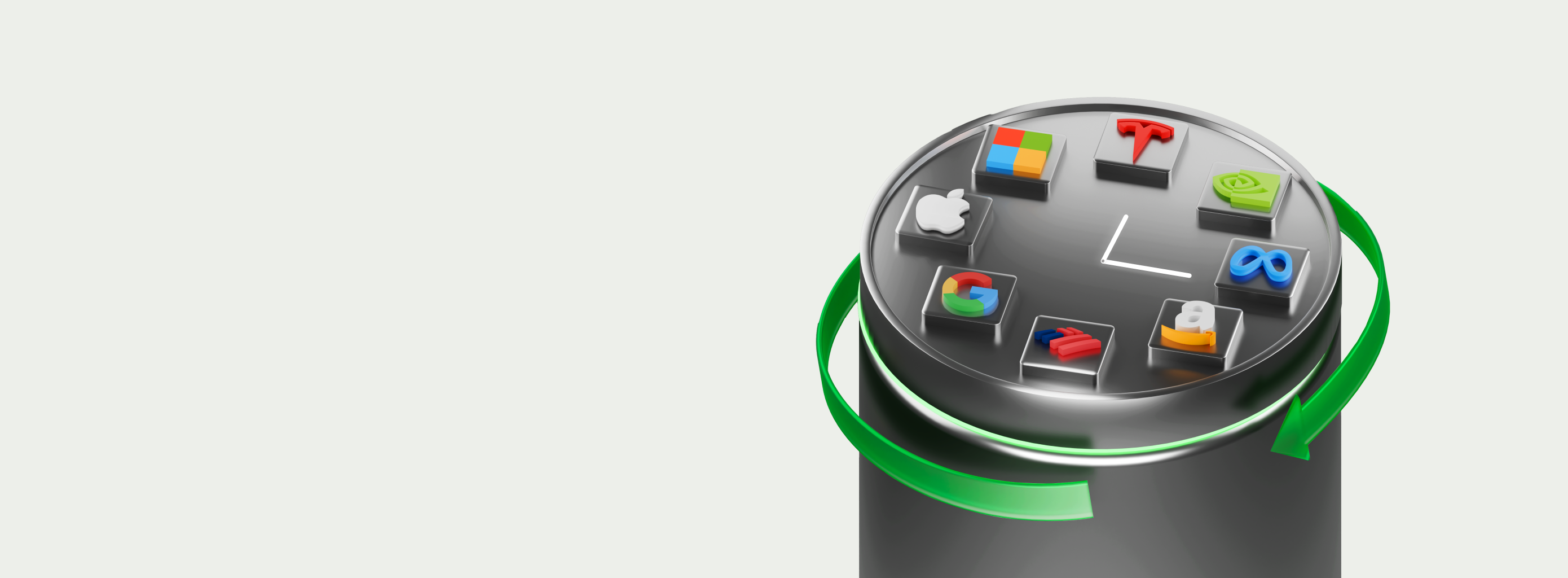
Most watched this season

Apple • Microsoft • Alphabet • Amazon • Nvidia • Meta • Tesla

Giao dịch mùa báo cáo lợi nhuận tại Mỹ với GO Markets

Mùa báo cáo lợi nhuận tại Mỹ mang đến làn sóng cập nhật lợi nhuận từ các công ty lớn niêm yết tại Mỹ. Kết quả, định hướng và kỳ vọng thị trường có thể thay đổi nhanh chóng, thúc đẩy biến động trên từng cổ phiếu, các ngành và các chỉ số rộng hơn.

Mức giá cạnh tranh

Kiểm soát chi phí khi giao dịch quanh các báo cáo biến động nhanh.

Công cụ phân tích kỹ thuật

Sử dụng biểu đồ và chỉ báo để lên kế hoạch điểm vào, điểm thoát và quản trị rủi ro.
Tối ưu cho giao dịch năng động

Giao dịch với khớp lệnh nhanh và nền tảng ổn định.

Công cụ quản lý rủi ro

Sử dụng các công cụ tích hợp để xác định mức rủi ro giảm và bảo vệ vị thế trong giai đoạn biến động.

Thêm thời gian để hành động

Có sẵn phiên giao dịch mở rộng cho một số CFD cổ phiếu Mỹ, cho bạn thêm thời gian giao dịch ngoài giờ chuẩn của thị trường.*

*Tùy theo từng sản phẩm. Điều kiện giao dịch có thể khác ngoài giờ thị trường thông thường.

Được theo dõi nhiều nhất mùa này

Lịch báo cáo lợi nhuận Mỹ

Thời gian hiển thị sử dụng Giờ tiết kiệm ánh sáng ban ngày của Úc (GMT+11). Bạn có thể đổi múi giờ bất cứ lúc nào trong phần cài đặt Lịch báo cáo lợi nhuận.

Tin tức & phân tích

Cryptocurrency exchange logos with BlockFi and FTX bankruptcy filing documents
Market insights
Cryptocurrency
Will BlockFi be another FTX?

Not even one week after crypto exchange FTX officially filed for bankruptcy another Cryptocurrency entity has felt the wrath and submitted its own Chapter 11. The spread and contagion effect from FTX was always a concern and now cryptocurrency lender BlockFi has fallen. BlockFi had been struggling even prior to the FTX collapse.

In fact, the company was bailed out with credit support form FTX of which the company could access up to USD 400 million. BlockFi is not a traditional exchange, rather a lender in which it used cryptocurrency assets as collateral for the loans. As the value of the crypto assets has declined the value of the company’s collateral became lower and lower and the company was unable to cover its liabilities.

Once the FTX crisis broke out, the support the credit offered by FTX was of course no longer available leading to a liquidity crisis. The bankruptcy filing outlined that the company currently has 256.9 million dollars of cash on hand which it says will provide enough liquidity in the short term to keep it operational until a restructuring can be done. The company owes approximately 100,000 creditors and the top creditor is the SEC is number which is owed 100 million dollars to settle charges it has in relation to one of its products that it offered.

The company has halted withdrawals from its platform and acknowledged the significant exposure it has to FTX. Will BlockFi end up like FTX? The manager of the financial group that advising BlockFi has made it clear that the situations Is not the same as FTX.

This is because they believe that the management teams of BlockFi are experienced, competent, and responsible as opposed to the leadership at FTX. There have been to date, “No failure of corporate controls and the company’s financial statements have shown to be trustworthy”. The difference in management and leadership does represent a potential safe exit for BlockFi and perhaps a lower level of negative impact on the crypto sector.

Ultimately, the situation surrounding BlockFi just highlights how precarious the whole FTX crisis is and the potential for other firms to be caught up in the fiasco. With such an interconnected market other exchanges and entities need to stay vigilant and aware of their exposure to the falling value of their assets.

GO Markets
November 29, 2022
Market insights
Cryptocurrency
FTX, a failure in Corporate Governance and effective risk management

The FTX bankruptcy case has been a fascinating study in the failure of corporate governance providing a warning to the Cryptocurrency industry that a lack of regulation will not excuse poor financial management and that these exchanges are not immune to failure. In the last week, the company engaged distressed company expert, John Ray III to take over control as the company's CEO as it declares bankruptcy. Ray who has helped companies such as Enron wind up their business and dealt with fraudulent and criminal business activity will help wind up the company.

In FTX’s Chapter 11 Bankruptcy filing, Ray provided some intriguing insight and warnings for other business and companies that may be in a similar boat, stating “Never in my career have I seen such a complete failure of corporate controls”. For market participants the information out of the filing is helpful in providing direction for potential investment and trading decisions going forward. Overview FTX, prior to its demise was the world’s second largest cryptocurrency exchange under the management of founder, Sam Bankman-Fried.

The initial announcement of the company failing, lead to a drop in the price of Bitcoin by almost 25% and a panic in the market and FTX losing a rumoured 1 billion dollars in customer funds. Outlined below are some of the key issues that Bankruptcy filing found as being responsible for FTX becoming insolvent. Cash Management The issues highlighted by Ray, included a lack of cash management controls.

The company did not maintain accurate books and cash accounts and currently is not able to locate accurate accounts and transaction history to verify its positions. This means that currently, there is no clear indication of how much money the company on its balance sheet. Disbursements and record keeping The company’s management and control of its disbursement were so poor that it was not “appropriate for a business enterprise”.

For example, there were no records of loan documents, for money used purchase homes for employees. In addition, wage requests made by employees were made and approved with the use of personalised emojis and messages that automatically deleted after a short period of time. The lack of record keeping was also evident in its management of the actual digital assets under it held.

There was no record of the coins or digital assets that the firm was holding for its customers. This adherent lack of record keeping has made it increasingly difficult to work out the financial position of the company. Auditing Failures This also leads to the next major issue which was the auditing opinions.

Although most segments of the business were audited, Ray, made it clear that none of the opinions should be relied upon by current and future stakeholders. In addition, there has so far been no indication of auditing performed on Alameda and Venture segments of FTX. The failure of the auditing process was an essential risk management measure that was missed.

Lack of Employee records The failure in governance also extended to Human Resource Management within the company. No clear records of employees and contractors have been found and even now there is no clear indication of how many employees FTX, and its various subsidiaries had. In fact, the problems relating to employee records have been so poor that there has been difficulty even locating some of members of the workforce to verify their employment.

Ray ended the filing with perhaps the most damming statement of all which was that Sam Bankman Fried does not represent creditors and that his current actions are not only problematic but highly irrational including social media posts that he currently engages in. The lack of regards and contempt held for Bankman Fried is indicative of complete failure from the senior leadership team at FTX. The situation at FTX has been brought about by a sector that hides itself behind low regulation and complex technical language that allows it to escape much scrutiny and criticisms.

The environment of ambiguous leadership roles and no clear focus on compliance and risk lead to a situation whereby failure on such a large scale has been allowed to occur.

GO Markets
November 18, 2022
Market insights
Preview: the Bank of Canada rate decision

One of the must-watch economic events this week will be the Bank of Canada interest rate decision. The rate decision is due to be announced at 15:00 PM London time on Wednesday. Why is the announcement important?

A bank interest rate is a rate at which a country's central bank lends money to local banks. The interest rate is charged by the nation's central or federal bank on loans and advances to control the money supply in the economy and the banking sector. The Bank of Canada has an inflation target of 1% to 3% (currently 1%).

The interest rates are changed accordingly to meet the target. The decision to increase, decrease, or maintain the interest rate has a significant impact on the financial markets so it is one of the most closely watched economic events in the calendar. Bank of Canada interest rate changes since 2015 Expectations All eyes will be on the Bank of Canada governor, Tiff Macklem on whether the interest rate remains unchanged at 0.25% or reduced closer to 0%.

Canada has had one of the strictest lockdown measures in the world in its fight to defeat the Coronavirus in recent months, which has had a considerable impact on the country’s economy. Despite that, the rates are expected to remain unchanged, according to economists. Brett House, vice-president, and deputy chief economist at Scotiabank: ''We do not expect a rate cut from the Bank of Canada at its next meeting as rate-sensitive sectors don’t need an additional boost.

For instance, Governor Macklem noted before the holidays that we should watch how housing is faring... Canadian home sales were up 7.2 per cent month-over-month in December to set a record for the month, which completed an annual gain of 12.6 per cent year-over-year. In other areas, retail sales have been above year-ago levels for several months.'' ''Although some immediate risks to the economy have gone up with intensified restrictions to stem the spread of COVID-19, medium-term risks relevant for setting monetary policy have abated.

Vaccines are being delivered about a year ahead of the Bank of Canada’s earlier expectations; the U.S. stimulus and funding bill passed and a government shutdown was averted, which will provide some positive spillover effects into Canada; and financial conditions remain favourable to growth.'' The Monetary Policy Report is set to be released shortly after the rate decision.

Klavs Valters
April 14, 2021
Market insights
Market Health: Dr Copper Will See You Now

What is the Gold-to-copper ratio and why is it important? And more importantly, what could it be telling us? The Gold-To-Copper Ratio Health Check Copper is often referred to as a barometer for economic growth and gold has historically been the safe-haven, a risk-off asset of choice for investors, so naturally comparing the two allows one to take a decent look at broader market sentiment.

Why Copper? Copper is one of the most widely used metals from both established and emerging economies and on top of that it is the only base metal used throughout all aspects of industrialization. Therefore increase in industrialization equates to an increasing demand in copper which ultimately relates to higher copper prices.

For this reason, the metal holds the moniker of "Dr. Copper." and why we can use it as an indicator of economic growth. The Ratio Explained In layman's terms, the gold-to-copper ratio is the current gold price divided by the current copper price.

However what is more import is what this ratio indicates and how it can help us get a firmer understand of the macro forces at play within the market. The gold-to-copper ratio is effectively a visual representation of risk-on/risk-off sentiment. The higher the ratio means that fewer people are buying copper and more are buying gold so what we see is a risk-off sentiment, meaning that people are more cautious with their money and investments, sticking to low-risk products.

The lower the ratio equates to the inverse, vis-à-vis risk-on sentiment and more stimulus into the economy. Gold-to-Copper Ratio Historical Traits In June of 2016, the story on everybody’s radar was bond yields at the lowest since the middle of the financial crisis with the U.S. 10-year yield printing lows at 1.3579% in and then for the next few weeks we saw the yield sit at around the lows and the 1.50% level. Was the gold-to-copper ratio signaling a shift to us?

The ratio peaked in early September 2016 but very quickly began to tumble as Gold prices started to see sell-offs and Copper started to see pretty heavy buying, this resulted in seeing the ratio price drop by about a third. It was during the second leg lower for the ratio that we started to see a bid in bond yields and the transition to a more risk-off environment, which we can see in the chart below that shows both the U.S. 10yr Bond yield (orange line) and the Dow Jones Industrial Index (white shaded line) begin their rally higher. U.S. 10yr Bond yield & Dow Jones Industrial Index So how can we utilise this within our trading?

To quote Samuel Goldwyn “The harder you work, the luckier you get.” and in this case, the harder you work to understand the interconnectivity of financial markets the ‘luckier’ you get with trading. Understanding how certain assets can be used to evaluate market/economic sentiment allows you to move away from being dependent on the obvious indicators, i.e. economic data & mainstream media sources and will enable you to be ahead of the curve, active as a pose to reactive. So, with the Gold price just popping above $1200 an ounce and Copper prices pushing lower on the back of poor Chile exports, we could see the gold-to-copper begin to push higher again, was the Gold-to-copper ratio flashing a warning to us before the significant equity market sell-off on Wednesday the 10th?

Will a push higher in the ratio signal a further sell-off in equities? We will be watching closely, both the commodity prices and equity indices to see where the market takes us next. This article is written by a GO Markets Analyst and is based on their independent analysis.

They remain fully responsible for the views expressed as well as any remaining error or omissions. Trading Forex and Derivatives carries a high level of risk. Sources: Bloomberg

GO Markets
April 14, 2021
Market insights
Shares
Landing soon - Airbnb IPO

Uber, the world’s largest taxi company, owns no vehicles. Facebook, the world’s most popular media owner, creates no content. Alibaba, the most valuable retailer, has no inventory.

And Airbnb, the world’s largest accommodation provider, owns no real estate. Uber, Facebook, and Alibaba have all gone public, but Airbnb has not. But that is about to change.

The home-rental company is set to go public on 10th December, in one of the most anticipated IPO's of the year. What is an Initial Public Offering (IPO)? IPO is a type of public offering in which shares of a company are sold to investors.

The company usually hires investment banks to market and understand the demand, set the IPO price and date, etc. It must meet requirements by exchanges and the Securities and Exchange Commission (SEC) before holding an initial public offering (IPO). About Airbnb Airbnb, Inc. is an American accommodation rental online marketplace company founded in 2008 by Brian Chesky, Nathan Blecharczyk, and Joe Gebbia.

It allows people to rent out their properties or spare rooms and is available in 191+ countries. Airbnb has more than 7m million listings on its platform, run by 4 million hosts worldwide. Its headquarters are located in San Francisco, California, United States, and it also has international offices around the world.

The company employs over 6,300 people. Expectations The global pandemic has had a significant impact on the company’s finances. It brought in $2.5 billion in revenue in the first nine months of the year - down from $3.7 billion a year earlier.

Companies net loss more than doubled during that period to $697 million. Year on year bookings down 72% in April and roughly 20% through June to September. In a government filing in the United States, the home-sharing company said it expects to price its shares between $56-$60 each, up from a range of $44-$50 earlier this month.

The new price range would increase the amount company is expected to raise to as much as $3.1 billion and increase its valuation to $42 billion from $35 billion at the top of the previous range. Airbnb does not intend to pay a dividend in the foreseeable future. Airbnb shares will start trading on the US stock market from 2.30 pm (UK time) on 10th December with the symbol ABNB.

Klavs Valters
April 14, 2021
Market insights
Emerging Economies - Growth Potential

GDP Dominance The United States dominates the world when it comes to having the largest economy by Gross Domestic Product (GDP), however, there are countries around the world which are showing major signs of economic growth and expected to overtake current world economic leaders, such as the United States and the United Kingdom. As mentioned above, the United States has the largest GDP in the world at around $19 trillion, followed by China and Japan at $11 and $4 trillion respectively according to the figures for 2017. However, looking to the future there are some economies that are expected to expand dramatically, and we can take a look at them in this article.

China Capital: Beijing Population: 1.4 billion (18.% of the world total) Official language: Standard Chinese Currency: Renminbi (CNY) Summary Even though the Chinese economy is already the second largest in the world, it is expected to grow even further over the next decade. China’s GDP has grown from around $4.5 trillion in 2008 to $12.2 trillion last year, a 166% increase over the last 9 years. And according to PricewaterhouseCoopers (PwC), one of world’s biggest professional service companies, China’s GDP is expected to grow to $38 trillion by 2030, making it the largest economy in the world.

India Capital: New Delhi Population: 1.3 billion (17% of the world total) Official language: Hindi Currency: Indian Rupee (INR) Summary India’s economy was 6th largest in the world at $2.5 trillion. Since 2008, Asia’s 3rd largest economy has expanded by around 110% from $1.1 to $2.5 trillion. It is expected to grow further to $19.5 trillion, according to PwC overtaking the United Kingdom, Germany, and Japan – making it the third largest economy in the world by 2030.

Indonesia Capital: Jakarta Population: 266 million (3.5% of the world total) Official language: Indonesian Currency: Indonesian Rupiah (IDR) Summary The Indonesian economy is currently 16th largest in the world at just over $1 trillion. It has nearly doubled since 2008. The South East Asian countries economy is projected to expand to around $5.4 trillion making it world’s 5th largest economy by 2030 overtaking United Kingdom and Germany.

Brazil Capital: Brasilia Population: 210 million (2.8% of the world total) Official language: Portuguese Currency: Brazilian Real (BRL) Summary Brazil is currently the world’s 8th largest economy at $2 trillion GDP in 2017. South America’s largest economy has experienced a steady growth since 2008 when it’s GDP was at $1.6 trillion. Brazil is expected to overtake countries like France and the United Kingdom by 2030 when its economy is projected to expand to around $4.4 trillion.

Mexico Capital: Mexico City Population: 130 million (1.7% of the world total) Official language: Spanish Currency: Mexican Peso (MXN) Summary Mexico’s economy has expanded by around 3% since 2008 and is currently the world’s 15th largest economy. However, its economy is expected to grow drastically over the coming years to around $3.6 trillion according to the projection making it the 9th largest economy in the world by 2030. By Klāvs Valters ( Market Analyst) This article is written by a GO Markets Analyst and is based on their independent analysis.

They remain fully responsible for the views expressed as well as any remaining error or omissions. Trading Forex and Derivatives carries a high level of risk. Sources: PwC, World Bank and Google Maps

Klavs Valters
April 14, 2021