The Aussie dollar has been on a tear in recent weeks as a weaker USD and thoughts of a pivot in US interest rate hikes has seen the Aussie bounce from its lows near $0.62. The Australian dollar and economy have benefited from the improved strength in commodity prices such as Gold and Iron ore which are important players in Australia’s economy. In addition, a potential reopening of China and improved economic prospects for the country means that it may be protected in the case of a global recession.
The long-term price action of the AUSUSD is that of a ranging pattern. Since 2015 there has been no consistent trend. The price dropped to near $0.60 during the initial stages of Covid 19 and in October last year.
The price has now recovered almost 12% from this October bottom and has shown a strong rejection of the $0.62 zone. The strength of the support can be seen by the weekly buying candle. This is almost identical to the pattern that occurred when the price bounced in 2020 categorised by a long green body and short wick.
In 2020, the price then rose to $0.79. This is a reasonable longer-term target especially if the USD continues to weaken. The one concern is the resistance level at $0.70.
This level is middle of the range of the pair’s price and could act as a difficult area to profit on the price action. Therefore, it would be best to wait for a confirmation candle either short or long before entering into a position. On the daily time frame, the price has just risen above the 200-day moving average and the 50-day moving average has begun to trend back upward and potentially cross back above the longer time moving average.
This may provide a buy signal if it occurs. The RSI is also consolidating and if it breaks out of its wedge, it may provide an indication of a further move to the upside. With so much more data to come still relating to inflation data and broader economic data, there may still be some volatility in the direction of the AUDUSD.
By
GO Markets
Disclaimer: Articles are from GO Markets analysts and contributors and are based on their independent analysis or personal experiences. Views, opinions or trading styles expressed are their own, and should not be taken as either representative of or shared by GO Markets. Advice, if any, is of a ‘general’ nature and not based on your personal objectives, financial situation or needs. Consider how appropriate the advice, if any, is to your objectives, financial situation and needs, before acting on the advice.

The biggest move in 80 years We need to start with what is probably the biggest structural change Europe has seen since the formation of the European Union to its biggest member – Germany. For the first time in 80 years Germany’s Bundestag has voted to lift the country's “debt brake” to allow the expansion of major defence and infrastructure spending under new leadership of incoming Chancellor Frederick Merz. We need to illustrate how much spending Germany is going to do in defence it is up to €1 trillion over the forward estimates. 5 billion of which is to support Ukraine for this year and to continue to put European pressure on Russia.
It's also a country it has been highly sceptical of stimulating itself having suffered through the Weimar government of the 1920s and 30s that led to hideous hyperinflation and drove the country to political extremism. It is also clearly in response to Washington’s change of tact regarding Europe and the war in Ukraine. As it is now clear that Europe who need to defend itself and that NATO is becoming a dead weight that can no longer be relied upon.
Couple this with what the EU is doing itself. Last week we saw the head of the EU Ursula von der Leyen, delivered a speech that stated the continent needed to: “rearm and develop the capabilities to have credible deterrence.” This came off the back of the EU endorsing a commission plan aimed at mobilising up to €800 billion in investments specifically around infrastructure and in turn defence. The plan also proposes to ease the blocs fiscal rules to allow states to spend much more on defence.
If you want to see direct market reactions to this change in the continent’s commitments – look no further than the performance of the CAC40 and DAX30. Both are outperforming in 2025 and considering how far back they are coming compared to their US counterparts over the past 5 years – the switch trade may only be just beginning. What is also interesting it’s the limited reactions in debt markets.
The 10-year Bund finished marginally higher, though overall European bond markets saw limited movement. Bonds rallied slightly following confirmation of the German stimulus package. Inflation swap rates were little changed, while EUR swaps dipped, particularly in the belly of the curve.
EUR/USD ticked up 0.2% to $1.0960. Hopes for a potential Russia-Ukraine cease-fire also offered some support to the euro but has eased to start the weeks as Russia looks to break the deal before it even begins. Staying with currency impactors – The US saw a range of second-tier U.S. economic data releases last week all came in stronger than expected.
Housing starts jumped, likely benefiting from improved February weather. Industrial production rose 0.7% month-over-month big beat considering consensus was for a 0.2% gain while manufacturing jumped 0.9%. Import and export prices also exceeded forecasts, prompting a slight upward revision to core PCE inflation estimates, mainly due to higher-than-expected foreign airfares.
These upside surprises led to a brief sell-off in treasury bills but yields soon drifted lower as equities struggled. Looking ahead to the FOMC decision, expectations remain for the Fed to hold steady. Chair Powell has emphasised that the U.S. economy is in a "good place" despite ongoing uncertainties and has signalled there’s no rush to cut rates.
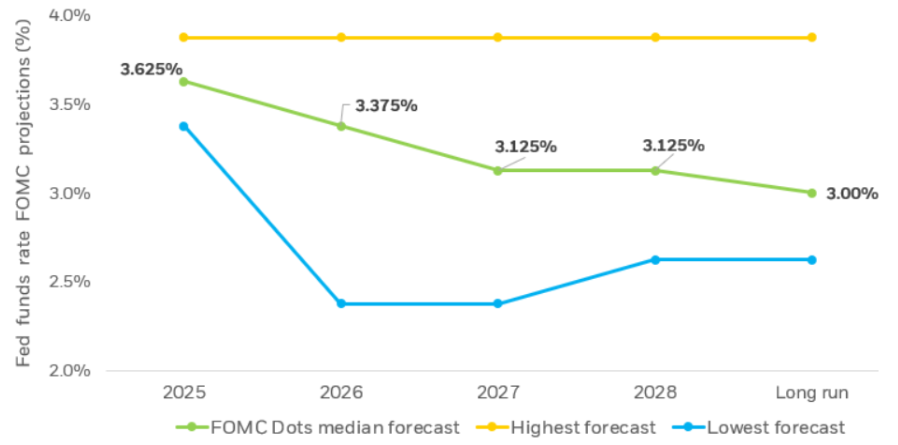
The Fed’s updated projections are expected to show a slight downward revision to growth, a more cautious view on GDP risks, and slightly higher inflation forecasts. As for rate cuts, the median expectation remains two 25bps cuts in 2025 and another two in 2026, with markets currently pricing around 56bps of easing next year. All this saw the U.S. dollar trade mixed against G10 currencies as local factors took centre stage.
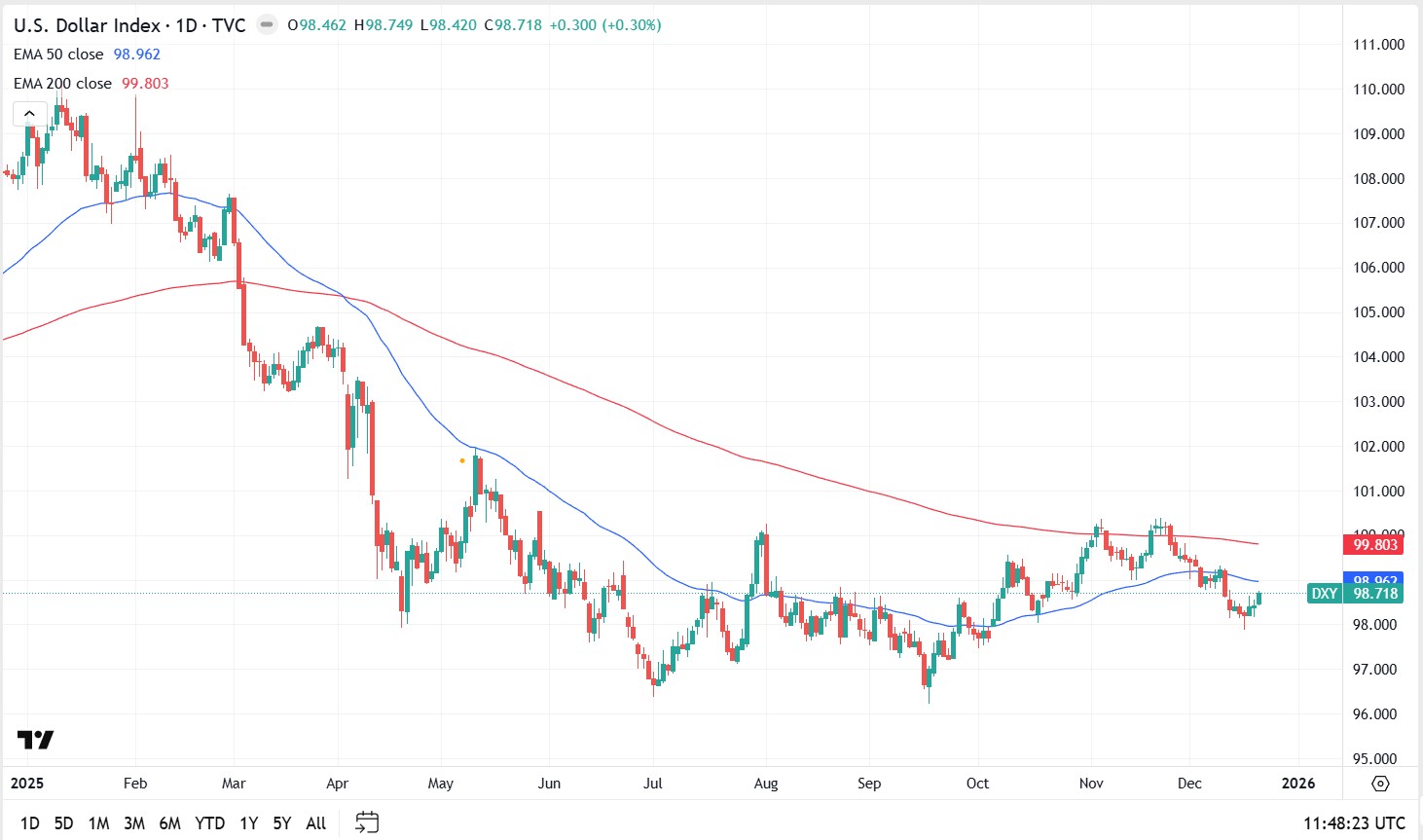
Despite a weaker risk tone in equities, the DXY USD Index edged down 0.1%. The Aussie and Kiwi dollars softened (AUD/USD -0.3%, NZD/USD -0.4%) as risk sentiment deteriorated. The AUD will be interesting this week as we look to the budget that was never meant to happen on Tuesday.
Considering that we are within 10 weeks of a certain election, the budget really is not worth the paper its written on as it will likely change with an ‘election’ likely to be enacted straight after the new government is sworn in. That said, the budget is likely to show once again that Canberra is messing at the edges and not taking the steps needed to address structural issues. The AUD is likely to fluctuate on the release and then find a direction (more likely to the downside) over the week as the budget shows the soft set of numbers with little or no change in the interim.
Finally, the rally of the yen appears to be over as it continues to weaken. USD/JPY climbed from Y149.20 in early Tokyo trade to around Y149.90 as the London session got underway. With CFTC data showing significant long yen positioning, some traders likely unwound short USD/JPY bets ahead of the BoJ decision.
Other JPY pairs moved in tandem with USD/JPY. But whatever is at play out of Japan – the rally of the past 6-7 months looks to be ending and with USD/JPY facing the magic Y150 mark – will the BoJ step in like it did last year? Will the market look straight past it again?
With core CPI missing expectations and some slight deceleration in other areas such as retail sales an overall service economic activity. The RBA is likely to hold tight and not raise rates on Tuesday. We say this with some confidence, based on the communication coming from RBA governor Bullock.
She had emphasised the importance of the second quarter CPI print at the June meeting, despite providing hawkish rhetoric around the risk of rate rises and a stalling inflation story. This had led the market and many economists to suggest the possibility of a rate rise has now reduced to sub 10% coming into Tuesday's meeting. That clearly means that it's not still a possibility but all things being equal the likelihood now is negligible.
You can see that here in the charts of the Aussie dollar particularly against the JPY and the USD AUDUSD AUDJPY Given the preference for rate stability by the board, what's also interesting about the Q2 CPI figures is that it gives them a clear path to keep rate stability (their words) for the stable future. It suggests not only will August be a hold but suggests that the September meeting as well would likely be the same. However it can't be ignored that CPI was slightly ahead of forecast and thus the Statement of Monetary Policy (SoMP) coming up in a few weeks will be very interesting.
Because we expect forecast changes and are likely to show a slower progress towards target. So first and foremost, forecasts have to narrow to include the higher than expected year on year figure. The forecast for inflation at the May SoMP update didn't include the new Federal government’s $300 energy rebate or the Western Australian and Queensland governments respective energy rebate.
This will significantly lower the financial year 24 inflation rate but will simultaneously raise the financial year 25 forecast by a similar amount. Providing a bit of a catch 22 from the board. There's been upward revisions in consumer spending and are likely to challenge the forecast assumptions used in the May statement of monetary policy that was justifying a lower part of inflation.
All things therefore being considered the hawkish message coming from governor Bullock is likely to persist. Because as this chart shows core inflation and headline inflation in Australia is the highest against all major peers and despite the RBA having a 2 to 3% target band higher than its peers around 2% it is a long long way away from reaching its goal. It should therefore be pointed out that come the Tuesday decision making call “all options” as the RBA like to call it, realistically means a tight hold or a possible rate hike With the right hike being dismissed.
This means that there is a divergence going on between the RBA and the rest of the dovish global environment. You only have to look at what the Bank of England said last week to understand that something like AUDGBP has a neutral central bank with the hawkish bias dovish central bank with dovish action to see the pair likely moving slightly higher in the interim. The same argument could actually be made for the AUDUSD because post the CPI number as we explained last week The US Federal Reserve was due to meet.
And although the board didn't move the Federal Funds rate At the July meeting it is all but confirmed September is the likely start point for the Fed’s right cutting cycle. The US has seen some pretty mixed data over the last six days. Unemployment has ticked up; retail sales ticked down; inflation has moderated and forward looking indicators in consumer confidence and industrial manufacturing have both declined.
Couple this with the US election geopolitical risks and other factors explains the rally that has happened in the pair post the CPI data as seen here: AUDUSD Returning to the outlook for the US and the federal funds rate post the FOMC July meeting. 7 major economists are forecasting not just the September meeting with a rate cut but the remaining three meetings of the year will see cuts from Constitutional Ave. And if we take into consideration the FOMC’s dot plots the cuts will continue early into 2025 most likely at the February, March and May meetings. If this doesn't indeed come to fruition the impact on US indices will clearly be to the upside.
FX is likely to have to ask some serious questions around pricing in pairs such as the EUR, GBP and CAD. Which brings us back to the Aussie dollar The current sell off that we've seen in the currency is based solely on the idea the RBA is on a tight hold, and that selling is probably justified. However with the data that is currently before us it is hard to make a case that isn't bullish for the AUD as it gets left behind in the rate cut environment and dovish outlook the global economy is about to undertake.
Thus post Tuesdays meeting Michele Bullock's press conference will be key to this trade idea because it's likely to show you like she did in June that is going to have to continue on with the hawkish view and jawbone inflation lower.
Market action and underline breath of the last two and half weeks has been extreme and rather eye opening. The S&P 500 has made 38 record all time highs in 2024 so far, however since its most recent peak on July 16 it has traded lower ever since. Now we need to put that into perspective, the pullback since its July high is 4.75 percent to date.
The pullback that we saw in April was 5.7 per cent, the rally at the end of the April pullback was 14.1 per cent to that July 16 high. And overall the S&P 500 is still up 6.6 per cent year to date. But what's really catching our attention is that the pullback in the second half of July looks very much like the pullback that started in July 2023.
If we compare the SNP's year to date performance in 2023 to what we have seen today in 2024 the correlation is surprisingly tight. Have a look at this chart. Yes, the path of the market in the first quarter of 2023 was different to what happened this year but by the end of March (2023 and 2024) the S&P was up a similar amount on a year to date basis.
What we can then see is that from the start of the second quarter through to mid-July that correlation is really tight. So the question we're now asking is are we going to experience déjà vu? The pullback that began in late July 2023 went all the way through to late October 2023 Started slightly lighter than what we've seen this year.
But as the price action shows if we follow what happened last year we could be in for a couple of months of high volatility and the Bulls quickly reassessing their current trajectory. It's going to be interesting because unlike in 2023 where the issues came for monetary policy and the prospect of rate rises or cuts. 2024 has an external factor we only experience every four years and that's a U.S. presidential election. And what might be a trigger point for the bottom of the market if we are about to experience a multi month pullback would be the November 5 election.
Second to that is that all things being equal a rate cut or cuts will have happened by the end of October something that didn't happen in 2023. What's hard to equate is the impact one or more cuts will have on indices in particular as according to the market pricing it's already factored in. It's why the current pullback although close to 2023 the deja vu we are experiencing right now is just that deja vu and not something to be factored into your thinking.
What’s going on in FX? What we are watching very closely on a monetary policy and FX perspective is this coming Wednesday's CPI read in Australia. Over the last 2 1/2 weeks the AUD has been savaged.
So much so that several traders have exited their bullish positions in the Aussie. It's not hard to see why with the AUD/USD losing some two cents in this. Yes this is down to USD strength on the back of a change in the democratic candidate,risk increases in markets, and signs of economic reactivity in the world's largest economy.
But it's not only the AUD/USD but it's saying movements of this kind of magnitude news over the last week and a half of intervention by the Bank of Japan has seen the JPY recuperate some of the losses experienced this year. Again using the Aussie dollar as an example AUD/JPY moved from a high of ¥107.56 to as low as ¥100.5 inside 10 days. This all suggests that at the moment FX is probably ignoring fundamentals and is being caught up in short term external factors.
It is why this coming Wednesday's CPI numbers could be a real turning point in the trading of FX of the last few weeks. Because it should sharpen traders' minds back to the fundamentals. As this chart shows, the expectation of a rate rise on August 6 has been as high as 27 percent in fact at one point in the last two months it's been as high as 46 per cent.
This in our opinion has been fully factored out of FX trading in the Aussie over the last couple of weeks. Thus, if Australia’s trimmed mean inflation rate comes in anywhere north of 3.9 per cent year on year. This chart should rapidly change and be pricing in the probability of a rate hike as high as 80per cent for the August 6 meeting.
What this means for FX is that the current sell off in the AUD is probably overdone and will rapidly unwind itself. Those bulls that have been shaken out over the last week and 1/2 will more than likely reinstate positions. Crosses that have been savaged are also likely to face a rapid snapback because from what is currently presented in the data suggests the Aussie is more fairly valued where it was two weeks ago rather than where it is now.
The caveat If however Australia is trimming inflation rate comes in at or below 3.9 per cent. Then the current pricing of the Aussie is probably fair, and the reaction is likely to be negative. All pricing this year in the local currency has been on the premise of an improving China which is yet to materialise and the divergence that's happening at the RBA.
If inflation indeed is showing signs of finally declining in Australia then there will be a reaction to the downside because the probability of a rate increase in 2024 will drop back to almost 0, as there will be no data strong enough to convince the RBA to raise rates again is there a hesitant hawk something we discussed 4 weeks ago. We will do a full report on the CPI next week and how to trade it leading into the August 6 RBA meeting.
Last week brought some relief as markets found support following the retreat from record highs... with the recent crypto crash being a notable exception.
Bitcoin Breaks Below $100K
Crypto markets are under significant pressure after Bitcoin crashed through the psychological $100,000 level. Currently trading around $94,650, Bitcoin has fallen to its lowest point since May. The $94,000 level appears critical; if it fails, we could see Bitcoin slip back into the $80,000 range and potentially enter bear market territory.
Fed Minutes and Rate Cut Signals
The Federal Reserve minutes are due this week, and they could provide crucial insight into the timing of rate cuts in 2026. Markets have already priced in a likely December cut, but the January 2026 cut that was initially expected may be in jeopardy. Pay attention to the Fed speakers scheduled throughout the week—their comments could help clarify the path forward on monetary policy.
Strong Earnings Season Winds Down
We're in the final stretch of what's been an exceptionally strong earnings season, with 82% of companies beating EPS expectations and 76% surpassing revenue forecasts. This week features some heavyweight reports, most notably Nvidia reporting Wednesday after the bell. Major retailers Target and Walmart will cap things off, giving us a clear picture of consumer health heading into the holidays.
Market Insights
Watch Mike Smith's analysis for the week ahead in markets
Key Economic Events
Stay up to date with the upcoming economic events for the week.
The longest government shutdown in US history has finally ended after 42 long days.
After a month and a half of political theatre, seven Democrats and one independent broke ranks and voted with Republicans to pass a stopgap measure. The Senate went 60-40, the House followed 222-209, and Trump signed it hours later.
The legislation includes three-year appropriations for the Agriculture Department, FDA, military construction, veterans affairs, and congressional operations, along with restoration of pay for federal workers and reversal of Trump administration layoffs through January.
However, the most contentious issue, healthcare subsidies, has been kicked down the road to a December Senate vote.
Trump signs bill to end longest shutdown in history
COVID-era ACA subsidies expire at year-end. When they do, premiums for the average subsidised household will more than double from $888 to $1,904 per year, with an estimated 3.8 million people losing coverage entirely.
If the December vote fails, which is likely considering how far apart the two parties are on the topic, we could see a new shutdown begin in January.
What Happens Next?
This Week:
Federal employees return to work.
Paychecks start flowing again.
SNAP benefits get restored for 42 million people, though heating assistance won't come back for weeks.
National parks reopen.
Airports start to go back to normal.
December:
Senate votes on healthcare subsidies. It will probably fail.
Premium notices continue to be sent showing 2026 costs doubling.
January 30:
Government funding expires.
We do this whole thing over, except now the healthcare subsidies have already expired.
If Republicans and Democrats remain divided on budget priorities, another shutdown will likely begin.
By the Numbers:
Over the past 42 days, approximately 750,000 federal workers have been furloughed. Another two million worked without pay. Over 42 million had their food assistance delayed. And the FAA cut flights by 10% because air traffic controllers stopped showing up to work.
Further concern is the "data blackout" that has hampered Federal Reserve decision-making. Key economic indicators, including jobs reports, were suspended, leaving the Fed blind during an active rate-cutting cycle.
Meanwhile, separate analyses from Challenger, Gray & Christmas showed layoffs surged 183% in October, which would make it the worst October for jobs since 2003.
The Bottom Line
Today’s deal ended the shutdown, but it didn’t actually solve anything. The deal essentially kicks the can down the road to January while leaving the healthcare crisis unresolved.
With both parties divided on healthcare and spending priorities, and Trump lacking a comprehensive plan to address rising premiums and high deductibles, a resolution in the December vote seems unlikely.
If no compromise is accepted by the time Government funding expires on January 30, another shutdown is almost inevitable.
Impact of Australian Jobs Reports and U.S. Shutdown End on the Aussie
The decision to scale (increase the traded lot size of a specific EA) should be based on statistical evidence that indicates your EA has the potential to perform to certain expectations.
Equal weight should be given to the decision to scale, as to the initial decision to deploy an EA. This guide provides an indicative approach on how to put together and action your scaling plan.
Before You Start Your Scaling Plan
Important: this should be an individual plan that is consistent with your personal trading objectives, your EA portfolio, and your personal financial situation (including account size).
We are going to use a starting lot of 0.10 per trade in the examples in this document —you want to adjust this based on your own risk tolerance.
Whatever your chosen lot size start point, EA scaling should be a pre-planned incremental approach, scaling stepwise based on performance metrics you are seeing in your live trading account.
You should also have assessed the current margin usage of your EA portfolio exposure to ensure that any scaling and related increased margin requirements are appropriate to the size of your account.
Suggested Scaling Baseline Requirements
Scaling should only be performed when your EA is performing to what you deem to be a good standard. To make this judgment, you need to set some minimum performance standards.
The past performance of your EA is not a guarantee of future performance. If market conditions change, you must remain vigilant and continue to measure performance on an ongoing basis for every live EA you have.
You need to define the key metrics that are important to you.
Two important metrics to include are:
The number of trades: to provide some evidence of reliability
The period of time: to have had exposure to at least some variation in market conditions
Example of how you may lay your metrics out in a table:
Table 1 – Sample scaling metrics
Some may choose to include proximity to original expectations of other metrics, such as minimum win rate, average profit in winning trades, and average loss in those that go against you.
It should only be after your metrics are met that lot scaling begins on any specific EA.
Lot Size Scaling Ladder
Below is an example of a performance-based scaling plan assuming a 0.10-lot baseline.
Again, this is indicative. It provides a framework with clear review dates and an approach that illustrates incremental scaling. You must still define a regime that is right for your specific trading objectives.
Table 2 – Review planning
Risk Guardrails
It is vital to keep an eye on your general account risks and have limits in place that guide your EA use.
Such limits must be constant across all stages of scaling and referenced beyond the risk of a single EA, but to your portfolio as a whole.:
Per-Trade Risk (Nominal)
Trade risk for any one trade should be seen in the context of account size and the dollar risk based on the risk parameters you have set for your EA.
Specify a maximum percentage of the account balance — a $200 loss is more impactful on a $1000 account compared to a $10,000 account.
Stick to what is right for you in terms ofyour tolerable risk level based on your trading objectives and financial situation. A common suggestion is a 1-2% risk of account equity per trade.
Total Open Exposure
Specifying maximum exposure in the number of EAs open at any time and those that use the same asset class is important for overall portfolio risk management.
There are tools you can use to monitor exposure risk generally, as well as those that can be used to indicate single asset exposure.
Margin Usage
It is always desirable that your set exit approaches and parameter levels are what your exits are based on. It should not be because your margin usage has meant you have moved into a margin call situation.
Specify a minimum level to adhere to and make sure that your account is sufficiently funded. If volatility or slippage rises (e.g., news events or illiquid sessions), reduce lot size temporarily.
Scaling Psychology – Managing “Big Numbers”
As lot sizes rise, your emotions may respond accordingly when you see the larger dollar amounts that your EA is generating.
If you are used to seeing an average profit of $100 and average loss of $50, and suddenly you are seeing significantly bigger numbers, it creates an emotional challenge where you may be tempted to do a “discretionary override”.
Although there are situations, such as major market events, overexposure in a specific asset, or VPS or account system problems, where such intervention may be considered, generally this would distort the actual performance evaluation of your EA and is not encouraged (unless it is pre-planned).
The table below presents some of the generally accepted challenges and offers suggestions on how to manage them.
Your Plan Into Action…
In practical terms, your scaling plan should have two components:
The key parameters for action on your chosen key metrics
Specified periodic review times to make your next scaling decision
This is not a race. Having systems in place facilitates creating the opportunity that scaling brings while still mitigating the risks.