Market news & insights
Stay ahead of the markets with expert insights, news, and technical analysis to guide your trading decisions.

US inflation data on Wednesday is the week's centrepiece, but with oil nearing seven-month highs, Bitcoin (BTC) sentiment shifting, and the Australian dollar at three-year highs, traders have plenty to navigate in the week ahead.
Quick Facts
- US inflation rate (February) is the key binary event for rate cut pricing and equity direction.
- Brent crude is trading around US$82–84/bbl, near seven-month highs, with a $4–$10 geopolitical risk premium baked in from Iran/Hormuz tensions.
- Bitcoin is trading above US$70,000 as of 6 March, a potential trend change if it holds through the week.
United States: inflation in focus
Last month’s US inflation reading showed prices rising 2.4% year-on-year, still well above the Fed's 2% target.
February's inflation rate, due Wednesday, will be scrutinised for signs that tariff pass-through or rising energy costs are pushing prices back up, or whether the slow grind lower is still intact.
The March FOMC meeting on 17–18 March is now priced at only an 4.7% probability of a cut. A higher-than-expected inflation print this week could potentially push rate cut expectations further out.
A softer read opens the door to renewed cut pricing and potential relief across risk assets.
Key Dates
- US Inflation Rate (February CPI): Wednesday 11 March, 12:30 am (AEDT)
Monitor
- Core vs. headline inflation divergence as evidence of tariff pass-through in goods prices.
- 2-year and 10-year treasury yield sensitivity to the print.
- USD direction and FedWatch repricing in the lead up to the 18 March FOMC decision.

Oil: elevated and event-sensitive
Brent is currently trading around US$83–85 per barrel, with a 52-week range spanning $58.40 to $85.12, reflecting the dramatic move triggered by the Middle East conflict.
Analysts estimate the geopolitical risk premium already baked into oil at US$4–$10 per barrel, and average 2026 Brent forecasts have been lifted to US$63.85/bbl, up from US$62.02 in January.
The EIA's Short-Term Energy Outlook forecasts Brent to average $58/bbl in 2026, well below the current spot price.
The gap between spot and the forecast baseline could be a useful frame for traders this week: any de-escalation signal from the Middle East could rapidly close that gap.
Monitor
- Strait of Hormuz developments and any diplomatic signals from Iran nuclear talks.
- EIA weekly oil inventory data.
- Oil's knock-on to inflation expectations and whether it shifts central bank posture.
- Energy sector equity performance relative to the broader market.

Bitcoin: sentiment watch
BTC has been attempting to stabilise after a brutal 53% correction over the past 17 weeks, fuelled by escalating geopolitical tensions and renewed tariff concerns.
However, yesterday saw a 8% jump back above $72,000, and the crypto “fear and greed index” jumped up to 29 (fear), up from below 20 (extreme fear), where it has been sitting for over a month, indicating a potential sentiment shift.
A cooler-than-expected US inflation print on Wednesday could provide further fuel for the breakout; a hot print risks potentially pulling BTC back below the US$70,000 level it has just reclaimed.
Monitor
- Inflation print reaction on Wednesday as the primary macro catalyst for the move.
- Any rotation into altcoins following BTC strength.
- ETF inflow/outflow data as confirmation of institutional participation.

AUD/USD: Hawkish RBA meets geopolitical crosswinds
The Aussie is trading near more than three-year highs and heading for its fourth consecutive monthly gain, up more than 6% year-to-date, making it the top-performing G10 currency in 2026.
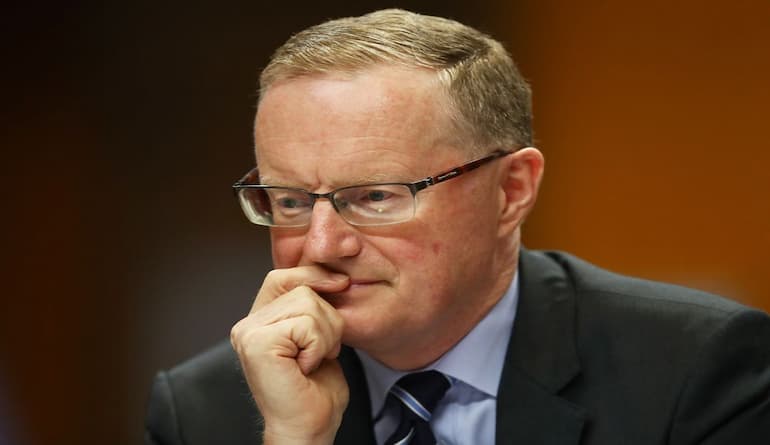
The driver is a clear policy divergence. RBA Governor Michele Bullock signalled the March policy meeting is "live" for a possible rate increase, and warned that an oil price shock from Iran tensions could reignite domestic inflationary pressures.
Market pricing now suggests around a 28% chance of a 25bp hike at the upcoming meeting, while fully pricing in tightening through May, and around a 75% chance of another increase to 4.35% by year-end.
This hawkish read, set against a Fed on hold and facing dovish political pressure, creates a potential structural tailwind for the Aussie.
Monitor
- AUD/USD reaction to Wednesday's US inflation data.
- RBA rate hike probability repricing through the week.
- Iron ore and commodity prices as secondary AUD drivers.
- China demand signals, given Australia's export exposure.


Gold had been trading strongly to the upside since the beginning of March, rising from the 1810 price area to reach the 2000 price area which was last tested in April 2022. However, after reaching the resistance area, Gold retraced lower to test the 1937.50 support area which coincides with the 38.2% Fibonacci retracement level and the bullish trendline. Currently, Gold is forming a double top chart pattern as the price again retraces from the resistance level at 2000.
With the Moving Average Convergence and Divergence (MACD) indicator signaling a potential bearish reversal, a confirmation of further downside potential could be signaled if Gold breaks below the bullish trendline. This could see the price trade lower to test the 1917 level, and beyond that, the 1887 support level which coincides with the 61.8% Fibonacci retracement level. Significant moves to the downside on Gold is likely to be driven by a recovery in the strength of the DXY, due to its inverse correlation with the reserve commodity.
Alternatively, if the market uncertainty increases, arising from further developments in the banking crisis or increased concern over possible global inflation, Gold could trade higher beyond the 2000 resistance level, which would invalidate the double-top formation. A continuation of the uptrend could see Gold trade toward the next resistance level of 2070, which was last reached in March 2022.


USDJPY The USDJPY is on the march higher again after a better than expected Non-Farm payroll figure on Friday saw sentiment shift hawkishly toward Fed monetary policy with Fed fund futures now pricing in a 70% chance of a 25bp hike at the FOMC May meeting, up from around a 50-50 split earlier in the week. The policy divergence in the US and Japan and the subsequent yield differentials on their respective 10 year government bonds has been the main driver of this pair in the last 12 months. You can see the close relationship of this in the chart below.
The black line is the difference between 10 year yields on US 10 years – Japanese 10 year years, the orange line, the USDJPY rate. As the US yields increase their gap to their Japanese counterparts, the USDJPY will be pressured upwards as traders look for low risk carry trades. The Yen was also not helped recently by comments from the new incoming governor of the BoJ that indicated that any change to the current dovish policy was not imminent.
Key levels to watch USDJPY has been forming a textbook uptrend since late March. With the upward trend line tested and holding as support on a handful of occasions, a resistance level of 133.85 has so far held any further upside, but is looking vulnerable. Ways to trade this are 1, Playing the range, buying low at the trendline, selling high at the resistance level.
Though whilst the uptrend is in place the more cautious approach would be to stick to buys. 2, Waiting for a break of these levels for the next push. The longer this takes, and the tighter the range gets the more explosive this move could be. While economic announcements out of Japan are very light on the ground this week, The US will be releasing both CPI and PPI figures, how these inflation figures look will have a measurable effect on market sentiment towards Federal Reserve policy and will almost certainly see some big moves in the USD and rates markets, so the break of this range may come as early as tomorrow night.


American manufacturer of farm machinery and industrial equipment Deere & Company (NYSE:DE) announced the latest financial results for the quarter ending January 29, 2023, before the market open in the US on Friday. Revenue was reported at $12.652 billion for the quarter (up by 32% year-over-year) vs. $11.337 billion expected. Earnings per share also topped analyst estimates at $6.55 per share vs. an estimate of $5.565 per share.
The company expects revenue of between $8.75 to $9.25 billion in the fiscal year 2023. CEO commentary ''Deere’s first-quarter performance is a reflection of favorable market fundamentals and healthy demand for our equipment as well as solid execution on the part of our employees, dealers, and suppliers to get products to our customers,'' CEO of the company, John C. May said in a press release. ''We are, at the same time, benefiting from an improved operating environment, which is contributing to higher levels of production,'' May concluded.
Stock reaction Shares of Deere were up around 5% at the market open on Friday, trading at $427.32 a share. Stock performance 1 month: -1.38% 3 months: -2.43% Year-to-date: -6.02% 1 year: +5.89% Deere & Company stock price targets Stifel: $477 Citigroup: $505 BMO Capital: $450 Wells Fargo: $485 Morgan Stanley: $522 Argus Research: $475 Credit Suisse: $582 JP Morgan: $440 UBS: $452 Deutsche Bank: $374 Goldman Sachs: $420 Citigroup: $425 Deere & Company is the 114 th largest company in the world with a market cap of $119.74 billion. You can trade Deere & Company (NYSE:DE) and many other stocks from the NYSE, NASDAQ, HKEX, ASX, LSE and DE with GO Markets as a Share CFD.
Sources: Deere & Company, TradingView, MarketWatch, MetaTrader 5, Benzinga, CompaniesMarketCap


Bollinger Bands are one of the most popular indicators that FX and CFD traders use, invented in the 1980’s they are a technical analysis tool that are widely used by short and long term traders. The main uses for Bollinger Bands is determining turning points in the market at oversold and overbought levels and also as a trend following indicator. Like any technical indicator Bollinger Bands should be used with your own analysis to confirm trades and help set entry and exit levels, they are a fairly simple indicator that focuses on price and volatility only and shouldn’t, in my opinion be used in isolation.
While effective, to use them successfully you will need to be aware of the fundamentals and other technical indicators such as major support or resistance levels. How Bollinger Bands are calculated Bollinger Bands are composed of three lines. The middle line is a simple moving average (SMA), the default period being 20.
The upper and lower bands are the SMA plus or minus 2 standard deviations by default, the SMA period and Deviations can be adjusted in the settings of the indicator if desired, but the standard settings are the most popular settings among traders. When the price hits the upper band the market could be seen as “overbought” when it hits the lower band it could be seen as “oversold”, they can also be used as levels where trends are confirmed, e.g. hitting upper band could be seen as the start of a strong uptrend and vice versa. Day Trading strategies using Bollinger Bands Bollinger Bands are used mainly in two different trading styles, for contrarians looking for overbought and oversold levels to enter fade trades, or confirmation of trend for trend following systems. Both systems have their pros and cons, as with most indicators it will depend on the market “fee” for the time used, a choppy whipsawing market will see the fading system work very well, a strong trending market will see the trend following system work very well.
As with any technical system, the selection of the market to trade and being aware of the fundamentals driving the FX market at that time are critical.. Just had a Fed meeting where they surprised with a 100bp rate hike? Don’t use the fade system on USD pairs!
A good technical system I have found is useful is a mixture of both of these strategies, using the Bollinger Bands to confirm a trend, then using the fading strategy to trade pullbacks of this trend. Lets look at the example below from the AUDNZD – 5 minute chart from the 23 rd March 2023 In the above example, which is a common price action across all FX pairs, you would be using the Bolling Bands to confirm a down trend after a close below a major low. Once the possible trend is confirmed, we will be using the “overbought” level of the upper band to enter a short trade, with a take profit exit on 2 closes below the lower band, indicating the market may have gone into “oversold” territory and was time to take some money off the table.
This process would be repeated while lower highs were being made, a close above a major recent high along with a close above the upper Bollinger Band would indicate the trend may have come to an end. This can be seen on the chart below, later in the session on the same pair. At this point you would exit the short selling of the down trend and reverse to a long bias, or if your analysis on fundamentals were negative for this pair, wait for a new downtrend to form for another shorting run.
The Bollinger Squeeze Strategy Another strategy popular with FX traders is known as the Bollinger squeeze strategy. A squeeze occurs when the price has a big move, then consolidates in a tight range, this also sees the Bollinger bands go from wide to “squeeze” in a much narrower range, hence the name of the strategy. A trader would be looking for a breakout and close below or above the Bollinger bands of this squeezed range for a trade entry, see the example below from the EURUSD 5 Minute chart on 23 rd of March 2023 When the price breaks through the upper or lower band after this period of consolidation a buy or a sell signal is generated.
An initial stop is traditionally placed just above (or below in a long position) the range of the consolidation. TP rules could be similar to the previous strategy, i.e. multiple closes below the lower Bollinger Bans in the case of a short, or using the middle Bollinger Band as a trailing stop in the move is explosive and looks to continue. Summary As you can see there are multiple uses for Bollinger Bands in a FX day traders toolbox, including using them for overbought and oversold trade signals in a trending market and the Squeeze strategy where an explosive move often follows a period of consolidation.
There are also many more strategies using this indicator which I encourage you to research for yourself.


BioNTech SE (NASDAQ: BNTX) reported Q4 2022 financial results on Monday. The German pharmaceutical company reported revenue of $4.563 billion for the quarter, topping analyst estimate of $3.897 billion. Earnings per share (EPS) also beat analyst estimates at $9.876 per share vs. $8.296 EPS expected.
CEO commentary ''We made significant progress in 2022 by advancing our pipeline and launching the world’s first Omicron BA.4/BA.5 adapted bivalent COVID-19 vaccine. In addition, multiple new modalities achieved encouraging clinical data and we progressed nine new programs into clinical trials,'' said professor Ugur Sahin, M.D., CEO and Co-Founder of BioNTech said in a press release. ''As we look to 2023 and beyond, we plan to continue investing in our transformation with a focus on building commercial capabilities in oncology and working towards registrational trials. Our mid-term goal is to seek approval for multiple oncology products in cancer indications with high unmet medical need,'' he added.
The stock was down by -3.59% at market close on Tuesday at $123.19 per share. Stock performance 1 month: -5.55% 3 months: -29.76% Year-to-date: -17.72% 1 year: -25.70% BioNTech SE price targets HC Wainwright & Co.: $210 JP Morgan: $142 Goldman Sachs: $156 Morgan Stanley: $216 B of A Securities: $239 SVB Leerink: $224 Canaccord Genuity: $192 BioNTech SE is the 576 th largest company in the world with a market cap of $29.99 billion. You can trade BioNTech SE (NASDAQ: BNTX) and many other stocks from the NYSE, NASDAQ, HKEX, ASX, LSE and DE with GO Markets as a Share CFD.
Sources: BioNTech SE, TradingView, MarketWatch, MetaTrader 5, Benzinga, CompaniesMarketCap


This week, the Bank of Canada (BoC) released its decision to hold interest rates at the current level of 4.50%. In the rate statement, the BoC indicated that inflation has eased to 5.9%, and the expectation for weaker economic growth and a moderation of wage growth could see inflation continue on its downward trajectory. The BoC highlighted that it projects that CPI inflation could reach the 3% level by the middle of the year, with core inflation reaching the target level of 2% in time to come.
Following the release of the decision, the Canadian Dollar weakened, with the USDCAD trading higher to test the 1.38 round number resistance level. This move higher was compounded by the recent strength of the DXY, a result of Fed Chair Powell’s testimony where he indicated that the Federal Reserve was ready to speed up rate hikes if the data warranted. The USDCAD could continue with the uptrend to trade significantly higher toward the next key resistance level of 1.39, especially if the US Non-Farm employment change to be released on Friday is stronger than expected.
However, it is likely that the USDCAD could first retrace briefly to the 1.37 price level, which aligns with the 23.60% Fibonacci Retracement level before a continuation to the upside. This brief retracement is also supported by the Relative Strength Index (RSI) as it indicates a likelihood to turn down from the overbought region.