
$APPL: Apple finds key support after August sell-off.
Ryan Boyd
18/10/2023
•
0 min read
Share this post
Copy URL
Apple has had a spectacular start to 2023, locking in 7 consecutive positive months and putting in an increase of 52.16% year to date at its peak. However, August so far isn’t looking as healthy. Despite the positive financial performance beating Q3 earnings expectations, Apple shares are down 8.48% for the start of August.
Profit taking after 7 green months may be a factor in the recent decline, so the coming days will be key to see if this is a short-term fall or the beginning of a longer-term downtrend. From a technical perspective, price has fallen through an upward trend line that begun at the start of 2023. Price appears to have landed at a key support & resistance level around $177-179.
This temporary bounce also lines up almost exactly at the 2022 yearly open price of $177.83, which adds more strength to this support level. Holding this support level is critical for the price, as a failure to do so could potentially lead to further declines, with the next support level likely around $155-157. Additionally, the Relative Strength Index (RSI) on the daily chart recently touched an oversold level of 30, followed by a slight bounce.
Traders will be watching to see if the two factors of RSI oversold and price at a key support level will be enough to stall the recent decline and potentially be a pivoting point to send price back north.
By
Ryan Boyd
Premium Client Manager
Disclaimer: Articles are from GO Markets analysts and contributors and are based on their independent analysis or personal experiences. Views, opinions or trading styles expressed are their own, and should not be taken as either representative of or shared by GO Markets. Advice, if any, is of a ‘general’ nature and not based on your personal objectives, financial situation or needs. Consider how appropriate the advice, if any, is to your objectives, financial situation and needs, before acting on the advice. If the advice relates to acquiring a particular financial product, you should obtain our Disclosure Statement (DS) and other legal documents available on our website for that product before making any decisions.
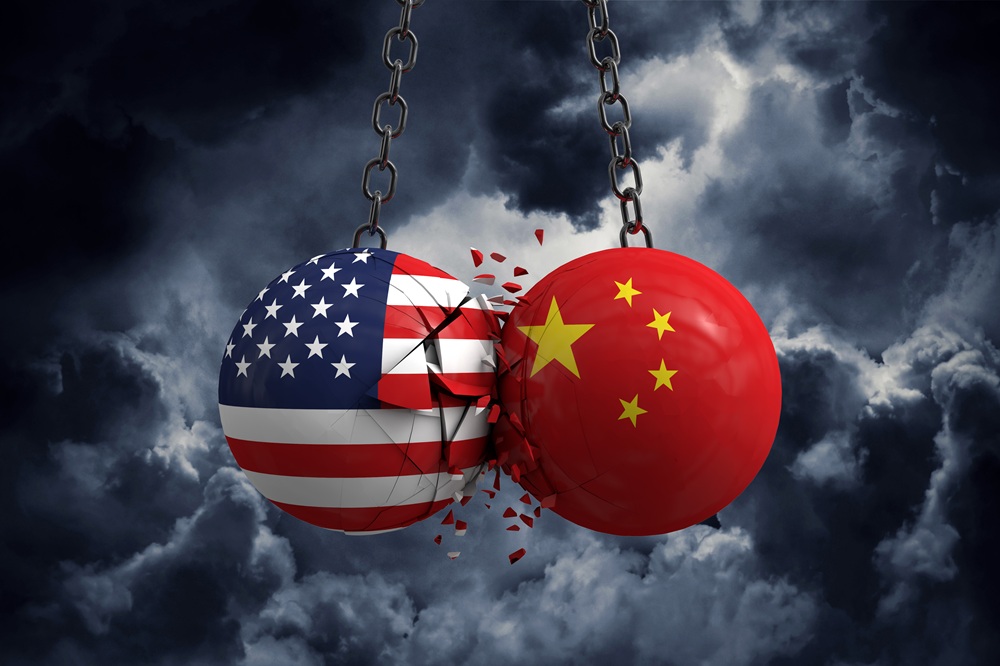
On February 28, 2026, as the joint US and Israeli attack began, the numbers on the screens started moving in ways that felt clinical, even as the reality on the ground with the tragic deaths of civilian casualties in Iran, felt anything but. Markets, as they say, do not have a moral compass, rather they have a weighing machine and right now, they are weighing the transition of the entire global economy from a "just-in-time" model to a "just-in-case" cycle.
What markets were signalling
On March 2, the index tape stayed cautious while defence rose. Historically, conflicts can speed up restocking and orders but how big it gets (and how fast) still depends on budgets, approvals and delivery bottlenecks.
The Winners
1. Hanwha Aerospace (012450.KS)
Hanwha is one of the more actively traded names linked to the “K-Defence” theme, a company markets increasingly view as a scalable supplier into a tightening global artillery and munitions cycle. Capacity and delivery credibility.
When replenishment becomes urgent, the ability to produce at scale often matters as much as the platform itself. Export demand tied to systems like the K9 Thunder and Chunmoo has reinforced the narrative of durable order flow even when outcomes still hinge on budgets, approvals and delivery timelines.
Key things that can move sentiment: order-book updates, production cadence, and any follow-on export announcements.
2. Northrop Grumman (NOC)
Northrop moved into focus as investors repriced exposure to strategic modernisation and large, long-running programs. Defence markets often seen as mission-critical can persist across cycles. It’s less about one quarter and more about whether momentum stays steady if modernisation priorities remain in place (and whether timelines shift if they don’t).
Key variables that can move sentiment: Procurement pace, contract timing, and program-related funding language.
3. RTX Corporation (RTX)
RTX returned to the centre of the tape as investors priced an interceptor replenishment cycle and the economics of high-tempo air defence. Attrition is expensive and when usage rates rise, governments typically have to replenish inventories and, in many cases, fund production expansion which can extend backlog and lift revenue visibility.
Key variables that can move sentiment: Replenishment orders, manufacturing expansion indicators, and delivery throughput.
4. Lockheed Martin (LMT)
Lockheed drew attention as markets focused on missile-defence demand and the question every procurement desk faces in a high-tempo environment: how fast can inventories be rebuilt? If utilisation stays elevated, the winners tend to be the contractors best positioned to scale production and deliver reliably. Lockheed’s missile defence exposure keeps it closely tied to that replenishment narrative.
Key variables that can move sentiment: production ramp signals, unit economics, and budget-driven order cadence.
5. BAE Systems (BA.L)
With an £83.6 billion backlog and a central role in the AUKUS submarine program, BAE moved into focus as parts of Europe signalled higher defence spending ambitions. The stock rose 6.11% to a 52-week high amid a “risk-off” rotation, with traders watching AUKUS milestones and European air and missile defence procurement, including “Sky Shield”.
Key variables that can move sentiment: A potential catalyst is any clear step-up in German spending that lifts order flow across BAE’s European units, while key risks include a sharp spike in UK gilt yields, renewed pound sterling volatility, or “threat of peace” profit-taking.
800
The Losers: not every ‘war stock’ rises
6. AeroVironment (AVAV)
AeroVironment surged 18% at the open before falling 17% intraday after reports that the US Space Force was reopening a US$1.4 billion contract. The move highlights how procurement processes and contract risk can drive volatility, even in supportive thematic environments.
7. Kratos Defence (KTOS)
Kratos sits in the drone and loitering munition theme that gained attention as the Middle East conflict intensified. The stock still sold off after earnings, highlighting a common defence-sector risk. Kratos announced a large follow-on equity offering in the US$1.2 billion to US$1.4 billion range, the move strengthens the balance sheet and can support future program investment.
For traders focused on short-term “conflict premium” narratives, dilution can quickly change the setup. Even when demand conditions appear supportive, the market may reprice the stock if each shareholder ultimately owns a smaller portion of the business.
8. Intuitive Machines (LUNR)
Some speculative space-tech names lagged as investors appeared to favour companies with more established defence-linked revenue.
9. Boeing (BA)
Boeing was down around 2.5% on the session. While its defence division is meaningful, its commercial business can be more sensitive to aviation demand, airspace disruptions and oil-price moves.
10. Spirit AeroSystems (SPR)
Spirit AeroSystems remains closely tied to the global aircraft production cycle as a major aerostructures supplier.Recent results showed widening losses despite higher sales, reflecting ongoing production cost increases on major aircraft programs. These pressures have weighed on investor confidence in the near-term outlook. The planned acquisition by Boeing may ultimately reshape the company’s position in the supply chain, but execution risk and production stability remain central to how the market prices the stock.
What to watch next
Escalation vs de-escalation: A shift toward diplomacy or ceasefire discussions can quickly change sentiment around defence stocks.
Oil and shipping: Energy spikes can tighten financial conditions and pressure cyclical sectors.
Budgets and awards: Price moves can sometimes precede contract decisions, with clarity arriving when awards are finalised.
Production capacity: Companies with proven production and delivery track records often attract the most investor attention.
Supply chain constraints: Rare earths, propulsion and electronics remain potential bottlenecks that can limit how quickly production scales.
The longer term lens
The 2026 Iran conflict is first and foremost a human tragedy. For markets, it may also represent a shift in how national security spending is prioritised within fiscal frameworks. If defence spending remains elevated over a multi year horizon, companies with scalable manufacturing capacity and integrated technology stacks could attract sustained investor attention. That said, markets move in cycles. Structural themes can persist, but they can also reprice quickly when assumptions change. Staying analytical and risk aware remains critical.
References to specific companies, sectors or market movements are provided for general market commentary only and do not constitute a recommendation, offer or solicitation to buy or sell any financial product.Market reactions to geopolitical or macroeconomic events can be volatile and unpredictable, and outcomes may differ materially from expectations.
2025 has seen a material decline in the fortunes of the greenback. A technical structure breakdown early in the year was followed by a breach of the 200-day moving average (MA) at the end of Q1. The index then entered correction territory, printing a three-year low at the end of Q2.
Since then, we have seen attempts to build a technical base, including a re-test of the end-of-June lows in mid-September. However, buying pressure has not been strong enough to push price back above the technically critical and psychologically important 100 level.
What the levels suggest from here
As things stand, the index remains more than 10% lower for 2025. On this technical view, the index may revisit the 96 area. However, technical levels can fail and outcomes depend on multiple factors.
US dollar index
Source: TradingView
The key question for 2026
The key question remains: are we likely to see further losses in the early part of next year and beyond, or will current support hold?
We cannot assess the US dollar in isolation and any outlook is shaped by internal and global factors, not least its relative strength versus other major currencies. Many of these drivers are interrelated, but four potential headwinds stand out for any US dollar recovery. Collectively, they may keep downside pressure in play.
Four headwinds for any US dollar recovery
1. The US dollar as a safe-haven trade
One scenario where US dollar support has historically been evident is during major global events, slowdowns and market shocks. However, the more muted response of the US dollar during risk-off episodes this year suggests a shift away from the historical norm, with fewer sustained US dollar rallies.
Instead, throughout 2025, some investors appearedto favour gold, and at other times, FX and even equities, rather than into the US dollar. If this change in behaviour persists through 2026, it could make recovery harder, even if global economic pressure builds over the year ahead.
2. US versus global trade
Trade policy is harder to measure objectively, and outcomes can be difficult to predict. That said, trade battles driven by tariffs on US imports are often viewed as an additional potential drag on the US dollar.
The impact may be twofold if additional strain is placed on the US economy through:
a slowdown in global trade volumes as impacted countries seek alternative trade relationships, with supply chain distortions that may not favour US growth
pressure on US corporate profit margins as tariffs lift costs for importers
3. Removal of quantitative tightening
The Fed formally halted its balance sheet reduction, quantitative tightening (QT), as of 1 December 2025, ending a program that shrank assets by roughly US$2.4 trillion since mid-2022.
Traditionally, ending QT is seen as marginally negative for the US dollar because it stops the withdrawal of liquidity, can ease global funding conditions, and may reduce the scarcity that can support dollar demand. Put simply, more dollars in the system can soften the currency’s support at the margin, although outcomes have varied historically and often depend on broader financial conditions.
4. Interest rate differential
Interest rate differential (IRD) is likely to be a primary driver of US dollar strength, or otherwise, in the months ahead. The latest FOMC meeting delivered the expected 0.25% cut, with attention on guidance for what may come next.
Even after a softer-than-expected CPI print, markets have been reluctant to price aggressive near-term easing. At the time of writing, less than a 20% chance of a January cut is priced in, and it may be March before we see the next move.
The Fed is balancing sticky inflation against a jobs market under pressure, with the headline rate back at levels last seen in 2012. The practical takeaway is that a more accommodative stance may add to downward pressure on the US dollar.
Current expectations imply around two rate cuts through 2026, with the potential for further easing beyond that, broadly consistent with the median projections shown in the chart below. These are forecasts rather than guarantees, and they can shift as economic data and policy guidance evolve.
Source: US Federal Reserve, Summart of Economic Projections
The “Magnificent Seven” technology companies are expected to invest a combined $385 billion into AI by the end of 2025.
Microsoft is positioning itself as the platform leader. Nvidia dominates the underlying AI infra. Google leads in research. Meta is building open-source tech. Amazon – AI agents. Apple — on-device integration. And Tesla pioneering autonomous vehicles and robots.
The “Big 4” tech companies' AI spending alone is forecast at $364 billion.
With such enormous sums pouring into AI, is this a winner-take-all game?
Or will each of the Mag Seven be able to thrive in the AI future?
Microsoft: The AI Everywhere Strategy
Microsoft has made one of the biggest bets on AI out of the Mag Seven — adopting the philosophy that AI should be everywhere.
Through its deep partnership with OpenAI, of which it is a 49% shareholder, the company has integrated GPT-5 across its entire ecosystem.
Key initiatives:
GPT-5 integration across consumer, enterprise, and developer tools through Microsoft 365 Copilot, GitHub Copilot, and Azure AI Foundry
Azure AI Foundry for unified AI development platform with model router technology
Copilot ecosystem spanning productivity, coding, and enterprise applications with real-time model selection
$100 billion projected AI infrastructure spending for 2025
Microsoft’s centrepiece is Copilot, which can now detect whether a prompt requires advanced reasoning and route to GPT-5's deeper reasoning model.
This (theoretically) means high-quality AI outputs become invisible infrastructure rather than a skill users need to learn.
However, this all-in bet on OpenAI does come with some risks. It is putting all its eggs in OpenAI's basket, tying its future success to a single partnership.
Elon Musk warned that "OpenAI is going to eat Microsoft alive"[/caption]
Google: The Research Strategy
Google’s approach is to fund research to build the most intelligent models possible. This research-first strategy creates a pipeline from scientific discovery to commercial products — what it hopes will give it an edge in the AI race.
Key initiatives:
Over 4 million developers building with Gemini 2.5 Pro and Flash
Ironwood TPU offering 3,600 times better performance compared to Google’s first TPU
AI search overviews reaching 2 billion monthly users across Google Search
DeepMind breakthroughs: AlphaEvolve for algorithm discovery, Aeneas for ancient text interpretation, AlphaQubit for quantum error detection, and AI co-scientist systems
Google’s AI research branch, DeepMind, brings together two of the world's leading AI research labs — Google Brain and DeepMind — the former having invented the Transformer architecture that underpins almost all modern large language models.
The bet is that breakthrough research in areas like quantum computing, protein folding, and mathematical reasoning will translate into a competitive advantage for Google.
Today, we're introducing AlphaEarth Foundations from @GoogleDeepMind , an AI model that functions like a virtual satellite which helps scientists make informed decisions on critical issues like food security, deforestation, and water resources. AlphaEarth Foundations provides a… pic.twitter.com/L1rk2Z5DKk
Meta has made a somewhat contrarian bet in its approach to AI: giving away their tech for free. The company's Llama 4 models, including recently released Scout and Maverick, are the first natively multi-modal open-weight models available.
Key initiatives:
Llama 4 Scout and Maverick - first open-weight natively multi-modal models
AI Studio that enables the creation of hundreds of thousands of AI characters
$65-72 billion projected AI infrastructure spending for 2025
This open-source strategy directly challenges the closed-source big players like GPT and Claude. By making AI models freely available, Meta is essentially commoditizing what competitors are trying to monetize. Meta's bet is that if AI models become commoditized, the real value will be in the infrastructure that sits on top. Meta's social platforms and massive user base give it a natural advantage if this eventuates.
Meta's recent quarter was also "the best example to date of AI having a tangible impact on revenue and earnings growth at scale," according to tech analyst Gene Munster.
H1 relative performance of the Magnificent Seven stocks. Source: KoyFin, Finimize
However, it hasn’t been all smooth sailing for Meta. Their most anticipated release, Llama Behemoth, has all but been scrapped due to performance issues. And Meta is now rumored to be developing a closed-source Behemoth alternative, despite their open-source mantra.
Amazon: The AI Agent Strategy
Amazon’s strategy is to build the infrastructure for AI that can take actions — booking meetings, processing orders, managing workflows, and integrating with enterprise systems.
Rather than building the best AI model, Amazon has focused its efforts on becoming the platform where all AI models live.
Key initiatives:
Amazon Bedrock offering 100+ foundation models from leading AI companies, including OpenAI models.
$100 million additional investment in AWS Generative AI Innovation Center for agentic AI development
Amazon Bedrock AgentCore enabling deployment and scaling of AI agents with enterprise-grade security
$118 billion projected AI infrastructure spending for 2025
The goal is to become the “orchestrator” that lets companies mix and match the best models for different tasks.
Amazon’s AgentCore will provide the underlying memory management, identity controls, and tool integration needed for these companies to deploy AI agents safely at scale.
This approach offers flexibility, but does carry some risks. Amazon is essentially positioning itself as the middleman for AI. If AI models become commoditized or if companies prefer direct relationships with AI providers, Amazon's systems could become redundant.
Nvidia: The Infra Strategy
Nvidia is the one selling the shovels for the AI gold rush. While others in the Mag Seven battle to build the best AI models and applications, Nvidia provides the fundamental computing infrastructure that makes all their efforts possible.
This hardware-first strategy means Nvidia wins regardless of which company ultimately dominates. As AI advances and models get larger, demand for Nvidia's chips only increases.
Key initiatives:
Blackwell architecture achieving $11 billion in Q2 2025 revenue, the fastest product ramp in company history
New chip roadmap: Blackwell Ultra (H2 2025), Vera Rubin (H2 2026), Rubin Ultra (H2 2027)
Data center revenue reaching $35.6 billion in Q2, representing 91% of total company sales
Manufacturing scale-up with 350 plants producing 1.5 million components for Blackwell chips
With an announced product roadmap of Blackwell Ultra (2025), Vera Rubin (2026), and Rubin Ultra (2027), Nvidia has created a system where the AI industry must continuously upgrade to Nvidia’s newest tech to stay competitive.
This also means that Nvidia, unlike the others in the Mag Seven, has almost no direct AI spending — it is the one selling, not buying.
However, Nvidia is not indestructible. The company recently halted its H20 chip production after the Chinese government effectively blocked the chip, which was intended as a workaround to U.S. export controls.
Apple: The On-Device Strategy
Apple's AI strategy is focused on privacy, integration, and user experience. Apple Intelligence, the AI system built into iOS, uses on-device processing and Private Cloud Compute to help ensure user data is protected when using AI.
Key initiatives:
Apple Intelligence with multi-model on-device processing and Private Cloud Compute
Enhanced Siri with natural language understanding and ChatGPT integration for complex queries
Direct developer access to on-device foundation models, enabling offline AI capabilities
$10-11 billion projected AI infrastructure spending for 2025
The drawback of this on-device approach is that it requires powerful hardware from the user's end. Apple Intelligence can only run on devices with a minimum of 8GB RAM, creating a powerful upgrade cycle for Apple but excluding many existing users.
Tesla: The Robo Strategy
Tesla's AI strategy focuses on two moonshot applications: Full Self-Driving vehicles and humanoid robots.
This is the 'AI in the physical world' play. While others in the Mag Seven are focused on the digital side of AI, Tesla is building machines that use AI for physical operations.
Tesla’s Optimus robot replicating human tasks
Key initiatives:
Plans for 5,000-10,000 Optimus robots in 2025, scaling to 50,000 in 2026
Robotaxi service targeting availability to half the U.S. population by EOY 2025
AI6 chip development with Samsung for unified training across vehicles, robots, and data centers
$5 billion projected AI infrastructure spending for 2025
This play is exponentially harder to develop than digital AI, and the markets have reflected low confidence that Tesla can pull it off.
TSLA has been the worst-performing Mag Seven stock of 2025, down 18.37% in H1 2025.
However, if Tesla’s strategy is successful, it could be far more valuable than other AI plays. Robots and autonomous vehicles could perform actual labour worth trillions of dollars annually.
The $385 billion Question
The Mag Seven are starting to see real revenue come in from their AI investments. But they're pouring that money (and more) back into AI, betting that the boom is just getting started.
The platform players like Microsoft and Amazon are betting on becoming essential infrastructure. Nvidia’s play is to sell the underlying hardware to everyone. Google and Meta compete on capability and access. While Apple and Tesla target specific use cases.
The $385 billion question is which of the Magnificent Seven has bet the right way? Or will a new player rise and usurp the long-standing tech giants altogether?
You can access all Magnificent Seven stocks and thousands of other Share CFDs on GO Markets.
Firmus Technologies is building AI-powered data centre infrastructure in Tasmania, and it may be one of the most strategically positioned tech companies in Australia right now.
Firmus is an Nvidia Cloud Partner and has joined the GPU maker's Lepton marketplace. The company has designed its modular, liquid-everywhere AI Factory platform to evolve with Nvidia's latest architectures, including Nvidia Spectrum-X Ethernet networking.
A September 2025 raise of A$330m closed at a post-money valuation of A$1.85 billion for the company. By November 2025, after a further A$500m raise, that valuation had trebled to approximately A$6 billion.
A subsequent A$100m investment from Maas Group in early 2026 confirmed the November valuation. Firmus is reported to be contemplating an ASX IPO within the next 12 months and, given the A$6 billion private valuation, any public raise is expected to be well above A$1 billion.
With Australia's growing demand for sovereign AI compute capacity and Tasmania's cool climate and renewable energy advantage for large-scale data centre operations, Firmus stands as one of the largest-scale ASX IPO candidates in 2026.
However, although market interest in Firmus appears to be growing, timing is everything when it comes to IPOs. Watch for confirmation of exact IPO timing, AI data centres sentiment, and whether Nvidia signals deepening its involvement as a strategic anchor investor post-listing.
2. Rokt
Sydney-founded Rokt has quietly become one of Australia's most valuable private tech companies. The e-commerce adtech platform aimed at helping brands monetise the “transaction moment” is now valued at ~US$7.9 billion.
A term sheet prepared by MA Financial projected an exit share price of US$72 under base-case scenarios, when shares are freed from escrow in November 2027.
Rokt is expected to potentially dual-list in the US and on the ASX in 2026, possibly as soon as the first half of the year. IG The most widely discussed structure is a primary Nasdaq listing with an ASX CDI (CHESS Depositary Interest) structure for Australian investors, rather than a full dual listing.
Rokt’s revenue for the year ending August 2025 is projected at US$743m (up 48% year-over-year), with EBITDA forecast at US$100m and a gross profit margin of approximately 43%. It is currently projected to cross the $US1 billion annual revenue milestone by August 2026.
Amazon, Live Nation, and Uber are all reported to be Rokt customers, and the company has expanded rapidly across North America and Europe.
Whether Rokt opts for a primary Nasdaq listing with an ASX CDI structure, or a full dual listing, could significantly affect liquidity and local investor access.
3. Greencross
Greencross, the business behind Petbarn, City Farmers, and Greencross Vets, is preparing to relist on the ASX after being taken private by US private equity firm TPG in 2019.
TPG currently owns 55% of Greencross, while AustralianSuper and the Healthcare of Ontario Pension Plan (HOOPP) hold the remaining 45%.
The company reported revenue of A$2 billion for the 2025 financial year, a modest increase from A$1.95 billion in 2024. TPG paid A$675 million in equity value for the business in 2019; it sold a 45% stake in 2022 at a valuation of more than A$3.5 billion. The proposed IPO implies a valuation of more than A$4 billion.
TPG is targeting an initial public offering of at least A$700 million. The IPO will mark Greencross's return to the ASX after an eight-year absence. TPG's relatively small raise size suggests the firm is banking on strong aftermarket performance before fully exiting.
TPG's exit timeline announcement is still a watch for whether a 2026 IPO is on the cards. And whether the company pursues a traditional IPO or a trade sale, which remains an alternative path.
4. Morse Micro
Morse Micro is a Sydney-based semiconductor company developing Wi-Fi HaLow chips designed for IoT applications across agriculture, logistics, smart cities, and industrial monitoring.
Morse Micro held a Series C round in September 2025, raising US$88 million, followed in November 2025 by a US$32 million pre-IPO raise, taking total funding to over A$300 million.
It is targeting an ASX listing in the next 12–18 months. The Series C was led by Japanese chip giant MegaChips and the National Reconstruction Fund Corporation.
Global IoT device connections forecast to exceed 30 billion by 2030, and Morse Micro would be a rare ASX-listed pure-play semiconductor company, which could attract significant interest from tech-focused fund managers.
Global IoT market forecast (in billions of connected IoT devices) | IOT Analytics
Morse Micro’s Revenue traction with tier-one hardware partners ahead of listing is a watch, and whether the company seeks a concurrent US listing given the depth of US semiconductor investor appetite.
5. Bison Resources
Bison Resources is a newly incorporated US-focused gold and precious metals explorer currently in the middle of its ASX IPO.
The offer closes on 20 March 2026, with an ASX listing targeted for mid-April 2026. At an indicative market capitalisation of A$13.25 million on full subscription, Bison is the most speculative name on this list by a significant margin.
The company holds four exploration projects in north-east Nevada, within the Carlin Trend (one of the world's most prolific gold-producing belts), responsible for approximately 75% of US gold output.
The IPO seeks to raise A$4.5 to A$5.5 million (22.5 to 27.5 million shares at A$0.20 per share). The team has prior experience at Sun Silver (ASX: SS1) and Black Bear Minerals, giving it a track record in ASX junior mining listings out of Nevada.
Australia's 2026 IPO calendar spans the full risk spectrum. A Nvidia-backed AI infrastructure play, a billion-dollar e-commerce platform, and a junior gold explorer with its IPO already underway.
Each candidate reflects a different stage of maturity and a different investor profile. Together, they suggest the ASX could see a meaningful injection of new listings across sectors that have been largely absent from the local market in recent years.
Oil prices tend to rise when demand is strong, supply is constrained or geopolitical events disrupt normal trade flows. In this case, the US and Israel appeared to act pre-emptively in what they saw as a defensive move. The broader market impact has been felt more widely.
When oil prices move, they rarely move in isolation. Higher crude prices can affect inflation, central bank expectations, shipping costs and corporate margins across the global economy.
What is happening
There are three broad ways companies can benefit from higher oil prices:
1. Producing oil and gas, by selling the commodity at a higher price 2. Providing services and equipment to producers 3. Transporting oil around the world
Each of the stocks below represents one of those exposure types, with a different risk profile when crude climbs.
1. Exxon Mobil (NYSE: XOM)
Exxon Mobil is one of the world’s largest integrated oil companies, involved in everything from exploring for and producing oil to refining it into fuel and producing chemicals. When oil prices rise, its upstream business may benefit from wider margins, while its size and diversification can help cushion weaker spots in the cycle.
Exxon has major positions in growth regions such as the US Permian Basin and large offshore projects, which are designed to deliver relatively low-cost barrels over many years. When prices are high, low-cost production may support free cash flow and the company’s capacity for dividends, buybacks or further investment.
Exxon Mobil (XOM) vs. Brent Crude 6-month performance
Over the past year, Exxon Mobil has outperformed Brent crude, with its share price rising nearly 35% compared with a 30% increase in Brent crude. As of the date of writing, both are trading just over 3% below their all-time highs, although Exxon remains closer to its 52-week high than Brent. | Source: Share Trader
Consensus: Buy
According to TradingView, analyst sentiment towards Exxon is broadly positive, with a consensus Buy rating. Of the 31 analysts tracked, 15 rate the stock as Strong Buy or Buy, while 13 rate it Hold.
The positive view is linked to Exxon’s balance sheet strength and higher-margin production, with the most optimistic analysts projecting a 1-year price target as high as US$183.00. However, a small minority of 3 analysts has issued a Sell or Strong Sell rating, contributing to an average price target of US$145.00, which sits about 3.6% below the current trading price.
Exxon Mobil price forecast and ratings as of Wednesday, 11 March 2026 | Source: TradingView
2. Chevron (NYSE: CVX)
Chevron is another global integrated major that has benefited from the recent move higher in crude, with its shares trading near 52-week highs. Like Exxon, Chevron operates across the value chain, including upstream production, refining and marketing. Chevron’s completed acquisition of Hess adds Guyana and other upstream assets, which some analysts see as supportive over time, although the earnings impact remains subject to integration, project execution and commodity-price risks.
In an environment where oil and gas prices can be volatile, that diversification may help smooth earnings while still providing leverage to stronger energy prices.
Exxon Mobil vs Chevron performance, 6-month chart
Consensus: Buy
Chevron is viewed similarly to Exxon, with broker sentiment remaining broadly constructive. Recent TradingView aggregates show 30 analysts covering the stock over the past three months, with 17 rating it Strong Buy or Buy, 11 at Hold, 1 at Sell and 1 at Strong Sell. Analysts have highlighted its diversified portfolio and the potential contribution from Hess, although commodity-price volatility and execution risks may keep some more cautious.
Chevron price forecast and ratings as of Wednesday, 11 March 2026. | Source: TradingView
3. SLB (NYSE: SLB)
Higher oil prices do not only affect producers. In this case, SLB (formerly Schlumberger) is one of the world’s largest oilfield services companies, providing technology, equipment and services that help producers find and extract hydrocarbons more efficiently. When crude trends higher, producers may increase drilling and completion activity, which can lift demand for SLB’s services and software. Recent commentary has also pointed to the company’s growing digital business and global exposure, which may support earnings growth if the upcycle continues.
Consensus: Buy
According to TradingView, analyst consensus on SLB is Buy, indicating broadly positive sentiment. Of the 33 analysts tracked, 27 rate the stock Strong Buy or Buy, while 4 rate it Hold and 2 rate it Sell or Strong Sell.
Analyst sentiment appears to reflect expectations around SLB’s position as a broader technology partner. The average price target of US$55.71 implies 15.8% upside from current levels, while the highest target stands at US$74.00. These forecasts appear to be linked to expectations of increased international drilling activity and a recovery in offshore deepwater markets.
SLB analysts bullish on digital and international growth | TradingView
4. Baker Hughes (NYSE: BKR)
Baker Hughes is another major oilfield services and equipment provider, with additional exposure to industrial segments such as LNG and power infrastructure. Even when oil prices are not at extreme highs, advances in drilling technology and lower break-even costs have helped keep many shale plays profitable, supporting demand for its services.
The company has been described as well positioned because of its balance sheet and its exposure to ongoing exploration and production activity. In a period of higher, or even stable-to-firm, oil prices, that mix of services and energy technology may create several revenue drivers.
Consensus: Strong Buy
Broker sentiment towards Baker Hughes is broadly positive, similar to SLB. More than 75% of covering analysts rate the stock as a Buy or Strong Buy, with the remainder generally at Hold. Analysts have pointed to its exposure to both traditional oilfield services and energy and industrial technology, including LNG infrastructure.
[CHART]
Transport and shipping exposure
5. Global oil tanker operators
Oil tanker companies can benefit when higher prices, OPEC+ policy shifts and geopolitical tensions increase long-distance shipments and disrupt usual routes.
Recent reports have pointed to stronger freight rates and high volumes of oil in transit, as increased production from the Middle East and supply growth from the US, Brazil, Guyana and Canada flow towards Asian markets. That ‘tonne-mile’ demand may support tanker day rates and profitability even when the broader energy market is volatile.
Consensus: N/A
This is a broader industry category rather than a single publicly traded stock, so there is no single broker consensus for it. Analyst views would need to be assessed at the company level, such as Frontline plc (FRO), Euronav (EURN) or Scorpio Tankers (STNG). More broadly, the sector is often viewed as cyclical, although current conditions may support freight rates when geopolitical disruptions lengthen shipping routes.
6. Woodside Energy (ASX: WDS)
Woodside adds an Australia-based name with global LNG and oil exposure. Its 2024 full-year results showed underlying profit down 13%, primarily because of lower realised oil and gas prices, according to the company’s full-year results announcement. That highlights how sensitive earnings can be to commodity price realisation.
If crude and related energy prices strengthen, Woodside’s earnings outlook may improve, although the extent of that change will still depend on company-specific factors and realised pricing.
Consensus: Hold
In contrast to the larger US majors, broker sentiment towards this Australian-based producer is more cautious, with consensus generally at Hold. Most analysts favour maintaining existing positions rather than increasing exposure. That more measured view is often linked to its LNG pricing exposure, softer realised commodity prices and longer-term regulatory and decarbonisation pressures.
[CHART]
Risks and constraints
Higher oil prices are not a free ride for these stocks.
If prices spike too far, too fast, they may trigger demand destruction and policy responses that weigh on future profits.
Political decisions from OPEC+ or major producers mau reverse a rally by increasing supply.
Services and tanker companies are highly cyclical. When the cycle turns, pricing power can fade quickly.
In other words, these names may benefit from higher oil prices, but they also carry sector-specific, geopolitical and company-level risks that deserve close attention.
Key market observations
Higher oil prices often support integrated majors such as Exxon and Chevron through stronger upstream margins and diversified cash flows.
Oilfield services stocks such as SLB and Baker Hughes may see stronger demand when producers increase drilling and completion activity.
Tanker operators may benefit from higher freight rates when geopolitics and supply shifts increase long-haul shipments.
These stocks can be volatile, so diversification and time horizon remain important during commodity upcycles.
References in this article to Exxon Mobil, Chevron, SLB, Baker Hughes, Woodside, tanker operators, analyst consensus ratings and price targets are included for general market commentary only and do not constitute a recommendation or offer in relation to any financial product or security. Third-party data, including consensus ratings and target prices, may change without notice and should not be relied on in isolation. Energy and shipping exposures are cyclical and can be materially affected by commodity price volatility, realised pricing, production changes, project execution, geopolitical disruptions, freight market conditions, regulatory developments and shifts in investor sentiment. Any views about potential beneficiaries of higher oil prices are subject to significant uncertainty.
Oil smashed US$100 a barrel as US-Israeli strikes on Iran shut down the Strait of Hormuz, triggering the biggest single-day crude spike since the Russian invasion of Ukraine.
Quick facts
Brent Crude intraday peak: US$119.50/bbl (up ~50% in 10 days)
Reported vessel traffic through the Strait of Hormuz fell to <20% of average
Analysts estimate up to ~20% of global seaborne oil flows could be affected if disruption persists (largest since the 1956 Suez Crisis)
Why have oil prices spiked?
Oil markets woke up on 9 March 2026 to joint U.S.-Israeli strikes on Iranian oil depots that sent Brent crude to an intraday peak of US$119.50 a barrel (its highest level since the start of the Russia-Ukraine war) before settling back near US$90.
Iran's Revolutionary Guard has threatened to target any tanker transiting the Strait of Hormuz, collapsing vessel traffic to near-zero.
The strait carries roughly 20% of the world's daily seaborne oil supply, and analysts are describing the disruption as the largest since the Suez Crisis of 1956–57. Crude had already risen around 16% in the week before the strikes as markets priced in escalating tensions.
ExxonMobil's chief economist, Tyler Goodspeed, has said the distribution of probable outcomes skews heavily toward the Strait remaining effectively closed for longer than markets currently expect.
Meanwhile, Donald Trump has played down the need to release strategic petroleum reserves, calling any short-term price pain a small cost for global safety. The G7 is discussing a coordinated SPR release, which briefly pulled prices back toward US$110 before late-session trading moved them lower on fresh Trump commentary about a potentially “swift end” to the conflict.
Biggest single day crude oil spike since 2022 | TradingView
Market Reaction
The ASX response has been sharply split. The broader ASX 200 fell as investors priced in inflation and potential demand destruction, with materials stocks like BHP sinking close to 6%. Energy was the only sector in the green. The IMF estimates that every sustained 10% rise in oil prices adds 0.4% to global inflation and reduces global growth by 0.15%.
If oil holds above US$100 for an extended period, recession risk in major importing economies could rise materially. ASX energy investors are navigating a world where the same tailwind for producers could become a headwind for global demand.
S&P/ASX 200 vs S&P/ASX 200 Energy Index | TradingView
Top 5 ASX energy stocks to watch
1. Woodside Energy Group (ASX: WDS)
Woodside is Australia’s largest listed oil and gas producer and is often closely watched when energy prices rise. Woodside operates Pluto LNG in the Pilbara with a 90% stake, the North West Shelf LNG project, and a growing international portfolio. Shares hit a fresh 52-week high and have risen 33% since January.
Fully franked dividends add yield support; the company recently paid an 83.4-cent-per-share final dividend. For cautious investors, Woodside is a potential entry point in the sector right now.
2. Santos Ltd (ASX: STO)
Santos is the ASX's second-largest oil and gas producer with a market cap of nearly A$23 billion, and it offers a compelling production growth story on top of the price tailwind.
The Barossa gas project shipped its first LNG cargo in January 2026, and production is expected to grow around 30% by 2027 as Barossa and the Pikka project in Alaska ramp up together.
CEO Kevin Gallagher sold A$5.6 million in stock in late February to cover personal tax obligations, which some investors have flagged as a caution signal, but the growth fundamentals remain intact.
3. Karoon Energy (ASX: KAR)
A mid-cap pure-play oil producer with 100% interests in the Bauna and Patola offshore oil fields in Brazil's Santos Basin, plus the Who Dat assets in the Gulf of Mexico, it was the biggest mover on the entire ASX 200 in recent sessions.
With a market cap near A$1.25 billion and a Price to Earnings (P/E) ratio of 7, the stock is extraordinarily sensitive to oil price movements. Karoon generated a free cash flow margin of approximately 45% against a base case of US$65 per barrel. At current prices, the cash flow profile could improve dramatically.
A new dividend of A$0.031 per share has been declared alongside 2026 production guidance. The risk is symmetrical: if the war premium fades and oil drifts back toward the mid-US$60s, the pullback could be as sharp as the rally.
4. Ampol Ltd (ASX: ALD)
Ampol is Australia's largest integrated fuel company, operating the Lytton oil refinery in Brisbane alongside a national fuel retail and distribution network and Z Energy in New Zealand.
Higher oil prices are a double-edged sword for Ampol. They improve crude inventory value and refining margins, but can compress consumer demand over time.
A planned A$1.1 billion acquisition of EG Australia's fuel and convenience network adds a structural growth catalyst independent of the oil price. A 100%-franked trailing yield of 3.2% could also provide income support.
5. Beach Energy (ASX: BPT)
Beach Energy has underperformed the broader ASX energy sector over the past year, weighed down by reserve replacement challenges and a difficult recent earnings period.
However, the company beat half-year FY2026 estimates by 13.5%, and management maintained full-year production guidance of 19.7–22.0 million barrels of oil equivalent.
Beach's asset base spans the Cooper and Eromanga Basins, the Otway Basin, the Perth Basin's Waitsia LNG export project, and New Zealand.
A 6.1% dividend yield with a payment due in March 2026, and the stock's low beta of 0.20 means it could offer materially less volatility than peers.
CEO Brett Woods has flagged M&A interest in East Coast gas assets and a target of 35% emissions intensity reduction by 2030. A sustained high-oil environment could arrest Beach's production decline trend.
What to watch next
Energy markets are moving on fear and geopolitics rather than fundamentals, which means the trade can reverse as fast as it started. The key question is whether this is a brief war premium or the start of a sustained structural disruption.
A prolonged Hormuz closure could push Brent even higher and keep ASX energy stocks elevated. A swift diplomatic resolution or coordinated G7 SPR release could snap oil back downwards and reverse much of the recent move.
Sitting over both scenarios is the question of recession: if oil holds above US$100 for six to eight weeks, markets may begin pricing in central bank responses and demand destruction, which could ultimately weigh on the Energy sector that is outperforming today.