Thirteen ASX-listed companies report this August, with margins, dividends and guidance in focus.
Australia's August reporting season is moving into focus against a market running at different speeds. Resource stocks delivered their strongest financial-year performance since 2006, while some industrial and consumer-facing businesses continued to navigate persistent inflation.
Here is the macro backdrop, the key themes across major sectors and the reporting calendar.
The August 2026 macro environment
Two forces are set to shape how markets interpret this season's results: the interest rate outlook and the effect of household cost pressures on company revenue, margins and guidance.
The Reserve Bank of Australia (RBA) increased the cash rate three times in 2026, lifting it to 4.35% in May before leaving it unchanged in June.
The next monetary policy decision is due on 4 August 2026, during the early stages of reporting season. This may increase the significance of company commentary on funding costs and consumer demand.
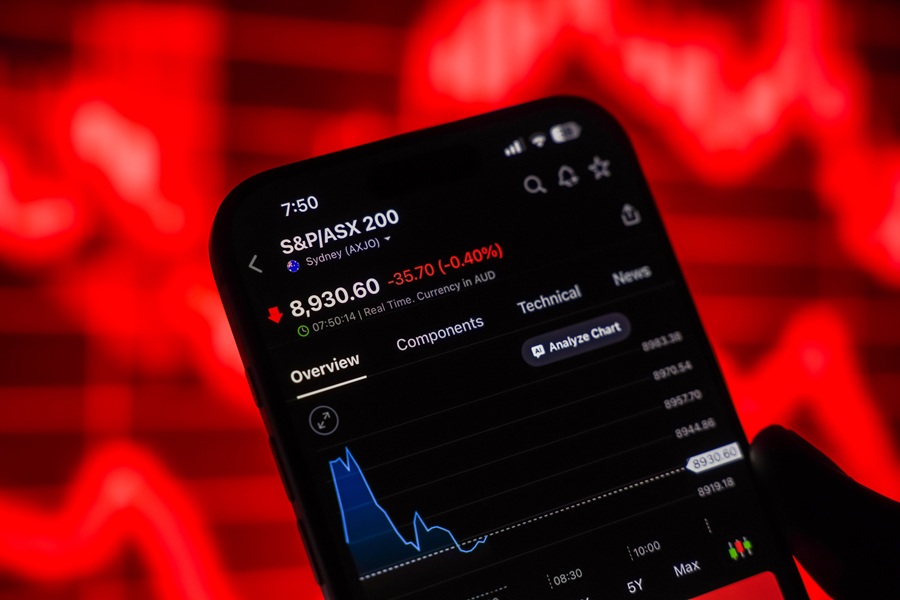
The S&P/ASX 200 Index recorded a total return of 6.1% during the 2025 to 2026 financial year (FY26). This was below its longer-term average total return of about 9.6%.
Performance varied considerably by sector. Resources outperformed, while several technology, healthcare and consumer-facing companies had a more difficult year.
Higher borrowing costs and persistent inflation continue to place pressure on household budgets.
Consumer-facing companies may report softer sales volumes, even where higher prices have supported headline revenue. Commentary on customer demand, discounting and margins may therefore be closely watched.
After a period of uneven earnings growth, some market forecasts point to stronger earnings growth during the 2026 to 2027 financial year (FY27).
A result that meets FY26 expectations may still receive a cautious market reaction if the outlook for revenue, margins or cash flow weakens.
EBIT vs EBITDA: Know what the numbers show
Learn when companies report, how to read the headline numbers and what may shape the market reaction.
Key themes across major sectors
Select a sector to explore some of the issues that may feature in company results and management commentary.
Banking
Note: While Commonwealth Bank (CBA) releases its full-year results, peer banks ANZ, NAB and Westpac operate on a different financial calendar and will provide third-quarter (Q3) trading updates this month.
- Net interest margins: Competition for deposits and mortgages may continue to affect net interest margins (NIMs), which measure the difference between interest earned and interest paid.
- Bad debts and credit provisions: Arrears, impaired loans and provisions may provide further information about household and business credit conditions.
- Capital management: Investors may look for updates on dividends, surplus capital and share buyback programs, alongside the outlook for credit growth.
Materials and mining
- Commodity demand: Global industrial activity may remain an important influence on commodity prices, revenue and guidance.
- Copper investment: Companies may provide further detail on copper projects, development costs and expected production.
- Iron ore costs: Unit costs and operational discipline may remain in focus as iron ore prices fluctuate.
- Cost inflation: C1 cash costs and all-in sustaining costs (AISC) may show how labour, energy and equipment expenses are affecting margins.
Consumer and retail
- Changing spending patterns: Consumers may continue to prioritise essential purchases and lower-priced products over some discretionary categories.
- Volume and price: Revenue growth may reflect higher prices rather than an increase in the number of products sold.
- Margin management: Labour, supply chain and input costs may affect how effectively retailers protect margins.
Healthcare and real estate
- Plasma margins: Collection costs, volumes and operating efficiency may remain important for companies exposed to plasma-derived therapies.
- Data centre investment: Data centre development and capital expenditure (capex) may feature in commentary from some industrial and logistics property groups.
- Property valuations: Interest rates, capitalisation rates and funding costs may influence valuations and development decisions.
Dividend expectations and payout resilience
Dividend policies vary significantly across companies and sectors. A single payout ratio range may not accurately represent the broader S&P/ASX 200.
Headline dividends are therefore only one part of the picture. Other considerations include cash flow, debt, capital expenditure (capex) requirements, franking levels and the company's stated payout policy.
Typical ASX 200 payout ratio band
Indicative range: 60% to 80% of net profit after tax (NPAT)Companies with strong operating cash flow, manageable debt and fewer major investment requirements may have greater flexibility to maintain dividends.
This does not guarantee that current payout or franking levels will continue.
Weaker cash generation, rising capex, higher financing costs or declining margins may place pressure on dividends or franking levels.
Any change to the dividend can be assessed alongside the company's balance sheet, cash flow statement and outlook.
The late July and August 2026 reporting calendar
The following calendar covers the 13 large ASX-listed companies that GO Markets is tracking this season, with reporting dates between 29 July and 27 August.
Result types include half-year 2026 (HY26), FY26 and Q3 updates.
| Ticker | Company | Sector | Result | Indicative date |
|---|---|---|---|---|
| RIO | Rio Tinto | Materials | HY26 | 29 July |
| WBC | Westpac Banking Corp | Banking | Q3 update | 10 August |
| CBA | Commonwealth Bank | Banking | FY26 | 12 August |
| ANZ | ANZ Group Holdings | Banking | Q3 update | 13 August |
| TLS | Telstra Group | Communications | FY26 | 13 August |
| NAB | National Australia Bank | Banking | Q3 update | 17 August |
| BHP | BHP Group | Materials | FY26 | 18 August |
| CSL | CSL Limited | Healthcare | FY26 | 18 August |
| GMG | Goodman Group | Real estate | FY26 | 20 August |
| FMG | Fortescue | Materials | FY26 | 24 August |
| WDS | Woodside Energy | Energy | HY26 | 25 August |
| WOW | Woolworths Group | Consumer staples | FY26 | 26 August |
| WES | Wesfarmers | Consumer discretionary | FY26 | 27 August |
Five minutes. Five checks. Clearer results.
Explore headline figures, cash flow, guidance and market reaction.

Disclaimer: Articles are from GO Markets analysts and contributors and are based on their independent analysis or personal experiences. Views, opinions or trading styles expressed are their own, and should not be taken as either representative of or shared by GO Markets. Advice, if any, is of a ‘general’ nature and not based on your personal objectives, financial situation or needs. Consider how appropriate the advice, if any, is to your objectives, financial situation and needs, before acting on the advice.