IntroductionSo, what is a Trading Edge?There is much written and many videos on social media that are out there singing the praises of developing a trading edge, and why it is a must if you want trading success, BUY in terms of practical “how do a get one” advice, most that is written seems to fall short of something substantive that you as a trader can work with.When you read articles discussing the concept of an "edge," they're talking about having some kind of advantage over other market participants; after all, there are always winners and losers in every trade.However, many traders are often mistakenly informed that edge relates solely to a system, but the reality is that it encompasses so much more than that. While systems certainly matter, your edge also includes how you think, act, and execute under pressure when YOUR real money is on the line.Your advantage may stem from speed, knowledge, technology, or experience, or better still a combination of all of these, the key point here is that you're not trading like so many others without the appropriate things in place and the consistency that is required when trading any asset class, on any timeframe to achieve on-going positive outcomes.Here's something worth considering before we have a deeper dive into your SEVEN secrets. Simply having a plan, trading it consistently, and evaluating it regularly gives you an advantage over more than 75% of traders out there. Most market participants lack these basic but critical elements of good trading practice. Just doing these fundamental things already puts you ahead of most, but refining further will truly set you apart from the crowd.At its core, a trading edge can be defined as a consistent, testable advantage that improves your odds over time. It's not about achieving perfection but developing repeatability in results and establishing statistically positive, i.e. evidence-based action that will work in your favour.So, despite what you may have seen or heard previously, a complete edge combines idea generation, timing, risk management, and execution; it's not just about focusing on high probability entries. It's a whole process, not a single isolated rule or signal.Just to give an example, a trading system that wins only 48% of the time may not seem that impressive on the surface to many, but if it consistently delivers a 2.5:1 reward-to-risk ratio can still achieve long-term profitability. The key issue in this example is the combination of numbers that creates the result, AND the word consistently.That IS an edge.In this article, we will explore SIX things that are not so regularly talked about in combination, this is the difference, and an approach that can move you towards creating such an edge.As we move through each of these, use this as your trading checklist for potentially taking action on the things that you need to take to the next level, and so take affirmative steps to sharpen your edge.Secret #1: An Edge Is Something You Build, Not Something You FindAs traders, we are always looking for the “holy grail”, that system or indicator that means we will be a success. As previously discussed, that is NOT what constitutes an edge. We need to let go of the idea that there's something magical waiting to be discovered and get to work on the things we need to.Your edge comes from testing, refining, and aligning strategies with your personal strengths and market access. The best edges are customised to your specific goals and circumstances, not simply downloaded from someone else's playbook, you may have heard on a webinar, conference or TikTok post.Your strategies should be a natural fit with your daily routine, available tools, trading purposes, and emotional style. If your approach you choose clashes with your lifestyle, mindset or experience, your execution and results will invariably suffer when you are in the heat of the market action and have decisions to make. For example, if you are a trader working a full-time job, it may be wise to either build a 4-hour chart trend model that matches your limited availability, consider some form of automation or restrict yourself to small windows of opportunity on very short timeframes for times that you can ringfence.We often come across systems that look attractive on the surface. When you copy others, you might get their trades, but you won't have their conviction (belief in your trading system is critical in terms of execution discipline) or context, e.g., their access to markets, and so you will find that you won't match their published results.Without the required deeper understanding of why a strategy works, you'll struggle to stick with it through the inevitable trades that don’t go your way, and drawdowns that WILL always test your resolve to keep with any system.So, the key takeaway is that you must make the investment in time, in yourself as a trader and do the work as you move towards building your edge. There are no shortcuts!Secret #2: Probability of Your Edge Is Only as Good as Your DataData that you can use in your decision-making for system development and refinement can come from accessing historical test data, but more importantly, YOUR results in live market trading (whether from journaling or automated tracking).The strength of this in developing an edge depends directly on two key things.Firstly, on data being clean, i.e. the key numbers relating to what happened, and sufficient detail with a sufficient critical mass of results that allows you to see beyond the profit/loss of a handful of trades. The meticulous recording to a high quality of this evidence makes it a priority if you are to create something meaningful on which to base decisions.Poor data creates false confidence in any system developed on such with fragile strategy and forces you to rely on guesswork to fill in any gaps or because you simply haven’t got enough numbers on which to make a strategic decision.Think about this for a moment, if you have 60 trades, across three strategies, and then of those 20 trades per strategy, 10 are FX and 10 are stock CFDS, and of those 10, 5 are long and 5 are short trades, to make substantive decisions on 5 trades hardly seems like enough evidence on which to base something so important. To think that this is ok, go full tilt into the market, your confidence based on a sample so small, there is a high chance your strategy will likely break under real market pressure.Always ensure the market conditions in your testing environment reasonably match your live trading environment.Even when using backtests to try to get more evidence, which on the surface seems worthwhile, it is not without pitfalls unless due care is taken. For example, back tests performed exclusively during trending market periods won't adequately prepare your system for range-bound price action.Secret #3: Simplicity May Beat Complexity Under PressureSimple systems prove easier to create, allow you to find errors when they are occurring, and of course follow in the heat of inevitably volatile market moments. The more clarity you have about exactly what to do and when, significantly reduces hesitation and increases follow-through when decisive trading action may matter most.A complex system, as a contrast, increases your “thinking load”, slows your reaction time when speed of decision may count, and if you have 14 criteria to tick before action, may lead to the “that’s close enough” temptation for trade actions. Adding more indicators without evidence rarely does anything but make your charts look more impressive and typically leads to more doubt and “short-cutting” rather than better results.As a formula, more rules = more system and trader fragility, which is potentially a good rule of thumb to have in place.Consider how some automation, for example, the use of exit-only EAS, can help simplify the execution of otherwise complex situations and achieve consistency.It is not inconceivable that a trader using a simple price-only breakout strategy consistently outperforms another with a 12-indicator system by executing cleanly during volatile news events when others freeze with so-called “analysis paralysis”.Secret #4: Edge Disappears Without Execution DisciplineYou could have the most brilliant, robustly tested, evidence-based strategy on the planet and yet the reality of why many traders fail to reach their potential is at the point of action. Plans are often skipped, rushed, or mismanaged, and the harsh reality is that your system of systems that you have invested a considerable amount of effort and time to develop may crumble without precise, consistent and disciplined execution.Emotional interference in decision making is something we discuss regularly at education sessions, whether from fear of loss, greed, revenge trading or the fear of missing out on potential profit, can kill performance, even when presented with textbook setups and times when price action is telling you it is time to get out. Even momentary lapses in judgment and actions originating from cognitive biases can undo hours or days of careful preparation or remove the profit from several previous trades.Recency bias can creep in quickly, even after a couple of losses, where hesitation in action in an attempt to avoid the same again costs you the opportunity that the “plan-following” trade can give you.What brings your edge to life is consistency in action, not just having a good plan. The discipline of follow-through can transform a considered and carefully developed system into actual profits, and quite simply, to fail to do this is unlikely to deliver the results you seek.Secret #5: Evolve or Expire — Markets Consistently Change, So Should YouMarket circumstances, fundamental drivers and shifts in these create different conditions not only in price action and direction, but volatility and effects in sentiment can be changed for the long term, not just the next hour. If markets evolve to a new way of acting, it is logical that your systems must, at a minimum, be able to accommodate this. This is part of your potential edge that few traders master (or even look at!), but your systems must evolve accordingly when markets change. What works brilliantly in the last few months may not necessarily work forever—diligently monitor changes and adjust your approach.Static systems will potentially degrade in outcomes without regular review and adaptation, or at best have significant periods of underperformance. Perhaps think of your strategy as requiring a review and maintenance plan like any sophisticated machine.In practical terms, system evolution means identifying when strategies do well and not so well, including evaluation of performance in different market conditions. With this information, you can make informed changes based on evidence, not random tinkering or looking for the next new indicator to add.Remember, you always have the ultimate sanction of switching a strategy off completely during specific market conditions that may mean risk is increased.Secret #6: Effective Risk Management Is an Edge MultiplierIt is difficult when talking about a multi-factor approach to hone down on the most influential factor, but this may be it.Your position sizing approach in not only single but multiple trades determines whether your edge, even when followed to the letter, can scale profitably or self-destruct dramatically. The same system can either give you ongoing positive outcomes or destroy an account based depending on how you size your positions.Risk too much, and you'll potentially blow your account up; risk too little, and you'll generate gains that make little difference to the choice you can make with any trading success.Your sizing should align with both your system's statistical properties as we discussed before and your psychological comfort zone, as the latter is equally something that will develop over time with sufficient belief in your system – a key factor as we have discussed at length in other articles, in the ability to be disciplined in trade execution.Only scale your position sizing after accumulating a critical mass of trades and establishing a clear set of rules based on a record of positive trading metrics for doing so. Premature scaling should only be done when you have proved not only that your system looks as though it performed favourably but also that you have the consistency to move to the next level.Finally on this point, and perhaps the topic of a future article in more detail, concerning the previous point relating to market conditions, once you have developed a way of identifying market conditions and fine tune strategies accordingly, there is of course the possibility of using this information to position size more effectively, To give a simple example something like market condition A =1% risk, market condition B = 2% risk.Summary and Your Actions...As stated earlier, a good approach to this article is to use it as a checklist. Invest some time to review the material covered here and make a judgment of where you are right now with some of the things covered.For some of you, there may be a few things to work on; for others, it may be just some checking and fine-tuning. Either way, identify at least one specific area to work on immediately. One insight that you implement properly is worth far more in terms of the difference it can make than a few insights you just acknowledge but forget to take action on.Ask yourself honestly: "On a scale of 1-10, how do I perform on each of the above in the pursuit of my current trading edge?Or perhaps where would I like it to be six months from now?"Build yourself a roadmap to achieve these, and of course, commit to and follow through in making it happen.
The 6 Secrets of Developing a Trading Edge – What it is and how you get one!

Related Articles
Recent Articles

Markets move into the week ahead with inflation data across Australia and Japan, alongside elevated geopolitical tensions that continue to influence energy prices and broader risk sentiment.
- Australia Consumer Price Index (CPI): Inflation data may influence the Reserve Bank of Australia (RBA) policy path, with the Australian dollar (AUD) and local yields sensitive to any surprise.
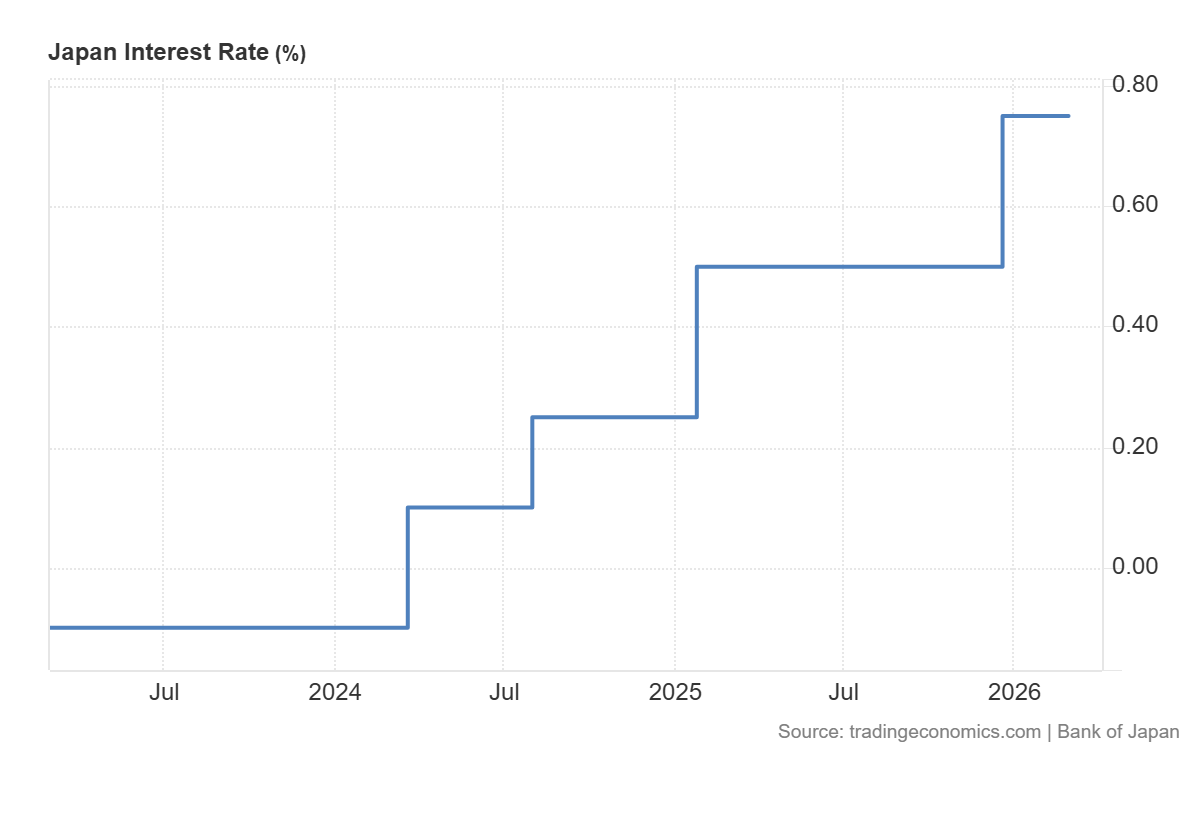
- Japan data cluster: Tokyo CPI (preliminary) plus industrial production and retail sales provide an inflation-and-activity pulse that could shape Bank of Japan (BoJ) normalisation expectations.
- Eurozone & Germany CPI: Flash inflation readings will test the disinflation narrative and influence ECB rate-cut timing expectations.
- Oil and geopolitics: Brent crude has posted its highest close since 8 August 2025 amid renewed Middle East tensions, reinforcing energy-driven inflation risk.
Australia CPI: RBA expectations to change?
Australia’s upcoming CPI release will be closely watched for signals on whether inflation is stabilising or proving more persistent than expected.
A stronger-than-expected print could be associated with higher yields and a firmer AUD as rate expectations adjust. A softer outcome could support expectations for a steadier policy stance.
Key dates
- Inflation Rate (MoM): 11:30 am Wednesday, 25 February (AEDT)
- CPI: 11:30 am Wednesday, 25 February (AEDT)
Monitor
- AUD volatility around the release.
- Local bond yield reactions.
- Interest rate pricing shifts.

Japan inflation and growth data
Japan’s late-week releases combine Tokyo CPI (preliminary) with industrial production and retail sales, offering a broader read on price pressures and domestic demand.
Tokyo CPI is often watched as a timely signal for national inflation dynamics and BoJ debate. Industrial output and retail spending add context on activity.
Surprises across this cluster can drive sharp moves in the JPY, particularly if results shift perceptions around the pace and persistence of BoJ normalisation.
Key dates
- Tokyo CPI: 10:30 am Friday, 27 February (AEDT)
- Industrial Production: 10:50 am Friday, 27 February (AEDT)
- Retail Sales: 10:50 am Friday, 27 February (AEDT)
Monitor
- JPY sensitivity to inflation surprises
- Bond yield moves in response to activity data
- Equity reactions if growth momentum expectations shift
Energy and safe-haven flows
Oil prices have climbed to their highest close since 8 August 2025 amid renewed Middle East tensions.
Recent reporting on heightened regional military activity and shipping-risk headlines near the Strait of Hormuz has reinforced energy security as a market focus. The Strait of Hormuz remains a widely watched chokepoint for global energy flows.
Higher oil prices can feed into inflation expectations and influence bond yields. At the same time, geopolitical uncertainty can support the USD through safe-haven demand and relative rate positioning.
Monitor
- Brent crude price levels
- USD strength versus major currencies
- Yield movements as inflation risk premiums adjust

Eurozone and Germany inflation
Flash inflation readings from Germany and the broader eurozone (HICP) will test whether the region’s disinflation trend remains intact.
Germany’s release can influence expectations ahead of the aggregated eurozone figure. If core inflation proves sticky, expectations around the timing and pace of potential European Central Bank easing could shift.
Key dates
- Germany Inflation Rate: 12:00 am Saturday, 28 February (AEDT)
Monitor
- EUR volatility around inflation releases
- European sovereign bond yields
- Rate-cut probability adjustments
Key economic events


From tech disruptors to defence contractors, some of the market's most talked-about companies start their public journey through an initial public offering (IPO). For traders, these initial public listings can represent a unique trading environment, but also a period of heightened uncertainty.
Quick facts
- An IPO is when a private company lists its shares on a public stock exchange for the first time.
- IPOs can offer traders early access to high-growth companies, but come with elevated volatility and limited price history.
- Once listed, traders can gain exposure to IPO stocks through direct share purchases or derivatives such as contracts for difference (CFDs).
What is an initial public offering (IPO)?
An IPO is when a company offers its shares to the public for the first time.
Before performing an IPO, shares in the company are typically only held by founders, early employees, and private investors. Going public makes the shares available to be purchased by anyone.
Depending on the size of the company, it will usually list its public shares on the local stock exchange (for example, the ASX in Australia). However, some large-valuation companies choose to only list on a global stock exchange, like the Nasdaq, no matter where their main headquarters is located.
For traders, IPOs are generally the first opportunity to gain exposure to a company’s stock. They can create a unique environment with increased volatility and liquidity, but also carry heightened risk, given the limited price history and sensitivity to sentiment swings.
Why do companies go public?
The biggest driver to perform an IPO is to access more capital. Listing on a public exchange means the company can raise significant funds by selling shares.
It also provides liquidity for existing shareholders. Founders, early employees, and private investors often sell a portion of their existing holdings on the open market, realising the returns on their years of support.
Beyond the monetary benefits, going public means companies can use their stock as currency for acquisitions and offer equity-based compensation to attract talent. And a public valuation provides a transparent benchmark, which is useful for strategic positioning and future fundraising.
However, it does come with trade-offs. Public companies must comply with ongoing disclosure and reporting obligations, and pressure from public shareholders can become a barrier to long-term progress if many are focused on short-term performance.

How does the IPO process work?
While the specifics vary by jurisdiction, going from a private company to a public listing generally involves the following stages:
1. Preparation
The company first selects the underwriter (typically an investment bank) to manage the offering. Together, they assess the company's financials, corporate structure, and market positioning to determine the best approach for going public. It is the heavy planning stage to make sure the company is actually ready to go public.
2. Registration
Once everything is prepared, the underwriters conduct a thorough due diligence check and then lodge the required disclosure documents with the relevant regulator. These documents give a detailed disclosure to the regulator about the company, its management, and its proposed offering. In Australia, this is typically a prospectus lodged with ASIC; in the US, a registration statement filed with the SEC.
3. Roadshow
Executives at the company and underwriters will then present the investment case to institutional investors and market analysts in a “roadshow”. This showcase is designed to gauge demand for the stock and help generate interest. Institutional investors can register their interest and valuation of the IPO, which helps inform the initial pricing.
4. Pricing
Based on feedback from the roadshow and current market conditions, the underwriters set the final share price and determine the number of shares to be issued. Shares are allocated on the ‘primary market’ to investors participating in the offer (before the stock is listed publicly on the secondary market). This process sets the pre-market price, which effectively determines the company’s initial public valuation.
5. Listing
On listing day, the company’s shares begin trading on the chosen stock exchange, officially opening the secondary market. For most traders, this is the first point at which they can trade the stock, either directly or through derivatives such as Share CFDs.
6. Post-IPO
Once listed, the company becomes subject to strict reporting and disclosure requirements. It must communicate regularly with shareholders, publish its financial results, and comply with the governance standards of the exchange on which it is listed.
IPO risks and benefits for traders
How do traders participate in IPOs?
For most traders, participating in an IPO comes once shares have listed and begun trading on the secondary market.
Once shares are live on the exchange, investors can buy the physical shares directly through a broker or online exchange, or they can use derivatives such as Share CFDs to take a position on the price without owning the underlying asset.
The first few days of IPO trading tend to be highly volatile. Traders should ensure they have taken appropriate risk management measures to help safeguard against potential sharp price swings.
The bottom line
IPOs mark when a company becomes investable to the public. They can offer early access to high-growth companies and create a unique trading environment driven by elevated volatility and market interest.
For traders, understanding how the process works, what drives pricing and post-IPO performance, and how to weigh potential rewards against the risks of trading newly listed shares is essential before taking a position.

2026 is not giving investors much breathing room. It seems markets may have largely moved past the idea that rate cuts are just around the corner and into a year where inflation may prove harder to control than many expected.
Goods inflation has picked up, while services inflation remains relatively sticky due to ongoing labour cost pressures. Housing costs, particularly rents, also remain a key source of inflation pressure.
The RBA is trying to stay credible on inflation without pushing the economy too far the other way.
Key data
CPI is still around 3.8 per cent (above target), wages are still rising at about 0.8 per cent over the quarter, and unemployment is around 4.1 per cent.
Based on market-implied pricing, rate hikes are not expected soon, so the way the RBA explains its decision can matter almost as much as the decision itself. If the tone shifts expectations, those expectations can move markets.
What this playbook covers
This is a playbook for RBA-heavy weeks in 2026. It covers what to watch across sectors, lists the key triggers, and explains which indicators may shift sentiment.

1. Banks and financials: how RBA decisions flow through to lending and borrowers
Banks are where the RBA shows up fastest in the Australian economy. Rates can hit borrowers quickly and feed into funding costs and sentiment.
In tighter phases, margins can improve at first, but that can flip if funding costs rise faster, or if credit quality starts to weaken. The balance between those forces is what matters most.
If banks rally into an RBA decision week, it may mean the market thinks higher for longer supports earnings. If they sell off, it may mean the market thinks higher for longer hurts borrowers. You can get two different readings from the same headline.
What to watch
- The yield curve shape: A steeper curve can help margins, while an inverted curve can signal growth stress.
- Deposit competition: It can quietly squeeze margins even when headline rates look supportive.
- RBA wording on financial stability, household buffers, and resilience. Small phrases can shift the risk story.
Potential trigger
If the RBA sounds more hawkish than expected, banks may react early as markets reassess growth and credit risk expectations. The first move can sometimes set the tone for the session.
Key risks
- Funding costs rising faster than loan yields: May point to margin pressure.
- Clear tightening in credit conditions: Rising arrears or refinancing stress can change the narrative quickly.

2. Consumer discretionary and retail: where higher rates hit household spending
When policy is tight, consumer discretionary becomes a live test of household resilience. This is where higher everyday costs often show up fastest.
Big calls about the consumer can look obvious until the data stops backing them up. When that happens, the narrative can shift quickly.
What to watch
- Wages versus inflation: The real income push or drag.
- Early labour signals: Hours worked can soften before unemployment rises.
- Reporting season clues: Discounting, cost pass-through, and margin pressure can indicate how stretched demand really is.
Potential trigger
If the tone from the RBA is more hawkish than expected, the sector may be sensitive to rate expectations. Any initial move may not persist, and subsequent price action can depend on incoming data and positioning
Key risks
- A fast turn in the labour market.
- New cost-of-living shocks, especially energy or housing, that hit spending quickly.

3. Resources: what to watch when tariffs, geopolitics, and policy shift
Resources can act as a read on global growth, but currency moves and central bank tone can change how that story lands in Australia.
In 2026, tariffs and geopolitics could also create sharper headline moves than usual, so gap risk can sit on top of the normal cycle.
The RBA still matters through two channels: the Australian dollar and overall risk appetite. Both can reprice the sector quickly, even when commodity prices have not moved much.
What to watch
- The global growth pulse: Industrial demand expectations and China-linked signals.
- The Australian dollar: The post-decision move can become a second driver for the sector.
- Sector leadership: How resources trade versus the broader market can signal the current regime.
Potential trigger
If the RBA tone turns more restrictive while global growth stays stable, resources may hold up better than other parts of the market. Strong cash flows can matter more, and the real asset angle can attract buyers.
Key risks
- In a real stress event, correlations can jump, and defensive positioning can fail.
- If policy tightens into a growth scare, the cycle can take over, and the sector can fade quickly.

4. Defensives, staples, and quality healthcare
Defensives are meant to be the calmer corner of the market when everything else feels messy. In 2026, they still have one big weakness: discount rates.
Quality defensives can draw inflows when growth looks shaky, but some defensive growth stocks still trade like long-duration assets. They can be hit when yields rise, even if the business looks solid. That means earnings may be steady while valuations still move around.
What to watch
- Relative strength: How defensives perform during RBA weeks versus the broader market.
- Guidance language: Comments on cost pressure, pricing power, and whether volumes are holding up.
- Yield behaviour: Rising yields can overpower the quality bid and push multiples down.
Potential trigger
If the RBA sounds hawkish and cyclicals start to wobble, defensives can attract relative inflows, but that can depend on yields staying contained. If yields rise sharply, long-duration defensives can still de-rate.
Key risks
- Cost inflation that squeezes margins and weakens the defensive story.

5. Hard assets, gold, and gold equities
In 2026, hard assets may be less about the simple inflation-hedge story and more about tail risk and policy uncertainty.
When confidence weakens, hard assets often receive more attention. They are not driven by one factor, and gold can still fall if the main drivers run against it.
What to watch
- Real yield direction: Shapes the opportunity cost of holding gold.
- US dollar direction: A major pricing channel for gold.
- Gold equities versus spot gold: Miners add operating leverage, and they also add cost risk.
Potential trigger
If the market starts to question inflation control or policy credibility, the hard-asset narrative can strengthen. If the RBA stays restrictive while disinflation continues, gold can lose urgency, and money can rotate into other trades.
Key risks
- Real yields rising significantly, which can pressure gold.
- Crowding and positioning unwinds that can cause sharp pullbacks.

6. Market plumbing, FX, rates volatility, and dispersion
In some RBA weeks, the first move shows up in rates and the Australian dollar, and equities follow later through sector rotation rather than a clean index move.
When guidance shifts, the RBA can change how markets move together. You can end up with a flat index while sectors swing hard in opposite directions.
What to watch
- Front-end rates: Repricing speed right after the decision can reveal the real surprise.
- AUD reaction: Direction and follow-through often shape the next move in equities and resources.
- Implied versus realised volatility: Can show whether the market paid too much or too little for the event.
- Options skew: Can reflect demand for downside protection versus upside chasing.
- Early tape behaviour: The first 5 to 15 minutes can be messy and can mean-revert.
Potential trigger
If the decision is expected but the statement leans hawkish, the front end may reprice first, and the AUD can move with it. Realised volatility can still jump even if the index barely moves, as the market rewrites the path and rotates positions under the surface.
Key risks
- A true surprise that overwhelms what options implied and creates gap moves.
- Competing macro headlines that dominate the tape and drown out the RBA signal.
- Thin liquidity that creates false signals, whipsaw, and worse execution than models assume.

7. Theme baskets
Theme baskets may let traders express a macro regime while reducing single-name risk. They also introduce their own risks, especially around events.
What to watch
- What the basket holds: Methodology, rebalance rules, hidden concentration.
- Liquidity and spreads: Especially around event windows.
- Tracking versus the narrative: Whether the “theme” behaves like the macro driver.
Potential trigger
If RBA language reinforces a “restrictive and uncertain” regime, theme baskets tied to value, quality, or hard assets may attract attention, particularly if broad indices get choppy.
Key risks
- Theme reversal when macro expectations shift.
- Liquidity risk around event windows, where spreads can widen materially.
The point of this playbook is not to predict the exact headline; it is to know where the second-order effects usually land, and to have a short checklist ready before the decision hits.
Keeping these triggers and risks in view may help some traders structure their monitoring around RBA decisions throughout 2026.
FAQs
Why does “tone” matter so much in 2026?
Because markets often pre-price the decision. The incremental information is guidance on whether the RBA sounds comfortable, concerned, or open to moving again.
What are the fastest tells right after a decision?
Some traders look to front-end rates, the AUD, and sector leadership as early indicators, but these signals can be noisy and influenced by positioning and liquidity.
Why are REITs called duration trades?
Because a large part of their valuation can be sensitive to discount rates and funding costs. When yields move, valuations can reprice quickly.
Are defensives always safer around the RBA?
Not always. If yields jump, long-duration defensives can still be repriced lower even with stable earnings.
Why do hard assets keep showing up in 2026 narratives?
Because they can act as a hedge when trust in policy credibility wobbles, but they also carry crowding and real-yield risks.