Noticias del mercado & perspectivas
Anticípate a los mercados con perspectivas de expertos, noticias y análisis técnico para guiar tus decisiones de trading.

Los datos de inflación de Estados Unidos del miércoles son la pieza central de la semana, pero con el petróleo acercándose a máximos de siete meses, el sentimiento de Bitcoin (BTC) cambiando y el dólar australiano en máximos de tres años, los comerciantes tienen mucho que navegar en la próxima semana.
Datos rápidos
- La tasa de inflación de Estados Unidos (febrero) es el evento binario clave para la fijación de precios de reducción de tasas y la dirección de la renta variable.
- El crudo Brent cotiza alrededor de US$82—84/BBL, cerca de máximos de siete meses, con una prima de riesgo geopolítico de 4 a 10 dólares gracias a las tensiones entre Irán y Ormuz.
- Bitcoin cotiza por encima de los 70.000 dólares al 6 de marzo, un posible cambio de tendencia si se mantiene a lo largo de la semana.
Estados Unidos: la inflación en foco
La lectura de inflación estadounidense del mes pasado mostró que los precios subieron 2.4% interanual, aún muy por encima de la meta de 2% de la Fed.
La tasa de inflación de febrero, que vence el miércoles, será examinada en busca de señales de que la traspaso de las tarifas o el aumento de los costos de la energía están haciendo que los precios vuelvan a subir, o si la lenta bajada sigue intacta.
La reunión del FOMC de marzo del 17 al 18 de marzo ahora tiene un precio de solo 4.7% de probabilidad de un recorte. Una impresión de inflación más alta de lo esperado esta semana podría potencialmente empujar aún más las expectativas de recorte de tasas.
Una lectura más suave abre la puerta a una nueva reducción de precios y un posible alivio en los activos de riesgo.
Fechas clave
- Tasa de inflación de Estados Unidos (IPC de febrero): Miércoles 11 de marzo, 12:30 h (AEDT)
Monitorear
- La divergencia de inflación básica frente a la general como evidencia de traspaso arancelario en los precios de los bienes.
- Sensibilidad de rendimiento de tesorería a 2 y 10 años a la impresión.
- Dirección del USD y retarificación de FedWatch antes de la decisión del FOMC del 18 de marzo.

Aceite: elevado y sensible a los eventos
Actualmente, el Brent cotiza alrededor de US$83—85 por barril, con un rango de 52 semanas que abarca US$58,40 a US$85,12, lo que refleja el dramático movimiento desencadenado por el conflicto de Oriente Medio.
Analistas estiman que la prima de riesgo geopolítico ya horneada al petróleo en 4 a 10 dólares por barril, y los pronósticos promedio del Brent 2026 se han elevado a 63,85 dólares por bbl, frente a los 62,02 dólares de enero.
El Perspectiva Energética a Corto Plazo de la EIA pronostica que el Brent promediará $58/bbl en 2026, muy por debajo del precio spot actual.
La brecha entre el spot y la línea base del pronóstico podría ser un marco útil para los comerciantes esta semana: cualquier señal de desescalada de Oriente Medio podría cerrar rápidamente esa brecha.
Monitorear
- Desarrollos del Estrecho de Ormuz y cualquier señal diplomática de las conversaciones nucleares de Irán.
- Datos de inventario de petróleo semanal de EIA.
- El derribación del petróleo a las expectativas de inflación y si cambia la postura del banco central.
- Desempeño de la renta variable del sector energético en relación con el mercado en general.

Bitcoin: vigilancia del sentimiento
BTC ha estado intentando estabilizarse después de una brutal corrección del 53% en las últimas 17 semanas, alimentada por la escalada de tensiones geopolíticas y las renovadas preocupaciones arancelarias.
No obstante, ayer se vio un salto de 8% por encima de los 72,000 dólares, y el cripto “índice de miedo y codicia” saltó a 29 (miedo), arriba desde debajo de 20 (miedo extremo), donde lleva más de un mes sentado, lo que indica un posible cambio de sentimiento.
Una impresión de inflación estadounidense más fresca de lo esperado el miércoles podría proporcionar más combustible para la ruptura; una impresión caliente corre el riesgo de que BTC vuelva a estar por debajo del nivel de US$70,000 que acaba de recuperar.
Monitorear
- Inflación impresión reacción el miércoles como el macrocatalizador primario de la mudanza.
- Cualquier rotación a altcoins siguiendo la fuerza de BTC.
- Datos de entrada/salida de ETF como confirmación de participación institucional.

AUD/USD: El RBA de Hawkish se encuentra con vientos cruzados geopolíticos
El australiano cotiza cerca de máximos de más de tres años y se dirige a su cuarta ganancia mensual consecutiva, con un aumento de más del 6% en lo que va de año, lo que la convierte en la moneda del G10 de mejor desempeño en 2026.
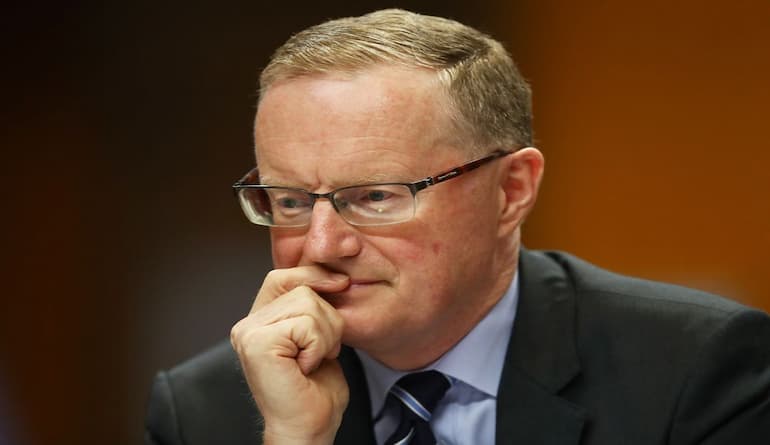
El impulsor es una clara divergencia política. La gobernadora del RBA, Michele Bullock, señaló que la reunión de política de marzo está “viva” para un posible aumento de tasas, y advirtió que un choque en el precio del petróleo por las tensiones en Irán podría reavivar las presiones inflacionarias internas.
Los precios de mercado ahora sugieren alrededor de un 28% de posibilidades de una subida de 25 pb en la próxima reunión, mientras que la fijación de precios por completo se ajustará hasta mayo, y alrededor de un 75% de probabilidad de otro aumento a 4.35% para fin de año.
Esta lectura tensa, puesta en contra de una Fed en espera y que enfrenta una presión política dótica, crea un potencial viento de cola estructural para el australiano.
Monitorear
- Reacción del AUD/USD al dato de inflación estadounidense del miércoles.
- Probabilidad de alza de tasa del RBA reajuste de precios a lo largo de la semana.
- El mineral de hierro y los precios de las materias primas como impulsores secundarios del AUD.
- China demanda señales, dada la exposición exportadora de Australia.


The Australian interest rate is currently at 3.85% and the most recent consumer price index (CPI) released at 6.8% which indicates slightly higher than expected inflation growth (expectation was 6.4% with previous data at 6.3%). This puts more focus on the upcoming interest rate decision from the Reserve Bank of Australia (RBA). While further rate hikes could apply added pressure onto the economy as households face increasing mortgage repayments, on the other hand, the series of previous rate hikes have not signaled that inflation growth is likely to slow down sustainably towards the RBA’s target level.
Market analysts are split between a hawkish hold (keeping rates at 3.85% while signaling a possible hike in the 3rd quarter, depending on further data) or continuing with another hike of 25bps to 4.1%. With the AUDUSD currently trading along the 0.66 price level, a hawkish interest rate decision from the RBA could see the AUDUSD break above the resistance at 0.6650, formed by the 200 moving average. The expected price action could be similar to that seen following the RBA’s surprise decision to hike rates by 25bps at the May meeting.
In this scenario, the AUDUSD could trade toward the immediate key resistance level of 0.68 with further sustained upside likely to depend on the volatility of the DXY.


Charles Schwab Corporation (NYSE: SCHW) announced the latest financial results for the first three months of 2023 ended March 31, before the opening bell on Wall Street on Monday. Company overview Founded: 1971 Headquarters: Westlake, Texas, United States Number of branches: 400 Number of employees: 35,300 (as of December 2022) Industry: Financial services Key people: Charles R. Schwab (co-chairman), Walter W.
Bettinger (co-chairman & CEO) The results The company reported revenue that fell slightly short of analyst expectations at $5.116 billion vs. $5.134 billion estimate. Earnings per share reported at $0.93 per share for the quarter vs. $0.90 per share expected. CEO commentary ''When I drafted my first letter to stockholders 15 years ago in the middle of the financial crisis, I outlined four factors that helped distinguish Schwab from other financial institutions during a very challenging time for global markets: a strong financial foundation, a client-centric strategy, a disciplined operating approach, and a diversified business model.
These characteristics remain every bit as relevant to our story today. We continue to consistently manage the business in a conservative manner, with an unwavering long-term orientation. Our ongoing commitment to this consistency of mission, including our “Through Clients’ Eyes” strategy, highlights why we maintain the ability to meet the needs of individual investors and the advisors who serve them through various environments,'' CEO, Walter W.
Bettinger said in a letter to shareholders. ''While equity markets rebounded from year-end 2022 levels, investor sentiment remained bearish – especially following the onset of the banking industry turmoil in early March. Fixed income markets also reflected growing fears of an economic downturn as the 10-year U.S. Treasury yield declined approximately 50 basis points from its intra-quarter peak to end March just under 3.50%.
Through the various ups and downs to start the year, Schwab remained a trusted partner to investors. During the quarter, clients opened over 1 million new brokerage accounts and entrusted us with $132 billion of core net new assets – including over $53 billion in March alone. While Investor Services gathered approximately $60 billion during the period, the Advisor Services segment posted a record first quarter with over $71 billion in net flows and attracted 70 transitioning advisor teams.
These near-record inflows across both our primary businesses represents an annualized organic growth rate north of 7% and helped push total client assets to $7.58 trillion at quarter-end.'' Shares closed up by +3.94% on Monday at $52.73 a share. Stock performance 1 month: -6.55% 3 months: -36.81% Year-to-date: -37.02% 1 year: -30.03% Charles Schwab Corporation price targets Barclays: $56 Morgan Stanley: $65 Citigroup: $65 Credit Suisse: $68 Goldman Sachs: $75 Deutsche Bank: $83 Piper Sandler: $95 JP Morgan: $97 Charles Schwab Corporation is the 147 th largest company in the world with a market cap of $95.10 billion, according to CompaniesMarketCap. You can trade Charles Schwab Corporation (NYSE: SCHW) and many other stocks from the NYSE, NASDAQ, HKEX, ASX, LSE and DE with GO Markets as a Share CFD.
Sources: Charles Schwab Corporation, TradingView, MarketWatch, MetaTrader 5, Benzinga, CompaniesMarketCap, Wikipedia


The Boeing Company (NYSE: BA) announced Q1 financial results before the market open in the US on Wednesday. World’s largest aerospace company posted mixed results. Let’s take a close look at how it performed.
Company overview Founded: July 15, 1916 Headquarters: Arlington County, Virginia, United States Number of employees: 156,000 (2022) Industry: Aerospace Key people: Dave Calhoun (President and CEO), Larry Kellner (Chairman) The results Boeing reported revenue of $17,921 billion for the quarter, topping analyst estimate of $17.516 billion. Revenues were up by 28% compared to the same period last year. The company reported loss per share of -$1.27, which exceeded analyst estimate of -$1.073 loss per share.
CEO commentary "We delivered a solid first quarter and are focused on driving stability for our customers," Dave Calhoun, CEO of Boeing said in a letter to shareholders. "We are progressing through recent supply chain disruptions but remain confident in the goals we set for this year, as well as for the longer term. Demand is strong across our key markets and we are growing investments to advance our development programs and innovate strategic capabilities for our customers and for our future," Calhoun concluded. The latest results had a positive impact on the share price.
The stock was up by around 2% on Wednesday at $207.62 a share. Stock performance 1 month: +0.94% 3 months: -1.29% Year-to-date: +10.21% 1 year: +35.91% Boeing price targets Susquehanna: $260 Bernstein: $252 Credit Suisse: $220 Northcoast Research: $180 Cowen & Co.: $230 Boeing is the 95 th largest company in the world with a market cap of $126.05 billion, according to CompaniesMarketCap. You can trade The Boeing Company (NYSE: BA) and many other stocks from the NYSE, NASDAQ, HKEX, ASX, LSE and DE with GO Markets as a Share CFD.
Sources: The Boeing Company, TradingView, MarketWatch, MetaTrader 5, TipRanks, CompaniesMarketCap, Wikipedia


The Bank of Japan is due to hold its first monetary policy meeting under new Governor Ueda on the 29th of April 2023. Since his appointment, Governor Ueda has frequently indicated that the BoJ will continue with its current easing stance on monetary policy with targets for long and short-term interest rates. Although headline and core inflation runs above 3% and the 10Y JGB yields have again climbed close to the ceiling at 0.50%, it is unlikely that Gov Ueda would introduce a widening of the Yield Curve Control (YCC) at this meeting.
However, while a lack of action from the BoJ is widely expected, this could still result in a further weakening of the Japanese Yen across the board. The USDJPY currently trades along the 134 price level, with the upside capped by the 135 resistance level which coincides with the 61.8% Fibonacci retracement level from the longer term. A weakening of the Yen could see the USDJPY break above the resistance level and climb higher toward the next key resistance level at 138.
This potential move higher is also signaled by the cross-over on the MACD indicator. Alternatively, if the BoJ surprises markets by announcing a widening of the YCC or an adjustment to the current monetary policy, this could result in a sharp strengthening of the Japanese Yen. In this scenario, the GBPJPY could reverse strongly from the resistance area of 168 to trade significantly to the downside toward the immediate support level at 165.50 which aligns with the 23.6% Fibonacci retracement level.


Bank of England announced the latest policy decision on Thursday, raising interest rates for the 12th consecutive time from 4.25% to 4.5%, which was in line with expectations. Bank of England’s Monetary Policy Committee voted by a majority of 7-2 to raise interest rates to 4.5%. Two members voted to maintain the interest rate unchanged at 4.25%.
The current interest rate is at its highest level since October 2008. Inflation UK’s annual inflation rate decreased from 10.4% to 10.1% in April and remains high. The bank expects inflation to continue falling in Q2 and in the near term. ''CPI inflation is expected to fall sharply from April, in part as large rises in the price level one year ago drop out of the annual comparison.
In addition, the extension in the Spring Budget of the Energy Price Guarantee and declines in wholesale energy prices will both lower the contribution from household energy bills to CPI inflation. However, food price inflation is likely to fall back more slowly than previously expected. Alongside news in other goods prices, this explains why the Committee’s modal expectation for CPI inflation now falls back more slowly than in the February Report.'' Economic outlook As for the economy, the central bank expects it to remain flat but there are signs potential growth. ''UK GDP is expected to be flat over the first half of this year, although underlying output, excluding the estimated impact of strikes and an extra bank holiday, is projected to grow modestly.
Economic activity has been less weak than expected in February, and the Committee now judges that the path of demand is likely to be materially stronger than expected in the February Report, albeit still subdued by historical standards. The improved outlook reflects stronger global growth, lower energy prices, the fiscal support in the Spring Budget, and the possibility that a tight labour market leads to lower precautionary saving by households.'' The unemployment is expected to remain below 4% until the end of next year. Market reaction The Pound was weaker against the US dollar on Thursday, down by around -0.93% at 1.25089.
FTSE100 was down by -0.14% at 7733.41. The next Bank of England rate decision will be on 22 nd June. Source: Bank of England, Trading Economics, MetaTrader 5


Major Asian stock indexes are following the lead from Wall St where US stocks finished broadly lower in a choppy, low volume session as economic news disappointed, Fed talking heads remained hawkish and a mixed batch of earnings. The ASX200 and Nikkei down around 0.24% while the Hang Seng down just over 0.5 a % FX Markets Have mostly continued with US dollar strength, the Aussie and Kiwi dollars have both declined against the greenback in the Asian session so far. The Aussie dollar is looking to test the 0.67 level where it found support yesterday, and the Kiwi dollar in similar action looking to also test yesterdays lows at 0.6150.
Both the Aussie and Kiwi suffering from a risk off mood to the markets on the weak economic data released in the US overnight. The JPY is bucking the USD strength trend though with a Hotter than expected CPI figure released today supporting the Yen as well as safe haven flows. core inflation came in at 3.1% vs 3% expected. We also have a BoJ meeting next week, the first for the new governor and one where we may get a hawkish surprise regarding The BoJ policies going forward which seems to be adding to Yen strength. commodities Gold has modestly declined this morning, but holding just above the 2000 USD an ounce level where there has been a real battle between the bulls and the bears the last few days and will be an important level to watch going into tonight's US and European session.