Berita & analisis pasar
Tetap selangkah lebih maju di pasar dengan wawasan ahli, berita, dan analisis teknikal untuk memandu keputusan trading Anda.

Data inflasi AS pada hari Rabu adalah pusat minggu ini, tetapi dengan minyak mendekati level tertinggi tujuh bulan, sentimen Bitcoin (BTC) bergeser, dan dolar Australia pada level tertinggi tiga tahun, pedagang memiliki banyak hal untuk dinavigasi di minggu mendatang.
Fakta Singkat
- Tingkat inflasi AS (Februari) adalah peristiwa biner utama untuk harga penurunan suku bunga dan arah ekuitas.
- Minyak mentah Brent diperdagangkan di sekitar US$82—84/barel, mendekati level tertinggi tujuh bulan, dengan premi risiko geopolitik $4—$10 yang dihasilkan dari ketegangan Iran/Hormuz.
- Bitcoin diperdagangkan di atas US $70.000 pada 6 Maret, perubahan tren potensial jika bertahan sepanjang minggu.
Amerika Serikat: Inflasi dalam Fokus
Pembacaan inflasi AS bulan lalu menunjukkan harga naik 2,4% tahun-ke-tahun, masih jauh di atas target Fed 2%.
Tingkat inflasi Februari, yang akan dijadwalkan pada hari Rabu, akan diteliti untuk tanda-tanda bahwa penerusan tarif atau kenaikan biaya energi mendorong harga kembali naik, atau apakah penurunan lambat masih utuh.
Pertemuan FOMC Maret pada 17-18 Maret sekarang dihargai hanya dengan kemungkinan pemotongan 4,7%. Pencetakan inflasi yang lebih tinggi dari perkiraan minggu ini berpotensi mendorong ekspektasi penurunan suku bunga lebih jauh.
Bacaan yang lebih lembut membuka pintu untuk pemotongan harga yang diperbarui dan potensi keringanan di seluruh aset berisiko.
Tanggal Utama
- Tingkat Inflasi AS (CPI Februari): Rabu 11 Maret, 00:30 pagi (AEDT)
Memantau
- Divergensi inflasi inti vs utama sebagai bukti penerusan tarif dalam harga barang.
- Sensitivitas imbal hasil kas 2 tahun dan 10 tahun terhadap cetakan.
- Arah USD dan harga ulang FedWatch menjelang keputusan FOMC 18 Maret.

Minyak: tinggi dan peka terhadap peristiwa
Brent saat ini diperdagangkan sekitar US$83—85 per barel, dengan kisaran 52 minggu yang mencakup $58,40 hingga $85,12, mencerminkan pergerakan dramatis yang dipicu oleh konflik Timur Tengah.
Analis memperkirakan premi risiko geopolitik yang sudah dibakar pada minyak sebesar US$4—$10 per barel, dan perkiraan rata-rata Brent 2026 telah dinaikkan menjadi US$63,85/barel, naik dari US$62,02 pada Januari.
Prospek Energi Jangka Pendek EIA memperkirakan Brent rata-rata $58/bbl pada tahun 2026, jauh di bawah harga spot saat ini.
Kesenjangan antara spot dan baseline perkiraan bisa menjadi kerangka yang berguna bagi para pedagang minggu ini: setiap sinyal de-eskalasi dari Timur Tengah dapat dengan cepat menutup kesenjangan itu.
Memantau
- Perkembangan Selat Hormuz dan sinyal diplomatik apa pun dari pembicaraan nuklir Iran.
- Data inventaris minyak mingguan EIA.
- Minyak berpengaruh terhadap ekspektasi inflasi dan apakah itu menggeser postur bank sentral.
- Kinerja ekuitas sektor energi relatif terhadap pasar yang lebih luas.

Bitcoin: tontonan sentimen
BTC telah berusaha untuk stabil setelah koreksi 53% yang brutal selama 17 minggu terakhir, dipicu oleh meningkatnya ketegangan geopolitik dan kekhawatiran tarif baru.
Namun, kemarin melihat lonjakan 8% kembali di atas $72,000, dan “indeks ketakutan dan keserakahan” kripto melonjak menjadi 29 (ketakutan), naik dari bawah 20 (ketakutan ekstrim), di mana telah bertahan selama lebih dari sebulan, menunjukkan potensi pergeseran sentimen.
Cetakan inflasi AS yang lebih dingin dari perkiraan pada hari Rabu dapat memberikan bahan bakar lebih lanjut untuk terobosan; hot print berisiko menarik BTC kembali di bawah level US $70.000 yang baru saja direklamasi.
Memantau
- Reaksi cetak inflasi pada hari Rabu sebagai katalis makro utama untuk langkah tersebut.
- Setiap rotasi ke altcoin mengikuti kekuatan BTC.
- Data masuk/keluar ETF sebagai konfirmasi partisipasi institusi.

AUD/USD: Hawkish RBA bertemu dengan angin geopolitik
Aussie diperdagangkan mendekati level tertinggi lebih dari tiga tahun dan menuju kenaikan bulanan keempat berturut-turut, naik lebih dari 6% tahun-hingga saat ini, menjadikannya mata uang G10 berkinerja terbaik pada tahun 2026.
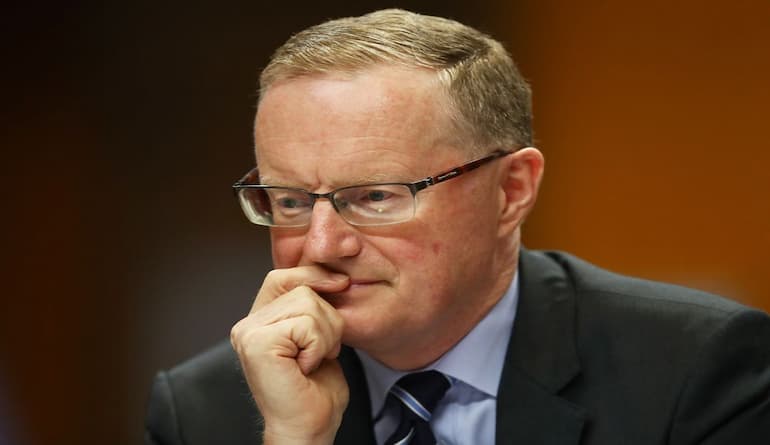
Pengemudi adalah perbedaan kebijakan yang jelas. Gubernur RBA Michele Bullock mengisyaratkan pertemuan kebijakan Maret “hidup” untuk kemungkinan kenaikan suku bunga, dan memperingatkan bahwa guncangan harga minyak dari ketegangan Iran dapat memicu kembali tekanan inflasi domestik.
Harga pasar sekarang menunjukkan sekitar 28% peluang kenaikan 25 bp pada pertemuan mendatang, sementara harga penuh dalam pengetatan hingga Mei, dan sekitar peluang 75% kenaikan lagi menjadi 4,35% pada akhir tahun.
Bacaan hawkish ini, melawan Fed yang ditunda dan menghadapi tekanan politik yang sopan, menciptakan potensi angin struktural bagi Aussie.
Memantau
- Reaksi AUD/USD terhadap data inflasi AS hari Rabu.
- Harga ulang probabilitas kenaikan suku bunga RBA sepanjang minggu.
- Harga bijih besi dan komoditas sebagai pendorong AUD sekunder.
- Sinyal permintaan China, mengingat eksposur ekspor Australia.


The Australian interest rate is currently at 3.85% and the most recent consumer price index (CPI) released at 6.8% which indicates slightly higher than expected inflation growth (expectation was 6.4% with previous data at 6.3%). This puts more focus on the upcoming interest rate decision from the Reserve Bank of Australia (RBA). While further rate hikes could apply added pressure onto the economy as households face increasing mortgage repayments, on the other hand, the series of previous rate hikes have not signaled that inflation growth is likely to slow down sustainably towards the RBA’s target level.
Market analysts are split between a hawkish hold (keeping rates at 3.85% while signaling a possible hike in the 3rd quarter, depending on further data) or continuing with another hike of 25bps to 4.1%. With the AUDUSD currently trading along the 0.66 price level, a hawkish interest rate decision from the RBA could see the AUDUSD break above the resistance at 0.6650, formed by the 200 moving average. The expected price action could be similar to that seen following the RBA’s surprise decision to hike rates by 25bps at the May meeting.
In this scenario, the AUDUSD could trade toward the immediate key resistance level of 0.68 with further sustained upside likely to depend on the volatility of the DXY.


Charles Schwab Corporation (NYSE: SCHW) announced the latest financial results for the first three months of 2023 ended March 31, before the opening bell on Wall Street on Monday. Company overview Founded: 1971 Headquarters: Westlake, Texas, United States Number of branches: 400 Number of employees: 35,300 (as of December 2022) Industry: Financial services Key people: Charles R. Schwab (co-chairman), Walter W.
Bettinger (co-chairman & CEO) The results The company reported revenue that fell slightly short of analyst expectations at $5.116 billion vs. $5.134 billion estimate. Earnings per share reported at $0.93 per share for the quarter vs. $0.90 per share expected. CEO commentary ''When I drafted my first letter to stockholders 15 years ago in the middle of the financial crisis, I outlined four factors that helped distinguish Schwab from other financial institutions during a very challenging time for global markets: a strong financial foundation, a client-centric strategy, a disciplined operating approach, and a diversified business model.
These characteristics remain every bit as relevant to our story today. We continue to consistently manage the business in a conservative manner, with an unwavering long-term orientation. Our ongoing commitment to this consistency of mission, including our “Through Clients’ Eyes” strategy, highlights why we maintain the ability to meet the needs of individual investors and the advisors who serve them through various environments,'' CEO, Walter W.
Bettinger said in a letter to shareholders. ''While equity markets rebounded from year-end 2022 levels, investor sentiment remained bearish – especially following the onset of the banking industry turmoil in early March. Fixed income markets also reflected growing fears of an economic downturn as the 10-year U.S. Treasury yield declined approximately 50 basis points from its intra-quarter peak to end March just under 3.50%.
Through the various ups and downs to start the year, Schwab remained a trusted partner to investors. During the quarter, clients opened over 1 million new brokerage accounts and entrusted us with $132 billion of core net new assets – including over $53 billion in March alone. While Investor Services gathered approximately $60 billion during the period, the Advisor Services segment posted a record first quarter with over $71 billion in net flows and attracted 70 transitioning advisor teams.
These near-record inflows across both our primary businesses represents an annualized organic growth rate north of 7% and helped push total client assets to $7.58 trillion at quarter-end.'' Shares closed up by +3.94% on Monday at $52.73 a share. Stock performance 1 month: -6.55% 3 months: -36.81% Year-to-date: -37.02% 1 year: -30.03% Charles Schwab Corporation price targets Barclays: $56 Morgan Stanley: $65 Citigroup: $65 Credit Suisse: $68 Goldman Sachs: $75 Deutsche Bank: $83 Piper Sandler: $95 JP Morgan: $97 Charles Schwab Corporation is the 147 th largest company in the world with a market cap of $95.10 billion, according to CompaniesMarketCap. You can trade Charles Schwab Corporation (NYSE: SCHW) and many other stocks from the NYSE, NASDAQ, HKEX, ASX, LSE and DE with GO Markets as a Share CFD.
Sources: Charles Schwab Corporation, TradingView, MarketWatch, MetaTrader 5, Benzinga, CompaniesMarketCap, Wikipedia


The Boeing Company (NYSE: BA) announced Q1 financial results before the market open in the US on Wednesday. World’s largest aerospace company posted mixed results. Let’s take a close look at how it performed.
Company overview Founded: July 15, 1916 Headquarters: Arlington County, Virginia, United States Number of employees: 156,000 (2022) Industry: Aerospace Key people: Dave Calhoun (President and CEO), Larry Kellner (Chairman) The results Boeing reported revenue of $17,921 billion for the quarter, topping analyst estimate of $17.516 billion. Revenues were up by 28% compared to the same period last year. The company reported loss per share of -$1.27, which exceeded analyst estimate of -$1.073 loss per share.
CEO commentary "We delivered a solid first quarter and are focused on driving stability for our customers," Dave Calhoun, CEO of Boeing said in a letter to shareholders. "We are progressing through recent supply chain disruptions but remain confident in the goals we set for this year, as well as for the longer term. Demand is strong across our key markets and we are growing investments to advance our development programs and innovate strategic capabilities for our customers and for our future," Calhoun concluded. The latest results had a positive impact on the share price.
The stock was up by around 2% on Wednesday at $207.62 a share. Stock performance 1 month: +0.94% 3 months: -1.29% Year-to-date: +10.21% 1 year: +35.91% Boeing price targets Susquehanna: $260 Bernstein: $252 Credit Suisse: $220 Northcoast Research: $180 Cowen & Co.: $230 Boeing is the 95 th largest company in the world with a market cap of $126.05 billion, according to CompaniesMarketCap. You can trade The Boeing Company (NYSE: BA) and many other stocks from the NYSE, NASDAQ, HKEX, ASX, LSE and DE with GO Markets as a Share CFD.
Sources: The Boeing Company, TradingView, MarketWatch, MetaTrader 5, TipRanks, CompaniesMarketCap, Wikipedia


The Bank of Japan is due to hold its first monetary policy meeting under new Governor Ueda on the 29th of April 2023. Since his appointment, Governor Ueda has frequently indicated that the BoJ will continue with its current easing stance on monetary policy with targets for long and short-term interest rates. Although headline and core inflation runs above 3% and the 10Y JGB yields have again climbed close to the ceiling at 0.50%, it is unlikely that Gov Ueda would introduce a widening of the Yield Curve Control (YCC) at this meeting.
However, while a lack of action from the BoJ is widely expected, this could still result in a further weakening of the Japanese Yen across the board. The USDJPY currently trades along the 134 price level, with the upside capped by the 135 resistance level which coincides with the 61.8% Fibonacci retracement level from the longer term. A weakening of the Yen could see the USDJPY break above the resistance level and climb higher toward the next key resistance level at 138.
This potential move higher is also signaled by the cross-over on the MACD indicator. Alternatively, if the BoJ surprises markets by announcing a widening of the YCC or an adjustment to the current monetary policy, this could result in a sharp strengthening of the Japanese Yen. In this scenario, the GBPJPY could reverse strongly from the resistance area of 168 to trade significantly to the downside toward the immediate support level at 165.50 which aligns with the 23.6% Fibonacci retracement level.


Bank of England announced the latest policy decision on Thursday, raising interest rates for the 12th consecutive time from 4.25% to 4.5%, which was in line with expectations. Bank of England’s Monetary Policy Committee voted by a majority of 7-2 to raise interest rates to 4.5%. Two members voted to maintain the interest rate unchanged at 4.25%.
The current interest rate is at its highest level since October 2008. Inflation UK’s annual inflation rate decreased from 10.4% to 10.1% in April and remains high. The bank expects inflation to continue falling in Q2 and in the near term. ''CPI inflation is expected to fall sharply from April, in part as large rises in the price level one year ago drop out of the annual comparison.
In addition, the extension in the Spring Budget of the Energy Price Guarantee and declines in wholesale energy prices will both lower the contribution from household energy bills to CPI inflation. However, food price inflation is likely to fall back more slowly than previously expected. Alongside news in other goods prices, this explains why the Committee’s modal expectation for CPI inflation now falls back more slowly than in the February Report.'' Economic outlook As for the economy, the central bank expects it to remain flat but there are signs potential growth. ''UK GDP is expected to be flat over the first half of this year, although underlying output, excluding the estimated impact of strikes and an extra bank holiday, is projected to grow modestly.
Economic activity has been less weak than expected in February, and the Committee now judges that the path of demand is likely to be materially stronger than expected in the February Report, albeit still subdued by historical standards. The improved outlook reflects stronger global growth, lower energy prices, the fiscal support in the Spring Budget, and the possibility that a tight labour market leads to lower precautionary saving by households.'' The unemployment is expected to remain below 4% until the end of next year. Market reaction The Pound was weaker against the US dollar on Thursday, down by around -0.93% at 1.25089.
FTSE100 was down by -0.14% at 7733.41. The next Bank of England rate decision will be on 22 nd June. Source: Bank of England, Trading Economics, MetaTrader 5


Major Asian stock indexes are following the lead from Wall St where US stocks finished broadly lower in a choppy, low volume session as economic news disappointed, Fed talking heads remained hawkish and a mixed batch of earnings. The ASX200 and Nikkei down around 0.24% while the Hang Seng down just over 0.5 a % FX Markets Have mostly continued with US dollar strength, the Aussie and Kiwi dollars have both declined against the greenback in the Asian session so far. The Aussie dollar is looking to test the 0.67 level where it found support yesterday, and the Kiwi dollar in similar action looking to also test yesterdays lows at 0.6150.
Both the Aussie and Kiwi suffering from a risk off mood to the markets on the weak economic data released in the US overnight. The JPY is bucking the USD strength trend though with a Hotter than expected CPI figure released today supporting the Yen as well as safe haven flows. core inflation came in at 3.1% vs 3% expected. We also have a BoJ meeting next week, the first for the new governor and one where we may get a hawkish surprise regarding The BoJ policies going forward which seems to be adding to Yen strength. commodities Gold has modestly declined this morning, but holding just above the 2000 USD an ounce level where there has been a real battle between the bulls and the bears the last few days and will be an important level to watch going into tonight's US and European session.