

GO Markets,让交易更进一步
智慧交易,从选择值得信赖的全球券商开始。低点差、快速成交、零入金手续费、功能强大的交易平台,以及屡获殊荣的客户支持,让您的交易更进一步
二十年稳健实力,成就值得信赖。
二十年专注打造极致交易体验。
自2006年起,致力缔造卓越的交易环境。

初学者
新手上路?
从基础知识入手,循序渐进,逐步建立交易信心。

中级交易者
让策略更进一步
使用先进的交易工具,获取更深入的市场洞察。

专业交易者
专业交易者专区
为专业投资者与高净值客户提供量身定制的专属服务。
每笔交易,尽享超值回馈
即刻查看我们的限时优惠

开始使用 GO Markets
无论你是市场新手还是全职交易,GO Markets 都有一个
根据您的需求量身定制的账户。


全球交易者共同的选择
自 2006 年起,GO Markets 已帮助全球数十万交易者实现他们的投资目标。凭借严格监管、以客户为本的服务,以及屡获殊荣的教育资源,我们始终是交易者值得信赖的合作伙伴。
*Trustpilot reviews are provided for the GO Markets group of companies and not exclusively for GO Markets Ltd.

































*Awards were awarded to GO Markets group of companies and not exclusively to GO Markets Ltd.
探索更多 GO Markets 的产品与服务

差价合约市场
外汇、指数、股票、商品、贵金属、数字货币、ETF 等全品类交易,一站式管理。

交易平台与工具
尖端技术支持、优质客服团队、灵活资金管理,让您的交易更轻松。

学习中心
系统化学习交易技能与策略,培养稳健投资心态,助力长期稳健交易。

账户与定价
对比账户类型、查看点差,选择最适合您交易目标的方案。

GO Markets
让交易更进一步
探索上千种交易机会,享受专业机构水准的交易工具、流畅稳定的交易体验,以及屡获殊荣的客户支持。开户流程简单快捷,让您轻松开启交易之旅。
市场新闻与分析
用专业工具和市场分析助力您的每一步交易决策

很少有机构能像澳大利亚储备银行(RBA)那样安静或有力地塑造澳大利亚的日常生活。
每当你续订抵押贷款、开立储蓄账户或观察澳元走势时,澳洲联储的决定都在后台。
但是,银行内部到底发生了什么,是什么推动了席卷整个澳大利亚经济的呼声?
事实速览
- 澳洲联储的现金利率是澳大利亚金融界最受关注的数字。
- 费率决定 由九名成员组成的董事会每年八次制定。
- 澳洲联储的目标是随着时间的推移平均通货膨胀率为2-3%。
- 2023年11月,澳大利亚的现金利率达到了 4.35% 的12年高点。
什么是澳洲联储?
澳大利亚央行是澳大利亚的中央银行。与向个人和企业贷款的商业银行不同,澳大利亚央行向金融机构贷款,发行国家货币并充当政府的银行家。
它还在监督更广泛的金融体系的稳定方面发挥着作用。它可以在经济压力时期介入,确保信贷持续流动。
对于普通澳大利亚人来说,澳洲联储对利率的影响最为明显。通过设定现金利率目标,它可以塑造整个经济的借贷和储蓄成本。
这种影响可以渗透到抵押贷款利率、商业贷款和澳元的价格。
现金利率如何运作?
现金利率是澳大利亚央行对银行间隔夜贷款收取的利率。银行不断相互借钱以管理其日常现金需求,而澳洲联储则为这些借贷成本设定了下限。
当澳洲联储提高现金利率时,银行往往会将成本转嫁给借款人;当它降低现金利率时,还款利息往往会下降。
这种连锁反应是现金利率如此强大的工具的原因。银行根据现金利率为产品定价,因此澳大利亚央行0.25%的变动通常会在几周内流向浮动抵押贷款利率。
澳洲联储现金利率变动的影响
澳大利亚抵押贷款中有很大一部分是浮动利率的,因此,与固定利率贷款更为突出的国家相比,现金利率的任何变化往往更快地转移到家庭预算。
澳洲联储如何做出决定?
澳大利亚央行董事会每年举行八次会议,制定货币政策,会议日期提前公布。
该委员会有九名成员:总督、副总督、财政部长和六名外部成员,由财务部长任命,任期五年。决定尽可能以协商一致方式作出,必要时由总督进行决定性投票。
这些成员作出决定的目的是维持物价稳定和支持充分就业,将澳大利亚人民的经济繁荣和福利作为首要目标。
价格稳定通常意味着随着时间的推移,平均通货膨胀率保持在2-3%的目标区间内。“一段时间内的平均值” 框架是经过深思熟虑的;如果通货膨胀率短暂偏离区间外,澳洲联储不会感到恐慌,但任一方向的持续偏差都可能促使董事会考虑政策应对措施。
充分就业是从非加速通货膨胀失业率(NAIRU)的角度来看待充分就业,这是经济在不产生通货膨胀工资压力的情况下可以维持的最低失业率。估计各不相同,但澳大利亚央行历来将其定为4-4.5%左右。
这两个目标之间的紧张关系决定了澳大利亚央行的大多数决策。强劲的劳动力市场对工人来说是个好消息,但它可以推高工资(进而推高通货膨胀)。另一方面,降温通货膨胀通常需要接受失业率的上升。
在每次会议之前,澳洲联储的工作人员准备了涵盖所有主要经济指标的大量简报材料。在做出决定之前,董事会对证据进行了为期两天的辩论。结果将在会议当天澳大利亚东部夏令时间下午 2:30 公开宣布,随后由州长发表详细声明和新闻发布会。
每项决策的关键输入
澳洲联储最近的利率周期
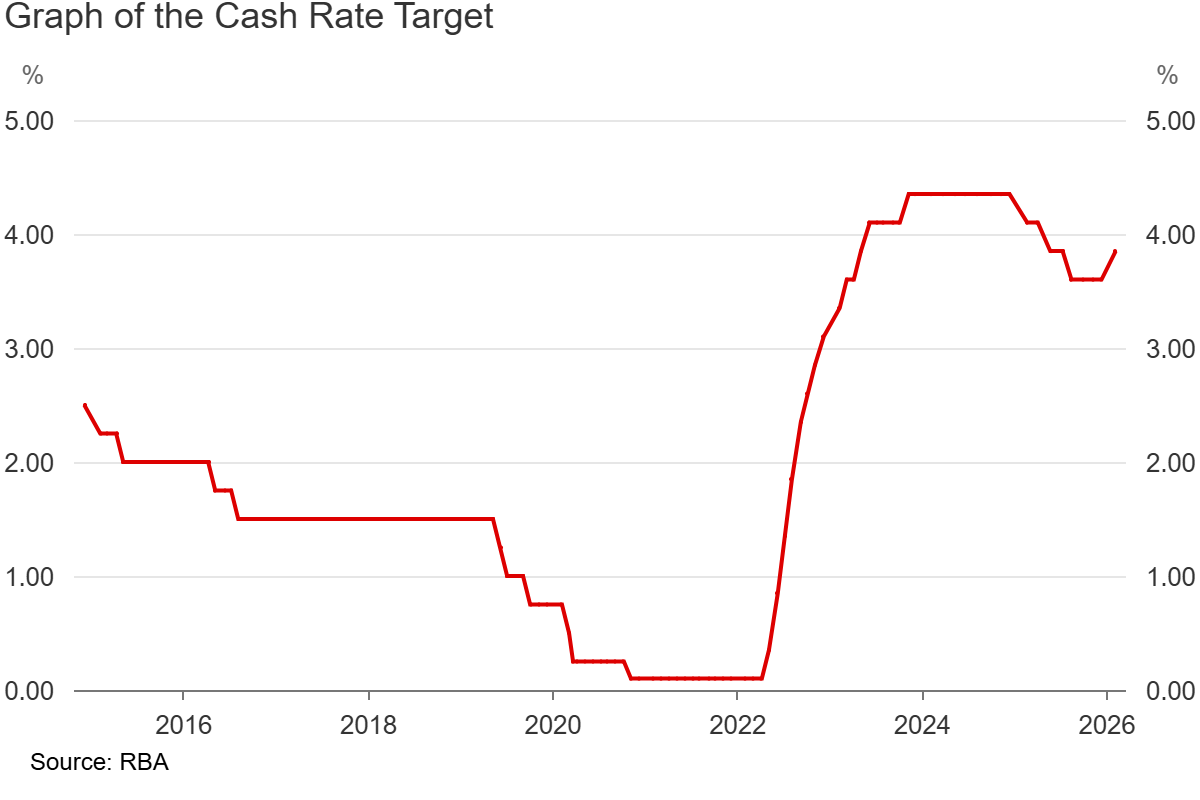
当前的利率周期是澳洲联储现代历史上最激进的周期之一。在COVID疫情期间将现金利率维持在0.10%的历史最低水平之后,澳大利亚央行于2022年5月开始加息,并十三次加息,然后在2023年11月暂停在4.35%。
在2022年5月至2023年底期间,拥有75万美元浮动利率抵押贷款的借款人的每月还款额增加了约1,500美元,至1800美元,这是家庭预算的严重紧缩,直接加剧了澳大利亚央行试图策划的消费者放缓。
在整个2025年,澳洲联储定期将利率下调,在最近于2026年2月加息之后,利率目前为3.75%。
交易者应该注意什么?
每月消费物价指数
对于澳洲联储观察者来说,月度消费者价格指数通常被认为是最重要的单一数据点。如果数据显示 “季度调整后的平均消费者价格指数” 超过3%,则可能会提高人们对加息或推迟削减的预期(尤其是在意外向上行的情况下)。“调整后的均值” 是澳洲联储的首选衡量标准,因为它倾向于减少波动造成的数据噪音。
劳动力数据
劳动力数据包括失业率和就业不足率以及工资增长的数字。澳大利亚央行密切关注这些数字,看是否有任何迹象表明工资的增长速度可能与通货膨胀目标不一致。
州长的讲话和出席
在正式会议之间,州长在众议院经济委员会作证并发表公开演讲。这些都受到严格审查,以了解董事会的情绪信号。例如,简单的语言转变,从 “耐心” 到 “警惕”,通常可以被视为语气的变化,可能会影响即将举行的会议的费率决定。
中性利率
“中性利率” 是澳洲联储认为既不会加速经济增长也不会减缓的现金利率区间。目前的中性现金利率估计约为3.0-3.5%,低于3.75%的实际利率,这表明澳洲联储仍在阻碍经济。随着利率越来越接近中性区域,这可能表明澳洲联储继续削减的紧迫性降低。但是,意外数据总是可以颠覆这一假设。
全球中央银行
澳洲联储不是孤立运作的。如果美联储在更长的时间内维持更高的利率,则在不削弱澳元和通过提高进口价格来导入通货膨胀的情况下,限制了澳洲联储的降息空间。
底线
澳洲联储的工作是保持澳大利亚经济的平衡,而现金利率是其实现这一目标的主要工具。它的决定几乎触及澳大利亚金融生活的每个角落,从抵押贷款的支付到澳元的交易方式。
对于交易者来说,了解澳洲联储的想法和正在关注的事情对于理解更广泛的澳大利亚经济环境大有帮助。

在图表开始说话之前,该地区确实如此。上周末,中东局势从紧张走向活跃。美国和以色列的联合袭击击中了伊朗境内的目标,多家媒体报道伊朗最高领袖阿亚图拉·阿里·哈梅内伊遇害。这一事实改变了整个市场判决结构,不仅仅是地缘政治,而是风险溢价被实时重新定价,涵盖能源、波动性和全球增长前景。
市场不是交易悲剧,而是交易不确定性。当不确定性笼罩在全球能源动脉之上时,价格发现就会变得响亮。
一目了然
- 发生了什么: 多家主要媒体报道说,伊朗最高领袖阿亚图拉·阿里·哈梅内伊在美国和以色列联合袭击伊朗境内后遇害,伊朗官方媒体援引伊朗官方媒体证实了他的死亡。
- 现在市场可能关注什么: 以原油和成品油为首的地缘政治风险溢价的快速重新定价,加上头条新闻推动流动性、相关性和盘中区间波动的跨资产波动。
- 还没有发生什么: 市场的定价可能更多地是总体风险溢价,而不是有充分证据、持续的实物供应中断。
- 接下来的 24 到 72 小时: 焦点可能会继续放在升级信号和二级限制上,包括对海湾航线以及政策和外交轨道的任何影响,包括联合国安理会的任何动态。
- 澳大利亚和亚洲挂钩: 飞行和空域中断已经蔓延到该地区以外。对于市场而言,面向亚洲的敏感性可以通过炼油厂的利润率以及运输和保险成本来体现,而当全球风险偏好不稳定时,澳元可以充当风险晴雨表。
石油是传动机制
由于霍尔木兹海峡的风险从理论变为即时,布伦特原油在3月2日星期一早盘交易中飙升了多达13%,在报告中触及每桶82美元左右。海峡之所以重要,是因为全球大约五分之一的石油和天然气运输通过海峡,当油轮犹豫不决时,保险公司会重新定价,改写航线,能源就会成为波动性产物。
基本案例: 原油出现局部中断和更高的 “风险溢价”,盘中波动幅度很大。
上行风险: 一些分析师警告说,持续的航运放缓或基础设施的直接冲击可能会推动原油大幅上涨。
下行风险: 缓和局势的头条新闻、紧急供应应对措施或更明确的航运保护以压缩风险溢价。
波动率和股票
VIX并不是在真空中变动的,这种不确定性的激增已经以一种相当 “教科书” 的方式蔓延到其他资产类别。随着波动率的重新定价,市场的第一本能是逃往安全地带,同时争夺受冲突影响最大的大宗商品。
周一,亚洲以这种基调开盘:日本日经225指数下跌约2.4%,澳大利亚澳大利亚证券交易所200指数在稳定之前下跌。同时,防御定位出现在经典的避风港中。黄金期货在周末跳空上涨了约3%,而以瑞士法郎为首的传统避险货币立即吸引了兑欧元和美元的资金流入。
相比之下,股票风险受到了打击。包括道琼斯指数和标准普尔500指数在内的美国指数期货开盘走低,这是更广泛的地区冲突和能源成本急剧上涨可能带来的通货膨胀拖累的双重威胁。
阅读更多:了解波动率(及其对差价合约交易条件可能意味着什么)。
避风港随心所欲
随着市场寻求保险,黄金上涨。报告显示,在石油价格飙升的同一个交易日中,金价上涨了近3%。对于澳大利亚和亚洲交易者来说,值得注意的是:当石油上涨和黄金一起上涨时,市场经常告诉你它对通货膨胀和增长都感到担忧。对于包括澳洲联储在内的中央银行来说,这是一个混乱的组合,因为即使需求疲软,汽油驱动的通货膨胀仍可能上升。
这对差价合约风险管理可能意味着什么
焦点 1:绘制事件风险日程表
在以头条新闻为导向的市场中,价格的变动速度可能比流动性更快。风险不仅仅是错误;还可能是动荡条件下的时机和执行风险。
一些交易者监视哪些事态发展可能会改变市场情绪(例如,官方声明或经过验证的运营更新)。如果您选择交易,可能值得了解价格差距和波动性将如何影响您的头寸,包括交易日开盘前后和主要公告前后。
市场可能会出现跳空或快速波动,订单执行(包括止损订单,如果使用)可能无法达到预期水平,尤其是在快速条件下或流动性低的情况下。功能和结果取决于产品条款和市场条件。
焦点2:观察能源通货膨胀之路
如果原油价格保持高位,市场可能会关注通胀预期是否发生变化。如果发生这种情况,它可能会影响利率、股票和外汇,尽管结果取决于多种因素并且可能会迅速变化。
这可能反映在:
- 随着利率市场的调整,全球债券收益率。
- 股票估值敏感度,尤其是在长期和增长密集型领域。
- 外汇走势,包括澳元、日元和一些与大宗商品挂钩的货币。
接下来要看什么
对于总体市场背景(不是作为交易建议),一些观察家监测:
- 指向局势升级或缓和的关键头条新闻和官方声明。
- 布伦特原油和西德克萨斯中质原油价格走势,包括高位是否持续到最初的飙升之后。
- 通货膨胀预期和利率定价,包括债券收益率的变动和基于市场的通胀指标。
- 风险情绪信号,包括主要交易时段的波动率水平和股票指数期货的行为。
%20(1).jpg)
用户自定义函数是由程序员编写的函数,不同于 Pine Script内置提供的函数。它们用于封装脚本中需要有条件执行或重复执行的自定义计算,或者将逻辑集中在一个位置,以提升模块化程度和代码可读性。当现有的内置函数无法满足需求时,程序员通常会编写自定义函数来扩展脚本的功能。
一个函数定义由两个主要部分组成:函数头(Header) 和 函数体(Body)。
函数头(Header)
函数头声明了函数的签名,也就是函数的名称和参数。脚本通过创建一个包含函数名并跟随括号的表达式来调用该函数(例如 f())。
函数体(Body)
函数体是紧随函数头之后的代码。每一次函数调用,都会执行函数体中由表达式和语句定义的任务。
用户自定义函数的通用特性和限制
无论函数的格式、位置或用途如何,所有用户自定义函数都遵循以下共同特性和限制:
- 函数的定义必须位于全局作用域。程序员不能在另一个函数的函数体内,或其他任何结构的局部代码块中定义函数。
- 函数不能修改其已声明的参数,也不能修改任何全局变量。
- 函数体内可以调用大多数其他函数,但不能调用自身,也不能调用必须从全局作用域调用的函数。
- 函数的每一次书写调用,在所有执行过程中都必须具有一致的参数类型,因此传入的参数类型也必须一致。
- 每一次调用都会返回函数体中最后一个语句或独立表达式的计算结果,并且该结果会继承调用中使用的最强类型限定符。与参数类型一样,返回值类型在不同执行中也必须保持一致。
- 每一次对函数的书写调用都会基于函数定义创建一个新的作用域。在该作用域中创建的参数、变量和表达式都是独立的,并且拥有各自的历史记录;不同的函数调用不会直接相互影响。
函数头语法
[export ]<functionName>([[[paramQualifier ]<paramType> ]<paramName>[ = defaultValue], …]) =>
其中:
- 方括号 [] 中的内容表示可选语法,尖括号 <> 中的内容表示必需语法。
- export 是一个可选关键字,用于将函数从库中导出,使其可以在其他脚本中使用。详情请参阅 Libraries 页面。
- functionName 是函数的标识符(名称)。脚本通过引用该标识符并跟随括号来调用函数。
- paramName 是已声明参数的标识符。脚本在每次函数调用时,可以为该参数提供具体的参数值(值或引用)。函数头中可以声明零个或多个参数。
- defaultValue 是参数的默认值。如果未指定默认值,则每次调用函数时都必须为该参数提供参数;如果指定了默认值,则传参是可选的。
- paramQualifier 和 paramType 是限定符和类型关键字,它们共同指定参数的限定类型。在大多数情况下,这些关键字是可选的。如果未包含它们,编译器会自动推断参数的类型信息。更多内容请参阅 Declaring parameter types 部分。
单行函数 – 示例1
单行函数的函数体与函数头位于同一行代码中。该格式非常适合用于定义紧凑的函数,这类函数只执行简单的语句,并且不使用条件结构或循环。定义单行函数的语法如下:
<functionHeader> => {statement, }<returnExpression>
其中,functionHeader 用于声明函数的名称和参数,其含义与上一节中的说明一致。花括号中的 statement 表示函数在返回结果之前要执行的零个或多个语句或表达式,函数体中的每一条独立语句都必须使用逗号分隔。returnExpression 是函数体中的最后一个表达式、变量或元组,每一次函数调用都会返回对该部分代码求值后的结果。
下面的示例以单行格式定义了一个 add() 函数。该函数包含两个参数 val1 和 val2。函数体中只有一个 + 运算,根据参数的类型不同,该运算可以执行数值相加或字符串拼接。每次调用该函数,都会返回该运算的结果:
add(val1, val2) => val1 + val2
在脚本中包含了该函数定义之后,就可以在不同的位置调用 add(),并为 val1 和 val2 传入不同的参数。每一次调用所返回的值类型,取决于传入参数的类型。例如,在下面的脚本中,会执行多次 add() 调用,然后将其返回结果传递给 plot() 函数的 series、title 和 linewidth 参数。
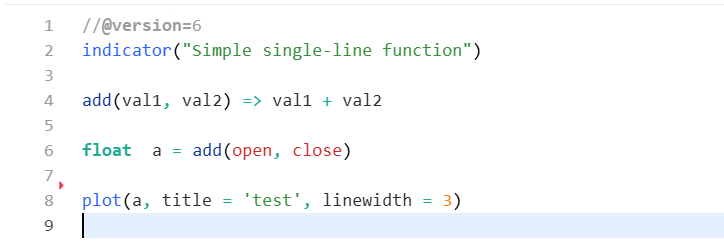
下面逐行解析代码:
- 指定脚本版本。
- 声明这是一个指标脚本,并设置指标名称。
- 定义一个单行函数 add()。
- 调用 add() 函数,并把返回结果存入变量 a。
- 把变量 a 画成一条线。
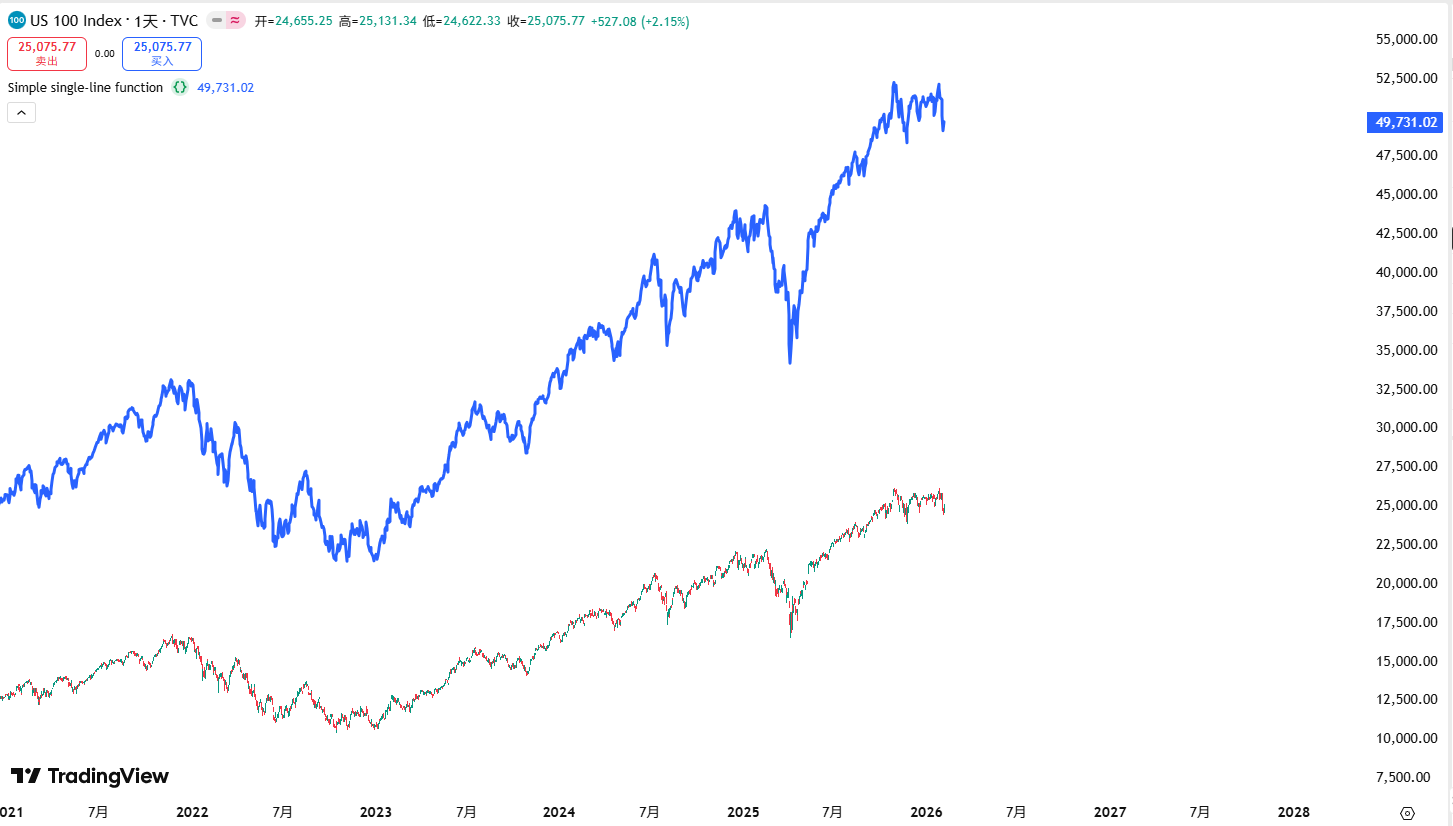
- 最终效果:在图表上画出一条线,其数值等于每根 K 线的 open + close。
单行函数 – 示例2
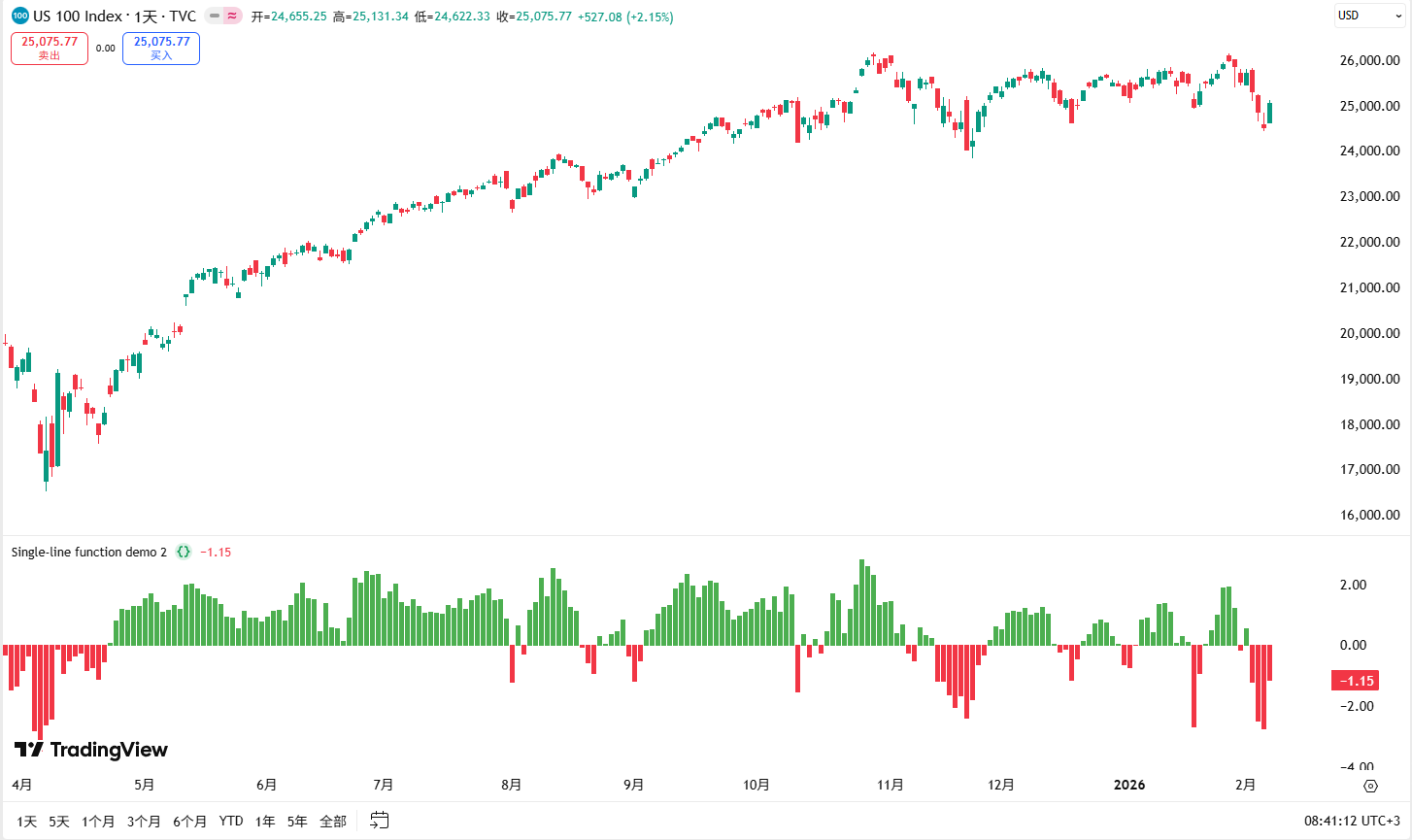
例如,下面的脚本以单行格式定义了一个 zScore() 函数。该函数用于计算某个源数据序列在 length 根 K 线上的 Z-Score(标准分数)。函数体中声明了两个变量 mean 和 sd,分别用于保存该序列的平均值和标准差。函数体中的最后一个表达式使用这两个变量来计算并返回函数的结果。脚本在每一根 K 线上都会调用一次 zScore() 函数,使用 close 作为源数据参数、20 作为长度参数,然后将计算结果绘制出来。
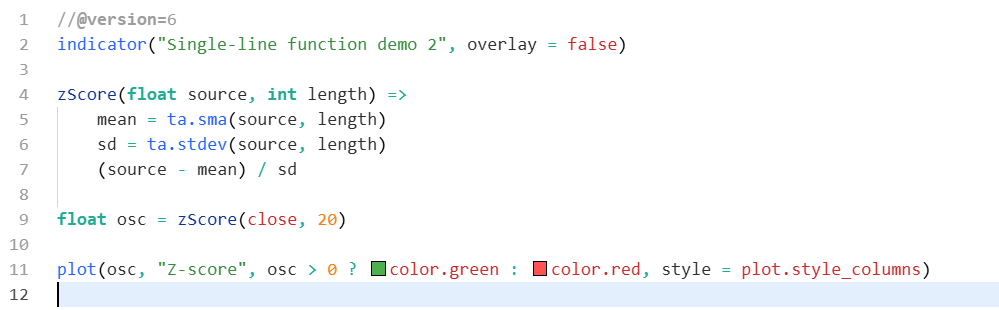
核心部分是 zScore 函数的定义。函数使用多行单行函数写法,通过箭头符号 => 声明。函数接收两个参数:source 表示数据序列,如收盘价 close,length 表示计算周期,如 20 根 K 线。函数内部首先计算 mean = ta.sma(source, length),即 source 的简单移动平均,用于反映周期内的均值;然后计算 sd = ta.stdev(source, length),即标准差,用于衡量数据的波动性。最后,函数返回 (source - mean) / sd,即标准分数(Z-score),表示当前值与均值的偏离程度以标准差为单位。
在函数定义之后,脚本调用 zScore 函数:float osc = zScore(close, 20)。这里使用收盘价作为源数据,计算 20 根 K 线周期的 Z-score,并将结果存入变量 osc。由于 Z-score 随每根 K 线变化,因此 osc 实际上是一个随时间变化的序列(series float),每根 K 线都有对应的值。
最后,脚本通过 plot 函数将 osc 绘制在独立面板上。plot(osc, "Z-score", osc > 0 ? color.green : color.red, style = plot.style_columns) 指定了绘制的数据为 osc,图例名为 “Z-score”,并根据值的正负设置颜色:正值为绿色,负值为红色,同时使用柱状图风格 plot.style_columns 展示每根柱子的高度。这样,独立面板上便能直观显示价格相对于均值的标准差偏离,绿色柱表示高于均值,红色柱表示低于均值。
本文系统介绍了 TradingView Pine Script 中用户自定义函数的概念、定义方法及使用技巧。文章首先讲解了函数的组成,包括函数头部的名称与参数声明以及函数体中表达式和语句的执行逻辑,并区分了单行函数与多行函数的写法与适用场景。随后通过具体示例,如 add() 和 zScore(),展示了函数的实际应用,包括如何封装重复计算、处理序列数据、返回计算结果以及在脚本中调用函数。
总体而言,通过对函数定义、调用、序列计算及绘图技巧的详细解析,读者不仅能够掌握 Pine Script 中自定义函数的使用方法,还能够灵活构建可复用、模块化的指标脚本,为日后的策略开发和指标优化提供坚实基础。