We would suggest that right now Markets are underestimating the impact of April 2 US Reciprocal Tariffs – aka Liberation Day monikered by the President.There is consistent and constant chatter around what is being referred to as The Dirty 15. This is the 15 countries the president suggests has been taking advantage of the United States of America for too long. The original thinking was The Dirty 15 for those countries with the highest levels of tariffs or some form of taxation system against US goods. However, there is also growing evidence that actually The Dirty 15 are the 15 nations that have the largest trade relations with the US.That is an entirely different thought process because those 15 countries include players like Japan, South Korea, Germany, France, the UK, Canada, Mexico and of course, Australia. Therefore, the underestimation of the impact from reciprocal tariffs could be far-reaching and much more destabilising than currently pricing.From a trading perspective, the most interesting moves in the interim appear to be commodities. Because the scale and execution of US’s reciprocal tariffs will be a critical driver of commodity prices over the coming quarter and into 2025.Based on repeated signals from President Trump and his administration, reinforced by recent remarks from US Commerce Secretary Howard Lutnick. Lutnick has indicated that headline tariffs of 15-30% could be announced on April 2, with “baseline” reciprocal tariffs likely to fall in the 15-20% range—effectively broad-based tariffs.The risk here is huge: economic downturn, possibilities of hyperinflation, the escalation of further trade tensions, goods and services bottlenecks and the loss of globalisation.This immediately brings gold to the fore because, clearly risk environment of this scale would likely mean that instead of flowing to the US dollar which would normally be the case the trade of last resort is to the inert metal.The other factor that we need to look at here is the actual end goal of the president? The answer is clearly lower oil prices—potentially through domestic oil subsidies or tax cuts—to offset inflationary pressures from tariffs and to force lower interest rates.‘Balancing the Budget’Secretary Lutnick has specified that the tariffs are expected to generate $700 billion in revenue, which therefore implies an incremental 15-20% increase in weighted-average tariffs. We can’t write off the possibility that the initial announcement may set tariffs at even higher levels to allow room for negotiation, take the recently announced 25% tariffs on the auto industry. From an Australian perspective, White House aide Peter Navarro has confirmed that each trading partner will be assigned a single tariff rate. Navarro is a noted China hawk and links Australia’s trade with China as a major reason Australia should be heavily penalised.Trump has consistently advocated for tariffs since the 1980s, and his administration has signalled that reciprocal tariffs are the baseline, citing foreign VAT and GST regimes as justification. This suggests that at least a significant portion of these tariffs may be non-negotiable. Again, this highlights why markets may have underestimated just how big an impact ‘liberation day’ could have.Now, the administration acknowledges that tariffs may cause “a little disturbance” (irony much?) and that a “period of transition” may be needed. The broader strategy appears to involve deficit reduction, followed by redistributing tariff revenue through tax cuts for households earning under $150K, as reported by the likes of Reuters on March 13.The White House has also emphasised a focus on Main Street over Wall Street, which we have highlighted previously – Trump has made next to no mention of markets in his second term. Compared to his first, where it was basically a benchmark for him.All this suggests that some downside risk in financial markets may be tolerated to advance broader economic objectives.Caveat! - a policy reversal remains possible in 2H’25, particularly if tariffs are implemented at scale and prove highly disruptive and the US consumer seizes up. Which is likely considering the players most impacted by tariffs are end users.The possible trades:With all things remaining equal, there is a bullish outlook for gold over the next three months, alongside a bearish outlook on oil over the next three to six months.Gold continues to punch to new highs, and its upward trajectory has yet to be truly tested. Having now surpassed $3,000/oz, as a reaction to the economic impact of tariffs. Further upside is expected to drive prices to $3,200/oz over the next three months on the fallout from the April 2 tariffs to come.What is also critical here is that gold investment demand remains well above the critical 70% of mine supply threshold for the ninth consecutive quarter. Historically, when investment demand exceeds this level, prices tend to rise as jewellery consumption declines and scrap supply increases.On the flip side, Brent crude prices are forecasted to decline to $60-65 per barrel 2H’25 (-15-20%). The broader price range for 2025 is expected to shift down to $60-75 per barrel, compared to the $70-90 per barrel range seen over the past three years.Now there is a caveat here: the weak oil fundamentals for 2025 are now widely known, and the physical surplus has yet to materialise – this is the risk to the bearish outlook and never write off OPEC looking to cut supply to counter the price falls.
The Dirty 15 and the ‘liberation’ of what?

Related Articles

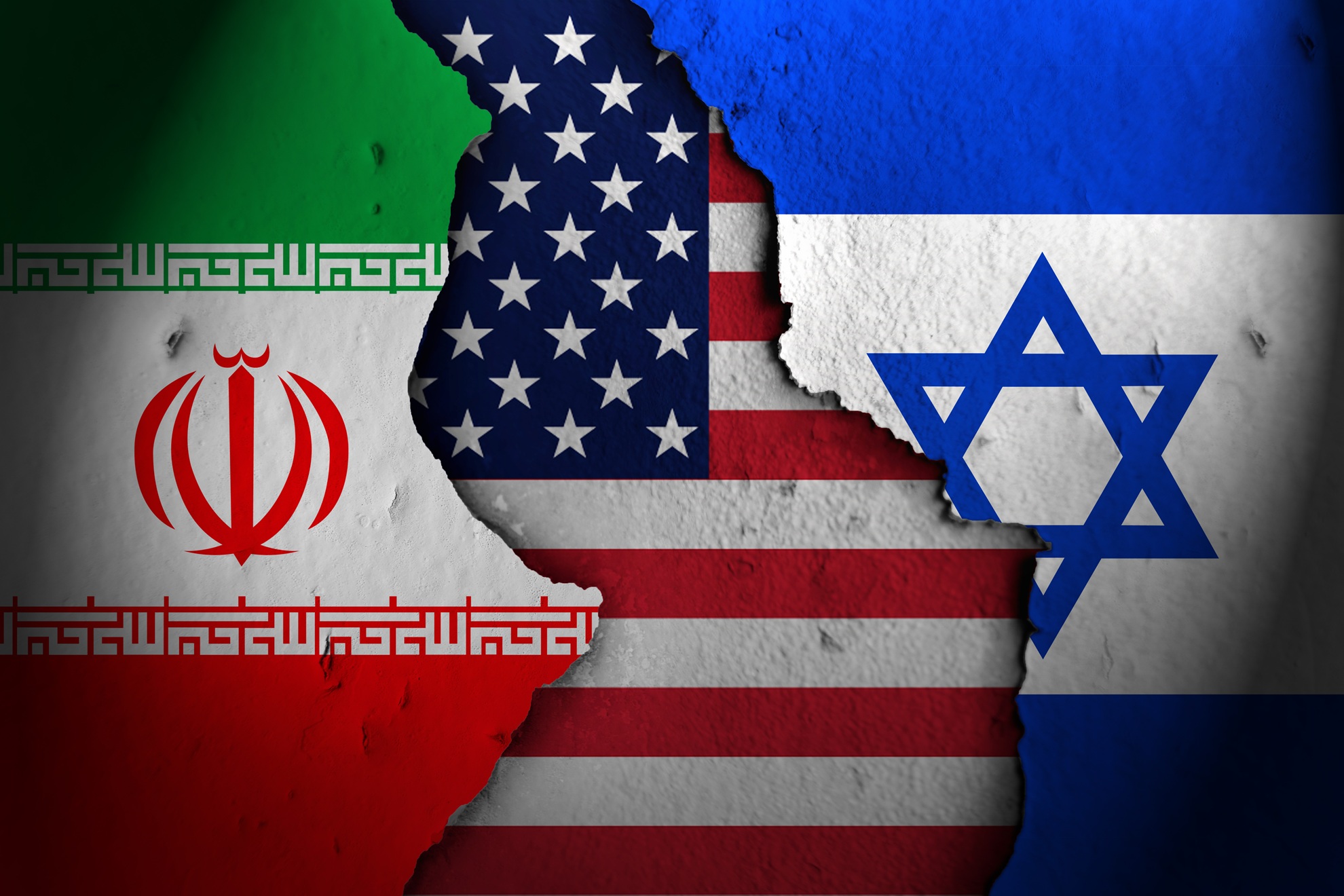
Before the charts start talking, the region does. Over the weekend, the Middle East moved from tense to kinetic. Joint US and Israeli strikes hit targets inside Iran, and multiple outlets reported Iran’s Supreme Leader Ayatollah Ali Khamenei was killed. That single fact changes the whole market sentence structure and it is not just geopolitics, it is risk premia being re-priced in real time, across energy, volatility and the global growth outlook.
Markets do not trade tragedy, rather they trade uncertainty. When the uncertainty sits on top of global energy arteries, price discovery gets loud.
At a glance
- What happened: Multiple major outlets reported that Iran’s Supreme Leader Ayatollah Ali Khamenei was killed following joint US and Israeli strikes inside Iran, with Iranian state media cited as confirming his death.
- What markets may focus on now: A fast-moving repricing of geopolitical risk premia, led by crude and refined products, plus cross-asset volatility as headlines drive liquidity, correlations and intraday ranges.
- What is not happening yet: Markets may be pricing more of a headline risk premium than a fully evidenced, sustained physical supply disruption.
- Next 24 to 72 hours: Focus is likely to stay on escalation signals and second-order constraints, including any impact on Gulf shipping routes and the policy and diplomatic track, including any UN Security Council dynamics.
- Australia and Asia hook: Flight and airspace disruptions are already spilling beyond the region. For markets, Asia-facing sensitivities can show up through refinery margins and shipping and insurance costs, while AUD can behave as a risk barometer when global risk appetite is unstable.
Oil is the transmission mechanism
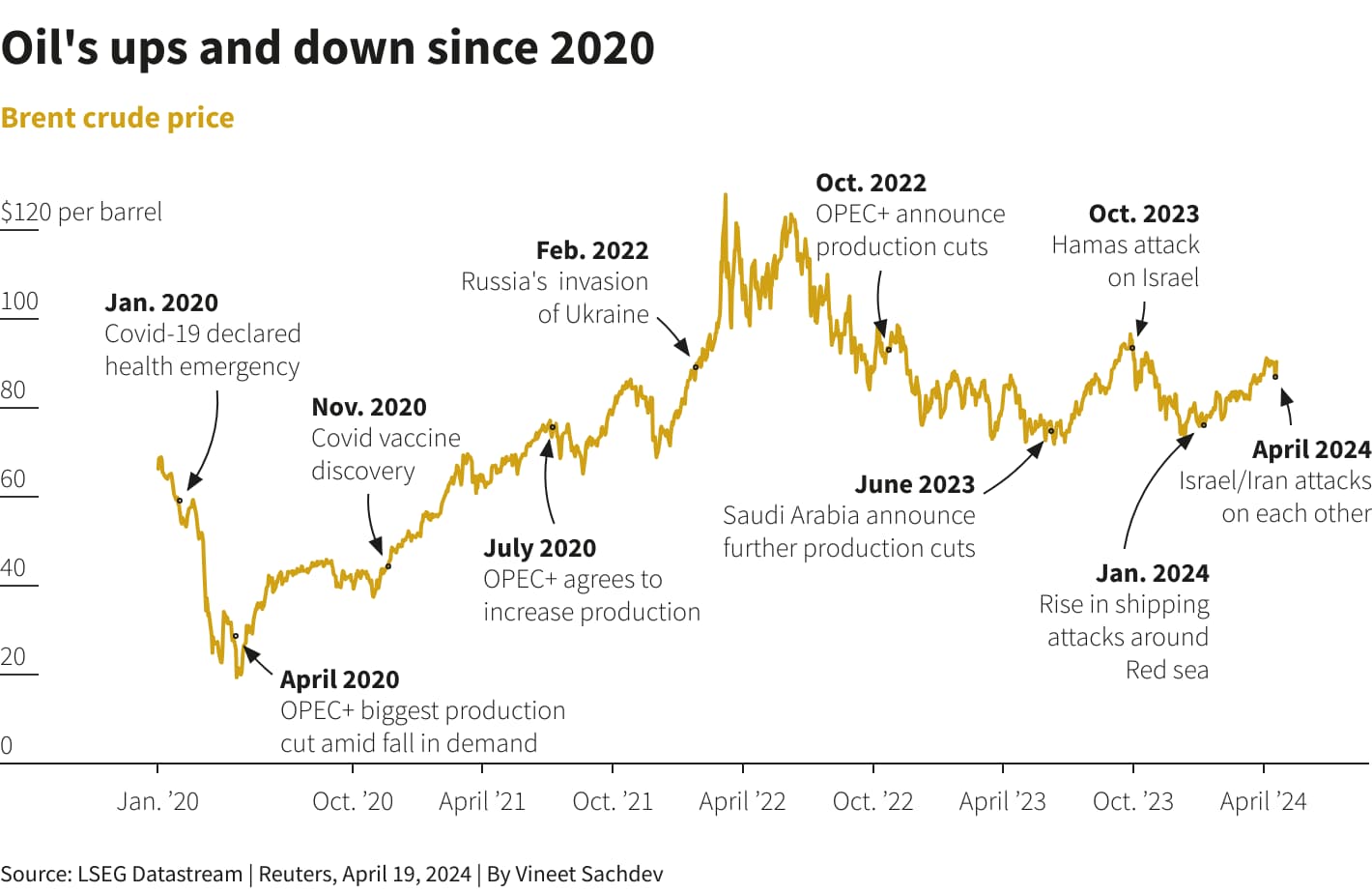
Brent crude spiked by as much as 13% in early trade on Monday 2 March, touching around US$82 per barrel in reporting, as the Strait of Hormuz risk moved from theoretical to immediate. The Strait matters because roughly one-fifth of global oil and gas shipments pass through it and when tankers hesitate, insurers re-price, and routes get re-written, energy becomes a volatility product.
Base case: partial disruption and higher “risk premium” in crude, with big intraday swings.
Upside risk: a sustained shipping slowdown or direct infrastructurehits, which some analysts warn could push crude materially higher.
Downside risk: de-escalation headlines, emergency supply responses, orclearer shipping protection that compresses the risk premium.
Read More: Where the world’s oil supply depth actually sits.
Volatility and equities
The VIX does not move in a vacuum, and this spike in uncertainty is already spilling into other asset classes in a fairly ‘textbook’ way. As volatility reprices, the market’s first instinct has been a flight to safety, alongside a scramble for commodities most exposed to the conflict.
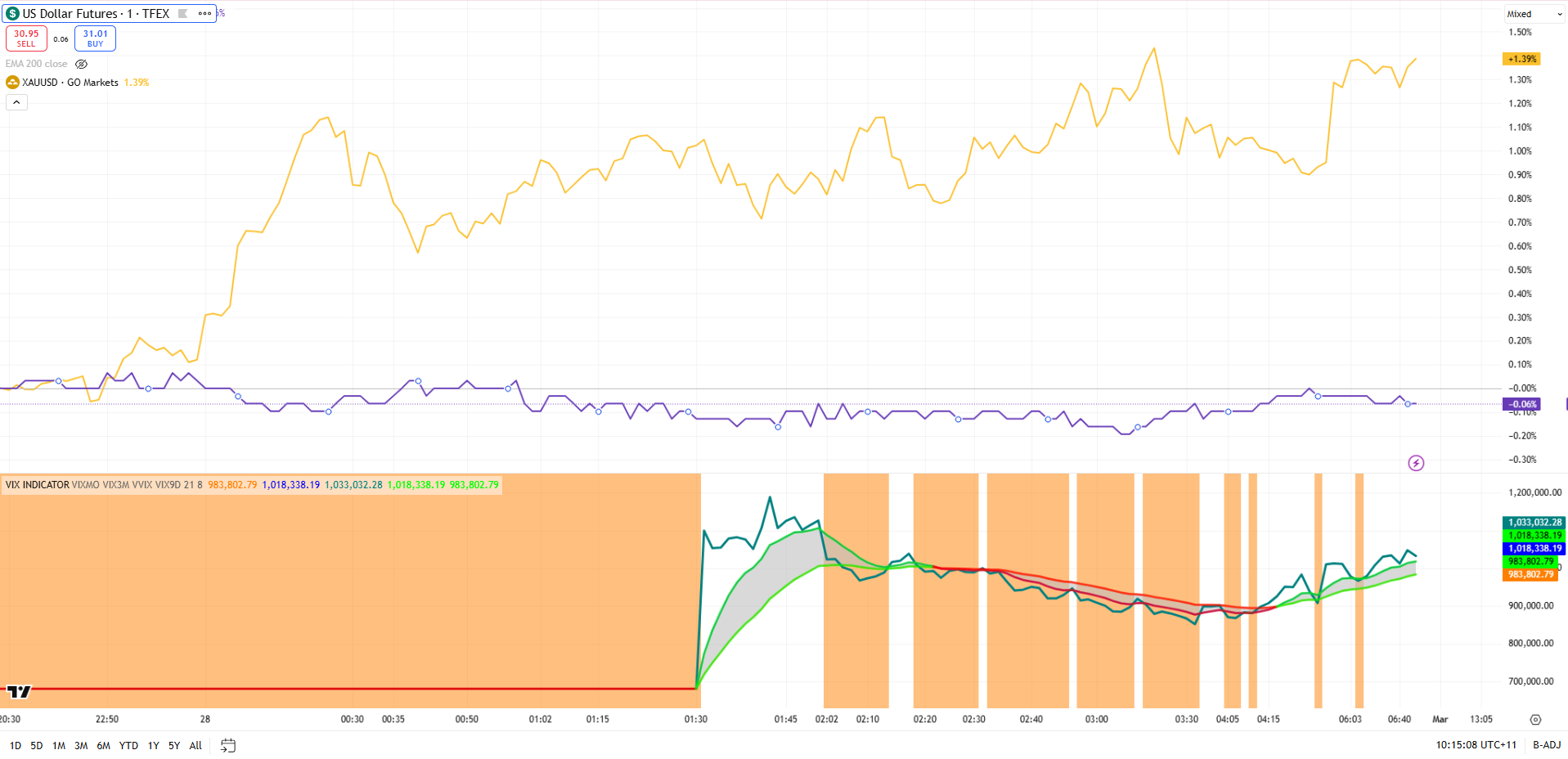
Monday saw Asia opened with that tone: Japan’s Nikkei 225 was reported down around 2.4%, and Australia’s ASX 200 dipped before stabilising. At the same time, defensive positioning showed up in classic safe havens. Gold futures gapped higher by roughly 3% over the weekend, while traditional refuge currencies, led by the Swiss franc, attracted immediate inflows against both the euro and the US dollar.
Equity risk, by contrast, took the hit. US index futures, including the Dow and S&P 500, opened lower as desks moved to price in the twin threat of a wider regional conflict and the inflationary drag that can follow a sharp jump in energy costs.
Read More: Understanding volatility (and what it can mean for CFD trading conditions).
Safe havens do what they do
Gold rallied as the market reached for insurance. Reporting had gold up close to 3% in the same Monday session that oil surged. Worth noting for Aussie and Asia traders: when oil jumps and gold jumps together, the market is often telling you it is worried about both inflation and growth. That is a messy mix for central banks, including the RBA, because petrol-driven inflation can rise even as demand softens.
What this could mean for CFD risk management
Focus 1: map the event risk calendar
In headline-driven markets, prices can move faster than liquidity. The risk is not just being wrong; it can also be timing and execution risk in volatile conditions.
Some traders monitor which developments might change market sentiment (for example, official statements or verified operational updates). If you choose to trade, it may be worth understanding how price gaps and volatility could affect your position, including around session opens and major announcements.
Markets can gap or move quickly, and order execution (including stop orders, if used) may not occur at expected levels, especially in fast conditions or low liquidity. Features and outcomes depend on the product terms and market conditions.
Focus 2: watch the energy to inflation pathway
If crude remains elevated, markets may watch whether inflation expectations shift. If that occurs, it could influence rates, equities and FX and although outcomes depend on multiple factors and can change quickly.
That may be reflected in:
- Global bond yields, as rates markets adjust.
- Equity valuation sensitivity, particularly in long-duration and growth-heavy areas.
- FX moves, including across the Australian dollar, Japanese yen, and some commodity-linked currencies.
Want a comparable risk-premium setup? Look at Venezuela.
What to watch next
For general market context (not as a recommendation to trade), some observers monitor:
- Key headlines and official statements that point to escalation or de-escalation.
- Brent and WTI price action, including whether elevated levels persist beyond an initial spike.
- Inflation expectations and rates pricing, including moves in bond yields and market-based inflation measures.
- Risk-sentiment signals, including volatility levels and equity index futures behaviour around major sessions.

Volatility headlines can encourage rushed decisions and for leveraged products like CFDs, acting without a plan can increase the risk of losses. During times like this, a pattern does emerge.
News shock → Emotional reaction → Impulsive trade → Higher risk of avoidable losses
This isn’t about being “wrong” so much as it’s about skipping the emotional reaction between headline and trade idea.
Translation: The headline isn’t your signal. Your process is.
Middle East flare-ups, sanctions, shipping disruptions, regional security shocks? This is your general checklist for assessing how geopolitical developments may affect markets.
Note: This article provides general information only and is not financial advice. It does not take into account your objectives, financial situation or needs. CFDs are complex, leveraged products and carry a high risk of loss. Consider whether trading CFDs is appropriate for you and refer to the relevant disclosure documents before trading.
Step 1. Identify the driver
Here’s the trap: “Iran” is not the driver. “Conflict” is not the driver. Those are categories useful for cable news but too broad for a risk-defined CFD trade. What moves markets is the mechanism that got worse today than it was yesterday. Separate the headline from the specific mechanism.

Driver A: Energy risk
This is the Strait of Hormuz, shipping lanes, insurance and rerouting story. In Iran flare-ups, markets care because the threat isn’t just “war,” it’s friction in oil logistics including tankers avoiding routes, insurance premiums surging and temporarily suspended transits. When Hormuz risk gets priced, oil prices may react quickly where markets perceive increased shipping or supply risk, which can influence inflation expectations.
Driver B: Supply risk
This is not “ships are nervous.” This is about production outages, infrastructure hits, refinery disruptions and export constraints. This driver tends to matter more when the headline implies physical damage or credible near-term capacity loss.
Driver C: Funding stress
This is the under-discussed engine of ugly CFD outcomes: the “who needs dollars right now?” problem. This is not “risk-off vibes,” this is liquidity tightening, the kind that makes markets move together and can coincide with wider spreads, slippage and faster price moves, which may affect execution.
In an Iran flare-up, funding stress shows up when participants stop debating the headline and start doing the mechanical work of de-risking: broad USD demand, carry trades unwinding and correlated selling across risk assets. And here’s the key filter that stops you from overreacting: the USD tends to strengthen persistently and broadly mainly during severe funding stress, not every routine fear spike.
Driver D: Policy amplification
This is not about tensions rising so much as the rules changing, the kind of change that outlives the headline cycle and forces real repricing because it alters incentives, access, or flows. The Iran conflict headlines won’t stay local if policy escalates them through sanctions (supply, payments, shipping, insurance), changes to retaliation rules, or shifts in central bank reaction functions as oil risk feeds into inflation risk. That can harden rate expectations.
This is where “geopolitics” stops being narrative and becomes policy constraint and policy constraints tend to create follow-through because they change what market participants can do, not just what they think.
Before acting on a headline
If you choose to monitor breaking news, consider pausing before trading and checking whether the development is new, whether there are observable real-world constraints, and how markets are reacting. Don’t ask ‘is this bullish for gold?’. Instead, consider:
- Is this a flow story, a barrel story, a funding story, or a policy story?
- Is it new information or a remix of what markets already knew?
- Is there evidence of real-world constraint (shipping behaviour, insurance, official measures), or just rhetoric?”
Step 2. Identify the key markets
Some traders stick to a small set of markets they know well, especially when headlines hit. Liquidity and spreads can change fast. If you try to watch everything, you may end up trading your own adrenaline rather than the market.
1) Oil (WTI or Brent proxy)
If the driver is energy flow risk or supply risk, oil is usually the first and cleanest repricing channel—risk premium, inflation impulse, and global growth expectations all run through here.
2) USD conditions (DXY proxy or your most tradable USD pairs)
Not because the USD is always “safe haven,” but because it’s the funding layer under everything. In true stress, you’ll see broad USD strength; in “headline stress,” you often won’t.
3) Gold
Gold is not “up on fear” by default, its fear filtered through USD and real yields. If USD funding stress ramps up, gold can be pulled in different directions and this is why traders get whipsawed: they trade the story, not the cross-currents.
4) A volatility gauge (execution risk, not ideology)
This can help gauge whether conditions may lead to wider spreads, slippage or faster moves.
5) The instrument you actually trade
For a lot of CFD traders, this is where the Iran shock becomes your problem in the form of local markets and local positioning and USD pairs.
Don’t map by habit, map by driver
- Energy flow risk? Oil first, then risk indices, then FX linked to risk/commodities.
- Funding stress? USD conditions first, then JPY crosses, then equities.
- Policy shock? Watch oil + USD together—policy can tighten both simultaneously.
Translation: For some traders, focus comes from watching fewer markets that are most relevant to the driver they’re assessing.
Step 3. Check the charts that matter
Before considering any trade setup, some traders do a quick ‘triage’ check. The aim isn’t prediction, it’s checking whether fast markets could mean wider spreads, slippage or sharper moves in leveraged products like CFDs.
Chart A: Oil
What you’re checking: Is the market pricing real disruption risk, or just reacting? In Iran-related flare-ups, “Hormuz risk” narratives tend to show up as a risk premium conversation in oil, often faster than it shows up in equities or FX.
Examples of chart features some traders look at include
- Is price breaking and holding above a prior structure level? (Not just spiking).
- Did it gap and then fill? (Often means headline heat > real constraint).
- Is the move continuing during liquid sessions, or only during thin hours? (Thin-hours moves are where CFD spreads can punish you the most).
Translation: Oil indicates whether the Iran story may become an inflation/flow story or just a screen-flash.

Chart B: USD
What you’re checking: Is this turning into a funding event? The USD doesn’t “safe-haven” on schedule. In some episodes of severe global funding stress, the USD has strengthened broadly and persistently, although this isn’t consistent across all headline-driven spikes.
Practical CFD filters:
- Broad USD strength across multiple pairs (not just one cross doing something weird).
- Commodity FX vs USD (AUD, CAD proxies) behaving like risk is truly tightening.
- JPY crosses as a stress indicator (carry unwind tells the truth quickly).
If USD is not confirming, that’s information. It often means: headline risk is loud, but global liquidity isn’t actually panicking.
Translation: USD indicates whether the Iran headline is “market stress”… or “market noise with wider spreads and higher execution risk.”

Chart C: Volatility
What you’re checking: How dangerous normal sizing has become.
Use a sizing governor that forces honesty:
- Normal ranges → normal size
- ~1.5× typical range expansion → consider half size
- ~2× range expansion → quarter size or stand aside
Some traders reduce position size or choose not to trade when ranges expand materially versus usual conditions. Any sizing approach depends on individual circumstances and risk tolerance.
Because in CFDs, volatility doesn’t just change directionality, it changes execution quality, stop distance, and how fast a loss becomes a margin problem.
Translation: Volatility is your permission slip or your stop sign.

Step 4. Choose a setup type
Geopolitics creates volatility but it doesm't guarantee trend.
Pick structure, not opinion
- Breakout: after the market forms a post-headline range.
- Pullback: once trend is established and liquidity steadies.
- Mean reversion: only if the spike stalls and structure confirms.
Common mistake: picking direction first, then hunting confirmation.
Translation: The setup is the response to price behaviour, not your worldview.
Step 5. Define risk
From a general risk-management perspective, traders often define that a trade idea is not complete until it has
- Entry condition: what must happen for you to participate
- Invalidation: where you are wrong
- Position size: based on dollars-at-risk, not conviction
- Session max loss: daily or weekly cap (protects you from spiral trading)
For CFDs specifically, regulators emphasise how leverage can accelerate losses, and why protections such as margin close-out arrangements, leverage limits and negative balance protection (where applicable) exist.

Asia starts the week with a fresh geopolitical shock that is already being framed in oil terms, not just security terms. The first-order move may be a repricing of risk premia and volatility across energy and macro, while markets wait to see whether this becomes a durable physical disruption or a fast-fading headline premium.
At a glance
- What happened: US officials said the US carried out “Operation Absolute Resolve”, including strikes around Caracas, and that Venezuela’s President Nicolás Maduro and his wife were taken into US custody and flown to the United States (subject to ongoing verification against the cited reporting).
- What markets may focus on now: Headline-driven risk premia and volatility, especially in products and heavy-crude-sensitive spreads, rather than a clean “missing barrels” shock.
- What is not happening yet: Early pricing has so far looked more like a headline risk premium than a confirmed physical supply shock, though this can change quickly, with analysts pointing to ample global supply as a possible cap on sustained upside.
- Next 24 to 72 hours: Market participants are likely to focus on the shape of the oil “quarantine”, the UN track, and whether this stays “one and done” or becomes open-ended.
- Australia and Asia hook: AUD as a risk barometer, Asia refinery margins in diesel and heavy, and shipping and insurance where the price can show up in friction before it shows up in benchmarks.
What happened, facts fast
Before anyone had time to workshop the talking points, there were strikes, there was a raid, and there was a custody transfer. US officials say the operation culminated in Maduro and his wife being flown to the United States, where court proceedings are expected.
Then came the line that turned a foreign policy story into a markets story. President Trump publicly suggested the US would “run” Venezuela for now, explicitly tying the mission to oil.
Almost immediately after that came a message-discipline correction. Secretary of State Marco Rubio said the US would not govern Venezuela day to day, but would press for changes through an oil “quarantine” or blockade.
That tension, between maximalist presidential rhetoric and a more bureaucratically describable “quarantine”, is where the uncertainty lives. Uncertainty is what gets priced first.

Why this is price relevant now
What’s new versus known for positioning
What’s new, and price relevant, is that the scale and outcome are not incremental. A major military operation, a claimed removal of Venezuela’s leadership from the country, and a US-led custody transfer are not the sort of things markets can safely treat as noise.
Second, the oil framing is explicit. Even if you assume the language gets sanded down later, the stated lever is petroleum. Flows, enforcement, and pressure via exports.
Third, the embargo is not just a talking point anymore. Reporting says PDVSA has begun asking some joint ventures to cut output because exports have been halted and storage is tightening, with heavy-crude and diluent constraints featuring prominently.
What’s still unknown, and where volatility comes from
Key unknowns include how strict enforcement is on water, what exemptions look like in practice, how stable the on-the-ground situation is, and which countries recognise what comes next. Those are not philosophical questions. Those are the inputs for whether this is a temporary risk premium or a durable regime shift.
Political and legal reaction, why this drives tail risk
The fastest way to understand the tail here is to watch who calls this illegal, and who calls it effective, then ask what those camps can actually do.
Internationally, reaction has been fast, with emphasis on international law and the UN Charter from key partners, and UN processes in view. In the US, lawmakers and commentators have begun debating the legal basis, including questions of authority and war powers. That matters for markets because it helps define whether this is a finite operation with an aftershock, or the opening chapter of a rolling policy regime that keeps generating headlines.
Market mechanism, the core “so what”
Here’s the key thing about oil shocks. Sometimes the headline is the shock. Sometimes the plumbing is the shock.

Volumes and cushion
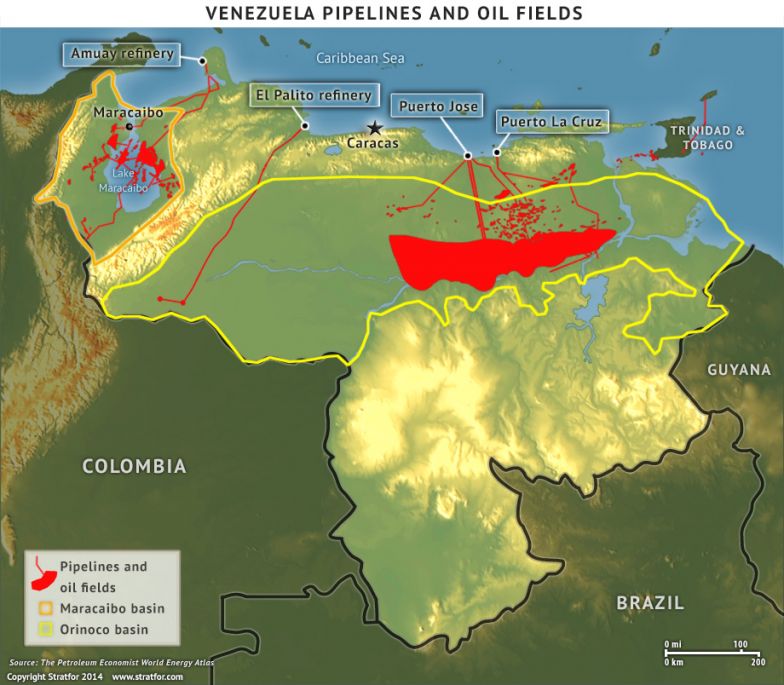
Venezuela is not the world’s swing producer. Its production is meaningful at the margin, but not enough by itself to imply “the world runs out of oil tomorrow”. The risk is not just volume. It is duration, disruption, and friction.
The market’s mental brake is spare capacity and the broader supply backdrop. Reporting over the weekend pointed to ample global supply as a likely cap on sustained gains, even as prices respond to risk.
Quality and transmission
Venezuela’s barrels are disproportionately extra heavy, and extra heavy crude is not just “oil”. It is oil that often needs diluent or condensate to move and process. That is exactly the kind of constraint that shows up as grade-specific tightness and product effects.
Reporting has highlighted diluent constraints and storage pressure as exports stall. Translation: even if Brent stays relatively civil, watch cracks, diesel and distillates, and any signals that “heavy substitution” is getting expensive.

Products transmission, volatility first, pump later
If crude is the headline, products are the receipt, because products tell you what refiners can actually do with the crude they can actually get. The short-run pattern is usually: futures reprice risk fast, implied volatility pops; physical flows adapt more slowly; retail follows with a lag, and often with less drama than the first weekend of commentary promised.
For Australia and Asia desks, the bigger point is transmission. Energy moves can influence inflation expectations, which can feed into rates pricing and the dollar, and in turn affect Asia FX and broader risk, though the links are not mechanical and can vary by regime.
Some market participants also monitor refined-product benchmarks, including gasoline contracts such as reformulated gasoline blendstock, as part of that chain rather than as a stand-alone signal.
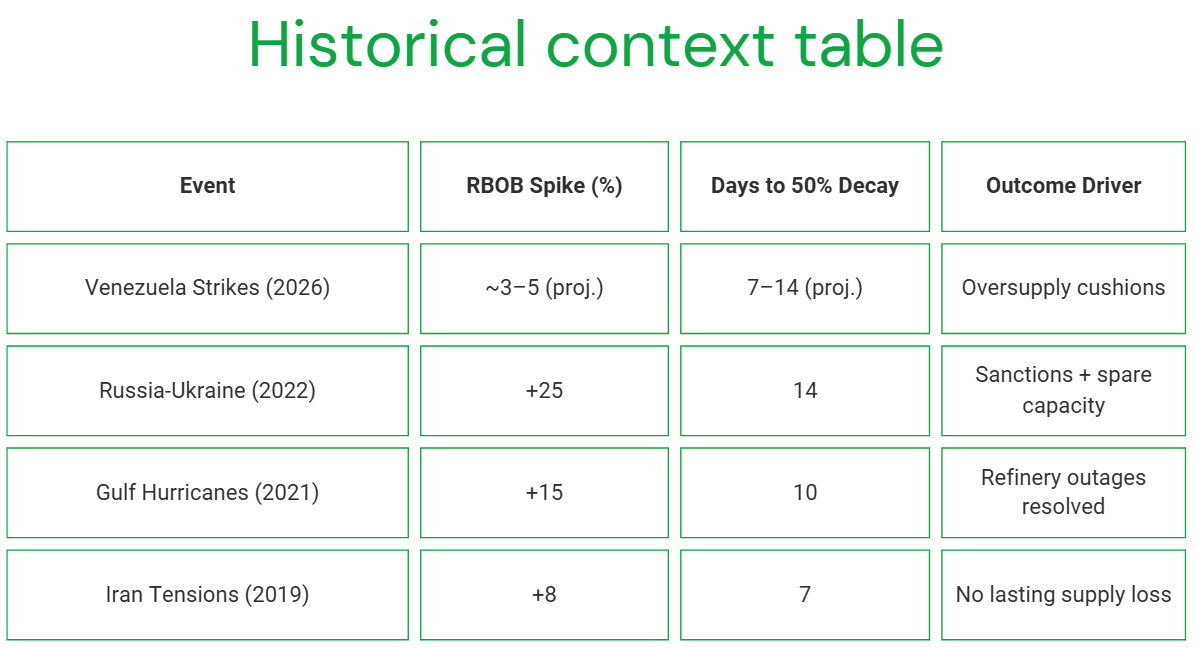
Historical context, the two patterns that matter
Two patterns matter more than any single episode.
Pattern A: scare premium. Big headline, limited lasting outage. A spike, then a fade as the market decides the plumbing still works.
Pattern B: structural. Real barrels are lost or restrictions lock in; the forward curve reprices; the premium migrates from front-month drama to whole-curve reality.

One commonly observed pattern is that when it is only premium, volatility tends to spike more than price. When it is structural, levels and time spreads move more durably.
The three possible market reactions
Contained, rhetorical: quarantine exists but porous; diplomacy churns; no second-wave actions. Premium bleeds out; volatility mean-reverts.
Embargo tightens, exports curtailed, quality shock: enforcement hardens; PDVSA cuts deepen; diluent constraints bite. Heavies bid; cracks and distillates react; freight and insurance add friction.
Escalation, prolonged control risk: “not governing” language loses credibility; repeated operations; allies fracture further. Longer-duration premium; broader risk-off impulse across FX and rates.
Australia and Asia angle
For Sydney, Singapore, and Hong Kong screens, this is less about Venezuelan retail politics and more about how a Western Hemisphere intervention bleeds into Asia pricing.
AUD is the quick and dirty risk proxy. Asia refiners care about the kind of oil and the friction cost. Heavy crude plus diluent dependency makes substitution non-trivial. If enforcement looks aggressive, the “price” can show up in freight, insurance, and spreads before it shows up in headline Brent.
Catalyst calendar, key developments markets may monitor
- US policy detail: quarantine rules, enforcement posture, exemptions.
- UN and allies: statements that signal whether this becomes a long legitimacy fight.
- PDVSA operations: storage, shut-ins, diluent availability, floating storage signals.
- OPEC+ signalling: whether the group stays committed to stability if spreads blow out.
Recent Articles

Volatility has a way of showing up uninvited.
One day the ASX is drifting quietly... and the next, margin requirements rise, stops do not fill where expected, and portfolios open with uncomfortable overnight gaps.
If you have been searching for answers, you are not alone. Some of the most searched questions about volatility among Australian traders relate to margin calls, slippage, overnight gaps, leveraged exchange traded funds (ETFs), and tools such as average true range (ATR).
Here is what is happening.
Why this matters now
Global markets have become more sensitive to interest rates, inflation data, geopolitics and technology-driven flows. When liquidity thins and uncertainty rises, price swings widen. That is volatility.
And volatility doesn’t just affect price direction, it changes how trades are executed, how much capital is required, and how risk behaves beneath the surface.
Translation: Volatility is not just about bigger moves, rather, it’s about faster moves and thinner liquidity - that’s when the mechanics of trading matter most.
Want a real-world volatility case study?
Why did my broker increase margin requirements?
One of the most searched questions about volatility is why margin requirements increase without warning.
When markets become unstable, brokers may increase margin requirements on contracts for difference (CFDs) and other leveraged products. Larger price swings can increase the risk of accounts moving into negative equity thus raising margin requirements reduces available leverage and can help manage exposure during extreme conditions.
What this can mean in practice
-A margin call may occur even if price has not moved significantly.
-Effective leverage can drop quickly.
-Positions may need to be reduced at short notice.
Margin adjustments are typically a response to changing market risk, not a random decision. In highly volatile markets, it is prudent to assume margin settings can change quickly, therefore many traders choose to review position sizes and available buffers in light of that risk.
What is slippage and why didn’t my stop fill at my price?
Another frequently searched topic is slippage.
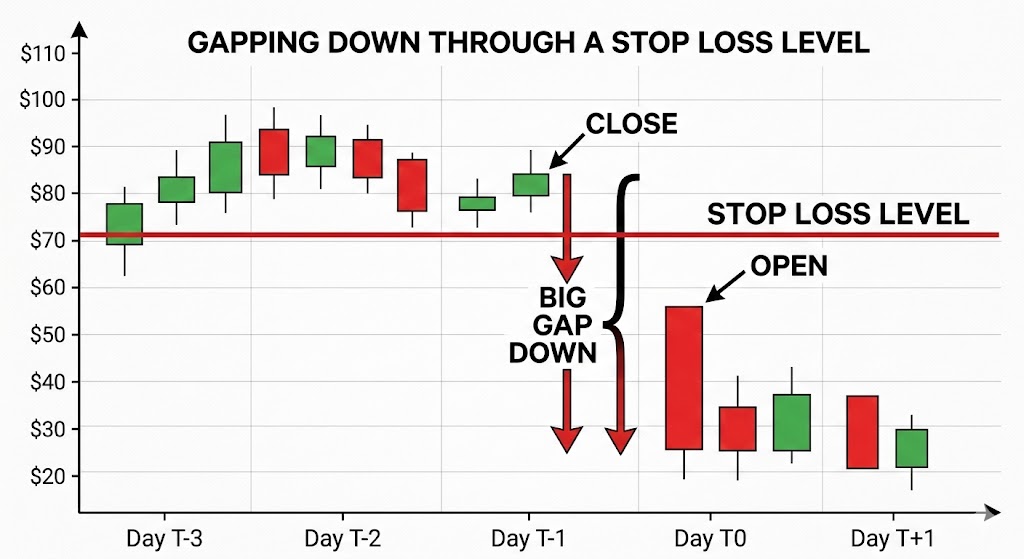
Slippage can occur when a stop order triggers and is executed at the next available price, the outcome can depend on the order type, market liquidity and gaps. In calm markets, the difference may be small whereas in fast markets, prices can gap beyond the stop level.

Common drivers include
-Major economic or earnings releases.
-Thin liquidity.
-Crowded stop levels.
-Overnight sessions.
Stop-loss orders generally prioritise execution rather than price certainty and during periods of high volatility, this distinction becomes important. Adjusting position size and placing stops with reference to typical price movement may be more effective than simply tightening stops in unstable conditions.
How do I manage overnight gapping on the ASX?
Australia trades while the United States sleeps, and vice versa. This time zone difference is, sadly, one reason overnight gap risk is frequently searched by Australian traders. If US markets fall sharply, the ASX may open lower the following morning, with no opportunity to exit between the close and the open.
Examples of risk-management approaches market traders may use include
-Index hedging using ASX 200 futures or CFDs*.
-Partial hedging during high risk events.
-Reducing exposure ahead of major macro announcements.
Hedging can offset part of a move, but it introduces basis risk as individual stocks may not move in line with the broader index.
There is no perfect protection, only trade-offs between cost, complexity and risk reduction.
*CFDs are complex instruments and come with a high risk of losing money due to leverage.
What are the key risks of leveraged or inverse ETFs in volatile markets?
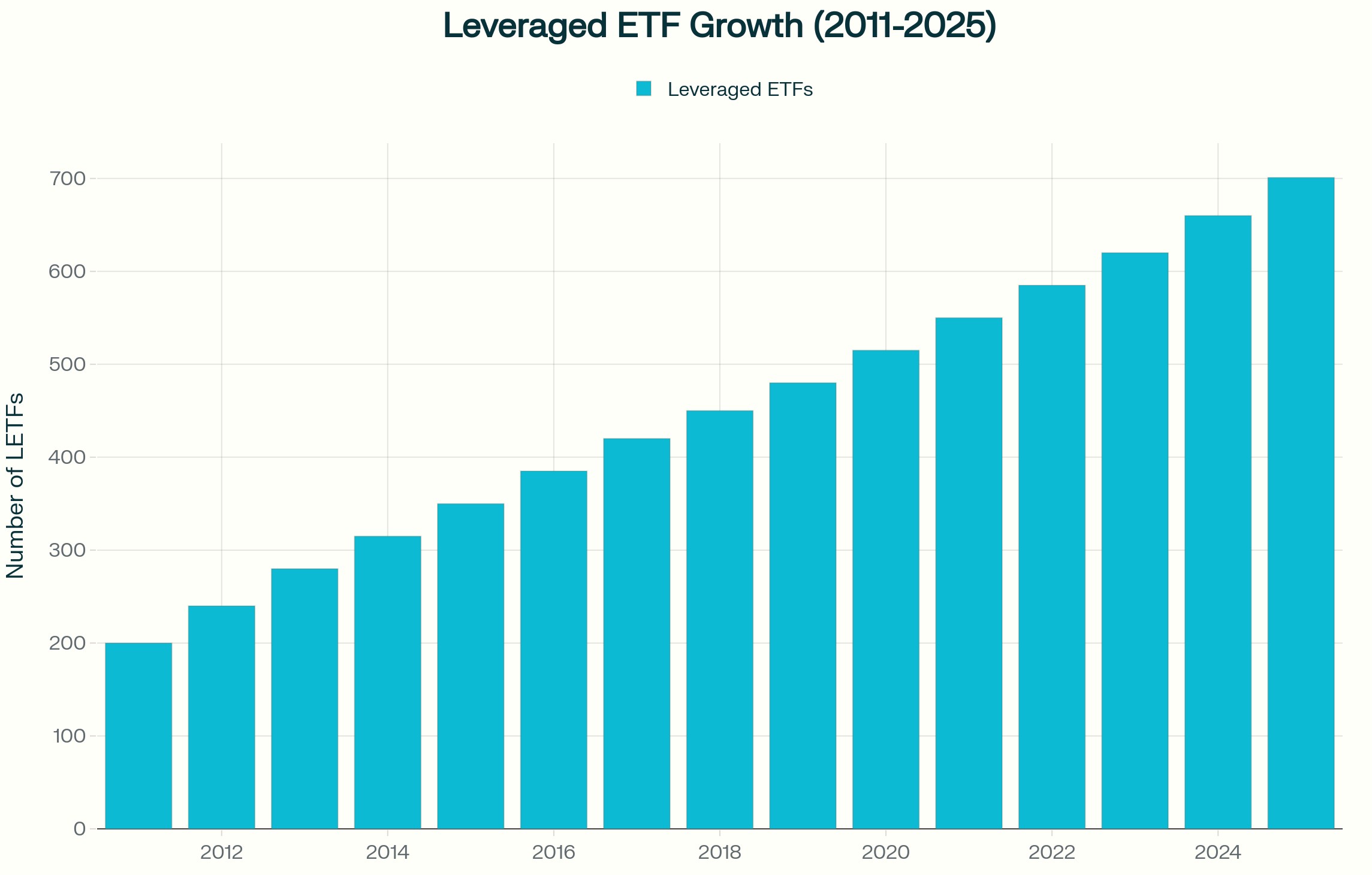
Leveraged and inverse ETFs are often searched during periods of heightened volatility.
While these products typically reset daily, they aim to deliver a multiple of the index’s daily return, not its long-term return. In a volatile, sideways market, daily compounding can erode value even if the index finishes near its starting level.

This occurs because gains and losses compound asymmetrically. A fall of 10 percent requires a gain of more than 10 percent to recover. When that effect is multiplied daily, outcomes can diverge materially from the underlying index over time.
Such instruments may be used tactically by some market participants. They are generally not designed as long-term hedging tools and understanding their structure is essential before using them in a strategy.
How can ATR be used to inform stop placement?
Average true range (ATR) is a commonly used indicator for measuring volatility.
ATR estimates how much an asset typically moves over a given period, including gaps. Rather than setting a stop at an arbitrary percentage, some traders reference ATR and place stops at a multiple, such as two or three times ATR, to reflect prevailing conditions.
When volatility rises, ATR expands and that can imply wider stops or smaller position sizes if overall risk is to remain constant. The shift is from asking, “How far am I willing to lose?” to asking, “What is a normal move in current conditions?"
Practical considerations in volatile markets
During periods of elevated volatility, traders may consider
- Allowing for the possibility of margin changes
- Sizing positions conservatively if volatility increases
- Recognising that stop-loss orders do not guarantee a specific exit price
- Reviewing exposure ahead of major economic events
- Understanding the daily reset mechanics of leveraged ETFs
- Using volatility measures such as ATR to inform stop placement
- Maintaining adequate cash buffers
Volatility does not reward prediction alone. Preparation and risk awareness may assist traders in understanding potential risks, but outcomes remain unpredictable.
Read: Global volatility and how to trade CFD
What this means for Australian traders
Australian markets face specific structural considerations cpmapred to Asian and US Markets. Overnight gap risk is influenced by US trading hours and resource heavy indices such as the ASX can respond quickly to commodity price movements and data from China. Currency exposure, including AUD and US dollar (USD) moves, can add another layer of variability.
Volatility is not uniform across regions. It behaves differently depending on market structure and liquidity depth.
Frequently asked questions about volatility
What causes sudden spikes in market volatility?
Interest rate decisions, inflation data, geopolitical developments, earnings surprises and liquidity constraints are common triggers.
Why do brokers increase margin during volatile markets?
To reduce leverage exposure and manage risk when price swings widen.
Can stop-loss orders fail during volatility?
They can experience slippage if markets gap beyond the stop level, meaning execution may occur at a worse price than expected. In fast or illiquid markets, this difference can be significant.
Are leveraged ETFs suitable for long term hedging?
They are generally structured for short-term exposure due to daily resets. Whether they are appropriate depends on your objectives, financial situation and risk tolerance.
How can volatility be measured before placing a trade?
Tools such as ATR, implied volatility indicators and historical range analysis can help quantify prevailing conditions.
Risk warning: Periods of heightened volatility can lead to rapid price movements, margin changes and execution at prices different from those expected. Risk-management tools such as stop-loss orders and volatility indicators may assist in assessing market conditions but cannot eliminate the risk of loss, particularly when using leveraged products.

Few institutions shape everyday Australian life as quietly, or as powerfully, as the Reserve Bank of Australia (RBA).
Every time you renew a mortgage, open a savings account, or watch the Australian dollar move, the RBA's decisions are somewhere in the background.
But what actually goes on inside the bank, and what drives the calls that ripple through the entire Australian economy?
Quick facts
- The RBA's cash rate is the single most-watched number in Australian finance.
- Rate decisions are made by a nine-member board, eight times per year.
- The RBA targets inflation of 2–3% on average over time.
- Australia's cash rate reached a 12-year high of 4.35% in November 2023.
What is the RBA?
The RBA is Australia’s central bank. Unlike commercial banks that lend to individuals and businesses, the RBA lends to financial institutions, issues the nation's currency, and acts as the government's banker.
It also plays a role in overseeing the stability of the broader financial system. It can step in during periods of economic stress to ensure credit keeps flowing.
What is central bank independence, and why does it matter?
For the average Australian, the RBA is most visible through its influence on interest rates. By setting a target for the cash rate, it shapes borrowing and saving costs across the economy.
This influence can filter through to mortgage rates, business lending, and the price of the Australian dollar.
How does the cash rate work?
The cash rate is the interest rate the RBA charges on overnight loans between banks. Banks constantly lend money to each other to manage their daily cash needs, and the RBA sets the floor on what those borrowing costs are.
When the RBA raises the cash rate, banks tend to pass that cost on to borrowers; when it cuts, interest on repayments tends to fall.
This knock-on effect is why the cash rate is such a powerful tool. Banks price their products off the cash rate, so a 0.25% RBA move typically flows through to variable mortgage rates within weeks.
Effects of RBA cash rate moves
A large share of Australian mortgages are on variable rates, so any change in the cash rate tends to pass through to household budgets faster than in countries where fixed-rate lending is more prominent.
How does the RBA make decisions?
The RBA board meets eight times per year to set monetary policy, with meeting dates published in advance.
The Board has nine members: the Governor, the Deputy Governor, the Secretary to the Treasury, and six external members appointed by the Treasurer for five-year terms. Decisions are made by consensus where possible, with the Governor holding a casting vote if needed.
These members make decisions with the intention of maintaining price stability and supporting full employment, with the economic prosperity and welfare of the Australian people as the overarching objective.
Price stability generally means keeping inflation within a 2–3% target band on average over time. The "on average over time" framing is deliberate; the RBA doesn't panic if inflation briefly strays outside the band, but sustained deviation in either direction can prompt the Board to consider a policy response.
Full employment is viewed in terms of the Non-Accelerating Inflation Rate of Unemployment (NAIRU), the lowest unemployment rate the economy can sustain without generating inflationary wage pressure. Estimates vary, but the RBA has historically placed this around 4–4.5%.
The tension between these two goals defines most RBA decisions. A strong labour market is good news for workers, but it can push wages (and therefore inflation) higher. On the other hand, cooling inflation often requires accepting some rise in unemployment.
In the lead-up to each meeting, RBA staff prepare extensive briefing materials covering every major economic indicator. The Board debates the evidence over two days before reaching a decision. The outcome is announced publicly at 2:30 pm AEDT on the meeting day, followed by a detailed statement and a press conference by the Governor.
Key inputs to each decision
The RBA's recent rate cycle
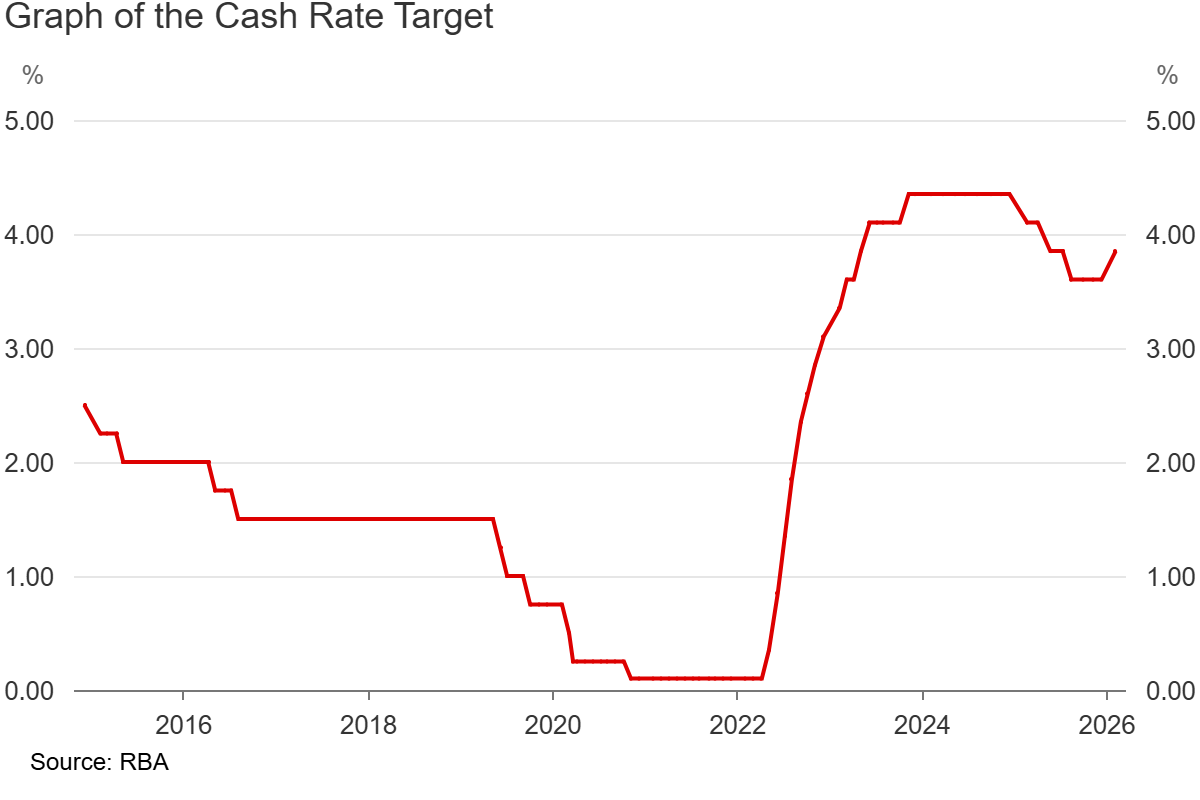
The current rate cycle is one of the most aggressive in the RBA's modern history. After holding the cash rate at a record low of 0.10% through the COVID pandemic, the RBA began hiking in May 2022 and raised rates thirteen times before pausing at 4.35% in November 2023.
A borrower with a $750,000 variable-rate mortgage saw their monthly repayments rise by roughly $1,500 to $1,800 between May 2022 and late 2023, a significant squeeze on household budgets that fed directly into the consumer slowdown the RBA was trying to engineer.
Throughout 2025, the RBA periodically dropped the rate back down, with it now sitting at 3.75% after a recent hike in February 2026.

What should traders watch?
Monthly CPI
Monthly CPI is generally considered the most important single data point for RBA watchers. If the data returns a “quarterly trimmed mean CPI” print above 3%, it can sharpen expectations of a hike or delay cuts (particularly if it surprises to the upside). The “trimmed mean” is the RBA's preferred measure as it tends to reduce data noise from volatility.
Labour force data
The labour force data includes numbers on the unemployment and underemployment rates, and wage growth. The RBA watches these numbers closely for any signs that wages may be rising at a pace inconsistent with the inflation target.
Governor's speeches and appearances
Between formal meetings, the Governor testifies before the House Economics Committee and delivers public speeches. These are closely scrutinised for sentiment signals of the board. Simple shifts in language, from "patient" to "vigilant", for example, can often be perceived as a change in tone that could influence the rate decision in upcoming meetings.
Neutral rate
The “neutral rate” is the cash rate range the RBA believes will neither speed the economy up nor slow it down. The current neutral cash rate is estimated at around 3.0–3.5%, which is below the actual rate of 3.75%, a sign that the RBA is still pumping the brakes on the economy. As the rate gets closer to the neutral zone, it can signal less urgency for the RBA to keep cutting. However, surprise data can always upend this assumption.
Global central banks
The RBA doesn't operate in isolation. If the US Federal Reserve holds rates higher for longer, it limits the RBA's room to cut without weakening the AUD and importing inflation through higher import prices.
Bottom line
The RBA's job is to keep the Australian economy on an even keel, and the cash rate is its main tool for doing so. Its decisions touch almost every corner of Australian financial life, from what you pay on your mortgage to how the Aussie dollar trades.
For traders, understanding how the RBA thinks and what it is watching goes a long way toward making sense of the broader Australian economic environment.

Before the charts start talking, the region does. Over the weekend, the Middle East moved from tense to kinetic. Joint US and Israeli strikes hit targets inside Iran, and multiple outlets reported Iran’s Supreme Leader Ayatollah Ali Khamenei was killed. That single fact changes the whole market sentence structure and it is not just geopolitics, it is risk premia being re-priced in real time, across energy, volatility and the global growth outlook.
Markets do not trade tragedy, rather they trade uncertainty. When the uncertainty sits on top of global energy arteries, price discovery gets loud.
At a glance
- What happened: Multiple major outlets reported that Iran’s Supreme Leader Ayatollah Ali Khamenei was killed following joint US and Israeli strikes inside Iran, with Iranian state media cited as confirming his death.
- What markets may focus on now: A fast-moving repricing of geopolitical risk premia, led by crude and refined products, plus cross-asset volatility as headlines drive liquidity, correlations and intraday ranges.
- What is not happening yet: Markets may be pricing more of a headline risk premium than a fully evidenced, sustained physical supply disruption.
- Next 24 to 72 hours: Focus is likely to stay on escalation signals and second-order constraints, including any impact on Gulf shipping routes and the policy and diplomatic track, including any UN Security Council dynamics.
- Australia and Asia hook: Flight and airspace disruptions are already spilling beyond the region. For markets, Asia-facing sensitivities can show up through refinery margins and shipping and insurance costs, while AUD can behave as a risk barometer when global risk appetite is unstable.
Oil is the transmission mechanism
Brent crude spiked by as much as 13% in early trade on Monday 2 March, touching around US$82 per barrel in reporting, as the Strait of Hormuz risk moved from theoretical to immediate. The Strait matters because roughly one-fifth of global oil and gas shipments pass through it and when tankers hesitate, insurers re-price, and routes get re-written, energy becomes a volatility product.
Base case: partial disruption and higher “risk premium” in crude, with big intraday swings.
Upside risk: a sustained shipping slowdown or direct infrastructurehits, which some analysts warn could push crude materially higher.
Downside risk: de-escalation headlines, emergency supply responses, orclearer shipping protection that compresses the risk premium.
Read More: Where the world’s oil supply depth actually sits.
Volatility and equities
The VIX does not move in a vacuum, and this spike in uncertainty is already spilling into other asset classes in a fairly ‘textbook’ way. As volatility reprices, the market’s first instinct has been a flight to safety, alongside a scramble for commodities most exposed to the conflict.
Monday saw Asia opened with that tone: Japan’s Nikkei 225 was reported down around 2.4%, and Australia’s ASX 200 dipped before stabilising. At the same time, defensive positioning showed up in classic safe havens. Gold futures gapped higher by roughly 3% over the weekend, while traditional refuge currencies, led by the Swiss franc, attracted immediate inflows against both the euro and the US dollar.
Equity risk, by contrast, took the hit. US index futures, including the Dow and S&P 500, opened lower as desks moved to price in the twin threat of a wider regional conflict and the inflationary drag that can follow a sharp jump in energy costs.
Read More: Understanding volatility (and what it can mean for CFD trading conditions).
Safe havens do what they do
Gold rallied as the market reached for insurance. Reporting had gold up close to 3% in the same Monday session that oil surged. Worth noting for Aussie and Asia traders: when oil jumps and gold jumps together, the market is often telling you it is worried about both inflation and growth. That is a messy mix for central banks, including the RBA, because petrol-driven inflation can rise even as demand softens.
What this could mean for CFD risk management
Focus 1: map the event risk calendar
In headline-driven markets, prices can move faster than liquidity. The risk is not just being wrong; it can also be timing and execution risk in volatile conditions.
Some traders monitor which developments might change market sentiment (for example, official statements or verified operational updates). If you choose to trade, it may be worth understanding how price gaps and volatility could affect your position, including around session opens and major announcements.
Markets can gap or move quickly, and order execution (including stop orders, if used) may not occur at expected levels, especially in fast conditions or low liquidity. Features and outcomes depend on the product terms and market conditions.
Focus 2: watch the energy to inflation pathway
If crude remains elevated, markets may watch whether inflation expectations shift. If that occurs, it could influence rates, equities and FX and although outcomes depend on multiple factors and can change quickly.
That may be reflected in:
- Global bond yields, as rates markets adjust.
- Equity valuation sensitivity, particularly in long-duration and growth-heavy areas.
- FX moves, including across the Australian dollar, Japanese yen, and some commodity-linked currencies.
Want a comparable risk-premium setup? Look at Venezuela.
What to watch next
For general market context (not as a recommendation to trade), some observers monitor:
- Key headlines and official statements that point to escalation or de-escalation.
- Brent and WTI price action, including whether elevated levels persist beyond an initial spike.
- Inflation expectations and rates pricing, including moves in bond yields and market-based inflation measures.
- Risk-sentiment signals, including volatility levels and equity index futures behaviour around major sessions.