Noticias del mercado & perspectivas
Anticípate a los mercados con perspectivas de expertos, noticias y análisis técnico para guiar tus decisiones de trading.

Los datos de inflación de Estados Unidos del miércoles son la pieza central de la semana, pero con el petróleo acercándose a máximos de siete meses, el sentimiento de Bitcoin (BTC) cambiando y el dólar australiano en máximos de tres años, los comerciantes tienen mucho que navegar en la próxima semana.
Datos rápidos
- La tasa de inflación de Estados Unidos (febrero) es el evento binario clave para la fijación de precios de reducción de tasas y la dirección de la renta variable.
- El crudo Brent cotiza alrededor de US$82—84/BBL, cerca de máximos de siete meses, con una prima de riesgo geopolítico de 4 a 10 dólares gracias a las tensiones entre Irán y Ormuz.
- Bitcoin cotiza por encima de los 70.000 dólares al 6 de marzo, un posible cambio de tendencia si se mantiene a lo largo de la semana.
Estados Unidos: la inflación en foco
La lectura de inflación estadounidense del mes pasado mostró que los precios subieron 2.4% interanual, aún muy por encima de la meta de 2% de la Fed.
La tasa de inflación de febrero, que vence el miércoles, será examinada en busca de señales de que la traspaso de las tarifas o el aumento de los costos de la energía están haciendo que los precios vuelvan a subir, o si la lenta bajada sigue intacta.
La reunión del FOMC de marzo del 17 al 18 de marzo ahora tiene un precio de solo 4.7% de probabilidad de un recorte. Una impresión de inflación más alta de lo esperado esta semana podría potencialmente empujar aún más las expectativas de recorte de tasas.
Una lectura más suave abre la puerta a una nueva reducción de precios y un posible alivio en los activos de riesgo.
Fechas clave
- Tasa de inflación de Estados Unidos (IPC de febrero): Miércoles 11 de marzo, 12:30 h (AEDT)
Monitorear
- La divergencia de inflación básica frente a la general como evidencia de traspaso arancelario en los precios de los bienes.
- Sensibilidad de rendimiento de tesorería a 2 y 10 años a la impresión.
- Dirección del USD y retarificación de FedWatch antes de la decisión del FOMC del 18 de marzo.

Aceite: elevado y sensible a los eventos
Actualmente, el Brent cotiza alrededor de US$83—85 por barril, con un rango de 52 semanas que abarca US$58,40 a US$85,12, lo que refleja el dramático movimiento desencadenado por el conflicto de Oriente Medio.
Analistas estiman que la prima de riesgo geopolítico ya horneada al petróleo en 4 a 10 dólares por barril, y los pronósticos promedio del Brent 2026 se han elevado a 63,85 dólares por bbl, frente a los 62,02 dólares de enero.
El Perspectiva Energética a Corto Plazo de la EIA pronostica que el Brent promediará $58/bbl en 2026, muy por debajo del precio spot actual.
La brecha entre el spot y la línea base del pronóstico podría ser un marco útil para los comerciantes esta semana: cualquier señal de desescalada de Oriente Medio podría cerrar rápidamente esa brecha.
Monitorear
- Desarrollos del Estrecho de Ormuz y cualquier señal diplomática de las conversaciones nucleares de Irán.
- Datos de inventario de petróleo semanal de EIA.
- El derribación del petróleo a las expectativas de inflación y si cambia la postura del banco central.
- Desempeño de la renta variable del sector energético en relación con el mercado en general.

Bitcoin: vigilancia del sentimiento
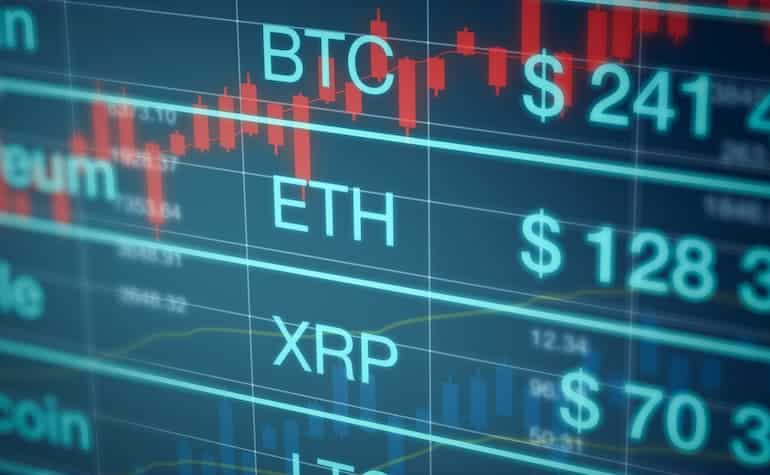
BTC ha estado intentando estabilizarse después de una brutal corrección del 53% en las últimas 17 semanas, alimentada por la escalada de tensiones geopolíticas y las renovadas preocupaciones arancelarias.
No obstante, ayer se vio un salto de 8% por encima de los 72,000 dólares, y el cripto “índice de miedo y codicia” saltó a 29 (miedo), arriba desde debajo de 20 (miedo extremo), donde lleva más de un mes sentado, lo que indica un posible cambio de sentimiento.
Una impresión de inflación estadounidense más fresca de lo esperado el miércoles podría proporcionar más combustible para la ruptura; una impresión caliente corre el riesgo de que BTC vuelva a estar por debajo del nivel de US$70,000 que acaba de recuperar.
Monitorear
- Inflación impresión reacción el miércoles como el macrocatalizador primario de la mudanza.
- Cualquier rotación a altcoins siguiendo la fuerza de BTC.
- Datos de entrada/salida de ETF como confirmación de participación institucional.

AUD/USD: El RBA de Hawkish se encuentra con vientos cruzados geopolíticos
El australiano cotiza cerca de máximos de más de tres años y se dirige a su cuarta ganancia mensual consecutiva, con un aumento de más del 6% en lo que va de año, lo que la convierte en la moneda del G10 de mejor desempeño en 2026.
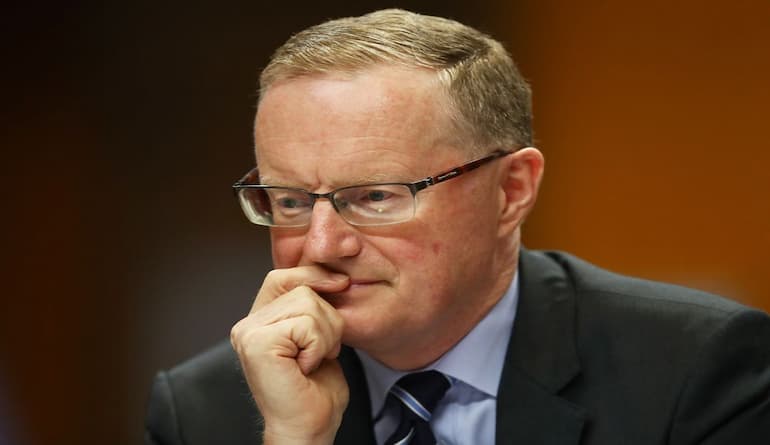
El impulsor es una clara divergencia política. La gobernadora del RBA, Michele Bullock, señaló que la reunión de política de marzo está “viva” para un posible aumento de tasas, y advirtió que un choque en el precio del petróleo por las tensiones en Irán podría reavivar las presiones inflacionarias internas.
Los precios de mercado ahora sugieren alrededor de un 28% de posibilidades de una subida de 25 pb en la próxima reunión, mientras que la fijación de precios por completo se ajustará hasta mayo, y alrededor de un 75% de probabilidad de otro aumento a 4.35% para fin de año.
Esta lectura tensa, puesta en contra de una Fed en espera y que enfrenta una presión política dótica, crea un potencial viento de cola estructural para el australiano.
Monitorear
- Reacción del AUD/USD al dato de inflación estadounidense del miércoles.
- Probabilidad de alza de tasa del RBA reajuste de precios a lo largo de la semana.
- El mineral de hierro y los precios de las materias primas como impulsores secundarios del AUD.
- China demanda señales, dada la exposición exportadora de Australia.


World’s largest sporting goods company, Nike Inc. (NYSE:NKE) reported fiscal 2023 financial results for its third quarter after the closing bell in the US on Tuesday. Nike beat both revenue and earnings per share (EPS) estimates for the quarter ending February 28, 2023. Revenue reported at $12.4 billion (up by 14% year-over-year) vs. $11.482 billion estimate.
EPS reported at $0.79 per share (down by 9% year-over-year) vs. $0.555 per share expected. CEO commentary "NIKE’s strong results in the third quarter offer continued proof of the success of our Consumer Direct Acceleration strategy," said John Donahoe, CEO of the company said in a press release. "Fueled by compelling product innovation, deep relationships with consumers and a digital advantage that fuels brand momentum, our proven playbook allows us to navigate volatility as we create value and drive long-term growth," Donahoe concluded his statement to investors. Stock reaction The stock rose by 3.64% on Tuesday, trading at $125.50 a share.
Share price fell by around 2% in the after-hours. Stock performance 1 month: +3.72% 3 months: +21.70% Year-to-date: +7.35% 1 year: -5.62% Nike stock price targets Telsey Advisory Group: $138 Redburn Partners: $100 Barclays: $110 Morgan Stanley: $140 Oppenheimer: $150 RBC Capital: $145 Wells Fargo: $146 JP Morgan: $156 HSBC: $125 Nike is the 49 th largest company in the world with a market cap of $194.76 billion. You can trade Nike Inc. (NYSE:NKE) and many other stocks from the NYSE, NASDAQ, HKEX, ASX, LSE and DE with GO Markets as a Share CFD.
Sources: Nike, TradingView, MarketWatch, MetaTrader 5, Benzinga, CompaniesMarketCap


As the banking crisis subside slightly with the news of First Citizens bank’s acquisition of Silicon Valley Bank (SVB), the DXY has reversed from the 103.50 price area, resuming the previous downtrend and currently trades at 102.60. This move lower on the DXY has resulted in the major currencies reversing on the lost ground to gain briefly against the US dollar. The short-term directional bias of the NZDUSD is likely to be driven primarily by the volatility of the DXY as there are no major news events on the near-term horizon for the NZD, with the Reserve Bank of New Zealand (RBNZ) cash rate decision due on 5th April.
The interest rate in New Zealand is currently at 4.75% and the RBNZ had previously indicated that it expects rates to peak at 5.50%, highlighting the possibility for further rate increases at this upcoming meeting. Recent price action on the NZDUSD has seen price trading higher to form higher lows while the MACD oscillator creates progressive lower lows. This movement of price and the indicator has developed into a hidden bullish divergence, which signals further upside potential for the NZDUSD.
Furthermore, the price has also broken through the 0.62 round number level, turning the resistance to a support level. The immediate target level for this bullish divergence could be at the next round number resistance level of 0.63, which was the previous swing high, and beyond that the 0.64 resistance area, which was last tested in February 2023.


Lululemon athletica inc. (NASDAQ: LULU) announced Q4 and full-year earnings results on Wednesday. World’s second largest sporting goods company reported revenue of $2.772 billion for the quarter (up by 30% year-over-year or 33% on a constant currency basis) vs. $2.701 billion estimate. Earnings per share (EPS) also topped analyst expectations at $4.40 per share (up by 30.5% year-over-year) vs. $4.259 per share expected.
Full-year revenue reported at $8.1 billion (up by 30% vs. 2021), EPS at $10.07 per share. Lululemon expects revenue of $1.890 billion to $1.930 billion for Q1. EPS expected to be between $1.93 to $2.00 for the quarter.
CEO and CFO commentary "In the fourth quarter and full year 2022, we delivered strong results across the business driven by our innovative products, powerful guest experiences, and strategic market expansion. Our continued high level of performance is a reflection of the hard work and agility of our incredible teams and the deep connections they create with our guests and communities around the world. As we enter 2023, we look forward to another year of strong momentum across the globe and delivering on our Power of Three ×2 growth plan," Calvin McDonald, CEO of the company said in a press release.
Meghan Frank, CFO of Lululemon also commented on the latest results and delivering for its shareholders: "We are pleased with our performance in the fourth quarter, which remained balanced across product category, channel, and regions. Our ability to exceed our annual revenue target in a dynamic operating environment is a testament to the enduring strength of the lululemon brand. Looking ahead, we remain optimistic regarding our ability to deliver sustained growth and long-term value for all our stakeholders." The latest results had a positive impact on the stock price.
Shares were up by +12.72% at the end the trading session on Wednesday at $360.87 a share. Stock performance 1 month: +16.66% 3 months: +16.86% Year-to-date: +12.69% 1 year: -4.21% Lululemon price targets TD Cowen: $500 Baird: $425 B of A Securities: $410 BMO Capital: $340 Credit Suisse: $420 Stifel: $460 Wells Fargo: $425 Guggenheim: $440 Citigroup: $440 Telsey Advisory Group: $425 Keybanc: $390 Barclays: $368 JP Morgan: $430 Lululemon athletica inc. is the 358 th largest company in the world with a market cap of $46.03 billion, according to CompaniesMarketCap. You can trade Lululemon athletica inc. (NASDAQ: LULU) and many other stocks from the NYSE, NASDAQ, HKEX, ASX, LSE and DE with GO Markets as a Share CFD.
Sources: Lululemon athletica inc., TradingView, MarketWatch, MetaTrader 5, Benzinga, CompaniesMarketCap


JP Morgan Chase & Co. (NYSE: JPM) announced Q1 financial results before the market open in the US on Friday. The largest bank in the US beat both revenue and earnings per share (EPS) estimates for the first quarter of 2023, sending the stock price higher. The company reported revenue of $38.349 billion vs. forecast of $36.125 billion.
EPS reported at $4.10 per share vs. $3.414 per share expected. CEO commentary ''Our lines of business saw continued momentum in the quarter. In Consumer & Community Banking, consumer spending remained healthy with combined debit and credit card sales up 10% and card loans up 21%.
In the Corporate & Investment Bank, Markets revenue fell 4% versus a very strong prior year, and we focused on supporting clients as they navigated volatile market conditions. Global Investment Banking fees remained challenged for the industry, although we significantly outperformed the overall wallet. In Commercial Banking, we earned record revenue, with exceptionally strong Payments revenue, up 98%.
Finally, Asset & Wealth Management performed well with strong long-term inflows of $47 billion across products,'' JP Morgan’s CEO, Jamie Dimon commented on the latest results. Dimon also touched on the state of the US and global economy: ''The U.S. economy continues to be on generally healthy footings —consumers are still spending and have strong balance sheets, and businesses are in good shape. However, the storm clouds that we have been monitoring for the past year remain on the horizon, and the banking industry turmoil adds to these risks.
The banking situation is distinct from 2008 as it has involved far fewer financial players and fewer issues that need to be resolved, but financial conditions will likely tighten as lenders become more conservative, and we do not know if this will slow consumer spending. We also continue to monitor for potentially higher inflation for longer (and thus higher interest rates), the inflationary impact of continued fiscal stimulus, the unprecedented quantitative tightening, and geopolitical tensions including relations with China and the unpredictable war in Ukraine. While we hope these clouds will dissipate, the Firm is prepared for a broad range of outcomes, and we are confident that we can serve the needs of our customers and clients in all environments.'' ''Finally, I want to recognize our outstanding employees across the globe.
Thanks to their efforts, we extended credit and raised $588 billion in capital in the quarter for small and large businesses, governments, and U.S. consumers, as well as efficiently onboarded a significant amount of new clients across many of our businesses,'' Dimon concluded. The stock rose after beating Wall Street expectations. Shares were up by 7.55% at the end of the trading day on Friday at $138.71 a share.
Stock performance 1 month: +10.27% 3 months: -2.99% Year-to-date: +3.45% 1 year: +10.00% JP Morgan Chase & Co. price targets Barclays: $179 Evercore ISI Group: $146 Morgan Stanley: $153 RBC Capital: $132 Oppenheimer: $157 Wells Fargo: $155 Morgan Stanley: $173 Piper Sandler: $157 Deutsche Bank: $145 Barclays: $189 JP Morgan Chase & Co. is the 17 th largest company in the world with a market cap of $406.68 billion, according to CompaniesMarketCap. You can trade JP Morgan Chase & Co. (NYSE: JPM) and many other stocks from the NYSE, NASDAQ, HKEX, ASX, LSE and DE with GO Markets as a Share CFD. Sources: JP Morgan Chase & Co., TradingView, MarketWatch, MetaTrader 5, Benzinga, CompaniesMarketCap


Index trading is one of the most popular class of markets to trade for CFD traders, rivalling major FX pairs in trading volume, but what is indices trading and how does trading them with CFDs work? Most people will be familiar with the names of the major stock indices from financial reports in all forms of media, the most popular stock indices of CFD traders and the stocks they track are below: USA The Dow Jones Industrial average - 30 largest blue-chip companies in the US NASDAQ Composite Index – Top 100 largest non-financial companies in the US (Mostly Tech) S&P 500 Index - 500 large cap companies in the US (Bank heavy) Europe and UK FTSE 100 – Top 100 UK companies CAC 40 – Top 40 French companies DAX 40 – Top 40 German companies (Formerly known as the DAX30 which it may still be labelled as) Asia and Australia ASX 200 – Top 200 Australian companies Hang Seng - A selection of the largest companies in Hong Kong. Nikkei 225 - Consists of 225 stocks in the Prime Market of the Tokyo Stock Exchange Some of the advantages of trading indices: You can take a broad view of the health (or not) of that countries stock market, i.e. rather than take a position in a single stock, take a position in a basket of stocks by buying or selling the index they are components of.
Higher leverage available to trade stock indices, up to 100:1 for qualified Pro clients. Extended trading hours, you can take positions in most indices up to 23 hours a day, far greater hours than the underlying stock exchanges. Take positions long or short with ease to profit from both a rising and falling market.
When you take a Long (Buy) position you profit if the market moves up, a Short (Sell) position will profit when the market moves down. How Indices are priced and understanding your position size Stock Indices are priced in the native currency i.e., the Dow Jones (WS30 on the GO Markets platform) is priced in USD, the FTSE100 in GBP, the ASX200 in AUD etc. This is important to keep in mind when choosing your position size, it also important to know the specifications of the contract you are trading is to make sure you understand the lot sizing before entering a trade.
You can check the specifications of any contract on MT4 and MT5 by right clicking it in the Market Watch Window and selecting “Specification” An example specification of the Dow (WS30) is below (MT4 specs, MT5 is very similar): You can see in the example above that the WS30 contract with GO Markets has a contract size of 1, this means 1 lot will equal $1 USD per point movement in PnL if you take a position. e.g., if you buy 1 lot at a price of 33670 and the price rises to 33680 you are in profit by 10 points, which would equal $10 USD Most indices will have a contract size of 1, though it is advisable to always check as some may have different values, an example in the S&P 500 (US500) which has a contract size of 10. It is important to understand the contract size and base currency of the index you are trading before entering a trade to avoid any nasty surprises. Main drivers of what moves an Index’s price.
In choosing which Index to trade it is also important to understand the drivers of that index and it’s component stocks. All Indexes will have some common drivers, such as global growth concerns, geopolitical events and non-US indices will be affected (fairly or not) by what US markets are doing. Each index will also have its own individual drivers as well though.
Examples The NASDAQ (NDX100) is heavily weighted with mega cap tech stocks, the health of the Tech sector will heavily influence its price. The ASX200 and FTSE100 both have large contingents of miners, meaning commodity prices will be big drivers of these 2 indexes, more so the ASX200. The Russell 2000 has many regional and mid-size banks as its component stocks, which is why during the recent banking crisis it underperformed other US indices.
Understanding these unique drivers for each Index is recommended to make the best trading decisions possible. In Summary, trading Indices opens up some great opportunities to position yourself to profit from market moves, spreads on Indices with GO Markets are some of the best in the CFD industry, with tight spreads in and out of hours( Some brokers will artificially increase spreads on Indices outside the stock market hours of that country) They allow you to seamlessly take long or short positions to speculate for profit, or to headge existing stock positions from an overnight move. You can click the link below to learn more about Index trading with GO Markets. https://www.gomarkets.com/au/index-trading-cfds/


The US Dollar Index (DXY) is a popular tool used by forex traders to assess the value of the US dollar relative to a basket of other major currencies. The DXY is calculated using the weighted average of six major currencies: the euro, yen, pound sterling, Canadian dollar, Swedish krona, and Swiss franc. To use the DXY to trade forex, you can follow these steps: 1.
Monitor the DXY: Keep an eye on the movements of the DXY to get a sense of the overall strength or weakness of the US dollar. You can use technical analysis tools, such as moving averages or trend lines, to identify the direction of the trend. 2. Analyse currency pairs Look for forex pairs that are inversely correlated to the DXY.
This means that when the DXY goes up, the currency pair goes down, and vice versa. For example, the EUR/USD pair is negatively correlated to the DXY, which means that as the DXY goes up, the EUR/USD pair goes down. Plan your trades Once you have identified a currency pair that is inversely correlated to the DXY, you can plan your trades accordingly.
For example, if the DXY is showing signs of weakness, you may want to consider going long on a negatively correlated currency pair, such as the EUR/USD. Manage your risk As with any trading strategy, it's important to manage your risk when using the DXY to trade forex. Make sure to use stop-loss orders to limit your losses in case the market moves against you.
Currency pairs may be influenced by other factors besides the DXY, which may not be a perfect indicator of the US dollar's value. To make informed trading decisions, it is important to combine the DXY with other technical and fundamental analysis tools.