Maju lebih jauh bersama GO Markets
Trading lebih cerdas bersama broker global tepercaya. Spread rendah, eksekusi cepat, tanpa biaya deposit, platform canggih, dan customer support peraih penghargaan.
20 Tahun Kuat
Merayakan 20 tahun keunggulan dalam perdagangan
Dibuat untuk para trader sejak 2006
Untuk pemula
Baru memulai?
Pelajari dasar-dasarnya dan bangun kepercayaan diri Anda.
Untuk trader tingkat menengah
Bawa strategi Anda ke tingkat berikutnya
Akses alat trading canggih untuk analisis yang lebih mendalam.
Profesional
Untuk trader profesional
Temukan penawaran khusus kami untuk trader bervolume tinggi dan investor profesional.
Dapatkan lebih banyak dari setiap trade
Jelajahi penawaran spesial kami yang tersedia untuk waktu terbatas

Get Started with GO Markets
Whether you’re new to markets or trading full time, GO Markets has an
account tailored to your needs.


Dipercaya oleh trader di seluruh dunia
Sejak 2006, GO Markets telah membantu ratusan ribu trader mencapai tujuan trading mereka dengan keyakinan dan ketepatan, didukung oleh regulasi yang kuat, layanan yang mengutamakan klien, dan Edukasi pemenang penghargaan.

*Trustpilot reviews are provided for the GO Markets group of companies and not exclusively for GO Markets Ltd.


*Awards were awarded to GO Markets group of companies and not exclusively to GO Markets Ltd.
Jelajahi lebih banyak dari GO Markets
Platform & alat trading
Akun trading dengan teknologi canggih, customer support pemenang penghargaan, dan akses mudah ke berbagai metode pendanaan.
Akademi
Pelajari keterampilan, strategi, dan pola pikir di balik keberhasilan trading jangka panjang.
Akun & harga
Bandingkan jenis akun, lihat spread, dan pilih opsi yang sesuai dengan tujuan Anda.
Maju lebih jauh bersama GO Markets
Temukan ribuan peluang trading dengan alat profesional, eksekusi mulus, dan customer support pemenang penghargaan. Membuka akun pun cepat dan mudah.


Maju lebih jauh bersama GO Markets
Temukan ribuan peluang trading dengan alat profesional, eksekusi mulus, dan customer support pemenang penghargaan. Membuka akun pun cepat dan mudah.

Jadi inilah masalahnya: musim pendapatan AS April tiba di pasar yang masih terasa sama sekali tidak normal. Seperti yang dijelaskan GO Markets di Buku pedoman pendapatan AS global: Panduan penting untuk pedagang, periode pelaporan ini mendarat setelah perubahan nyata dalam apa yang dipedulikan pasar. Ini bukan lagi hanya tentang mengejar pertumbuhan dengan biaya berapa pun. Ini tentang apa yang dikatakan angka-angka di bawah permukaan.

Dan pada tahun 2026, sinyal-sinyal itu bertabrakan dengan latar belakang gesekan tinggi:
- Konflik geopolitik: Ketegangan yang sedang berlangsung di Timur Tengah
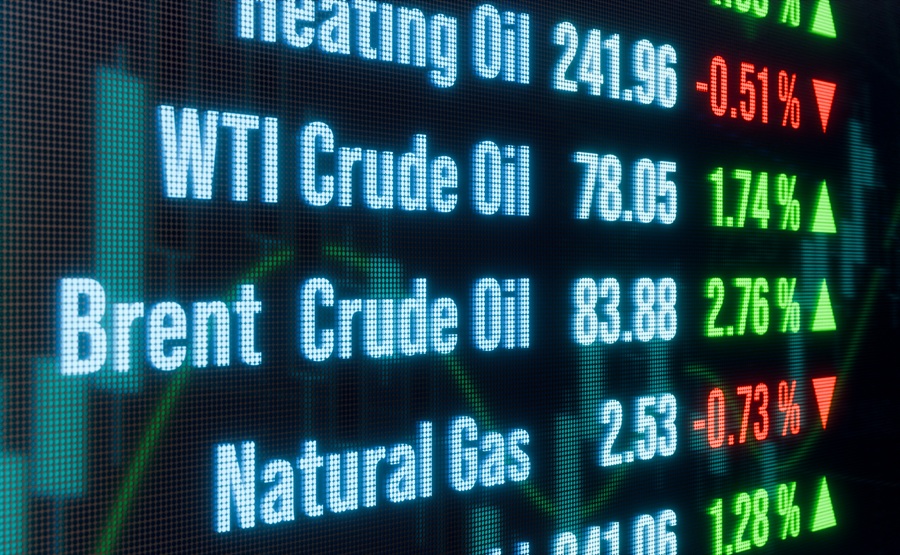
- Kejutan pasokan minyak: Minyak mentah Brent di atas US $100
- The Fed: Bank Sentral Masih Terkena Inflasi
Pivot daya tahan
Ya, AI masih menjadi cerita utama pasar tetapi masih mesin mencolok yang mendapatkan sebagian besar perhatian. Tapi di bawahnya, ada langkah yang lebih tenang menuju perusahaan yang terlihat dibangun untuk bertahan lebih baik ketika kondisinya semakin sulit.

Ketika tarif tidak pasti dan pasar energi berada di bawah tekanan, nama-nama seperti JPMorgan Chase dan kontraktor pertahanan utama mulai membawa lebih banyak bobot. Mereka tidak menggantikan narasi AI, melainkan, mereka menjadi bagian dari cara pedagang membaca selera risiko, daya tahan pendapatan dan, pada akhirnya, di mana pasar mencari sesuatu yang lebih solid untuk dipertahankan.

JPMorgan Chase & Co.
Global Release Countdown (BMO)
Market Intelligence: $JPM
Analysis: JPM price drivers and scenarios
The analyst spread of US$0.68 signals genuine disagreement about how the rate environment is flowing through to margins. A result above consensus but below the high end estimate may produce a muted reaction. A result above US$5.70 may shift the discussion.
Key swing factors for the result
Trade Execution: $JPM
Earnings reaction framework: Q1 2026
Reaction trigger to watch: The market response in the first 30 minutes after the result may indicate which scenario traders are leaning towards. A move above the prior session high on volume may support the bull case. A fade back into the range after an initial pop may point to the base case. A break below the prior session low on volume may suggest the bear case is gaining traction.
Sentiment Analysis · JPMorgan Chase
Interactive scenario analysis: $JPM
AI-linked offset, beat supported by NII and ROTCE
Sources & Data Methodology Sources: Reporting dates and release times are from company investor relations calendars where marked Confirmed; otherwise they are GO Markets estimates. Consensus EPS, revenue and analyst-range data are sourced from Bloomberg and Earnings Whispers, as at 7 April 2026 (AEDT). Company guidance, backlog and operating metrics are sourced from the latest company filings, results presentations or investor relations materials unless stated otherwise. Any scenario analysis reflects GO Markets analysis. Figures and schedules may change without notice.
From credit to defence
If JPMorgan gives the market an early read on the consumer, credit quality and business activity, the defence names may be telling a different story. This is the point where the focus may start to shift from the credit cycle to government-backed demand.
In a market still shaped by geopolitical risk, that matters. Long-dated programs can help support revenue visibility, even when the broader outlook looks less certain. That is one reason the sector remains on the watchlist.
Lockheed Martin Corp.
Global Release Countdown (BMO)
Market Intelligence: $LMT
Analysis: LMT price drivers and scenarios
The consensus sits near the lower end of the analyst range. That positioning may leave room for upside if backlog growth and F-35 delivery timelines support execution. A print near the high end, above US$7.10, may extend the move, although the reaction would still depend on guidance and margins.
Key swing factors for the result
Trade Execution: $LMT
Earnings reaction framework: Q1 2026
Reaction trigger to watch: The market response in the first 30 minutes after the result may indicate which scenario traders are leaning towards. A move above the prior session high on volume may support the bull case. A fade back into the range after an initial pop may point to the base case. A break below the prior session low on volume may suggest the bear case is gaining traction.
Sentiment Analysis · Lockheed Martin
Interactive scenario analysis: $LMT
Backlog and FCF confirmation may support continuation
Sources & Data Methodology Sources: Reporting dates and release times are from company investor relations calendars where marked Confirmed; otherwise they are GO Markets estimates. Consensus EPS, revenue and analyst-range data are sourced from Bloomberg and Earnings Whispers, as at 7 April 2026 (AEDT). Company guidance, backlog and operating metrics are sourced from the latest company filings, results presentations or investor relations materials unless stated otherwise. Any scenario analysis reflects GO Markets analysis. Figures and schedules may change without notice.
Not all defence names are the same
Lockheed Martin and Northrop Grumman may sit in the same defence bucket, but the market does not always read them the same way. Lockheed is more closely tied to the F-35 and current air combat demand. Northrop is more closely linked to next-generation programs such as the B-21 Raider and Sentinel.
That gives this section its contrast. One is often read through the lens of current defence demand. The other is more closely tied to longer-cycle strategic modernisation.
Northrop Grumman Corp.
Global Release Countdown (BMO)
Market Intelligence: $NOC
Analysis: NOC price drivers and scenarios
The consensus sits near the lower end of the analyst range. That offers a quick visual for whether the result is merely in line or strong enough to ease the guidance concerns that weighed on the stock after its last update. A result above US$7.20 may shift the conversation more materially.
Key swing factors for the result
Trade Execution: $NOC
Earnings reaction framework: Q1 2026
Reaction trigger to watch: The market response in the first 30 minutes after the result may indicate which scenario traders are leaning towards. A move above the prior session high on volume may support the bull case. A fade back into the range after an initial pop may point to the base case. A break below the prior session low on volume may suggest the bear case is gaining traction.
Sentiment Analysis · Northrop Grumman
Interactive scenario analysis: $NOC
B-21 momentum, stronger execution and FCF support
Sources & Data Methodology Sources: Reporting dates and release times are from company investor relations calendars where marked Confirmed; otherwise they are GO Markets estimates. Consensus EPS, revenue and analyst-range data are sourced from Bloomberg and Earnings Whispers, as at 7 April 2026 (AEDT). Company guidance, backlog and operating metrics are sourced from the latest company filings, results presentations or investor relations materials unless stated otherwise. Any scenario analysis reflects GO Markets analysis. Figures and schedules may change without notice.
Bottom line
In a market shaped by geopolitical risk and shifting rate expectations, companies with visible demand and longer-cycle revenue may continue to attract attention. But sentiment can still turn quickly if valuations are stretched, rate expectations shift again, or tensions in the Middle East ease.
That is why the story still needs to be tested against the numbers, not just the narrative. GO Markets will be analysing more companies throughout this earnings season. For more updates, visit our earnings page, follow our social media channels, or check the weekly newsletters.
Your next earnings setup starts here
Stay ahead of major beats, misses, and market surprises. Log in to your terminal, open a new account, or explore our dedicated earnings academy.
Need help? Contact our support team

Jika Anda telah mengamati pasar selama setahun terakhir, Anda akan memperhatikan bahwa era “pertumbuhan dengan biaya berapa pun” telah secara efektif mencapai tembok. Siklus pendapatan April 2026 tiba pada saat fokus pasar telah mengalami reorientasi struktural. Ini bukan hanya tentang laporan laba rugi lagi. Ini tentang sinyal yang ada di belakang mereka.
Dengan ketidakpastian suku bunga yang masih ada dan guncangan geopolitik mendorong minyak di atas US $100, pedoman telah bergeser dari hype AI menuju ketahanan kelembagaan dan industrialisasi komputasi. Bagi pedagang di Australia, Asia dan Amerika Latin, hasil ini dapat bertindak sebagai cincin suasana hati untuk selera risiko global dan supercycle keamanan yang muncul.
Important - Dates, Times and Figures
All earnings dates marked as confirmed or estimated should be verified against current company investor relations calendars before you act on them. Reporting schedules can change without notice due to corporate decisions, regulatory requirements or exchange timetable adjustments.
The mechanics: How the timing works across time zones
The US earnings season does not arrive as a smooth drip. It arrives in waves. For non-US traders, the primary challenge is the overnight gap: major results land while you are away from your desk and can move index CFDs before your local market opens. Before market open (BMO) and after market close (AMC) matter just as much as the numbers themselves. The timing changes how quickly markets react, when liquidity is available and whether the first move has already happened before your session begins.

Mengapa BMO dan AMC penting
Hasil BMO mencapai sebelum pasar kas AS dibuka, sehingga penemuan harga terjadi dalam perdagangan pra-pasar di mana likuiditas lebih tipis dan pergerakan dapat dilebih-lebihkan. Hasil AMC mencapai setelah penutupan, yang berarti reaksi dikompresi ke jendela pra-pasar pendek keesokan paginya. Memahami jendela mana yang dilaporkan perusahaan Anda sama pentingnya dengan memahami apa yang dilaporkannya.
Institutional Grade Performance
Master the Markets with MetaTrader 5
Trade hundreds of instruments with superior speed and advanced technical analysis. Harness full EA functionality to execute your strategy.
Need to access your terminal? Log in to Client Portal
The key themes for Q1
For this cycle, the market is no longer rewarding AI mentions alone. It is looking for return on investment (ROI) proof. The four thematic snapshots below help explain where attention is likely to sit as results come through. Each theme has its own section with company cards that can be updated each quarter.
Defence against volatility
These companies are often watched as relative defensives during energy shocks and inflation spikes, although they remain exposed to normal share-price risk. When macro uncertainty rises, money has historically rotated toward businesses with contracted revenue, government-linked demand or pricing power that is not dependent on the consumer cycle — but past rotation patterns do not guarantee future performance.
Net interest margin (NIM) under higher for longer rates, and whether AI spending remains cost neutral.
F-35 delivery schedules and the company's ability to absorb tariff related costs on supply chain inputs.
B-21 Raider production progress and the conversion of its reported US$95.7 billion backlog into recognised revenue.
EVs and energy
As parts of tech slow, investors have been rotating toward tangible, capital-intensive businesses. The energy transition and the infrastructure required to support AI data centre power demand have put utilities and energy companies in an unusual position: they are now growth stocks with defensive characteristics — though all remain subject to ordinary equity and sector risk.
The strategic shift from EV margins toward robotaxi and energy storage as the new growth narrative.
Data centre power demand and progress on its reported 30 GW contracted backlog as utilities face new infrastructure pressure.
Permian and Guyana volume growth, and cash flow resilience during the Hormuz supply disruption.
AI infrastructure
This is the engine room of the S&P 500 and the part of the market most tied to whether AI capital expenditure is generating measurable returns. The question the market is now asking is not whether these companies are spending on AI. It is whether the spending is translating into capacity utilisation and revenue that justifies the multiple.
Azure and Cloud capacity constraints against heavy AI capital expenditure. The gap between spending and utilisation is the market's primary concern.
Blackwell GPU demand and gross margin sustainability as the product cycle matures and competition intensifies.
Consumer platforms and devices
This theme tests the K-shaped consumer recovery: higher-income cohorts remain more resilient while lower-income cohorts face continued pressure from elevated borrowing costs and energy prices. Ad revenue and device upgrade cycles are the clearest indicators of where on the K-curve the consumer sits.
AI-driven ad click improvements against Reality Labs spending and retail logistics costs as the profitability test for non-core investment.
iPhone upgrade cycle momentum and the Apple Intelligence rollout in China as the first real-world test of AI-driven hardware demand.
Analysis checklist: how to read each result
Use this structure for every company on your watchlist. A headline beat is common. The bigger market move often comes from how the market translates the details sitting behind the number.
This is the bar for earnings per share (EPS) and revenue. Small beats may already be priced in. The market often sets a whisper number above the published consensus, so a technically positive result can still disappoint.
Identify the single variable analysts are most focused on this cycle: capital expenditure versus margins, inventory turnover, customer growth rate, or contract backlog conversion.
A beat, meet or miss each carries a different market dynamic.
The recency bias problem
The emotional trap many traders fall into is recency bias. Because the Magnificent 7 have led markets for so long, it can feel as though they are still the only trade that matters. That assumption deserves to be tested.
Perlu ditanyakan: Apakah perdagangan yang jelas sudah dihargai untuk kesempurnaan?
Tahun 2026 terbentuk sebagai tahun pembuktian. Perusahaan yang menghabiskan banyak uang untuk AI selama dua tahun terakhir sekarang diminta untuk menunjukkan pengembaliannya. Pasar tidak lagi menghargai pengumuman investasi AI. Ini menghargai bukti hasil pendapatan yang digerakkan oleh AI.
Pertanyaan pembingkaian yang lebih baik untuk setiap hasil adalah ini: apakah Anda bereaksi terhadap judul, atau apakah Anda menilai peran perusahaan dalam rantai pasokan AI fisik atau sebagai lindung nilai volatilitas potensial? Itu adalah tugas analitis yang sangat berbeda, dan mereka cenderung menghasilkan keputusan penentuan posisi yang sangat berbeda.
What to watch next
Three time horizons, three distinct signals. Update these each cycle with the most relevant near-term catalyst, the sector rotation to watch, and the longer-horizon dispersion theme.
Watch the 31 March Nike report as a lead indicator for consumer discretionary health. Footwear and apparel demand signals tend to front-run broader retail sentiment.
Focus shifts to the major banks. If loan demand tied to industrial and infrastructure projects remains firm, the earnings cycle may have support beyond the tech sector.
Watch for dispersion to widen. The companies converting heavy capital expenditure into measurable revenue outcomes may separate clearly from those that cannot.
Client & Education Portal
Follow the US Reporting Season
Stay ahead of major beats, misses, and market surprises. Log in to your terminal, open a new account, or explore our dedicated earnings academy.
Need help? Contact our support team

Mulailah dengan apa yang sebenarnya terjadi pada pasar FX menjelang April: ada guncangan geopolitik dan pasokan minyak dari Timur Tengah berada di bawah tekanan. Reaksi langsung di seluruh pasar mata uang adalah yang telah dilihat pedagang sebelumnya: uang bergerak menuju keamanan, menuju imbal hasil, dan menjauh dari apa pun yang tampak terpapar gangguan.
Arus safe-haven memenuhi divergensi hasil
Dolar AS mendapat manfaat dari kedua kekuatan itu sekaligus. Ini adalah tempat yang aman dan juga membawa keuntungan hasil yang tidak dapat ditandingi oleh sebagian besar rekan-rekannya saat ini. Franc Swiss mengambil beberapa luapan dari penghindaran risiko Eropa. Yen, yang dulunya menarik arus safe-haven hampir secara otomatis, terjebak dalam situasi yang berbeda sama sekali di mana kesenjangan hasil terhadap dolar sekarang begitu luas sehingga logika safe-haven telah digantikan oleh logika carry.
Mata uang yang mengalami bulan terberat adalah yang terjebak di tengah: sensitif terhadap risiko, terkait komoditas, atau menjalankan suku bunga kebijakan yang tidak dapat bersaing. Dolar Selandia Baru adalah contoh paling jelas sementara dolar Australia adalah cerita yang lebih berantakan. Di bawah semua itu adalah penetapan harga ulang ekspektasi penurunan suku bunga 2026 yang sekarang dinilai kembali oleh bank sentral di beberapa negara.
DXY context
Regained 100 on geopolitical risk
Strongest currency
USD — safe haven plus yield
Weakest currency
NZD — yield gap plus energy
Main central bank theme
Repricing of 2026 rate cut paths
Main catalyst ahead
Fed and BOJ policy meetings
Monthly leaderboard — biggest movers
Penggerak terkuat: Dolar AS (USD)
Dolar AS menghabiskan sebagian besar tahun 2025 secara bertahap kehilangan tanah karena Fed memangkas suku bunga dan seluruh dunia mengejar ketinggalan. Cerita itu terhenti dengan keras pada akhir Maret. Konflik Iran mengubah kalkulus, dan dolar menegaskan kembali dirinya dengan cara yang mencerminkan sesuatu yang nyata tentang posisi strukturalnya di pasar global.
AS mengekspor minyak dan ketika harga energi naik, itu adalah perbaikan syarat perdagangan, bukan kejutan istilah perdagangan. Sebagian besar mata uang utama dolar berada di sisi lain dari persamaan itu. Tambahkan kisaran suku bunga kebijakan 3,50% hingga 3,75% yang sekarang terlihat terkunci lebih lama, dan keuntungan dolar bersifat siklus dan struktural pada saat yang bersamaan. Indeks Dolar AS (DXY) telah kembali ke level 100 tetapi Pertanyaan menuju April adalah apakah itu bertahan di sana atau mendorong lebih jauh.
Key drivers
- Safe-haven demand: The Iran conflict directed flows into US assets across equities, Treasuries, and the dollar itself.
- Yield advantage: The federal funds rate at 3.50% to 3.75% provides a meaningful return floor relative to most peers, helping to sustain capital inflows.
- Energy insulation: The US position as an oil exporter creates a structural terms-of-trade benefit when oil prices rise sharply.
- Rate cut repricing: Market expectations for 2026 Fed cuts have been scaled back significantly, removing a key source of dollar headwinds.
What markets are watching next
The DXY's ability to hold above 100 is the near-term reference point. The 10 April CPI print is the most direct test. A reading above expectations may add further support, while a soft print could give traders reason to take some dollar positions off the table.
The main risks to the upside case are a sudden diplomatic resolution in the Middle East, which could reduce safe-haven demand quickly, or a labour market print on 3 April that is weak enough to revive recession concerns and push rate cut expectations higher again.
Penggerak terlemah: Dolar Selandia Baru (NZD)
Jika Anda ingin merancang mata uang yang akan berjuang di lingkungan saat ini, NZD cocok dengan brief hampir sempurna. Ini sensitif terhadap risiko. Ini terkait dengan komoditas. Ini menjalankan suku bunga kebijakan 2,25%, yang berada di bawah Fed dan sekarang di bawah RBA juga. Selandia Baru juga merupakan importir energi, sehingga kenaikan harga minyak menghantam neraca perdagangan dan prospek inflasi domestik pada saat yang bersamaan.
Tak satu pun dari hal-hal itu baru tetapi kombinasi dari semuanya sekaligus, dengan latar belakang dolar yang melonjak dan sentimen risiko yang luas, telah menekan NZD dengan cara yang sulit untuk diabaikan. Carry trade yang pernah membuat NZD menarik telah berbalik karena modal bergerak keluar, bukan masuk.
Key drivers
- Energy import exposure: Rising Brent crude hits New Zealand's trade balance directly and adds upside pressure to domestic inflation.
- Yield gap: The 2.25% Reserve Bank of New Zealand (RBNZ) policy rate sits below the Fed and the RBA, sustaining negative carry against both the USD and AUD.
- Risk-off positioning: As a commodity and risk currency, the NZD tends to underperform when global sentiment deteriorates.
- Trade uncertainty: Ongoing tariff related uncertainty continues to weigh on export sector confidence.
Risks and constraints
Any unexpected hawkish commentary from the RBNZ or a sharp decline in oil prices could provide some relief. A broader improvement in global risk appetite would also tend to benefit the NZD, given its sensitivity to sentiment shifts.
But the structural yield disadvantage is not going away quickly, and that may continue to limit the pair's recovery potential.
USD/JPY
USD/JPY adalah pasangan yang paling jelas menggambarkan apa yang terjadi ketika status safe-haven mata uang diganti oleh logika carry. Yen dulunya merupakan pelabuhan panggilan pertama bagi para pedagang yang mencari perlindungan selama tekanan geopolitik. Dinamika itu telah ditekan, dan alasannya sangat mudah: Anda melepaskan terlalu banyak hasil untuk menahan yen sekarang.
Suku bunga kebijakan Bank of Japan (BOJ) berada di 0,75% sementara Fed berada di 3,50% hingga 3,75% dan kesenjangan itu tidak mendorong aliran safe-haven. Ini mendorong pinjaman dalam yen dan penyebaran di tempat lain. Jadi sementara dolar naik karena risiko geopolitik, yen jatuh pada peristiwa yang sama. Bukan seperti itu seharusnya bekerja, tetapi begitulah cara kerja matematika ketika perbedaan hasil seluas ini.
USD/JPY berada di dekat 159, yang membuatnya tidak jauh dari level 160 yang secara konsisten ditandai oleh Kementerian Keuangan Jepang sebagai garis yang membutuhkan perhatian. Pertemuan BOJ pada 27 dan 28 April sekarang menjadi acara yang benar-benar langsung.
Key events to watch
- Tokyo CPI, 30 March (AEDT): March inflation data. A strong read may build the case for BOJ action at the April meeting.
- BOJ meeting, 27 and 28 April (AEST): Markets are treating this as a live event. The quarterly outlook report may include updated inflation forecasts that shift rate hike timing expectations.
- Intervention watch: Japan's Ministry of Finance has been explicit about the 160 level. Actual intervention, or a credible threat of it, could trigger a sharp and fast reversal.
What could shift the outlook
A hawkish BOJ, actual FX intervention, or a softer US CPI print that reduces dollar support could all push USD/JPY lower from current levels. On the other side, a dovish hold from the BOJ combined with continued dollar strength could see the pair test 160 and potentially beyond, which would likely intensify the intervention conversation in Tokyo.
For traders watching AUD/JPY and other yen crosses, the BOJ meeting on 27 and 28 April carries similar weight. A hawkish shift tends to compress yen crosses broadly, not just USD/JPY.
Data untuk ditonton selanjutnya
Empat acara menonjol sebagai katalis FX potensial paling jelas dalam minggu-minggu mendatang. Masing-masing memiliki saluran transmisi langsung ke ekspektasi suku bunga, dan ekspektasi suku bunga mendorong sebagian besar pergerakan FX saat ini.
Key dates and FX sensitivity
A strong read may strengthen the case for a more hawkish BOJ at the April meeting.
A weak result could revive recession concerns and alter Fed pricing.
The most direct test of whether inflation is easing fast enough to reopen the rate cut conversation.
The key policy event for yen crosses. Updated inflation forecasts may shift rate hike timing expectations.
Level dan sinyal kunci
Ini adalah titik referensi yang paling diperhatikan oleh para pedagang dan pembuat kebijakan. Masing-masing mewakili pemicu potensial untuk pergeseran posisi atau respons resmi.
-
◆
DXY 100.00
A psychologically and technically significant support level. Holding above it may sustain the dollar's current run across major pairs. A break below it would likely signal a broader sentiment shift.
-
◆
USD/JPY 160.00
Japan's Ministry of Finance has consistently referenced this level as a threshold requiring attention. Actual intervention, or a credible threat of it, has historically been capable of producing sharp and fast reversals in the pair.
-
◆
Brent crude US$120
A move to this level would likely intensify risk off behaviour across FX markets, putting further pressure on energy importing currencies including the NZD, EUR, and JPY.
-
◆
AUD/USD 0.7000
This level has historically attracted buying interest and may act as a near term directional reference for positioning in the pair.
Bottom line
The FX moves heading into April were shaped by a combination of geopolitical shock, yield divergence, and a repricing of central bank expectations that few had positioned for at the start of the quarter. The dollar's dual role as a high yielding and safe haven currency has put it in an unusually strong position, but that position is not unconditional.
One soft CPI print, one diplomatic breakthrough, or one labour market miss could change the tone quickly. Currency moves may remain highly data dependent and sensitive to overnight news flow from the Middle East, where developments can gap markets before the next session opens.