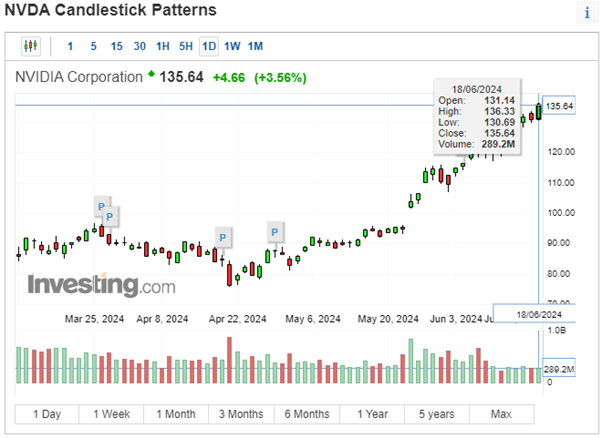
5月22日,英伟达抛出拆股这个 “流动性大礼包”,更多的散户得以从AI巨头腾飞红利中分一杯羹。截至6月6日(周四)登记在册的股东在周五收盘后获得了额外9只股票。同时,英伟达将季度股息提高了150%,从每股4美分提高到每股10美分,此次上调保证了股票1拆10后季度派息达到每股1美分。从历史数据看,拆股后公司股价表现往往优于市场,因为拆股虽不会改变公司市值,但显示公司管理层对公司未来增长的信息,通常被市场解读为积极的信号,也有分析师认为,英伟达似乎开启了科技巨头的“拆股潮”。根据基本经济学原理,GDP长期增长的源动力是TFP( Total Factor Productivity),通俗来讲就是科技进步,这场人工智能主导的“第四次”工业革命似乎已如日中天,AI概念公司股价不断刷下新高,到底现在买入是低点、还是泡沫的开始?“种下一棵树最好的时间是十年前,其次是现在。“如果你错过了低位的英伟达,不如看看黄仁勋十年愿景内布局了哪些AI企业,或者说投资了哪些领域的企业,今天简单介绍三个初创公司:1. CohereCohere是英伟达在基础模型开发领域的重要布局之一。Cohere由前谷歌AI研究员Aidan Gomez,好友Ivan Zhang于2019年在多伦多创立,前Google Brain工程师Nick Fross作为首席科学家在2020年加入。除了总部多伦多之外,Cohere在旧金山、伦敦和纽约均有分部。核心创始人Aidan Gomez是大名鼎鼎《Attention is All You Need》的作者之一,论文中首次提出的“Transformer”架构,是ChatGPT大模型的底层架构。今年英伟达GTC大会上,他被黄仁勋邀请作为嘉宾参与圆桌对话。除英伟达之外,Cohere背后不乏SalesForce,Cisco等大佬加持。

前以太矿工CoreWeave成立于2017年,2019年转型成为云服务提供商,是AI界的算力新秀。作为英伟达的亲儿子,CoreWeave是英伟达产品和技术的忠实拥趸和首发使用者,也是英伟达在云基础设施领域的重要战略投资。公司早期与Inflection的深度合作也为其赢得英伟达最新H100芯片优先配货权,更别提CoreWeave“非常卷”的团队风格让它能够以更低的价格、更短的时间交付订单、构建数据中心和完成产品测试。英伟达在2023年两度参与公司B轮融资,抬高公司估值的同时以较低的成本共享了CoreWeave早期积累的GPU和算力基础。今年5月份,Corewave再次获得11.5亿美元C轮融资,估值已达190亿美元。据披露,2024年CoreWeav年收入预计约24亿美元,前两年分别是3000万和5亿美元,公司将计划于2025年推动IPO,这样夸张的增长态势也吸引到了微软的大笔订单,未来可期。3. Hugging FaceHugging Face(拥抱脸)是英伟达在模型应用领域的推手。Hugging Face被称为AI领域的Github,它为机器学习人员和开发人员提供一系列的开源工具来执行各种NLP任务。公司成立于2016年,其创始团队由Clément Delangue, Julien Chaumond, and Thomas Wolf Ph.D组成。Hugging Face第一个产品是AI聊天机器人,主要用于满足青少年群体各种社交场景,聚焦提供情绪价值以及娱乐性,但是真正的转折点是在2018年12月——Hugging Face在网上分享了应用的部分底层代码,这一举动带来了开源社区及谷歌、微软等公司研究员的关注和推广,团队也从“做好产品”转变为“搭好平台”,为各类AI使用场景提供了开源模型库。自2018年以来,Hugging Face已经历大大小小8次融资,最近一次是在2023年8月23日,公司收到共计2.35亿美元的D轮融资,由英伟达、谷歌、亚马逊领投,公司在不到一年时间内身价翻了个翻。
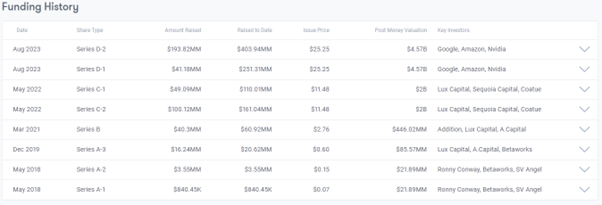
(Source:Forge)公司6月14日宣布收购开源平台Argilla,这是Hugging Face第四次收购行动,其创始人之一Clément Delangue在最近的一次访谈中也透露出公司未来愿意吸收并帮助一些小而美的初创科技公司,以求通过整合更多资源来扩大业内影响力。这些围绕在英伟达产业链周边的,具有坚实的财务基础和业务增长模型的Pre-IPO公司,全方位拓展了英伟达的软件+硬件生态,也正体现了黄仁勋的阳谋——“把整个系统变成我的全家桶”。而这些公司一旦成功IPO,正是我们低位压注的好时候。免责声明:GO Markets 分析师或外部发言人提供的信息基于其独立分析或个人经验。所表达的观点或交易风格仅代表其个人;并不代表 GO Markets 的观点或立场。联系方式:墨尔本 03 8658 0603悉尼 02 9188 0418中国地区(中文) 400 120 8537中国地区(英文) +248 4 671 903作者:Christine Li | GO Markets 墨尔本中文部
By
Xavier Zhang
The information provided is of general nature only and does not take into account your personal objectives, financial situations or needs. Before acting on any information provided, you should consider whether the information is suitable for you and your personal circumstances and if necessary, seek appropriate professional advice. All opinions, conclusions, forecasts or recommendations are reasonably held at the time of compilation but are subject to change without notice. Past performance is not an indication of future performance. Go Markets Pty Ltd, ABN 85 081 864 039, AFSL 254963 is a CFD issuer, and trading carries significant risks and is not suitable for everyone. You do not own or have any interest in the rights to the underlying assets. You should consider the appropriateness by reviewing our TMD, FSG, PDS and other CFD legal documents to ensure you understand the risks before you invest in CFDs. 免责声明:文章来自 GO Markets 分析师和参与者,基于他们的独立分析或个人经验。表达的观点、意见或交易风格仅代表作者个人,不代表 GO Markets 立场。建议,(如有),具有“普遍”性,并非基于您的个人目标、财务状况或需求。在根据建议采取行动之前,请考虑该建议(如有)对您的目标、财务状况和需求的适用程度。如果建议与购买特定金融产品有关,您应该在做出任何决定之前了解并考虑该产品的产品披露声明 (PDS) 和金融服务指南 (FSG)。
If you have ever wondered why a forex pair moves sharply on a single Tuesday afternoon, the answer often sits inside one number: the cash rate.
On 5 May 2026, the Reserve Bank of Australia (RBA) raised its cash rate target by 25 basis points (bps) to 4.35%. The decision unwound much of the easing cycle traders had spent the previous year debating. Markets repriced quickly, and the Australian dollar moved against major peers as traders digested the decision.
When one rate decision changes the market mood
For new traders, decisions like this can feel chaotic.
The chart moves before the headline finishes loading. Spreads widen. Stop levels can be tested in seconds. The financial media then fills with confident takes that often disagree with one another.
This playbook is designed to help you make sense of that chaos. Not by predicting the next move, but by understanding how the cash rate works, how it can ripple through markets, and how to prepare a process before the next decision lands.
Important
This article is general market commentary and education only. It does not constitute personal financial advice. Trading CFDs carries significant risk and may not be suitable for everyone.
Part 01
The 101 explainer
Build a clear, foundational understanding before going anywhere near a setup.
The Basics
What the cash rate is, in plain English
The cash rate is the interest rate that commercial banks charge each other for overnight, unsecured loans. The cash rate target is the level a central bank officially sets to steer that market.
In Australia, the RBA sets the cash rate target to manage inflation and employment. While the names vary, each acts as an anchor for the following equivalents:
United States: Federal Funds Rate
United Kingdom: Bank Rate
Eurozone: Main Refinancing Rate
New Zealand: Official Cash Rate
A simple way to think about it is as the wholesale price of money. When that wholesale price rises, the retail prices linked to it, such as mortgage rates, business loans, savings rates and bond yields, often move higher too. When it falls, borrowing costs across the economy tend to ease.
For traders, this is the macro anchor. It is not just a number on an economic calendar; it influences currencies, indices, commodities, and yield-sensitive stocks.
Where the world's major policy rates sit in May 2026
Headline cash rate equivalents at major central banks, expressed in per cent.
Illustrative
Source. Reserve Bank of Australia, US Federal Reserve, Bank of England, European Central Bank, Bank of Japan and Reserve Bank of New Zealand official statements, figures as at May 2026. Educational illustration.
Why It Matters
Why the cash rate matters more than new traders expect
Central bank decisions are among the most closely watched events on the market calendar. That is because one rate decision can influence several markets at once, from currencies and bond yields to share indices, commodities and the cost of holding leveraged positions overnight.
It affects more than currencies
For CFD traders, this matters for two main reasons. First, leverage can magnify both gains and losses when markets are volatile. Around a central bank decision, price can move quickly, spreads can widen and risk controls become especially important.
It can change holding costs
Second, the swap or holding cost on a CFD position is linked to the underlying cash rate. When rates change, the cost of carrying a position overnight may also change. For example, a pair like AUD/JPY can behave differently when the yield gap between Australia and Japan is wide compared with when it is narrow.
Markets can reprice quickly
New traders often underestimate how fast markets can react. A central bank can shift expectations with one sentence in a statement or press conference.
Markets do not wait for the next quarterly review. They often adjust as soon as the message changes.
Vocabulary
The key terms to know
You do not need to memorise every term in this list. These are the ones that come up most often around cash rate decisions.
Cash rate target
The interest rate level set by a central bank to anchor the economy.
Basis points (bps)
1bp = 0.01%. A 25bps move is a 0.25% change in rates.
Repricing
Markets adjusting expectations instantly after new info.
Hawkish vs Dovish: Hawkish leans toward higher rates (supports currency); Dovish leans toward lower rates (weighs on currency).
Yield Differential: The rate gap between two economies that drives capital flows.
Carry trade
Investing in high-yield via low-yield borrowing.
Risk-on/off
Market mood favouring growth vs safe-havens.
Trimmed Mean
Inflation measure that filters out volatile price swings.
Swap or Rollover:
The overnight interest charge/credit for leveraged positions.
Watch for triple swaps on Wednesdays which account for weekend settlement.
Position Sizing
What a 25 bps move may cost you
Basis points can sound abstract until you connect them to position size. Here is a simplified way to show why a small percentage move can matter for a CFD trader. A standard one-lot position in major FX is 100,000 units of the base currency and a 25 bps shift in the underlying cash rate is 0.25% per year.
The point is not the exact cents. It is that small-sounding percentage changes can compound on leveraged positions held for weeks or months.
Position size
Annual exposure to a 25 bps shift
Approximate daily impact
Standard lot, 100,000 units
About 250 units
About 0.68 units
Mini lot, 10,000 units
About 25 units
About 0.07 units
Micro lot, 1,000 units
About 2.50 units
About 0.01 units
Note. Figures are illustrative and shown in the quote currency of the pair. Educational illustration only.
How it works in real market conditions
A central bank decision is rarely just about the rate change itself. The market reaction is shaped by three layers: the decision, the statement, and any press conference or projections.
On 5 May 2026, the RBA raised the cash rate to 4.35%. While the hike was the headline, the statement and subsequent press conference provided the context that allowed markets to reprice bond yields and currency pairs in real time.
AUD/USD often spikes, fades, then trends after a rate decision
Stylised intraday reaction in the first 90 minutes around a hawkish RBA surprise.
Illustrative
Source. Stylised illustration based on typical post-decision price behaviour. Educational purposes only. Liquidity can shift quickly: In the first 5 to 15 minutes after a decision, spreads can widen and fills can slip. High-frequency systems can digest language faster than humans, and mean reversion is common before a clearer trend emerges.
Market Dynamics
How central banks ripple across assets
Cash rate decisions rarely affect one market in isolation. They trigger a domino effect through currencies, yields, and volatility at varying speeds.
This kind of sector dispersion is not just an equities story. The same monetary tightening can produce sharply different outcomes across consumer segments, business sizes and parts of the wider economy, a dynamic sometimes called a K-shaped economy.
Major FX pairs
AUD/USD, EUR/USD, and JPY crosses respond directly to yield differentials.
Short-end yields
The 2-year government bond often acts as a leading indicator for currency moves.
Stock indices
High rates discount future earnings, weighing heavily on growth and tech names.
Gold & safe havens
Bullion reacts to real yields and the USD; hawkish shifts usually pressure gold prices.
Energy markets
Prices feed into inflation expectations, creating a feedback loop for central bank policy.
Market dispersion
When index components move in opposite directions following a rate change.
A tightening cycle can split the ASX 200
Illustrative
Stylised illustration of sector dispersion through a tightening cycle, with index levels rebased to 100.
Source. Stylised illustration based on typical sector behaviour during tightening cycles. Outcomes vary by cycle. Educational purposes only.
The Beginner Trap
What many new traders miss
Markets react to the gap between expectations and reality. A hike that is fully priced in can lead to a falling currency; a hold with hawkish guidance can trigger a rally. The chart is only one part of the story. The setup may look simple, but the risk rarely is.
"Success in these events comes from understanding what is already priced in, and what would change the view if it does not play out that way."
Common mistakes to avoid
• Trading headlines: The initial print is often misleading. Wait for the second wave (statement/press conference).
• Binary leverage: Volatility hits stops harder. Scale risk down into known event risks.
• Chasing moves: Entering late usually means buying exhaustion. Wait for clear retracements.
• Narrative vs. trade: A clear story doesn't guarantee a setup. Ask: "What is already in the price?"
• Indicator myopia: No single signal captures global flows. Watch yields and cross-asset confirmation.
• No Invalidation: Without a clear "I am wrong" level, traders hold losing positions far too long.
Next Strategic Step
Master the volatility cycle
Understanding how the cash rate moves the market is only half the battle. Learn how to read the "Fear Gauge" to identify when volatility creates high-probability entry points.