学习中心
学习中心

市场资讯及洞察

每日财经快讯
TSM台积电的满意答卷

AI的热度持续已久, 我们看着英伟达股价上蹿下跳来到高位,很多朋友问我:“现在追高不敢,不买又怕踏空,到底该怎么办?”其实,在半导体这个巨大的星系里,如果说英伟达是最亮的恒星,那么 台积电(TSM) 就是维持整个星系运转的万有引力。就刚刚,台积电交出了一份堪称“炸裂”的成绩单。今天我们就来扒一扒,这位AI时代的“卖铲人”,到底还能不能买?

01赚钱能力:简直就是印钞机

我们要看一家公司好不好,先看它赚不赚钱,怎么赚的钱。台积电的数据,只能用“恐怖”来形容。

1. 营收:创历史新高根据最新的2025年Q4数据,台积电单季营收干到了 337亿美元,同比增长超 20%! 这是什么概念?在全球经济还在复苏的时候,它跑出了百米冲刺的速度。这背后,全是AI 和高性能计算(HPC)的功劳。

2. 毛利率:62%!这才是最吓人的地方。做制造业的,通常赚的是辛苦钱,但台积电的毛利率高达62%。 这意味着什么?意味着它有着绝对的定价权。

3. 敢花钱,才敢赚钱。虽然赚得多,但台积电花钱也凶。预计2026年,为了建厂和研发2nm技术,它要砸进去 520亿-560亿美元。 这说明了什么?说明管理层极度看好未来,现在烧钱,是为了以后筑起更高的墙,让对手爬不进来。

02为什么要看多?逻辑很硬核

如果你问为什么看好台积电,理由就是不可替。

逻辑一:AI 时代的“独家水龙头”, 不管是 ChatGPT 还是自动驾驶,目前市面上所有最牛的 AI 芯片(英伟达、AMD、苹果),几乎 100% 都是台积电造的。 只要人类不停止发展 AI,台积电就是那个坐地收租的地主。

逻辑二:对手?一个能打的都没有,三星和英特尔虽然也在追赶,但在3nm 和即将到来的 2nm良率上,台积电依然遥遥领先。这不仅是技术优势,更是信任壁垒。

逻辑三:朋友圈太强大,看看它的客户名单:苹果、英伟达、高通……全是全球最有钱的科技巨头。这些大佬离不开台积电,这也保证了台积电的饭碗超级稳。

03风险在哪里?

地缘政治:这是房间里的大象。台海局势的一举一动,都会牵动股价。这是非市场因素,不可预测,也是压制台积电估值的最大原因。

现金流压力:刚才说了,一年砸500多亿美金建厂,这对现金流是个巨大的考验。如果宏观经济突然变冷,这些巨额投入可能会变成负担。

04总结:

现在的台积电,估值虽然不算“白菜价”,但考虑到它垄断级的地位,这个价格是合理的。它是半导体行业中,确定性最强的标的。考虑到地缘风险,不要一次性把子弹打光, 把它作为科技股的底仓配置,每当因为非基本面消息(比如政治新闻)导致股价大跌时,往往是最好的“捡带血筹码”的机会。

流水的科技巨头,铁打的台积电。在AI 的淘金热里,买把铲子防身,准没错。


Mill Li
January 16, 2026
Fundamental analysis
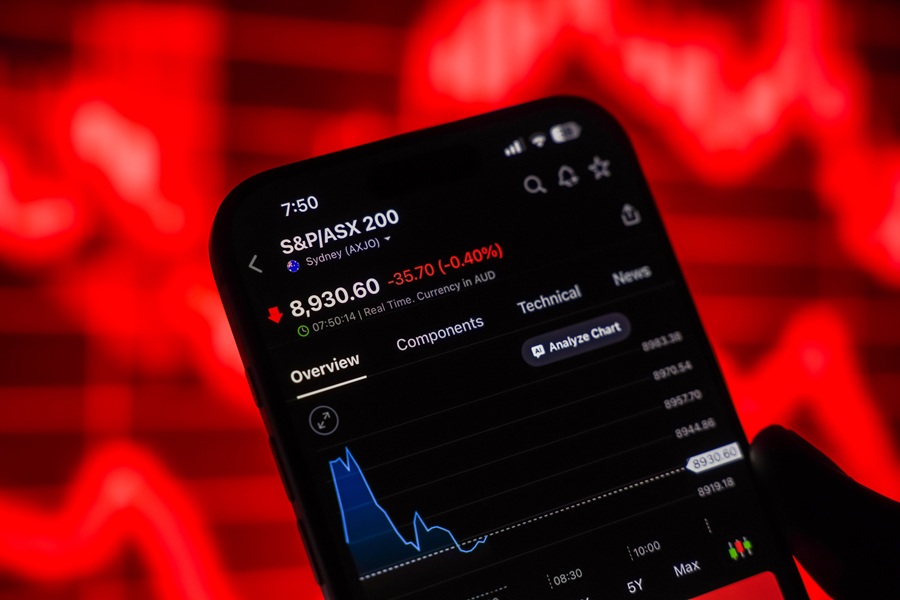
What is the ASX? Your complete guide to Australia's $2 trillion stock market

The Australian Securities Exchange (ASX) is one of the world's top 20 exchanges, hosting over 2,000 listed companies worth approximately $2 trillion.

Quick Facts:

  • The ASX operates as Australia's primary stock exchange, combining market trading, clearinghouse operations, and trade and payment settlement.
  • It represents roughly 80% of the Australian equity market value through its flagship ASX 200 index.
  • 2,000+ companies and 300+ ETFs are listed on the exchange, spanning from mining giants to tech innovators.

How does the ASX work?

The ASX combines three critical functions in one system.

As a market operator, it provides the electronic platform where buyers and sellers meet. Trading occurs through a sophisticated computer system that matches orders in milliseconds, replacing the traditional floor-based trading that once defined stock exchanges globally.

The exchange also acts as a clearinghouse, ensuring trades settle correctly. When you buy shares, the ASX guarantees the transaction completes, managing the transfer of securities and funds between parties.

Finally, it serves as a payments facilitator, processing the money flows that accompany each trade. This integrated approach reduces settlement risk and keeps the market running smoothly.

What are ASX trading hours?

The ASX operates from 10:00am to 4:00pm Sydney time (AEST/AEDT) on business days, with a pre-open phase from 7:00am. 

Stocks open alphabetically in staggered intervals starting at 10:00am, followed by continuous trading until the closing auction at 4:00pm. 

The exchange observes Australian public holidays and adjusts for daylight saving time between October and April, which can affect coordination with international markets.

ASX trading hours by time zone

Phase Sydney (AEST) Tokyo (JST) London (BST) New York (EDT)
Pre-Open 7:00am - 10:00am 6:00am - 9:00am 10:00pm - 1:00am 5:00pm - 8:00pm*
Normal Trading 10:00am - 4:00pm 9:00am - 3:00pm 1:00am - 7:00am 8:00pm - 2:00am*
Closing Auction 4:00pm - 4:10pm 3:00pm - 3:10pm 7:00am - 7:10am 2:00am - 2:10am
*Previous day. Note: Times shown assume daylight saving time in effect (AEST/BST/EDT). Japan does not observe daylight saving. Time differences vary when regions switch between standard and daylight saving at different dates.

Top ASX Indices

S&P/ASX 200

This is the exchange's flagship index. It tracks the 200 largest companies by market capitalisation and represents approximately 80% of Australia's equity market.

It serves as the primary benchmark for most investors and fund managers and is rebalanced quarterly to ensure it reflects the current market leaders.

All Ordinaries Index

Commonly called the All Ords, this index covers the top 500 companies on the ASX. 

It provides broader market exposure than the S&P/ASX 200, capturing roughly 80-90% of total market value. 

The 11 ASX sectors

The ASX also breaks down into 11 sector-specific indices, allowing investors to track performance in areas like financials, materials, healthcare, and technology. 

These indices can help identify which parts of the Australian economy are strengthening or weakening.

ASX sector breakdown as of 31 December 2025. Source: S&P Global

  1. Financials dominates as the largest sector, driven by Commonwealth Bank, NAB, Westpac, and ANZ. These banking giants provide lending, wealth management, and insurance services across Australia.
  2. Materials ranks second, led by mining powerhouses BHP and Rio Tinto. This sector extracts and processes resources, including iron ore, coal, copper, and gold.
  3. Consumer Discretionary includes retailers, media companies, and hospitality groups that benefit when household spending rises.
  4. Industrials encompasses construction firms, airlines, and professional services businesses.
  5. Healthcare features companies like CSL, a global biotech leader, and Cochlear, which produces hearing implants.
  6. Real Estate features property developers and Real Estate Investment Trusts (REITs) that own and manage commercial and residential assets.
  7. Communication Services includes telecommunications providers like Telstra alongside media and entertainment companies.
  8. Energy tracks oil and gas producers (many renewable energy companies typically fall under utilities).
  9. Consumer Staples covers essential goods providers like supermarkets and food producers.
  10. Information Technology includes software developers and IT services firms.
  11. Utilities covers electricity, gas, and water suppliers, including renewable energy.


ASX Symbol Sector Top Stocks % of ASX 200
XFJ Financials CBA, NAB, ANZ 33.4%
XMJ Materials Orica, Amcor, BHP 23.2%
XDJ Consumer Discretionary Harvey Norman, Crown 7.4%
XNJ Industrials Qantas, Transurban 7.4%
XHJ Health Care ResMed, CSL and Cochlear  7.1%
XRE  Real Estate Mirvac, LendLease, Westfield 6.7%
XTJXIJ Communication Services Telstra, Airtasker 3.7%
XEJ  Energy  Santos, Woodside  3.6%
XSJ Consumer Staples Woolworths, Westfarmers 3.4%
XIJ Information Technology Dicker Data, Xero 2.5%
XUJ Utilities AGL, APA Group 1.4%
Data accurate as of 31 December 2025

Top ASX companies

Three companies consistently lead the S&P/ASX 200 by market capitalisation.

Commonwealth Bank (Mkt cap: A$259 bln)

Commonwealth Bank holds the top position on the ASX as Australia's biggest lender. 

Founded in 1911 and fully privatised by 1996, CBA offers retail banking, business lending, wealth management, and insurance.

Its performance often signals the health of the domestic economy.

BHP Group (Mkt cap: A$241 bln)

BHP Group stands as the world's largest mining company. 

Its diversified portfolio spans iron ore, copper, coal, and nickel operations globally. 

It serves as a bellwether for Australian commodity markets.

CSL Limited (Mkt cap: A$182 bln)

CSL Limited leads the Australian healthcare sector as a global biotech firm. 

Established in 1916, CSL develops treatments for rare diseases and manufactures influenza vaccines. 

The company demonstrates Australian innovation competing on the world stage.

The ASX's role in Australia's economy

The ASX serves as a vital mechanism for capital formation in Australia. It tends to provide price signals that reflect market expectations. 

When share prices rise, it suggests optimism about economic conditions. Falling markets may indicate concerns about future growth.

Australian companies raise funds through initial public offerings and follow-on share sales on the ASX, using proceeds to expand operations, fund research, or pay down debt.

Investors in these shares benefit from potential capital gains and dividend income. Many Australians build retirement savings through superannuation funds that invest heavily in ASX-listed companies.

Employment in financial services also depends partly on a healthy stock market. Brokers, analysts, fund managers, and supporting roles exist because of active capital markets.

Key takeaways

The ASX functions as a market operator, clearinghouse, and payments facilitator, providing the infrastructure that enables capital formation and supports retirement savings for millions of Australians.

Its flagship index, the S&P/ASX 200, tracks the 200 largest companies and captures about 80% of market capitalisation, while the All Ordinaries index covers the top 500. 

Financials and Materials dominate the exchange, led by Commonwealth Bank, BHP, and CSL, reflecting Australia's strength in banking and resources.

You can trade the S&P/ASX 200 Index CFD and over 230 ASX Share CFDs on GO Markets.

GO Markets
January 15, 2026
Earnings season concept image with a calculator and magnifying glass on a blue background
US Earnings
US earnings season 101: A 2026 guide for Aussie traders

US earnings season is where the market gets its cleanest burst of new information. For Australians, it usually lands while the country is asleep. This is not just “US company news”. It is the scoreboard for the Nasdaq, the S&P 500, and risk appetite more broadly, with spillover into SPI futures, the AUD, and sector mood at the ASX open.

What this guide covers

  • The four-wave rhythm (why volatility clusters in predictable months)
  • The order of play (banks → tech → retailers) and what each group tends to reveal
  • Before market open (BMO) vs after market close (AMC)
  • The few lines markets care about (surprise vs expectations, and the forward reset)
  • How earnings information can flow through to Australia via futures, FX, and sector sentiment

US earnings season basics

Earnings season is the 4 to 6-week window after each quarter when most US-listed companies report a new set of numbers and a new story.

Calendar rhythm and clustering

Earnings does not arrive as a smooth drip. It typically arrives in four recurring waves. Most US reporting clusters around January, April, July, and October. Each wave covers the prior quarter, which is why markets spend the lead-up period building expectations, then reprice quickly as numbers and guidance hit.

The sequence is familiar: banks open, tech dominates the middle, retailers close. That order matters because each group updates a different part of the macro story. If you only track one set of reports, make it the Magnificent 7 — here’s the Mag 7 earnings calendar for 2026 (Aussie-friendly timing)

Source: GO Markets

Time zones: the two windows

For Australians, the key is when the first move hits.

  • AMC (after market close): often Sydney and Melbourne morning, sometimes near the ASX open
  • BMO (before market open): often late night, with the initial reaction while Australia sleeps

Daylight saving shifts timings, but the structure is consistent: two windows, two different liquidity conditions.

How the market digests an earnings event

Earnings is rarely a single reaction. It is a sequence.

  1. Headline release (EPS and revenue versus consensus)
  2. Immediate price discovery (often in after-hours or pre-market liquidity)
  3. Call and Q&A (guidance, margins, and demand tone get tested)
  4. Next US cash session (follow-through, reversals, broader positioning)
  5. Australia opens into the aftershock (futures, FX, and sector mood already set)

Translation: volatility often clusters around reporting windows because the calendar can concentrate new information and repricing.

Expectations: the scoreboard the market uses

Markets do not price “good” or “bad” in isolation. They price the gap versus expectations, then adjust the forward story. That is why the same quarter can look strong on paper and still disappoint if it lands below what the market had already baked in.

Most headlines boil down to three checks. First, actual results versus consensus. Second, actual results versus what the company previously guided. Third, quality and durability. That tends to show up in margins, the mix across segments, and whether cash flow backs up the earnings number.

Guidance: the forward reset

Guidance is where the narrative can change without the quarter changing. A company can deliver the past cleanly, then move the goalposts for what comes next. That forward reset is often what drives the bigger repricing.

In practice, guidance usually lands in a few buckets. Revenue or EPS outlook sets the top-line and earnings path. Margin outlook tells you how confident management is about costs and pricing. Capex language signals how heavy the investment cycle is likely to be. Capital return talk, including buybacks, is a read on balance sheet posture and priorities.

Translation: markets trade forward narratives. Guidance is the mechanism.

The call: where tone becomes data

Prepared remarks are polished. The call is where the market stress-tests the story. The Q&A is where the edges show up, because that is where analysts push on the parts that matter and management has to answer in real time.

Listen for the tells. Demand language can shift from broad to patchy. Pricing can move from power to pressure. Margin confidence can sound steady or start to carry caveats. And the “we are not breaking that out” moments matter too. What management avoids can be as informative as what it highlights.

Key takeaways

  • Earnings season clusters in four waves (January, April, July, October), so volatility often arrives in blocks.
  • The sequence matters. Banks open the read on confidence, tech steers index tone, retailers often close the consumer chapter.
  • From Australia, BMO and AMC are the two windows that shape what you wake up to.
  • Markets trade surprise vs expectations, then the forward reset via guidance and call tone.
  • The spillover typically shows up through futures, FX, and sector sentiment before the ASX open.

Glossary (quick definitions)

  • EPS: earnings per share
  • Consensus: the market’s compiled estimate set
  • Guidance: management’s forward-looking outlook ranges/comments
  • Margins: profitability as a percentage of revenue
  • Capex: capital expenditure (investment spend)
  • BMO/AMC: before market open / after market close (US reporting labels)
  • After-hours / pre-market: trading sessions outside regular US cash hours
  • Correlation: how tightly assets move together (often rises in macro or de-risking periods)

GO Markets
January 15, 2026
每日财经快讯
风险定价切换:资金从科技走向安全与资源

近期全球市场的核心变化,并非单一数据或单一事件,而是风险定价逻辑的再平衡。中东地缘局势反复、美伊关系阶段性紧张,使市场对潜在冲突的敏感度显著抬升。尽管美国方面释放出“局势可控”的安抚信号,短期恐慌有所缓解,但相关不确定性仍然牵动着全球资产配置方向。

更值得关注的是,在地缘风险背景下,中美经贸与科技层面的博弈出现新的变量。中国通过关税、反垄断监管及部分技术与网络安全层面的审查措施,释放出更为明确的政策信号。这种变化并未引发市场剧烈波动,但正在悄然改变板块间的相对强弱结构

从美股表现来看,风险偏好出现阶段性回落。科技板块承压,三大股指集体收低,其中以科技权重较高的纳指跌幅相对靠前。与之形成对照的是,国防军工、关键矿产与资源相关板块获得资金青睐,反映出在不确定性上升阶段,市场更倾向于防御属性与战略资源方向。

政策层面,美国近期密集出台行政指令,围绕关键矿物供应、芯片应用场景及产业安全展开部署。与此同时,最高法院对部分贸易政策的裁决进程仍存在不确定性,也为市场预期留下想象空间。宏观数据方面,PPI阶段性反弹、褐皮书对经济与通胀的表述偏中性偏稳,使得市场对短期货币政策转向的预期进一步降温。

整体而言,当前市场并未进入系统性风险阶段,但“高估值成长 → 防御与资源”的轮动逻辑正在逐步显现,资金配置思路更趋谨慎,也更注重现实约束。

Xavier Zhang
January 15, 2026
每日财经快讯
震荡中的上行?年初美股的韧性与分化

年初美股在强势起跑后,并未出现单边加速,而是进入震荡上行、结构分化逐步显现的阶段。本周正处于年内资金重新布局的重要时间窗口,市场一方面消化宏观经济与政策预期的变化,另一方面也在重新评估风险资产的定价逻辑。在多重变量交织影响下,整体风险偏好维持在相对积极水平,但不同资产与板块之间的表现差异明显,轮动特征愈发突出。

从指数层面看,美股整体保持韧性,但波动并未消失。
截至 1 月 12 日,美股三大指数延续年初以来的上行趋势。道琼斯工业指数再创历史新高,反映传统蓝筹股在不确定环境中依然具备防御与配置价值;标普 500 指数同样刷新收盘纪录,显示资金继续向核心资产集中;纳斯达克指数表现稳健,科技板块在震荡中保持相对强势。12 月消费者价格指数(CPI)数据显示同比增速为 2.7%,核心 CPI 略低于预期,整体通胀未出现明显加速迹象,同时就业等数据延续稳健态势,这被市场解读为经济增长放缓,这一背景下,对货币政策继续大幅收紧的担忧有所降温,为风险资产提供了一定的基本面支撑。从市场定价来看,交易员依旧倾向于认为年中开启降息的可能性较高,当前预期集中在 6 月前后。

推动市场上行的核心动力,来自盈利预期改善与“经济软着陆”判断的强化。
一方面,随着新一轮财报季临近,市场对企业盈利前景的预期有所上修。部分科技巨头释放出的积极信号,增强了投资者对中长期成长逻辑的信心,尤其是在 AI、半导体等方向,资金持续加码,成为支撑指数的重要力量。另一方面,宏观数据整体呈现出“放缓但未失速”的特征,就业数据释放出经济降温却依旧稳健的信号,使市场对美国经济实现软着陆的预期进一步巩固,从而缓解了对激进紧缩政策的担忧。

风险偏好虽在修复,但市场整体仍保持克制。
本周行情并未演变为全面风险追逐,而是呈现出进攻与防守并行的特征。成长股、小盘股以及部分高弹性主题表现活跃,成交量放大反映出资金愿意在相对高位参与配置;与此同时,避险资产同样受到青睐,贵金属价格走强显示部分资金仍在为潜在不确定性进行对冲。这种“风险资产上涨、避险资产不弱”的组合,体现出当前市场情绪并非单边乐观。

结构性分化加剧,板块轮动成为本周主旋律。
从行业表现来看,金融与周期板块内部差异明显,部分受益于经济复苏与利率环境的子行业表现尚可,但在政策不确定性影响下,银行及信用相关板块波动加大。科技板块同样呈现分化特征,头部龙头继续为指数提供支撑,而估值偏高、基本面尚待验证的细分领域则面临阶段性回调压力。相比之下,小盘股和主题型资产表现更为活跃,显示资金正在从高度集中的权重股,向更具成长弹性和性价比的方向扩散。

政策预期依然是影响市场节奏的关键变量。
本周围绕美联储政策独立性的讨论,对市场情绪造成了短期冲击,也提醒投资者货币政策路径仍存在不确定性。尽管当前基本面整体尚可,但未来降息的节奏、幅度以及政策表态的变化,仍可能成为引发市场波动的重要触发点。随着财报季逐步展开,企业盈利能否兑现预期,也将对估值形成直接检验。

展望与策略思路

短期
CPI、PPI 以及初请失业金人数等数据,将直接影响市场对通胀走势和美联储政策路径的判断,可能成为短期波动的重要触发因素。

随着财报季逐步展开,企业盈利表现及管理层指引将对当前估值形成验证。

中长期来看,在风险偏好回升但不确定性仍存的环境下,投资策略更适合保持均衡:一方面继续关注具备长期逻辑的优质成长和 AI 相关龙头,另一方面留意小盘股与价值板块在政策转向周期中的阶段性机会,同时注重仓位管理与风险控制,避免过度集中。

Alena Wang
January 14, 2026
Market insights
US Earnings
CPI, earnings season, and Fed independence risk | US and Europe outlook

As geopolitical narratives continue to simmer, US and European markets move into the rest of the week with three dominant drivers: US inflation data, the start of US earnings season, and an unusual Fed-independence headline risk after the DOJ subpoenaed the Federal Reserve. 

Quick facts:

  • US consumer price index (CPI) and producer price index (PPI) are the key macro releases and are likely to impact the US dollar (USD) and other asset classes if there is a significant move from expectations.
  • JPMorgan reports Tuesday, with other major US banks through the week, as the Q4 reporting season gets underway.
  • Reporting around DOJ action involving the Fed, and Chair Powell’s prior testimony, created early market volatility on Monday, with markets sensitive to anything that may be perceived as undermining Fed independence.
  • President Trump announced this morning that any country doing business with Iran will face a 25% tariff on all business with the US, effective immediately.
  • Europe’s production and growth updates, including Eurozone industrial production and UK monthly GDP and trade data, are later in the week.

United States: CPI, Fed path, DOJ and Fed headline risk, and banks leading earnings

What to watch:

The US is carrying the highest event density in global data releases this week. CPI and PPI will both be watched for moves away from expectations.

Any meaningful surprise can shift Fed policy expectations. Markets are currently pricing a lower likelihood of a March rate cut (under 30%) than this time last week, based on fed funds futures probabilities tracked by CME FedWatch.

Bank earnings may set the tone for the reporting season as a whole. Forward guidance is likely to be as important as Q4 performance, with valuations thought to be high after another record close in the S&P 500 overnight.

Key releases and events:

  • Tue 13 Jan (Wed am AEDT): CPI (Dec) (high sensitivity)
  • Tue 13 Jan (Wed am AEDT): JPMorgan earnings before market open (high sensitivity for banks and risk tone)
  • Wed to Thu: additional large-bank earnings cluster (high sensitivity for financials sentiment)
  • Wed 14 Jan (Thu am AEDT): US PPI
  • Thu 15 Jan (Fri am AEDT): US weekly unemployment
  • Throughout the week: Fed member speeches

How markets may respond:

S&P 500 and US risk tone: US indices are near record levels. The S&P 500 closed at 6,977.27 on Monday. Hotter-than-expected inflation can pressure growth and small-cap equities in particular, and weigh on the market broadly. Softer inflation can support further risk-on behaviour.

USD: Inflation data is the obvious driver this week for the greenback, but any continuation of DOJ and Fed developments, or geopolitical escalation, may introduce additional USD influences.

With the USD testing the highest levels seen in a month, followed by some light selling yesterday, some volatility looks likely. Gold has also been bid as a potential safety trade and hit fresh highs in the latest session, suggesting demand for defensive exposure remains present.

Earnings (banks): In a market already priced near highs, results can still create volatility if they are not accompanied by supportive earnings per share (EPS), revenue and forward guidance. Financials will likely see the first-order response, but any early pattern in results and guidance can influence the broader market beyond the first few days.

UK and Eurozone: growth data influence amid continuing equity strength

What to watch:

In a week where Europe may be driven primarily by events in the US and geopolitical narrative, the Eurozone industrial production print is still a noteworthy local release.

In the UK, monthly GDP and trade numbers on Thursday may influence both the FTSE 100 and the pound, particularly if there is any meaningful surprise.

Key releases and events:

Eurozone

  • Wed 14 Jan: Eurozone industrial production (Nov 2025) (medium sensitivity for cyclical sectors)

UK

  • Thu 15 Jan: GDP monthly estimate (Nov 2025) (high sensitivity for GBP and UK rate expectations)
  • Thu 15 Jan: UK trade (Nov 2025) (low to medium sensitivity)

How markets may respond:

EUR spillover from the US: Despite light Eurozone data, the US response is likely to matter most this week, with the US dollar index a major driver of broader G10 FX direction.

DAX (DE40): Germany’s index is also trading at or near record levels and closed at 25,405 on Monday. (2) If the index is extended, it may react more to global rate moves and shifts in perceived risk.

FTSE 100 and GBP: The FTSE hit a new high in the overnight session, driven particularly by materials and mining stocks. (5) Any GDP surprise can re-price GBP and UK equities quickly in an environment where growth concerns persist.

US and Europe calendar summary (AEDT)

  • Wed 14 Jan: US CPI, US bank earnings kick-off (notably JPMorgan)
  • Wed 14 Jan: Eurozone industrial production (Nov 2025)
  • Thu 15 Jan: UK monthly GDP (Nov 2025) and UK trade (Nov 2025), US bank earnings continue
  • Fri 16 Jan: US weekly unemployment, US bank earnings continue

Bottom line

  • If US CPI surprises higher, markets may lean toward higher-for-longer interest rate pricing, which can pressure equity multiples and lift rates volatility.
  • If bank earnings are solid but guidance is cautious, equities can still see two-way swings given index levels near records and high valuations.
  • If DOJ and Fed headlines escalate, they may override normal data reactions to some degree. That could increase demand for perceived safe havens such as gold and lift FX volatility.
  • For Europe, Eurozone production (Wed) and UK GDP and trade (Thu) are the key local data. The region is still likely to trade primarily off US outcomes and broader risk sentiment.

Mike Smith
January 13, 2026