Middle East conflict & US interest rates send Gold back towards all-time highs.
Ryan Boyd
2/2/2024
•
0 min read
Share this post
Copy URL
Since reaching a local bottom in October of last year, XAUUSD has experienced a strong uptrend of over 13%. Closing its third consecutive positive session, Gold is inching closer to its all-time high, now sitting just above $2,050 USD per ounce. From a technical standpoint, Gold is following a well-defined rising channel that has been predominantly respected since November 2023.
As the price approaches the midpoint of this channel, there is a possibility, especially on lower time frames, that this point may act as temporary resistance. This is a crucial level to monitor closely. Image: GOLD Chart The recent positive momentum in XAUUSD is closely tied to escalating tensions in the Middle East.
The enduring conflict between Gaza and Israel, coupled with the initiation of a new US-led conflict in Yemen against the Houthis, has contributed to the precious metal's strength. The current economic landscape in the United States, along with projections for rate cuts in 2024, also is playing a pivotal role in Gold's recent performance. In response to US inflation climbing from nearly 0% to a peak of 9.10% in July 2022, the US Federal Reserve has raised interest rates 11 times.
The rates have surged from 0.25% to the current 5.50%. Image: CPI and Federal Funds Rate (FFR) Chart Data suggests the possibility of multiple rate cuts in 2024, with some anticipating cuts as early as the March Federal Open Market Committee (FOMC) meeting. According to CME data, market expectations indicate a projection of six rate cuts for 2024, culminating in an effective rate of approximately 3.50-3.75% by year-end.
Image: CME FedWatch Historically, the appeal of non-interest-bearing assets like Gold tends to rise when interest rates decrease, contributing to the recent upward trajectory of Gold prices. Gold traders will be closely monitoring the evolving tensions in the Middle East and upcoming US Consumer Price Index (CPI) data. This scrutiny aims to draw insights into the potential timing of Federal Reserve rate cuts and their subsequent impact on Gold's market dynamics.
By
Ryan Boyd
Premium Client Manager
The information provided is of general nature only and does not take into account your personal objectives, financial situations or needs. Before acting on any information provided, you should consider whether the information is suitable for you and your personal circumstances and if necessary, seek appropriate professional advice. All opinions, conclusions, forecasts or recommendations are reasonably held at the time of compilation but are subject to change without notice. Past performance is not an indication of future performance. Go Markets Pty Ltd, ABN 85 081 864 039, AFSL 254963 is a CFD issuer, and trading carries significant risks and is not suitable for everyone. You do not own or have any interest in the rights to the underlying assets. You should consider the appropriateness by reviewing our TMD, FSG, PDS and other CFD legal documents to ensure you understand the risks before you invest in CFDs. These documents are available here.
免责声明:文章来自 GO Markets 分析师和参与者,基于他们的独立分析或个人经验。表达的观点、意见或交易风格仅代表作者个人,不代表 GO Markets 立场。建议,(如有),具有“普遍”性,并非基于您的个人目标、财务状况或需求。在根据建议采取行动之前,请考虑该建议(如有)对您的目标、财务状况和需求的适用程度。如果建议与购买特定金融产品有关,您应该在做出任何决定之前了解并考虑该产品的产品披露声明 (PDS) 和金融服务指南 (FSG)。
Venezuela commands the world's largest proven oil reserves at 303 billion barrels. Yet political turmoil, global sanctions, and recent US intervention show that being the biggest isn’t always best.
Quick facts:
Venezuela holds 18% of the world's total proven oil reserves despite producing less than 1% of global consumption.
Just four countries (Venezuela, Saudi Arabia, Iran, and Canada) control over half the planet's proven reserves.
Saudi Arabia dominates crude oil production contributing to over 16% of global exports.
US shale technology has enabled America to lead in production despite ranking ninth in reserves.
Top 10 countries by proven oil reserves
1. Venezuela – 303 billion barrels
Controls 18% of global reserves, primarily extra-heavy crude in the Orinoco Belt requiring specialised refining.
Heavy crude trades $15-20 below Brent benchmarks due to high sulphur content and complex processing requirements.
Output crashed 60% from 2.5 million bpd in 2014 to less than 1.0 million bpd last year.
Approximately 80% of exports flow to China as loan repayment, with export revenues dwarfed by reserve potential.
2. Saudi Arabia – 267 billion barrels
Majority light, sweet crude oil requires minimal refining and commands premium prices, contributing to world-leading exports of $191.1 billion in 2024.
Maintains 2-3 million bpd of spare production capacity, providing market stabilisation capability during supply disruptions.
Oil comprises roughly 50% of the country’s GDP and 70% of its export earnings.
Production decisions significantly impact international oil prices due to market dominance.
Heavy Western sanctions severely limit the country’s ability to monetise and access international markets.
Production estimates vary significantly (2.5-3.8 million bpd) due to sanctions, limited transparency, and restricted international reporting.
Significant crude volumes flow to China through discount arrangements and sanctions-evading mechanisms.
Sanctions relief could rapidly boost production toward 4-5 million bpd, though domestic consumption (12th globally) reduces export potential.
4. Canada – 163 billion barrels
Approximately 97% of reserves are oil sands (bitumen) requiring steam-assisted extraction and significant upfront capital investment.
Political stability and regulatory frameworks position Canada as a secure source compared to volatile producers, with direct pipeline access to US refineries.
Supplied over 60% of U.S. crude oil imports in 2024, making Canada America's top source by far.
5. Iraq – 145 billion barrels
Decades of war and sanctions have prevented optimal field development and infrastructure modernisation.
Improved security conditions since 2017 have enabled production recovery, but pipeline attacks and aging facilities continue to constrain output.
Oil revenue comprises over 90% of government income, creating extreme fiscal vulnerability.
Exports flow primarily to China, India, and Asian buyers seeking a reliable Middle Eastern supply, with most production from super-giant southern fields near Basra.
6. United Arab Emirates – 113 billion barrels
Produces primarily medium-to-light sweet crude commanding premium prices, ranking fourth globally in export value at $87.6 billion.
Has successfully diversified its economy through tourism, finance, and trade, reducing oil's GDP share compared to Gulf peers.
Strategic location near the Strait of Hormuz and openness to international oil companies help facilitate efficient global distribution.
7. Kuwait – 101.5 billion barrels
Reserves are concentrated in aging super-giant fields like Burgan, which require enhanced recovery techniques.
Favourable geology enables extraction costs around $8-10 per barrel, with proven reserves providing 80+ years of supply at current production rates.
Oil comprises 60% of GDP and over 95% of export revenue.
8. Russia – 80 billion barrels
World's third-largest producer despite ranking eighth in reserves.
Post-2022 Western sanctions redirected crude flows from Europe to Asia, with China and India now absorbing the majority at discounted prices.
Despite export restrictions and G7 price cap at $60/barrel, it posted the second-highest global export value at $169.7 billion in 2024.
Russian Urals crude typically trades $15-30 below Brent due to quality, sanctions, and logistics, with November 2024 revenues declining to $11 billion.
9. United States – 74.4 billion barrels
The shale revolution through horizontal drilling and hydraulic fracturing has made the U.S. the world's #1 oil producer despite holding only the 9th-largest reserves.
The Permian Basin accounts for nearly 50% of production, with shale/tight oil representing 65% of total output.
Achieved net petroleum exporter status in 2020 for the first time since 1949, with crude exports growing from near-zero in 2015 to over 4 million bpd in 2024.
The U.S. government maintains a 375+ million barrel strategic reserve.
10. Libya – 48.4 billion barrels
Holds Africa's largest proven oil reserves at 48.4 billion barrels, producing light sweet crude commanding premium prices.
Rival bordering governments compete for oil revenue control, causing production to fluctuate based on political conditions.
Oil facilities face blockades, militia attacks, and political leverage tactics, preventing consistent returns.
Favourable geology enables extraction costs around $10-15 per barrel, with geographic proximity making Libya a natural supplier to European refineries.
What does this mean for oil markets?
The concentration of reserves among OPEC members (60% of the global total) ensures the organisation has continued influence over pricing, even as US shale provides a production counterweight.
Venezuela's potential return as a major exporter post-U.S. occupation could eventually ease supply constraints, though most analysts view significant production increases as years away.
Sanctions could create a situation where discounted crude seeks buyers willing to navigate compliance risks. Refiners with heavy crude processing capability may benefit from price differentials if Venezuelan barrels increase.
While reserves appear abundant, economically recoverable volumes depend on sustained high prices. If renewable adoption accelerates and demand peaks sooner than projected, stranded assets become a material risk for reserve-heavy producers.
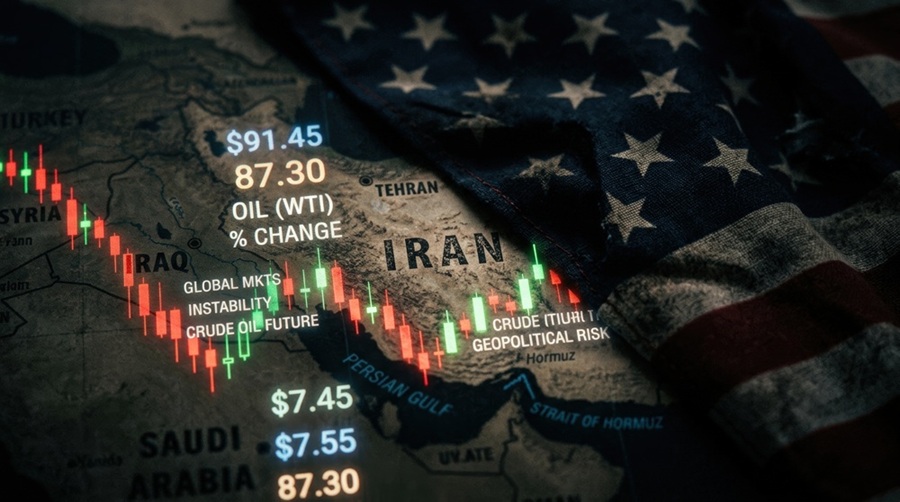
Asia starts the week with a fresh geopolitical shock that is already being framed in oil terms, not just security terms. The first-order move may be a repricing of risk premia and volatility across energy and macro, while markets wait to see whether this becomes a durable physical disruption or a fast-fading headline premium.
At a glance
What happened: US officials said the US carried out “Operation Absolute Resolve”, including strikes around Caracas, and that Venezuela’s President Nicolás Maduro and his wife were taken into US custody and flown to the United States (subject to ongoing verification against the cited reporting).
What markets may focus on now: Headline-driven risk premia and volatility, especially in products and heavy-crude-sensitive spreads, rather than a clean “missing barrels” shock.
What is not happening yet: Early pricing has so far looked more like a headline risk premium than a confirmed physical supply shock, though this can change quickly, with analysts pointing to ample global supply as a possible cap on sustained upside.
Next 24 to 72 hours: Market participants are likely to focus on the shape of the oil “quarantine”, the UN track, and whether this stays “one and done” or becomes open-ended.
Australia and Asia hook: AUD as a risk barometer, Asia refinery margins in diesel and heavy, and shipping and insurance where the price can show up in friction before it shows up in benchmarks.
What happened, facts fast
Before anyone had time to workshop the talking points, there were strikes, there was a raid, and there was a custody transfer. US officials say the operation culminated in Maduro and his wife being flown to the United States, where court proceedings are expected.
Then came the line that turned a foreign policy story into a markets story. President Trump publicly suggested the US would “run” Venezuela for now, explicitly tying the mission to oil.
Almost immediately after that came a message-discipline correction. Secretary of State Marco Rubio said the US would not govern Venezuela day to day, but would press for changes through an oil “quarantine” or blockade.
That tension, between maximalist presidential rhetoric and a more bureaucratically describable “quarantine”, is where the uncertainty lives. Uncertainty is what gets priced first.
Source: Adobe images
Why this is price relevant now
What’s new versus known for positioning
What’s new, and price relevant, is that the scale and outcome are not incremental. A major military operation, a claimed removal of Venezuela’s leadership from the country, and a US-led custody transfer are not the sort of things markets can safely treat as noise.
Second, the oil framing is explicit. Even if you assume the language gets sanded down later, the stated lever is petroleum. Flows, enforcement, and pressure via exports.
Third, the embargo is not just a talking point anymore. Reporting says PDVSA has begun asking some joint ventures to cut output because exports have been halted and storage is tightening, with heavy-crude and diluent constraints featuring prominently.
What’s still unknown, and where volatility comes from
Key unknowns include how strict enforcement is on water, what exemptions look like in practice, how stable the on-the-ground situation is, and which countries recognise what comes next. Those are not philosophical questions. Those are the inputs for whether this is a temporary risk premium or a durable regime shift.
Political and legal reaction, why this drives tail risk
The fastest way to understand the tail here is to watch who calls this illegal, and who calls it effective, then ask what those camps can actually do.
Internationally, reaction has been fast, with emphasis on international law and the UN Charter from key partners, and UN processes in view. In the US, lawmakers and commentators have begun debating the legal basis, including questions of authority and war powers. That matters for markets because it helps define whether this is a finite operation with an aftershock, or the opening chapter of a rolling policy regime that keeps generating headlines.
Market mechanism, the core “so what”
Here’s the key thing about oil shocks. Sometimes the headline is the shock. Sometimes the plumbing is the shock.
Venezuela’s heavy-crude system: Orinoco production, key pipelines, and export/refining bottlenecks.
Volumes and cushion
Venezuela is not the world’s swing producer. Its production is meaningful at the margin, but not enough by itself to imply “the world runs out of oil tomorrow”. The risk is not just volume. It is duration, disruption, and friction.
The market’s mental brake is spare capacity and the broader supply backdrop. Reporting over the weekend pointed to ample global supply as a likely cap on sustained gains, even as prices respond to risk.
Quality and transmission
Venezuela’s barrels are disproportionately extra heavy, and extra heavy crude is not just “oil”. It is oil that often needs diluent or condensate to move and process. That is exactly the kind of constraint that shows up as grade-specific tightness and product effects.
Reporting has highlighted diluent constraints and storage pressure as exports stall. Translation: even if Brent stays relatively civil, watch cracks, diesel and distillates, and any signals that “heavy substitution” is getting expensive.
Heavy-light spread as a stress gauge: rising differentials can signal costly substitution and tighter heavy supply.
Products transmission, volatility first, pump later
If crude is the headline, products are the receipt, because products tell you what refiners can actually do with the crude they can actually get. The short-run pattern is usually: futures reprice risk fast, implied volatility pops; physical flows adapt more slowly; retail follows with a lag, and often with less drama than the first weekend of commentary promised.
For Australia and Asia desks, the bigger point is transmission. Energy moves can influence inflation expectations, which can feed into rates pricing and the dollar, and in turn affect Asia FX and broader risk, though the links are not mechanical and can vary by regime.
Some market participants also monitor refined-product benchmarks, including gasoline contracts such as reformulated gasoline blendstock, as part of that chain rather than as a stand-alone signal.
Historical context, the two patterns that matter
Two patterns matter more than any single episode.
Pattern A: scare premium. Big headline, limited lasting outage. A spike, then a fade as the market decides the plumbing still works.
Pattern B: structural. Real barrels are lost or restrictions lock in; the forward curve reprices; the premium migrates from front-month drama to whole-curve reality.
One commonly observed pattern is that when it is only premium, volatility tends to spike more than price. When it is structural, levels and time spreads move more durably.
The three possible market reactions
Contained, rhetorical: quarantine exists but porous; diplomacy churns; no second-wave actions. Premium bleeds out; volatility mean-reverts.
Escalation, prolonged control risk: “not governing” language loses credibility; repeated operations; allies fracture further. Longer-duration premium; broader risk-off impulse across FX and rates.
Australia and Asia angle
For Sydney, Singapore, and Hong Kong screens, this is less about Venezuelan retail politics and more about how a Western Hemisphere intervention bleeds into Asia pricing.
AUD is the quick and dirty risk proxy. Asia refiners care about the kind of oil and the friction cost. Heavy crude plus diluent dependency makes substitution non-trivial. If enforcement looks aggressive, the “price” can show up in freight, insurance, and spreads before it shows up in headline Brent.
Catalyst calendar, key developments markets may monitor
US policy detail: quarantine rules, enforcement posture, exemptions.
UN and allies: statements that signal whether this becomes a long legitimacy fight.
Why Is Gold in Focus Right Now?Throughout early 2025, gold has surged to record highs, breaching $3,400 an ounce for the first time in history. For newer traders, this may seem like a “blue-sky” breakout without precedent. For experienced market participants, it raises a more practical and important question, i.e. what is driving this rally, and is it sustainable?Understanding the fundamental and technical context behind such moves helps us not only trade the present but plan for what may come next, which can guide us in the decisions we make with our trading action.This article aims to build upon recent outlook webinars that we have delivered recently, which have waved the bullish flag throughout. However, I must admit to having been surprised at the velocity of the rally.We will try to unpick key drivers as well as analyse what could be next and why.What’s Driving the Gold Rally in 2025?Let’s take a look at the main contributing factors that are currently supporting the upward momentum in gold prices:1. Rising Global Uncertainty and Geopolitical RiskPolitical instability, as it has historically, remains a strong macro backdrop for gold. Recent flare-ups in geopolitical conflict — particularly in Eastern Europe and the Middle East — have returned “safe haven” flows back into focus. This is typical during periods when traditional risk assets like equities face greater downside volatility.Additionally, the somewhat turbulent start (even more so than many predicted) to the new U.S. administration has introduced an element of policy uncertainty, particularly around trade, inflation and the impact of economic growth. The possibility of further tariffs or fiscal tightening reinforces gold’s appeal as a form of protection.Key Point: Traders need to monitor not just existing conflicts, but also the market perception of risk. Gold often responds not to what is happening, but to what investors fear might happen.2. US V China – trade war brewing?Tariff dramas have been the major market chatter and sentiment changer over the last few weeks. On top of general broad international tariffs, and to pause or not to pause decisions, the major attention is, and likely to continue to be, the escalation of tariffs between the U.S. and China has pushed inflation expectations higher. While inflation has generally cooled since its 2022–2023 peaks, cost-push factors such as tariffs can reintroduce price pressures, particularly on imports.Central banks globally are including tariffs within a rate decision narrative, but no central bank is more in focus, of course, than the Federal Reserve. In Trump's last presidency, the current Fed chairman Jerome Powell came under fire for rate policy, and already, it was noteworthy that the current president aimed a shot at him once again. The market is aware that inflationary shocks are not off the table once tariff impact starts to bite at importer costs in the US, and the “priced in” rate cut that is likely to occur in June is still some time away, and the certainty that this may happen may start to waver. Gold has historically performed well when real yields (interest rates adjusted for inflation) fall or remain negative.Key Point: Watch CPI data closely. If inflation expectations start to climb again due to trade-related costs, gold may continue to benefit.3. U.S. Dollar WeaknessThe U.S. dollar index (DXY) has declined to multi-year lows, making gold more attractive to non-U.S. investors. This is a classic inverse relationship — as the dollar falls, gold often rises.A weaker dollar could potentially indicating that the market could be pricing in a more dovish Federal Reserve, with rate cuts potentially on the table later in the year, However, more likely in this case, the dramatic drop in the USD, which this week hit 3 year lows, is more likely due to concerns about growth and even the perceived chance of recession.At the time of writing, the earnings season is ramping up, and despite Q1 results so far being relatively positive, we are already seeing concerns expressed (as is often the case with uncertainty) relating to forward guidance. This, of course, plays into the slowdown narrative. This week's PMI data feels as though it may have even more importance than usual.Key Point: Gold traders should always include USD direction in their macro framework. It often amplifies or suppresses broader trends in the metal.4. Central Bank and Institutional DemandAnother major support for gold is the persistent demand from central banks, particularly in emerging markets such as China and Turkey. These institutions are increasingly shifting reserves into gold as part of long-term diversification away from USD assets.Evidence suggests ETF flows have also picked up, showing increasing but not outrageous levels, suggesting the move is still institutional in nature rather than purely speculative.Key Point: As long as institutional and central bank demand remains steady or rising, gold has a structural reason to be supported underneath current price levels.What the Technical Picture Is Telling UsWhile fundamental drivers continue to support gold, the technical setup also tells an important story — one that can help traders decide whether to stay in, take partial profits, or prepare for tactical re-entries after any price pullback. Let’s explore the technical picture in a bit more detail.
Gold’s Long-Term Trend Structure Remains Intact
Gold has been making a consistent series of higher highs and higher lows since mid-2023. This trend has been confirmed across multiple timeframes, including the daily and weekly charts — an important feature for position traders.Currently, price is well above both the 50-day and 200-day exponential moving averages (EMA), which have now turned upward and widened — a classic sign of trend strength and directional bias. When prices pull back in strong trends, these EMAs often serve as dynamic support levels.
Momentum: The weekly RSI is elevated (above 75), which suggests gold may be in overbought territory in the short term.
What About RSI Being Overbought?One of the most common misunderstandings among newer traders is how to interpret an elevated RSI (Relative Strength Index), particularly when it crosses above the traditional 70 level.RSI above 70 does not automatically mean 'sell' — especially in strong trends, so this merits a little further discussion.Here’s why a high RSI may not be a problem:
Context matters: In trending markets, RSI can remain elevated (above 70 or even 80) for extended periods without any meaningful pullback. This is often referred to as a 'momentum breakout' condition.
Confirmation from volume: If rising RSI is accompanied by increased volume, it suggests that momentum is being supported by participation, not exhaustion. Currently, weekly volume has expanded on breakout weeks, supporting the move.
New highs with RSI > 70 are actually bullish: A strong market making new highs and registering overbought readings usually reflects strength, not vulnerability — unless divergence begins to appear.
Key Point: Use RSI as a momentum gauge, not a reversal trigger in isolation. In this case, RSI supports the idea that gold is strong, not yet stretched to the point of reversal.
Next Targets: Many technical analysts are watching $3,500 and $3,650 as key psychological and Fibonacci extension levels. A sustained break above $3,400 would likely bring these into view.
Support Levels: If price retraces, $3,200 and $3,050 are likely areas where buyers may step back in, especially if the macro story remains intact.Key Point: Momentum remains strong, but even in trending markets, corrections are normal. Having a plan for where to re-engage is just as important as knowing when to stay out.
What Would a Healthy Pullback Look Like?
Even the strongest trends pause. If gold does retrace in the short term, the nature of the pullback is more important than whether it happens.Signs of a healthy pullback include:- Controlled decline in decreasing volume- Price respecting prior breakout zones — e.g., $3,250–$3,280- Holding dynamic support like the 20-day or 50-day EMA- Reversal candle patterns near support (e.g., hammer, bullish engulfing)Key Point: In strong markets, pullbacks are often shallow and short-lived. They can be opportunities to scale in, provided the structure remains intact.Sentiment and Positioning: Are Traders Too Bullish?It’s important not to get swept up in price action alone. The COT (Commitments of Traders) report can provide valuable insight into whether markets are approaching overly crowded levels.
Large Speculators have increased their net long positions, but not yet at levels seen in major historical peaks.
Retail traders have only recently started to increase exposure, which suggests the move is not fully mature.
ETF inflows, while rising, are still below the aggressive flows seen in 2020.Key Point: Current positioning suggests there may still be room to run, especially if new catalysts emerge. However, if positioning becomes too lopsided, be ready for faster and sharper corrections.
What Could Change the Narrative….Risks to Watch?Even with a strong bull case, traders must stay aware of what could derail gold’s momentum:Risk Event #1: Sudden USD reboundImpact on Gold: Could trigger a sharp pullbackRisk Event #2: Hawkish Fed surpriseImpact on Gold: Logically higher real yields = bearish gold due to USD impact – however, gold’s role as an inflation risk is likely to offset this.Risk Event #3: De-escalation of trade/geopolitical tensionsImpact on Gold: Safe-haven demand may soften if this is part of the reason for the current price rise. However, with other factors predominating price moves for right now, again, this may not be critical.Risk Event #4: Profit-taking and reversal in momentumImpact on Gold: Could create a short-term topKey Point: Risk doesn’t always mean reversal — but it does mean adjusting trade size, stops, and expectations when conditions change.Summary: Stay Informed, Stay DisciplinedGold’s rise in 2025 has been impressive, but it hasn’t been irrational. The macro backdrop, institutional support, and technical structure all support the trend.However, markets rarely move in straight lines, and traders should stay ready for both continuation and correction scenarios.Success is likely to lie in applying consistency in the management of profit and capital risks, as well as having a clear method to re-enter as appropriate. consistently while remaining adaptable to changing conditions.Traders should view the current gold move as a reflection of persistent macro themes and technical support rather than any sort of “bubble”. Whether you’re already long or waiting for a retracement, your decision-making should be rooted in having a clear and unambiguous trading plan and, of course, the discipline of follow-through in the actions you take.