Theresa May suffered the worst defeat in recent times in British history. The House has spoken, and Theresa May stated that the government will listen. “It is clear that the House does not support this deal, but tonight’s vote tells us nothing about what it does support.” It will be a big challenge for her to negotiate a withdrawal agreement with the European Union if the UK seems confused about what they want themselves. What’s Next? is the number one question emerging after the big defeat.
Labour’s Leader, Jeremy Corbyn has tabled the motion of No-Confidence. Today will be another busy day for Britain: 1:00 PM (London time)– Jeremy Corbyn will open the debate and Theresa May will debate the motion. 7:00 PM (London time) – The Vote will take place. 7:15 PM (London time) – The Result will be out. Out of 650 MPs, Theresa May will require 318 votes to win.
The result of the no-confidence vote will determine the next course of action: At this stage, we believe that the government have higher chances of surviving the vote. The conservative rebels do not want a change of government but want a change of policy rather. It is unlikely that her Conservative Party will risk Labour winning and Jeremy Corbyn becoming Prime Minister.
In the case, the Labour Party fails to trigger an election, they will attempt to seek a second referendum as discussed in my previous article. Tonight’s No confidence vote will provide more clarity on the next course of action. In the meantime, we continue to expect wild swings in GBP pairs.
The Pound pumped back the heavy losses made against major currencies after the vote, and we believe such volatility is normal given the circumstances and uncertainties grasping the markets around the next steps of Brexit. However, now that the likelihood of a no-deal Brexit has reduced, giving room to more alternative plans, the direction of the Pound appears less skewed to the downside. A look at the long Doji candle on the daily chart of the GBPUSD pair shows that bulls are providing strong support to the pair.
GBPUSD Source: GO MT4
By
GO Markets
本文由 GO Markets 的分析師及撰稿人撰寫,內容基於其獨立分析或個人經驗。文中所表達的觀點、意見或交易風格均屬作者個人,並不代表或反映 GO Markets 的立場。任何提供的建議均屬一般性,並未考慮您的個人目標、財務狀況或需求。在採取任何行動之前,請考慮該建議是否適合您的目標、財務狀況與需求。若該建議涉及購買特定金融產品,請於作出任何決定前,先閱讀我們網站上提供的《產品揭露聲明書》(Disclosure Statement, DS)及其他法律文件。
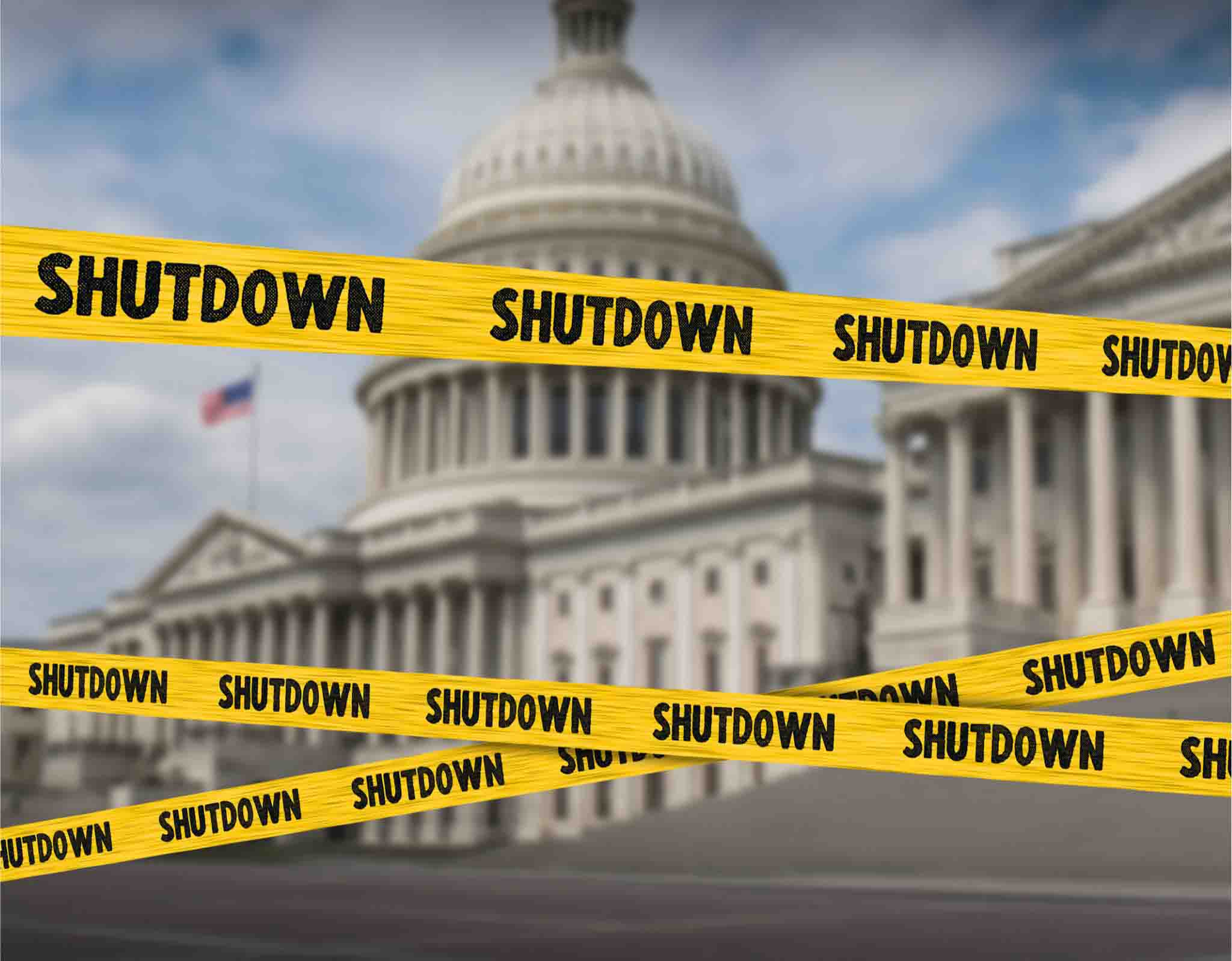
The United States entered a government shutdown on October 1, 2025, after Congress failed to agree on full-year appropriations or a short-term funding bill. Although shutdowns have occurred before, the timing, speed, scale, and motives behind this one make it unique. This is the first shutdown since the last Trump term in 2018–19, which lasted 35 days, the longest in history.For traders, understanding both the mechanics and the ripple effects is essential to anticipating how markets may respond, particularly if the shutdown draws out to multiple weeks as currently anticipated.
What Is a Government Shutdown?
A government shutdown occurs when Congress fails to pass appropriation bills or a temporary extension to fund government operations for the new fiscal year beginning October 1.Without the legal authority to spend, federal agencies must suspend “non-essential” operations, while “essential” services such as national security, air traffic control, and public safety continue, often with employees working unpaid until funding is restored.Since the Government Employee Fair Treatment Act of 2019, federal employees are guaranteed back pay to cover lost wages once the shutdown ends, although there has been some narrative from the current administration that some may not be returning to work at all.
Why Did the Government Shutdown Happen?
The 2025 impasse stems from partisan disputes over spending levels, health-insurance subsidies, and proposed rescissions of foreign aid and other programs. The reported result is that around 900,000 federal workers are furloughed, and another 700,000 are currently working without pay.Unlike many past standoffs, there was no stopgap agreement to keep the government open while negotiations continued, making this shutdown more disruptive and unusually early.
Why an Early Shutdown?
Historically, most shutdowns don’t occur immediately on October 1. Lawmakers typically kick the can down the road with a “Continuing Resolution (CR)”. This is a stopgap measure that can extend existing funding for weeks or months to allow time for an agreement later in the quarter.The speed of the breakdown in 2025, with no CR in place, is unusual compared to past shutdowns. It suggests it was not simply budgetary drift, but a potentially deliberate refusal to extend funding.
Alternative Theories Behind the Early Shutdown
While the main narrative coming from the U.S. administrators points to budget deadlock, several other theories are being discussed across the media:
Executive Leverage – The White House may be using the shutdown as a tool to increase bargaining power and force structural policy changes. Health care is central to the debate, funding for which was impacted significantly by the “one big, beautiful bill” recently passed through Congress.
Hardline Congressional Factions – Small but influential groups within Congress, particularly on the right, may be driving the shutdown to demand deeper cuts.
Political Messaging – The blame game is rife, despite the reality that Republican control of the presidency, House, and Senate, as well as both sides, is indulging in the usual political barbs aimed at the other side. As for the voter impact, Recent polls show that voters are placing more blame on Republicans than Democrats at this point, though significant numbers of Americans suggest both parties are responsible
Debt Ceiling Positioning – Creating a fiscal crisis early could shape the terms of future negotiations on borrowing limits.
Electoral Calculus – With midterms ahead, both sides may be positioning to frame the narrative for voters.
Systemic Dysfunction – A structural view is that shutdowns have become a recurring feature of hyper-partisan U.S. politics, rather than exceptions.
Short-Term Impact of Government Shutdown
AreaImpactFederal workforceHundreds of thousands have been furloughed with reduced services across various agencies.Travel & aviationFAA expects to furlough 11,000 staff. Inspections and certifications may stall. Safety concerns may become more acute if prolonged shutdown.Economic outputThe White House estimates a $15 billion GDP loss per week of shutdown (source: internal document obtained by “Politico”.Consumer spendingFederal workers and contractors face delayed income, pressuring local economies. Economic data releaseKey data releases may be delayed, impacting the decision process at the Fed meeting later this month.Credit outlookScope Ratings and others warn that the shutdown is “negative for credit” and could weigh on U.S. borrowing costs.Projects & researchInfrastructure, grants, and scientific initiatives are delayed or paused.
Medium- to Long-Term Impact of Government Shutdown
1. Market Sentiment
Shutdowns show some degree of U.S. political dysfunction. They can weigh on confidence and subsequently equity market and risk asset sentiment. To date, markets are shrugging off a prolonged impact, but a continued shutdown into later next week could start to impact.Equity markets have remained strong, and there has been no evidence of the frequent seasonal pullback we often see around this time of year.Markets have proved resilient to date, but one wonders whether this could be a catalyst for some significant selling to come.
2. Borrowing Costs
Ratings downgrades could lift Treasury yields and increase debt-servicing costs. The Federal Reserve is already balancing sticky inflation and potential downward pressure on growth. This could make rate decisions more difficult.
3. The Impact on the USD
Rises in treasury yields would generally support the USD. However, rising concerns about fiscal stability created by a prolonged shutdown may put further downward pressure on the USD. Consequently, it is likely to result in buying into gold as a safe haven. With gold already testing record highs repeatedly over the last weeks, this could support further moves to the upside.
4. Credibility Erosion
Repeated shutdowns weaken the U.S.’s reputation as the world’s most reliable borrower. With some evidence that tariffs are already impacting trade and investment into the US, a prolonged shutdown could exacerbate this further.
What Traders Should Watch
For those who trade financial markets, shutdowns matter more for what they could signal both in the short and medium term. Here are some of the key asset classes to watch:
Equities: Likely to see volatility as political risk rises, and the potential for “money off the table” after significant gains year-to-date for equities.
U.S. Dollar: With the US dollar already relatively weak, further vulnerability if a shutdown feeds global doubts about U.S. fiscal stability.
Gold and other commodities: May continue to gain as hedges against political and credit risk. Oil is already threatening support levels; any prolonged shutdown may add to the bearish narrative, along with other economic slowdown concerns
Outside the US: With the US such a big player in global GDP, we may see revisions in forward-looking estimates, slingshot impacts on other global markets and even supply chain disruptions with impact on customs services (potentially inflationary).
Final Word
The 2025 shutdown is unusual because of its scale and because it started on Day 1 of the fiscal year, without even a temporary extension. That speed points to a deeper strategic and political contribution beyond the usual budget wrangling that we see periodically.For traders, the lesson is clear: shutdowns are not just what happens in Washington, but may impact confidence, borrowing costs, and market sentiment across a range of asset classes. In today’s world, where political credibility is a form of capital, shutdowns have the potential to erode the very foundation of the U.S.’s role in global finance and trade relationships.
The US has entered the Israel-Iran war. However, despite an initial 4 per cent surge on the open, oil has settled where it has been since the conflict began in early June — around US$72 to US$75 a barrel.Trump claims the attacks from the US on Iranian nuclear facilities over the weekend are a very short, very tactical, one-off. This is something his base can get behind — some really big conservative players do not want a long-contracted war that sucks the US into external disputes.Whether this will be the case or not is up for debate, but there is a precedent from Trump's first presidency that we can look to. Iran had attacked several American bases in 2019, as well as attacking Saudi Arabia's most important oil refinery with Iranian drones. There wasn't a huge amount of damage; it was more a symbolic movement and display of capabilities by Iran.Initially, Trump didn't react — it took pressure from Gulf allies like the UAE and Israel for him to respond, which saw him order the assassination of the head of the Iranian Defence Force, Qasem Soleimani. This led to an Iranian response of ‘lots of noise’ and ‘cage rattling’, but minimal real action events, just a few drone attacks. Trump is betting on the same reaction now.If Iran follows the same patterns from the previous engagement, the geopolitical side of this is already at its peak.As of now, Iran is not going after or destroying major Gulf energy capabilities. Nor have there been any disruptions to the shipping traffic through the Strait of Hormuz. In fact, apart from a posturing vote to block the Strait, Iran has not made any indication that it is going to disrupt oil in any way that would lead to price surges.Additionally, despite the U.S. military equipment buildup in the region being its highest since the Iraq war, critical Iranian energy infrastructure is running largely unscathed.This all suggests that the geopolitics and the physical and futures oil markets remain disconnected. Oil will spike on news rumours, but the actual impacts in the physical realm to this point remain low. Of course, this could change in future. But, for now, the risk of seeing oil move to US$100 a barrel is still a minority case rather than the majority.
Oil has been thrust back into the spotlight as the negative catalyst for markets. The events over the weekend highlight just how fragile the Middle East is and how it will shape global trading in the second half of 2025.Putting Iran in an oil-specific perspective, despite rising geopolitical tensions, the potential for sustained disruptions to energy supply appears limited for now. This is backed by historical data seen in April, June, and October last year, where heightened risk didn't translate into prolonged price surges.There are absolutely geopolitical concerns around Iranian retaliation, coupled with Israeli retaliation, and so on. But the likelihood of strikes on regional energy infrastructure appears low.Iran’s relationships with Gulf nations have improved markedly, reducing the risk of hostile action toward their oil operations. This has been led by Saudi Arabia, which will be strong in ensuring no disruption to global oil supplies. The caveat is if Iran decides to go at it alone and block the Strait of Hormuz, which would severely impact the likes of Bahrain, Qatar, the UAE, Kuwait, and Iraq. This appears unlikely, but a risk we need to be aware of.
Where does diplomacy sit?
Expectations are for tensions to spike in the short term. However, that will likely lead to renewed diplomatic engagement, particularly if the alternatives prove economically or strategically untenable (i.e., long-term war, regime changes, civil unrest). That's the long term; the near-term resolution is the concern. The United States and the greater regions of Europe and Asia will be brought in. We know that the President has a very high preference for low oil prices as a major part of his election campaign. With no signs, demand is likely to collapse. The only way to keep prices down on this escalation is to ramp up supply. The catch is that US producers remain very reluctant to ramp up supply at current prices. OPEC and Saudi Arabia have already moved to increase production to stamp out non-OPEC members on price, and Russia is still a global pariah with its war with Ukraine. So the supply lever is going to be tricky.
So, what about pricing?
Energy price volatility is being closely tied to positioning in the futures market. Historical patterns show a strong correlation between net longs and Brent pricing.If we speculate that short positions were to be fully unwound (from 187k lots to zero), the implied move could be around $14 per barrel. Brent recently hit $65 per barrel before the conflict and spiked to an intraday high of $78.5 per barrel on the news breaking. This reflects the type of technical squeezes we can expect. Sustained gains would then require fresh long positioning.
Summary
The market remains focused on how Iran and Israel might respond further, and whether any escalation might target energy infrastructure directly. Meanwhile, the U.S. continues to signal interest in keeping diplomatic channels open. Unless Iran decides to go against all expectations and independently block the Strait of Hormuz, we can expect heightened volatility in the short term, without any prolonged surge — similar to the patterns we saw during heightened tensions throughout last year.
Last week brought some relief as markets found support following the retreat from record highs... with the recent crypto crash being a notable exception.
Bitcoin Breaks Below $100K
Crypto markets are under significant pressure after Bitcoin crashed through the psychological $100,000 level. Currently trading around $94,650, Bitcoin has fallen to its lowest point since May. The $94,000 level appears critical; if it fails, we could see Bitcoin slip back into the $80,000 range and potentially enter bear market territory.
Fed Minutes and Rate Cut Signals
The Federal Reserve minutes are due this week, and they could provide crucial insight into the timing of rate cuts in 2026. Markets have already priced in a likely December cut, but the January 2026 cut that was initially expected may be in jeopardy. Pay attention to the Fed speakers scheduled throughout the week—their comments could help clarify the path forward on monetary policy.
Strong Earnings Season Winds Down
We're in the final stretch of what's been an exceptionally strong earnings season, with 82% of companies beating EPS expectations and 76% surpassing revenue forecasts. This week features some heavyweight reports, most notably Nvidia reporting Wednesday after the bell. Major retailers Target and Walmart will cap things off, giving us a clear picture of consumer health heading into the holidays.
Market Insights
Watch Mike Smith's analysis for the week ahead in markets
Key Economic Events
Stay up to date with the upcoming economic events for the week.
The longest government shutdown in US history has finally ended after 42 long days.
After a month and a half of political theatre, seven Democrats and one independent broke ranks and voted with Republicans to pass a stopgap measure. The Senate went 60-40, the House followed 222-209, and Trump signed it hours later.
The legislation includes three-year appropriations for the Agriculture Department, FDA, military construction, veterans affairs, and congressional operations, along with restoration of pay for federal workers and reversal of Trump administration layoffs through January.
However, the most contentious issue, healthcare subsidies, has been kicked down the road to a December Senate vote.
Trump signs bill to end longest shutdown in history
COVID-era ACA subsidies expire at year-end. When they do, premiums for the average subsidised household will more than double from $888 to $1,904 per year, with an estimated 3.8 million people losing coverage entirely.
If the December vote fails, which is likely considering how far apart the two parties are on the topic, we could see a new shutdown begin in January.
What Happens Next?
This Week:
Federal employees return to work.
Paychecks start flowing again.
SNAP benefits get restored for 42 million people, though heating assistance won't come back for weeks.
National parks reopen.
Airports start to go back to normal.
December:
Senate votes on healthcare subsidies. It will probably fail.
Premium notices continue to be sent showing 2026 costs doubling.
January 30:
Government funding expires.
We do this whole thing over, except now the healthcare subsidies have already expired.
If Republicans and Democrats remain divided on budget priorities, another shutdown will likely begin.
By the Numbers:
Over the past 42 days, approximately 750,000 federal workers have been furloughed. Another two million worked without pay. Over 42 million had their food assistance delayed. And the FAA cut flights by 10% because air traffic controllers stopped showing up to work.
Further concern is the "data blackout" that has hampered Federal Reserve decision-making. Key economic indicators, including jobs reports, were suspended, leaving the Fed blind during an active rate-cutting cycle.
Meanwhile, separate analyses from Challenger, Gray & Christmas showed layoffs surged 183% in October, which would make it the worst October for jobs since 2003.
The Bottom Line
Today’s deal ended the shutdown, but it didn’t actually solve anything. The deal essentially kicks the can down the road to January while leaving the healthcare crisis unresolved.
With both parties divided on healthcare and spending priorities, and Trump lacking a comprehensive plan to address rising premiums and high deductibles, a resolution in the December vote seems unlikely.
If no compromise is accepted by the time Government funding expires on January 30, another shutdown is almost inevitable.
Impact of Australian Jobs Reports and U.S. Shutdown End on the Aussie
The decision to scale (increase the traded lot size of a specific EA) should be based on statistical evidence that indicates your EA has the potential to perform to certain expectations.
Equal weight should be given to the decision to scale, as to the initial decision to deploy an EA. This guide provides an indicative approach on how to put together and action your scaling plan.
Before You Start Your Scaling Plan
Important: this should be an individual plan that is consistent with your personal trading objectives, your EA portfolio, and your personal financial situation (including account size).
We are going to use a starting lot of 0.10 per trade in the examples in this document —you want to adjust this based on your own risk tolerance.
Whatever your chosen lot size start point, EA scaling should be a pre-planned incremental approach, scaling stepwise based on performance metrics you are seeing in your live trading account.
You should also have assessed the current margin usage of your EA portfolio exposure to ensure that any scaling and related increased margin requirements are appropriate to the size of your account.
Suggested Scaling Baseline Requirements
Scaling should only be performed when your EA is performing to what you deem to be a good standard. To make this judgment, you need to set some minimum performance standards.
The past performance of your EA is not a guarantee of future performance. If market conditions change, you must remain vigilant and continue to measure performance on an ongoing basis for every live EA you have.
You need to define the key metrics that are important to you.
Two important metrics to include are:
The number of trades: to provide some evidence of reliability
The period of time: to have had exposure to at least some variation in market conditions
Example of how you may lay your metrics out in a table:
Table 1 – Sample scaling metrics
Some may choose to include proximity to original expectations of other metrics, such as minimum win rate, average profit in winning trades, and average loss in those that go against you.
It should only be after your metrics are met that lot scaling begins on any specific EA.
Lot Size Scaling Ladder
Below is an example of a performance-based scaling plan assuming a 0.10-lot baseline.
Again, this is indicative. It provides a framework with clear review dates and an approach that illustrates incremental scaling. You must still define a regime that is right for your specific trading objectives.
Table 2 – Review planning
Risk Guardrails
It is vital to keep an eye on your general account risks and have limits in place that guide your EA use.
Such limits must be constant across all stages of scaling and referenced beyond the risk of a single EA, but to your portfolio as a whole.:
Per-Trade Risk (Nominal)
Trade risk for any one trade should be seen in the context of account size and the dollar risk based on the risk parameters you have set for your EA.
Specify a maximum percentage of the account balance — a $200 loss is more impactful on a $1000 account compared to a $10,000 account.
Stick to what is right for you in terms ofyour tolerable risk level based on your trading objectives and financial situation. A common suggestion is a 1-2% risk of account equity per trade.
Total Open Exposure
Specifying maximum exposure in the number of EAs open at any time and those that use the same asset class is important for overall portfolio risk management.
There are tools you can use to monitor exposure risk generally, as well as those that can be used to indicate single asset exposure.
Margin Usage
It is always desirable that your set exit approaches and parameter levels are what your exits are based on. It should not be because your margin usage has meant you have moved into a margin call situation.
Specify a minimum level to adhere to and make sure that your account is sufficiently funded. If volatility or slippage rises (e.g., news events or illiquid sessions), reduce lot size temporarily.
Scaling Psychology – Managing “Big Numbers”
As lot sizes rise, your emotions may respond accordingly when you see the larger dollar amounts that your EA is generating.
If you are used to seeing an average profit of $100 and average loss of $50, and suddenly you are seeing significantly bigger numbers, it creates an emotional challenge where you may be tempted to do a “discretionary override”.
Although there are situations, such as major market events, overexposure in a specific asset, or VPS or account system problems, where such intervention may be considered, generally this would distort the actual performance evaluation of your EA and is not encouraged (unless it is pre-planned).
The table below presents some of the generally accepted challenges and offers suggestions on how to manage them.
Your Plan Into Action…
In practical terms, your scaling plan should have two components:
The key parameters for action on your chosen key metrics
Specified periodic review times to make your next scaling decision
This is not a race. Having systems in place facilitates creating the opportunity that scaling brings while still mitigating the risks.