
February’s FX landscape is likely to be driven by inflation persistence, labour resilience, and central bank communications. With several high-impact data releases across the US, Europe, Japan and Australia, near-term moves may be more event-driven and repricing-led, rather than trend-led.
Quick facts
- USD remains the key reference point, with US data driving repricing in yields and the broader FX market.
- EUR sensitivity remains high around European Central Bank (ECB) messaging and incoming inflation and activity signals.
- JPY remains tightly linked to domestic data and Bank of Japan (BOJ) communication, with USD/JPY often reacting sharply to shifts in yield expectations.
- AUD remains policy sensitive, with domestic inflation and labour data likely to matter most, alongside global risk tone and metals.
US dollar (USD)
Key events
- Nonfarm payrolls (NFP) and unemployment: 8:30 am, 11 February (ET) | 12:30 am, 12 February (AEDT)
- Consumer Price Index (CPI), headline and core: 8:30 am, 13 February (ET) | 12:30, 13 February (AEDT)
- Personal income and outlays (includes the PCE price index): 8:30, 20 February (ET) | 12:30, 21 February (AEDT)
What to watch
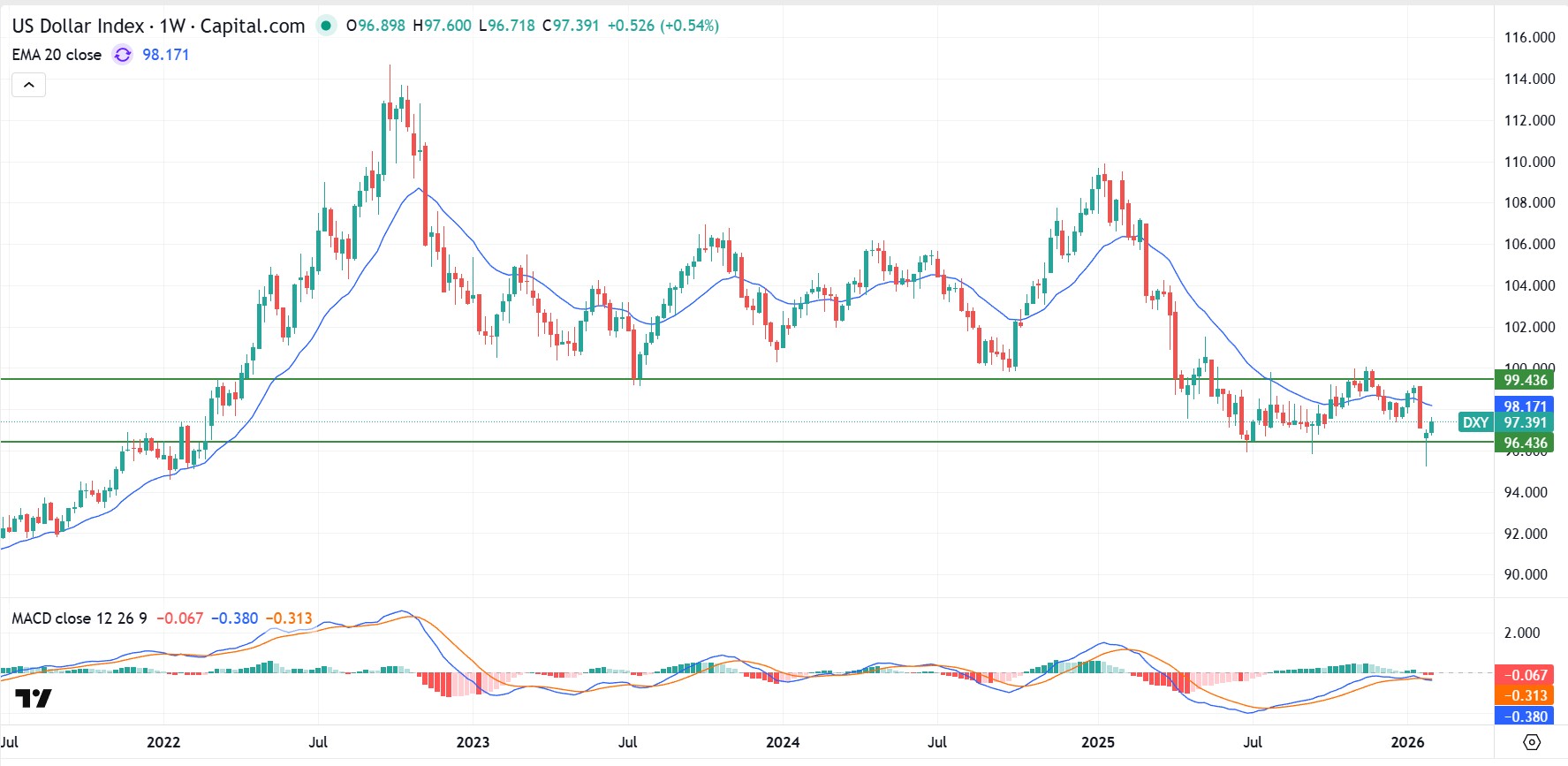
The USD is likely to remain primarily driven by shifts in inflation and labour data and their implications for Federal Reserve rate expectations. Recent headlines surrounding Federal Reserve independence have also added volatility to USD positioning.
Stronger inflation or labour resilience is often associated with firmer USD support via higher yield expectations. Softer outcomes could reduce rate support and allow pairs like EUR/USD and AUD/USD to stabilise.
Key chart: US dollar index (DXY) weekly chart
Euro (EUR)
Key events
- ECB policy decision: 12:15 am, 6 February (AEDT)
- ECB press conference: 12:45 am, 6 February (AEDT)
- ECB flash estimates for GDP and employment: 8:00 pm, 13 February (AEDT)
What to watch
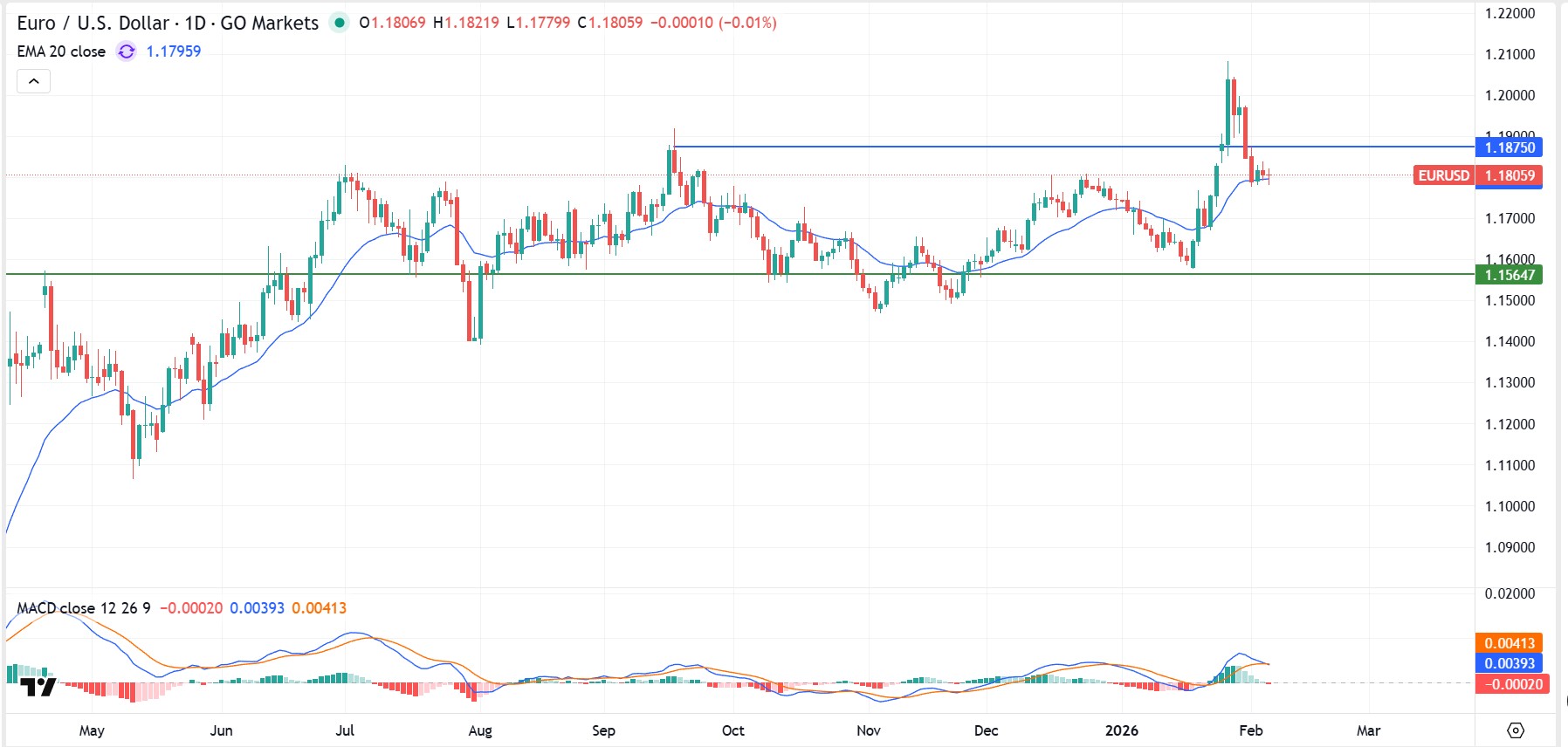
EUR direction remains linked to whether the ECB can maintain its stance without a material deterioration in activity, or whether inflation and growth data pull forward easing expectations.
Resilient growth and firm inflation could support the “higher for longer” pricing bias. Weaker growth or softer inflation could weigh on the currency, particularly if they bring forward easing expectations.
Key chart: EUR/USD weekly chart
Japanese yen (JPY)
Key events
- Japan preliminary GDP (Q4 2025, first preliminary): 6:50 pm, 15 February (ET) | 10:50 am, 16 February (AEDT)
- National CPI (Japan): 20 February (Japan)
What to watch
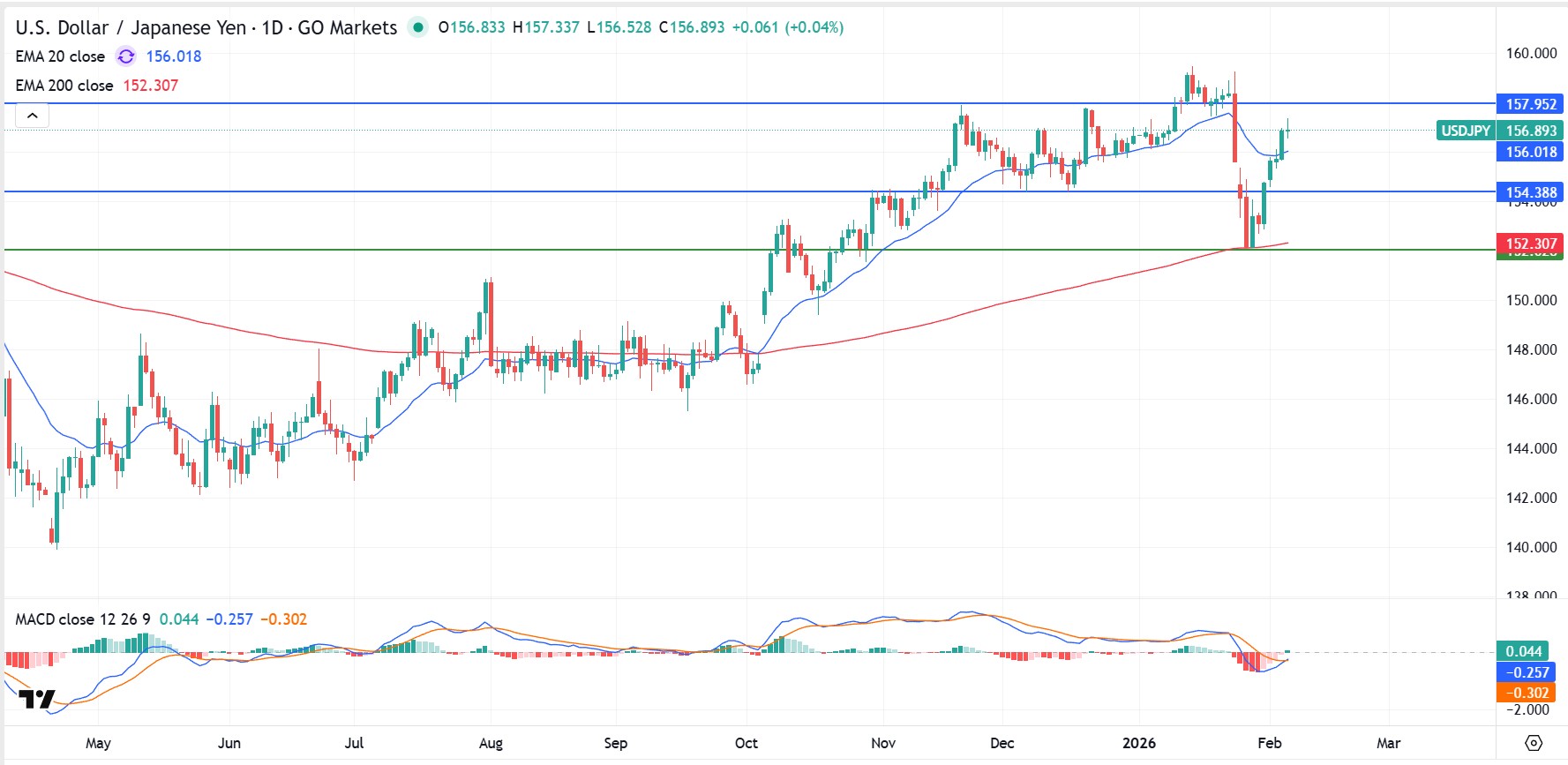
JPY remains sensitive to domestic yield shifts and BOJ communication. Even modest adjustments to policy expectations could generate outsized moves in USD/JPY.
Firm growth or inflation outcomes could support JPY via higher domestic yields and shifting BOJ expectations. Softer outcomes or cautious policy messaging could keep USD/JPY supported.
Key chart: USD/JPY daily chart
Australian dollar (AUD)
Key events
- RBA minutes: 11:30 am, 17 February (AEDT)
- Wage Price Index: 11:30 am, 18 February (AEDT)
- Labour Force Survey: 11:30 am, 19 February (AEDT)
- Consumer Price Index (CPI): 11:30 am, 25 February (AEDT)
What to watch
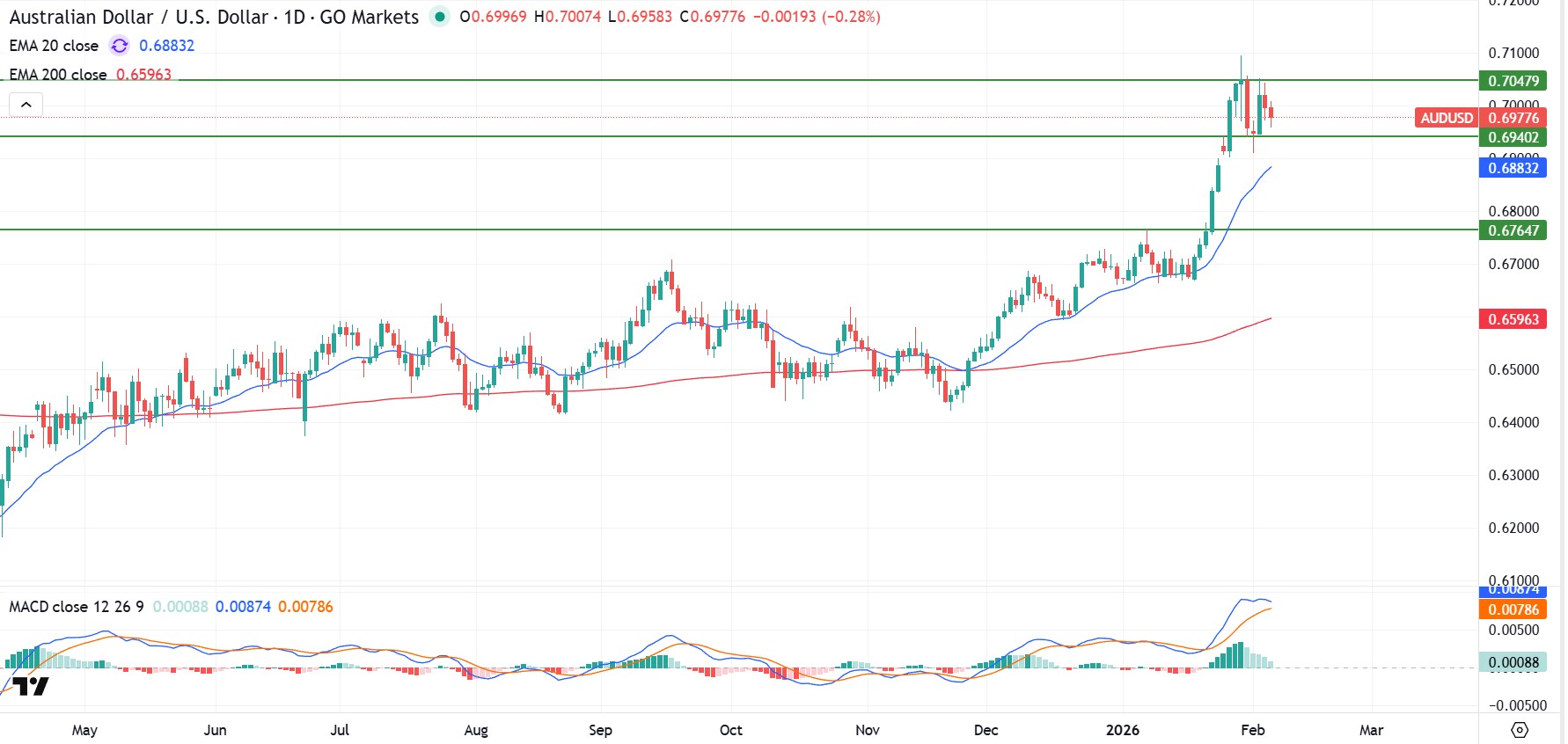
AUD remains sensitive to policy, responding quickly to domestic inflation and labour data, as well as global risk sentiment and its impact on metal pricing.
Persistent wages or inflation pressures could support AUD via firmer policy expectations. Softening data could reduce rate support and weigh on AUD performance, particularly versus USD and JPY.
Key chart: EUR/AUD daily chart

Disclaimer: Articles are from GO Markets analysts and contributors and are based on their independent analysis or personal experiences. Views, opinions or trading styles expressed are their own, and should not be taken as either representative of or shared by GO Markets. Advice, if any, is of a ‘general’ nature and not based on your personal objectives, financial situation or needs. Consider how appropriate the advice, if any, is to your objectives, financial situation and needs, before acting on the advice. If the advice relates to acquiring a particular financial product, you should obtain our Disclosure Statement (DS) and other legal documents available on our website for that product before making any decisions.