Look before you leap …FIVE reasons why a low PE Ratio may be a reason NOT to jump in
Mike Smith
6/10/2023
•
0 min read
Share this post
Copy URL
What is a PE Ratio, and Why is It of Interest to Investors? The Price-to-Earnings (P/E) ratio is a metric that measures a company's current share price relative to its earnings per share (EPS). It's a relatively simple calculation, worked out by dividing the current share price by the Earnings per Share.
Traditionally, it has been used as a potential method as part of fundamental analysis to determine the valuation of a stock at its current price, and by comparing it against other stocks, one can make a judgment as to whether a stock is overvalued or undervalued relative to its earnings. In simple terms, a high P/E ratio might indicate that the stock is overvalued and may be worth avoiding, while a low P/E ratio could suggest undervaluation and hence an opportunity to invest and benefit as the price moves up to a fair value. We have discussed P/E ratios and the influences of this fundamental analysis measure in some detail in another article, “PE Ratios: What They Tell You (and What They Don’t),” which you can find HERE.
However, although this is true to some degree, it is far from the whole story. It is equally true that a low P/E ratio may have causative factors that mean you should avoid the stock rather than jumping in expecting a return to former glory. So, in this article, we take a deeper dive into some low P/E ratio causes that may be “red flags” in your investment decision-making.
For each, we will define what the concern may be that merits further investigation and provide examples to assist in highlighting how this may happen. So, in essence, you will have a checklist to use when considering stocks with low P/E ratios as investments. Declining Industry or Sector: A low P/E may be indicative of an actual or potential gradual reduction in overall demand and growth prospects within a particular industry or sector.
Many reasons for this could include changes in policy, environmental concerns, technology advances, customer preferences, and demographics. Although this decline may be permanent in some cases, there may also be temporary declines due to longer-term supply chain issues or healthcare reasons (the recent COVID pandemic being a prime example where overnight the travel industry was hit hard). The difficulty with the more temporary causes is not only the investor's ability to judge the potential duration of the causative factor but also the subsequent time required for recovery after the event has passed.
The more permanent declines may be currently in progress or likely to happen in the future. With current declines, an obvious example would be the move from traditional print media to digital news platforms. The ability, or even the possibility, of a company to adapt is part of the equation to determine the degree of decline.
Assessing the potential for decline poses the challenge of timing, as it is commonly unknown when there will be a substantial impact. An example of this may be the coal industry's decline due to renewable energy adoption. Poor Quality Earnings: Earnings are clearly part of the P/E ratio calculation.
However, this warrants further exploration, as earnings may be temporarily inflated, giving a misrepresentation of the company's true health. Even a company with an already low P/E that appears to have growth based on the latest earnings, and may look attractive, is worth additional checks. One-time events, accounting changes, or other non-recurring factors may all contribute, at least superficially, to earnings that may be indicative of growth potential.
For example, a company’s earnings may be inflated by a one-time sale of intellectual property or an asset. As this may be reflected more obviously in trailing rather than forward P/E, at a minimum, this should be a starting point for any assessment, but it does reinforce the need to view other broader fundamental analysis metrics. High Debt Levels: High debt levels, appearing to support a company’s ability to operate currently, may restrict future flexibility, the ability to service such debt should interest rates or consumer spending landscapes change, and ultimately jeopardize stability.
Even in a company with a comparatively low P/E and relatively good performance currently, the level of debt should be part of your decision-making process when considering stock positions for the long term. Examples of such could be a real estate company highly leveraged during rising interest rate periods or a consumer discretionary retail chain carrying excessive debt in an economic downturn. Lack of Growth Potential: There may be a situation where a low P/E reflects a decrease in price due to the market's perception of limited opportunities for a company to expand its market share, innovate, or increase revenue due to various internal and external factors.
The level of competition and innovation within a specific sector is a key potential factor in this, with a comparison to industry peers helping the investor to identify discrepancies or unique attributes that may suggest that a low P/E ratio is merited and unlikely to improve in the foreseeable future. Examples of this may include a mature telecom company with limited growth in a saturated market or a software company hindered by strong competition and a lack of innovation. Poor Management or Governance: Poor management can manifest in several ways, with varying degrees of potential damage to the company going forward, resulting in a company’s low P/E ratio reflecting trouble rather than value.
Weak leadership or governance may lead to inefficiency, apparent indecision, or strategic mistakes. This can include decisions leading to legal or regulatory issues that may threaten the company's well-being or result in substantial financial penalties. Warning signs could include: A company with frequent CEO changes, indicating instability.
A corporation's history of failed acquisitions, showing poor decision-making. A car manufacturer recalling models due to dangerous design faults. A pharmaceutical company involved in lawsuits over questionable marketing.
Conclusion: Understanding the warning signs when considering a stock with a low P/E ratio involves an in-depth analysis of various aspects, including earnings quality, financial leverage, growth prospects, product relevance, leadership quality, among many others not included in this article. We have focused on what we consider to be the top 5, and we trust this proves to be a useful starting point. Being adept in interpreting these signs is a vital skill that can help traders mitigate risks and make more informed decisions.
By
Mike Smith
Mike Smith (MSc, PGdipEd)
Client Education and Training
Los artículos son elaborados por analistas y colaboradores de GO Markets y se basan en su propio análisis independiente o en sus experiencias personales. Las opiniones, puntos de vista o estilos de trading expresados son propios de los autores y no deben considerarse como representativos de, ni compartidos por, GO Markets. Cualquier consejo proporcionado es de carácter “general” y no tiene en cuenta tus objetivos, situación financiera ni necesidades personales. Considera si dicho consejo es adecuado para tus objetivos, situación financiera y necesidades antes de actuar sobre él. Si el consejo se refiere a la adquisición de un producto financiero en particular, debes obtener nuestra Declaración de Divulgación (Disclosure Statement, DS) y otros documentos legales disponibles en nuestro sitio web antes de tomar cualquier decisión.
Every trader has had that moment where a seemingly perfect trade goes astray.
You see a clean chart on the screen, showing a textbook candle pattern; it seems as though the market planets have aligned, and so you enthusiastically jump into your trade.
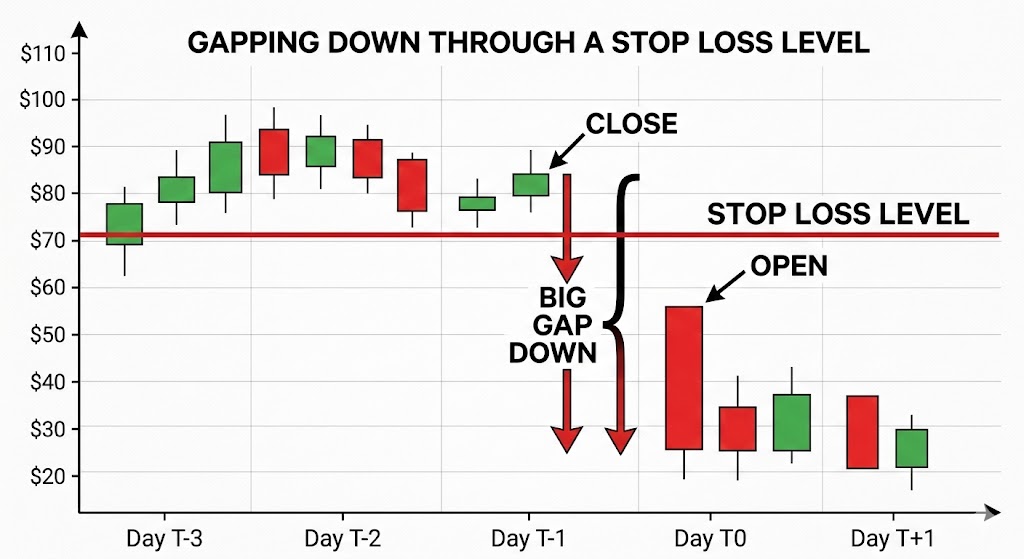
But before you even have time to indulge in a little self-praise at a job well done, the market does the opposite of what you expected, and your stop loss is triggered.
This common scenario, which we have all unfortunately experienced, raises the question: What separates these “almost” trades from the truly higher-probability setups?
The State of Alignment
A high-probability setup isn’t necessarily a single signal or chart pattern. It is the coming together of several factors in a way that can potentially increase the likelihood of a successful trade.
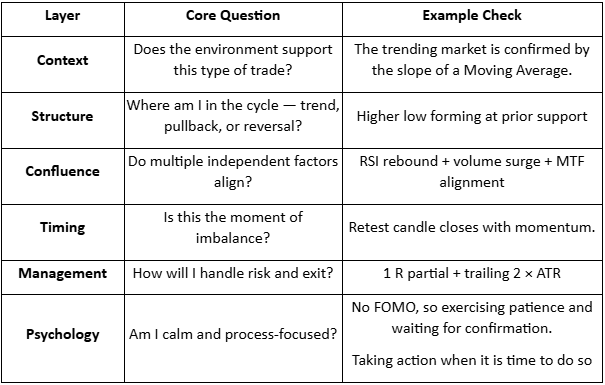
When combined, six interconnected layers can come together to form the full “anatomy” of a higher-probability trading setup:
Context
Structure
Confluence
Timing
Management
Psychology
When more of these factors are in place, the greater the (potential) probability your trade will behave as expected.
Market Context
When we explore market context, we are looking at the underlying background conditions that may help some trading ideas thrive, and contribute to others failing.
Regime Awareness
Every trading strategy you choose to create has a natural set of market circumstances that could be an optimum trading environment for that particular trading approach.
For example:
Trending regimes may favour momentum or breakout setups.
Ranging regimes may suit mean-reversion or bounce systems.
High-volatility regimes create opportunity but demand wider stops and quicker management.
Investing time considering the underlying market regime may help avoid the temptation to force a trending system into a sideways market.
Simply looking at the slope of a 50-period moving average or the width of a Bollinger Band can suggest what type of market is currently in play.
Sentiment Alignment
If risk sentiment shifts towards a specific (or a group) of related assets, the technical picture is more likely to change to match that.
For example, if the USD index is broadly strengthening as an underlying move, then looking for long trades in EURUSD setups may end up fighting headwinds.
Setting yourself some simple rules can help, as trading against a potential tidal wave of opposite price change in a related asset is not usually a strong foundation on which to base a trading decision.
Key Reference Zones
Context also means the location of the current price relative to levels or previous landmarks.
Some examples include:
Weekly highs/lows
Prior session ranges, e.g. the Asian high and low as we move into the European session
Major “round” psychological numbers (e.g., 1.10, 1000)
A long trading setup into these areas of market importance may result in an overhead resistance, or a short trade into a potential area of support may reduce the probability of a continuation of that price move before the trade even starts.
Market Structure
Structure is the visual rhythm of price that you may see on the chart. It involves the sequences of trader impulses and corrections that end up defining the overall direction and the likelihood of continuation:
Uptrend: Higher highs (HH) and higher lows (HL)
Downtrend: Lower highs (LH) and lower lows (LL)
Transition: Break in structure often followed by a retest of previous levels.
A pullback in an uptrend followed by renewed buying pressure over a previous price swing high point may well constitute a higher-probability buy than a random candle pattern in the middle of nowhere.
Compression and Expansion
Markets move through cycles of energy build-up and release. It is a reflection of the repositioning of asset holdings, subtle institutional accumulation, or a response to new information, and may all result in different, albeit temporary, broad price scenarios.
Compression: Evidenced by a tightening range, declining ATR, smaller candles, and so suggesting a period of indecision or exhaustion of a previous price move,
Expansion: Evidenced by a sudden breakout, larger candle bodies, and a volume spike, is suggestive of a move that is now underway.
A breakout that clears a liquidity zone often runs further, as ‘trapped’ traders may further fuel the move as they scramble to reposition.
A setup aligned with such liquidity flows may carry a higher probability than one trading directly into it.
Confluence
Confluence is the art of layering independent evidence to create a whole story. Think of it as a type of “market forensics” — each piece of confirmation evidence may offer a “better hand’ or further positive alignment for your idea.
There are three noteworthy types of confluence:
Technical Confluence – Multiple technical tools agree with your trading idea:
Moving average alignment (e.g., 20 EMA above 50 EMA) for a long trade
A Fibonacci retracement level is lining up with a previously identified support level.
Momentum is increasing on indicators such as the MACD.
Multi-Timeframe Confluence – Where a lower timeframe setup is consistent with a higher timeframe trend. If you have alignment of breakout evidence across multiple timeframes, any move will often be strengthened by different traders trading on different timeframes, all jumping into new trades together.
3. Volume Confluence – Any directional move, if supported by increasing volume, suggests higher levels of market participation. Whereas falling volume may be indicative of a lesser market enthusiasm for a particular price move.
Confluence is not about clutter on your chart. Adding indicators, e.g., three oscillators showing the same thing, may make your chart look like a work of art, but it offers little to your trading decision-making and may dilute action clarity.
Think of it this way: Confluence comes from having different dimensions of evidence and seeing them align. Price, time, momentum, and participation (which is evidenced by volume) can all contribute.
Timing & Execution
An alignment in context and structure can still fail to produce a desired outcome if your timing is not as it should be. Execution is where higher probability traders may separate themselves from hopeful ones.
Entry Timing
Confirmation: Wait for the candle to close beyond the structure or level. Avoid the temptation to try to jump in early on a premature breakout wick before the candle is mature.
Retests: If the price has retested and respected a breakout level, it may filter out some false breaks that we will often see.
Then act: Be patient for the setup to complete. Talking yourself out of a trade for the sake of just one more candle” confirmation may, over time, erode potential as you are repeatedly late into trades.
Session & Liquidity Windows
Markets breathe differently throughout the day as one session rolls into another. Each session's characteristics may suit different strategies.
For example:
London Open: Often has a volatility surge; Range breaks may work well.
New York Overlap: Often, we will see some continuation or reversal of morning trends.
Asian Session: A quieter session where mean-reversion or range trading approaches may do well
Trade Management
Managing the position well after entry can turn probability into realised profit, or if mismanaged, can result in losses compounding or giving back unrealised profit to the market.
Pre-defined Invalidation
Asking yourself before entry: “What would the market have to do to prove me wrong?” could be an approach worth trying.
This facilitates stops to be placed logically rather than emotionally. If a trade idea moves against your original thinking, based on a change to a state of unalignment, then considering exit would seem logical.
Scaling & Partial Exits
High-probability trade entries will still benefit from dynamic exit approaches that may involve partial position closes and adaptive trailing of your initial stop.
Trader Psychology
One of the most important and overlooked components of a higher-probability setup is you.
It is you who makes the choices to adopt these practices, and you who must battle the common trading “demons” of fear, impatience, and distorted expectation.
Let's be real, higher-probability trades are less common than many may lead you to believe.
Many traders destroy their potential to develop any trading edge by taking frequent low-probability setups out of a desire to be “in the market.”
It can take strength to be inactive for periods of time and exercise that patience for every box to be ticked in your plan before acting.
Measure “You” performance
Each trade you take becomes data and can provide invaluable feedback. You can only make a judgment of a planned strategy if you have followed it to the letter.
Discipline in execution can be your greatest ally or enemy in determining whether you ultimately achieve positive trading outcomes.
Bringing It All Together – The Setup Blueprint
Final Thoughts
Higher-probability setups are not found but are constructed methodically.
A trader who understands the “higher-probability anatomy” is less likely to chase trades or feel the need to always be in the market. They will see merit in ticking all the right boxes and then taking decisive action when it is time to do so.
It is now up to you to review what you have in place now, identify gaps that may exist, and commit to taking action!
One of the most impactful books I’ve ever read is “The 7 Habits of Highly Effective People: Powerful Lessons in Personal Change” by Stephen Covey.
When it was first published in 1989, it quickly became one of the most influential works in business and personal development literature, and retained its place on bestseller lists for the next couple of decades.
The compelling, comprehensive, and structured framework for personal growth presented in the book has undoubtedly inspired many to rethink how they organise their lives and priorities, both professionally and personally.
Although its lessons were originally designed for self-improvement and positive structured growth, the underlying principles are universal, making them easily transferable to many areas of life, including trading.
In this article, you will explore how each of Covey’s seven original habits can be reframed within a trading context, in an attempt to offer a structure that may help guide you to becoming the best trader you can be.
1. Be Proactive
Being proactive means recognising that we have the power to choose our responses and to shape outcomes through appropriate preparation with subsequent planned reactions.
In a Trading Context:
For traders, this means anticipating potential problems before they arise and putting measures in place to better mitigate risk.
Rather than waiting for issues to unfold, the proactive trader identifies potential areas of concern and ensures that they have access to the right tools, resources, and people to prepare effectively, whatever the market may throw at them.
What This Means for You:
Being proactive may involve seeking out quality education and services, maintaining access to accurate and timely market information, continually assessing risk and opportunity, and having systems to manage those risks within defined limits.
Consequences of Non-Action:
Inadequate preparation and a lack of defined systems often lead to poor trading decisions and less-than-desired outcomes.
Failing to assess risk properly can result in significant and often avoidable losses.
By contrast, a proactive approach builds resilience and confidence, ensuring that when challenges arise, your response is measured and less emotionally driven by what is happening on the screen in front of you.
2. Begin with the End in Mind
Covey's second habit is about defining purpose. It suggests that effective people are more likely to achieve what is possible if they start with a clear understanding of their destination, so every action aligns with that ultimate vision.
In a Trading Context:
Ask yourself: What is my true purpose for trading?
Many traders may instinctively answer “to make money,” but money is surely only a vehicle to achieve something else in your world for you and those you care about, not a purpose per se.
You need to clarify what trading success really means for you.
Is it a greater degree of financial independence through increased income or capital growth, the freedom of having more time, achieving a personal challenge of becoming an effective trader, or a combination of any of these?
What This Means to You:
Try framing your purpose as, “I must become a better trader so that I can…” and complete a list with your genuine reasons for tackling the market and its challenges.
This helps you establish meaningful short-term development goals that keep you moving toward your vision. Keep that purpose visible, as a note near your trading screen that reminds you why you are doing this.
Consequences of Non-Action:
Traders with a clearly defined purpose are more likely to stay disciplined and consistent.
Those without one often drift, chasing short-term gains without direction. There is ample evidence that formalising your development in whatever context through goal setting can significantly increase the likelihood of success. Why would trading be any different?
Surely the bottom-line question to ask yourself is, “Am I willing to risk my potential by trading without purpose?”
3. Put First Things First
This habit is about time management and prioritisation. This involves focusing your efforts and energy on what truly matters. As part of the exploration of this concept, Covey emphasised distinguishing between what is important and what is merely urgent.
In a Trading Context:
Trading demands commitment, learning, and reflection.
It is not just about screen time but about using that time effectively.
Managing activities to ensure your effort is spent wisely on planning, measuring, journaling and performance evaluation, and refining systems, accordingly, are all critical to sustaining both improvements in results and balance.
What This Means to You:
Traders often believe they need to spend more time trading when what they really need is to focus on better time allocation.
It is logical to suggest that prioritising activities that can often contribute directly to improvement, such as system testing, reviewing performance, analysing results, and refining your strategy, is worthwhile.
These high-value tasks can help traders focus their time more deliberately and systematically.
Consequences of Non-Action:
If you fail to control your trading time effectively, you will be more likely to spend much of it on low-impact activities that produce little progress.
Over time, this not only hurts your results but also reduces the real “hourly value” of your trading effort.
In business terms, and of course, you should be treating your trading as you would any business activity; poor prioritisation can inflate your costs and diminish your potential trading outcomes.
4. Think Win: Win
Covey's fourth habit encouraged an attitude of mutual benefit, where seeking solutions that facilitate positive outcomes for all parties.
In a Trading Context:
In trading, this concept must be adapted to suggest that developing a mindset that recognises every well-executed plan as a win, even when an individual trade results in a loss.
Some trading ideas will simply not work out, and so some losses are inevitable, but if they remain within defined limits, they should not be viewed as failures but rather as a successful adherence to a trading plan. In the aim of developing consistency in action, and the widely held belief that this is one of the cornerstones of effective trading, then it surely is a win to fulfil this.
So, in simple terms, the real “win” lies in a combination of maintaining discipline, following your system, and controlling risk beyond just looking at the P/L of a single trade.
What This Means to You:
Building and trading clear, unambiguous systems that you follow consistently has got to be the goal.
This process produces reliable data that you can later analyse and subsequently use to refine specific strategies and personal performance.
When you do this, every outcome, whether profit or loss, can serve as valuable feedback.
For example, a controlled loss that fits your plan is proof that your system works and that you are protecting your capital.
Alternatively, a trailing stop strategy, which means you exit trades in a timely way and give less profit back to the market, provides positive feedback that your system has merit in achieving outcomes.
Consequences of Non-Action:
Without this mindset shift, traders can become emotionally reactive, interpreting normal drawdowns as personal defeats.
This fosters loss aversion and other biases that can erode decision-making quality if left unchecked. Through the process of redefining “winning,” you are potentially safeguarding both your capital and, importantly, your trading confidence (a key component of trading discipline).
5. Seek First to Understand and Then Take Action
Covey's fifth habit emphasises empathy, the act of listening and aiming to fully understand before responding. In trading, this principle translates to understanding the market environment before taking any action.
In a Trading Context:
Many traders act impulsively, driven by excitement or fear, which often results in entering trades without taking into account the full context of what is happening in the market, and/or the potential short-term influences on sentiment that may increase risk.
This “minimalisation bias,” defined as acting on limited information, will rarely produce consistent results. Instead, adopt a process that begins with observation and comprehension.
What This Means to You:
Establishing a daily pre-trading routine is critical. This may include a review of key markets, sentiment indicators, and potential catalysts for change, such as imminent key data releases. Understanding what the market is telling you before you decide what to do is the aim of having this sort of daily agenda.
This approach may not only improve trade selection but also enable you to get into a state of psychological readiness that can facilitate decision-making quality throughout the session.
Consequences of Non-Action:
Failing to prepare for the trading day ahead can mean not only exposing yourself to unnecessary risk but also arguably being more likely to miss potential opportunities.
A trader who acts without understanding is vulnerable both psychologically and financially. Conversely, being forewarned is being forearmed. When you aim to understand markets first before any type of trading activity, your actions are more likely to be deliberate, grounded, and more effective.
6. Synergise
Synergy in Covey's model means valuing differences and combining the strengths of those around you to create outcomes greater than the sum of their parts.
In a Trading Context:
In trading, synergy refers to the integration of multiple systems and disciplines that work together. This includes your plan, your record keeping and performance management processes, your time management, and your emotional balance.
No single system is enough; success comes from the synergy of elements that support and inform one another.
What This Means to You:
Integrating learning and measurement is an integral part of your trading development process. Journaling, for example, allows you to assess not only your technical performance but also your behavioural consistency.
This self-awareness allows you to refine your plan and so helps you operate with greater confidence.
The synergy between rational analysis and emotional composure is what is more likely to lead to consistently sound trading decisions.
Consequences of Non-Action:
When logic and emotion are out of balance, decision-making will inevitably suffer.
If your systems are incomplete, ambiguous, or poorly connected to the reality of your current level of understanding, competence and confidence, your results are likely to be inconsistent. Building synergy across all areas of your trading practice, including that of evaluation and development in critical trading areas, will help create cohesion, efficiency, and better performance.
7. Sharpen the Saw
Covey's final habit focuses on continuous learning and refinement, including maintaining and improving the tools at your disposal and skills and knowledge that allow you to perform effectively.
In a Trading Context:
In trading, this translates to creating a plan to achieve ongoing, purposeful learning.
Even small insights can make a large difference in results. Effective traders continually refine their knowledge, ask new questions, and apply lessons from experience.
What This Means to You:
Trading learning can, of course, take many forms. Discovering new indicators that may offer some confluence to price action, testing different strategies, exploring new markets, or simply understanding more about yourself as a trader.
There is little doubt that active participation in learning keeps you engaged, adaptable and sharp. Even making sure you ask at least one question at a seminar or webinar or making a simple list at the end of each session of the "3 things I learned", can be invaluable in developing momentum for your growth as a trader.
Your record-keeping and performance metrics should generate fresh questions that can guide future development.
Consequences of Non-Action:
Without direction in your learning, your progress is likely to slow.
I often reference that when someone talks about trading experience in several years, this is only meaningful if there has been continuous growth, rather than staying in the same place every year (i.e. only one year of meaningful experience)
Passive trading learning, for example, reading an article without applying, watching a webinar without engagement, or measuring without closing the circle through putting an action plan together for your development, can all lead to stagnation.
It is fair to suggest that taking shortcuts in trading learning is likely to translate directly into shortcuts in result success.
Active, focused development is essential for sustained improvement.
Are You Ready for Action?
Stephen Covey’s The 7 Habits of Highly Effective People presented a timeless model for self-development and purposeful living.
When applied to trading, these same habits form a powerful framework for consistency, focus, and growth.
Trading is a pursuit that demands both technical skill and emotional strength. Success is rarely about finding the perfect system, but about developing the right habits that support consistent, rational decision-making over time.
By integrating the principles of Covey’s seven habits into your trading practice, you create a foundation not only for profitability but for continual personal growth.
A market bubble occurs when asset prices rise far beyond any reasonable valuation.
It is driven by speculation, emotion, and the belief that prices will continue rising indefinitely.
For traders, the challenge is more about finding a way to manage a bubble, rather than just identifying that one exists.
By their very nature, bubbles can persist far longer than any logical analysis suggests. There are opportunities as they develop, but timing their peak is virtually impossible.
Understanding their characteristics and having a systematic way of managing bubbles in your trading strategy is worth considering for any trader.
What is a Bubble?
Market bubbles have distinct features that separate them from normal bull markets or even overvalued conditions for a particular asset:
Dramatic Price Appreciation Disconnected From Fundamentals
In a bubble, traditional valuation metrics become meaningless.
Company or asset fundamentals that usually matter to market participants are ignored in the hope of what might be.
Cash flow, profit margins, competitive positioning, and (in some cases) producing revenue may be dismissed.
Widespread Participation And "This Time Is Different" Narratives
Bubbles require mass market participation.
When every headline you see or article you read references "this time is different," or "the old rules don't apply anymore," it is a sign that the collective psychology has shifted from normal caution.
Social media may begin to explode with ever more frequent success stories, and for the individual trader, the fear of missing out becomes increasingly overwhelming.
Credit and Leverage Fuelling Demand
Bubbles are typically accompanied by easier credit conditions.
When interest rates are lowered and investors are confident in general economic conditions, any spare cash is put to work.
In stock or other market bubbles, you may see retail traders maxing out credit cards to buy call options, with the put/call ratio becoming increasingly distorted.
This leverage often amplifies the rise and the eventual fall, making the risk even more acute and potentially damaging to trader capital.
Vertical Price Charts in Final Stages
One of the telltale signs of a bubble's final phase is a parabolic price chart.
Prices seem to go up daily, and every minor pullback is short-lived (creating more buying pressure).
This is the euphoria stage. It is where the greatest danger is.
The fear of missing out on further moves is at its highest, and a logical willingness to take profit off the table diminishes in the minds of ever more excited traders.
New participants may continue to enter solely for the way the price is appreciating. Entering into the move only understanding that what they are buying is going up, so they want to join in too.
Bubble vs. Overvalued: Key Differences
Not every expensive market is a bubble. Several characteristics distinguish a bubble from a simpler and far less dangerous overvaluation:
Elevated Valuations With Reasoned Fundamental Justification
An overvalued market has stretched valuations, but can point to real supporting factors (at least to some degree).
Examples include strong earnings growth, low interest rates, disruption in service or productivity, and providing genuine temporary value.
Even if prices respond to less obvious immediate influencing factors, such as international events, policy changes, and supply issues, the fact that some factors justify continued positive sentiment (even if somewhat unfulfilled) is a positive sign.
Linear or Steady Uptrend
Overvalued markets tend to grind higher with a more sustainable trend rather than a vertical spike. There are normal corrections along the way, even if the highs and lows of a fluctuation are higher.
Reasonable Participation Levels
There is evidence of institutional investors buying on any dips, but common retracements last days or even weeks.
Retail participation exists but isn't frenzied and plastered all over social media every day or referenced in mainstream media consistently.
Some Scepticism Still Exists
There will be some legitimate and contrary opinions about valuations. Major financial media will present both bearish and bullish cases when a stock is discussed.
Trading Strategies for Potential Bubble Management
Here is the scenario: You bought early in the up move, you are now in profit, but some of the bubble signs are beginning to show up in your thinking.
Tiered Profit-Taking Strategies
Don't try to pick the top. As an alternative approach, begin to scale out systematically with partial closes. This will alleviate the potential for FOMO creeping in.
You could stage this with set points, e.g. sell 30% when you've doubled, another 30% when you've tripled, 20% when conditions clearly show evidence of entering bubble territory and, having banked a substantial profit already, you keep the final 20% with a trailing stop for the final run if it happens.
Trailing Stops With Wider Bands to Accommodate Volatility
Let’s assume you see the merit in some form of trial stop. In bubble conditions, normal stop distances will get you whipsawed out. Use percentage-based trailing stops or ATR multiples with enough room to accommodate bigger intraday moves.
For example, if your norm is to trail your stop 1.5 x ATR behind price at the end of every candle, then in increasingly volatile conditions during a parabolic move, consider 2,5 x ATR to allow room to move while still offering protection against price collapse.
Reduce Position Sizing and Leverage
The temptation in bubbles is to maximise gains by increasing your margin and entering more and more positions in one asset.
High leverage and significant single asset exposure in bubble conditions is a potential death sentence to trading capital.
Recognising the added risks you are contemplating before entry is critical. Combining this with an approach that reduces position sizing and increases margin requirements is consistent with good trading practice as risk increases.
Planned and Rigid Exits
Before buying, you should have already made decisions on what exit approaches you should take and the parameters at which they will be executed,
Having the exit plan as you enter can limit the chance of getting trapped by greed. Neglecting this and focusing on the opportunity alone can be disastrous.
Never Assume You Can Time the Top
It is usually a big mistake if you believe you will recognise the exact top and exit perfectly. Let’s be frank, even if you hit it lucky once, you won't be able to every time — no one does.
Recognise Behavioural Biases That May Affect Your Judgment
Bubbles can create powerful psychological forces.
Anchoring bias may mean that you fixate on peak prices. Confirmation bias makes you seek information supporting your bullish view and ignore opposing evidence. Recency bias makes you believe the recent trend will continue indefinitely.
The indisputable key to any bias management is awareness and honesty that some markets may just not be for you (or if they are, to proceed with extreme and continuous caution).
Psychological Preparation for Rapid Reversals
Mentally rehearse the worst scenario and clarity of planned action, e.g., “if it drops 10% in three days, I will ….”.
Having thought through your response and armed with unambiguous exits in advance will make execution easier when emotions run high and begin to dominate.
Final Thoughts
Extreme valuations, little fundamental underpinning, parabolic price action, and universal bullishness should be part of your bubble identification checklist and flag that your bubble action plan should be implemented.
If you are already in, or tempted to be so, then approach bubbles with honesty, awareness of your trading self and extraordinary discipline to follow through, as predicting what and when things may dramatically turn is close to impossible.
Never forget you are not smarter than the market, but you can (potentially) be smarter than many traders by planning and doing the right thing.
Los mercados se dirigen a la semana que comienza el 16 de febrero con una fuerte mezcla de datos económicos y un impulso de ganancias en curso, lo que alimentará el panorama de crecimiento más amplio.
Flash PMIs (viernes): Las encuestas empresariales de Estados Unidos, Eurozona, Reino Unido y Japón proporcionan una lectura temprana sobre el impulso de crecimiento de febrero.
IA más allá de la tecnología: Los comentarios se han centrado cada vez más en cómo la IA podría afectar los modelos de negocio en todas las industrias, aunque los movimientos del sector pueden reflejar múltiples factores impulsores.
Rotación de acciones: El desempeño tecnológico reciente ha sido mixto y una participación más amplia parece menos consistente que una rotación confirmada.
Ganancias: Con la mayoría de las mega gorras reportadas en Estados Unidos, los nombres minoristas y de consumidores están en el foco esta semana, y la temporada de reportajes australiana sigue ocupada.
Bitcoin (BTC): Retrocedió después de un intento de rebote y sigue siendo muy sensible a los cambios en el sentimiento.
PMIs Flash
Las lecturas flash del PMI del viernes en las principales economías podrían proporcionar una lectura oportuna sobre las condiciones comerciales y las tendencias de la demanda.
Si los servicios siguen siendo resistentes mientras que la fabricación se mantiene blanda, los mercados pueden interpretar esto como un crecimiento constante pero desigual. Si ambos se debilitan, las preocupaciones de crecimiento podrían regresar más rápidamente.
A principios de semana, el PIB de Japón, los datos laborales del Reino Unido, el IPC del Reino Unido, el empleo australiano y los datos comerciales de Estados Unidos ayudaron a establecer el tono antes de las publicaciones flash del PMI del viernes de múltiples países.
Fechas clave
PMI Flash (EE. UU., Eurozona y Reino Unido): Viernes, 20 de febrero
Monitorear
Volatilidad monetaria en torno a las liberaciones de PMI.
Reacciones de rendimiento de bonos ante sorpresas de crecimiento o decepciones.
Cambios en el desempeño del sector y de las materias primas que pueden estar ligados a las cambiantes expectativas de demanda.
Disrupción de la IA
Algunos comentarios del mercado han puesto de relieve las posibles implicaciones competitivas a largo plazo de la IA en una variedad de industrias, aunque el desempeño de las empresas y del sector aún puede estar impulsado por las condiciones macro, las tasas y las expectativas de ganancias.
Finanzas: Algunas discusiones se han centrado en si las herramientas de IA podrían alterar partes de la administración del patrimonio y la entrega de asesoramiento a lo largo del tiempo, aunque los movimientos del precio de las acciones pueden reflejar múltiples influencias.
Logística y fletes: Parte de la discusión del mercado se ha centrado en si una mayor automatización podría afectar los costos y la dinámica de precios a lo largo del tiempo, junto con otros impulsores cíclicos.
Software: Las reacciones siguen siendo mixtas, y algunas empresas se benefician de la integración de IA, mientras que otras se enfrentan a preguntas sobre la diferenciación y el poder de fijación de precios.
Este cambio significa que el tema de la IA podría expresarse cada vez más a través del rendimiento y la dispersión relativos, en lugar de una amplia oferta de “riesgo”.
Monitorear
Guía de ganancias que hace referencia a la automatización, la inversión en IA o la presión competitiva relacionada con la IA.
Mayor dispersión entre sectores y dentro de sectores.
Reacciones más grandes a los comentarios con visión de futuro en lugar de los latidos o errores de los titulares.
Rotación de acciones
El repunte en las acciones de tecnología visto a principios de la semana pasada ha perdido impulso. En lugar de condiciones claras de riesgo, el mercado está mostrando una participación mixta.
Los sectores financiero, industrial y defensivo han atraído flujos en ocasiones, pero no lo suficientemente consistentemente como para confirmar una rotación duradera.
La participación sigue siendo desigual, y la evidencia de un patrón más consistente de flujo de dinero sigue siendo limitada en esta etapa.
Monitorear
Fortaleza relativa sostenida en sectores no tecnológicos.
Movimientos de rendimiento y su influencia en la renta variable sensible al crecimiento
Participación más amplia del sector frente a un liderazgo tecnológico limitado
Los resultados del retail pueden proporcionar señales sobre la fortaleza del consumidor, las tendencias discrecionales del gasto y la resiliencia de los márgenes, particularmente en medio de percepciones mixtas sobre el estado de la economía.
En Australia, la temporada de presentación de informes continúa, lo que respalda la volatilidad específica de las existencias en todo el ASX.
Monitorear
Comentario de márgenes minoristas y tendencias de descuentos
Declaraciones de perspectivas de demanda del consumidor y tono de orientación
Grandes movimientos de una sola acción incluso cuando la dirección del índice está silenciada
Bitcoin sensible al sentimiento
Bitcoin ha cotizado a la baja en las últimas sesiones y sigue siendo muy volátil. Es posible retroceder hacia el mínimo del 5 de febrero, pero los precios pueden cambiar rápidamente en cualquier dirección.
Algunos participantes del mercado ven a Bitcoin como un indicador del sentimiento especulativo, aunque cualquier lectura más amplia del “apetito por el riesgo” es incierta y puede verse influenciada por múltiples impulsores en los mercados de criptomonedas.
Grandes eventos globales como el Juegos Olímpicos puede apartar la atención de los mercados, cambiar la participación y adelgazar el volumen en los bolsillos.
Cuando eso sucede, la liquidez puede parecer más ligera, los diferenciales pueden ser menos consistentes y la acción de los precios a corto plazo puede volverse más ruidosa, incluso si la volatilidad a nivel de índice más amplia no cambia materialmente.
Entonces, en lugar de preguntar “¿Las Olimpiadas crean volatilidad?” , una lente más práctica es preguntar “¿Qué eventos de volatilidad podría ¿aparecen durante los Juegos?”
Datos rápidos
En general, la evidencia es débil de que los Juegos Olímpicos en sí mismos son un impulsor constante y directo de la volatilidad del mercado.
Los picos de volatilidad que ocurren durante las ventanas olímpicas a menudo han coincidido con mayores fuerzas ya en movimiento, incluido el estrés macro, las sorpresas políticas y la geopolítica.
El impacto más repetible vinculado a los Juegos Olímpicos tiende a estar en torno a las condiciones de ejecución, no a un nuevo régimen fundamental de mercado.
“bingo de volatilidad” olímpico, cómo funciona
Piense en ello como una lista de verificación de desencadenantes de volatilidad comunes que pueden aterrizar mientras el mundo está observando.
Algunas plazas de “bingo de volatilidad” son atemporales, como los bancos centrales y la geopolítica. Otros son más modernos, como el riesgo de interrupción cibernética, el activismo climático y los puntos de inestabilidad social que rodean la logística de la ciudad anfitriona.
Tarjeta de bingo de volatilidad olímpíada | Mercados GO
Macro y política
Choque del banco central
Cuando las expectativas de políticas cambian, los mercados pueden moverse independientemente del calendario.
Londres 2012 es un recordatorio de que la historia no era deporte. Fue la Eurozona. A finales de julio de 2012, el presidente del BCE, Mario Draghi, pronunció sus comentarios “cueste lo que cueste” en Londres, en un momento en que el estrés soberano era un tema dominante de volatilidad.
El estrés macro ya está en marcha
Beijing 2008 se llevó a cabo en un año definido por la crisis financiera mundial, con volatilidad ligada al estrés crediticio y al reajuste del apetito de riesgo, no al evento en sí. Los Juegos se desarrollaron del 8 de agosto de 2008 al 24 de agosto de 2008.
El S&P500 cayó casi un 50% en 6 meses en 2008 | TradingView
Geopolítica y seguridad
Calendario de conflictos regionales
Durante Beijing 2008, el conflicto Rusia-Georgia se intensifica a principios de agosto de 2008, superponiándose con el período olímpico. La lección del mercado es que la retarificación geopolítica no se detiene para las principales emisiones.
Riesgo “Después de la ceremonia de clausura”
Beijing 2022 finalizó el 20 de febrero de 2022. La invasión a gran escala de Ucrania por parte de Rusia comenzó el 24 de febrero de 2022, solo unos días después.
Este es un clásico “cuadrado de bingo” porque refuerza el mismo principio. Una escalada geopolítica puede aterrizar cerca de una ventana de evento global sin que necesariamente sea causada por ella.
Incidente de seguridad: shock titular
Los Juegos Olímpicos también se han visto afectados directamente por eventos de seguridad, incluso si esos eventos no son “impulsores del mercado” por sí solos.
Dos ejemplos históricos que dieron forma al contexto de seguridad más amplio en torno a eventos importantes son:
La masacre de Munich durante los Juegos de Verano de 1972.
El bombardeo de los Juegos Olímpicos de Atlanta de 1996 en el Parque Olímpico del Centenario.
Medidas de seguridad para París 2024 incluidas cámaras alimentadas por IA | Adobe Stock
Clima moderno de la ciudad anfitriona
Protestas ambientales y antiolímpiadas
El activismo de la ciudad anfitriona no es nuevo, pero los temas se han centrado más en el clima y la infraestructura.
París 2024 vio protestas organizadas y eventos de “contra-apertura”. Los informes en torno a París también hicieron referencia a los intentos de protesta ambiental por parte de grupos climáticos.
El actual Juegos Olímpicos de Invierno 2026 se inauguró en medio de protestas antiolímpicas en Milán, con informes que incluyeron presunto sabotaje ferroviario y manifestaciones centradas en parte en los impactos ambientales de la infraestructura olímpica.
Este tipo de titulares pueden ser importantes para los mercados indirectamente, a través del sentimiento de riesgo, la interrupción del transporte, la respuesta política y el encuadre más amplio de “inestabilidad”.
Riesgo de interrupción cibernética
El “cuadrado del bingo” cibernético se ha vuelto más prominente en los Juegos modernos.
La agencia nacional de ciberseguridad de Francia, ANSSI, informó 548 eventos de ciberseguridad que afectaron a entidades relacionadas con los Juegos Olímpicos que fueron reportados a ANSSI entre el 8 de mayo de 2024 y el 8 de septiembre de 2024.
Incluso cuando los eventos están contenidos, los incidentes cibernéticos aún pueden agregar ruido a los titulares y confianza.
Logística y polémica de “puede correr el evento”
En ocasiones el enlace de volatilidad no son los Juegos, sino la polémica en torno a la entrega.
París 2024 tuvo un escrutinio de alto perfil en torno al Sena y la preparación para eventos, junto con un importante gasto público para limpiar el río y el debate en curso sobre los riesgos de calidad del agua.
Narrativas de salud y disrupción
Preocupaciones de salud pública
Río 2016 es un recordatorio de que las narrativas de riesgo para la salud pueden convertirse en parte del telón de fondo olímpico, incluso cuando el impacto en el mercado sea indirecto.
Las preocupaciones sobre el zika se discutieron ampliamente antes de los Juegos, incluido el debate sobre el riesgo de transmisión global y la propagación relacionada con los viajes.
La memoria de la “era del aplazamiento”
Tokio 2020 se pospuso hasta 2021 debido al COVID-19, lo que subrayó que los eventos de choque global pueden dominar todo lo demás, incluidos los principales calendarios deportivos.
Juegos Olímpicos “COVID” Tokio 2020 | Adobe Stock
Consejos prácticos para los comerciantes
El cambio más repetible de la era olímpica a menudo no es “más volatilidad”, sino diferentes condiciones de ejecución.
Durante los principales eventos globales, algunos comerciantes optan por observar los diferenciales y la profundidad en busca de signos de una liquidez más delgada, comerciar menos cuando las condiciones se ven entrecordadas y mantenerse conscientes de que los titulares geopolíticos, cibernéticos y de protesta pueden llegar en cualquier momento.
En mercados globales de enorme escala, el deporte no suele ser el catalizador. Los cuadrados de bingo son.
Los Juegos Olímpicos y los Juegos Olímpicos de Invierno captan la atención mundial durante semanas, atrayendo a millones de espectadores y dominando los titulares. Para los comerciantes, esta atención a menudo se siente como un catalizador, sin embargo, los verdaderos impulsores del mercado siguen siendo los mismos: macroeconomía, política y sentimiento de riesgo global, no el calendario deportivo.
Entonces, ¿por qué algunos comerciantes dicen que los resultados se sienten más débiles durante los grandes eventos deportivos?
A menudo se reduce a una falta de adaptación a condiciones que pueden cambiar en el margen, particularmente la liquidez y la participación.
1. Esperando “volatilidad de eventos”
Un evento global importante puede crear una suposición de que los mercados debería mover más. Algunos operadores se posicionan para rupturas o aumentan el riesgo en previsión de oscilaciones más grandes, incluso cuando las condiciones no lo soportan.
Controladores clave
En algunos mercados y sesiones, la participación reducida puede debilitar el seguimiento de tendencias
El sentimiento puede inflar las expectativas más allá de lo que ofrece la acción del precio
Ejemplo: Un comerciante espera una ruptura durante el período de ceremonia de apertura olímpica, pero la baja participación regional limita el movimiento de precios, lo que lleva a inicios falsos.
2. Forzar operaciones en sesiones silenciosas
Cuando la acción del precio es más lenta y los rangos se comprimen, algunos comerciantes sienten la presión de mantenerse activos y tomar entradas de menor calidad.
Controladores clave
Los rangos intradía estrechos pueden aumentar las señales falsas
La menor convicción puede favorecer la consolidación sobre la tendencia, lo que aumenta el riesgo de ruptura falsa
“Mantenerse comprometido” puede reducir la selectividad
Nota: Use sesiones más silenciosas para refinar configuraciones o revisar datos en lugar de forzar operaciones marginales.
3. Ignorando la liquidez más delgada
La participación puede disminuir ligeramente durante los principales eventos mundiales, y el impacto suele ser más pronunciado en plazos más cortos. Los gráficos diarios pueden parecer normales, mientras que la acción intradiaria del precio se vuelve más entrecortada con más mechas.
Controladores clave
En condiciones de menor profundidad, el precio puede saltar más fácilmente y el tamaño de la mecha puede aumentar
En algunos instrumentos y sesiones, una liquidez más delgada puede coincidir con diferenciales más amplios y una ejecución más variable (varía según el mercado, el lugar y las condiciones del corredor)
Sensibilidad del marco de tiempo a condiciones más delgadas
La tabla anterior es solo ilustrativa (varía según el mercado): Los gráficos diarios pueden parecer normales. Los gráficos de cinco minutos pueden parecer más erráticos.
Ejemplo de mechas grandes de bajo volumen
Fuente: MT5
4. Usar el tamaño normal en condiciones anormales
Incluso si la volatilidad general parece estable, el riesgo de ejecución puede aumentar cuando la liquidez disminuye, especialmente para enfoques de corto plazo o estilo scalping.
Controladores clave
El deslizamiento puede aumentar y las paradas pueden “sobrepasar”
Las condiciones delgadas pueden desencadenar paradas más fácilmente en el ruido
Los diferenciales más amplios pueden cambiar los resultados de entrada/salida en comparación con las condiciones normales
Ajuste: Mantener un tamaño fijo puede distorsionar efectivo riesgo. Algunos operadores revisan los costos de transacción, incluidos los diferenciales, y las condiciones de ejecución al establecer parámetros de riesgo como stops/límites, particularmente en sesiones más delgadas.
5. Rupturas de operaciones con bajo seguimiento
Las tácticas de seguimiento de tendencias pueden flaquear cuando la participación disminuye. El impulso puede disiparse rápidamente y las pausas falsas se vuelven más comunes.
Controladores clave
El flujo reducido puede limitar los movimientos direccionales sostenidos
Algunos regímenes de baja liquidez pueden favorecer la reversión media sobre el impulso
Ejemplo: Una ruptura de rango clásica parece válida dentro de la red, pero se desvanece rápidamente ya que el volumen de seguimiento no se materializa.
Ejemplo de ruptura fallida
Fuente: MT5
6. Pasando por alto el tiempo y el riesgo de distracción
No hay evidencia fidedigna de que el calendario olímpico impulse previsiblemente los eventos geopolíticos. Pero cuando las tensiones ya están elevadas, los grandes acontecimientos mundiales a veces pueden coincidir con la atención que se extiende a otros lugares, algo similar a los días festivos, las elecciones o las grandes cumbres.
Los operadores deben identificar cuándo las condiciones son más lentas o más delgadas y ajustar en consecuencia, alineando las tácticas con un riesgo de seguimiento reducido y calibrando los tamaños de posición a la realidad de ejecución. Lo más importante es evitar forzar las operaciones cuando la ventaja es limitada durante estos períodos.