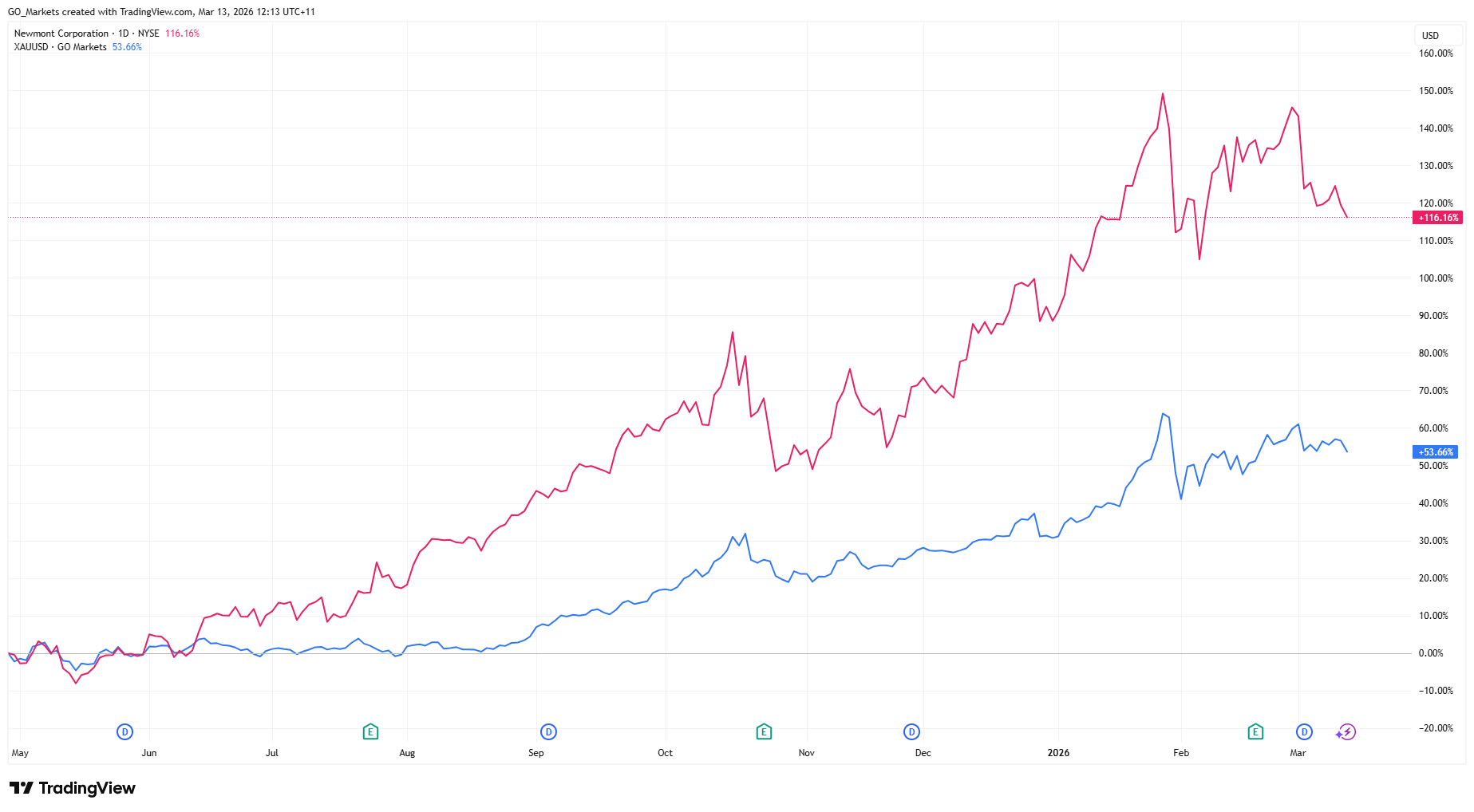
FX markets enter the month influenced by uncertain growth momentum, inflation dynamics and central bank policy, yield sensitivity, and shifts in how markets are pricing geopolitical risk.
Quick facts:
- USD remains primarily responsive to inflation data, and this may have overtaken growth as the main driver.
- JPY sensitivity to potential Bank of Japan (BOJ) action remains high, creating asymmetric responses to global rate moves and policy communication.
- EUR and AUD continue to trade reactively to global events and commodity price moves.
- Volatility may be episodic, clustering around key data releases rather than a single sustained directional trend.
With central bank expectations still evolving into the first quarter (Q1), key releases and policy communication are likely to stay central to near-term FX pricing. In this environment, moves may cluster around scheduled events and headline risk, rather than build into a single dominant trend.
US dollar (USD)
Key data and events:
- Non-farm payrolls (Employment Situation, Dec 2025): 9 January 2026 Bureau of Labor Statistics
- CPI (Dec 2025): 13 January 2026 Bureau of Labor Statistics
- Fed rate decision: 27-28 January 2026 Federal Reserve
- Advance GDP (Q4): rescheduled (date TBA) U.S. Bureau of Economic Analysis
What to watch:
USD performance remains closely tied to inflation data and what it could mean for Federal Reserve policy expectations. Market pricing can shift quickly around CPI and labour-market outcomes, particularly where outcomes affect how investors perceive the timing and pace of any policy changes.
Jobs data and GDP numbers will be watched as gauges of growth momentum. The start of the US earnings season may also influence FX indirectly through its impact on equity performance, risk sentiment, and yield expectations, rather than acting as a direct currency driver.
Key chart: US dollar index (DXY) weekly chart
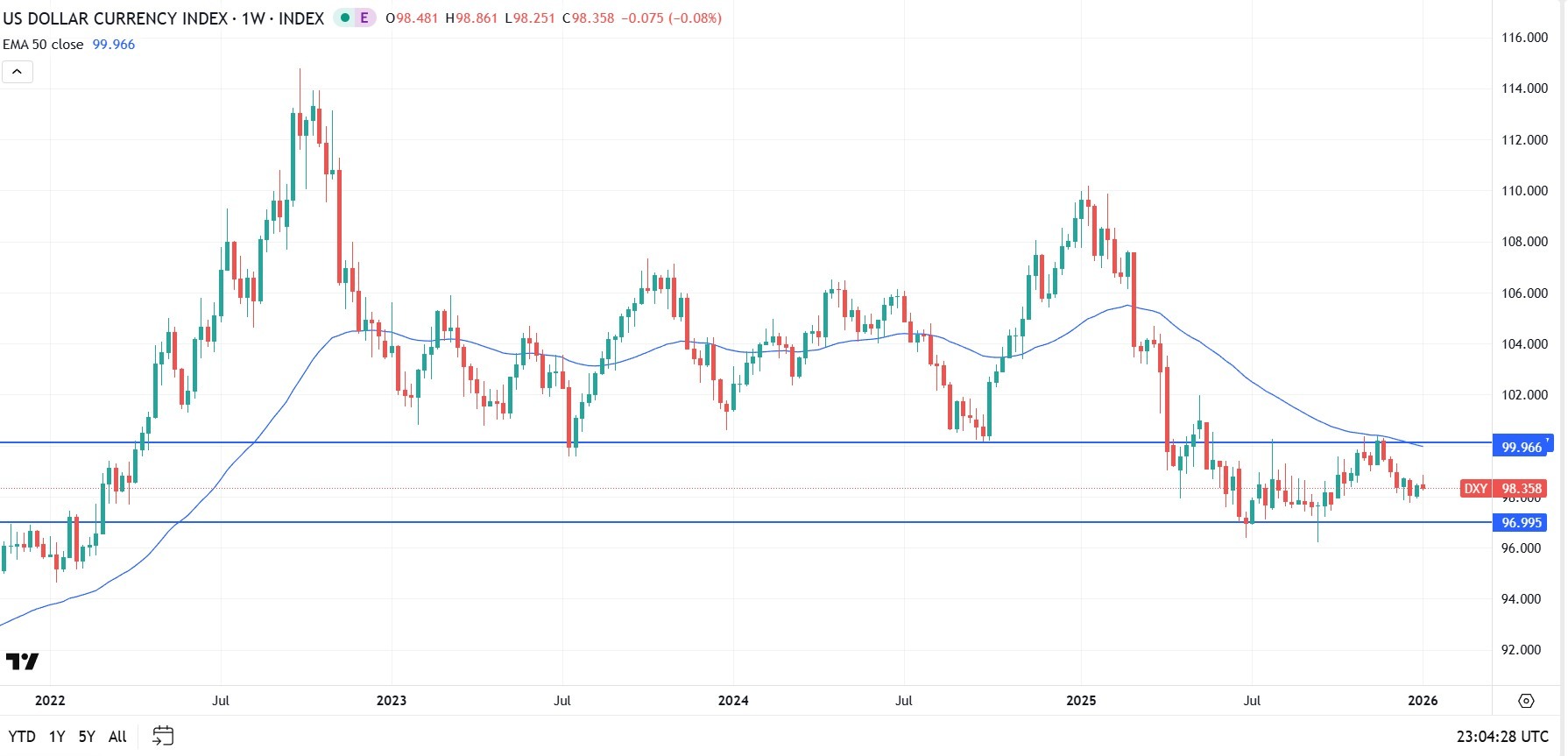
Periods of market uncertainty can support USD demand around prior support areas near 97, while the 100 region may continue to act as a reference point for resistance, including where it aligns with commonly watched moving averages (noting technical indicators can fail).
A break in either direction may reflect shifting expectations about how different central banks will respond to the next run of inflation and growth data.
Euro (EUR)
Key data and events:
- CPI (Euro area HICP, Dec 2025 reference period): 19 January 2026 European Central Bank
- ECB rate decision: 5 February 2026 European Central Bank
What to watch:
European Central Bank (ECB) messaging on policy direction and inflation remains key. A prolonged hold is one scenario market participants continue to debate, but outcomes are likely to remain data-dependent and sensitive to changes in the growth and inflation backdrop.
The geopolitical situation in Ukraine will also remain in focus.
Key chart: EUR/USD weekly chart
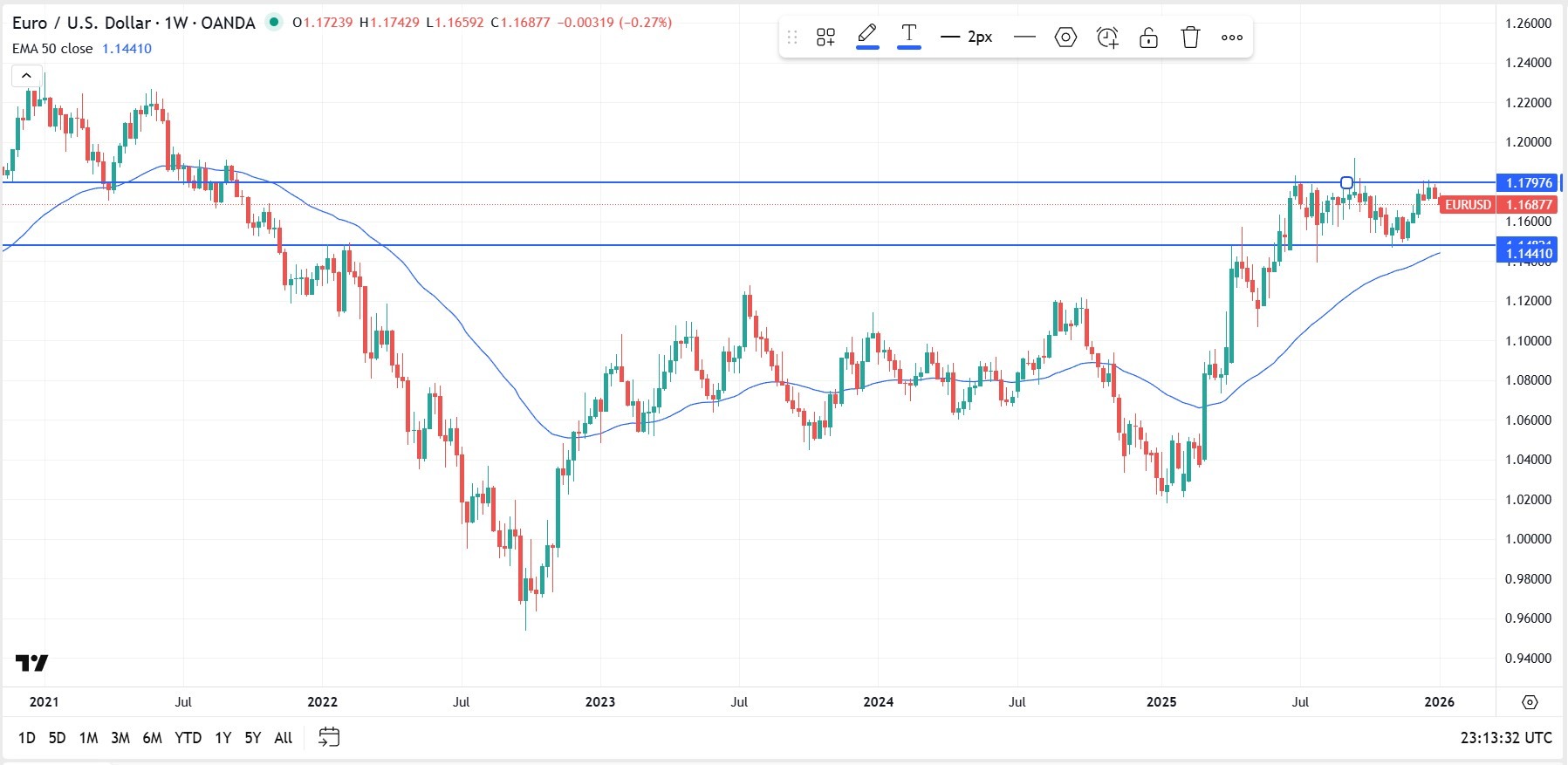
Differences in likely central bank direction could support a test of the top end of the current multi-month range near 1.18. A sustained break above that level would be technically significant.
For now, price may stay range-bound until there is clearer guidance on policy direction on both sides of the Atlantic.
Japanese yen (JPY)
Key data and events:
- BOJ policy decision: 22–23 January 2026 Bank of Japan
- Tokyo core CPI (Ku-area of Tokyo, preliminary; Dec 2025 reference month): 23 January 2026 Statistics Bureau of Japan
What to watch:
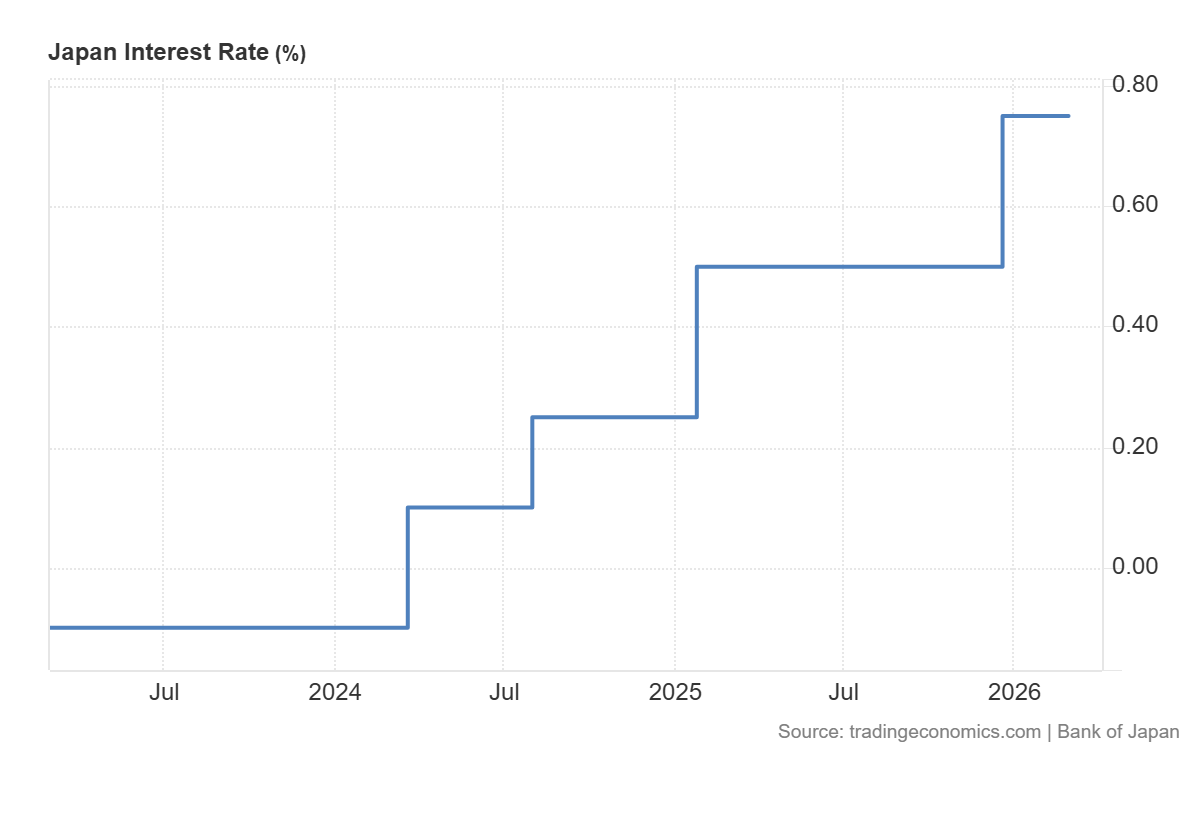
Following the BOJ’s December rate rise, markets appear to be weighing the likelihood of further action in Q1. Whether the January meeting delivers another move remains uncertain and may depend on incoming inflation and wage signals, as well as BOJ communication.
Data released ahead of the decision may be important in shaping expectations.
Key chart: GBP/JPY daily chart
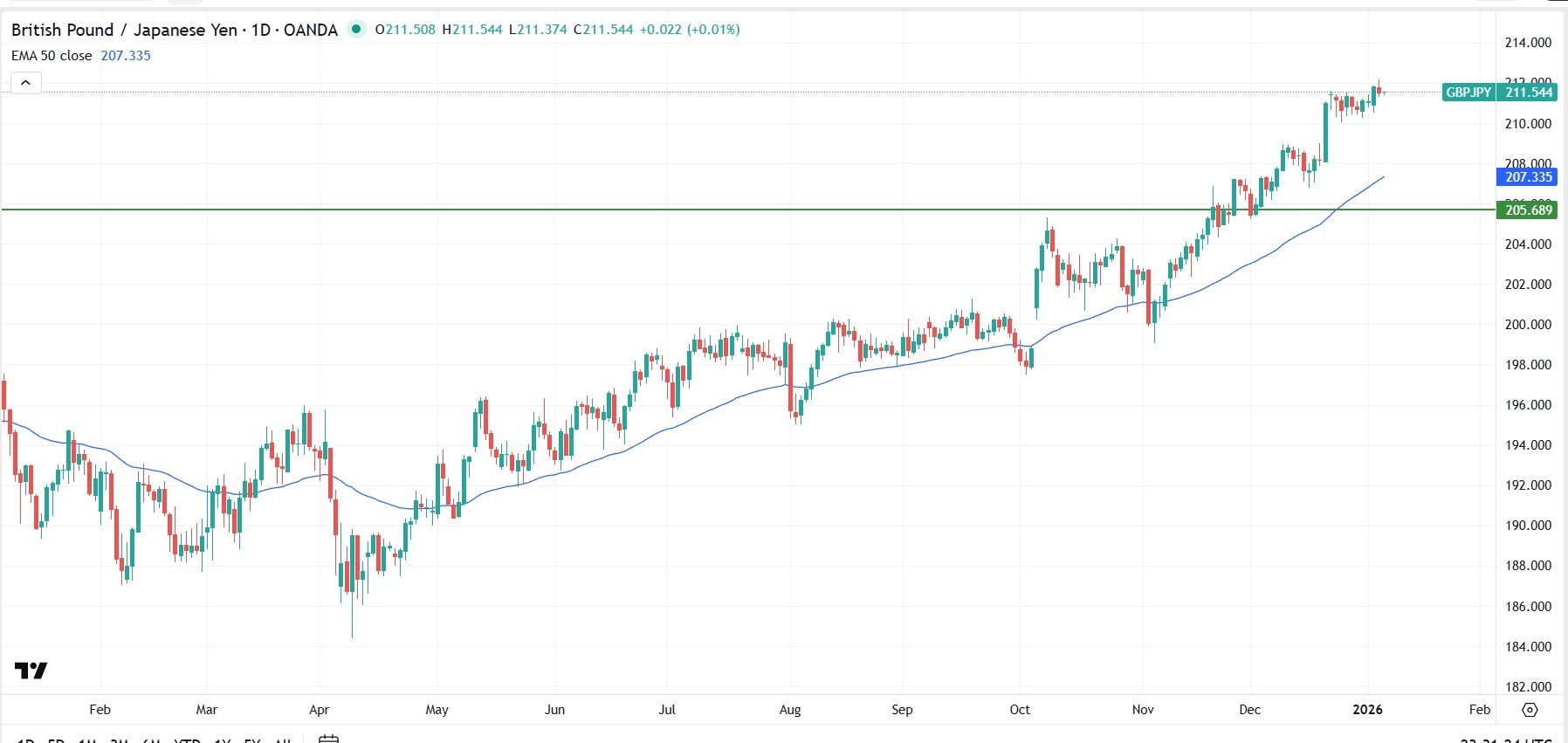
As of 7 January 2026, GBPJPY has traded around the 211.50 area, near levels last seen in 2008. Continued consolidation may suggest fresh drivers are needed to extend gains.
If the cross can’t push higher, some traders will start watching for a pullback toward 210.00, where support has shown up before. And if expectations for BOJ action build, selling could accelerate, with price potentially drifting down through those previously tested support zones and toward the more established support near 208.00.
Australian dollar (AUD)
Key data and events:
- CPI (Complete Monthly CPI; Nov 2025 reference month): 7 January 2026 Australian Bureau of Statistics
- Employment (Labour Force; Dec 2025 reference month): 22 January 2026, Australian Bureau of Statistics
- RBA rate decision: 3 February 2026 (Monetary Policy Board meeting 2–3 February) Reserve Bank of Australia
AUD continues to behave as a proxy for global growth sentiment and commodity demand.
Stabilisation in Chinese data, firmer commodity prices, and expectations around the Reserve Bank of Australia (RBA) policy path may be providing relative support for AUD. Sensitivity to broader risk conditions remains high.
Key chart: EUR/AUD daily chart
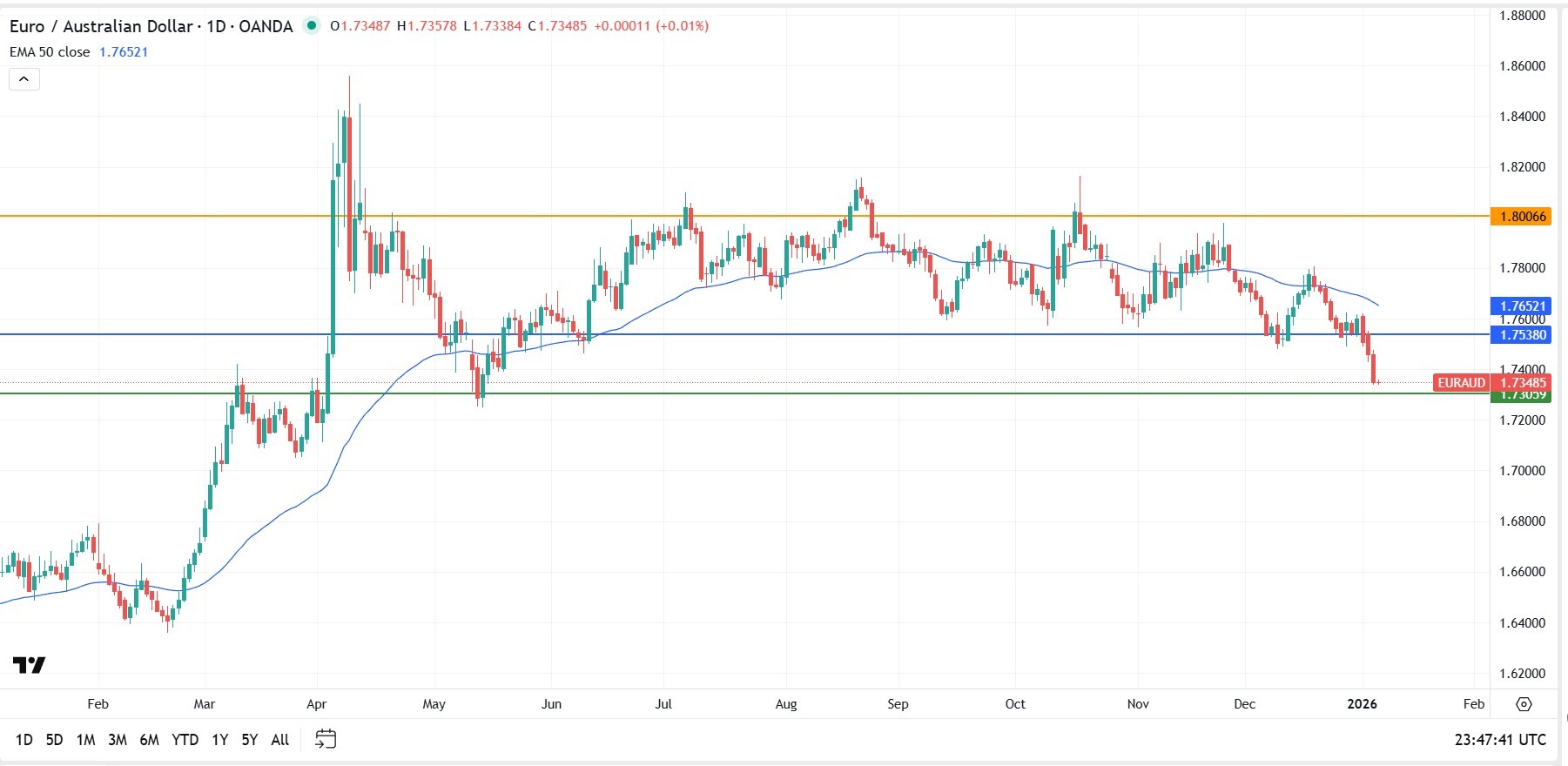
Moves in commodity prices have coincided with a sharp fall in EURAUD since the 31 December close, breaking down out of the prior range. The next key level to the downside sits at 1.7305.
The area around 1.7305 may help indicate whether selling pressure is continuing or whether momentum is fading for now. Near-term commodity price moves are likely to remain important.
Bottom line
FX conditions this month may remain reactive, with volatility clustering around key data releases rather than a sustained directional trend. With Q1 central bank expectations still forming, price moves may be sharper around the calendar, policy communication, and geopolitical headlines.

The information provided is of general nature only and does not take into account your personal objectives, financial situations or needs. Before acting on any information provided, you should consider whether the information is suitable for you and your personal circumstances and if necessary, seek appropriate professional advice. All opinions, conclusions, forecasts or recommendations are reasonably held at the time of compilation but are subject to change without notice. Past performance is not an indication of future performance. Go Markets Pty Ltd, ABN 85 081 864 039, AFSL 254963 is a CFD issuer, and trading carries significant risks and is not suitable for everyone. You do not own or have any interest in the rights to the underlying assets. You should consider the appropriateness by reviewing our TMD, FSG, PDS and other CFD legal documents to ensure you understand the risks before you invest in CFDs.