Boeing stock takes off as earnings land above estimates
Klavs Valters
1/3/2024
•
0 min read
Share this post
Copy URL
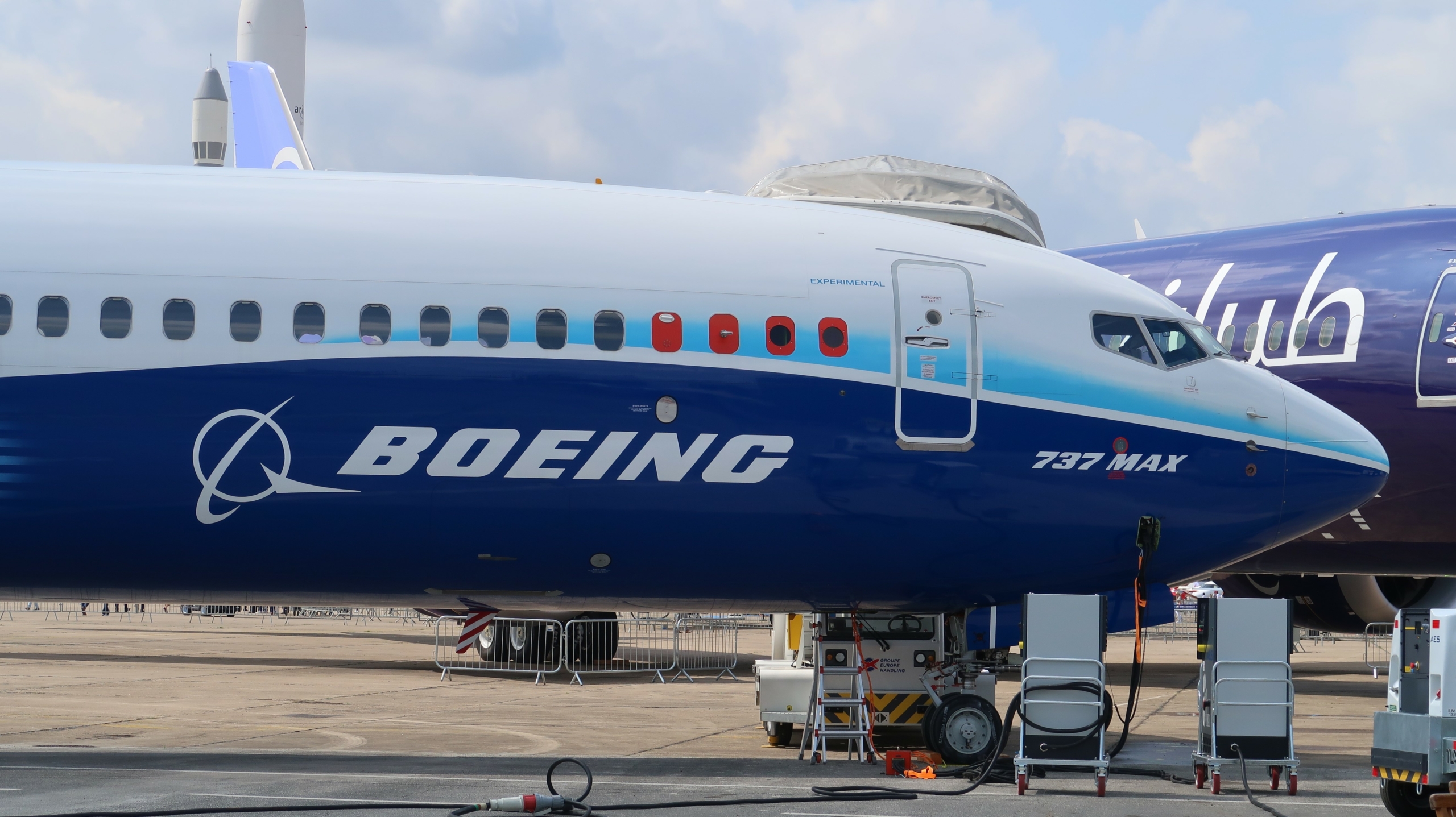
The Boeing Company (NYSE: BA) reported Q4 2023 financial results before the market open in the US on Wednesday. World’s largest aircraft manufacturer’s revenue reached $22.018 billion for the last three months of 2023, above analyst estimate of $21.184 billion. Revenue rose by 10% year-over-year.
Boeing reported a loss per share of -$0.47, which was less than -$0.777 loss per share expected. Company overview Founded: 1916 Headquarters: Arlington County, Virginia, United States Number of employees: 156,000 (2022) Industry: Aerospace Key people: Dave Calhoun (President and CEO), Larry Kellner (Chairman) CEO commentary "While we report our financial results today, our full focus is on taking comprehensive actions to strengthen quality at Boeing, including listening to input from our 737 employees that do this work every day," Dave Calhoun, CEO of Boeing said in a statement. "As we move forward, we will support our customers, work transparently with our regulator and ensure we complete all actions to earn the confidence of our stakeholders," Calhoun looked ahead as company battles recent 737 aircraft safety issues and tries to rebuild its reputation. Stock reaction The stock took off on Wednesday after dropping to its lowest level since 17/11/2023 the day before.
Shares were up 5.29%, trading at $211.04 a share. Stock performance 5 day: -1.44% 1 month: -13.48% 3 months: +11.44% Year-to-date: -19.04% 1 year: -1.73% Boeing price targets Bank of America: $225 Susquehanna: $279 Wells Fargo & Company: $225 UBS Group: $315 Barclays: $235 Stifel Nicolaus: $265 Royal Bank of Canada: $275 Deutsche Bank: $270 Morgan Stanley: $220 Citigroup: $271 TD Cowen: $260 Jefferies Financial Group: $275 JP Morgan Chase & Co.: $245 The Boeing Company is the 104th largest company in the world with a market cap of $127.67 billion, according to CompaniesMarketCap. You can trade The Boeing Company (NYSE: BA) and many other stocks from the NYSE, NASDAQ, HKEX and ASX with GO Markets as a Share CFD on the MetaTrader 5 platform.
To find out more, go to ''Trading'' then select ''Share CFDs''. GO Markets offers pre-market and after-market trading on popular US Share CFDs. Why trade during extended hours?
Volatility never sleeps. Trade over earnings releases as they happen outside of main trading hours Reduce your risk and hedge your existing positions ahead of a new trading day Extended trading hours on popular US stocks means extended opportunities Sources: The Boeing Company, TradingView, MarketWatch, MarketBeat, CompaniesMarketCap
By
Klavs Valters
Account Manager, GO Markets London.
Os artigos são elaborados por analistas e colaboradores da GO Markets e baseiam-se na sua análise independente ou em experiências pessoais. As opiniões, pontos de vista ou estilos de negociação expressos são próprios dos autores e não devem ser considerados como representativos ou partilhados pela GO Markets. Qualquer conselho fornecido é de natureza “geral” e não leva em conta os seus objetivos, situação financeira ou necessidades pessoais. Antes de agir com base em qualquer conselho, considere se ele é apropriado para os seus objetivos, situação financeira e necessidades. Se o conselho estiver relacionado à aquisição de um produto financeiro específico, você deve obter a nossa Declaração de Divulgação (Disclosure Statement - DS) e outros documentos legais disponíveis no nosso site antes de tomar qualquer decisão.
2025 has seen a material decline in the fortunes of the greenback. A technical structure breakdown early in the year was followed by a breach of the 200-day moving average (MA) at the end of Q1. The index then entered correction territory, printing a three-year low at the end of Q2.
Since then, we have seen attempts to build a technical base, including a re-test of the end-of-June lows in mid-September. However, buying pressure has not been strong enough to push price back above the technically critical and psychologically important 100 level.
What the levels suggest from here
As things stand, the index remains more than 10% lower for 2025. On this technical view, the index may revisit the 96 area. However, technical levels can fail and outcomes depend on multiple factors.
US dollar index
Source: TradingView
The key question for 2026
The key question remains: are we likely to see further losses in the early part of next year and beyond, or will current support hold?
We cannot assess the US dollar in isolation and any outlook is shaped by internal and global factors, not least its relative strength versus other major currencies. Many of these drivers are interrelated, but four potential headwinds stand out for any US dollar recovery. Collectively, they may keep downside pressure in play.
Four headwinds for any US dollar recovery
1. The US dollar as a safe-haven trade
One scenario where US dollar support has historically been evident is during major global events, slowdowns and market shocks. However, the more muted response of the US dollar during risk-off episodes this year suggests a shift away from the historical norm, with fewer sustained US dollar rallies.
Instead, throughout 2025, some investors appearedto favour gold, and at other times, FX and even equities, rather than into the US dollar. If this change in behaviour persists through 2026, it could make recovery harder, even if global economic pressure builds over the year ahead.
2. US versus global trade
Trade policy is harder to measure objectively, and outcomes can be difficult to predict. That said, trade battles driven by tariffs on US imports are often viewed as an additional potential drag on the US dollar.
The impact may be twofold if additional strain is placed on the US economy through:
a slowdown in global trade volumes as impacted countries seek alternative trade relationships, with supply chain distortions that may not favour US growth
pressure on US corporate profit margins as tariffs lift costs for importers
3. Removal of quantitative tightening
The Fed formally halted its balance sheet reduction, quantitative tightening (QT), as of 1 December 2025, ending a program that shrank assets by roughly US$2.4 trillion since mid-2022.
Traditionally, ending QT is seen as marginally negative for the US dollar because it stops the withdrawal of liquidity, can ease global funding conditions, and may reduce the scarcity that can support dollar demand. Put simply, more dollars in the system can soften the currency’s support at the margin, although outcomes have varied historically and often depend on broader financial conditions.
4. Interest rate differential
Interest rate differential (IRD) is likely to be a primary driver of US dollar strength, or otherwise, in the months ahead. The latest FOMC meeting delivered the expected 0.25% cut, with attention on guidance for what may come next.
Even after a softer-than-expected CPI print, markets have been reluctant to price aggressive near-term easing. At the time of writing, less than a 20% chance of a January cut is priced in, and it may be March before we see the next move.
The Fed is balancing sticky inflation against a jobs market under pressure, with the headline rate back at levels last seen in 2012. The practical takeaway is that a more accommodative stance may add to downward pressure on the US dollar.
Current expectations imply around two rate cuts through 2026, with the potential for further easing beyond that, broadly consistent with the median projections shown in the chart below. These are forecasts rather than guarantees, and they can shift as economic data and policy guidance evolve.
Source: US Federal Reserve, Summart of Economic Projections
The “Magnificent Seven” technology companies are expected to invest a combined $385 billion into AI by the end of 2025.
Microsoft is positioning itself as the platform leader. Nvidia dominates the underlying AI infra. Google leads in research. Meta is building open-source tech. Amazon – AI agents. Apple — on-device integration. And Tesla pioneering autonomous vehicles and robots.
The “Big 4” tech companies' AI spending alone is forecast at $364 billion.
With such enormous sums pouring into AI, is this a winner-take-all game?
Or will each of the Mag Seven be able to thrive in the AI future?
Microsoft: The AI Everywhere Strategy
Microsoft has made one of the biggest bets on AI out of the Mag Seven — adopting the philosophy that AI should be everywhere.
Through its deep partnership with OpenAI, of which it is a 49% shareholder, the company has integrated GPT-5 across its entire ecosystem.
Key initiatives:
GPT-5 integration across consumer, enterprise, and developer tools through Microsoft 365 Copilot, GitHub Copilot, and Azure AI Foundry
Azure AI Foundry for unified AI development platform with model router technology
Copilot ecosystem spanning productivity, coding, and enterprise applications with real-time model selection
$100 billion projected AI infrastructure spending for 2025
Microsoft’s centrepiece is Copilot, which can now detect whether a prompt requires advanced reasoning and route to GPT-5's deeper reasoning model.
This (theoretically) means high-quality AI outputs become invisible infrastructure rather than a skill users need to learn.
However, this all-in bet on OpenAI does come with some risks. It is putting all its eggs in OpenAI's basket, tying its future success to a single partnership.
Elon Musk warned that "OpenAI is going to eat Microsoft alive"[/caption]
Google: The Research Strategy
Google’s approach is to fund research to build the most intelligent models possible. This research-first strategy creates a pipeline from scientific discovery to commercial products — what it hopes will give it an edge in the AI race.
Key initiatives:
Over 4 million developers building with Gemini 2.5 Pro and Flash
Ironwood TPU offering 3,600 times better performance compared to Google’s first TPU
AI search overviews reaching 2 billion monthly users across Google Search
DeepMind breakthroughs: AlphaEvolve for algorithm discovery, Aeneas for ancient text interpretation, AlphaQubit for quantum error detection, and AI co-scientist systems
Google’s AI research branch, DeepMind, brings together two of the world's leading AI research labs — Google Brain and DeepMind — the former having invented the Transformer architecture that underpins almost all modern large language models.
The bet is that breakthrough research in areas like quantum computing, protein folding, and mathematical reasoning will translate into a competitive advantage for Google.
Today, we're introducing AlphaEarth Foundations from @GoogleDeepMind , an AI model that functions like a virtual satellite which helps scientists make informed decisions on critical issues like food security, deforestation, and water resources. AlphaEarth Foundations provides a… pic.twitter.com/L1rk2Z5DKk
Meta has made a somewhat contrarian bet in its approach to AI: giving away their tech for free. The company's Llama 4 models, including recently released Scout and Maverick, are the first natively multi-modal open-weight models available.
Key initiatives:
Llama 4 Scout and Maverick - first open-weight natively multi-modal models
AI Studio that enables the creation of hundreds of thousands of AI characters
$65-72 billion projected AI infrastructure spending for 2025
This open-source strategy directly challenges the closed-source big players like GPT and Claude. By making AI models freely available, Meta is essentially commoditizing what competitors are trying to monetize. Meta's bet is that if AI models become commoditized, the real value will be in the infrastructure that sits on top. Meta's social platforms and massive user base give it a natural advantage if this eventuates.
Meta's recent quarter was also "the best example to date of AI having a tangible impact on revenue and earnings growth at scale," according to tech analyst Gene Munster.
H1 relative performance of the Magnificent Seven stocks. Source: KoyFin, Finimize
However, it hasn’t been all smooth sailing for Meta. Their most anticipated release, Llama Behemoth, has all but been scrapped due to performance issues. And Meta is now rumored to be developing a closed-source Behemoth alternative, despite their open-source mantra.
Amazon: The AI Agent Strategy
Amazon’s strategy is to build the infrastructure for AI that can take actions — booking meetings, processing orders, managing workflows, and integrating with enterprise systems.
Rather than building the best AI model, Amazon has focused its efforts on becoming the platform where all AI models live.
Key initiatives:
Amazon Bedrock offering 100+ foundation models from leading AI companies, including OpenAI models.
$100 million additional investment in AWS Generative AI Innovation Center for agentic AI development
Amazon Bedrock AgentCore enabling deployment and scaling of AI agents with enterprise-grade security
$118 billion projected AI infrastructure spending for 2025
The goal is to become the “orchestrator” that lets companies mix and match the best models for different tasks.
Amazon’s AgentCore will provide the underlying memory management, identity controls, and tool integration needed for these companies to deploy AI agents safely at scale.
This approach offers flexibility, but does carry some risks. Amazon is essentially positioning itself as the middleman for AI. If AI models become commoditized or if companies prefer direct relationships with AI providers, Amazon's systems could become redundant.
Nvidia: The Infra Strategy
Nvidia is the one selling the shovels for the AI gold rush. While others in the Mag Seven battle to build the best AI models and applications, Nvidia provides the fundamental computing infrastructure that makes all their efforts possible.
This hardware-first strategy means Nvidia wins regardless of which company ultimately dominates. As AI advances and models get larger, demand for Nvidia's chips only increases.
Key initiatives:
Blackwell architecture achieving $11 billion in Q2 2025 revenue, the fastest product ramp in company history
New chip roadmap: Blackwell Ultra (H2 2025), Vera Rubin (H2 2026), Rubin Ultra (H2 2027)
Data center revenue reaching $35.6 billion in Q2, representing 91% of total company sales
Manufacturing scale-up with 350 plants producing 1.5 million components for Blackwell chips
With an announced product roadmap of Blackwell Ultra (2025), Vera Rubin (2026), and Rubin Ultra (2027), Nvidia has created a system where the AI industry must continuously upgrade to Nvidia’s newest tech to stay competitive.
This also means that Nvidia, unlike the others in the Mag Seven, has almost no direct AI spending — it is the one selling, not buying.
However, Nvidia is not indestructible. The company recently halted its H20 chip production after the Chinese government effectively blocked the chip, which was intended as a workaround to U.S. export controls.
Apple: The On-Device Strategy
Apple's AI strategy is focused on privacy, integration, and user experience. Apple Intelligence, the AI system built into iOS, uses on-device processing and Private Cloud Compute to help ensure user data is protected when using AI.
Key initiatives:
Apple Intelligence with multi-model on-device processing and Private Cloud Compute
Enhanced Siri with natural language understanding and ChatGPT integration for complex queries
Direct developer access to on-device foundation models, enabling offline AI capabilities
$10-11 billion projected AI infrastructure spending for 2025
The drawback of this on-device approach is that it requires powerful hardware from the user's end. Apple Intelligence can only run on devices with a minimum of 8GB RAM, creating a powerful upgrade cycle for Apple but excluding many existing users.
Tesla: The Robo Strategy
Tesla's AI strategy focuses on two moonshot applications: Full Self-Driving vehicles and humanoid robots.
This is the 'AI in the physical world' play. While others in the Mag Seven are focused on the digital side of AI, Tesla is building machines that use AI for physical operations.
Tesla’s Optimus robot replicating human tasks
Key initiatives:
Plans for 5,000-10,000 Optimus robots in 2025, scaling to 50,000 in 2026
Robotaxi service targeting availability to half the U.S. population by EOY 2025
AI6 chip development with Samsung for unified training across vehicles, robots, and data centers
$5 billion projected AI infrastructure spending for 2025
This play is exponentially harder to develop than digital AI, and the markets have reflected low confidence that Tesla can pull it off.
TSLA has been the worst-performing Mag Seven stock of 2025, down 18.37% in H1 2025.
However, if Tesla’s strategy is successful, it could be far more valuable than other AI plays. Robots and autonomous vehicles could perform actual labour worth trillions of dollars annually.
The $385 billion Question
The Mag Seven are starting to see real revenue come in from their AI investments. But they're pouring that money (and more) back into AI, betting that the boom is just getting started.
The platform players like Microsoft and Amazon are betting on becoming essential infrastructure. Nvidia’s play is to sell the underlying hardware to everyone. Google and Meta compete on capability and access. While Apple and Tesla target specific use cases.
The $385 billion question is which of the Magnificent Seven has bet the right way? Or will a new player rise and usurp the long-standing tech giants altogether?
You can access all Magnificent Seven stocks and thousands of other Share CFDs on GO Markets.
Over the past 3 months Nvidia has moved through ranges that some stocks don’t do in years, in some cases decades. Having lost over 35 per cent in the June to August sell off, it quickly bounced over 40 per cent in the preceding 20 days once it hit its August low as we build positions ahead of its results. These results delivered Nvidia style numbers with three figure growth on the sales, net profit and earnings lines but this did not appease the market, seeing it fall 22 per cent in a little over 8 days.
Which brings us to now – a new 16 per cent drive as Nivida reports it’s struggling to meet demands and that the AI revolution is translating faster than even it expected. This got us thinking – Where are we right “Now” in the AU players? Thus, it’s time to dive into the drivers for the Nvidia and Co.
AI players. Supersonic As mentioned, Nvidia’s results have been astonishing – and it still has time to do a US$50 billion buyback. It collected the award for becoming the world’s largest company in the shortest timeframe in the post-WWII era, think about that for one second – that’s faster than Amazon, Microsoft, Apple, Google, Shell, BP, ExxonMobil, TV players of the 60s and 70s.
So the question is how does it keep its speed and trajectory? Well that comes from what some are calling the ‘supersonic’ scalers. These are the players like Google, Amazon, Meta and Microsoft that are the users and providers of the AI revolution.
These are the players that have spent hundreds billions thus far on the third digital revolution. Let us once again put that into perspective, the amount of spending is (inflation adjusted) the same as what was spent during the 1960’s on mainframe computing and the 1990’s distribution of fibre-optics. So we have now seen that level of spending in AI the next step is ‘usage’ and that is the inflection point we find ourselves at.
Currently AI is mainly used to train foundational models and chatbots – which is fine but not long-term financially stable. It needs to move into things like productions – that is producing models for corporate clients that forecast, streamline and increase productivity. This is the ‘Grail’ This immediately raises the bigger question for now – can this Grail be achieved?
The Voices To answer that – let us present some arguments from some of AI’s largest “Voices” On the AI potential and the possibility of a profound and rapid technological revolution, Sam Altman, CEO of OpenAI, has claimed that AI represents the "biggest, best, and most important of all technology revolutions," and predicts that AI will become increasingly integrated into all aspects of life. This reflects a belief in AI's far-reaching influence over time. The never subtle McKinsey and Co. has projected that generative AI could eventually contribute up to $8 trillion to the global economy annually.
This figure underscores the massive economic potential of AI. The huge caveat: McKinsey's predictions are never real-world tested and inevitably fall flat in the market. This kind of money is what makes AI so attractive to players in Venture Capital.
For the VC watchers out there the one that is catching everyone’s attention is VC accelerator Y Combinator which is fully embracing the technology. Just to put Y Combinator into context, according to Jared Heyman’s Rebel Fund, if anyone had invested in every Y Combinator deal since 2005 (which would have been impossible just to let you know), the average annual return would have been 176%, even after accounting for dilution. Furthermore to the VC story - AI has accounted for over 40 per cent of new unicorns (startups valued at $1 billion or more) in the first half of 2024, and 60 per cent of the increase in VC-backed valuations.
So far in 2024, U.S. unicorn valuations have grown by $162 billion, largely driven by AI’s rapid expansion, according to Pitchbook data. So the Voices certainly believe it can be achieved. But is this a good thing?
The Good, the Bad and the Ugly AI is advancing at such a rapid pace that existing performance benchmarks, such as reading comprehension, image classification and advanced maths, are becoming outdated, necessitating the creation of new standards. This reflects the fast-moving nature of AI progress. For example, look at the success of AlphaFold, an AI-driven algorithm that accurately predicts protein structures.
Some see this as one of the most important achievements in AI’s short history and underscores AI’s transformative impact on science, particularly in fields like biology and healthcare. This is the Good. Then there is the 165-page paper titled "Situational Awareness" by Aschenbrenner which has predicted that by 2030, AI will achieve superintelligence and create a $1 trillion industry.
Also, a positive, but will consume 20 per cent of the U.S. power supply. These incredible predictions emphasise the enormous scale of AI and the impact it will have on industry, infrastructure and people. The latest Google study found that generative AI could significantly improve workforce productivity.
The study suggests that roughly 80 per cent of jobs could see at least 10 per cent of tasks completed twice as fast due to AI, which has implications for industries such as call centres, coding, and professional writing. This highlights AI's capacity to streamline tasks and enhance efficiency across various fields. However it also raises the massive concern around job security, job satisfaction and the socio-economic divide as the majority of those affected by AI ‘productivity’ are in mid to low scales.
Then we come to Elon Musk’s new AI startup, xAI, which raised $6 billion at a valuation of $24 billion this year. The company is planning to build the world’s largest supercomputer in Tennessee to support AI training and inference. This all sounds economically and financially exciting but it has a darker side.
These are the kinds of AI ventures that have seen ‘deep-fake’ creations. For example Musk himself shared a deep-fake video of Vice President Kamala Harris. This is the ugly side of AI and reflects the broader cultural and ethical issues surrounding AI-generated content.
Furthermore – we should always be forecasting both the good and the bad for investment opportunities. These issues are already attracting regulations and compliance responses. How impactful will these be?
And will it halt the AI driven share price appreciation? It is a very real and present issue. Where does this leave us?
The share price future of Nvidia and Co is clearly dependent on the longer-term achievement of the AI revolution. As shown, the supersonic players in technology and venture capital are betting big on AI, with predictions that it will reshape the global economy, industries, and even basic societal structures. However, there is still uncertainty about the exact timeline for these changes and how accurately the market is pricing in AI's potential.
The AI ecosystem is moving at breakneck speed, with new developments outpacing benchmarks and productivity gains reshaping jobs, but whether all these projections that range from trillion-dollar economies to superintelligence materialises remains to be seen. Thus – for now – Nvidia and Co’s recent roller-coaster trading looks set to continue.
Os Jogos Olímpicos e os Jogos Olímpicos de Inverno capturam a atenção global por semanas, atraindo milhões de telespectadores e dominando as manchetes. Para os traders, essa atenção geralmente parece um catalisador, mas os verdadeiros impulsionadores do mercado permanecem os mesmos: macroeconomia, política e sentimento de risco global, não o calendário esportivo.
Então, por que alguns traders dizem que os resultados parecem mais fracos durante grandes eventos esportivos?
Muitas vezes, tudo se resume a uma falha na adaptação às condições que podem mudar na margem, particularmente liquidez e participação.
1. Esperando a “volatilidade do evento”
Um grande evento global pode criar a suposição de que os mercados deveria mova mais. Alguns negociadores se posicionam para surtos ou aumentam o risco em antecipação a grandes oscilações, mesmo quando as condições não o suportam.
Principais motivadores
Em alguns mercados e sessões, a participação reduzida pode enfraquecer o acompanhamento da tendência
O sentimento pode inflar as expectativas além do que a ação de preço oferece
Exemplo: um trader espera uma fuga durante o período da cerimônia de abertura olímpica, mas a baixa participação regional limita o movimento dos preços, levando a falsos começos.
2. Forçando negociações em sessões silenciosas
Quando a ação do preço é mais lenta e as faixas se comprimem, alguns traders se sentem pressionados a se manterem ativos e aceitarem entradas de menor qualidade.
Principais motivadores
Intervalos intradiários estreitos podem aumentar os sinais falsos
Uma menor convicção pode favorecer a consolidação em detrimento da tendência, aumentando o risco de falsa quebra
“Permanecer engajado” pode reduzir a seletividade
Conclusão: use sessões mais silenciosas para refinar as configurações ou revisar dados, em vez de forçar negociações marginais.
3. Ignorando a menor liquidez
A participação pode diminuir um pouco durante grandes eventos globais, e o impacto geralmente é mais pronunciado em prazos mais curtos. Os gráficos diários podem parecer normais, enquanto a ação intradiária do preço se torna mais agitada com mais mechas.
Principais motivadores
Em condições de baixa profundidade, o preço pode aumentar mais facilmente e o tamanho do pavio pode aumentar
Em alguns instrumentos e sessões, uma liquidez menor pode coincidir com spreads maiores e uma execução mais variável (varia de acordo com o mercado, o local e as condições da corretora)
Sensibilidade do cronograma a condições mais finas
A tabela acima é meramente ilustrativa (varia de acordo com o mercado): os gráficos diários podem parecer normais. Gráficos de cinco minutos podem parecer mais irregulares.
Exemplo de mechas grandes de baixo volume
Fonte: MT5
4. Usando o tamanho normal em condições anormais
Mesmo que a volatilidade geral pareça estável, o risco de execução pode aumentar quando a liquidez diminui, especialmente para abordagens de curto prazo ou de escalpelamento.
Principais motivadores
O deslizamento pode aumentar e as paradas podem “ultrapassar”
Condições finas podem desencadear paradas mais facilmente no ruído
Spreads mais amplos podem alterar os resultados de entrada/saída em relação às condições normais
Ajuste: Manter o tamanho fixo pode distorcer eficaz risco. Alguns negociadores analisam os custos de transação, incluindo spreads e condições de execução ao definir parâmetros de risco, como paradas/limites, especialmente em sessões mais reduzidas.
5. Estágios de negociação com baixo acompanhamento
As táticas de acompanhamento de tendências podem falhar quando a participação diminui. O impulso pode se dissipar rapidamente e quebras falsas se tornam mais comuns.
Principais motivadores
O fluxo reduzido pode limitar movimentos direcionais sustentados
Alguns regimes de baixa liquidez podem favorecer a reversão média em detrimento do momentum
Exemplo: Uma quebra de faixa clássica parece válida intradiária, mas diminui rapidamente à medida que o volume de acompanhamento não se materializa.
Exemplo de falha de fuga
Fonte: MT5
6. Negligenciando o tempo e o risco de distração
Não há evidências confiáveis de que o calendário olímpico impulsione previsivelmente os eventos geopolíticos. Mas quando as tensões já estão elevadas, os grandes eventos globais às vezes podem coincidir com a atenção espalhada por outros lugares, algo semelhante a feriados, eleições ou grandes cúpulas.
Os traders devem identificar quando as condições são mais lentas ou mais baixas e se ajustar adequadamente, alinhando as táticas com o risco reduzido de acompanhamento e calibrando os tamanhos das posições de acordo com a realidade da execução. Mais importante ainda, evite forçar negociações quando a vantagem é limitada durante esses períodos.
A tocha é acesa em Milão, e a atenção do público passou do teatro da cerimônia de abertura para a competição nas pistas.
Mas para os negociantes de forex (FX), os olhos ainda estão nos gráficos do euro (EUR). Com a Itália no centro do mundo esportivo, a economia da zona do euro está enfrentando um dos momentos mais assistidos do ano.
1. A vantagem de jogar em casa (economia da Itália)
Algumas estimativas sugerem que as Olimpíadas poderiam impulsionar aproximadamente 5,3 bilhões de euros à economia italiana, impulsionada por gastos diretos e por uma maior redução do turismo quando a chama se apagar. Em termos práticos, isso pode significar uma fase antecipada de “despesas diretas”. A demanda por hospitalidade, varejo e transporte pode atingir o pico quando cerca de 2,5 milhões de espectadores se deslocam entre Milão e as Dolomitas.
Tarefa da lista de verificação: Observe a produção industrial da Itália (quarta-feira, 11 de fevereiro de 2026). Embora os Jogos possam apoiar a atividade de serviços, vale a pena acompanhar se os dados de produção mais amplos estão acompanhando o ritmo ou se o impacto olímpico está estreitamente concentrado nos setores vinculados ao turismo.
Na reunião de 5 de fevereiro, o Banco Central Europeu (BCE) manteve as configurações de política estáveis em 2,15% e a facilidade de depósito em 2,00%. A presidente Christine Lagarde sinalizou que, embora a inflação pareça estar se estabilizando, o BCE permanece no modo “esperar para ver”.
Tarefa da lista de verificação: Monitore os discursos dos membros do BCE nesta semana. Qualquer mudança de tom, incluindo uma inclinação mais agressiva que sugira que as taxas podem permanecer mais altas por mais tempo, pode atuar como um potencial vento favorável para o EUR/USD, especialmente se contrastar com um tom mais cauteloso do Federal Reserve.
As finais olímpicas de maior prestígio geralmente acontecem na noite europeia. Para os traders, isso se alinha com a sobreposição das sessões de Londres a Nova York (normalmente das 14:00 às 17:00 GMT). É quando a liquidez é mais profunda nos cruzamentos de EUR e quando o posicionamento pode contornar dados e manchetes.
Tarefa da lista de verificação: Espere um possível pico de liquidez e o potencial de “falsos surtos” durante essas horas. Se um dado importante dos EUA (como as vendas no varejo de terça-feira ou o IPC de sexta-feira) chegar enquanto os mercados europeus ainda estiverem abertos, os pares de EUR poderão ver uma recuperação na volatilidade.
Embora o euro seja a estrela do show, as Olimpíadas ainda podem ser obscurecidas por um ruído geopolítico mais amplo. Por exemplo, o ouro já está sendo negociado em torno da marca de USD 5.000 depois de ultrapassá-la brevemente no início de fevereiro, impulsionado pelas compras pelo banco central, pelas expectativas de um dólar mais fraco e pelas melhores previsões para o final do ano.
Tarefa da lista de verificação: Se o sentimento diminuir o risco, observe os ativos tradicionais do paraíso, como o franco suíço (CHF) e o ouro. O ouro sofreu grandes oscilações recentemente e atualmente está testando uma resistência de cerca de USD 5.000. O EUR/CHF também pode ter maior volatilidade se as manchetes geopolíticas se intensificarem durante os Jogos.
A semana termina com o PIB do quarto trimestre da zona do euro (segunda estimativa) na sexta-feira, 13 de fevereiro de 2026.
Tarefa da lista de verificação: A estimativa preliminar mostrou um crescimento de 0,3%. Se o valor for revisado para cima, pode reforçar a resiliência da zona do euro e apoiar uma oferta de EUR no final da semana.
Embora o “impulso olímpico” possa oferecer uma almofada de sentimento para a Itália, é provável que a direção do euro seja moldada pelo fato de a postura de “esperar para ver” do BCE ser desafiada pela atualização do PIB de sexta-feira ou pela divulgação da produção industrial de quarta-feira.
Com o ouro pairando perto de USD 5.000 e os EUA enfrentando um calendário afetado por dados reprogramados, a volatilidade pode permanecer elevada até os principais horários de sobreposição, no momento em que os eventos do horário nobre estão ocorrendo.
Seu guia diário completo sobre as chances de medalhas australianas e os momentos que movimentam o mercado durante os Jogos Olímpicos de Inverno de Milano Cortina.
Fatos rápidos
Cerimônia de abertura: 6h, 7 de fevereiro AEDT (20h, 6 de fevereiro de Milão).
Janela de visualização principal: Das 4h às 14h, o AEDT coincide diariamente com o horário de negociação pré-mercado e do ASX.
Cerimônias de medalha: Normalmente funciona das 6:00 às 7:00 da manhã AEDT. Perfeito para ajustes de posição antes do mercado.
53 atletas australianoscompetindo: A segunda maior equipe olímpica australiana de inverno de todos os tempos, com 10 verdadeiros candidatos a medalhas.
Calendário Olímpico da GO Markets
GO Markets Olympic Schedule
Olympic Schedule
All times shown in AEDT
= Australian competing
🏅 = AUS medal chance
🔥 = Potential volatility
Feb 7
06:00
Opening Ceremony
Live from Milano
🔥
21:30
Men's Downhill Final
Harry Laidlaw
🔥
23:00
Women's 10km+10km Skiathlon
Rosie Fordham, Phoebe Cridland
🔥
Feb 8
05:30
Men's Snowboard Big Air Final
Valentino Guseli
🏅🔥
05:57
Women's NH Individual Final
Global Superstars (Ski Jumping)
🔥
Feb 10
05:30
Women's Snowboard Big Air Final
Tess Coady, Ally Hickman
🏅
Feb 12
00:15
Women’s Moguls Final
Jakara Anthony, Emma Bosco, Charlotte Wilson
🏅🔥
22:15
Men’s Moguls Final
Matt Graham, Jackson Harvey, George Murphy
🏅
Feb 13
00:56
Men's Snowboard Cross Finals
Adam Lambert, Cam Bolton, Jarryd Hughes
🏅
19:30
Women's Snowboard Cross Finals
Josie Baff, Abbey Wilson, Mia Clift
🏅
Feb 14
21:46
Women’s Dual Moguls Final
Jakara Anthony, Charlotte Wilson
🏅
Feb 15
08:42
Short Track (1500m Final)
Brendan Corey
21:46
Men’s Dual Moguls Final
Matt Graham, George Murphy
🏅
Feb 16
23:00
Alpine Skiing (Men's Slalom)
Harry Laidlaw
Feb 17
06:00
Pairs Figure Skating Final
A. Golubeva & H. Giotopoulos Moore
07:06
Women’s Monobob Final
Bree Walker
🏅
Feb 18
21:30
Women’s Aerials Final
Laura Peel, Danielle Scott, Abbey Willcox
🏅
23:30
Women’s Slalom Final
Madison Hoffman, Phoebe Heaydon
Feb 19
21:30
Men’s Aerials Final
Reilly Flanagan
Feb 21
05:30
Men’s Halfpipe Final
Scotty James, Valentino Guseli
🏅🔥
23:30
SkiMo Mixed Relay
Phil Bellingham & Lara Hamilton
Feb 22
05:30
Women’s Freeski Halfpipe Final
Indra Brown
🏅
07:05
Two-Woman Bobsleigh Final
Walker/Reddingius & Blizzard/Johnson
Feb 23
00:10
Men’s Ice Hockey Final
NHL Superstars
🔥
06:00
Closing Ceremony
Live from Milano
🔥
Cerimônia de abertura e primeiras medalhas - sábado, 7 de fevereiro
Cerimônia de abertura na hora do café da manhã, depois a primeira medalha de ouro concedida no horário nobre no sábado.
Harry Laidlaw representa a Austrália no Downhill Masculino, o primeiro evento com medalha de ouro dos Jogos, enquanto as esquiadoras de cross-country Rosie Fordham e Phoebe Cridland competem na noite de sábado.
Essa combinação de cerimônia e primeiras medalhas no mesmo dia cria saturação máxima de mídia, com um ciclo completo de notícias de fim de semana processando antes da abertura do ASX na segunda-feira.
Eventos-chave
Cerimônia de abertura: 6:00 da manhã AEDT
Final masculina de downhill (primeira medalha de ouro dos jogos): 21h30 AEDT
Esquiatlo feminino de 10 km + 10 km: 23:00 AEDT
Para comerciantes
NEC (Nine Entertainment): Evento de dupla audiência. Cerimônia de abertura, às 6h de sábado, se alinha para o pico da audiência matinal da TV. As primeiras medalhas às 21h30 são no horário nobre de sábado à noite.
Ações italianas (FTSE MIB): Desempenho historicamente inferior durante as Olimpíadas nacionais. Turim 2006 teve -2,1% durante os Jogos.
STLA (Stellantis): O ESG destacará o risco se grupos ambientais tiverem como alvo a cerimônia.
Arbitragem entre patrocinadores de vestuário: Se um não favorito vencer o Downhill Masculino, seu patrocinador verá uma média de +2,3% de pop (dados de PyeongChang 2018, Pequim 2022).
As primeiras medalhas continuam - domingo, 8 de fevereiro
A corrida por medalhas continua no domingo, quando Valentino Guseli, de 19 anos, voa no snowboard masculino Big Air, oferecendo à Austrália uma chance antecipada de pódio em um dos eventos visualmente mais espetaculares dos Jogos.
Com o brilho da cerimônia ainda fresco, o desempenho de Guseli dá o tom para a campanha australiana de snowboard e pode influenciar o posicionamento aberto da ASX na segunda-feira para ações de esportes de ação.
Eventos-chave
Final masculina de snowboard Big Air(Valentino Guseli): 5h30 AEDT
Final individual feminina de Normal Hill: 5:57 da manhã AEDT
Para comerciantes
MNST (Monster Beverage): Patrocinador de esportes de ação, se beneficia da presença olímpica multiatleta.
FL (Foot Locker), ZUMZ (Zumiez): Exposição de esportes de ação no varejo para jovens. O ouro Guseli pode criar um burburinho temporário.
Segunda-feira, 9 de fevereiro
Um raro dia tranquilo no calendário olímpico da Austrália. Nenhum evento de medalhas australianas está programado, o que torna este um dia de pura observação para os comerciantes.
Monitore como o resultado do fim de semana de Guseli é processado até o ASX Open de segunda-feira e se posicione antes do confronto de Coady na terça-feira.
Terça-feira, 10 de fevereiro
Tess Coady tenta transformar seu bronze de 2022 em ouro no snowboard feminino Big Air. O horário da manhã de terça-feira oferece aos negociadores uma potencial janela de posicionamento antes do mercado, embora o modesto perfil convencional de Coady limite a exposição em comparação com as estrelas magnatas no dia seguinte.
Eventos-chave
Final feminina de snowboard Big Air: 5h30 AEDT
Para comerciantes
FL (Foot Locker), ZUMZ (Zumiez): Varejo juvenil. Coady gold pode criar um burburinho temporário.
MNST (Monster Beverage): Patrocinador de esportes de ação geral menos volátil.
Quarta-feira, 11 de fevereiro
A calma antes de Jakara Anthony. Nenhum evento australiano na quarta-feira significa que os traders passam o dia se posicionando para o maior momento dos Jogos: a final dos magnatas de Anthony, pouco depois da meia-noite.
Finais do Moguls - quinta-feira, 12 de fevereiro
O maior momento dos Jogos da Austrália chega logo após a meia-noite de quarta-feira, com Jakara Anthony defendendo sua coroa olímpica na final feminina de magnatas.
Como a maior esperança de medalha de ouro do país, com 26 vitórias na Copa do Mundo, o desempenho de Anthony às 12h15 é o único evento potencial de maior impacto para as ações da NEC e da VFC em toda a quinzena olímpica.
Matt Graham também busca seu primeiro ouro olímpico às 22h15 da noite de quinta-feira. Ambos os eventos têm um alto potencial de volatilidade do NEC e do VFC.
Eventos-chave
Final feminina de magnatas (Jakara Anthony): 12h15 AEDT
Final masculina de magnatas (Matt Graham): 22h15 AEDT
Para comerciantes
NEC (Nine Entertainment): Monitore os resultados noturnos e a audiência da direção aberta de quinta-feira.
VFC (VF Corp/North Face): Patrocina os dois atletas. Uma medalha dupla poderia trazer um impacto maior.
Volatilidade do atual campeão: A perda de Anthony pode criar maiores oscilações emocionais.
Sentimento social: Acompanhe o Twitter/Google Trends na quinta-feira de manhã para avaliar a magnitude do desempenho de Anthony.
Sexta-feira, 13 de fevereiro
O snowboard cross ocupa o centro das atenções com duas chances de medalhas australianas marcando o dia de negociação de sexta-feira.
A final noturna de Adam Lambert abre a manhã, enquanto o confronto noturno de Josie Baff acontece no horário nobre da Austrália.
Eventos-chave
Finais masculinas de snowboard cross: 00h56 AEDT
Finais femininas de snowboard cross: 19h30 AEDT
Para comerciantes
Medidor de sentimento da NEC: Se Lambert ganhar medalhas na sexta de manhã e Graham na quinta à noite, isso pode criar um impulso positivo.
Jakara Anthony compete - sábado, 14 de fevereiro
Jakara Anthony disputa a dobradinha na final feminina de Dual Moguls na noite de sábado.
Se ela reivindicar ouro na quinta-feira e novamente aqui, a narrativa do “ouro duplo de Jakara” se escreve sozinha, oferecendo valor de mídia geométrico em vez de linear.
Eventos-chave
Final feminina de Dual Moguls (Jakara Anthony): 21h46 AEDT
Para comerciantes
Poder narrativo da NEC: “Double gold Jakara” poderia atrair espectadores mais casuais.
Se Anthony prateado/bronze Qui: Potencial da história de redenção.
Horário do fim de semana: Resultado da noite de sábado = diferença no ASX na segunda-feira.
Risco de formato: Monitore as rodadas de qualificação; se as margens forem maiores que 1 segundo (explosões), o engajamento poderá cair.
Domingo, 15 de fevereiro
Um domingo tranquilo oferece arcos de redenção e ação de baixo impacto. O esforço matinal de Brendan Corey em pista curta tem relevância mínima para as ações, enquanto a final noturna de dois magnatas de Matt Graham oferece uma segunda chance de medalha após o tradicional evento de sexta-feira.
Eventos-chave
Final de 1500 m de patinação de velocidade em pista curta: 8h42 AEDT
Final masculina de Dual Moguls: 21h46 AEDT
Para comerciantes
Segunda oportunidade do VFC: Se Graham perder os magnatas de sexta-feira, a redenção dos magnatas duplos é possível.
Segunda-feira, 16 de fevereiro
Harry Laidlaw retorna às pistas para a ação de slalom na noite de segunda-feira, mas o esqui alpino tem pouca influência sobre o público australiano.
Este é um dia reservado no calendário de negociações, com os mercados mais focados em digerir os resultados dos magnatas do fim de semana e se posicionar para a final do monobob de terça-feira.
Eventos-chave
Slalom masculino: 23:00 AEDT
Bree Walker compete - terça-feira, 17 de fevereiro
Bree Walker pode fazer história olímpica ao competir na final feminina de monobob, perseguindo a primeira medalha de bobsleigh da Austrália.
Embora a narrativa seja poderosa, a realidade comercial é que o bobsleigh não tem presença de patrocinadores de varejo, limitando as ações diretas.
Eventos-chave
Final de patinação artística em pares: 6:00 da manhã AEDT
Final feminina de Monobob: 7h06 AEDT
Para comerciantes
PESCOÇO: Historicamente, o bobsleigh obtém avaliações baixas, mas um ouro Walker pode agregar valor como pioneiro na Austrália.
Quarta-feira, 18 de fevereiro
As veteranas Laura Peel e Danielle Scott ocupam o centro das atenções na noite de quarta-feira em um evento com uma história orgulhosa da Austrália (2 medalhas de ouro desde 2002). No entanto, o apelo de nicho das antenas e o horário noturno podem limitar o impacto no mercado.
Eventos-chave
Final Aérea Feminina: 21h30 AEDT
Final de slalom feminino: 23h30 AEDT
Para comerciantes
PESCOÇO: Se houver medalhas, potencial para um pequeno impulso de sentimento.
Exposição ao VFC: Potencial limitado, pois os atletas aéreos são menos desenvolvidos comercialmente.
Quinta-feira, 19 de fevereiro
O esforço aéreo de quinta-feira à noite é um evento final de baixo impacto, com expectativa mínima de medalhas para o australiano Reilly Flanagan e ainda menos relevância no mercado.
O confronto de Scotty James no sábado é a verdadeira conversa quando os jogos começam a terminar, embora uma conquista de medalhas de Flanagan possa criar uma narrativa de azarão.
Eventos-chave
Antenas masculinas FinalÀs: 21h30 AEDT
Sexta-feira, 20 de fevereiro
A calma final antes do sábado que define o legado de Scotty James. Marque o dia para a final halfpipe de James no sábado, às 5h30, o último grande evento de volatilidade potencial dos Jogos para um atleta australiano.
Scotty James compete - sábado, 21 de fevereiro
O momento do legado de Scotty James chega no sábado de manhã. Ele representou a Austrália em cinco Olimpíadas, com duas medalhas e zero ouro. Esta é sua última chance e traz consigo o evento mais carregado de emoção dos Jogos e o último grande catalisador comercial antes da cerimônia de encerramento de segunda-feira.
Eventos-chave
Final masculina de snowboard Halfpipe (Scotty James): 5h30 AEDT
Relé misto SkIMo: 23h30 AEDT
Para comerciantes
PESCOÇO: Possíveis atrasos no fim de semana na descoberta de preços. Se James ganhasse no sábado.
NKE (Nike): Potencial efeito de halo do ouro por meio de levantamento esportivo de ação.
Curinga de Guseli: Valentino também está competindo (seu segundo evento depois do Big Air, 8 de fevereiro). Uma medalha dupla pode criar uma amplificação narrativa.
Domingo, 22 de fevereiro
Indra Brown, de dezesseis anos, ganha os holofotes da manhã de domingo com o Freeski Halfpipe feminino, enfrentando a favorita Eileen Gu (CHN) no que pode se tornar um ponto de inflexão da marca Gen-Z.
Eventos-chave
Final feminina do Freeski Halfpipe(Indra Brown): 5h30 AEDT
Final de bobsleigh para duas mulheres: 7h05
Para comerciantes
Relógio de segunda a terça: Monitore quais marcas anunciam contratações de Brown.
MILN (ETF Global X Millennials): Varejistas de esportes de ação, exposição a plataformas sociais para a geração Z.
Cerimônia de encerramento - segunda-feira, 23 de fevereiro
A cortina cai sobre Milano Cortina 2026 com a cerimônia de encerramento da manhã de segunda-feira, e a história diz que é aqui que a euforia morre.
Final masculina de hóquei no gelo (NHL Superstars): 12h10 AEDT
Cerimônia de fechamento: 6:00 da manhã AEDT
Mercados para observar:
Rotação dos Alpes franceses em 2030: O encerramento inclui a entrega para a França.
Contagem de medalhas australianas: Se houver mais de 4 medalhas (total de Pequim), o governo poderá aumentar o financiamento dos esportes de inverno em 2030.
Final de hóquei no gelo: Jogadores da NHL competem pela primeira vez desde 2014. A maior audiência nos EUA/Canadá significa um potencial aumento do CMCSA.