市场资讯及洞察
.png)
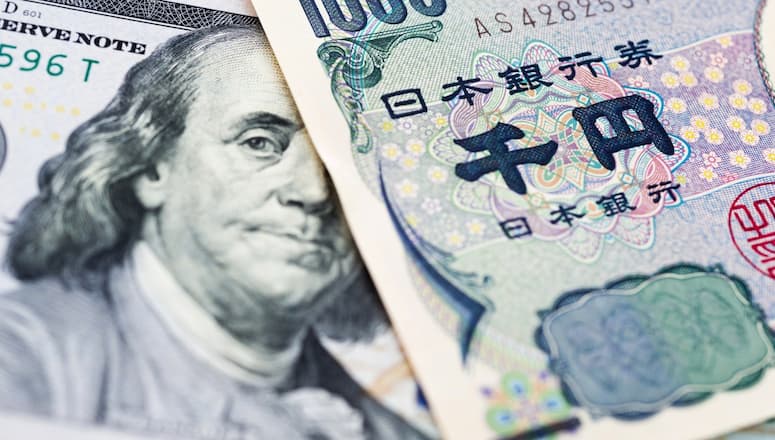
最近外汇市场发生的一件事,看起来不复杂,就是日元在一个关键位置突然稳住了。但如果只把它当成日本自己出手,可能会漏掉真正重要的部分。
日元走弱已经不是一天两天了,市场早就盯着几个重要点位。很多人心里都有数,真到那一步,例如160左右,日本大概率会有动作。所以当汇率真的被拉住时,没人会觉得意外。

意外的是,出手的不只有日本,纽约那边也有同步操作。
也就是并不是日本单方面救火,而是有人在旁边帮了一把。而这个“旁边的人”,并不是普通角色。
这件事之所以值得反复琢磨,是因为美国其实没有那么明显的理由去管日元。美元并没有强到失控的程度,过去一段时间,市场反而一直在讨论美元是不是被高估,是不是应该分散配置。在这种背景下,美国如果主动压低美元,反而显得有点多此一举。
那问题就来了,美国为什么要参与?
答案并不在汇率本身,而是在另一个大家平时不太爱盯着,但更关键的地方,美债。
可以换一种更直观的方式理解。日本如果想靠自己稳住汇率,最现实的办法是什么?动用外汇储备。而外汇储备主要放在哪里?很大一部分就是美国国债。也就是说,日本一旦大规模行动,很可能就要卖掉一部分美债,换成别的资产,再去市场上买日元。

这样一来,日元是稳住了,但美债市场就可能被冲击。债券一被卖,价格就容易跌,收益率就会上去。而这件事,恰恰是现在美国最不想看到的。
在当前环境下,美国最大的顾虑之一,就是利率再被推高。融资成本上去,不只是政府压力大,整个金融市场都会跟着紧张。所以,美国选择了一种更“省事”的方式,直接在外汇市场上配合操作,把对债券市场的影响压到最低。
这样看,这次行动的重点,其实并不是把日元拉到什么位置,而是尽量不让问题从汇率蔓延到利率。
从结果上看,这个目标基本达成了。债券市场并没有出现明显波动,利率保持在一个还能接受的区间。美元短期走弱并不意外,但也没有出现失控的情况。日元确实得到了喘息的空间,但更多是暂时的缓冲,而不是方向上的改变。
说到这里,就不得不提最近被反复讨论的一个词,去美元。
每当贸易摩擦、关税威胁或者政治摩擦升级,市场上就会出现类似的说法,好像大家都要抛弃美元资产了。但如果真的去看钱的去向,情况其实没有那么极端。
确实有一部分资金在离开美元体系,最典型的就是买黄金。黄金不属于任何国家,不用担心信用问题,这也是为什么在不确定性上升时,黄金总是容易受追捧。但这更多是部分资金的选择,而不是整体行为。
从实际的数据看,很多国家并没有大规模抛售美元资产,尤其是美国的传统伙伴。短期内可能会有流出,但市场情绪缓和之后,资金往往又会回去。原因也很现实,可替代的选择并不多,能承载大规模资金的市场,更是屈指可数。

所以,与其说现在正在发生全面的去美元,不如说大家开始更谨慎了。有人在分散风险,有人在减少单一依赖,但这和彻底离开,是两回事。
放在这个背景下,再回头看这次日元干预,就更容易理解了。它并不是在宣告某种新秩序,也不是一次激进的政策转向,更像是一次临时的稳场操作。目的很简单,把可能扩散的风险先按住。
趋势会不会改变,还要看更长时间的变化。但至少在关键时刻,有些底线,仍然有人愿意出手去守。对市场来说,这本身就是一个重要的信息。

The Logistics Company has reported a 27% decline in net profit (after tax) for the six months ended 31 December. The drop in profit is mainly due to higher costs on: Fuel Transport Brexit-proofing costs. The company was also deprived of the one-off tax benefit of US$130 million from a year ago.
Below is a summary of key metrics: Source: www.brambles.com With respect to the IFCO reusable plastic container business, the Chief Executive, Mr Chipchase did not provide any concrete information and said that the process “is not sufficiently” advanced, further adding that the company has not yet made any decisions on whether they will “sell” or “de-merge” it. Its share price dropped to a low of $10.85 which is a drop above 3% before rebounding slightly. As of writing, it is trading at $11.04:

Central banks of major economies like the US, UK and Japan turned to quantitative easing (QE) at a time where they were unable to push interest rates any lower. The European Central Bank (ECB) launched its first large scale of asset purchases in 2015 and was among the latest central bank to join the QE bandwagon. How QE works The ECB adopted the QE program to address the risks of a prolonged period of low inflation and help the Eurozone to return to the desired inflation level.
The QE, also known as the Asset Purchase Program (APP), consists of: Corporate Sector Purchase Programme (CSPP) Public Sector Purchase Programme (PSPP) Asset-backed Securities Purchase Programme (ABSPP) Third Covered Bond Purchase Programme (CBPP3) On 13 December 2018, the ECB decided to end the net purchases under the APP and announced that it would keep reinvesting cash from maturing bonds for a long time after its first interest rate hike. Market Expectations As the economic sentiment in the eurozone is worsening rapidly, investors are expecting the central bank to announce a robust stimulus package at its next meeting on Thursday: An Interest Rate Cut and Resuming Quantitative Easing. However, we saw divergent opinions on whether the central bank should resume asset purchases.
An Interest Rate Cut An interest rate policy by itself might not be enough, as cutting rates that are already negative will bring little help to the markets. If the central bank resume bond purchases, it could boost monetary and financing conditions. However, we are seeing divergent opinions on whether the central bank should resume asset purchases.
QE2 – The Second Round of Quantitative Easing In the height of the eurozone crisis from 2011-2014, such policies were probably justified. The current weakness in the euro- area might not be weak enough to warrant such a step, and there is now much skepticism on recommencing such non-standard and controversial monetary policies. The ECB policymakers have also dampened expectations of the resumption of bond purchases lately.
Market participants were initially expecting Mario Draghi to end its term with a significant package of monetary stimulus before Christine Lagarde takes over. It was are largely priced-in and now that the expectations eased ahead of the meeting, we are seeing European bond yields bouncing off record lows. Money markets and the foreign exchange markets are still expecting a traditional monetary policy intervention – at least a 10-basis point rate cut.
The Euro received a boost on Monday on hopes of German fiscal stimulus, though some expectations of monetary easing have limited the gains. EURUSD (H4 Chart) Source: GO MT4 If the central bank failed to satisfy dovish expectations already instilled in the markets, the shared currency may get a boost. The EURUSD pair may be trading sideways around the 1.10 level ahead of the ECB meeting on Thursday.
The pair could pick up a strong bid if the central bank falls short of expectations.

The week kicked off with a series of ECB speeches, and markets participants were gearing up to have more updates on the Eurozone economy, interest rate and Italy. Investors were keen to see whether the ECB downplays the slowdown in the German economy and the Italian Budget risks. We bring you a summary of the main headlines following the speeches: ECB’s Praet Speech: Peter Praet is a member of the ECB’s Executive Board since 2011.
The most captivating headlines from the latter are probably: “ The eurozone has lost some growth momentum, and headwinds are becoming increasingly noticeable.” He also argued that there is limited spillover from Italy so far. Praet acknowledged how the factors related to protectionism, financial market volatility and vulnerabilities in emerging markets are creating headwinds. He reiterated that the ECB policy will remain predictable and will proceed at a gradual pace.
He mentioned that it would need a big change in scenarios not to abide by rate guidance. ECB’s Nowotny Speech: Ewald Nowotny is the governor of the National Bank of Austria and member of the European Central Bank (ECB)’s governing council. Nowotny discussed the quantitative easing program and that the ending process poses little risk to financial stability.
He believes that “ a well-communicated exit may benefit financial health and very low rates for a long time may impair stability ”. ECB’s Coeuré Speech: Benoît Cœuré is a member of the ECB's Executive Board. The speech was mainly focused on Growth, Europe and Togetherness.
His speech captures how to reap the benefits of the Single Market. He highlighted how Europe’s East is not catching up which might question the value of the EU. “There have been some notable improvements in certain countries over time, but in others the process of gradually catching up with their EU peers appears to have stalled, or even to have backtracked, in recent years.” “And if there is no credible prospect of lower-income countries catching up soon, there is a risk that people living in those countries begin questioning the very benefits of membership of the EU or the currency union.” ECB’s President Draghi’s Speech: The President provided further insights into the euro area outlook and the ECB’s monetary policy. “The data that have become available since my last visit in September have been somewhat weaker than expected.” “A gradual slowdown is normal as expansions mature and growth converges towards its long-run potential…. Some of the slowdowns may also be temporary.” “Underlying drivers of domestic demand remain in place.” Overall, he expressed that the ECB maintained their view that the economy was still in line with expectations.
However, inflationary pressures were lower than expected which means that while bond purchases are set to end in December, the ECB will maintain significant monetary stimulus due to the moderation in recent data.

Dissecting the FOMC Statement The US Federal Reserve cut interest rates overnight by 25 basis points, taking the US Federal Funds rate to 2.25%. The rate cut was mostly seen as a hawkish one. In the press conference, Chair Powell said that the central bank’s rate cut was a “mid-cycle adjustment to policy ” rather than “the beginning of a long series of rate cuts.” We have dissected the July FOMC statement in comparison with the June statement to highlight the changes for ease of reference.

Deutsche Bank Revives The Failure of Lehman Brothers Deutsche Bank’s woes dominated headlines this week. On Sunday, the multinational investment bank announced 18,000 job cuts around the globe by 2022 and shut down its global stock trading business as part of a sweeping overhaul. It was reported that the cuts had been anticipated for weeks.
We watched the staff of the German bank being laid off around the world including, Sydney, New York, and London offices this week. It was difficult to witness the lay-offs of the troubled bank without reviving the moments of Lehman Brothers. Since the 2008 financial crisis, the bank started its downfall over a series of costly scandals, alleged wrongdoing, and years of mismanagement.
The massive restructuring did little to boost investor sentiment. The market is worried that the overhaul is not enough to deliver shareholders’ value in the future. In the face of its large workforce cuts, there are concerns on the revenue stream from the core European retail and corporate banking.
Additionally, in the era of low global interest rates and an-already struggling European banking sector, Deutsche Bank’s restructuring does not inspire a lot of confidence. Just recently, the Chief Executive Officer, Christian Sewing was celebrating its first major win when Deutsche Bank passed the stress test after it repeatedly failed past exams. The bank’s share price has increased since the beginning of June.
However, this week were the bearer of bad news. The bank might not have anticipated the lack of optimism on the revamp plans. The market has doubts over the restructuring and the ability of the German lender to meet its 2022 profitability goal is highly questionable.
Its share price fell by more than 10% from a high of 8.22 last week to a low of 7.28 this week! Source: Bloomberg Terminal (1 Month Chart) The week got worse as Deutsche Bank is being dragged in a wider probe of a 1MDB scandal. The investigation adds to the list of other high-profile government probes.
The restructuring has not been met with optimism by global rating agencies as well. Now is probably not the time to test the buy the dip strategy.

An oil price war and the pandemic struck the crude oil market at a time where the industry was already faced with a simultaneous demand and supply shock. Put simply, crude oil prices were already under pressure due to a flood of supply at a moment of diminishing demand. A Supply Glut which is mainly driven by US shale producers and a Weak Oil Demand Growth driven by the structural shift in the market! 2020 was set to be the confirmation of a new era for climate change.
As we entered a new decade, the extreme weather conditions around the world have forced leaders of many countries to reassess their actions over climate change and transform the global energy system. In the face of stronger climate action, the energy landscape is changing with the rise of renewables and the increased engagement on climate change, but there are still much debates about the pace of the transition and the extent of disruption. The Pandemic As the world grapples with the ongoing pandemic, different forms of lockdowns across the globe have severely impacted key industries of consumers of oil.
Global activities have slowed down on a massive scale with empty roads, grounded aircraft, plunging car sales and disrupted supply chains abruptly sapping oil demand. The extent of the disruptions in the energy market caused by the pandemic might leave a lasting impact on the oil market which may take years to overcome. Overall, it might still be too early to see that the pandemic could be the reason that either accelerate the pace in using renewables or delay that process.
Below $50 The coronavirus outbreak has caused crude oil prices to fall to its lowest level in more than a year and tumbled below a key $50 level. In a desperate attempt to stabilise oil prices, the world’s biggest oil producers have agreed to slash the world’s oil production to lower supply to counter the steep fall in demand. Source: Bloomberg Terminal Oil Demand Outlook While weekly crude oil inventory reports might provide some relief from time to time to the oil market, traders are mostly concerned with the ongoing uncertainty on the demand outlook.
The Oil Market Report October 2020 and the World Energy Outlook 2020 released this week provided some clarity on the energy market. In its October report, the International Energy Administration (IEA) reported that volumes of crude oil held in floating storage fell sharply by 70 mb (2.33 mb/d) to 139.1 mb in September. The IEA also predicted a significant stock draw in the fourth quarter which provided some support to crude oil prices.
However, the World Energy Outlook 2020 report released earlier this week reiterates the struggles of the energy market in the coming years. The organisation identified four main scenarios to analyse key uncertainties ranging from an energy world in lockdown to mapping out and building a sustainable recovery: The Stated Policies Scenario (STEPS) The COVID-19 pandemic has caused more disruption to the energy sector than any other event in recent history, leaving impacts that will be felt for years to come. In this scenario, COVID-19 is brought under control in 2021 and the global economy returns to pre-crises levels the same year.
The Delayed Recovery Scenario (DRS) In this scenario, the shadow of the pandemic looms large - Global energy demand rebounds to its pre-crisis level in early 2023 in the STEPS, but this is delayed until 2025 in the event of a prolonged pandemic and deeper slump, as in the DRS. In the Sustainable Development Scenario (SDS), a surge in clean energy policies and investment puts the energy system on track to achieve sustainable energy objectives in full, including the Paris Agreement, energy access and air quality goals. The new Net Zero Emissions by 2050 case (NZE2050) extends the SDS analysis.
A rising number of countries and companies are targeting net-zero emissions, typically by mid-century. Given the forecasts on the demand side, there is also increasing pressure from OPEC members and its allies to balance the supply side and avoiding flooding the oil market with extra supply. Crude oil prices have remained stuck within a range below the $50 mark as oil traders struggled to push prices higher dragged by the dire demand outlook.
The energy sector is among the worst-performing sector in the stock market as investors are also shifting their investment towards green energy. As lockdown eased, traders will likely eye the consumption of oil in emerging and developing countries rather than developed countries which are taking more steps towards climate change. The US election outcome might also be a driver of crude oil prices in the next couple of weeks as it will depend on the stance of the government towards climate change policies.