ASX Share CFDs: Timing Entry: “The professionals close the market”?
Mike Smith
14/4/2021
•
0 min read
Share this post
Copy URL
Traditionally, one of the long-lasting market clichés is that the “amateurs open the market the professionals close it”. Although this may be a little simplistic, there is no doubt that commonly trading volume in equity markets is at it’s highest at the beginning and the end of the day, but of course there are active market participants throughout. However, it is worth perhaps exploring this thinking in a little more detail, and look at the two key reasons why many experienced traders choose to do the majority of their entries into new positions (and potentially exit) in the last hour of a trading session.
Full candle and chart picture The majority of traders who use some sort of technical analysis for trading, ideally would like as complete information as is possible before taking action. Without exception, we have all seen volatility within a specific incomplete price bar/candle where it appears to start in one direction only to close in the opposite. It is generally desirable that entry is early in the beginning of a new technical trend but you are balancing this with having the optimum chance of that new trend being confirmed (i.e. by closing price in a time period) or your willingness to accept the risk that if intra-bar then the price may move from its current point to a place which would have failed to meet entry criteria.
Logically, if one accepts the general market belief the closing price of a particular time period is the most important (and its relationship to opening price), then if trading a daily timeframe the end of the session is the time where you are closest to that complete information, when the candle is almost matured in formation. Additionally, the majority of technical indicators have price as part of their calculation, again one could term this a mature price (i.e. towards the end of the session). Consequently, logically this will give the optimum chance of a ‘complete” technical picture being formed.
Let’s give a couple of examples to help illustrate this further. Imagine one of the entry strategies you use is a breakthrough a key price point (e.g. support/resistance). A close price above this can be more assured towards the end of a trading period than towards the beginning where there is still significant time before candle maturity.
Alternatively, you have a moving average cross as one of your strategies. This is of course based on an average of prices over a specific time period. At the point of cross many traders with this strategy would choose to act, but again prior to a mature price within that daily session there is a chance of a price move which would not demonstrate a cross.
End of day clues as to what may happen next Clearly with set open and close times of equity markets, the next day’s open will be determined by what happens in Europe and more commonly more so in the US overnight.Much of this is unpredictable of course with the market response to any released economic data and events unknown. However, if one accepts that decision-making regarding risk and opportunity is best made with as much information as possible. We know already what data points are to be released overnight and this can indicate, to some degree, potential risks that may exist to any existing market trend.
This is no different irrespective of what time within a trading session you take action. Additionally, other variables such as the VIX index and current market trends are known. However, towards the end of the equity trading day in Australia it is possible to get a more tangible “update” as to what may happen as” a.
European markets are close to opening time b. US equity market futures are beginning to mature in light of Asian market action. c. Commodity price movements are establishing which of course is relevant should you hold stocks in this sector.
Again, let’s use a practical example to illustrate meaning. If towards the end of the session, you see a potential long technical trading opportunity on a materials stock e.g. BHP If you are position sizing with risk in mind consider the these two scenarios: Scenario 1 a.
The European futures are indicating a strong positive open. b. US futures are positive and have moved higher during the Asian session. c. The economic data due is not strongly market sensitive. d.
Copper futures re also positive. Scenario 2 a. European and US futures are near neutral. b.
There is an interest rate decision from the US Federal reserve due overnight. c. Copper futures are negative. Of course, you can also compare this with a potential trade earlier in the day where: a.
There is an interest rate decision from the Fed due overnight. b. As it is early in the Asian session there is no obvious movement in US/European or commodity futures yet. Clearly there is a different risk profile between scenarios 1 and 2 which may logically lead you to position size differently or even wait until the overnight action has passed and then act on the following day if scenario 2 is the case.
Additionally of course, if looking at the level of information you have (or rather don’t have) if traded early in the session, you can see how these extra clues can offer some extra guidance as to what may be the optimum decision for you. What this means to you? Ultimately, of course you have choices to make.
You could choose to restrict your trading activity to the last hour, or not. If you are to follow the thinking that towards the end of the session is right for you right now, than you need to make the decision as to what “clues” are going to be part of your decision making and what they mean in terms of entry, and if so position sizing. If you are going to delay entry in light of potential overnight action, does this mean that if you do get confirmation at the beginning of the next trading day do you then take action.
And then of course, our focus here has been on entries, logically do you adopt the same philosophy when looking at exits from any open positions (note: if you have set a profit target the majority of traders would adopt and anytime “hit” of that target). And finally, what ever you choose, the reality is that you need to “plant your flag” right now and articulate it within your trading plan. Follow through and trade it, and then you can start to test the alternatives.
By
Mike Smith
Mike Smith (MSc, PGdipEd)
Client Education and Training
Los artículos son elaborados por analistas y colaboradores de GO Markets y se basan en su propio análisis independiente o en sus experiencias personales. Las opiniones, puntos de vista o estilos de trading expresados son propios de los autores y no deben considerarse como representativos de, ni compartidos por, GO Markets. Cualquier consejo proporcionado es de carácter “general” y no tiene en cuenta tus objetivos, situación financiera ni necesidades personales. Considera si dicho consejo es adecuado para tus objetivos, situación financiera y necesidades antes de actuar sobre él. Si el consejo se refiere a la adquisición de un producto financiero en particular, debes obtener nuestra Declaración de Divulgación (Disclosure Statement, DS) y otros documentos legales disponibles en nuestro sitio web antes de tomar cualquier decisión.
2025 has seen a material decline in the fortunes of the greenback. A technical structure breakdown early in the year was followed by a breach of the 200-day moving average (MA) at the end of Q1. The index then entered correction territory, printing a three-year low at the end of Q2.
Since then, we have seen attempts to build a technical base, including a re-test of the end-of-June lows in mid-September. However, buying pressure has not been strong enough to push price back above the technically critical and psychologically important 100 level.
What the levels suggest from here
As things stand, the index remains more than 10% lower for 2025. On this technical view, the index may revisit the 96 area. However, technical levels can fail and outcomes depend on multiple factors.
US dollar index
Source: TradingView
The key question for 2026
The key question remains: are we likely to see further losses in the early part of next year and beyond, or will current support hold?
We cannot assess the US dollar in isolation and any outlook is shaped by internal and global factors, not least its relative strength versus other major currencies. Many of these drivers are interrelated, but four potential headwinds stand out for any US dollar recovery. Collectively, they may keep downside pressure in play.
Four headwinds for any US dollar recovery
1. The US dollar as a safe-haven trade
One scenario where US dollar support has historically been evident is during major global events, slowdowns and market shocks. However, the more muted response of the US dollar during risk-off episodes this year suggests a shift away from the historical norm, with fewer sustained US dollar rallies.
Instead, throughout 2025, some investors appearedto favour gold, and at other times, FX and even equities, rather than into the US dollar. If this change in behaviour persists through 2026, it could make recovery harder, even if global economic pressure builds over the year ahead.
2. US versus global trade
Trade policy is harder to measure objectively, and outcomes can be difficult to predict. That said, trade battles driven by tariffs on US imports are often viewed as an additional potential drag on the US dollar.
The impact may be twofold if additional strain is placed on the US economy through:
a slowdown in global trade volumes as impacted countries seek alternative trade relationships, with supply chain distortions that may not favour US growth
pressure on US corporate profit margins as tariffs lift costs for importers
3. Removal of quantitative tightening
The Fed formally halted its balance sheet reduction, quantitative tightening (QT), as of 1 December 2025, ending a program that shrank assets by roughly US$2.4 trillion since mid-2022.
Traditionally, ending QT is seen as marginally negative for the US dollar because it stops the withdrawal of liquidity, can ease global funding conditions, and may reduce the scarcity that can support dollar demand. Put simply, more dollars in the system can soften the currency’s support at the margin, although outcomes have varied historically and often depend on broader financial conditions.
4. Interest rate differential
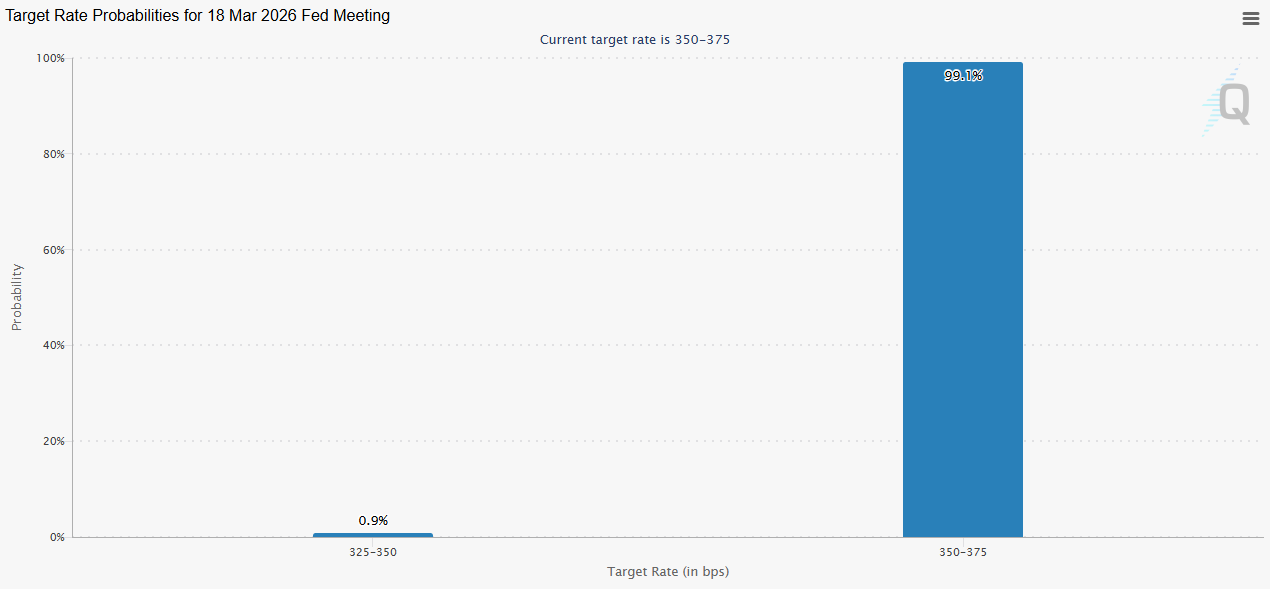
Interest rate differential (IRD) is likely to be a primary driver of US dollar strength, or otherwise, in the months ahead. The latest FOMC meeting delivered the expected 0.25% cut, with attention on guidance for what may come next.
Even after a softer-than-expected CPI print, markets have been reluctant to price aggressive near-term easing. At the time of writing, less than a 20% chance of a January cut is priced in, and it may be March before we see the next move.
The Fed is balancing sticky inflation against a jobs market under pressure, with the headline rate back at levels last seen in 2012. The practical takeaway is that a more accommodative stance may add to downward pressure on the US dollar.
Current expectations imply around two rate cuts through 2026, with the potential for further easing beyond that, broadly consistent with the median projections shown in the chart below. These are forecasts rather than guarantees, and they can shift as economic data and policy guidance evolve.
Source: US Federal Reserve, Summart of Economic Projections
Every trader has had that moment where a seemingly perfect trade goes astray.
You see a clean chart on the screen, showing a textbook candle pattern; it seems as though the market planets have aligned, and so you enthusiastically jump into your trade.
But before you even have time to indulge in a little self-praise at a job well done, the market does the opposite of what you expected, and your stop loss is triggered.
This common scenario, which we have all unfortunately experienced, raises the question: What separates these “almost” trades from the truly higher-probability setups?
The State of Alignment
A high-probability setup isn’t necessarily a single signal or chart pattern. It is the coming together of several factors in a way that can potentially increase the likelihood of a successful trade.
When combined, six interconnected layers can come together to form the full “anatomy” of a higher-probability trading setup:
Context
Structure
Confluence
Timing
Management
Psychology
When more of these factors are in place, the greater the (potential) probability your trade will behave as expected.
Market Context
When we explore market context, we are looking at the underlying background conditions that may help some trading ideas thrive, and contribute to others failing.
Regime Awareness
Every trading strategy you choose to create has a natural set of market circumstances that could be an optimum trading environment for that particular trading approach.
For example:
Trending regimes may favour momentum or breakout setups.
Ranging regimes may suit mean-reversion or bounce systems.
High-volatility regimes create opportunity but demand wider stops and quicker management.
Investing time considering the underlying market regime may help avoid the temptation to force a trending system into a sideways market.
Simply looking at the slope of a 50-period moving average or the width of a Bollinger Band can suggest what type of market is currently in play.
Sentiment Alignment
If risk sentiment shifts towards a specific (or a group) of related assets, the technical picture is more likely to change to match that.
For example, if the USD index is broadly strengthening as an underlying move, then looking for long trades in EURUSD setups may end up fighting headwinds.
Setting yourself some simple rules can help, as trading against a potential tidal wave of opposite price change in a related asset is not usually a strong foundation on which to base a trading decision.
Key Reference Zones
Context also means the location of the current price relative to levels or previous landmarks.
Some examples include:
Weekly highs/lows
Prior session ranges, e.g. the Asian high and low as we move into the European session
Major “round” psychological numbers (e.g., 1.10, 1000)
A long trading setup into these areas of market importance may result in an overhead resistance, or a short trade into a potential area of support may reduce the probability of a continuation of that price move before the trade even starts.
Market Structure
Structure is the visual rhythm of price that you may see on the chart. It involves the sequences of trader impulses and corrections that end up defining the overall direction and the likelihood of continuation:
Uptrend: Higher highs (HH) and higher lows (HL)
Downtrend: Lower highs (LH) and lower lows (LL)
Transition: Break in structure often followed by a retest of previous levels.
A pullback in an uptrend followed by renewed buying pressure over a previous price swing high point may well constitute a higher-probability buy than a random candle pattern in the middle of nowhere.
Compression and Expansion
Markets move through cycles of energy build-up and release. It is a reflection of the repositioning of asset holdings, subtle institutional accumulation, or a response to new information, and may all result in different, albeit temporary, broad price scenarios.
Compression: Evidenced by a tightening range, declining ATR, smaller candles, and so suggesting a period of indecision or exhaustion of a previous price move,
Expansion: Evidenced by a sudden breakout, larger candle bodies, and a volume spike, is suggestive of a move that is now underway.
A breakout that clears a liquidity zone often runs further, as ‘trapped’ traders may further fuel the move as they scramble to reposition.
A setup aligned with such liquidity flows may carry a higher probability than one trading directly into it.
Confluence
Confluence is the art of layering independent evidence to create a whole story. Think of it as a type of “market forensics” — each piece of confirmation evidence may offer a “better hand’ or further positive alignment for your idea.
There are three noteworthy types of confluence:
Technical Confluence – Multiple technical tools agree with your trading idea:
Moving average alignment (e.g., 20 EMA above 50 EMA) for a long trade
A Fibonacci retracement level is lining up with a previously identified support level.
Momentum is increasing on indicators such as the MACD.
Multi-Timeframe Confluence – Where a lower timeframe setup is consistent with a higher timeframe trend. If you have alignment of breakout evidence across multiple timeframes, any move will often be strengthened by different traders trading on different timeframes, all jumping into new trades together.
3. Volume Confluence – Any directional move, if supported by increasing volume, suggests higher levels of market participation. Whereas falling volume may be indicative of a lesser market enthusiasm for a particular price move.
Confluence is not about clutter on your chart. Adding indicators, e.g., three oscillators showing the same thing, may make your chart look like a work of art, but it offers little to your trading decision-making and may dilute action clarity.
Think of it this way: Confluence comes from having different dimensions of evidence and seeing them align. Price, time, momentum, and participation (which is evidenced by volume) can all contribute.
Timing & Execution
An alignment in context and structure can still fail to produce a desired outcome if your timing is not as it should be. Execution is where higher probability traders may separate themselves from hopeful ones.
Entry Timing
Confirmation: Wait for the candle to close beyond the structure or level. Avoid the temptation to try to jump in early on a premature breakout wick before the candle is mature.
Retests: If the price has retested and respected a breakout level, it may filter out some false breaks that we will often see.
Then act: Be patient for the setup to complete. Talking yourself out of a trade for the sake of just one more candle” confirmation may, over time, erode potential as you are repeatedly late into trades.
Session & Liquidity Windows
Markets breathe differently throughout the day as one session rolls into another. Each session's characteristics may suit different strategies.
For example:
London Open: Often has a volatility surge; Range breaks may work well.
New York Overlap: Often, we will see some continuation or reversal of morning trends.
Asian Session: A quieter session where mean-reversion or range trading approaches may do well
Trade Management
Managing the position well after entry can turn probability into realised profit, or if mismanaged, can result in losses compounding or giving back unrealised profit to the market.
Pre-defined Invalidation
Asking yourself before entry: “What would the market have to do to prove me wrong?” could be an approach worth trying.
This facilitates stops to be placed logically rather than emotionally. If a trade idea moves against your original thinking, based on a change to a state of unalignment, then considering exit would seem logical.
Scaling & Partial Exits
High-probability trade entries will still benefit from dynamic exit approaches that may involve partial position closes and adaptive trailing of your initial stop.
Trader Psychology
One of the most important and overlooked components of a higher-probability setup is you.
It is you who makes the choices to adopt these practices, and you who must battle the common trading “demons” of fear, impatience, and distorted expectation.
Let's be real, higher-probability trades are less common than many may lead you to believe.
Many traders destroy their potential to develop any trading edge by taking frequent low-probability setups out of a desire to be “in the market.”
It can take strength to be inactive for periods of time and exercise that patience for every box to be ticked in your plan before acting.
Measure “You” performance
Each trade you take becomes data and can provide invaluable feedback. You can only make a judgment of a planned strategy if you have followed it to the letter.
Discipline in execution can be your greatest ally or enemy in determining whether you ultimately achieve positive trading outcomes.
Bringing It All Together – The Setup Blueprint
Final Thoughts
Higher-probability setups are not found but are constructed methodically.
A trader who understands the “higher-probability anatomy” is less likely to chase trades or feel the need to always be in the market. They will see merit in ticking all the right boxes and then taking decisive action when it is time to do so.
It is now up to you to review what you have in place now, identify gaps that may exist, and commit to taking action!
One of the most impactful books I’ve ever read is “The 7 Habits of Highly Effective People: Powerful Lessons in Personal Change” by Stephen Covey.
When it was first published in 1989, it quickly became one of the most influential works in business and personal development literature, and retained its place on bestseller lists for the next couple of decades.
The compelling, comprehensive, and structured framework for personal growth presented in the book has undoubtedly inspired many to rethink how they organise their lives and priorities, both professionally and personally.
Although its lessons were originally designed for self-improvement and positive structured growth, the underlying principles are universal, making them easily transferable to many areas of life, including trading.
In this article, you will explore how each of Covey’s seven original habits can be reframed within a trading context, in an attempt to offer a structure that may help guide you to becoming the best trader you can be.
1. Be Proactive
Being proactive means recognising that we have the power to choose our responses and to shape outcomes through appropriate preparation with subsequent planned reactions.
In a Trading Context:
For traders, this means anticipating potential problems before they arise and putting measures in place to better mitigate risk.
Rather than waiting for issues to unfold, the proactive trader identifies potential areas of concern and ensures that they have access to the right tools, resources, and people to prepare effectively, whatever the market may throw at them.
What This Means for You:
Being proactive may involve seeking out quality education and services, maintaining access to accurate and timely market information, continually assessing risk and opportunity, and having systems to manage those risks within defined limits.
Consequences of Non-Action:
Inadequate preparation and a lack of defined systems often lead to poor trading decisions and less-than-desired outcomes.
Failing to assess risk properly can result in significant and often avoidable losses.
By contrast, a proactive approach builds resilience and confidence, ensuring that when challenges arise, your response is measured and less emotionally driven by what is happening on the screen in front of you.
2. Begin with the End in Mind
Covey's second habit is about defining purpose. It suggests that effective people are more likely to achieve what is possible if they start with a clear understanding of their destination, so every action aligns with that ultimate vision.
In a Trading Context:
Ask yourself: What is my true purpose for trading?
Many traders may instinctively answer “to make money,” but money is surely only a vehicle to achieve something else in your world for you and those you care about, not a purpose per se.
You need to clarify what trading success really means for you.
Is it a greater degree of financial independence through increased income or capital growth, the freedom of having more time, achieving a personal challenge of becoming an effective trader, or a combination of any of these?
What This Means to You:
Try framing your purpose as, “I must become a better trader so that I can…” and complete a list with your genuine reasons for tackling the market and its challenges.
This helps you establish meaningful short-term development goals that keep you moving toward your vision. Keep that purpose visible, as a note near your trading screen that reminds you why you are doing this.
Consequences of Non-Action:
Traders with a clearly defined purpose are more likely to stay disciplined and consistent.
Those without one often drift, chasing short-term gains without direction. There is ample evidence that formalising your development in whatever context through goal setting can significantly increase the likelihood of success. Why would trading be any different?
Surely the bottom-line question to ask yourself is, “Am I willing to risk my potential by trading without purpose?”
3. Put First Things First
This habit is about time management and prioritisation. This involves focusing your efforts and energy on what truly matters. As part of the exploration of this concept, Covey emphasised distinguishing between what is important and what is merely urgent.
In a Trading Context:
Trading demands commitment, learning, and reflection.
It is not just about screen time but about using that time effectively.
Managing activities to ensure your effort is spent wisely on planning, measuring, journaling and performance evaluation, and refining systems, accordingly, are all critical to sustaining both improvements in results and balance.
What This Means to You:
Traders often believe they need to spend more time trading when what they really need is to focus on better time allocation.
It is logical to suggest that prioritising activities that can often contribute directly to improvement, such as system testing, reviewing performance, analysing results, and refining your strategy, is worthwhile.
These high-value tasks can help traders focus their time more deliberately and systematically.
Consequences of Non-Action:
If you fail to control your trading time effectively, you will be more likely to spend much of it on low-impact activities that produce little progress.
Over time, this not only hurts your results but also reduces the real “hourly value” of your trading effort.
In business terms, and of course, you should be treating your trading as you would any business activity; poor prioritisation can inflate your costs and diminish your potential trading outcomes.
4. Think Win: Win
Covey's fourth habit encouraged an attitude of mutual benefit, where seeking solutions that facilitate positive outcomes for all parties.
In a Trading Context:
In trading, this concept must be adapted to suggest that developing a mindset that recognises every well-executed plan as a win, even when an individual trade results in a loss.
Some trading ideas will simply not work out, and so some losses are inevitable, but if they remain within defined limits, they should not be viewed as failures but rather as a successful adherence to a trading plan. In the aim of developing consistency in action, and the widely held belief that this is one of the cornerstones of effective trading, then it surely is a win to fulfil this.
So, in simple terms, the real “win” lies in a combination of maintaining discipline, following your system, and controlling risk beyond just looking at the P/L of a single trade.
What This Means to You:
Building and trading clear, unambiguous systems that you follow consistently has got to be the goal.
This process produces reliable data that you can later analyse and subsequently use to refine specific strategies and personal performance.
When you do this, every outcome, whether profit or loss, can serve as valuable feedback.
For example, a controlled loss that fits your plan is proof that your system works and that you are protecting your capital.
Alternatively, a trailing stop strategy, which means you exit trades in a timely way and give less profit back to the market, provides positive feedback that your system has merit in achieving outcomes.
Consequences of Non-Action:
Without this mindset shift, traders can become emotionally reactive, interpreting normal drawdowns as personal defeats.
This fosters loss aversion and other biases that can erode decision-making quality if left unchecked. Through the process of redefining “winning,” you are potentially safeguarding both your capital and, importantly, your trading confidence (a key component of trading discipline).
5. Seek First to Understand and Then Take Action
Covey's fifth habit emphasises empathy, the act of listening and aiming to fully understand before responding. In trading, this principle translates to understanding the market environment before taking any action.
In a Trading Context:
Many traders act impulsively, driven by excitement or fear, which often results in entering trades without taking into account the full context of what is happening in the market, and/or the potential short-term influences on sentiment that may increase risk.
This “minimalisation bias,” defined as acting on limited information, will rarely produce consistent results. Instead, adopt a process that begins with observation and comprehension.
What This Means to You:
Establishing a daily pre-trading routine is critical. This may include a review of key markets, sentiment indicators, and potential catalysts for change, such as imminent key data releases. Understanding what the market is telling you before you decide what to do is the aim of having this sort of daily agenda.
This approach may not only improve trade selection but also enable you to get into a state of psychological readiness that can facilitate decision-making quality throughout the session.
Consequences of Non-Action:
Failing to prepare for the trading day ahead can mean not only exposing yourself to unnecessary risk but also arguably being more likely to miss potential opportunities.
A trader who acts without understanding is vulnerable both psychologically and financially. Conversely, being forewarned is being forearmed. When you aim to understand markets first before any type of trading activity, your actions are more likely to be deliberate, grounded, and more effective.
6. Synergise
Synergy in Covey's model means valuing differences and combining the strengths of those around you to create outcomes greater than the sum of their parts.
In a Trading Context:
In trading, synergy refers to the integration of multiple systems and disciplines that work together. This includes your plan, your record keeping and performance management processes, your time management, and your emotional balance.
No single system is enough; success comes from the synergy of elements that support and inform one another.
What This Means to You:
Integrating learning and measurement is an integral part of your trading development process. Journaling, for example, allows you to assess not only your technical performance but also your behavioural consistency.
This self-awareness allows you to refine your plan and so helps you operate with greater confidence.
The synergy between rational analysis and emotional composure is what is more likely to lead to consistently sound trading decisions.
Consequences of Non-Action:
When logic and emotion are out of balance, decision-making will inevitably suffer.
If your systems are incomplete, ambiguous, or poorly connected to the reality of your current level of understanding, competence and confidence, your results are likely to be inconsistent. Building synergy across all areas of your trading practice, including that of evaluation and development in critical trading areas, will help create cohesion, efficiency, and better performance.
7. Sharpen the Saw
Covey's final habit focuses on continuous learning and refinement, including maintaining and improving the tools at your disposal and skills and knowledge that allow you to perform effectively.
In a Trading Context:
In trading, this translates to creating a plan to achieve ongoing, purposeful learning.
Even small insights can make a large difference in results. Effective traders continually refine their knowledge, ask new questions, and apply lessons from experience.
What This Means to You:
Trading learning can, of course, take many forms. Discovering new indicators that may offer some confluence to price action, testing different strategies, exploring new markets, or simply understanding more about yourself as a trader.
There is little doubt that active participation in learning keeps you engaged, adaptable and sharp. Even making sure you ask at least one question at a seminar or webinar or making a simple list at the end of each session of the "3 things I learned", can be invaluable in developing momentum for your growth as a trader.
Your record-keeping and performance metrics should generate fresh questions that can guide future development.
Consequences of Non-Action:
Without direction in your learning, your progress is likely to slow.
I often reference that when someone talks about trading experience in several years, this is only meaningful if there has been continuous growth, rather than staying in the same place every year (i.e. only one year of meaningful experience)
Passive trading learning, for example, reading an article without applying, watching a webinar without engagement, or measuring without closing the circle through putting an action plan together for your development, can all lead to stagnation.
It is fair to suggest that taking shortcuts in trading learning is likely to translate directly into shortcuts in result success.
Active, focused development is essential for sustained improvement.
Are You Ready for Action?
Stephen Covey’s The 7 Habits of Highly Effective People presented a timeless model for self-development and purposeful living.
When applied to trading, these same habits form a powerful framework for consistency, focus, and growth.
Trading is a pursuit that demands both technical skill and emotional strength. Success is rarely about finding the perfect system, but about developing the right habits that support consistent, rational decision-making over time.
By integrating the principles of Covey’s seven habits into your trading practice, you create a foundation not only for profitability but for continual personal growth.
Los mercados avanzan en la próxima semana con datos de inflación en Australia y Japón, junto con las elevadas tensiones geopolíticas que continúan influyendo en los precios de la energía y un sentimiento de riesgo más amplio.
Índice de Precios al Consumidor (IPC) de Australia: Los datos de inflación pueden influir en Banco de la Reserva de Australia (RBA)) trayectoria política, con el dólar australiano (AUD) y los rendimientos locales sensibles a cualquier sorpresa.
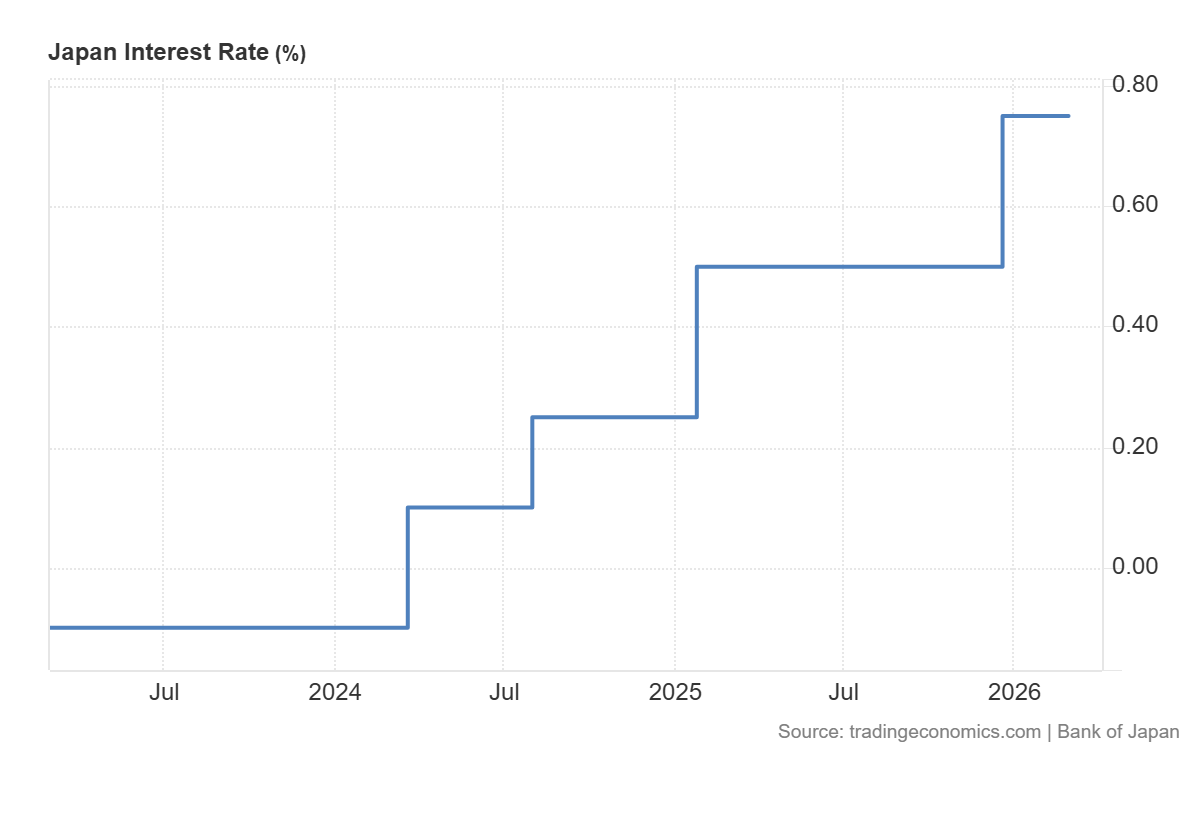
Grupo de datos de Japón: El IPC de Tokio (preliminar) más la producción industrial y las ventas minoristas proporcionan un pulso de inflación y actividad que podría dar forma a las expectativas de normalización del Banco de Japón (BoJ).
IPC de la Eurozona y Alemania: Las lecturas flash de inflación pondrán a prueba la narrativa de desinflación e influirán en las expectativas de cronometraje de recorte de tasas del BCE.
Petróleo y geopolítica: El crudo Brent ha alcanzado su cierre más alto desde el 8 de agosto de 2025 en medio de renovadas tensiones en Medio Oriente, reforzando el riesgo de inflación impulsado por la energía.
IPC de Australia: ¿Las expectativas del RBA cambiarán?
La próxima publicación del IPC de Australia será vigilada de cerca en busca de señales sobre si la inflación se está estabilizando o demostrando ser más persistente de lo esperado.
Una impresión más fuerte de lo esperado podría asociarse con rendimientos más altos y un AUD más firme a medida que se ajusten las expectativas de tasas. Un resultado más suave podría respaldar las expectativas de una postura política más firme.
Fechas clave
Tasa de inflación (MoM): 11:30 h miércoles 25 de febrero (AEDT)
CPI: 11:30 h miércoles 25 de febrero (AEDT)
Monitorear
Volatilidad del AUD en torno al lanzamiento.
Reacciones de rendimiento de bonos locales.
Los cambios en los precios de las tasas de interés.
Los lanzamientos de Japón a finales de semana combinan el IPC de Tokio (preliminar) con la producción industrial y las ventas minoristas, ofreciendo una lectura más amplia sobre las presiones de precios y la demanda interna.
El IPC de Tokio a menudo se ve como una señal oportuna para la dinámica de inflación nacional y el debate del BoJ. La producción industrial y el gasto minorista agregan contexto a la actividad.
Las sorpresas en este clúster pueden impulsar movimientos brusco en el JPY, especialmente si los resultados cambian las percepciones en torno al ritmo y la persistencia de la normalización del BoJ.
Fechas clave
IPC de Tokio: 10:30 h Viernes 27 de febrero (AEDT)
Producción industrial: 10:50 a.m. Viernes 27 de febrero (AEDT)
Ventas al por menor: 10:50 a.m. Viernes 27 de febrero (AEDT)
Monitorear
La sensibilidad del JPY a la inflación sorprende
El rendimiento de los bonos se mueve en respuesta a los datos de actividad
Reacciones de renta variable si cambian las expectativas de impulso de crecimiento
Flujos de energía y refugio seguro
Los precios del petróleo han subido a su cierre más alto desde el 8 de agosto de 2025 en medio de renovadas tensiones en Medio Oriente.
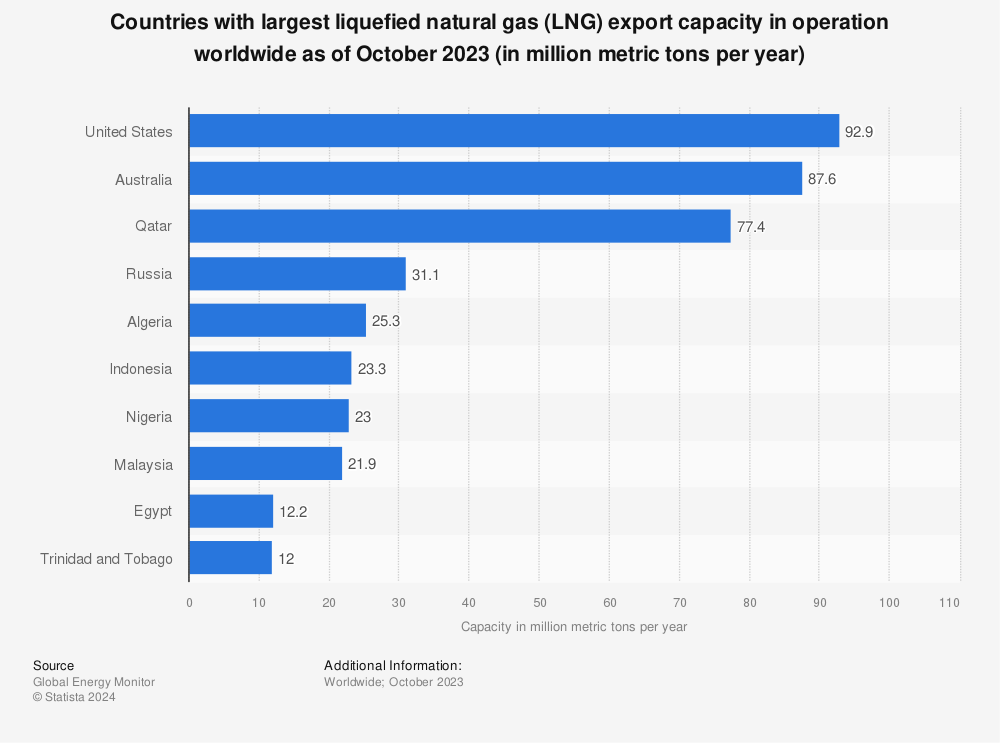
Los informes recientes sobre el aumento de la actividad militar regional y los titulares de riesgo de envío cerca del Estrecho de Ormuz han reforzado la seguridad energética como foco de mercado. El Estrecho de Ormuz sigue siendo un punto de choque ampliamente observado para los flujos de energía globales.
El aumento de los precios del petróleo puede alimentar las expectativas de inflación e influir en los rendimientos de los bonos. Al mismo tiempo, la incertidumbre geopolítica puede apoyar al USD a través de la demanda de refugio seguro y el posicionamiento de tasas relativas.
Monitorear
Niveles de precios del crudo Brent
Fortaleza del USD frente a las principales monedas
Movimientos de rendimiento a medida que se ajustan las primas de riesgo de inflación
Las lecturas flash de inflación de Alemania y la eurozona en general (IPC) pondrán a prueba si la tendencia de desinflación de la región se mantiene intacta.
La publicación de Alemania puede influir en las expectativas antes de la cifra agregada de la eurozona. Si la inflación subyacente resulta pegajosa, las expectativas en torno al momento y el ritmo de la posible flexibilización del Banco Central Europeo podrían cambiar.
Fechas clave
Alemania - Tasa de inflación: 12:00 h sábado 28 de febrero (AEDT)
Monitorear
Volatilidad del EUR en torno a las liberaciones de inflación
Desde disruptores tecnológicos hasta contratistas de defensa, algunas de las empresas más comentadas del mercado comienzan su viaje público a través de una oferta pública inicial (OPI). Para los comerciantes, estas listas públicas iniciales pueden representar un entorno comercial único, pero también un período de mayor incertidumbre.
Datos rápidos
Una OPI es cuando una empresa privada cotiza sus acciones en una bolsa pública por primera vez.
Las OPI pueden ofrecer a los comerciantes acceso temprano a empresas de alto crecimiento, pero vienen con una volatilidad elevada y un historial de precios limitado.
Una vez que cotizan en bolsa, los operadores pueden obtener exposición a las acciones de OPI a través de compras directas de acciones o derivados como contratos por diferencia (CFDs).
¿Qué es una oferta pública inicial (OPI)?
Una OPI es cuando una empresa ofrece sus acciones al público por primera vez.
Antes de realizar una OPI, las acciones de la empresa suelen estar en manos de los fundadores, los primeros empleados y los inversores privados. Salir a bolsa hace que las acciones estén disponibles para ser compradas por cualquier persona.
Dependiendo del tamaño de la empresa, generalmente listará sus acciones públicas en la bolsa de valores local (por ejemplo, la ASX en Australia). No obstante, algunas empresas de gran valuación optan por cotizar únicamente en una bolsa de valores global, como el Nasdaq, sin importar dónde se encuentre su sede principal.
Para los comerciantes, las OPI son generalmente la primera oportunidad de exponerse a las acciones de una empresa. Pueden crear un entorno único con mayor volatilidad y liquidez, pero también conllevan un mayor riesgo, dado el historial de precios limitado y la sensibilidad a las oscilaciones de sentimiento.
¿Por qué las empresas se hacen públicas?
El mayor impulsor para realizar una OPI es acceder a más capital. La cotización en una bolsa pública significa que la compañía puede recaudar fondos significativos mediante la venta de acciones.
También proporciona liquidez a los accionistas existentes. Los fundadores, los primeros empleados y los inversores privados a menudo venden una parte de sus participaciones existentes en el mercado abierto, dando cuenta de los rendimientos de sus años de apoyo.
Más allá de los beneficios monetarios, salir a bolsa significa que las empresas pueden usar sus acciones como moneda para adquisiciones y ofrecer una compensación basada en acciones para atraer talento. Y una valuación pública proporciona un punto de referencia transparente, el cual es útil para el posicionamiento estratégico y la recaudación de fondos futura.
Sin embargo, sí viene con compensaciones. Las empresas públicas deben cumplir con las obligaciones continuas de divulgación y presentación de informes, y la presión de los accionistas públicos puede convertirse en una barrera para el progreso a largo plazo si muchas se centran en el desempeño a corto plazo.
Si bien los detalles varían según la jurisdicción, pasar de una empresa privada a una cotización pública generalmente implica las siguientes etapas:
1. Preparación
La compañía primero selecciona al asegurador (típicamente un banco de inversión) para administrar la oferta. Juntos, evalúan las finanzas de la compañía, la estructura corporativa y el posicionamiento en el mercado para determinar el mejor enfoque para salir a bolsa. Es la etapa de planificación pesada para asegurarse de que la empresa esté realmente lista para salir a bolsa.
2. Inscripción
Una vez que todo está preparado, los suscritores llevan a cabo una verificación exhaustiva de la debida diligencia y luego presentan los documentos de divulgación requeridos ante el regulador correspondiente. Estos documentos dan una divulgación detallada al regulador sobre la empresa, su gestión, y su propuesta de oferta. En Australia, esto suele ser un prospecto presentado ante ASIC; en los Estados Unidos, una declaración de registro presentada ante la SEC.
3. Roadshow
Ejecutivos de la compañía y los suscritores presentarán entonces el caso de inversión a inversionistas institucionales y analistas de mercado en un “roadshow”. Este escaparate está diseñado para medir la demanda del stock y ayudar a generar interés. Los inversionistas institucionales pueden registrar su interés y valoración de la OPI, lo que ayuda a informar el precio inicial.
4. Precios
Con base en los comentarios del roadshow y las condiciones actuales del mercado, los suscritores fijan el precio final de la acción y determinan el número de acciones que se emitirán. Las acciones se asignan en el 'mercado primario' a los inversionistas que participan en la oferta (antes de que la acción cotiza públicamente en el mercado secundario). Este proceso establece el precio previo a la comercialización, lo que determina efectivamente la valoración pública inicial de la empresa.
5. Listado
El día de cotización, las acciones de la compañía comienzan a cotizar en la bolsa de valores elegida, abriendo oficialmente el mercado secundario. Para la mayoría de los comerciantes, este es el primer punto en el que pueden negociar las acciones, ya sea directamente o a través de derivados como Compartir CFDs.
6. Después de la salida a bolsa
Una vez incluida en la lista, la compañía queda sujeta a estrictos requerimientos de reporting y divulgación. Debe comunicarse regularmente con los accionistas, publicar sus resultados financieros, y cumplir con los estándares de gobernanza de la bolsa en la que cotiza.
Riesgos y beneficios de la OPI para los comerciantes
¿Cómo participan los comerciantes en las OPI?
Para la mayoría de los comerciantes, participar en una OPI se produce una vez que las acciones han cotizado y comenzado a cotizar en el mercado secundario.
Una vez que las acciones están en vivo en la bolsa, los inversores pueden comprar las acciones físicas directamente a través de un corredor o bolsa en línea, o pueden usar derivados como Compartir CFDs para tomar una posición sobre el precio sin poseer el activo subyacente.
Los primeros días de negociación de OPI tienden a ser altamente volátiles. Los comerciantes deben asegurarse de haber tomado las medidas adecuadas de gestión de riesgos para ayudar a protegerse contra posibles cambios bruscos de precios.
El resultado final
Las OPI marcan cuando una empresa se vuelve invertible para el público. Pueden ofrecer acceso temprano a empresas de alto crecimiento y crear un entorno comercial único impulsado por la elevada volatilidad y el interés del mercado.
Para los comerciantes, es esencial comprender cómo funciona el proceso, qué impulsa los precios y el rendimiento posterior a la OPI, y cómo sopesar las posibles recompensas frente a los riesgos de negociar acciones recientemente cotizadas es esencial antes de tomar una posición.
2026 no está dando mucho respiro a los inversionistas. Parece que los mercados pueden haber superado en gran medida la idea de que los recortes de tasas están a la vuelta de la esquina y en un año en el que la inflación puede resultar más difícil de controlar de lo que muchos esperaban.
La inflación de bienes se ha repuntado, mientras que la inflación de servicios sigue siendo relativamente pegajosa debido a las presiones en curso sobre los costos laborales. Los costos de vivienda, particularmente los alquileres, también siguen siendo una fuente clave de presión inflacionaria.
El RBA está tratando de mantenerse creíble sobre la inflación sin empujar demasiado a la economía en sentido contrario.
Datos clave
El IPC todavía está por aquí 3.8 por ciento (por encima de la meta), los salarios siguen aumentando aproximadamente 0.8 por ciento durante el trimestre, y el desempleo está alrededor 4.1 por ciento.
Con base en los precios implícitos en el mercado, no se esperan aumentos de tasas pronto, por lo que la forma en que el RBA explica su decisión puede importar casi tanto como la decisión en sí. Si el tono cambia las expectativas, esas expectativas pueden mover los mercados.
Qué cubre este libro de jugadas
Este es un libro de jugadas para las semanas de mucha RBA en 2026. Cubre qué observar en todos los sectores, enumera los factores desencadenantes clave y explica qué indicadores pueden cambiar el sentimiento.
Principales indicadores económicos, febrero 2026 | ABS/RBA
1. Bancos y finanzas: cómo las decisiones de RBA fluyen hacia los préstamos y los prestatarios
Los bancos son donde el RBA aparece más rápido en la economía australiana. Las tasas pueden llegar rápidamente a los prestatarios y alimentar los costos de financiamiento y el sentimiento.
En fases más ajustadas, los márgenes pueden mejorar al principio, pero eso puede cambiar si los costos de financiamiento aumentan más rápido o si la calidad crediticia comienza a debilitarse. El equilibrio entre esas fuerzas es lo que más importa.
Si los bancos se repuntan hacia una semana de decisión del RBA, puede significar que el mercado piensa que más por más tiempo apoya las ganancias. Si se venden, puede significar que el mercado piensa que más alto por más tiempo perjudica a los prestatarios. Puedes obtener dos lecturas diferentes del mismo titular.
Qué ver
La forma de la curva de rendimiento: Una curva más empinada puede ayudar a los márgenes, mientras que una curva invertida puede indicar el estrés del crecimiento.
Competencia de depósito: Puede exprimir silenciosamente los márgenes incluso cuando las tasas de los titulares parecen ser de apoyo.
Formulación de RBA sobre la estabilidad financiera, las zonas de amortiguación de los hogares y la resiliencia. Las frases pequeñas pueden cambiar la historia de riesgo.
Potencial disparador
Si el RBA suena más áspero de lo esperado, los bancos pueden reaccionar temprano a medida que los mercados reevalúan las expectativas de crecimiento y riesgo crediticio. El primer movimiento a veces puede establecer el tono de la sesión.
Riesgos clave
Los costos de financiamiento aumentan más rápido que los rendimientos de los préstamos: Puede apuntar a la presión del margen.
Apretamiento claro en las condiciones crediticias: El aumento de los atrasos o el estrés de refinanciamiento pueden cambiar la narrativa rápidamente.
El sector financiero es el mayor sector en el índice S&P/ASX 200 | S&P Global
2. El consumo discrecional y el comercio minorista: donde las tasas más altas golpean el gasto de los hogares
Cuando la política es ajustada, la discrecionalidad del consumidor se convierte en una prueba en vivo de la resiliencia de los hogares. Aquí es donde los costos diarios más altos a menudo aparecen más rápido.
Las grandes llamadas sobre el consumidor pueden parecer obvias hasta que los datos dejan de respaldarlos. Cuando eso sucede, la narrativa puede cambiar rápidamente.
Qué ver
Salarios versus inflación: El ingreso real empuja o arrastra.
Señales tempranas del trabajo de trabajo: Las horas trabajadas pueden suavizarse antes de que suba el desempleo.
Informar pistas de la temporada: Los descuentos, el paso de costos y la presión de los márgenes pueden indicar cuán extendida es realmente la demanda.
Potencial disparador
Si el tono del RBA es más ácaro de lo esperado, el sector puede ser sensible a las expectativas de tasas. Cualquier movimiento inicial puede no persistir, y la acción posterior del precio puede depender de los datos entrantes y el posicionamiento
Riesgos clave
Un giro rápido en el mercado laboral.
Nuevos choques del costo de vida, especialmente la energía o la vivienda, que golpean rápidamente el gasto.
3. Recursos: qué observar cuando cambian las tarifas, la geopolítica y las políticas
Los recursos pueden actuar como lectura sobre el crecimiento global, pero los movimientos monetarios y el tono del banco central pueden cambiar la forma en que esa historia aterriza en Australia.
En 2026, los aranceles y la geopolítica también podrían crear movimientos de titulares más nítidos de lo habitual, por lo que el riesgo de brecha puede situarse en la cima del ciclo normal.
El RBA sigue importando a través de dos canales: el dólar australiano y el apetito de riesgo general. Ambos pueden repreciar el sector rápidamente, incluso cuando los precios de las materias primas no se han movido mucho.
Qué ver
El pulso de crecimiento global: Expectativas de demanda industrial y señales vinculadas a China.
El dólar australiano: El movimiento posterior a la decisión puede convertirse en un segundo impulsor para el sector.
Liderazgo del sector: Cómo el comercio de recursos frente al mercado más amplio puede señalar el régimen actual.
Potencial disparador
Si el tono del RBA se vuelve más restrictivo mientras el crecimiento global se mantiene estable, los recursos pueden aguantar mejor que otras partes del mercado. Los flujos de efectivo fuertes pueden importar más, y el ángulo real del activo puede atraer compradores.
Riesgos clave
En un evento de estrés real, las correlaciones pueden saltar y el posicionamiento defensivo puede fallar.
Si la política se endurece hasta convertirse en un susto de crecimiento, el ciclo puede tomar el control y el sector puede desvanecerse rápidamente.
Los materiales (recursos) han superado a otros sectores ASX interanual | Índice de Mercado
4. Defensivas, productos básicos y atención médica de calidad
Las defensivas están destinadas a ser el rincón más tranquilo del mercado cuando todo lo demás se siente desordenado. En 2026, todavía tienen una gran debilidad: las tasas de descuento.
Las defensivas de calidad pueden atraer entradas cuando el crecimiento parece inestable, pero algunas acciones de crecimiento defensivo aún se negocian como activos de larga duración. Pueden verse afectados cuando los rendimientos suben, incluso si el negocio parece sólido. Eso significa que las ganancias pueden ser estables mientras que las valoraciones aún se mueven.
Qué ver
Fuerza relativa: Cómo se desempeñan las defensivas durante las semanas de RBA en comparación con el mercado en general.
Lenguaje de orientación: Comentarios sobre la presión de costos, el poder de fijación de precios y si los volúmenes se están manteniendo.
Comportamiento de rendimiento: El aumento de los rendimientos puede superar la oferta de calidad y empujar a los múltiplos hacia abajo.
Potencial disparador
Si el RBA suena agreste y los cíclicos comienzan a tambalearse, las defensivas pueden atraer entradas relativas, pero eso puede depender de que los rendimientos permanezcan contenidos. Si los rendimientos aumentan bruscamente, las defensivas de larga duración aún pueden disminuir.
Riesgos clave
Inflación de costos que exprime márgenes y debilita la historia defensiva.
La atención médica ha tenido un rendimiento inferior frente al S&P/ASX 200 desde el final de la pandemia | Índice de Mercado
5. Activos duros, oro y renta variable de oro
En 2026, los activos duros pueden tener menos que ver con la simple historia de cobertura de inflación y más sobre el riesgo de cola y la incertidumbre de las políticas.
Cuando la confianza se debilita, los activos duros suelen recibir más atención. No están impulsados por un factor, y el oro aún puede caer si los principales conductores corren en su contra.
Qué ver
Dirección de rendimiento real: Da forma al costo de oportunidad de tener oro.
Dirección del dólar estadounidense: Un canal importante de precios para el oro.
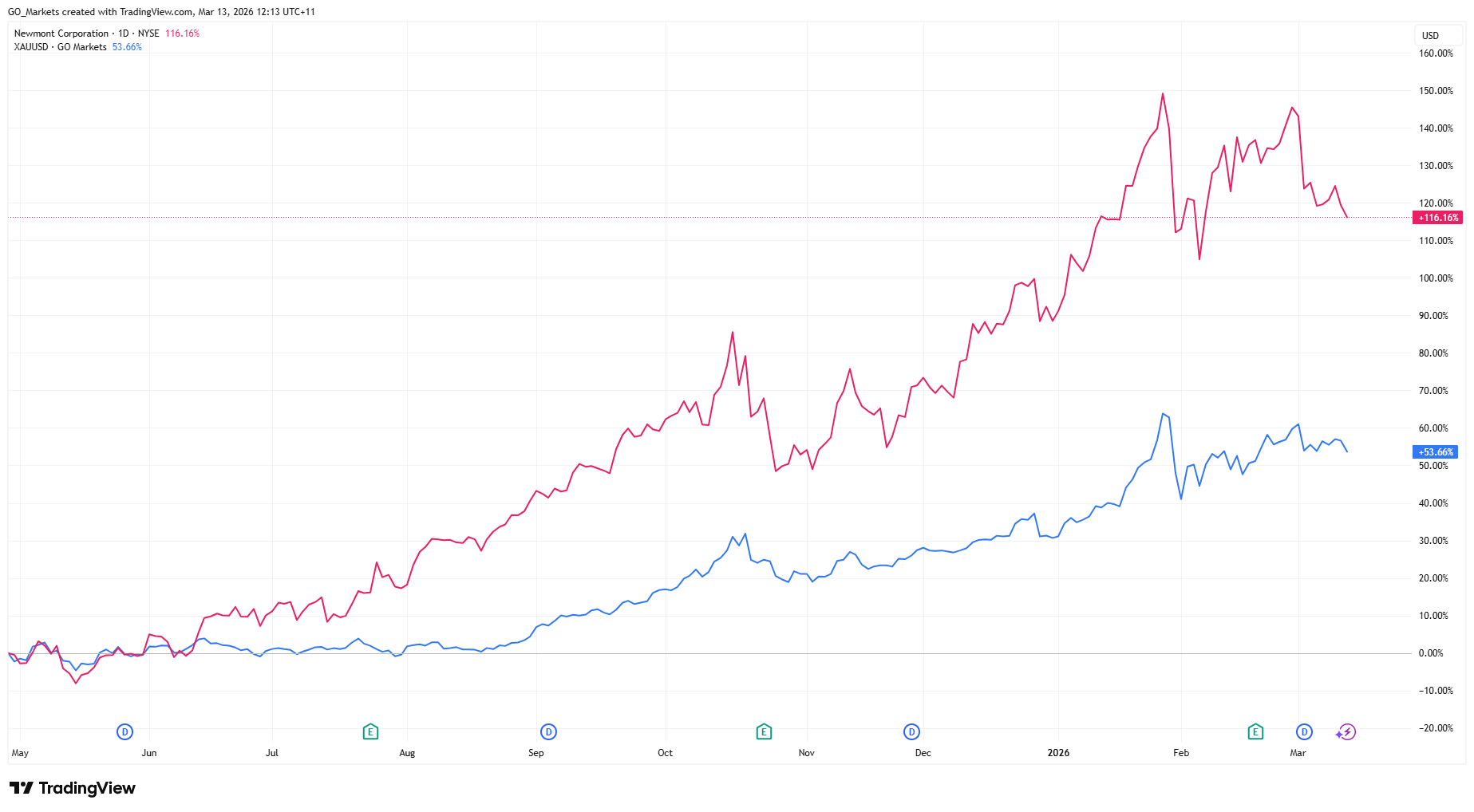
La renta variable de oro frente al oro al contado: Los mineros agregan apalancamiento operativo y también agregan riesgo de costos.
Potencial disparador
Si el mercado comienza a cuestionar el control de la inflación o la credibilidad de las políticas, la narrativa del activo duro puede fortalecerse. Si el RBA se mantiene restrictivo mientras continúa la desinflación, el oro puede perder urgencia y el dinero puede rotar hacia otras operaciones.
Riesgos clave
Los rendimientos reales aumentan significativamente, lo que puede presionar al oro.
El hacinamiento y el posicionamiento se desenrolla lo que puede causar retrocesos brusco.
Gráfico 5 Y del S&P/ASX All Ordinaries Gold vs Spot Gold (XAUUSD) | TradingView
6. Plomería de mercado, divisas, volatilidad de tasas y dispersión
En algunas semanas del RBA, el primer movimiento aparece al alza en las tasas y el dólar australiano, y las renta variable siguen más tarde a través de la rotación sectorial en lugar de un movimiento de índice limpio.
Cuando la orientación cambia, el RBA puede cambiar la forma en que los mercados se mueven juntos. Puedes terminar con un índice plano mientras los sectores oscilan con fuerza en direcciones opuestas.
Qué ver
Tasas de front-end: Refijar el precio de la velocidad justo después de la decisión puede revelar la verdadera sorpresa.
Reacción AUD: La dirección y el seguimiento a menudo dan forma al siguiente movimiento en renta variable y recursos.
Volatilidad implícita versus la volatilidad lograda: Puede mostrar si el mercado pagó demasiado o muy poco por el evento.
Opciones sesgado: Puede reflejar la demanda de protección a la baja frente a la persecución al alza.
Comportamiento temprano de la cinta: Los primeros 5 a 15 minutos pueden ser desordenados y pueden significar revertir.
Potencial disparador
Si se espera la decisión pero la declaración se inclina de forma dura, el front-end puede repreciar primero, y el AUD puede moverse con él. La volatilidad realizada aún puede saltar incluso si el índice apenas se mueve, ya que el mercado reescribe el camino y gira posiciones bajo la superficie.
Riesgos clave
Una verdadera sorpresa que abruma lo que las opciones implicaban y crea movimientos de brecha.
Titulares macro competidores que dominan la cinta y ahogan la señal RBA.
Liquidez delgada que crea señales falsas, whipsaw, y peor ejecución de lo que asumen los modelos.
Volatilidad del tipo de interés y del tipo de cambio australiano 1970-2020 | RBA
7. Cestas temáticas
Las canastas temáticas pueden permitir a los comerciantes expresar un régimen macro al tiempo que reducen el riesgo de un solo nombre. También introducen sus propios riesgos, especialmente en torno a eventos.
Qué ver
Lo que contiene la canasta: Metodología, reglas de reequilibrio, concentración oculta.
Liquidez y diferenciales: Especialmente alrededor de ventanas de eventos.
Seguimiento frente a la narrativa: Si el “tema” se comporta como el controlador de macro.
Potencial disparador
Si el lenguaje del RBA refuerza un régimen “restrictivo e incierto”, las canastas temáticas vinculadas al valor, la calidad o los activos duros pueden llamar la atención, particularmente si los índices amplios se entrecortan.
Riesgos clave
Reversión temática cuando cambian las expectativas macro.
Riesgo de liquidez alrededor de las ventanas de eventos, donde los diferenciales pueden ampliarse materialmente.
El objetivo de este libro de jugadas no es predecir el titular exacto; es saber dónde suelen aterrizar los efectos de segundo orden, y tener lista una lista de verificación corta antes de que llegue la decisión.
Mantener estos desencadenantes y riesgos a la vista puede ayudar a algunos comerciantes a estructurar su monitoreo en torno a las decisiones de RBA a lo largo de 2026.
FAQs
¿Por qué el “tono” importa tanto en 2026?
Debido a que los mercados a menudo precotizan la decisión. La información incremental es una guía sobre si el RBA suena cómodo, preocupado o abierto a moverse de nuevo.
¿Cuáles son las cuentas más rápidas justo después de una decisión?
Algunos operadores miran las tasas front-end, el AUD y el liderazgo del sector como indicadores iniciales, pero estas señales pueden ser ruidosas e influenciadas por el posicionamiento y la liquidez.
¿Por qué los REITs se denominan operaciones de duración?
Porque gran parte de su valuación puede ser sensible a las tasas de descuento y a los costos de financiamiento. Cuando los rendimientos se mueven, las valoraciones pueden revaluar rápidamente.
¿Las defensivas son siempre más seguras alrededor del RBA?
No siempre. Si los rendimientos saltan, las defensivas de larga duración aún se pueden reponer precios más bajos incluso con ganancias estables.
¿Por qué los activos duros siguen apareciendo en las narrativas de 2026?
Porque pueden actuar como una cobertura cuando la confianza en la credibilidad de las políticas se tambalea, pero también conllevan riesgos de hacinamiento y rendimiento real.