

Notícias de mercado & insights
Mantenha-se à frente dos mercados com insights de especialistas, notícias e análise técnica para orientar suas decisões de negociação.

Três bancos centrais estão decidindo as taxas simultaneamente, o petróleo Brent está oscilando em torno de USD 100 o barril e uma guerra no Oriente Médio está reescrevendo as perspectivas de inflação em tempo real. O que quer que aconteça nesta semana pode definir o tom dos mercados para o resto de 2026.
Fatos rápidos
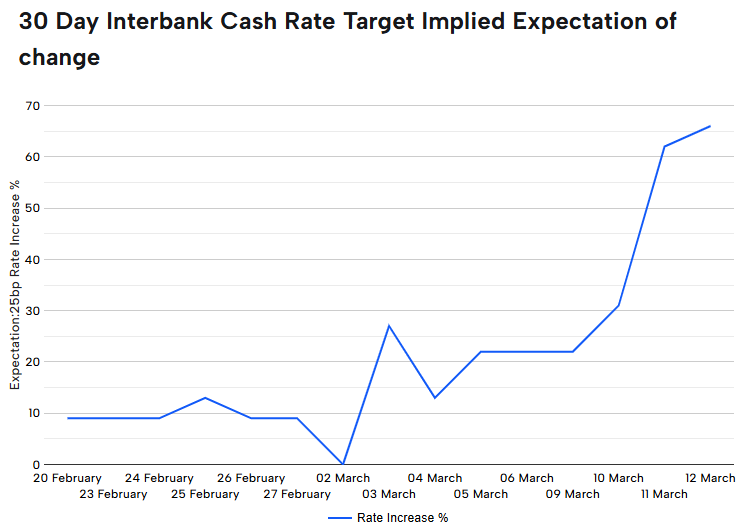
- O Banco da Reserva da Austrália (RBA) anuncia sua próxima decisão sobre a taxa de caixa na terça-feira, com os mercados agora precificando 66% de chance de um segundo aumento para 4,1%.
- Alguns analistas alertaram que a guerra do Irã pode empurrar a inflação dos EUA para 3,5% até o final do ano e atrasar os cortes nas taxas do Fed até setembro, tornando o gráfico de pontos do FOMC desta semana o mais observado em anos.
- O petróleo Brent está flertando com USD 100 o barril depois que o Irã lançou o que a mídia estatal descreveu como sua “operação mais intensa desde o início da guerra”.
RBA: A Austrália voltará a caminhar?
O RBA elevou a taxa de caixa pela primeira vez em dois anos para 3,85% em sua reunião de fevereiro, depois que a inflação aumentou materialmente no segundo semestre de 2025.
A questão agora é se ele se move novamente antes mesmo de ver a próxima impressão trimestral do IPC, que só deve ser divulgada em 29 de abril.
O vice-governador Andrew Hauser reconheceu antes da reunião que os formuladores de políticas enfrentam uma decisão genuinamente dividida, moldada por sinais econômicos conflitantes em casa e pela crescente instabilidade no exterior.
Atualmente, os mercados financeiros atribuem cerca de 66% de probabilidade a outro aumento, com um aumento de maio considerado praticamente certo, independentemente do que aconteça na segunda-feira.
Datas importantes
- Decisão sobre a taxa de caixa do RBA: Terça-feira, 17 de março, 14h30 AEDT
- Conferência de imprensa do governador Bullock: Terça-feira, 17 de março, 15:30 AEDT
Monitor
- Qualquer referência de Bullock a novas subidas será provável em maio
- Reação imediata do AUD/USD.
- Bancos ASX e REITs.
FOMC: É provável que todos os olhos estejam voltados para o gráfico de pontos
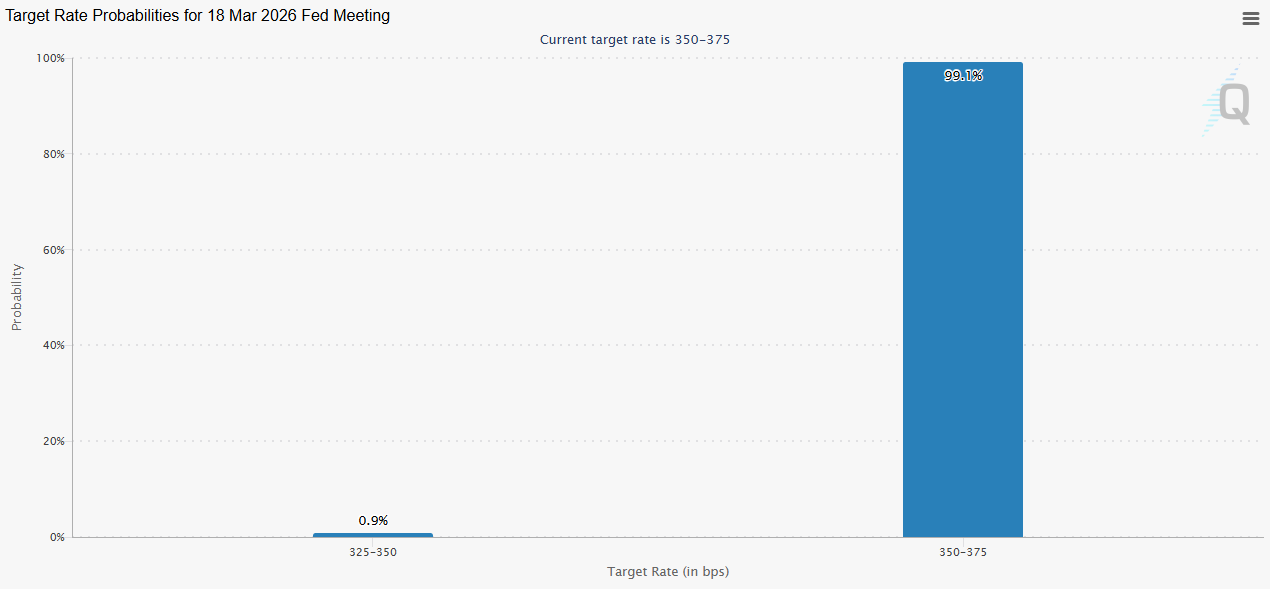
O FOMC se reúne de 17 a 18 de março, com a declaração de política agendada para 14h ET em 18 de março e a coletiva de imprensa do presidente Jerome Powell às 14h30. O CME FedWatch mostra uma probabilidade de 99% de que o Fed mantenha taxas de 3,50% a 3,75%.
A ação real está no Resumo das Projeções Econômicas (SEP) e no gráfico de pontos. O ponto médio atual mostra um corte de 25 pontos base para 2026. Se passar para dois cortes, isso é dovish e otimista para ativos de risco. Se mudar para zero cortes ou adicionar um aumento da taxa à projeção, os mercados poderão reagir na outra direção.
Para complicar ainda mais as coisas, o mandato de Powell como presidente do Federal Reserve expira em 23 de maio de 2026. Kevin Warsh é o principal candidato para substituí-lo, visto como mais agressivo em política monetária. Qualquer comentário de Powell sobre essa transição poderia movimentar os mercados independentemente da decisão de taxa em si.
Data chave
- Decisão de taxa do FOMC + Gráfico de SEP/ponto: Quinta-feira, 19 de março, 4:00 AEDT
- Conferência de imprensa de Powell: Quinta-feira, 19 de março, 4h30 AEDT
Monitor
- A linguagem de Powell sobre petróleo e inflação tarifária.
- Reação de rendimento do Tesouro em 2 anos.
- A reprecificação do CME FedWatch para qualquer mudança na probabilidade de redução de setembro.
Banco do Japão: um maior aperto pode ser antecipado
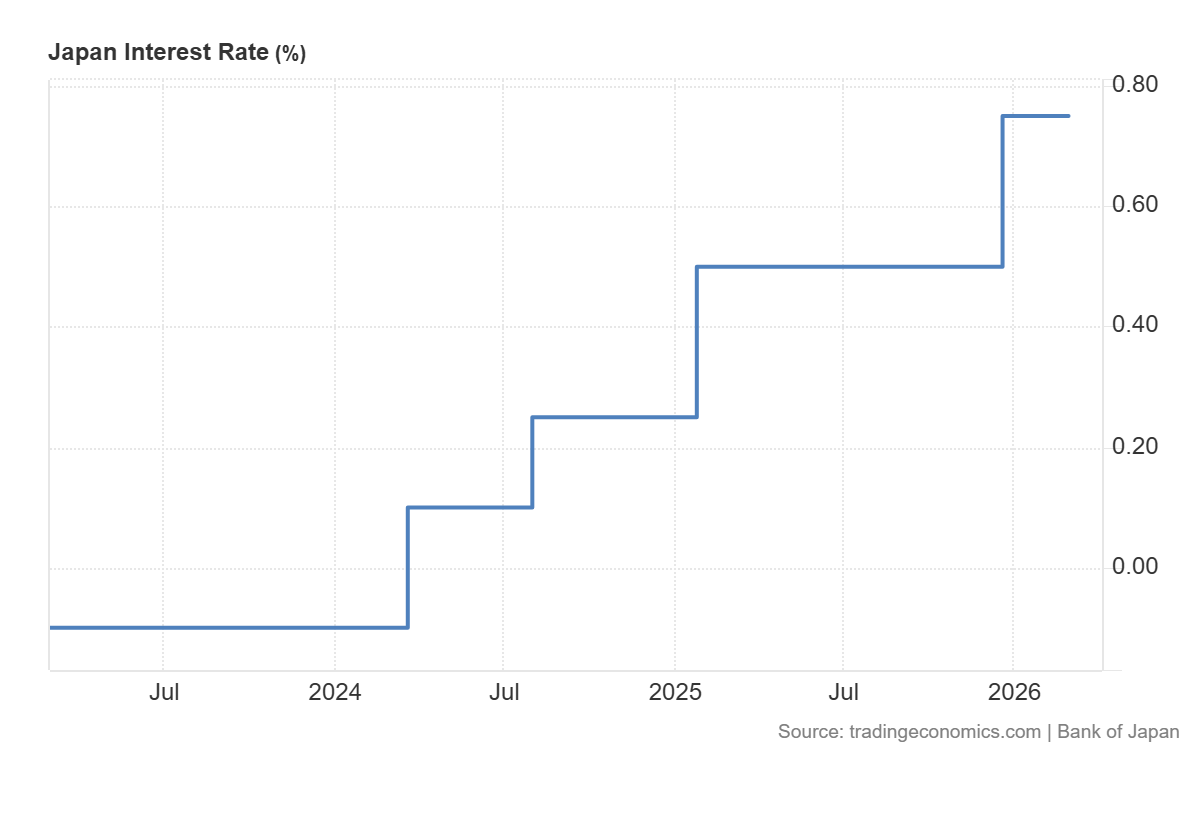
O BOJ se reúne de 18 a 19 de março, com a decisão prevista para quinta-feira de manhã, horário de Tóquio. A taxa de política atual está em 0,75% (uma alta de 30 anos), e a reunião de janeiro de 2026 resultou na suspensão de uma votação de 8 a 1.
O governador Ueda classificou a reunião de março como “ao vivo”, observando que o cronograma para um maior aperto poderia ser “antecipado” se as negociações salariais de primavera da Shunto produzirem resultados mais fortes do que o esperado.
Esses resultados devem começar a chegar durante a semana, tornando-os a contribuição crítica para a decisão do BOJ. Nomura espera que os aumentos salariais da Shunto em 2026 cheguem em torno de 5,0%, incluindo a antiguidade, com um crescimento do salário base de aproximadamente 3,4%. Se os resultados confirmarem essa trajetória, o argumento de uma alta em março se fortalece consideravelmente.
A complicação é o cenário global. O Japão importa cerca de 90% de suas necessidades de energia, e o petróleo em torno de USD 100 por barril está elevando os custos de importação e ameaçando aumentar a pressão inflacionária. Um aumento do BOJ em um choque global do petróleo seria uma medida excepcionalmente ousada.
A maioria dos participantes do mercado ainda deseja aguardar esta reunião, com abril ou julho vistos como o momento mais provável para o próximo movimento.
Data chave
- Decisão sobre a taxa de política do BOJ (atualmente 0,75%): Quinta-feira, 19 de março, manhã AEDT
Monitor
- Os resultados salariais de Shunto são o principal gatilho para um aumento em março.
- Linguagem da conferência de imprensa de Ueda e orientação futura em abril e julho.
- Reação USD/JPY.
Petróleo: volatilidade contínua
O petróleo Brent atingiu brevemente USD 119,50 por barril no início da semana, antes de cair 17% para menos de USD 80, depois se recuperando para USD 95 em sinais mistos de Washington sobre o Estreito de Ormuz.
Na quinta-feira, o Brent estava de volta com mais de USD 100 quando o Irã lançou novos ataques contra o transporte comercial e a liberação da reserva da AIE não trouxe alívio significativo.
No cenário em que um conflito mais longo inflige danos à infraestrutura de energia, analistas estimam que o IPC pode subir para 3,5% até o final de 2026, com os preços da gasolina se aproximando de USD 5 por galão no segundo trimestre.
Para esta semana, o petróleo atua como uma macro metavariável. Cada manchete geopolítica, sinal de cessar-fogo, ataque de petroleiro, liberação de reserva e comentário de Trump poderiam movimentar ações, títulos e moedas em tempo real.
Monitor
- Qualquer retomada do fluxo de petroleiros do Estreito de Ormuz.
- Liberação da reserva de emergência da IEA.
- Declarações de Trump sobre o Irã.
- Ações do setor de energia.
7 ações globais de commodities para observar a guerra do Irã remodelar os mercados


A written trading plan, usually comprising of several guiding action statements, serves the following two invaluable purposes: Facilitates consistency in trading action e.g. in the entry and exit of trades, allowing the trader AND Measures the strategy used specified within each statement to make an evidence-based judgement on how well these are serving you and test and amend these statements so you can develop an individual trading plan that may work better for you. Let’s move past the fact that many traders choose not to have a plan at all, an approach that goes against what is one of the key components of giving yourself the chance to become a successful trader, to those who have a plan in place already. This article is targeted a those who have made the logical choice to have some sort of written plan in place.
Great though having a plan is, many traders still have issues with the two purposes outlined above. They still fail to some degree to develop the consistency described and are not really able to measure effectively. A common problem, if we look closely at some of the plan statements used, is that such statement may not be specific enough, have some ambiguity, that means that those purposes may be difficult to achieve.
Let’s provide and work through an example for clarity. Consider the following statement… “I will tighten my stop/trailing stop prior to significant, imminent economic data releases” Firstly, on the positive side again, this does demonstrate an awareness of potential risk and a desire to have something within your plan to manage this risk. However, in terms of being a measurable statement that you can make a judgement as to how well this approach is serving you, there are the following issues: What does ‘tightening’ mean in practical terms in relation to current price point of the pair you are trading?
How close to a data release is ‘imminent’? What constitutes a significant data release (amongst the many that are released daily)? So, to take the previous example consider the following as an alternative: “Prior to imminent economic data releases, I will tighten of a trail stop loss for any open trades, 15 minutes prior to the release and to within 10 Pips of the current price.
This will be actioned for the following data points: Interest rate, CPI, industrial production and jobs data from the country of either currency pair (or Germany, France of across the Eurozone if one of the currency pair is the EURO). US and Chinese PMI manufacturing data, GDP, industrial jobs and interest rate decisions as these may impact all currency majors." So, with THIS amended plan statement the following elements could be measured (if journaled appropriately of course): What would the difference be in your trading outcomes if: No tightening had been actioned. If a different proximity to current price is used e.g. 15 rather than 10 Pips.
If other data releases are added/removed. With this level of measurement, possible with the revised statement, one would now be able to make any changes, backed up with evidence, to your trading plan. Alternatively, of course, you could make the choice to do nothing, retain statements such as the original, and not have the ability to create the richness of evidence to make considered amendments to your plan.
Logically ask yourself the question, "which choice is more likely to serve my trading going forward?"
When digging deeper into issues relating to trading precious metals you may come across the idea of using gold to silver ratios as part of decision-making. This brief article explores what this means both in terms of definition and potential implications for traders. What is the Gold-Silver Ratio?
The direction and degree of movement in the two key precious metals occurs “in synch” i.e. when one moves so does the other similarly. However, the exact rate of this movement over a period may differ, and it is this that attracts the attention of some precious metal investors. The gold-silver ratio is simply the amount of silver it takes to purchase one ounce of gold.
If the spot price of gold is $1403 with silver at $15.3, the approximate ratio is 92:1. When considering this information, the respective prices of each are considered irrelevant; it is this ratio that attracts some attention for the most avid of precious metals investors. Rather, it is a potential indicator as to which precious metal is more likely to yield a greater return if taking a “long” position (or vice versa).
Historically throughout the 20th Century, this ratio has been reported at an average of 47:1, so theoretically the current ratio is low for silver value than traditionally has been the case. There does not appear to be a strict defined range what is normal and what is high or low, but some consensus internationally suggests that between 40-70 could be a normal range, and outside of this can be considered either high or low, and so may correct according to a movement back within the ‘normal’ range. Theoretically, the implications of this are when making a choice to trade either gold or silver, if this ratio is high then it would suggest that silver CFDs may have more positive % move potential, and if low, then gold may be more worthy of your choice.
It is also noteworthy that generally, when one explores research on this topic, that it is for possible use by those taking longer term positions (i.e. using daily/weekly charts for decision making) rather than short-term price fluctuations you may see on an intraday chart. The reality in your trading As previously stated, this seems to be something of interest to the major “gold bugs”, and there is widespread variance in thinking on this topic. The inference by some is that fluctuations in the ratio may help in the choice as to whether long term gold or silver.
So, as with much that is “out there” this may in part inform trading decision making at any level, the onus as to whether this has relevance in your practical trading of course rests with you. Our aim of this article was to put the concept out there so you can do your own research and make the choice as to relevance for you and as importantly how you may integrate it with other factors you use in your entry and exit decisions. We often discuss commodity CFDs as part of the ‘Market Watch’ section of the FREE weekly GO Markets Inner Circle webinars.
If you are interested in joining us as we look at the market and of course provide on-going education go to https://www.gomarkets.com/au/inner-circle and join us.

Markets Eager To Resume As the Easter holidays fade, we quickly saw a market resurgence of traders looking to resume normality. Perhaps one of the more stand-out movers during today's London session was none other than the Pound Aussie cross (GBPAUD). Following the Reserve Bank of Australia's announcement to hold interest rates at 0.1%, the recently stronger Pound took a tumble, and we'll be looking at where the price may end up.
A Sizeable Move Since early hours, the price of GBPAUD declined by 1.05% or roughly 200 pips. Considering the Average True Range (ATR) tends to sit around 100-120 pips, it's not something to ignore. Is this just a one-off move, or is something larger happening here?
RBA Rates On Hold Until 2025 Perhaps the overriding factor that spiked AUD demand today is the dovish comments made by the RBA that suggest they'll aim to keep the current rates on hold until 2025. In an uncertain environment mainly consisting of negative rates worldwide, the ability to offer stability, however small, speaks volumes. But is it enough to stave off economic risks associated with the pandemic?
Probably not. Risky Business The Australian currency will remain risk-sensitive, and with Covid-19 cases continuing to rise throughout Europe and America, demand for the 'Aussie' will potentially struggle to find enough demand. By contrast, the Pound looks to build on vaccine success and hopefully reignite the economy in June/July by further easing lockdowns.
The potential for GBPAUD to turn bullish longer-term looks more probable at this stage. The idea that the pair could resume an upward trajectory is backed up by some relatively strong technical signals on both the hourly and daily Ichimoku charts listed below. Ichimoku Hourly Chart Analysis Beginning with the hourly, we can see today's bearish price action is heading towards the previous weekly pivot point of 1.8010 before finding some support.
Despite the decisive move to the downside, now that the pair found some short-term support, we'd generally expect some corrective price behavior during the upcoming sessions. Notice the RSI indicator (Relative Strength Index) is also in heavily oversold territory, further fueling speculation to the upside. The current weekly pivot point of 1.8145 makes an attractive potential target or a consideration for resistance.
Ichimoku Daily Chart Analysis The daily Ichimoku chart helps put today's price moves into perspective, further highlighting the bullish indicators in play. Note, the current price action is still trading well above the cloud, as is the lagging span (purple line). The thickness of the cloud also suggests plenty of support above 1.80 levels.
Remaining Tentatively Bullish So despite the sudden bearish activity seen today, the outlook for GBPAUD remains bullish across multiple timeframes, not accounting for any new Covid-19 issues that may emerge. Sources: Go Markets, Meta Trader 5, TradingView, Bloomberg
GBPCAD – Hourly Individually, both the British Pound and the Canadian Dollar have surged in recent trading sessions, appearing relatively strong against their peers in the short-term. With the latest fundamental data suggesting both currencies have benefited from similar economic drivers, it could be tough to navigate a directional bias for GBPCAD, as we'll discuss in today's Chart of The Day. Firstly, as the markets come to grip the idea that the Bank of England will seek to avoid cutting interest rates into negative territory, the Pound should continue to gather momentum along with positive reports of vaccine rollouts around the country.
Similarly, the Bank of Canada has also dismissed talks of negative rates and reaps the rewards of recent steadiness in global oil prices. At around $58 per barrel, we're seeing the highest oil prices in just over a year. And with further potential production cuts earmarked for Saudi Arabia, the commodity-sensitive CAD could see additional gains.
Technically speaking, Sterling does appear to have the slight upper hand from a longer-term trend perspective. However, in the short-term, the hourly chart shown looks bearish. We might be witnessing more corrective moves or some profit-taking activity following last week's sharp advance to higher levels instead of specific CAD demand.
This idea neatly ties in with the recent bearish divergence pattern highlighted on the RSI indicator above. A further sell-off on the hourly could target the current weekly pivot point (gold line), located at 1.7475. Looking at the price action during the past few weeks, it has a habit of utilising weekly pivots as critical support areas.
For example, not only did GBPCAD test last week's pivot of 1.7500 multiple times, but it even touched January's final pivot with pinpoint accuracy, reaching exactly 1.7350 before rebounding upwards. To the upside, the pair continues to find resistance around the early 1.76 regions, but as mentioned before, these trends display a more bullish bias when viewed longer-term. So despite all the factors contributing to a favourable condition for the Canadian Dollar, the Pound edges ahead in dominance as 2021's top-performing G10 currency thus far.
Given its momentum, any weakness is probably likely to be viewed as temporary, with traders eyeing the dips in price as possible opportunities to go long. Sources: Go Markets, Meta Trader 5, TradingView, Bloomberg
To begin the week, I thought we'd do something a little bit different. We have taken the current ten-year challenge sweeping social media and tried to apply it to a brief technical analysis summary of the major FX pairs. Where were they trading in early 2009?
And where are they now? Judging by the list below, it would seem gold wins the gold medal regarding overall performance. The following summaries will delve further into each trading pair.
EURUSD Even though current price action is trading just above the 200 MA suggesting the longer-term trend is bullish, the price action since 2009 provides more significant evidence of a strong downtrend in place, most notably the lower highs witnessed in 2009, 2011, 2014 and last year respectively. Following the rather dull consolidative period between 2015 to 2017, the Euro-Dollar pair has shown a new lease of life and has found the 1.25 level to play a significant role once again. At current levels though, the danger here is that we could slip back into the familiar rangebound territory if the supportive structure seen at 1.14 fails to contain sellers going forward.
The highlighted head and shoulders pattern might be a precursor to a EURUSD reversal back towards the 1.05 lows. GBPUSD Surprisingly, only a 5% difference in value since this time ten years ago. We see mostly rangebound moves since 2009, with the Brexit catalyst in 2016 providing fuel for an extended step down in price.
The recovery from 2017 to the beginning of 2018 may give a clue to future movements within the pair. Notice how the price has respected the 200 MA in recent years, it would appear the region of 1.35 could be a potential barrier if tested, resulting in a continuation of the longer-term downtrend. In this scenario, the previous 1.20 support is a target worth considering.
USDJPY In 2009 the Dollar-Yen pairing appeared somewhat heavy towards the downside. However, we've seen a steady recovery since the 2012 lows, and a validated bullish trendline is currently in play. In December last year, price attempted a sharp move down to 104 levels but was quickly rejected, resulting in further Dollar strength.
Key areas to note are the Fibonacci retracements of the 2015 high including the 50% level which has provided strong support around 100.00 and the 23.6% retracement at 113.80 which continues to act as tough resistance. Perhaps we'll see another rally north to re-test 113.80 longer-term, especially when RSI (Relative Strength Index) levels are looking oversold. AUDUSD Like a boomerang that's been thrown and come back, the Aussie has returned to where it began in 2009 following some large swings higher.
Currently, in a residual downtrend, it's difficult to see where this pair may up longer-term, but the key takeaway over the last decade would be the importance of the 0.70 zone regarding support and resistance levels. USDCAD It is also a case of 'Back To The Future' for the Loonie. Despite some significant price moves over time, current levels are almost identical to those seen this time ten years ago.
Technically still within a longer-term uptrend, price action has maintained a presence around the 200 MA and has produced a textbook series of higher highs and lower lows since mid-2017. It is also worth pointing out that the 50% retracement level near the 1.20 mark has provided strong support for the pair in both 2015 and 2017. The future outlook appears to be indecisive moves heading sideways.
USDCHF Not too much change for the Swissie either since 2009. Following the SNB crisis in 2015, price action has been practically non-existent with 1.03 acting as somewhat of a ceiling slowly squeezing the price into submission. We could either see a massive breakout after this extended consolidation phase or perhaps more of the same longer-term.
NZDUSD An impressive 36% gain since 2009. Longer-term we have settled around the 50% Fibonacci retracement level of the Jun 2014 high. Current levels also coincide with the 200 Moving Average which price action has failed to break above in recent years convincingly.
There is still a slight bias to the downside, and the previous support level of 0.62 could be a potential target should the Kiwi Dollar continue to grind lower. XAUUSD An impressive price rise in the last decade for the precious metal, and similar to Kiwi Dollar, current price action is sitting around the 50% Fibonacci retracement level from the August 2011 high. The overall longer-term trend has been sideways since 2013 with no clear directional bias in sight.
The only thing worth noting here is the current RSI situation which appears overbought and could spell some bearish activity in the weeks and months ahead. This article is written by a GO Markets Analyst and is based on their independent analysis. They remain fully responsible for the views expressed as well as any remaining error or omissions.
Trading Forex and Derivatives carries a high level of risk. For more resource on Forex trading check out our Forex Trading For Beginners introduction, Forex Trading Courses, open a Forex Demo Account or open a live Forex Trading Account. Sources: Go Markets MetaTrader, Google, Datawrapper, Tradingview.

Facebook has had a fair share of negative news headlines in recent times with lawsuits filed against the company and calls to improve the monitoring of information that is posted on the social media platform. Despite that, the share price of Facebook hit an all-time high this week after trading at above $314 per share for the first time during the trading day on Thursday. With the negative headlines, there is also a level of optimism about the future of the company with revenue numbers expected to increase in 2021.
Q4 2020– revenue growth Last year, the company saw a substantial slowdown in revenue growth in Q2 due to the COVID-19 pandemic when it saw a significant reduction in its advertising side of the business. However, Q4 revenue rose by 33% year-over-year, a significant increase from 22% growth in Q3 and 11% in Q2. ''This was a strong quarter for our business, as the acceleration of online commerce we’ve seen during the pandemic continued into the holiday season. Our total revenue for Q4 was $28.1 billion, which is a 33% year-over-year increase.
Our fastest growth rate in over two years. After a really difficult year for so many businesses, this holiday period was important. And while many businesses are still struggling, the good news is that Q4 was stronger than expected for retail'', Sheryl Sandberg, Facebook’s COO explained Q4 performance during its earning call back in January.
The share price is up by around 14% since the beginning of the year. Facebook – YTD Source: TradingView Price target increase Deutsche Bank recently increased their price target for Facebook from $355 to $385 and maintained a ''buy'' rating for the social media giant following positive feedback from advertisers and Mark Zuckerberg’s positive comments about more e-commerce moving onto the platform. Deutsche Bank data checks show that advertisers have continued to spend on the platform in Q1 of 2021.
Facebook report Q1 2021 earnings on 28 th April. You can trade Facebook (FB) and many other stocks from the ASX, NYSE, and the NASDAQ with GO Markets as a Share CFD. Click here for more information.
Trading Derivatives carries a high level of risk.