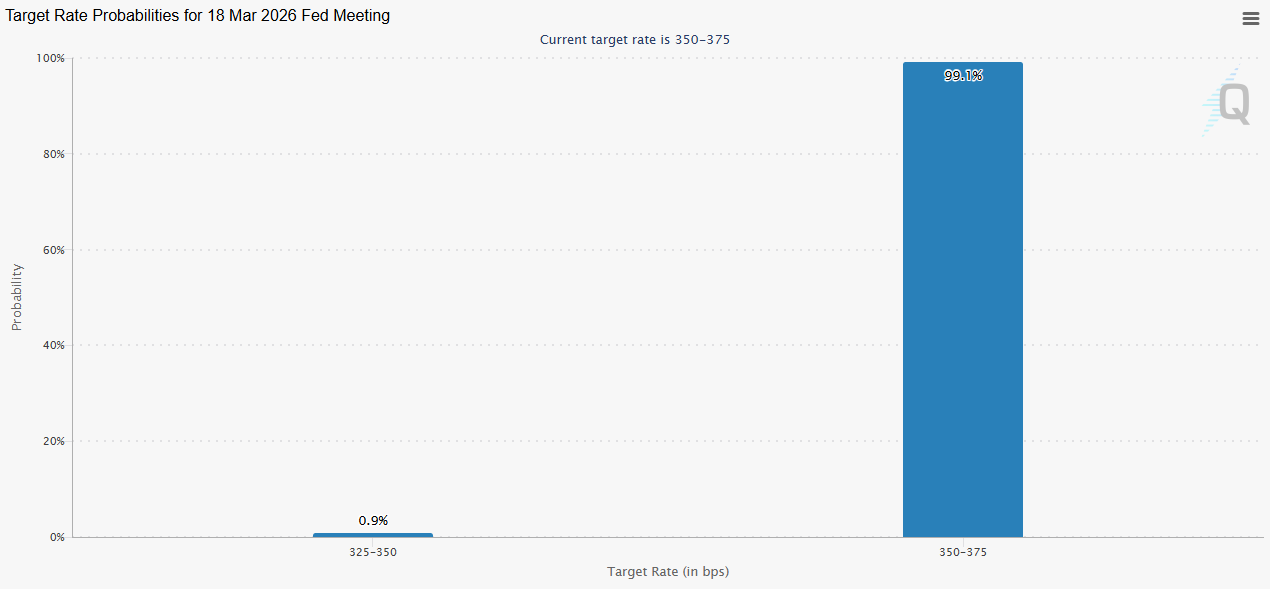
While recent data has shown core inflation moderating, core PCE is on track to average below target at just 1.6% annualised over the past three months.Federal Reserve Chair Jerome Powell made clear that concerns about future inflation, especially from tariffs, remain top of mind.“If you just look backwards at the data, that’s what you would say… but we have to be forward-looking,” Powell said. “We expect a meaningful amount of inflation to arrive in the coming months, and we have to take that into account.”While the economy remains strong enough to buy time, policymakers are closely monitoring how tariff-related costs evolve before shifting policy. Powell also stated that without these forward-looking risks, rates would likely already be closer to the neutral rate, which is a full 100 basis points from current levels.
2. The Unemployment Rate anchor
Powell repeatedly cited the 4.2% unemployment rate during the press conference, mentioning it six times as the primary reason for keeping rates in restrictive territory. At this level, employment is ahead of the neutral rate.“The U.S. economy is in solid shape… job creation is at a healthy level,” Powell added that real wages are rising and participation remains relatively strong. He did, however, acknowledge that uncertainty around tariffs remains a constraint on future employment intentions.If not for a decline in labour force participation in May, the unemployment rate would already be closer to 4.6%. Couple this with the continuing jobless claims ticking up and hiring rates subdued, risks are building around labour market softening.
3. Autumn Meetings are Live
While avoiding firm forward guidance, Powell hinted at a timeline:“It could come quickly. It could not come quickly… We feel like the right thing to do is to be where we are… and just learn more.”This suggests the Fed will remain on hold through the July meeting, using the summer to assess incoming data, particularly whether tariffs meaningfully push inflation higher. If those effects prove limited and unemployment begins to rise, the stage could be set for a rate cut in September.
By
Evan Lucas
The information provided is of general nature only and does not take into account your personal objectives, financial situations or needs. Before acting on any information provided, you should consider whether the information is suitable for you and your personal circumstances and if necessary, seek appropriate professional advice. All opinions, conclusions, forecasts or recommendations are reasonably held at the time of compilation but are subject to change without notice. Past performance is not an indication of future performance. Go Markets Pty Ltd, ABN 85 081 864 039, AFSL 254963 is a CFD issuer, and trading carries significant risks and is not suitable for everyone. You do not own or have any interest in the rights to the underlying assets. You should consider the appropriateness by reviewing our TMD, FSG, PDS and other CFD legal documents to ensure you understand the risks before you invest in CFDs. These documents are available here.
免责声明:文章来自 GO Markets 分析师和参与者,基于他们的独立分析或个人经验。表达的观点、意见或交易风格仅代表作者个人,不代表 GO Markets 立场。建议,(如有),具有“普遍”性,并非基于您的个人目标、财务状况或需求。在根据建议采取行动之前,请考虑该建议(如有)对您的目标、财务状况和需求的适用程度。如果建议与购买特定金融产品有关,您应该在做出任何决定之前了解并考虑该产品的产品披露声明 (PDS) 和金融服务指南 (FSG)。

The ASX 200 closed out the 2025 financial year on a high, reaching a new intra-month peak of 8,592 in June and within touching distance of the all-time record. The index delivered a 1.4% total return for the month, rounding off a strong final quarter with a 9.5% return and locking in a full-year gain of 13.8% — its best performance since 2021.This strong finish all came down to the postponement of the Liberation Day tariffs. From the April 7 lows through to the end of the financial year, the ASX followed the rest of the world. Mid-cap stocks were the standout performers, beating both large and small caps as investors sought growth opportunities away from the extremes of the market. Among the sectors, Industrials outperformed Resources, benefiting from more stable earnings and supportive macroeconomic trends tied to infrastructure and logistics.But the clear winner was Financials, which contributed an incredible 921 basis points to the overall index return. CBA was clearly the leader here, dominating everything with 457 basis points on its own. Westpac, NAB, and others also played a role, but nothing even remotely close to CBA. The Industrials and Consumer Discretionary sectors made meaningful contributions, adding 176 and 153 basis points, respectively. While Materials, Healthcare, and Energy all lagged, each detracting around 45 to 49 basis points. Looking at the final quarter of the financial year, Financials were by far the biggest player again, adding 524 basis points — more than half the quarter’s total return of 9.5%. Apart from a slight drag from the Materials sector, all other parts of the market made positive contributions. Real Estate, Technology, and Consumer Discretionary followed behind as key drivers. Once again, CBA was the largest individual contributor, adding 243 basis points in the quarter, while NAB, WBC, and Macquarie Group added a combined 384 basis points. On the other side of the ledger, key underperformers included BHP, CSL, Rio Tinto, Treasury Wine Estates, and IDP Education, which all weighed on quarterly performance.One of the most defining features of the 2025 financial year was the dominance of price momentum as a market driver — something we as traders must be aware of. Momentum strategies far outpaced more traditional, fundamental-based approaches such as Growth, Value, and Quality. The most effective signal was a nine-month momentum measure (less the most recent month), which delivered a 31.2% long-short return. The more commonly used 12-month price momentum factor was also highly effective, returning 23.6%. By contrast, short-term reversals buying last month’s losers and selling last month’s winners was the worst-performing approach, with a negative 16.4% return. Compared to the rest of the world, the Australian market was one of the strongest trades for momentum globally, well ahead of both the US and Europe, despite its relatively slow overall performance.Note: these strategies are prone to reversal, and in the early days of the new financial year, there has been a notable shift away from momentum-based trading to other areas. Now is probably too early to say whether this marks a sustained change, but it cannot be ignored, and caution is always advised.The second big story of FY26 will be CBA. CBA’s growing influence was a key story of FY25. Its weight in the index rose by an average of 2.1 percentage points across the year, reaching an average of 11.5% by June. That helped push the spread between the Financials and Resources sectors to 15.8 percentage points — the widest gap since 2018. Despite the strong cash returns, market valuations are eye-watering; at one point during June, CBA became the world’s most expensive bank on price metrics. The forward price-to-earnings multiple now sits at 18.9 times. This is well above the long-term average of 14.7 and higher than the 10-year benchmark of 16.1. Meanwhile, the dividend yield has slipped to 3.4%, down from the historical average of 4.4%. Earnings momentum remains soft, with FY25 growth estimates still tracking at 1.4%, and FY26 forecast at a moderate 5.4%. This suggests that recent gains have come more from expanding valuation multiples than from actual earnings upgrades, making the August reporting date a catalyst day for it and, by its size, the market as a whole.On the macro front, attention now turns to the Reserve Bank of Australia. The central bank cut the cash rate by 25 basis points to 3.6% at its July meeting. Recent commentary from the RBA has taken on a more dovish tone, with benign inflation data and ongoing global uncertainty expected to outweigh the strength of the labour market. The RBA appears to be steering toward a neutral policy stance, and markets will be watching for further signals on how that shift will be managed. Recent economic data has been mixed. May retail sales were weaker than expected, while broader household spending indicators held up slightly better. Building approvals saw a smaller-than-hoped-for bounce, employment remains strong, but productivity is low. Inflation is now at a 3-year low and falling; all this points to underlying support from the RBA’s easing bias both now and into the first half of FY26.As we move into FY26, the key questions are:
Can fundamentals wrestle back control over momentum?
Will earnings growth catch up to price to justify valuations?
How will policy decisions from the RBA and other central banks shape investor sentiment in an ever-volatile world?
While the early signs suggest a possible rotation, the jury is still out on whether this marks a new phase for the Australian market or just a brief pause in the rally that defined FY25.
While recent data has shown core inflation moderating, core PCE is on track to average below target at just 1.6% annualised over the past three months.Federal Reserve Chair Jerome Powell made clear that concerns about future inflation, especially from tariffs, remain top of mind.“If you just look backwards at the data, that’s what you would say… but we have to be forward-looking,” Powell said. “We expect a meaningful amount of inflation to arrive in the coming months, and we have to take that into account.”While the economy remains strong enough to buy time, policymakers are closely monitoring how tariff-related costs evolve before shifting policy. Powell also stated that without these forward-looking risks, rates would likely already be closer to the neutral rate, which is a full 100 basis points from current levels.
2. The Unemployment Rate anchor
Powell repeatedly cited the 4.2% unemployment rate during the press conference, mentioning it six times as the primary reason for keeping rates in restrictive territory. At this level, employment is ahead of the neutral rate.“The U.S. economy is in solid shape… job creation is at a healthy level,” Powell added that real wages are rising and participation remains relatively strong. He did, however, acknowledge that uncertainty around tariffs remains a constraint on future employment intentions.If not for a decline in labour force participation in May, the unemployment rate would already be closer to 4.6%. Couple this with the continuing jobless claims ticking up and hiring rates subdued, risks are building around labour market softening.
3. Autumn Meetings are Live
While avoiding firm forward guidance, Powell hinted at a timeline:“It could come quickly. It could not come quickly… We feel like the right thing to do is to be where we are… and just learn more.”This suggests the Fed will remain on hold through the July meeting, using the summer to assess incoming data, particularly whether tariffs meaningfully push inflation higher. If those effects prove limited and unemployment begins to rise, the stage could be set for a rate cut in September.
This coming Friday sees the January core PCE inflation data – the Fed’s preferred measure of inflation. Now most are forecasting that it should confirm that inflation has eased compared to this time last year. The consensus estimate has the monthly increase at 0.2 per cent with the annual rate at 2.5 per cent.
Now that is premised on a range of factors, they are also based on the fact the newly installed administration was not in power when these numbers were being collated. For now then – here are the key issues of the PCE read this Friday: Inflation Expectations: A temporary blip? Or is this the ‘transitory v structural debate again? – Upside impactor Several surveys are showing some upward movement in price expectations, mainly down to tariffs and other new external impacts.
Most don’t see this as a sign of a new inflationary trend but that is cold comfort considering how wrong these forecasts have been over the past three years. Case in point here is the University of Michigan’s 5 to 10 year inflation expectations which jumped to 3.5 per cent in February release, highest of this cycle. The caveat is that while this figure is high, historically this read has run above actual inflation, even when inflation was stable at 2 per cent, even so – a 1.5 per cent miss seems way out and even a 2.8 to 2.9 per cent read would be an issue for further cuts and the current US inflation story.
Other things to keep in mind: Tariffs were front and centre in February and clearly remain a political and geopolitical risk/threat. It should die down in the coming weeks as the administration settles in, the news cycle moves and the size of the tariffs retreat – that is until something causes the President to react. But March should be quieter – but the year will be volatile.
Countering the University of Michigan survey is the New York Fed’s, which hasn’t shown a major shift. If the increase in expectations were widespread, this would move the dial and would be more concerning. It makes the NY Fed data all the more interesting ahead of its launch.
We should also point out February’s manufacturing PMI showed rising input and output prices, while service sector price indices eased – why? Tariffs. This aligns with the 10% tariffs on Chinese imports that kicked in earlier this month.
With 25% steel and aluminium tariffs set for March 12, some price pressures may persist in March. Used Car Prices: A Temporary Divergence? – Down side impactor Used car prices in CPI have been running hotter than expected, especially relative to wholesale prices, which typically lead by a few months. And, this even after the surge in used car prices during the COVID era.
This market has remained above trend but is easing a Manheim wholesale used car prices fell 1.1 per cent month on month in early February, reinforcing our view that CPI inflation in this category has limited room to rise. If consumer demand were truly driving higher prices, we’d expect to see wholesale prices moving up as well which hasn’t happened. New York Congestion Pricing: Is this one and done?
A big policy pitch from the President for the state of New York was the congestion charging throughout New York City. True to its word the Trump administration revoked approval for congestion pricing in New York City, which had gone into effect in early January. This is likely to be the reason for the 2.6 per cent month on month spike in motor vehicle fees within CPI.
If the fee is ultimately scrapped, we’d expect an equivalent pullback in this CPI category. But with legal challenges keeping the fee in place for now – it was a double hit. One to watch.
Housing & Shelter: Watching LA Zillow’s single-family rent index rose 0.33 per cent month on month in January, consistent with shelter inflation continuing to slow – but still growing above historical averages. However it is not even across the country - Los Angeles rents spiked 1 per cent month on month - the biggest monthly jump since early 2022. The recent fires may have played a role, and if this strength persists, we could see upward pressure on shelter inflation later this year.
Median home prices remained flat in January, and with the broader housing market cooling, long-term upside risk to shelter inflation remains limited. In short, this Friday’s PCE is going to a line ball read – any hit that inflation is continuing to defy expectations as it has since September, the Fed will be dealt out of the rate market in 2025 and the USD, US bonds and risk exposures with debt are going to see reasonable movements. Which brings us to the other elephant in the market trading room – Tariffs on silver things.
Tariff Changes on Steel and Aluminium: Who really pays? We have been reluctant to write about the steel and aluminium tariffs that were announced on February 11. The Trump administration confirmed its plan to reinstate full tariffs on imported steel and aluminium—a move that will significantly impact both industries and consumers.
These tariffs are scheduled to start in early March, these Section 232 import tariffs will impose a 25% duty on steel and aluminium products, with aluminium tariffs rising from the previous 10% to 25%. Right now every nation on the planet (including Australia) is in Washington trying to wiggle their way out of the impending price surge – so far there is radio silence from the administration on if it will budge on any of the changes. Memory Lane If we take the 2018 tariffs as a guide, history suggests that once domestic stockpiles are depleted and buyers turn to global markets, U.S. prices will likely rise to reflect most of these duties.
However, exemptions may still be granted, particularly for aluminium, where the U.S. depends heavily on imports about 85% of aluminium consumption comes from overseas. While U.S. importers will bear roughly 80% of the tariff costs, exporters may need to lower prices to remain competitive—assuming they can’t find better pricing in other markets. Other things to be aware of from a trading point of view - The U.S. imports ~ 70 per cent of its primary aluminium Canada.
Who is the biggest play in that Canadian market? Rio Tinto. And it's not just Canada Rio Tinto ships approximately 1.75 million tonnes of aluminium annually from Canada and Australia.
Nearly 45 per cent of Rio Tinto’s U.S. aluminium sales are value-added products, which carries a premium of $200-$300 per tonne over London Metal Exchange (LME) prices. That is something that very much irks the President. Couple this with the fact physical delivery in the U.S. is also at a premium price and that gives you an average price estimate that could rise by ~40 per cent to approximately $1,036 per tonne ($0.50/lb), up from the 2024 average of $427 per tonne.
The thing is Rio Tinto itself is forecasting strong demand in North America, and its Value-add pricing is unlikely to change as domestic suppliers can’t easily replace the volumes it needs. In short, price pressure is coming – and suppliers will likely win out over the consumer. So what about Steel?
The U.S. imports 25-30 per cent of its steel so it’s not as reliant on this product as aluminium, but 80 per cent of those imports are currently exempt under Section 232 which is about to scrap it. That means the tariffs will impact around 18 million tonnes of steel imports annually, with: 35-40 per cent being flat products, 20-25 per cent semi-finished steel, and the rest covering long steel, pipes, tubes, and stainless steel. The Trump administration has signalled concerns over semi-finished steel imports, particularly Brazilian slab imports (~3-4 million tonnes per year).
What Does This Mean for Steel Prices? All things being equal - U.S. domestic steel prices will rise in full alignment with the 25% tariff on affected imports. The short and tall of it For both steel and aluminium, the reintroduction of tariffs means higher prices for U.S. buyers, particularly once inventories run down and imports reflect the new duty rates.
While exemptions remain a possibility, businesses reliant on imported metals should prepare for cost increases and potential supply disruptions. Traders should be ready for volatility, margin changes and erratic conditions as the administration rages over pricing issues.
February opens with a policy-heavy tone led by Australia’s RBA decision, while Japan provides the core macro anchors through GDP and inflation updates. In contrast, China’s calendar lightens due to the Spring Festival, shifting attention to liquidity and policy headlines. Across the region, a firmer USD and softer metals continue to frame cross-asset performance, especially for commodity-linked currencies.
Australia: RBA
Australia begins February with a policy-driven focus as the Reserve Bank of Australia (RBA) delivers its monetary policy decision, setting the month’s initial tone for rates, currency, and equities. While markets had priced around a 70% chance of a hike as of 30 January, expectations remain highly sensitive to evolving data and RBA commentary.
Key dates
RBA Monetary Policy Decision: 2:30 pm, 3 February (AEDT)
Wage Price Index (WPI): 11:30 am, 18 February (AEDT)
Labour Force: 11:30 am, 19 February (AEDT)
What markets look for
Aussie traders will gauge whether the RBA reinforces a data‑dependent stance or shifts more decisively toward tightening.
Wage and labour data will be central in testing inflation persistence, while the next CPI reading anchors positioning heading into March. A balanced or mildly hawkish tone could keep short‑term yields elevated and limit downside in the AUD.
Market sensitivities
AUD and ASX performance will primarily reflect the RBA’s policy tone and broader USD momentum, while resource‑linked sectors should continue to track metals and bulk commodity trends.
The February earnings season, highlighted by CBA and CSL (11 Feb), BHP (17 Feb), and Rio Tinto (19 Feb), is also set to reintroduce stock‑specific drivers once the initial policy focus fades.
Australia’s February Consumer Price Index (CPI) release will be a key post‑RBA event, offering the clearest read on whether domestic inflation pressures are easing in line with the central bank’s expectations.
The data following the RBA’s February policy decision and could quickly reset rate path probabilities reflected in ASX futures pricing.
Key dates
Consumer Price Index (CPI): 11:30 am, 25 February (AEDT)
What markets look for
Markets will focus on whether trimmed‑mean and services inflation components show further moderation.
Persistent strength in non‑tradables or wage‑related sectors could reinforce expectations for additional tightening later in Q1, while a softer headline would support the view that policy rates have peaked.
Market sensitivities
A stronger‑than‑expected CPI print would likely lift front‑end yields and support the AUD, while a downside surprise could weigh on the currency and flatten the yield curve.
Equity sentiment may diverge and financials could find relief from a pause bias, whereas rate‑sensitive sectors like real estate and consumer discretionary would benefit most from a cooler inflation read.
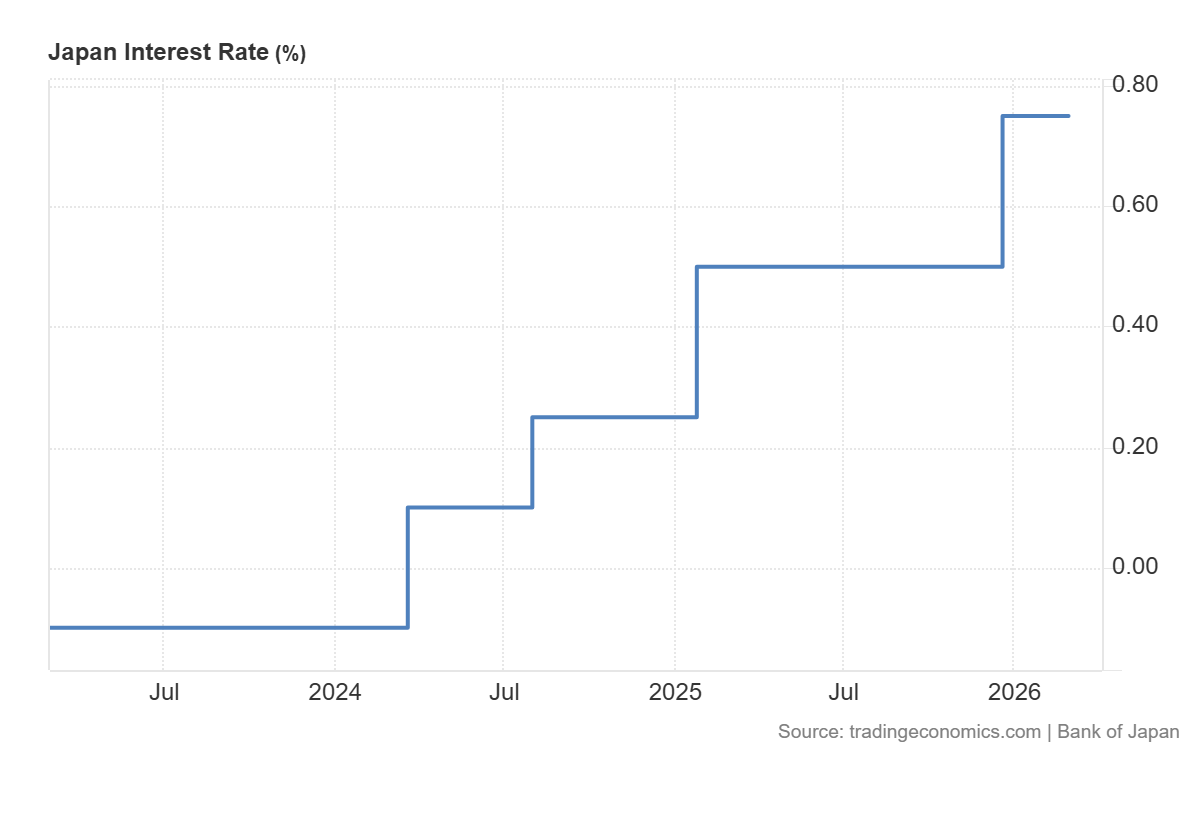
Japan’s Q4 GDP release will be a key reference point for how firmly the recovery is progressing after recent quarters of uneven growth momentum. Arriving ahead of the Tokyo CPI print, it helps shape expectations for domestic demand, external trade performance, and how much scope policymakers have to adjust their stance without derailing activity.
Key dates
Q4 GDP: 11:50 pm, 15 February (GMT)/ 10:50 am, 16 February (AEDT)
What markets look for
Investors pay close attention to the balance between consumption, business investment, and net exports to judge whether growth is broad‑based or narrowly supported.
A stronger‑than‑expected print tends to reinforce confidence in Japan’s expansion story, while a weaker outcome can revive concerns about stagnation and delay expectations for any meaningful policy shift.
Japan: Tokyo CPI
Tokyo’s latest inflation reading shows headline CPI easing to 1.5% year‑on‑year in January from 2.0% in December 2025, dipping further below the recent peaks seen during the post‑pandemic upswing.
The CPI release offers one of the timeliest reads on Japan’s inflation pulse and is closely watched as a lead indicator for nationwide price trends.
Coming late in the month, it serves as a check on whether the recent inflation upswing is sustaining at levels consistent with policymakers’ many objectives.
Tokyo CPI: 11:30 pm, 26 February (GMT)/ 10:30 am, 27 February (AEDT)
What markets look for
Attention centres on core measures that strip out volatile components, alongside services prices, to see whether underlying inflation is holding near target or drifting lower.
A firmer profile strengthens the case that Japan is exiting its low‑inflation regime, while softer readings suggest that price pressures remain fragile and dependent on external factors.
Market sensitivities
A hotter‑than‑expected Tokyo CPI print can push Japanese yields higher and lend support to the yen, often translating into pressure on exporter‑heavy equity names.
Conversely, a softer outcome tends to ease yield pressures, weaken the yen, and provide some relief to equity sectors that benefit from a more accommodative policy backdrop.
China’s February macro calendar is structurally lighter due to Spring Festival timing.
The National Bureau of Statistics of China notes that some releases are adjusted around Spring Festival timing, with the February PMI scheduled for early March leaving markets without major domestic data anchors for much of the month.
Key dates
Spring Festival: 17 February to 3 March
What markets look for
Markets turn their focus to policy signals out of Beijing — think targeted stimulus or liquidity injections, as well as shifts in funding conditions and flows responding to global risk sentiment or USD moves.
Trade and tariff rhetoric, or surprise consumption measures like expanded trade-in subsidies and festive spending incentives recently flagged by the Ministry of Commerce, often spark sharper reactions than the usual data releases.
Market sensitivities
CNH and CNY pairs turn more reactive to USD flows and external headlines, often amplifying volatility in regional equities, commodity currencies like AUD, and China-exposed EM assets.
Holiday-thinned liquidity elevates headline risk, particularly in materials (iron ore, copper), tech hardware supply chains, and regional financials, where policy surprises or US tariff updates can trigger 1–2% daily index swings.
Expected earnings date: Wednesday, 4 February 2026 (US, after market close) / ~8:00 am, Thursday, 5 February 2026 (AEDT)
Alphabet’s earnings provide insight into global digital advertising demand, enterprise cloud spending, and broader technology-sector investment trends.
As Google Search and YouTube are widely used by both consumers and businesses, results are often used as one input when assessing online activity and corporate marketing budgets, alongside other indicators.
Key areas in focus
Search
Search advertising remains Alphabet’s largest revenue driver. Markets are likely to focus on ad growth rates, pricing metrics such as cost-per-click, and overall advertiser demand across sectors such as retail, travel, and small-to-medium businesses.
YouTube
YouTube contributes to both advertising and subscription revenue. Markets commonly monitor advertising momentum, engagement trends, and monetisation developments as indicators of digital media conditions and brand spending.
Google Cloud
Sustained Cloud profitability is often discussed as a factor that may influence longer-term earnings expectations, though outcomes remain uncertain. Markets are expected to focus on revenue growth, enterprise adoption trends, and operating margins.
Other bets
Initiatives such as autonomous driving and life sciences, while typically smaller contributors to revenue, markets may still watch spending levels and progress updates as indicators of capital allocation and cost discipline.
Cost and margin framework
Management has previously flagged elevated capex tied to AI infrastructure, including data centres, specialised chips, and computing capacity. Traffic acquisition costs, staffing levels, and infrastructure expansion are also key variables influencing profitability.
What happened last quarter
Alphabet’s most recent quarterly update highlighted advertising trends, Cloud profitability, and continued increases in capex to support AI initiatives.
Management commentary has indicated that infrastructure spending is intended to support long-term competitiveness, while the market continues to assess the near-term margin trade-offs.
Last earnings key highlights
For reported figures and segment detail from the most recent quarter, refer to Alphabet’s latest earnings release materials, including revenue, earnings per share (EPS), Services mix, Cloud operating income, and capex commentary.
Bloomberg consensus estimates moderate year-on-year (YoY) revenue growth and higher EPS versus the prior-year quarter, with ongoing focus on operating margins given AI-related investment.
Bloomberg consensus reference points:
EPS: low-to-mid US$2 range
Revenue: high US$80 billion to low US$90 billion range
Capex: expected to remain elevated
*All above points observed as of 31 January 2026.
Market-implied expectations
Listed options implied an indicative expected move of around ±4% to ±6% over the relevant near-dated expiry window. Movements derived from option prices observed at 11:00 am AEDT, 2 February 2026.
These are market-implied estimates and may change. Actual post-earnings price moves can be larger or smaller.
What this means for Australian market participants
Alphabet’s earnings can influence near-term sentiment across major US equity indices, particularly Nasdaq-linked products, with potential spillover into the Asia session following the release.
Important risk note
Immediately after the US close and into the early Asia session, Nasdaq 100 (NDX) futures and related CFD pricing can reflect thinner liquidity, wider spreads, and sharper repricing around new information.
Such an environment can increase gap risk and execution uncertainty relative to regular-hours conditions.