By Deepta Bolaky “ Buy the Dips ” and “ Sell the Rallies ” are widely followed strategies by new or experienced traders. Buy-the-dip strategy is becoming increasingly popular based on the theory of market fluctuations. It takes into consideration that the market will eventually rally up at pre-dip prices at some point. “Nowadays, traders take advantage of market weakness and embrace it” An example of the “buy the dip” approach is the bull stock market where we have seen signs of rebound after a period of deep weakness.
Back in February, “buy the dip” was mentioned across various media channels and traders were desperate to find the bottom that would be the most profitable. This strategy will effectively work if traders can identity the transition from a bearish trend to a bullish one. US500 (S&P 500) Source: GO Markets MT4 Today, we will focus on the Bullish Hammer which is a pattern used to identity a bullish technical reversal.
The bullish hammer takes the form of a hammer – it consists of a “ long lower tail ” and a “ body ” with little or no upper wick. Generally, traders tend to see if the lower tail is twice or more than the body itself. The below screenshot gives you an indication of a “Hammer”.
When you see a “hammer” being formed after a downtrend, this is a sign of a potential reversal as the trading action suggests that the trend was heading downwards but manage to find meaningful buyers at a lower price driving the price higher on the close of the candle. As per the above picture, both the green and red hammer have bullish implications but the green indicates a slightly more bullish presence. Similarly, a shorter “lower tail” is interpreted as less bullish compared to a longer “lower tail”.
Put simply, the longer lower tail indicates a stronger presence of buyers. The inverted hammer is also an indication of a potential reversal. An inverted candle is found at the end of a downtrend and has similar criteria to the Hammer.
However, the inverted hammer indicates that buyers are stepping in, but sellers are still present. Main criteria of a Hammer or the Inverted Hammer: The tail should at least be twice the length on the body. The color of the body is not very important but it helps in identifying the strength of the bullish presence.
There should be no tail or a very little one above the body. Note: It is important to differentiate between a “Hammer” and a “Hanging Man”. Because the shape of both candle sticks is similar, traders might misinterpret the patterns.
The Hammer lies at the end of a downtrend where as the Hanging Man lies at the end of an uptrend hinting at a reversal of an upward trend. The hammer is a good indication of a potential reversal and can help traders in establishing the needed bottom to adopt the “Buy-the-dip” approach. However, alongside with the hammer, traders use other indications of price support to recognize the strength of a reversal.
It should be highlighted that this strategy is not a “guaranteed profitable strategy” and should be used wisely. Go Markets Pty Ltd
By
GO Markets
The information provided is of general nature only and does not take into account your personal objectives, financial situations or needs. Before acting on any information provided, you should consider whether the information is suitable for you and your personal circumstances and if necessary, seek appropriate professional advice. All opinions, conclusions, forecasts or recommendations are reasonably held at the time of compilation but are subject to change without notice. Past performance is not an indication of future performance. Go Markets Pty Ltd, ABN 85 081 864 039, AFSL 254963 is a CFD issuer, and trading carries significant risks and is not suitable for everyone. You do not own or have any interest in the rights to the underlying assets. You should consider the appropriateness by reviewing our TMD, FSG, PDS and other CFD legal documents to ensure you understand the risks before you invest in CFDs. These documents are available here.
免责声明:文章来自 GO Markets 分析师和参与者,基于他们的独立分析或个人经验。表达的观点、意见或交易风格仅代表作者个人,不代表 GO Markets 立场。建议,(如有),具有“普遍”性,并非基于您的个人目标、财务状况或需求。在根据建议采取行动之前,请考虑该建议(如有)对您的目标、财务状况和需求的适用程度。如果建议与购买特定金融产品有关,您应该在做出任何决定之前了解并考虑该产品的产品披露声明 (PDS) 和金融服务指南 (FSG)。

In 2025, the S&P 500 traded around 6,835 and was up approximately 16% year to date (YTD). Market direction remained most sensitive to Federal Reserve expectations, inflation data and the earnings outlook, with returns also shaped by mega-cap tech leadership and the broader AI narrative. The index pulled back from earlier December highs, but it has so far held above key major moving averages (MA).
Key 2025 drivers included:
Fed expectations and inflation: Inflation cooled through the year but remained sticky around 2.5% to 3%. A Fed easing bias likely supported price to earnings (P/E) multiples and “risk-on” positioning. More recently, markets appeared increasingly rate-sensitive, with the decreased likelihood of an additional rate cut until March 2026.
Earnings and guidance: Corporate earnings remained strong quarter on quarter. Recent Q3 results reportedly saw over 80% of the S&P 500 beat earnings per share (EPS) expectations. For Q4, the estimated year-over-year earnings growth rate is 8.1%, despite ongoing concerns around import tariffs and potential margin pressure.
Index leadership and breadth: Returns were heavily influenced by mega-cap tech and AI beneficiaries, even as broader market breadth appeared less consistent at points through the year.
Policy headlines and volatility: Trade and tariff headlines drove sharp moves, particularly earlier in the year. Some investors pointed to the “TACO” trade, with rapid recoveries after policy proposals were softened. Over time, similar shocks appeared to have less impact as the market became somewhat desensitised.
Valuations and sensitivity: The forward 12-month P/E ratio for the S&P 500 is 22, above the 5-year average (20.0) and above the 10-year average (18.7). That gap kept valuation sensitivity, especially in AI-linked names, firmly in focus.
Current state
The S&P 500 is about 1% below record highs hit earlier in December. That could indicate the broader uptrend remains in place, with a move back toward the recent highs one possible scenario if momentum improves. Despite the recent retracement, the index remains above all key major moving averages (MA). The latest bounce followed lower than expected CPI numbers earlier this week, alongside continued, and to some, surprising optimism about what may come next.
What to watch in January
Q4 earnings from mid-January: Results and guidance may help clarify whether valuations are being supported by forward expectations.
AI narrative and positioning: With AI-linked mega-caps carrying a large share of market capitalisation, changes in sentiment or expectations could have an outsized impact on index performance.
US jobs and CPI data: The latest US jobs report reportedly points to the highest headline unemployment rate since 2021. Cooling inflation this week may keep markets alert to shifts in rate cut timing, particularly around the March decision.
S&P 500 daily chart
Source: TradingView
Major FX pairs
Source: Adobe Images
AUD/USD
AUD/USD has been choppy in 2025. Since the “redemption day” drop in April, the move has looked more like a steady grind higher than a clean upside trend.
Key levels Recent peaks in early September and mid-December highlight resistance near 0.6625. Support has been evident around 0.6425, where price bounced over the last month.
What is supporting the bounce That support test coincided with stronger than expected jobs and inflation data, lifting expectations that the Reserve Bank of Australia (RBA) may raise rates during 2026 rather than cut again. The latest pullback looks contained so far, with buying interest already visible and price still above key longer-term moving averages.
What could drive a breakout The pair remains range-bound, but the tilt is still constructive. If Chinese data stays firm, metals prices hold up, and the central bank outlook remains relatively hawkish, a break above resistance could gain more traction.
AUD/USD daily chart
EUR/USD
After early 2025 euro strength, EUR/USD has mostly consolidated since June in a roughly 270 pip range. This month tested 1.18 resistance, reaching highs not seen since September.
What price is doing now The recent pullback still lacks strong downside conviction. Some technical analysts refer to the 1.17 area as a near-term reference level.
What could come next If price holds 1.17 and buyers step back in, another push toward 1.18 is possible. One view is that the European Central Bank (ECB) could be less inclined to ease in 2026, which could be consistent with a firmer EUR/USD scenario. Broader analyst commentary also suggests the euro may stall rather than collapse against the US dollar, although outcomes remain data and policy dependent.
EUR/USD daily chart
USD/JPY
Year-to-date picture USD/JPY is close to flat overall for the year. After US dollar weakness in Q1, the pair reversed higher and now sits just below resistance near 158.
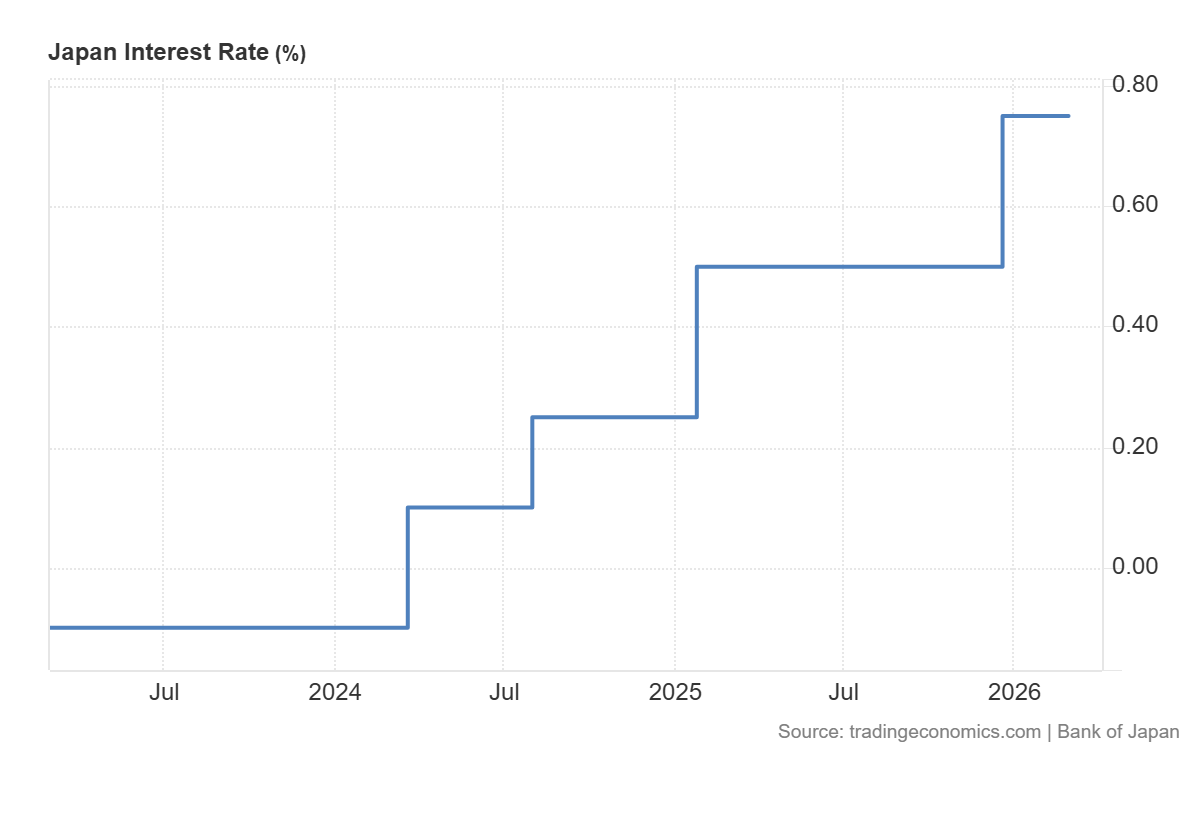
Rates remain the main driver Rate differentials still favour the US dollar. The Bank of Japan (BOJ) held steady for much of the period despite expectations it might act, and the recent rate increase was modest. Policy has only moved marginally away from zero.
What could shift the balance Rate differentials remain a key influence. Without a clearer shift in BOJ policy, the JPY may find it difficult to sustain a rebound. Some market commentators cite 154.20 as a chart reference level.
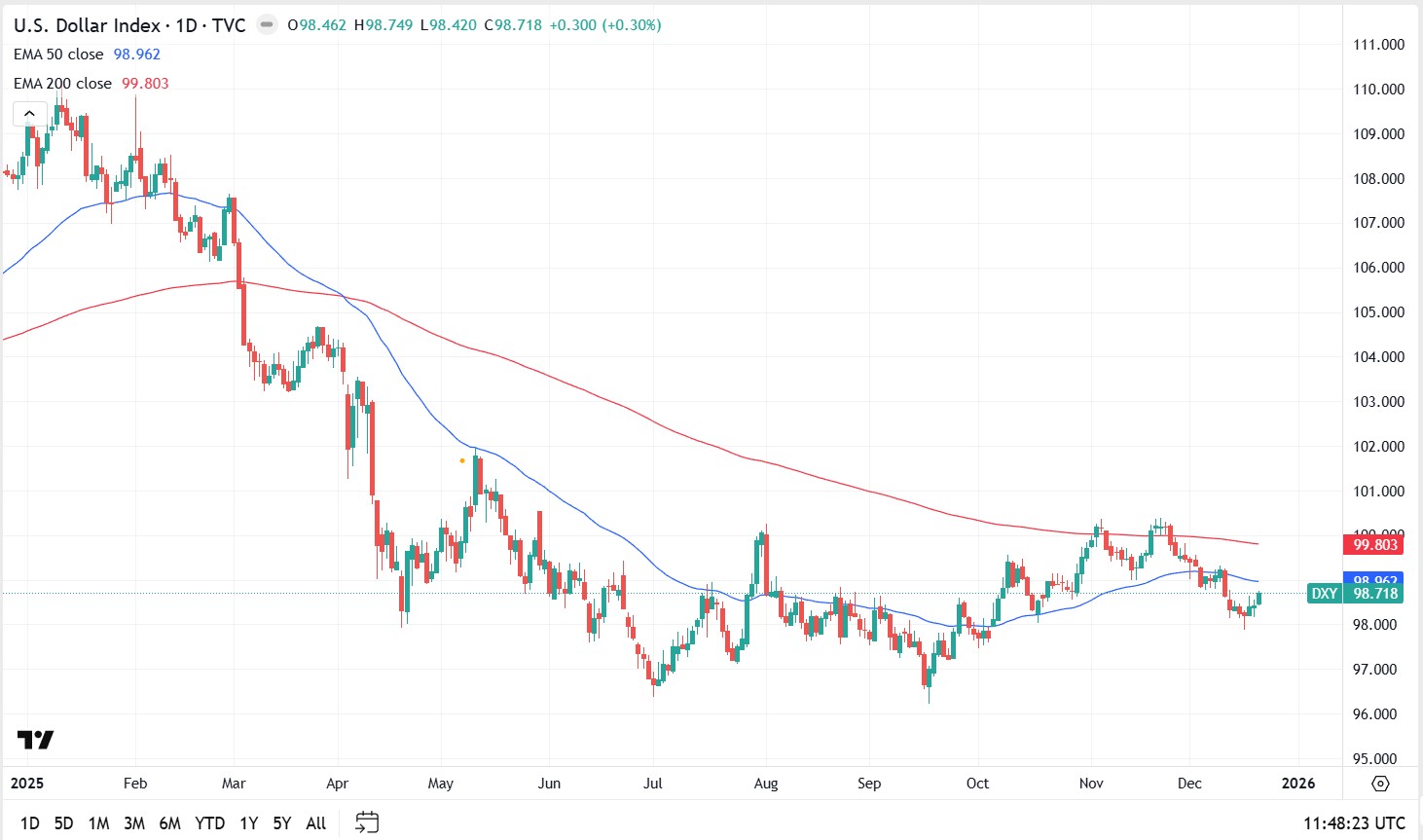
2025 has seen a material decline in the fortunes of the greenback. A technical structure breakdown early in the year was followed by a breach of the 200-day moving average (MA) at the end of Q1. The index then entered correction territory, printing a three-year low at the end of Q2.
Since then, we have seen attempts to build a technical base, including a re-test of the end-of-June lows in mid-September. However, buying pressure has not been strong enough to push price back above the technically critical and psychologically important 100 level.
What the levels suggest from here
As things stand, the index remains more than 10% lower for 2025. On this technical view, the index may revisit the 96 area. However, technical levels can fail and outcomes depend on multiple factors.
US dollar index
Source: TradingView
The key question for 2026
The key question remains: are we likely to see further losses in the early part of next year and beyond, or will current support hold?
We cannot assess the US dollar in isolation and any outlook is shaped by internal and global factors, not least its relative strength versus other major currencies. Many of these drivers are interrelated, but four potential headwinds stand out for any US dollar recovery. Collectively, they may keep downside pressure in play.
Four headwinds for any US dollar recovery
1. The US dollar as a safe-haven trade
One scenario where US dollar support has historically been evident is during major global events, slowdowns and market shocks. However, the more muted response of the US dollar during risk-off episodes this year suggests a shift away from the historical norm, with fewer sustained US dollar rallies.
Instead, throughout 2025, some investors appearedto favour gold, and at other times, FX and even equities, rather than into the US dollar. If this change in behaviour persists through 2026, it could make recovery harder, even if global economic pressure builds over the year ahead.
2. US versus global trade
Trade policy is harder to measure objectively, and outcomes can be difficult to predict. That said, trade battles driven by tariffs on US imports are often viewed as an additional potential drag on the US dollar.
The impact may be twofold if additional strain is placed on the US economy through:
a slowdown in global trade volumes as impacted countries seek alternative trade relationships, with supply chain distortions that may not favour US growth
pressure on US corporate profit margins as tariffs lift costs for importers
3. Removal of quantitative tightening
The Fed formally halted its balance sheet reduction, quantitative tightening (QT), as of 1 December 2025, ending a program that shrank assets by roughly US$2.4 trillion since mid-2022.
Traditionally, ending QT is seen as marginally negative for the US dollar because it stops the withdrawal of liquidity, can ease global funding conditions, and may reduce the scarcity that can support dollar demand. Put simply, more dollars in the system can soften the currency’s support at the margin, although outcomes have varied historically and often depend on broader financial conditions.
4. Interest rate differential
Interest rate differential (IRD) is likely to be a primary driver of US dollar strength, or otherwise, in the months ahead. The latest FOMC meeting delivered the expected 0.25% cut, with attention on guidance for what may come next.
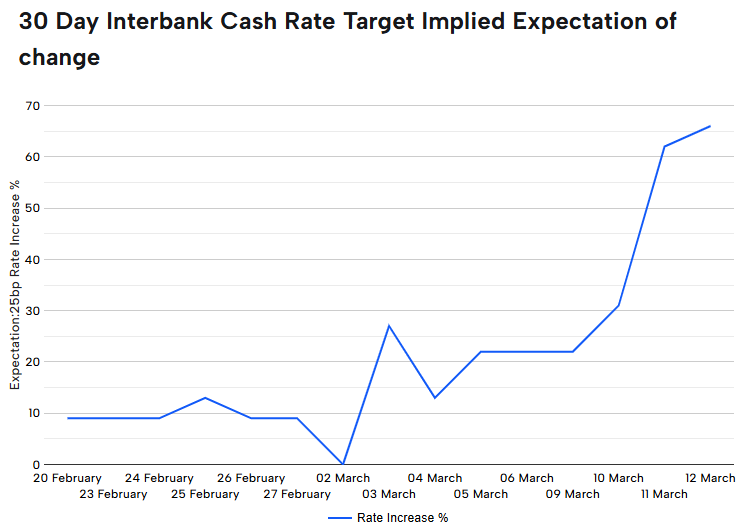
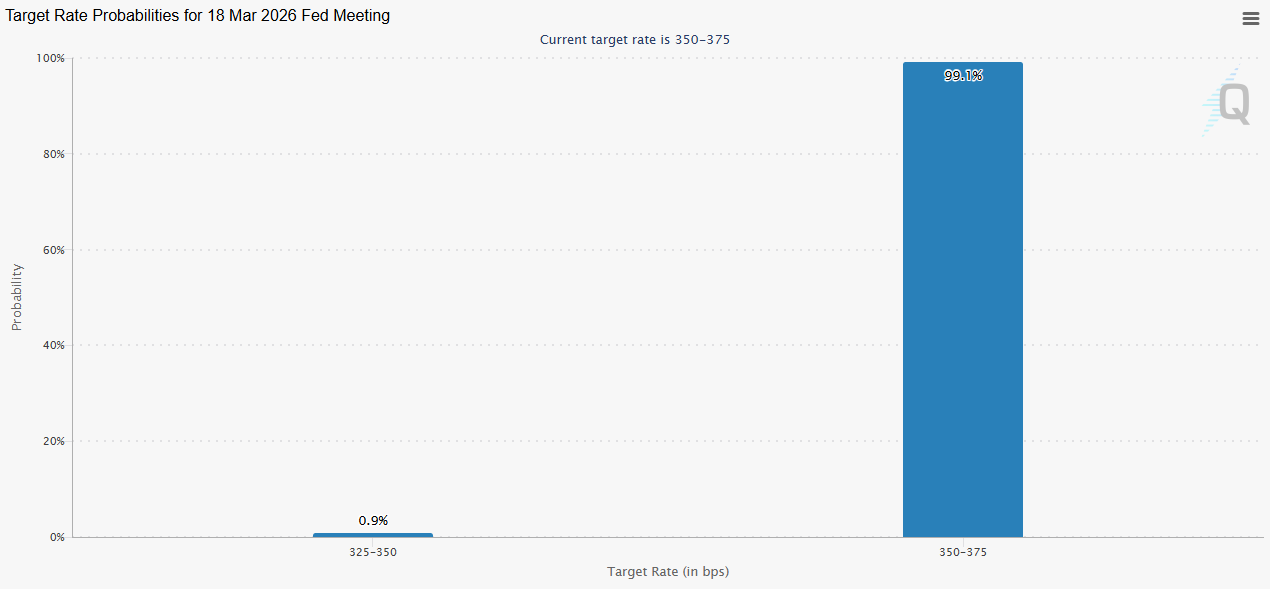
Even after a softer-than-expected CPI print, markets have been reluctant to price aggressive near-term easing. At the time of writing, less than a 20% chance of a January cut is priced in, and it may be March before we see the next move.
The Fed is balancing sticky inflation against a jobs market under pressure, with the headline rate back at levels last seen in 2012. The practical takeaway is that a more accommodative stance may add to downward pressure on the US dollar.
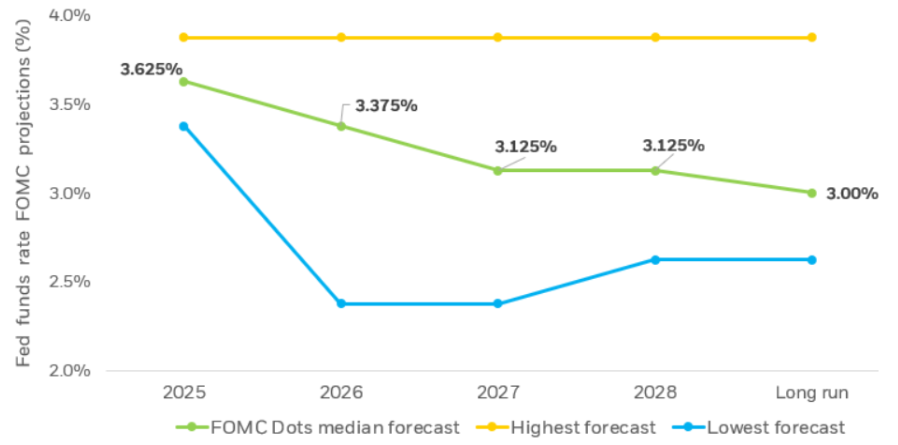
Current expectations imply around two rate cuts through 2026, with the potential for further easing beyond that, broadly consistent with the median projections shown in the chart below. These are forecasts rather than guarantees, and they can shift as economic data and policy guidance evolve.
Source: US Federal Reserve, Summart of Economic Projections
The “Magnificent Seven” technology companies are expected to invest a combined $385 billion into AI by the end of 2025.
Microsoft is positioning itself as the platform leader. Nvidia dominates the underlying AI infra. Google leads in research. Meta is building open-source tech. Amazon – AI agents. Apple — on-device integration. And Tesla pioneering autonomous vehicles and robots.
The “Big 4” tech companies' AI spending alone is forecast at $364 billion.
With such enormous sums pouring into AI, is this a winner-take-all game?
Or will each of the Mag Seven be able to thrive in the AI future?
Microsoft: The AI Everywhere Strategy
Microsoft has made one of the biggest bets on AI out of the Mag Seven — adopting the philosophy that AI should be everywhere.
Through its deep partnership with OpenAI, of which it is a 49% shareholder, the company has integrated GPT-5 across its entire ecosystem.
Key initiatives:
GPT-5 integration across consumer, enterprise, and developer tools through Microsoft 365 Copilot, GitHub Copilot, and Azure AI Foundry
Azure AI Foundry for unified AI development platform with model router technology
Copilot ecosystem spanning productivity, coding, and enterprise applications with real-time model selection
$100 billion projected AI infrastructure spending for 2025
Microsoft’s centrepiece is Copilot, which can now detect whether a prompt requires advanced reasoning and route to GPT-5's deeper reasoning model.
This (theoretically) means high-quality AI outputs become invisible infrastructure rather than a skill users need to learn.
However, this all-in bet on OpenAI does come with some risks. It is putting all its eggs in OpenAI's basket, tying its future success to a single partnership.
Elon Musk warned that "OpenAI is going to eat Microsoft alive"[/caption]
Google: The Research Strategy
Google’s approach is to fund research to build the most intelligent models possible. This research-first strategy creates a pipeline from scientific discovery to commercial products — what it hopes will give it an edge in the AI race.
Key initiatives:
Over 4 million developers building with Gemini 2.5 Pro and Flash
Ironwood TPU offering 3,600 times better performance compared to Google’s first TPU
AI search overviews reaching 2 billion monthly users across Google Search
DeepMind breakthroughs: AlphaEvolve for algorithm discovery, Aeneas for ancient text interpretation, AlphaQubit for quantum error detection, and AI co-scientist systems
Google’s AI research branch, DeepMind, brings together two of the world's leading AI research labs — Google Brain and DeepMind — the former having invented the Transformer architecture that underpins almost all modern large language models.
The bet is that breakthrough research in areas like quantum computing, protein folding, and mathematical reasoning will translate into a competitive advantage for Google.
Today, we're introducing AlphaEarth Foundations from @GoogleDeepMind , an AI model that functions like a virtual satellite which helps scientists make informed decisions on critical issues like food security, deforestation, and water resources. AlphaEarth Foundations provides a… pic.twitter.com/L1rk2Z5DKk
Meta has made a somewhat contrarian bet in its approach to AI: giving away their tech for free. The company's Llama 4 models, including recently released Scout and Maverick, are the first natively multi-modal open-weight models available.
Key initiatives:
Llama 4 Scout and Maverick - first open-weight natively multi-modal models
AI Studio that enables the creation of hundreds of thousands of AI characters
$65-72 billion projected AI infrastructure spending for 2025
This open-source strategy directly challenges the closed-source big players like GPT and Claude. By making AI models freely available, Meta is essentially commoditizing what competitors are trying to monetize. Meta's bet is that if AI models become commoditized, the real value will be in the infrastructure that sits on top. Meta's social platforms and massive user base give it a natural advantage if this eventuates.
Meta's recent quarter was also "the best example to date of AI having a tangible impact on revenue and earnings growth at scale," according to tech analyst Gene Munster.
H1 relative performance of the Magnificent Seven stocks. Source: KoyFin, Finimize
However, it hasn’t been all smooth sailing for Meta. Their most anticipated release, Llama Behemoth, has all but been scrapped due to performance issues. And Meta is now rumored to be developing a closed-source Behemoth alternative, despite their open-source mantra.
Amazon: The AI Agent Strategy
Amazon’s strategy is to build the infrastructure for AI that can take actions — booking meetings, processing orders, managing workflows, and integrating with enterprise systems.
Rather than building the best AI model, Amazon has focused its efforts on becoming the platform where all AI models live.
Key initiatives:
Amazon Bedrock offering 100+ foundation models from leading AI companies, including OpenAI models.
$100 million additional investment in AWS Generative AI Innovation Center for agentic AI development
Amazon Bedrock AgentCore enabling deployment and scaling of AI agents with enterprise-grade security
$118 billion projected AI infrastructure spending for 2025
The goal is to become the “orchestrator” that lets companies mix and match the best models for different tasks.
Amazon’s AgentCore will provide the underlying memory management, identity controls, and tool integration needed for these companies to deploy AI agents safely at scale.
This approach offers flexibility, but does carry some risks. Amazon is essentially positioning itself as the middleman for AI. If AI models become commoditized or if companies prefer direct relationships with AI providers, Amazon's systems could become redundant.
Nvidia: The Infra Strategy
Nvidia is the one selling the shovels for the AI gold rush. While others in the Mag Seven battle to build the best AI models and applications, Nvidia provides the fundamental computing infrastructure that makes all their efforts possible.
This hardware-first strategy means Nvidia wins regardless of which company ultimately dominates. As AI advances and models get larger, demand for Nvidia's chips only increases.
Key initiatives:
Blackwell architecture achieving $11 billion in Q2 2025 revenue, the fastest product ramp in company history
New chip roadmap: Blackwell Ultra (H2 2025), Vera Rubin (H2 2026), Rubin Ultra (H2 2027)
Data center revenue reaching $35.6 billion in Q2, representing 91% of total company sales
Manufacturing scale-up with 350 plants producing 1.5 million components for Blackwell chips
With an announced product roadmap of Blackwell Ultra (2025), Vera Rubin (2026), and Rubin Ultra (2027), Nvidia has created a system where the AI industry must continuously upgrade to Nvidia’s newest tech to stay competitive.
This also means that Nvidia, unlike the others in the Mag Seven, has almost no direct AI spending — it is the one selling, not buying.
However, Nvidia is not indestructible. The company recently halted its H20 chip production after the Chinese government effectively blocked the chip, which was intended as a workaround to U.S. export controls.
Apple: The On-Device Strategy
Apple's AI strategy is focused on privacy, integration, and user experience. Apple Intelligence, the AI system built into iOS, uses on-device processing and Private Cloud Compute to help ensure user data is protected when using AI.
Key initiatives:
Apple Intelligence with multi-model on-device processing and Private Cloud Compute
Enhanced Siri with natural language understanding and ChatGPT integration for complex queries
Direct developer access to on-device foundation models, enabling offline AI capabilities
$10-11 billion projected AI infrastructure spending for 2025
The drawback of this on-device approach is that it requires powerful hardware from the user's end. Apple Intelligence can only run on devices with a minimum of 8GB RAM, creating a powerful upgrade cycle for Apple but excluding many existing users.
Tesla: The Robo Strategy
Tesla's AI strategy focuses on two moonshot applications: Full Self-Driving vehicles and humanoid robots.
This is the 'AI in the physical world' play. While others in the Mag Seven are focused on the digital side of AI, Tesla is building machines that use AI for physical operations.
Tesla’s Optimus robot replicating human tasks
Key initiatives:
Plans for 5,000-10,000 Optimus robots in 2025, scaling to 50,000 in 2026
Robotaxi service targeting availability to half the U.S. population by EOY 2025
AI6 chip development with Samsung for unified training across vehicles, robots, and data centers
$5 billion projected AI infrastructure spending for 2025
This play is exponentially harder to develop than digital AI, and the markets have reflected low confidence that Tesla can pull it off.
TSLA has been the worst-performing Mag Seven stock of 2025, down 18.37% in H1 2025.
However, if Tesla’s strategy is successful, it could be far more valuable than other AI plays. Robots and autonomous vehicles could perform actual labour worth trillions of dollars annually.
The $385 billion Question
The Mag Seven are starting to see real revenue come in from their AI investments. But they're pouring that money (and more) back into AI, betting that the boom is just getting started.
The platform players like Microsoft and Amazon are betting on becoming essential infrastructure. Nvidia’s play is to sell the underlying hardware to everyone. Google and Meta compete on capability and access. While Apple and Tesla target specific use cases.
The $385 billion question is which of the Magnificent Seven has bet the right way? Or will a new player rise and usurp the long-standing tech giants altogether?
You can access all Magnificent Seven stocks and thousands of other Share CFDs on GO Markets.
US and European market attention this week is centred on the US Personal Income and Outlays report (which includes the PCE price index), late-week flash PMI releases, and a continued ramp-up in the US earnings season.
Alongside key data, geopolitical developments, including renewed discussion around Greenland and tariff threats, remain part of the broader risk backdrop.
Quick facts:
US PCE inflation: Closely watched by policymakers as an important inflation measure (released within the Personal Income and Outlays report).
Flash PMIs: US, Eurozone, Germany, and the UK are due late week, offering a read on growth momentum.
US earnings: Large-cap and index-heavy companies shaping sentiment at elevated index levels.
Geopolitical headlines: Greenland and proposed tariff measures add a layer of uncertainty to broader risk sentiment.
Equity indices: Trading at elevated levels, which may increase sensitivity to data and earnings surprises.
United States
What to watch
US markets reopen after the Juneteenth holiday, with the US data calendar featuring the PCE price index and core PCE measures. Outcomes that differ from expectations can influence interest-rate expectations and near-term risk sentiment.
Later in the week, flash PMIs offer a more current snapshot of activity across manufacturing and services. US earnings remain a key driver of sentiment, and with indices at elevated levels, valuation and guidance narratives may be tested as results are released.
Key releases and events
Thu 22 Jan (US): BEA GDP release — Q3 2025 (Updated Estimate)
Thu 22 Jan (US): BEA Personal Income and Outlays (Oct & Nov 2025) — includes PCE price index and core PCE
Fri 23 Jan (US): S&P Global flash PMIs (manufacturing and services)
Throughout the week: US earnings season continues
How markets may respond
Equities: Indices have been trading at elevated levels. As of 10:30am AEDT, 20 January 2026, the S&P 500 was within ~50 points of its record high.
USD: PCE results that differ from expectations can contribute to volatility in FX and USD-linked assets, while PMI data can influence shorter-term momentum.
Earnings: In a market trading at elevated levels, earnings results and forward guidance can generate volatility even without large headline misses. Forward guidance and margin commentary are likely to be closely watched.
In the UK, CPI and labour market data can influence rate expectations and perceptions of growth momentum. In Germany, producer price data offers insight into pipeline inflation pressures. Flash PMIs across the Eurozone, Germany, and the UK complete the week’s calendar and may influence near-term growth assessments.
Fri 23 Jan: UK flash manufacturing PMI (with services PMI)
How markets may respond
DAX: The German index has been trading at elevated levels. PMI and PPI outcomes may influence cyclical sectors, notably industrials and exporters.
FTSE 100 and GBP: UK CPI and labour market data can affect rate expectations and GBP sensitivity, while PMI outcomes may influence sector-level performance within the index.
EUR: Euro moves may reflect PMI momentum and inflation signals, though direction can still be heavily influenced by US outcomes and global risk sentiment.
Reporting has focused on renewed discussion around Greenland and associated tariff threats. Reporting also outlines tariff rates and potential escalation timelines, though details and implementation remain subject to change, and the situation is fluid.
Market reaction has been limited so far. If rhetoric escalates, markets could see intermittent volatility across equities, commodities, and FX. safe-haven moves (including in gold) are possible, though reactions can be uneven and may reverse.
US and Europe calendar summary
Wed 21 Jan: UK CPI
Thu 22 Jan (US) / Fri 23 Jan(AEDT):
US GDP (Q3 2025 updated estimate)
US Personal Income and Outlays (Oct/Nov, includes PCE)
The Personal Income and Outlays report (including PCE inflation measures) is one of the key US macro events this week and may influence rate expectations if outcomes differ materially from expectations.
With equity indices trading at elevated levels, markets may be more sensitive to negative surprises and guidance downgrades than to confirmatory data.
European releases — particularly UK CPI and the flash PMIs — remain important locally but may still trade in the context of US outcomes and broader risk sentiment.
Geopolitical developments around Greenland and tariffs remain a secondary but persistent source of uncertainty.
Asia-Pacific markets head into this week focused on China’s growth data, potential JPY volatility with a Bank of Japan (BoJ) meeting week, and Australia's labour force report and commodity prices. Geopolitical events also remain in focus globally, and the US earnings season’s progression may indirectly influence sentiment.
Quick facts:
China: Q4 GDP and December industrial production data will be read as a test of whether growth is stabilising or simply slowing more gradually.
Japan: The BoJ meets 22–23 January, and Japan CPI (Dec) is due on 23 January, keeping USD/JPY and rates in focus.
Australia:Labour Force (Dec) is the key local catalyst, alongside whether metal prices continue to support the materials sector.
China
What to watch:
China’s focus shifts to hard activity data, with Q4 GDP and December activity indicators offering a read on growth momentum into 2026. Markets are increasingly focused on whether recent policy support is translating into clearer traction in the real economy.
Key releases:
Mon 19 Jan: Q4 GDP, December industrial production (primary). Retail sales and fixed asset investment (secondary).
How markets may respond:
Growth-sensitive sectors in Chinese equities may react if the data reinforces that domestic demand remains soft, especially if headline GDP diverges from expectations.
Australian assets may respond to GDP and industrial output outcomes, with implications for materials stocks. The data may also influence AUD sentiment following recent consolidation.
With the BoJ meeting later in the week, markets may see pre-decision volatility as positioning shifts around how hawkish the BoJ narrative may be. While consensus expectations often lean toward no change, the statement and press conference will be watched closely for any change in tone.
Key events:
Fri 23 Jan: Bank of Japan rate decision and press conference (high sensitivity)
Fri 23 Jan: Japan CPI (Dec) (medium sensitivity)
Thu 22 Jan: Trade statistics — first 20 days of Dec (provisional) (low sensitivity)
How markets may respond:
USD/JPY: Often acts as a fast channel for repricing Japan risk during BoJ weeks, particularly if guidance shifts expectations for the next move.
Nikkei 225: Japanese equities can remain responsive to FX stability, particularly across exporter-heavy sectors. All-time high levels of 54000 will be watched as a key level.
Australia’s week is dominated by the employment data, with external influences from China’s data and broader global risk conditions also in view. Markets will likely focus on the balance between employment growth and participation and what it implies for Reserve Bank of Australia (RBA) expectations.
Key release:
Thu 22 Jan: Labour force, Australia (Dec) (high sensitivity)
How markets may respond:
ASX 200: Domestic cyclicals can react to the rates takeaway more than the headline jobs number. After the material-driven move back over 8800, this week will be key in determining whether a test of the psychologically important 9000 is on the cards.
AUD/USD: Rate expectations can shift quickly. A stronger-than-expected jobs result could support the AUD, while a weaker print (or a rise in unemployment) could weigh on it.
Mon 19 Jan: China GDP (Q4), industrial production and retail sales
Tue 20 Jan: China Loan Prime Rate (1Y/5Y) (Jan)
Thu 22 Jan: Australia employment (Dec); Japan trade statistics — first 20 days of Dec (provisional)
Fri 23 Jan: BoJ rate decision and press conference; Japan CPI (Dec). PMI manufacturing in Australia and Japan.
Bottom line
Asia-Pacific markets enter the week with China’s growth data setting the regional tone, Japan facing heightened FX sensitivity into a BoJ meeting, and Australia focused on labour-market signals alongside commodity price direction.
Chinese GDP and industrial production are a test of whether activity is stabilising, with implications for regional risk appetite, materials pricing and the AUD.
In Japan, any shift in BoJ communication could drive USD/JPY volatility and spill into broader equity sentiment. For Australia, local employment data and external influences, particularly China and global risk conditions, are likely to shape short-term expectations across rates, equities and currency markets.
Markets are navigating a familiar mix of macro and event risk with China growth signals, US inflation updates, central-bank guidance and earnings that will help confirm whether the growth narrative is broadening or narrowing.
At a glance
China: Q4 GDP + December activity + PBOC decision
US: PCE inflation (date per current BEA schedule)
Japan: BOJ decision (JPY/carry sensitivity)
Earnings: tech, industrials, energy, materials in focus
Gold: near record highs (yields/USD/geopolitics watch)
Geopolitics remain fluid. Any escalation could shift risk sentiment quickly and produce price action that diverges from current baselines.
China
China Q4 GDP: Monday, 19 January at 1:00 pm (AEDT)
Retail sales: Monday, 19 January at 1:00 pm (AEDT)
PBOC policy decision: Monday, 19 January at 12.30 pm (AEDT)
China’s Q4 GDP and December activity data, together with the PBOC decision, will shape expectations for China's growth momentum and the durability of policy support.
Market impact
Commodity-linked FX: AUD and NZD may react if growth expectations or the policy tone shifts.
Equities: The Shanghai Composite, Hang Seng and ASX 200 could respond to any change in how investors view demand and stimulus traction.
Commodities: Industrial metals and oil may move on any reassessment of China-linked demand.
US
PCE Inflation: Friday, 23 January at 2:00 am (AEDT)
PSI: Friday, 23 January at 2:00 am (AEDT)
S&P Flash (PMI): Saturday, 24 January at 1:45 am (AEDT)
Netflix: Tuesday, 20 January 2026 at 8:00 am (AEDT)
The personal consumption expenditures (PCE) price index is the Federal Reserve’s preferred inflation gauge and a key input for rate expectations and (by extension) Treasury yields, the USD, and growth stocks. Markets are likely to focus on whether the reading changes the inflation path that is currently priced, rather than simply matching consensus.
Market impact
USD: May move if rate expectations shift, particularly against JPY and EUR.
US equities: Growth and small caps, including the Nasdaq and Russell 2000, may be sensitive if the data or interpretation challenge the current rate outlook.
Gold futures: May be influenced indirectly via moves in Treasury yields and the USD.
Japan
Key reports
Inflation: Friday, 23 January at 10:30 am (AEDT)
Bank of Japan (BoJ) Interest Rate Meeting: Friday, 23 January at ~2:00 pm (AEDT)
Markets will focus on what the BOJ signals about inflation, wages and the policy path. A shift in tone can move JPY quickly and flow through to broader risk via carry positioning.
Market impact:
JPY/USD pairs and crosses: Pairs are sensitive to any guidance change and the USD/JPY has broken above 158, but the move could reverse if the BOJ strikes a more hawkish tone.
Japan equities and global sentiment: Could react if the dynamics shift.
Broader risk assets: May be influenced via moves in the USD and volatility conditions.
Netflix: Tuesday, 20 January 2026 at 8:00 am (AEDT)
Johnson & Johnson: Wednesday, 21 January at 10:20 pm (AEDT)
Intel Corporation: Thursday, 22 January at 8:00 am (AEDT)
A busy week of US earnings is expected with large-cap names across multiple sectors reporting. Early results and, importantly, forward guidance may help clarify whether growth is broadening or becoming more selective.
With the S&P 500 close to the psychological 7,000 level, earnings could be a catalyst for a fresh test of highs or a pullback if guidance disappoints.
Market impact
Upside scenario: Results that exceed expectations and are supported by steady guidance could support sector and broader market sentiment.
Downside scenario: Cautious guidance, particularly on margins and capex, could weigh on individual names and spill into broader indices if it becomes a repeated message.
Read-through: Early reporters in each sector may influence expectations for related stocks, especially where peers have not yet provided updated guidance.
Bottom line: This is a week where the market may trade the forward picture more than the rear-view numbers. The key is whether guidance supports the idea of broad, durable growth, or whether it points to a more selective backdrop as 2026 unfolds.
Continued strength in gold may support gold equities and gold-linked ETFs relative to the broader market but geopolitical developments and policy uncertainty may influence demand for defensive assets.
A sustained reversal in gold could be interpreted by some market participants as a sign of improved risk confidence. The driver set matters, especially whether the move is led by yields, USD strength, or a fade in event risk.