Trading terms glossary A - B - C - D - E - F - G - H - I - J - K - L - M - N - O - P - Q - R - S - T - U - V - W - X - Y - Z - D Dark pools Dark pools is a privately organized financial forum or exchange for trading securities. They allow institutional investors to trade without exposure until after the trade has been executed and reported Day order A day order is provision placed on an order to a broker to execute a trade at a specific price that expires at the end of the trading day. Day trading Day trading involves buying and selling stocks before the market closure, with the aim of earning short-term profits.
Debt ratio Debt ratio is an indication of how much debt a company is holding, when compared to the value of its assets. It can also be applied to individuals: in which case it is the cost accrued by their debt compared to total income each year. Delta Also termed as hedge ratio, Delta is a measure used in options trading to assess how the price of an options contract changes as the price of the underlying asset moves.
Depreciation Decline in an asset's value is defined as Depreciation. It can happen either due to market conditions or other factors like wear and tear. It is the opposite of appreciation.
Derivative Derivatives are financial products that derive their value from the price of an underlying asset. Derivatives are often used by traders as a device to speculate on the future price movements of an asset, whether that be up or down, without having to buy the asset itself. Direct market access (DMA) Direct market access (DMA) is a way of placing trades directly onto the order books of exchanges.
As a result, DMA offers traders flexibility and transparency when trading. But due to the risks and complexities involved, it is usually recommended for advanced traders only. Dividend A portion of profit that an organization chooses to return to its shareholders in terms of percentage is known as dividend.
Dividends are commonly paid quarterly, but in some cases are paid annually, or even monthly, depending on the companies policy.
By
GO Markets
The information provided is of general nature only and does not take into account your personal objectives, financial situations or needs. Before acting on any information provided, you should consider whether the information is suitable for you and your personal circumstances and if necessary, seek appropriate professional advice. All opinions, conclusions, forecasts or recommendations are reasonably held at the time of compilation but are subject to change without notice. Past performance is not an indication of future performance. Go Markets Pty Ltd, ABN 85 081 864 039, AFSL 254963 is a CFD issuer, and trading carries significant risks and is not suitable for everyone. You do not own or have any interest in the rights to the underlying assets. You should consider the appropriateness by reviewing our TMD, FSG, PDS and other CFD legal documents to ensure you understand the risks before you invest in CFDs. These documents are available here.
免责声明:文章来自 GO Markets 分析师和参与者,基于他们的独立分析或个人经验。表达的观点、意见或交易风格仅代表作者个人,不代表 GO Markets 立场。建议,(如有),具有“普遍”性,并非基于您的个人目标、财务状况或需求。在根据建议采取行动之前,请考虑该建议(如有)对您的目标、财务状况和需求的适用程度。如果建议与购买特定金融产品有关,您应该在做出任何决定之前了解并考虑该产品的产品披露声明 (PDS) 和金融服务指南 (FSG)。
As geopolitical narratives continue to simmer, US and European markets move into the rest of the week with three dominant drivers: US inflation data, the start of US earnings season, and an unusual Fed-independence headline risk after the DOJ subpoenaed the Federal Reserve.
Quick facts:
US consumer price index (CPI) and producer price index (PPI) are the key macro releases and are likely to impact the US dollar (USD) and other asset classes if there is a significant move from expectations.
JPMorgan reports Tuesday, with other major US banks through the week, as the Q4 reporting season gets underway.
Reporting around DOJ action involving the Fed, and Chair Powell’s prior testimony, created early market volatility on Monday, with markets sensitive to anything that may be perceived as undermining Fed independence.
President Trump announced this morning that any country doing business with Iran will face a 25% tariff on all business with the US, effective immediately.
Europe’s production and growth updates, including Eurozone industrial production and UK monthly GDP and trade data, are later in the week.
United States: CPI, Fed path, DOJ and Fed headline risk, and banks leading earnings
What to watch:
The US is carrying the highest event density in global data releases this week. CPI and PPI will both be watched for moves away from expectations.
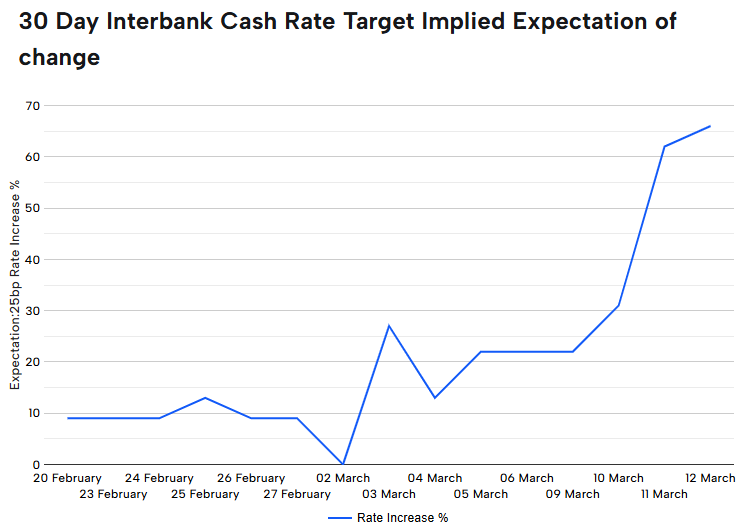
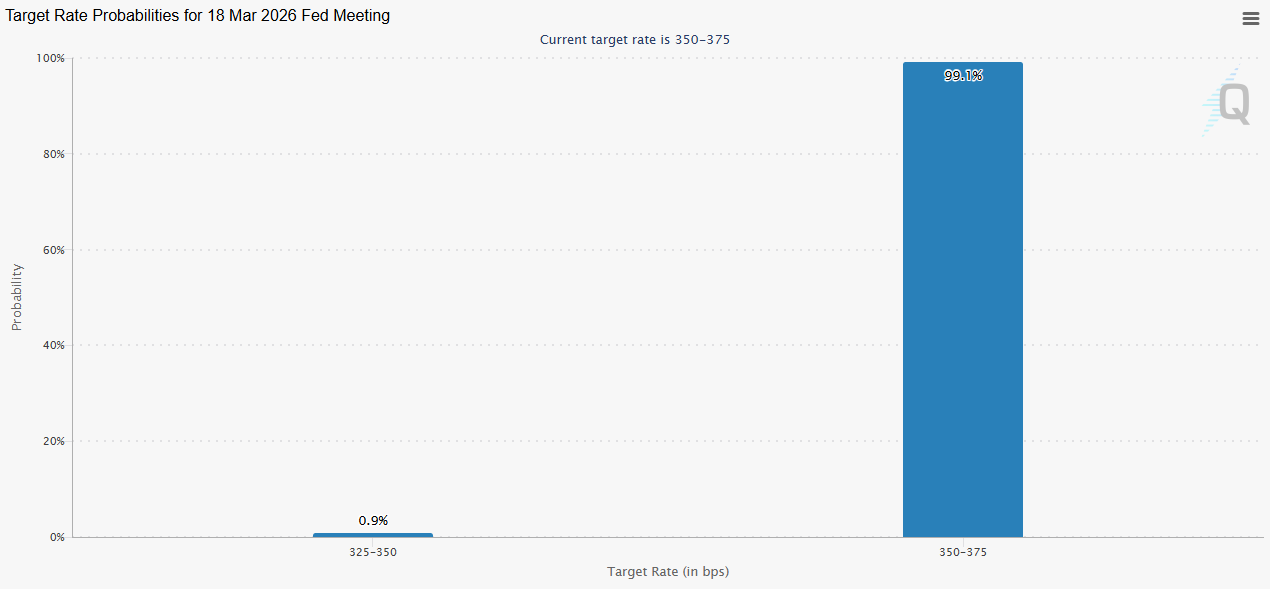
Any meaningful surprise can shift Fed policy expectations. Markets are currently pricing a lower likelihood of a March rate cut (under 30%) than this time last week, based on fed funds futures probabilities tracked by CME FedWatch.
Bank earnings may set the tone for the reporting season as a whole. Forward guidance is likely to be as important as Q4 performance, with valuations thought to be high after another record close in the S&P 500 overnight.
Key releases and events:
Tue 13 Jan (Wed am AEDT): CPI (Dec) (high sensitivity)
Tue 13 Jan (Wed am AEDT): JPMorgan earnings before market open (high sensitivity for banks and risk tone)
Wed to Thu: additional large-bank earnings cluster (high sensitivity for financials sentiment)
Wed 14 Jan (Thu am AEDT): US PPI
Thu 15 Jan (Fri am AEDT): US weekly unemployment
Throughout the week: Fed member speeches
How markets may respond:
S&P 500 and US risk tone: US indices are near record levels. The S&P 500 closed at 6,977.27 on Monday. Hotter-than-expected inflation can pressure growth and small-cap equities in particular, and weigh on the market broadly. Softer inflation can support further risk-on behaviour.
USD: Inflation data is the obvious driver this week for the greenback, but any continuation of DOJ and Fed developments, or geopolitical escalation, may introduce additional USD influences.
With the USD testing the highest levels seen in a month, followed by some light selling yesterday, some volatility looks likely. Gold has also been bid as a potential safety trade and hit fresh highs in the latest session, suggesting demand for defensive exposure remains present.
Earnings (banks): In a market already priced near highs, results can still create volatility if they are not accompanied by supportive earnings per share (EPS), revenue and forward guidance. Financials will likely see the first-order response, but any early pattern in results and guidance can influence the broader market beyond the first few days.
UK and Eurozone: growth data influence amid continuing equity strength
What to watch:
In a week where Europe may be driven primarily by events in the US and geopolitical narrative, the Eurozone industrial production print is still a noteworthy local release.
In the UK, monthly GDP and trade numbers on Thursday may influence both the FTSE 100 and the pound, particularly if there is any meaningful surprise.
Key releases and events:
Eurozone
Wed 14 Jan: Eurozone industrial production (Nov 2025) (medium sensitivity for cyclical sectors)
UK
Thu 15 Jan: GDP monthly estimate (Nov 2025) (high sensitivity for GBP and UK rate expectations)
Thu 15 Jan: UK trade (Nov 2025) (low to medium sensitivity)
How markets may respond:
EUR spillover from the US: Despite light Eurozone data, the US response is likely to matter most this week, with the US dollar index a major driver of broader G10 FX direction.
DAX (DE40): Germany’s index is also trading at or near record levels and closed at 25,405 on Monday. (2) If the index is extended, it may react more to global rate moves and shifts in perceived risk.
FTSE 100 and GBP: The FTSE hit a new high in the overnight session, driven particularly by materials and mining stocks. (5) Any GDP surprise can re-price GBP and UK equities quickly in an environment where growth concerns persist.
Wed 14 Jan: US CPI, US bank earnings kick-off (notably JPMorgan)
Wed 14 Jan: Eurozone industrial production (Nov 2025)
Thu 15 Jan: UK monthly GDP (Nov 2025) and UK trade (Nov 2025), US bank earnings continue
Fri 16 Jan: US weekly unemployment, US bank earnings continue
Bottom line
If US CPI surprises higher, markets may lean toward higher-for-longer interest rate pricing, which can pressure equity multiples and lift rates volatility.
If bank earnings are solid but guidance is cautious, equities can still see two-way swings given index levels near records and high valuations.
If DOJ and Fed headlines escalate, they may override normal data reactions to some degree. That could increase demand for perceived safe havens such as gold and lift FX volatility.
For Europe, Eurozone production (Wed) and UK GDP and trade (Thu) are the key local data. The region is still likely to trade primarily off US outcomes and broader risk sentiment.
Asia-Pacific markets start the week with sentiment shaped by China’s mid-week trade data, USDJPY (USD/JPY) as Japan’s key volatility channel, and offshore reporting influencing Australian equities. With a light domestic data calendar, global events may do most of the work on risk appetite.
Quick facts:
China's mid-week trade data is the primary regional risk event, with imports monitored for signs of domestic demand stability.
USD/JPY remains the key volatility channel, which may influence Nikkei performance.
Australian equities lack major domestic catalysts, leaving the ASX and AUD direction sensitive to China outcomes, geopolitics and US bank earnings.
This week’s Asia-Pacific focus is less about local policy and more about the transmission channels that typically set the tone.
For China, trade data may shape the growth narrative.
For Japan, the USD/JPY direction may influence equity momentum.
For Australia, offshore earnings, commodities and geopolitics may dominate in the absence of major domestic catalysts.
China: Shanghai may be influenced by trade data
What to watch:
With mid-week Chinese trade data, markets may view the release as a gauge of whether policy support is translating into growth activity or slowing any downturn.
Shanghai Composite: Stronger trade data could support sentiment, though the quality and perceived longevity of any improvement may matter. Weak imports would likely be read as continued softness in domestic demand.
Australia (resources and AUD): China trade and credit tone can feed directly into bulk commodity expectations and regional risk appetite, with potential flow-through to ASX miners and AUDUSD (AUD/USD).
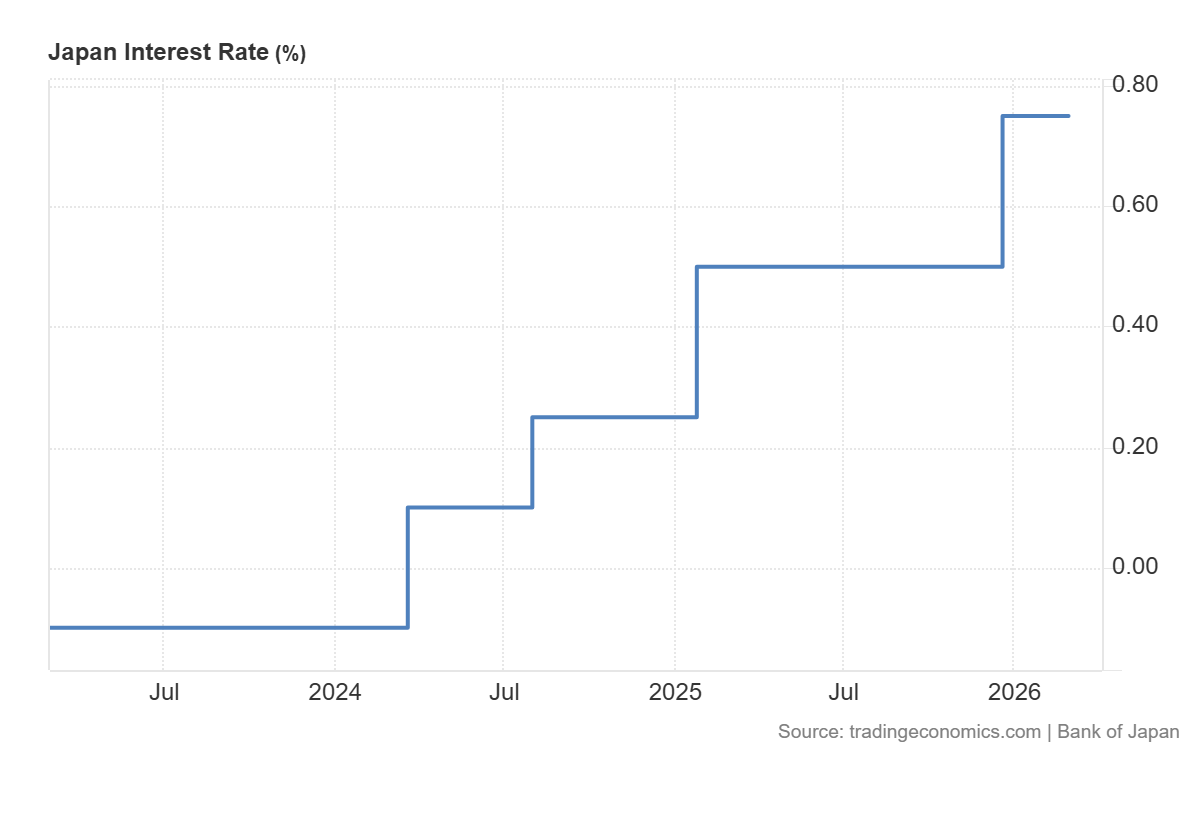
With no major policy decision scheduled, and the producer price index (PPI) the main data point, Japan’s influence this week may run primarily through USD/JPY moves after US data releases, and broader geopolitical headlines, particularly as markets reopen after Monday’s public holiday.
Key releases:
Wed 14 Jan: Preliminary machine tool orders, year on year (y/y) (low sensitivity)
Thu 15 Jan: PPI (medium sensitivity)
How markets may respond:
USD/JPY: The pair ended last week around 158, near recent highs. Moves can be volatile; markets will watch whether the pair holds recent strength or retraces, particularly around prior trading ranges.
Nikkei 225: The index hit a record high early last week before a modest two-day pullback, then closed higher on Friday. Equity momentum, often closely tied to FX stability, may be influenced by the strength or otherwise of USD/JPY.
Australia: offshore drivers dominate in a lighter data week
What to watch:
In the absence of significant domestic data releases, Australian markets may be more exposed to external influences. The main themes are China trade data, geopolitics, commodity prices and the start of the US earnings season, with banks in focus.
Thu 15 Jan: Melbourne Institute (MI) inflation expectations (low sensitivity)
How markets may respond:
ASX 200: The index has been consolidating around the 8,700–8,800 area (approx.). Local financial stocks may react to inferences made from US bank earnings. Stocks such as Macquarie Group are typically more sensitive to global market conditions and activity in investment markets, often drawing comparisons with US peers such as JPMorgan Chase (JPM).
AUDUSD (AUD/USD): AUD/USD has pulled back after last week’s gains and is trading near recent highs. Technical commentary is mixed, and price action can change quickly around major offshore events.
South Korea is expecting an interest rate decision on Thursday. Any deviation from market expectations for no change (currently 2.5% per Trading Economics) could create a minor FX ripple in regional currency pairs.
Asia-Pacific calendar:
Mon 12 Jan: Japan public holiday
Tue 13 Jan: Australia consumer sentiment
Wed 14 Jan: China trade balance, exports and imports
Thu 15 Jan: Bank of Korea rate decision; Japan PPI; Australia inflation expectations
Bottom line
If China trade and credit data stabilise, regional equities may move higher, with AUD and ASX resource stocks among the key sensitivity points.
If USD/JPY extends higher, the Nikkei may remain supported near highs, though FX volatility risk may increase.
If US bank earnings disappoint, ASX financials could face near-term pressure despite limited domestic data.
Information is accurate as at 23:00 AEDT on 11 January 2026. Economic calendar events, charts and market price data are sourced from TradingView.