In the words of Bjork’ 90s indie hit “Oh So Quiet” –It's, oh, so quiet Shhhh, Shhhh, It's, oh, so still Shhhh, Shhhh, You're all alone Shhh, Shhh And so peaceful until…Until… that is the question, and considering it is ‘peaceful’, it's probably best to review the minutes from the Fed as it is signalling that the quiet time is not far from ending soon.FOMC: The Pressure BuildsThe May 6th to 7th Federal Open Market Committee (FOMC) minutes reaffirmed the Fed’s cautious stance, with Chair Powell keeping to the “wait and see” script. But under the surface, the outlook has become more complicated as event risk is getting louder.Clearly, Trump’s Tariffs have created new complications for the Fed’s dual mandate.As the minutes note:“With uncertainty higher due to ‘larger and broader’ than expected tariffs, the Committee may ultimately face a more difficult trade-off between its price stability and full employment mandates.”And this was well before the Trade Court’s decision that the Liberation Day tariffs are illegal under the Economic Emergency Act of 1977, and then it was subsequently overturned 24 hours later by the appeals court.The Fed has flagged increased downside risk to real activity and now sees the probability of recession as nearly equal to its baseline forecast. At the same time, inflation risks for 2025 have been revised upward, though longer-term projections remain skewed to the upside, particularly as inflation expectations creep higher.Seen in these quotes from the minutes:“The staff continued to view the risks around the inflation forecast as skewed to the upside, with recent increases in some measures of inflation expectations raising the possibility that inflation would prove to be more persistent than the baseline projection assumed.”“Many participants reported that firms planned to partially or fully pass on tariff-related cost increases.”To paraphrase Milton Friedman, “Tariffs are not a tax on the sovereign, they are a tax on the consumer.” And this is what is being missed by government officials and the President himself.A counterargument to higher cost is that Fed officials suggested there is a chance of weakening demand, lower immigration driven housing inflation, and competitive pricing tactics. Which would feed back into the risk of recession as mentioned above, and signal that the US is entering a new stagflation era.Seen here:“Several argued that there might be less inflationary pressure for reasons such as reductions of tariff increases from ongoing trade negotiations, less tolerance for price increases by households, a weakening of the economy, reduced housing inflation pressures from lower immigration, or a desire by some firms to increase market share rather than raise prices.”On employment, the labour market remains tight but is potentially vulnerable to hiring pauses as policy and trade risks weigh.“The labour market was seen as ‘broadly in balance’ and the unemployment rate as ‘low.’”“Participants were concerned that tariff uncertainty could lead to a pause in hiring and the labour market to soften in the coming months.”Financial market signals were mixed. Several participants noted an unusual pattern: long-term Treasury yields rose even as the dollar weakened and equities sold off, raising concerns about shifting correlations and safe-haven perceptions.“Some participants commented on a change from the typical pattern... with longer-term Treasury yields rising and the dollar depreciating despite the decline in the prices of equities and other risky assets... [noting] that a durable shift... could have long-lasting implications for the economy.”Monetary framework discussions continue as well. The Fed appears to be reconsidering its post-COVID commitment to flexible average inflation targeting (FAIT). The minutes state:“Participants indicated that they thought it would be appropriate to reconsider the average inflation-targeting language in the Statement on Longer-Run Goals and Monetary Policy Strategy.”An interesting development is putting more rigidity into the mandate currently, suggesting the Fed is looking to ‘safeguard’ policy changes from external political forces.Where does this leave the US and the Fed in the short term? Don’t expect any near-term policy change, but the longer the Fed delays, the steeper the eventual rate cuts may need to be as the risks of a tariff-induced recession lead to the monetary brake being released.The consensus is that by January 2026, a possible 125 basis point will come out of the Federal funds rate, some even are forecasting 175 due to the need to stimulate the economy rather than restrict it. The consensus figure would see the Federal Funds rate landing on the terminal rate of 3.00% to 3.25%, the unknown is when, the size and velocity of reaching this point will be.It is oh so quiet, but it won’t be for long if the Fed is anything to go by.
It's oh so quiet, but for how long?

Related Articles

Asia starts the week with a fresh geopolitical shock that is already being framed in oil terms, not just security terms. The first-order move may be a repricing of risk premia and volatility across energy and macro, while markets wait to see whether this becomes a durable physical disruption or a fast-fading headline premium.
At a glance
- What happened: US officials said the US carried out “Operation Absolute Resolve”, including strikes around Caracas, and that Venezuela’s President Nicolás Maduro and his wife were taken into US custody and flown to the United States (subject to ongoing verification against the cited reporting).
- What markets may focus on now: Headline-driven risk premia and volatility, especially in products and heavy-crude-sensitive spreads, rather than a clean “missing barrels” shock.
- What is not happening yet: Early pricing has so far looked more like a headline risk premium than a confirmed physical supply shock, though this can change quickly, with analysts pointing to ample global supply as a possible cap on sustained upside.
- Next 24 to 72 hours: Market participants are likely to focus on the shape of the oil “quarantine”, the UN track, and whether this stays “one and done” or becomes open-ended.
- Australia and Asia hook: AUD as a risk barometer, Asia refinery margins in diesel and heavy, and shipping and insurance where the price can show up in friction before it shows up in benchmarks.
What happened, facts fast
Before anyone had time to workshop the talking points, there were strikes, there was a raid, and there was a custody transfer. US officials say the operation culminated in Maduro and his wife being flown to the United States, where court proceedings are expected.
Then came the line that turned a foreign policy story into a markets story. President Trump publicly suggested the US would “run” Venezuela for now, explicitly tying the mission to oil.
Almost immediately after that came a message-discipline correction. Secretary of State Marco Rubio said the US would not govern Venezuela day to day, but would press for changes through an oil “quarantine” or blockade.
That tension, between maximalist presidential rhetoric and a more bureaucratically describable “quarantine”, is where the uncertainty lives. Uncertainty is what gets priced first.

Why this is price relevant now
What’s new versus known for positioning
What’s new, and price relevant, is that the scale and outcome are not incremental. A major military operation, a claimed removal of Venezuela’s leadership from the country, and a US-led custody transfer are not the sort of things markets can safely treat as noise.
Second, the oil framing is explicit. Even if you assume the language gets sanded down later, the stated lever is petroleum. Flows, enforcement, and pressure via exports.
Third, the embargo is not just a talking point anymore. Reporting says PDVSA has begun asking some joint ventures to cut output because exports have been halted and storage is tightening, with heavy-crude and diluent constraints featuring prominently.
What’s still unknown, and where volatility comes from
Key unknowns include how strict enforcement is on water, what exemptions look like in practice, how stable the on-the-ground situation is, and which countries recognise what comes next. Those are not philosophical questions. Those are the inputs for whether this is a temporary risk premium or a durable regime shift.
Political and legal reaction, why this drives tail risk
The fastest way to understand the tail here is to watch who calls this illegal, and who calls it effective, then ask what those camps can actually do.
Internationally, reaction has been fast, with emphasis on international law and the UN Charter from key partners, and UN processes in view. In the US, lawmakers and commentators have begun debating the legal basis, including questions of authority and war powers. That matters for markets because it helps define whether this is a finite operation with an aftershock, or the opening chapter of a rolling policy regime that keeps generating headlines.
Market mechanism, the core “so what”
Here’s the key thing about oil shocks. Sometimes the headline is the shock. Sometimes the plumbing is the shock.

Volumes and cushion
Venezuela is not the world’s swing producer. Its production is meaningful at the margin, but not enough by itself to imply “the world runs out of oil tomorrow”. The risk is not just volume. It is duration, disruption, and friction.
The market’s mental brake is spare capacity and the broader supply backdrop. Reporting over the weekend pointed to ample global supply as a likely cap on sustained gains, even as prices respond to risk.
Quality and transmission
Venezuela’s barrels are disproportionately extra heavy, and extra heavy crude is not just “oil”. It is oil that often needs diluent or condensate to move and process. That is exactly the kind of constraint that shows up as grade-specific tightness and product effects.
Reporting has highlighted diluent constraints and storage pressure as exports stall. Translation: even if Brent stays relatively civil, watch cracks, diesel and distillates, and any signals that “heavy substitution” is getting expensive.

Products transmission, volatility first, pump later
If crude is the headline, products are the receipt, because products tell you what refiners can actually do with the crude they can actually get. The short-run pattern is usually: futures reprice risk fast, implied volatility pops; physical flows adapt more slowly; retail follows with a lag, and often with less drama than the first weekend of commentary promised.
For Australia and Asia desks, the bigger point is transmission. Energy moves can influence inflation expectations, which can feed into rates pricing and the dollar, and in turn affect Asia FX and broader risk, though the links are not mechanical and can vary by regime.
Some market participants also monitor refined-product benchmarks, including gasoline contracts such as reformulated gasoline blendstock, as part of that chain rather than as a stand-alone signal.
Historical context, the two patterns that matter
Two patterns matter more than any single episode.
Pattern A: scare premium. Big headline, limited lasting outage. A spike, then a fade as the market decides the plumbing still works.
Pattern B: structural. Real barrels are lost or restrictions lock in; the forward curve reprices; the premium migrates from front-month drama to whole-curve reality.

One commonly observed pattern is that when it is only premium, volatility tends to spike more than price. When it is structural, levels and time spreads move more durably.
The three possible market reactions
Contained, rhetorical: quarantine exists but porous; diplomacy churns; no second-wave actions. Premium bleeds out; volatility mean-reverts.
Embargo tightens, exports curtailed, quality shock: enforcement hardens; PDVSA cuts deepen; diluent constraints bite. Heavies bid; cracks and distillates react; freight and insurance add friction.
Escalation, prolonged control risk: “not governing” language loses credibility; repeated operations; allies fracture further. Longer-duration premium; broader risk-off impulse across FX and rates.
Australia and Asia angle
For Sydney, Singapore, and Hong Kong screens, this is less about Venezuelan retail politics and more about how a Western Hemisphere intervention bleeds into Asia pricing.
AUD is the quick and dirty risk proxy. Asia refiners care about the kind of oil and the friction cost. Heavy crude plus diluent dependency makes substitution non-trivial. If enforcement looks aggressive, the “price” can show up in freight, insurance, and spreads before it shows up in headline Brent.
Catalyst calendar, key developments markets may monitor
- US policy detail: quarantine rules, enforcement posture, exemptions.
- UN and allies: statements that signal whether this becomes a long legitimacy fight.
- PDVSA operations: storage, shut-ins, diluent availability, floating storage signals.
- OPEC+ signalling: whether the group stays committed to stability if spreads blow out.

The United States entered a government shutdown on October 1, 2025, after Congress failed to agree on full-year appropriations or a short-term funding bill. Although shutdowns have occurred before, the timing, speed, scale, and motives behind this one make it unique. This is the first shutdown since the last Trump term in 2018–19, which lasted 35 days, the longest in history.For traders, understanding both the mechanics and the ripple effects is essential to anticipating how markets may respond, particularly if the shutdown draws out to multiple weeks as currently anticipated.
What Is a Government Shutdown?
A government shutdown occurs when Congress fails to pass appropriation bills or a temporary extension to fund government operations for the new fiscal year beginning October 1.Without the legal authority to spend, federal agencies must suspend “non-essential” operations, while “essential” services such as national security, air traffic control, and public safety continue, often with employees working unpaid until funding is restored.Since the Government Employee Fair Treatment Act of 2019, federal employees are guaranteed back pay to cover lost wages once the shutdown ends, although there has been some narrative from the current administration that some may not be returning to work at all.
Why Did the Government Shutdown Happen?
The 2025 impasse stems from partisan disputes over spending levels, health-insurance subsidies, and proposed rescissions of foreign aid and other programs. The reported result is that around 900,000 federal workers are furloughed, and another 700,000 are currently working without pay.Unlike many past standoffs, there was no stopgap agreement to keep the government open while negotiations continued, making this shutdown more disruptive and unusually early.
Why an Early Shutdown?
Historically, most shutdowns don’t occur immediately on October 1. Lawmakers typically kick the can down the road with a “Continuing Resolution (CR)”. This is a stopgap measure that can extend existing funding for weeks or months to allow time for an agreement later in the quarter.The speed of the breakdown in 2025, with no CR in place, is unusual compared to past shutdowns. It suggests it was not simply budgetary drift, but a potentially deliberate refusal to extend funding.
Alternative Theories Behind the Early Shutdown
While the main narrative coming from the U.S. administrators points to budget deadlock, several other theories are being discussed across the media:
- Executive Leverage – The White House may be using the shutdown as a tool to increase bargaining power and force structural policy changes. Health care is central to the debate, funding for which was impacted significantly by the “one big, beautiful bill” recently passed through Congress.
- Hardline Congressional Factions – Small but influential groups within Congress, particularly on the right, may be driving the shutdown to demand deeper cuts.
- Political Messaging – The blame game is rife, despite the reality that Republican control of the presidency, House, and Senate, as well as both sides, is indulging in the usual political barbs aimed at the other side. As for the voter impact, Recent polls show that voters are placing more blame on Republicans than Democrats at this point, though significant numbers of Americans suggest both parties are responsible
- Debt Ceiling Positioning – Creating a fiscal crisis early could shape the terms of future negotiations on borrowing limits.
- Electoral Calculus – With midterms ahead, both sides may be positioning to frame the narrative for voters.
- Systemic Dysfunction – A structural view is that shutdowns have become a recurring feature of hyper-partisan U.S. politics, rather than exceptions.
Short-Term Impact of Government Shutdown
AreaImpactFederal workforceHundreds of thousands have been furloughed with reduced services across various agencies.Travel & aviationFAA expects to furlough 11,000 staff. Inspections and certifications may stall. Safety concerns may become more acute if prolonged shutdown.Economic outputThe White House estimates a $15 billion GDP loss per week of shutdown (source: internal document obtained by “Politico”.Consumer spendingFederal workers and contractors face delayed income, pressuring local economies. Economic data releaseKey data releases may be delayed, impacting the decision process at the Fed meeting later this month.Credit outlookScope Ratings and others warn that the shutdown is “negative for credit” and could weigh on U.S. borrowing costs.Projects & researchInfrastructure, grants, and scientific initiatives are delayed or paused.
Medium- to Long-Term Impact of Government Shutdown
1. Market Sentiment
Shutdowns show some degree of U.S. political dysfunction. They can weigh on confidence and subsequently equity market and risk asset sentiment. To date, markets are shrugging off a prolonged impact, but a continued shutdown into later next week could start to impact.Equity markets have remained strong, and there has been no evidence of the frequent seasonal pullback we often see around this time of year.Markets have proved resilient to date, but one wonders whether this could be a catalyst for some significant selling to come.
2. Borrowing Costs
Ratings downgrades could lift Treasury yields and increase debt-servicing costs. The Federal Reserve is already balancing sticky inflation and potential downward pressure on growth. This could make rate decisions more difficult.
3. The Impact on the USD
Rises in treasury yields would generally support the USD. However, rising concerns about fiscal stability created by a prolonged shutdown may put further downward pressure on the USD. Consequently, it is likely to result in buying into gold as a safe haven. With gold already testing record highs repeatedly over the last weeks, this could support further moves to the upside.
4. Credibility Erosion
Repeated shutdowns weaken the U.S.’s reputation as the world’s most reliable borrower. With some evidence that tariffs are already impacting trade and investment into the US, a prolonged shutdown could exacerbate this further.
What Traders Should Watch
For those who trade financial markets, shutdowns matter more for what they could signal both in the short and medium term. Here are some of the key asset classes to watch:
- Equities: Likely to see volatility as political risk rises, and the potential for “money off the table” after significant gains year-to-date for equities.
- U.S. Dollar: With the US dollar already relatively weak, further vulnerability if a shutdown feeds global doubts about U.S. fiscal stability.
- Gold and other commodities: May continue to gain as hedges against political and credit risk. Oil is already threatening support levels; any prolonged shutdown may add to the bearish narrative, along with other economic slowdown concerns
- Outside the US: With the US such a big player in global GDP, we may see revisions in forward-looking estimates, slingshot impacts on other global markets and even supply chain disruptions with impact on customs services (potentially inflationary).
Final Word
The 2025 shutdown is unusual because of its scale and because it started on Day 1 of the fiscal year, without even a temporary extension. That speed points to a deeper strategic and political contribution beyond the usual budget wrangling that we see periodically.For traders, the lesson is clear: shutdowns are not just what happens in Washington, but may impact confidence, borrowing costs, and market sentiment across a range of asset classes. In today’s world, where political credibility is a form of capital, shutdowns have the potential to erode the very foundation of the U.S.’s role in global finance and trade relationships.

The US has entered the Israel-Iran war. However, despite an initial 4 per cent surge on the open, oil has settled where it has been since the conflict began in early June — around US$72 to US$75 a barrel.Trump claims the attacks from the US on Iranian nuclear facilities over the weekend are a very short, very tactical, one-off. This is something his base can get behind — some really big conservative players do not want a long-contracted war that sucks the US into external disputes.Whether this will be the case or not is up for debate, but there is a precedent from Trump's first presidency that we can look to. Iran had attacked several American bases in 2019, as well as attacking Saudi Arabia's most important oil refinery with Iranian drones. There wasn't a huge amount of damage; it was more a symbolic movement and display of capabilities by Iran.Initially, Trump didn't react — it took pressure from Gulf allies like the UAE and Israel for him to respond, which saw him order the assassination of the head of the Iranian Defence Force, Qasem Soleimani. This led to an Iranian response of ‘lots of noise’ and ‘cage rattling’, but minimal real action events, just a few drone attacks. Trump is betting on the same reaction now.If Iran follows the same patterns from the previous engagement, the geopolitical side of this is already at its peak.As of now, Iran is not going after or destroying major Gulf energy capabilities. Nor have there been any disruptions to the shipping traffic through the Strait of Hormuz. In fact, apart from a posturing vote to block the Strait, Iran has not made any indication that it is going to disrupt oil in any way that would lead to price surges.Additionally, despite the U.S. military equipment buildup in the region being its highest since the Iraq war, critical Iranian energy infrastructure is running largely unscathed.This all suggests that the geopolitics and the physical and futures oil markets remain disconnected. Oil will spike on news rumours, but the actual impacts in the physical realm to this point remain low. Of course, this could change in future. But, for now, the risk of seeing oil move to US$100 a barrel is still a minority case rather than the majority.
Recent Articles

As geopolitical narratives continue to simmer, US and European markets move into the rest of the week with three dominant drivers: US inflation data, the start of US earnings season, and an unusual Fed-independence headline risk after the DOJ subpoenaed the Federal Reserve.
Quick facts:
- US consumer price index (CPI) and producer price index (PPI) are the key macro releases and are likely to impact the US dollar (USD) and other asset classes if there is a significant move from expectations.
- JPMorgan reports Tuesday, with other major US banks through the week, as the Q4 reporting season gets underway.
- Reporting around DOJ action involving the Fed, and Chair Powell’s prior testimony, created early market volatility on Monday, with markets sensitive to anything that may be perceived as undermining Fed independence.
- President Trump announced this morning that any country doing business with Iran will face a 25% tariff on all business with the US, effective immediately.
- Europe’s production and growth updates, including Eurozone industrial production and UK monthly GDP and trade data, are later in the week.
United States: CPI, Fed path, DOJ and Fed headline risk, and banks leading earnings
What to watch:
The US is carrying the highest event density in global data releases this week. CPI and PPI will both be watched for moves away from expectations.
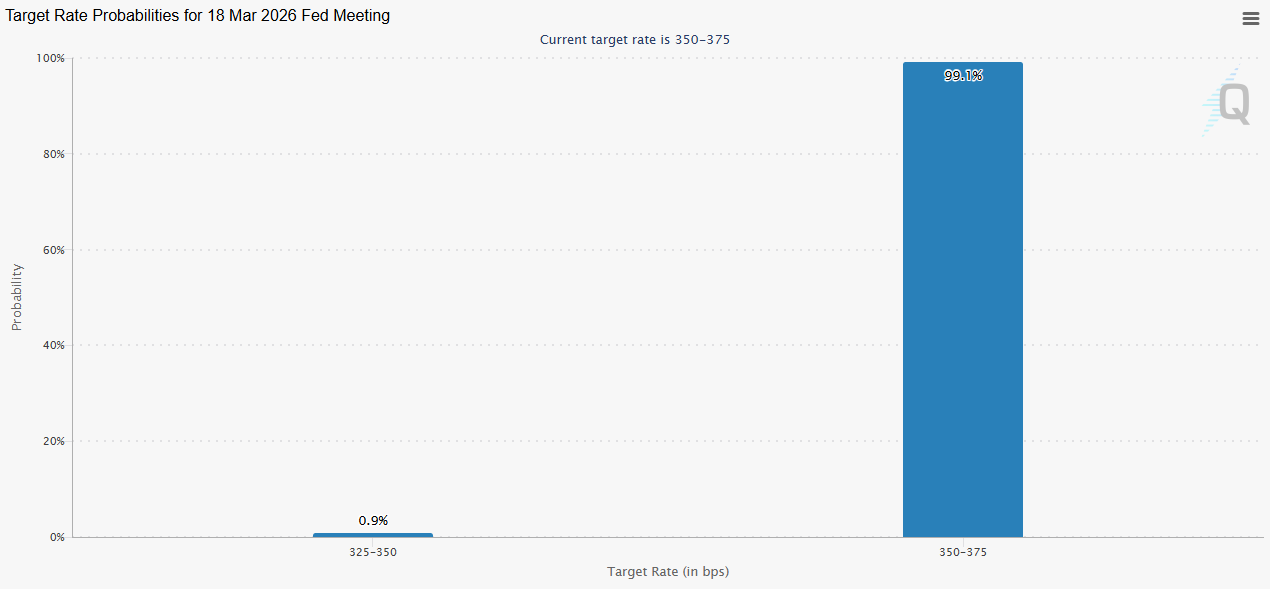
Any meaningful surprise can shift Fed policy expectations. Markets are currently pricing a lower likelihood of a March rate cut (under 30%) than this time last week, based on fed funds futures probabilities tracked by CME FedWatch.
Bank earnings may set the tone for the reporting season as a whole. Forward guidance is likely to be as important as Q4 performance, with valuations thought to be high after another record close in the S&P 500 overnight.
Key releases and events:
- Tue 13 Jan (Wed am AEDT): CPI (Dec) (high sensitivity)
- Tue 13 Jan (Wed am AEDT): JPMorgan earnings before market open (high sensitivity for banks and risk tone)
- Wed to Thu: additional large-bank earnings cluster (high sensitivity for financials sentiment)
- Wed 14 Jan (Thu am AEDT): US PPI
- Thu 15 Jan (Fri am AEDT): US weekly unemployment
- Throughout the week: Fed member speeches
How markets may respond:
S&P 500 and US risk tone: US indices are near record levels. The S&P 500 closed at 6,977.27 on Monday. Hotter-than-expected inflation can pressure growth and small-cap equities in particular, and weigh on the market broadly. Softer inflation can support further risk-on behaviour.
USD: Inflation data is the obvious driver this week for the greenback, but any continuation of DOJ and Fed developments, or geopolitical escalation, may introduce additional USD influences.
With the USD testing the highest levels seen in a month, followed by some light selling yesterday, some volatility looks likely. Gold has also been bid as a potential safety trade and hit fresh highs in the latest session, suggesting demand for defensive exposure remains present.
Earnings (banks): In a market already priced near highs, results can still create volatility if they are not accompanied by supportive earnings per share (EPS), revenue and forward guidance. Financials will likely see the first-order response, but any early pattern in results and guidance can influence the broader market beyond the first few days.
UK and Eurozone: growth data influence amid continuing equity strength
What to watch:
In a week where Europe may be driven primarily by events in the US and geopolitical narrative, the Eurozone industrial production print is still a noteworthy local release.
In the UK, monthly GDP and trade numbers on Thursday may influence both the FTSE 100 and the pound, particularly if there is any meaningful surprise.
Key releases and events:
Eurozone
- Wed 14 Jan: Eurozone industrial production (Nov 2025) (medium sensitivity for cyclical sectors)
UK
- Thu 15 Jan: GDP monthly estimate (Nov 2025) (high sensitivity for GBP and UK rate expectations)
- Thu 15 Jan: UK trade (Nov 2025) (low to medium sensitivity)
How markets may respond:
EUR spillover from the US: Despite light Eurozone data, the US response is likely to matter most this week, with the US dollar index a major driver of broader G10 FX direction.
DAX (DE40): Germany’s index is also trading at or near record levels and closed at 25,405 on Monday. (2) If the index is extended, it may react more to global rate moves and shifts in perceived risk.
FTSE 100 and GBP: The FTSE hit a new high in the overnight session, driven particularly by materials and mining stocks. (5) Any GDP surprise can re-price GBP and UK equities quickly in an environment where growth concerns persist.
US and Europe calendar summary (AEDT)
- Wed 14 Jan: US CPI, US bank earnings kick-off (notably JPMorgan)
- Wed 14 Jan: Eurozone industrial production (Nov 2025)
- Thu 15 Jan: UK monthly GDP (Nov 2025) and UK trade (Nov 2025), US bank earnings continue
- Fri 16 Jan: US weekly unemployment, US bank earnings continue
Bottom line
- If US CPI surprises higher, markets may lean toward higher-for-longer interest rate pricing, which can pressure equity multiples and lift rates volatility.
- If bank earnings are solid but guidance is cautious, equities can still see two-way swings given index levels near records and high valuations.
- If DOJ and Fed headlines escalate, they may override normal data reactions to some degree. That could increase demand for perceived safe havens such as gold and lift FX volatility.
- For Europe, Eurozone production (Wed) and UK GDP and trade (Thu) are the key local data. The region is still likely to trade primarily off US outcomes and broader risk sentiment.
%20(1).jpg)
2026年的CES国际消费电子展在拉斯维加斯刚刚落下帷幕,因为近年来市场高度关注AI市场的发展和进步,CES展也被称为科技界的“春晚”,今年也不例外,CES上爆出了大量新锐AI产品,也让AI发展的风向和科技产业投资趋势进一步具象化。
总结下来今年CES的核心趋势总结下来就是从云端算力向物理AI的重大转型,将AI从对话框延伸到电子产品的每个角落。
长久以来自GPT开始AI大模型的大部分应用集中在线上沟通的实时交互上,各大科技企业百花齐放用天量资金加码AI大模型的应用,这也让芯片供应商英伟达乘着本轮趋势登顶全球市值第一的宝座。今年英伟达老总“皮衣黄”再度现身CES只不过本轮他带来的新一代架构为今年的美股科技投资风向带来了一个新的趋势“物理AI”。
英伟达
英伟达在本轮CES展览上公布了其Vera Rubin模型,并表示将提前量产,会将AI推理的物理成本压低90%,意味着同级别情况下AI的算力再度以两位数的速率提振,而黄仁勋本次通过COSMOS开放模型平台具体展示AI对物理世界的规则的理解将会赋能机器人,汽车等多个电子产品领域,将AI从对话框搬到现实物理世界中来。
1. 结构化底座:Cosmos物理模拟平台与世界模型
· 通过精确的物理规律的嵌入,引入物理约束层理念,在生成与测试计算重力,动量,和摩擦系数等模拟现实世界。
· 训练数据包含超过10一小时真实物理世界视频以及高保真模拟合成数据,推理速度较上一代攀升12被,允许机器人每秒进行上千次的虚拟模拟和路径推演
· 真正开始挖掘了仿佛电影终结者和机械公敌里的机器人通过人工智能对现实世界产生重要交互的发展需求。
2. 算力构架层面RubinGPU的屋里计算特性
HBM4 的带宽飞跃: Rubin GPU 搭载了 16 层堆叠的 HBM4 内存。物理世界模型需要处理海量的三维空间数据和多模态感知数据(视觉、触觉、激光雷达),HBM4提供的 5.0 TB/s 以上的带宽 解决了物理 AI 的“数据贫血”问题。
Vera CPU 的协同: 物理理解需要极强的逻辑判断和调度,Rubin平台配套的 Vera CPU 针对机器人操作系统(ROS)底层的中断响应进行了硬件级加速,将系统延迟降低了 40%。
这些在计算上和对真实世界的模拟上将进一步推动英伟达将其产业触手从互联网和云端算力供应伸展到智能制造,电子产品AI赋能中来。
英特尔
相较于科技新锐英伟达,老牌芯片制造商英特尔在本轮AI发展中早期处于极端落后趋势,但是本届CES英特尔的NPU以及其快速落地智能制造将AI从云端搬到端口的发展思路展现了其老牌企业顽强的韧性和弯道超车的发展策略,英特尔股价最近表现也极度抢眼。
1. NPU5 架构与“端侧算力”的暴力重构
英特尔在 Panther Lake 中引入了全新的NPU 5 架构,其核心目标是彻底解决本地运行大模型的能效瓶颈。
· 算力指标: * NPU 独立算力:50 TOPS。虽然单看 NPU 算力与 AMD 持平,但英特尔强调的是XPU(全平台算力)协同;平台总算力(XPU):突破 180TOPS(由 50 TOPS NPU + 120 TOPS GPU + 10 TOPS CPU 组成)。
· 70B模型本地化: 英特尔在现场演示了通过 OpenVINO 优化,在搭载96GB 内存的 Panther Lake 笔记本上本地运行700 亿参数(70B)的大模型。这在过去被认为是只有服务器级显卡才能完成的任务。
· 始终在线的低功耗岛: NPU 5 采用了一种“岛屿架构”,允许 AI 以极低电流处理背景任务(如眼球追踪、实时语音翻译),而无需唤醒高功耗的CPU 核心。
2. 核心动向:18A 制程——IDM 2.0 的“荣誉之战”
英特尔的发展思路非常明确:通过制造工艺的跨代领先,强行在能效比上反超对手。
- RibbonFET 与 PowerVia 技术: * 8A 制程 引入了全环绕栅极(GAA)和背部供电(Backside Power)技术;数据效果: 相比上一代,Panther Lake 在同等功耗下多线程性能提升了 60%,并将 4K 视频流播放的功耗降低了 2/3。
- 27 小时续航: 这是英特尔在拉斯维加斯打出的最响亮口号。它不仅重塑了 x86 电脑“笨重耗电”的刻板印象,更是直接向苹果 MacBook 的续航霸权发起挑战。
3. 机器人协同:赋能AMR(自主移动机器人)的“小脑”
· 英特尔通过Robotics AI Suite(机器人AI 套件)将 NPU 的能力直接对接到ROS 2(机器人操作系统)底层;空间计算与避障: 机器人在复杂厂区移动时,需要处理激光雷达(LiDAR)和深度相机的数据。GPU负责复杂的三维建模,而NPU 负责高频的避障推理。NPU处理“感知到障碍物”到“发出转向指令”的时间被压缩到了亚毫秒级,极大地提升了协作机器人(Cobots)与人类共存的安全性。
· 本地自然语言交互:2026 年的趋势是“机器人智能体(Agent)”。工人不需要编写代码,直接通过语音命令(如“去 A 区把那个红色零件拿过来”)与机器人沟通;关键突破:英特尔 NPU 能够本地运行7B-10B 规模的小型语言模型(SLM)。这意味着机器人不需要连接Wi-Fi 即可理解复杂的人类指令,解决了工厂复杂电磁环境下网络信号不稳定的痛点。
波士顿动力公司:
作为非上市企业波士顿动力公司本轮在CES上也是占尽了风头,早年波士顿动力公司是人形机器人的佼佼者,但是近年来在国内制造业大幅领先的情况下,中国的机器人产业层出不穷快速迭代让波士顿动力公司的受关注程度大幅下降,本次CES上其展示的ATLAS电动版本让人眼前一亮,其中他的全方向灵活度的关节和对动作模拟的深度把控让所有观展者都惊呼神迹,同时韩国的现代公司将会引用该模型对厂区进行进一步机器人升级。
核心技术特点:
1. 超人类的关节灵活性(56 个自由度):
- 特点: 不同于人类受限的关节,全电动 Atlas 的关节(如颈部、腰部、腿部)具备 360 度旋转能力。在CES现场展示了从地面直接“翻折”起身,并以人类无法做到的姿态原地转身。以超越人类为前提——在狭窄的工厂车间里,它不需要转身即可后退工作,极大地提高了空间作业效率。
2. 具备触觉反馈的“人类级”灵爪:
- 配备了最新的三指/五指触觉传感器手部,能处理复杂的工业零件,不仅能抓取沉重的汽车悬挂件(负重能力可达 50 公斤),还能通过感知物体的细微纹理和硬度来调整抓取力度,实现了强力与精密的统一。
3. 物理 AI 的深度整合(与 GoogleDeepMind 合作):
- 接入了 Google 的 Gemini Robotics 大模型,具备了“视觉学习”能力,可以通过观看人类操作视频,自主理解复杂的装配流程,无需程序员逐行编写代码。它正在从“执行指令的机器”变为“能理解任务的智能体”。
核心总结:
如果说过去AI大模型集中在云服务,线上交互上给人类社会带来发展和效率的提升,今年毋庸置疑将是机器人的年份,AI将不再仅存于显示屏的对话框中而是进入方方面面,先从厂区的生产制造开始,接下来将有更多应用场景出现在我们的生活里,而机器人投资也必将吸引进一步的资金和资本的青睐。

Asia-Pacific markets start the week with sentiment shaped by China’s mid-week trade data, USDJPY (USD/JPY) as Japan’s key volatility channel, and offshore reporting influencing Australian equities. With a light domestic data calendar, global events may do most of the work on risk appetite.
Quick facts:
- China's mid-week trade data is the primary regional risk event, with imports monitored for signs of domestic demand stability.
- USD/JPY remains the key volatility channel, which may influence Nikkei performance.
- Australian equities lack major domestic catalysts, leaving the ASX and AUD direction sensitive to China outcomes, geopolitics and US bank earnings.
This week’s Asia-Pacific focus is less about local policy and more about the transmission channels that typically set the tone.
For China, trade data may shape the growth narrative.
For Japan, the USD/JPY direction may influence equity momentum.
For Australia, offshore earnings, commodities and geopolitics may dominate in the absence of major domestic catalysts.
China: Shanghai may be influenced by trade data
What to watch:
With mid-week Chinese trade data, markets may view the release as a gauge of whether policy support is translating into growth activity or slowing any downturn.
Key release:
- Wed 14 Jan: Trade balance, exports and imports (December) (high sensitivity)
How markets may respond:
Shanghai Composite: Stronger trade data could support sentiment, though the quality and perceived longevity of any improvement may matter. Weak imports would likely be read as continued softness in domestic demand.
Australia (resources and AUD): China trade and credit tone can feed directly into bulk commodity expectations and regional risk appetite, with potential flow-through to ASX miners and AUDUSD (AUD/USD).

Japan: FX sensitivity remains the key factor
What to watch:
With no major policy decision scheduled, and the producer price index (PPI) the main data point, Japan’s influence this week may run primarily through USD/JPY moves after US data releases, and broader geopolitical headlines, particularly as markets reopen after Monday’s public holiday.
Key releases:
- Wed 14 Jan: Preliminary machine tool orders, year on year (y/y) (low sensitivity)
- Thu 15 Jan: PPI (medium sensitivity)
How markets may respond:
USD/JPY: The pair ended last week around 158, near recent highs. Moves can be volatile; markets will watch whether the pair holds recent strength or retraces, particularly around prior trading ranges.
Nikkei 225: The index hit a record high early last week before a modest two-day pullback, then closed higher on Friday. Equity momentum, often closely tied to FX stability, may be influenced by the strength or otherwise of USD/JPY.
Australia: offshore drivers dominate in a lighter data week
What to watch:
In the absence of significant domestic data releases, Australian markets may be more exposed to external influences. The main themes are China trade data, geopolitics, commodity prices and the start of the US earnings season, with banks in focus.
Key releases:
- Tue 13 Jan: Westpac consumer sentiment (low sensitivity)
- Thu 15 Jan: Melbourne Institute (MI) inflation expectations (low sensitivity)
How markets may respond:
ASX 200: The index has been consolidating around the 8,700–8,800 area (approx.). Local financial stocks may react to inferences made from US bank earnings. Stocks such as Macquarie Group are typically more sensitive to global market conditions and activity in investment markets, often drawing comparisons with US peers such as JPMorgan Chase (JPM).
AUDUSD (AUD/USD): AUD/USD has pulled back after last week’s gains and is trading near recent highs. Technical commentary is mixed, and price action can change quickly around major offshore events.
Other Asia-Pacific events
South Korea is expecting an interest rate decision on Thursday. Any deviation from market expectations for no change (currently 2.5% per Trading Economics) could create a minor FX ripple in regional currency pairs.
Asia-Pacific calendar:
- Mon 12 Jan: Japan public holiday
- Tue 13 Jan: Australia consumer sentiment
- Wed 14 Jan: China trade balance, exports and imports
- Thu 15 Jan: Bank of Korea rate decision; Japan PPI; Australia inflation expectations
Bottom line
- If China trade and credit data stabilise, regional equities may move higher, with AUD and ASX resource stocks among the key sensitivity points.
- If USD/JPY extends higher, the Nikkei may remain supported near highs, though FX volatility risk may increase.
- If US bank earnings disappoint, ASX financials could face near-term pressure despite limited domestic data.
- Information is accurate as at 23:00 AEDT on 11 January 2026. Economic calendar events, charts and market price data are sourced from TradingView.