市場新聞與洞察
透過專家洞察、新聞與技術分析,助你領先市場,制定交易決策。

波动性不分青红皂白。但它可以惩罚没有做好准备的人。
在几分钟内反向移动时停止被击中。短期期权的溢价攀升。而且日元不再像以前那样作为可靠的对冲工具。
对于亚洲各地的交易者来说,驾驭这种环境意味着就风险、时机以及为市场平静而制定的策略中包含的假设提出更棘手的问题。
1。在地缘政治冲击期间如何交易VIX差价合约?
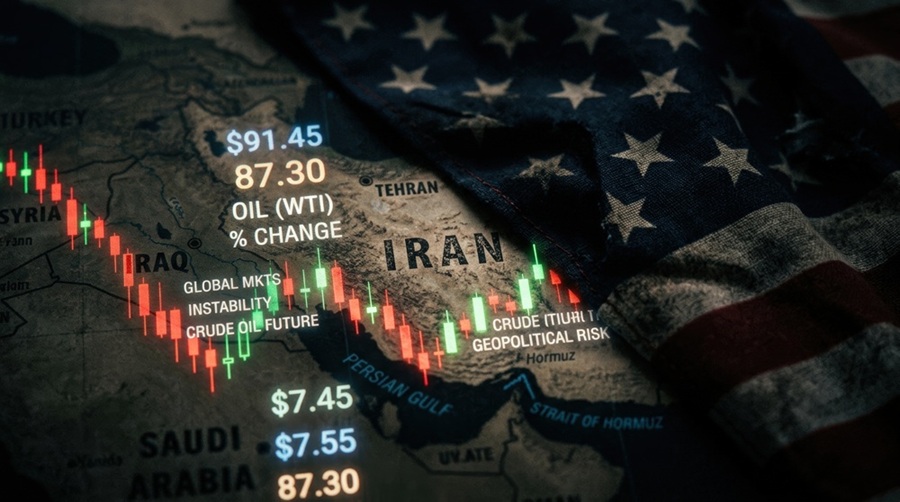
芝加哥期权交易所波动率指数(VIX)衡量了市场对标准普尔500指数30天隐含波动率的预期。它通常被称为 “恐惧指标”。在地缘政治冲击中,例如当前的伊朗升级、制裁公告和央行出人意料的行动,VIX可能会急剧而迅速地飙升。
是什么让 VIX 差价合约在震惊中与众不同
VIX 本身不可直接交易。VIX差价合约通常按VIX期货定价,这意味着它们在正常条件下具有同价拖累。
在地缘政治冲击期间,可能会同时发生几件事
- 现货VIX可能会立即飙升,而短期期货滞后,从而造成脱节。
- 随着流动性的减少,VIX差价合约的点差可能会显著扩大。
- 随着经纪商风险模型的调整,保证金要求可能会在盘中发生变化。
- VIX 在峰值之后往往会恢复均值,因此时机和持续时间至关重要。
这对亚洲时段交易者意味着什么
亚洲市场交易时间意味着许多地缘政治事件可能会在当地交易者活跃或刚刚开始交易时爆发。
在悉尼开盘之前,东京时段发生的冲击可能已经定价到VIX期货中。
一些交易者使用VIX差价合约头寸作为股票投资组合的短期对冲工具,而不是定向交易。其他人则交易回归(一旦最初的飙升消退,就会回到历史平均水平)。两种方法都有不同的风险,都不能保证特定的结果。

2。为什么我现在的0DTE期权保费这么贵?
零天到期(0DTE)期权在交易当天到期。根据芝加哥期权交易所全球市场数据,它们已成为期权市场增长最快的细分市场之一,目前占标准普尔500指数期权每日交易量的57%以上。
对于进入美国期权市场的亚洲参与者来说,波动时期的溢价上涨可能感觉像是定价错误,但通常反映了结构性定价因素。
为什么保费飙升
期权定价由内在价值和时间价值驱动。对于0DTE期权,几乎没有剩余的时间价值,这可能表明它们应该便宜,但隐含波动率部分可以弥补这一点。
当不确定性增加时,卖方可能会要求为盘中急剧波动的风险提供更多补偿。
这可以反映在
- 更高的隐含波动率输入。
- 更宽的买卖价差。
- 在 delta 和 gamma 对冲方面进行更快的调整。
在更高的VIX环境中,套期保值流量可能导致标的指数的短期反馈循环。这可能会放大价格波动,尤其是在关键水平附近。
这对亚洲时段交易者意味着什么
许多0DTE期权合约在美国交易时段的定价和套期保值流量最为活跃。在亚洲时段入仓可能意味着面临过时的定价或更大的利差。
如果您看到昂贵的保费,这可能反映出市场对当日大幅波动风险的准确定价。该保费是否值得支付取决于您对可能的盘中区间和风险承受能力的看法,而不仅仅是绝对的美元数字。

3.如何针对高 VIX 环境调整算法交易机器人?
许多算法交易系统都建立在低波动率模式下校准的参数之上。当 VIX 达到峰值时,这些参数很快就会过时。
政权不匹配问题
大多数交易算法使用历史数据来设置头寸规模、止损距离和入场阈值。该数据反映了测试系统的条件。如果 VIX 从 15 升至 35,则支撑这些设置的统计假设可能不再成立。
高 VIX 环境中的常见故障模式包括
- 在预期的定向运动发生之前,由噪声反复触发停止。
- 基于固定美元风险的头寸规模,与实际盘中区间相比,固定美元风险变得相对较小。
- 分解资产之间的相关性假设。
- 执行失误会削弱优势。
一些算法交易者考虑的方法
有些系统没有运行一组固定的参数,而是采用了波动率机制过滤器。这是对VIX或ATR的实时检查,当条件发生变化时,它会触发切换到不同的设置。
一些交易者在高VIX环境中审查的方法调整
- 与 ATR 成比例地扩大停车距离,以减少噪音驱动的出口。
- 缩小头寸规模,以保持相对于更大预期区间的恒定美元风险。
- 添加 VIX 阈值,超过该阈值系统将暂停或进入模拟交易模式。
- 减少同时持仓的数量,因为在市场压力下,相关性往往会上升。
任何调整都无法消除风险。尽管过去的情况并不能作为未来结果的可靠指导,但对历史High-VIX周期的新参数进行回溯测试可以为可能的表现提供一定的指示。
4。日元(JPY)仍然是可靠的避险交易吗?
在全球避险情绪期间,随着投资者放松套利交易并寻求波动率较低的持股,资本历来流入日元。但是,这种动态的可靠性已变得更加有条件了。
为什么日元历来是避风港?
日本历史最低的利率使日元成为套利交易的首选融资货币,当避险情绪来袭时,这些交易会迅速平仓,从而创造对日元的需求。
此外,日本庞大的外国净资产头寸意味着日本投资者倾向于在危机期间汇回资本,进一步支撑日元。
发生了什么变化
日本央行近年来放弃超宽松的货币政策,这使传统的避险动态变得复杂。
随着日本利率的上升:
- 套利交易头寸的规模可能会发生变化。
- 美元/日元可能对利率利差变得更加敏感。
- 日本央行的通讯和国内通胀数据可能会影响日元,与全球风险偏好无关。
日元仍然可以充当避风港,尤其是在股票大幅抛售期间。但是,与日本与世界其他地区之间的政策分歧更为极端的早期周期相比,它的反应可能更慢或不一致。
要看什么
对于将日元视为避险信号的交易者来说,日本央行的会议日期、日本消费者价格指数的发布以及美日实时利差数据已成为比几年前更重要的输入。

5。如何避免 “炒股” 能源差价合约?
Whipsawing描述了向一个方向进入交易,在价格反转时被强制平仓,然后看着价格向原始方向回移的经历。
能源差价合约,尤其是原油,在动荡的市场中尤其容易出现这种情况。对于亚洲的交易者来说,当地时间流动性薄弱以及对地缘政治头条的敏感性相结合,可能使这变得特别具有挑战性。
为什么能源差价合约大放异彩
原油对各种主要驱动因素很敏感:欧佩克+的生产决策、美国库存数据、地缘政治供应中断和货币走势。
在高波动性的环境中,市场可以对每个标题做出强烈反应,然后在下一个标题到来时逆转。
- 标题价格飙升,空头头寸触发止损。
- 交易者重新进入多头,预计会继续。
- 第二个头条新闻或获利回吐可以逆转这一走势。
- 长途停靠点被击中。循环重复。
交易者可以考虑采用的方法来管理鞭子风险
一些交易者选择在波动条件下更改风险控制(例如,审查与波动率指标相关的止损设置)。但是,这可能会增加损失;在快速市场中,执行和滑点风险可能会急剧上升
一些交易者审查的其他方法:
- 避免在主要预定数据发布前后的30分钟内交易原油差价合约。
- 在进入较短的时间范围之前,使用较长的时间框架图表来确定当前趋势,从而减少与更大的机构资金流进行交易的机会。
- 分阶段扩大仓位,而不是在初次进入时全额投入。
- 监控未平仓合约和交易量,以区分真实参与的走势和低流动性假货。
在动荡的能源市场中,不可能完全消除 Whipsawing。在这种情况下,风险管理的目标不是预测哪些走势将保持不变,而是确保虚假走势的损失小于真正的定向走势时的收益。
亚洲市场波动的实际注意事项
亚洲市场具有结构性特征,与波动的相互作用与美国或欧洲市场不同:
- 当地时段的流动性减少会夸大交易量的波动,尤其是能源和外汇差价合约的走势。
- 中国的事件,包括采购经理人指数的发布、贸易数据和中国人民银行的政策信号,可能会影响区域指数。
- 近年来,日本央行的政策决策已成为日元和日经指数波动的更积极的驱动力。
- 对于无法全天候监控头寸的交易者来说,美国交易日走势产生的隔夜缺口是一种持续的结构性风险。
- 在高VIX时期,杠杆产品的保证金要求可能会在短时间内发生变化。
有关亚洲市场波动的常见问题
高VIX读数对亚洲股票指数意味着什么?
VIX衡量标准普尔500指数的预期波动率,但读数上升通常反映了市场上普遍存在的全球避险情绪。日经225指数、恒生指数和澳大利亚证券交易所200指数等亚洲指数的波动性通常会增加,并且与VIX的急剧上涨呈负相关性。
0DTE 期权可以在亚洲时段交易吗?
访问权限取决于平台和特定工具。美国股票指数0DTE期权在美国交易时段的定价最为活跃。在这些时间以外,亚洲交易者可能会面临更大的点差和更不具代表性的定价。
在高波动性条件下,算法交易策略本质上是否更具风险?
在低波动率时期校准的策略在高 VIX 环境中的表现可能会有所不同。对于任何系统性方法,定期根据当前市场条件审查参数都是明智之举。
日元的避险交易是否发生了永久性变化?
日本央行的政策正常化带来了新的动力,但在一些避险时期,日元继续走强。这可能更多地取决于冲击的性质和日本央行的同步立场。
在高波动性条件下设置能源差价合约止损的最佳方法是什么?
没有普遍的最佳方法。许多交易者参考ATR来根据当前条件调整止损距离,而不是使用固定水平。这并不能保证以期望的价格退出,也不能消除鞭打风险。


Artificial intelligence stocks have begun to waver slightly, experiencing a selloff period in the first week of this month. The Nasdaq has fallen approximately 2%, wiping out around $500 billion in market value from top technology companies.

Palantir Technologies dropped nearly 8% despite beating Wall Street estimates and issuing strong guidance, highlighting growing investor concerns about stretched valuations in the AI sector.
Nvidia shares also fell roughly 4%, while the broader selloff extended to Asian markets, which experienced some of their sharpest declines since April.
Wall Street executives, including Morgan Stanley CEO Ted Pick and Goldman Sachs CEO David Solomon, warned of potential 10-20% drawdowns in equity markets over the coming year.
And Michael Burry, famous for predicting the 2008 housing crisis, recently revealed his $1.1 billion bet against both Nvidia and Palantir, further pushing the narrative that the AI rally may be overextended.
As we near 2026, the sentiment around AI is seemingly starting to shift, with investors beginning to seek evidence of tangible returns on the massive investments flowing into AI, rather than simply betting on future potential.
However, despite the recent turbulence, many are simply characterising this pullback as "healthy" profit-taking rather than a fundamental reassessment of AI's value.
Supreme Court Raises Doubts About Trump’s Tariffs
The US Supreme Court heard arguments overnight on the legality of President Donald Trump's "liberation day" tariffs, with judges from both sides of the political spectrum expressing scepticism about the presidential authority being claimed.
Trump has relied on a 1970s-era emergency law, the International Emergency Economic Powers Act (IEEPA), to impose sweeping tariffs on goods imported into the US.
At the centre of the case are two core questions: whether the IEEPA authorises these sweeping tariffs, and if so, whether Trump’s implementation is constitutional.
Chief Justice John Roberts and Justice Amy Coney Barrett indicated they may be inclined to strike down or curb the majority of the tariffs, while Justice Brett Kavanaugh questioned why no president before Trump had used this authority.
Prediction markets saw the probability of the court upholding the tariffs drop from 40% to 25% after the hearing.

The US government has collected $151 billion from customs duties in the second half of 2025 alone, a nearly 300% increase over the same period in 2024.
Should the court rule against the tariffs, potential refunds could reach approximately $100 billion.
The court has not indicated a date on which it will issue its final ruling, though the Trump administration has requested an expedited decision.
Shutdown Becomes Longest in US History
The US government shutdown entered its 36th day today, officially becoming the longest in history. It surpasses the previous 35-day record set during Trump's first term from December 2018 to January 2019.
The Senate has failed 14 times to advance spending legislation, falling short of the 60-vote supermajority by five votes in the most recent vote.
So far, approximately 670,000 federal employees have been furloughed, and 730,000 are currently working without pay. Over 1.3 million active-duty military personnel and 750,000 National Guard and reserve personnel are also working unpaid.

SNAP food stamp benefits ran out of funding on November 1 — something 42 million Americans rely on weekly. However, the Trump administration has committed to partial payments to subsidise the benefits, though delivery could take several weeks.
Flight disruptions have affected 3.2 million passengers, with staffing shortages hitting more than half of the nation's 30 major airports. Nearly 80% of New York's air traffic controllers are absent.
From a market perspective, each week of shutdown reduces GDP by approximately 0.1%. The Congressional Budget Office estimates the total cost of the shutdown will be between $7 billion and $14 billion, with the higher figure assuming an eight-week duration.
Consumer spending could drop by $30 billion if the eight-week duration is reached, according to White House economists, with potential GDP impacts of up to 2 percentage points total.


You've been using a 30-pip trailing stop for as long as you can remember. It feels professional, manageable and relatively safe.
But during volatile sessions, you see your winners get stopped out prematurely, while low-volatility winners drift back and hit stops that are relatively too tight.
Same 30 pips, different market contexts, but inconsistent in the protection of profit and overall results.
The Fixed-Pip Fallacy?
Traders gravitate toward fixed pip trailing stops because they feel concrete and calculable. The approach is easy to execute, readily automated through platforms like MetaTrader, and aligns with how most people naturally think about profit and loss.
But this simplicity masks a fundamental problem.
A twenty-five pip move in EURUSD during the London open represents an entirely different market event than the same move during the Asian session. The context matters, yet the fixed-pip approach treats them identically.
This becomes even more problematic when you consider different currency pairs. GBPJPY might have an average true range of thirty pips on an hourly chart, while EURGBP shows only ten. The same trailing stop applied to both instruments ignores the reality that volatility varies dramatically across pairs.
Timeframe introduces yet another layer of complexity. Take AUDUSD as an example: a ten-pip move on a four-hour chart barely registers as meaningful price action, but on a five-minute chart it represents a significant swing. The fixed-pip method treats these scenarios as equivalent.
The natural response might be to use something more sophisticated, like an ATR multiple. This accounts for your chosen timeframe, the instrument's normal volatility, and even session differences. But it brings its own complications.
When do you measure the ATR? Do you use the value at entry, knowing it might be distorted by sessional effects? Or do you make it dynamic, which becomes far more complex to implement in practice?
Perhaps there's another way forward that doesn't rely on abstract measures of volatility but instead responds directly to the movement of price in relation to the trade you're actually in—accounting for your lot size and the profit you've already captured.
Maximum Give Back: The Percentage Approach
Instead of asking "how do I protect profit after fifty pips," ask "how do I protect profit after giving back a certain percentage of open gains."
Consider a maximum give-back threshold of 40%. When your trade is up one hundred pips, the trailing stop activates if price retraces forty pips from peak, locking in a minimum of sixty pips.
But when that same trade reaches two hundred fifty pips of profit, the stop adjusts, and now it activates at a one-hundred-pip pullback, securing at least one hundred fifty pips. The stop distance scales naturally with the magnitude of the win you're sitting on.
This creates a logical asymmetry that fixed pip approaches miss entirely. Small winners receive tighter protection. Big winners get room to breathe.
The approach adapts automatically to what the market is actually giving you in real time, without requiring you to predict anything in advance.
You don't need to maintain a reference table where EURUSD gets thirty pips and GBPJPY gets sixty. You don't need different standards for different instruments at all.
The same 40% logic works whether the average true range is high or low, whether volatility is expanding or contracting. It is designed to be more adaptive to regime changes than fixed-pip stops, potentially requiring less manual recalibration as it's responding to the trade itself rather than to abstract measures of what the instrument normally does.
The market tells you how much it's willing to move in your direction, and you protect that information proportionally. Nothing more complicated than that.
Key Parameters to Specify in Your System:
- Maximum Give Back Percent: 30-50% is typical, but is dependent on how much profit retracement you can tolerate.
- Minimum Profit to Activate: In dollar amount or an ATR multiple form entry. This prevents premature exits on tiny winners, e.g., if it has moved 5 pips at 40% that would mean you are only locking in a 3-pip profit.
- Update Frequency: Potentially every bar. More frequent, but there may be issues if there is a limited ability to look at the market (if using some sort of automation, this could be programmed).
Is Maximum Giveback Always the Optimum Trail?
As with many approaches, results can be highly dependent on underlying market conditions. It is important to be balanced.
The table below summarises some observations when maximum giveback has been used as part of automated exits.

The major difference isn’t likely to be an increased win rate. It is about keeping more of your runners during high-volatility price moves rather than donating them back to the market.
It may not always be the best approach, as different strategies often merit different exit approaches.
There are two obvious scenarios where fixed pips may still be worth consideration.
- Very short-term scalping (sub-20 pip targets)
- News trading, where you want instant hard stops
Integrating Maximum Giveback With Your System
You may have other complementary exit filters in place that you already use. Remember, the ideal is often a combination of exits, with whichever is triggered first.
There is no reason why this approach will not work well with approaches such as set stops, take profits and partial closes (where you simply use maximum Giveback in the remainder as well as time-based exits.
Final Thoughts
To use fixed-pip trailing stops irrespective of instrument pricing, volatility, timeframe, and sessional considerations is the trading equivalent of wearing the same jacket in summer and winter.
Maximum Give Back trailing adjusts to the ‘market weather’. It won't make bad trades good, but it could help stop you from cutting your best trades short just because your stop was designed for average conditions.
The market doesn't trade in averages but has specific likely moves dependent on context. Your exits should not be average either.


Multi-Timeframe (MTF) analysis is not just about checking the trend on the daily before trading on the hourly; ideally, it involves examining and aligning context, structure, and timing so that every trade is placed with purpose.
When done correctly, MTF analysis can filter market noise, may help with timing of entry, and assist you in trading with the trending “tide,” not against it.
Why Multi-Timeframe Analysis Matters
Every setup exists within a larger market story, and that story may often define the probability of a successful trade outcome.
Single-timeframe trading leads to the trading equivalent of tunnel vision, where the series of candles in front of you dominate your thinking, even though the broader trend might be shifting.
The most common reason traders may struggle is a false confidence based on a belief they are applying MTF analysis, but in truth, it’s often an ad-hoc, glance, not a structured process.
When signals conflict, doubt creeps in, and traders hesitate, entering too late or exiting too early.
A systematic MTF process restores clarity, allowing you to execute with more conviction and consistency, potentially offering improved trading outcomes and providing some objective evidence as to how well your system is working.
Building Your Timeframe Hierarchy
Like many effective trading approaches, the foundation of a good MTF framework lies in simplicity. The more complex an approach, the less likely it is to be followed fully and the more likely it may impede a potential opportunity.
Three timeframes are usually enough to capture the full picture without cluttering up your chart’s technical picture with enough information to avoid potential contradiction in action.
Each timeframe tells a different part of the story — you want the whole book, not just a single chapter.

Scalpers might work on H1-M15-M5, while longer-term traders might prefer H4-H1-H15.
The key is consistency in approach to build a critical mass of trades that can provide evidence for evaluation.
When all three timeframes align, the probability of at least an initial move in your desired direction may increase.
An MTF breakout will attract traders whose preference for primary timeframe may be M15 AND hourly, AND 4-hourly, so increasing potential momentum in the move simply because more traders are looking at the same breakout than if it occurred on a single timeframe only.
Applying MTF Analysis
A robust system is built on clear, unambiguous statements within your trading plan.
Ideally, you should define what each timeframe contributes to your decision-making process:
- Trend confirmed
- Structure validated
- Entry trigger aligned
- Risk parameters clear
When you enter on a lower timeframe, you are gaining some conviction from the higher one. Use the lower timeframe for fine-tuning and risk control, but if the higher timeframe flips direction, your bias must flip too.
Your original trading idea can be questioned and a decision made accordingly as to whether it is a good decision to stay in the trade or, as a minimum action, trail a stop loss to lock in any gains made to date.
Putting MTF into Action
So, if the goal is to embed MTF logic into your trade decisions, some step-by-step guidance may be useful on how to make this happen
1. Define Your Timeframe Stack
Decide which three timeframes form your trading style-aligned approach.
The key here is that as a starting point, you must “plant your flag” in one set, stick to it and measure to see how well or otherwise it works.
Through doing this, you can refine based on evidence in the future.
One tip I have heard some traders suggest is that the middle timeframe should be at least two times your primary timeframe, and the slowest timeframe at least four times.
2. Build and Use a Checklist
Codify your MTF logic into a repeatable routine of questions to ask, particularly in the early stages of implementing this as you develop your new habit.
Your checklist might include:
- Is the higher-timeframe trend aligned?
- Is the structure supportive?
- Do I have a valid trigger?
- Is risk clearly defined?
This turns MTF from a concept into a practical set of steps that are clear and easy to action.
3. Consider Integrating MTF Into Open Trade Management
MTF isn’t just for entries; it can also be used as part of your exit decision-making.
If your higher timeframe begins showing early signs of reversal, that’s a prompt to exit altogether, scale out through a partial close or tighten stops.
By managing trades through the same multi-timeframe approach that you used to enter, you maintain logical consistency across the entire lifecycle of the trade.
Final Action
Start small. Choose one instrument, one timeframe set, and one strategy to apply it to.
Observe the clarity it adds to your decisions and outcomes. Once you see a positive impact, you have evidence that it may be worth rolling out across other trading strategies you use in your portfolio.
Final Thought
Multi-Timeframe Analysis is not a trading strategy on its own. It is a worthwhile consideration in ALL strategies.
It offers a wider lens through which you see the market’s true structure and potential strength of conviction.
Through aligning context, structure, and execution, you move from chasing an individual group of candles to trading with a more robust support for a decision.


Major companies have announced over 25,000 layoffs in the U.S. this month alone, with Amazon leading the charge with 14,000 announced corporate job cuts.
This number may increase to 30,000 for Amazon by the end of the year, as CEO Andy Jassy pursues a vision of operating like "the world's biggest startup.”
Other big corporations have followed the same trend, with Target making 1,800 corporate cuts, Starbucks 2,000 positions, and, in Europe, Nestlé plans for over 20,000 cuts.
What distinguishes this round of layoffs is the focus on white-collar roles seen as vulnerable to AI-driven automation—affecting middle managers, analysts, and corporate staff.
Gartner analysts predict that by 2026, one in five organizations will use AI to eliminate at least half of their management layers.
According to a KPMG survey, 78% of executives face intense pressure from boards and investors to prove AI is saving money and boosting profits, with traditional metrics often failing to capture its business impact.

Ford CEO Jim Farley warned that AI will "replace literally half of all white-collar workers," while Salesforce's Marc Benioff claims AI is already doing up to 50% of his company's workload.
Anthropic CEO Dario Amodei predicts AI could eliminate half of all entry-level white-collar jobs within five years, potentially spiking unemployment to 10-20%.
Nvidia Makes History Again As First $5 Trillion Company
NVDA hit a $5 trillion market on October 29, becoming the first company in history to reach this milestone. The achievement came just three months after breaching $4 trillion, further cementing its position as the dominant force in artificial intelligence infrastructure.
Since Q4 2022 — when Chat-GPT launched and began the AI-boom — Nvidia shares have climbed by over 1200% and Nvidia's valuation now exceeds the entire cryptocurrency market and equals roughly half the size of Europe's benchmark Stoxx 600 index.

The milestone comes on the back of CEO Jensen Huang unveiling $500 billion in AI chip orders and plans to build seven supercomputers for the US government.
However, there are warnings that AI's current expansion relies on a few dominant players financing each other's capacity, and valuations may be running hot. The real test comes on November 19 when Nvidia reports its quarterly results.
Fed Lowers Rates, but May Be Last Cut of 2025
The Federal Reserve delivered a quarter-point rate cut last night, but Jerome Powell's post-meeting press conference sent a clear message: don't expect another cut anytime soon.
While the Fed moved forward with the expected reduction, Powell pointed to two key obstacles that may prevent further easing this year. First, the ongoing federal government shutdown has created a data blackout, depriving policymakers of critical employment and inflation reports.
Second, Powell revealed "strongly differing views" among Fed officials about the path forward, with a "growing chorus" advocating for a pause before cutting rates again.
Markets responded by adjusting expectations, now pricing in roughly two-to-one odds for a December rate cut — down from what had been considered more certain just hours earlier.

While the Fed still seems to remain committed to eventual rate cuts, the timeline has become dependent on the government shutdown and clearer economic signals about inflation and employment trends.


President Trump and President Xi have scheduled talks for later this week in South Korea, marking their first face-to-face meeting since Trump's return to office. After two weeks of heightened tension, a preliminary framework was established that effectively takes the threatened 100% tariffs off the table.
Treasury Secretary Scott Bessent characterised the framework agreement as being "very successful." This diplomatic progress has created some optimism across markets that the world's two largest economies can avoid the deeper trade conflict that was threatening to destabilise supply chains and accelerate inflation.
Copper Tests Key Resistance
Following a dramatic Q3 that saw prices surge to a record high of $5.81 in July, before plummeting to $4.37 by early August, copper has been steadily recovering as supply fundamentals reassert themselves.
Since breaking through $5.00 in early October, prices have continued to gain strength, rising to $5.11 on October 9. Today's gap higher on trade talk optimism pushed prices back to this key technical level that has proven resistant since March.
A confirmed breakout above $5.24 could open the door to $5.50 and potentially higher, making copper worth watching closely this week as both supply constraints and improving US-China trade relations provide potential tailwinds.
Fed Rate Decision This Week
The Federal Reserve will meet this Wednesday for the October 28-29 policy meeting, with a quarter-point rate cut seemingly fully priced in by markets. Market pricing indicates a 100% probability of an October cut and an 88% chance of another reduction in December.
The key moment will come after the meeting during Fed Chair Powell's press conference — particularly on what he has to say about future rate policy and how the Fed views the balance of risks between inflation and employment.
Market Insights
Watch the latest video from Mike Smith for the week ahead in markets.
Key economic events
Stay up to date with the key economic events for the week.


You have just identified a breakout above $50 resistance that historically wins 65% of the time — with a degree of confidence, you decide to take the trade.
Minutes later, the market starts to stall. Volume fades, price begins to hesitate, and eventually, your stop loss is hit, leaving you to wonder why your “65% setup” didn’t work.
The root cause of what happened is not your setup, but rather the fact that you assume that the probability of a specific trade outcome stays constant after entry.
This assumption locks you into a “static probability trap.”
There is a tendency to treat probability as frozen in time after entering a trade, when in practice it shifts continuously throughout the life of a trade as new evidence enters the market.
Even if this new evidence may not be particularly dramatic, it can still have profound implications for the likelihood of a continuation of current sentiment and price action.
Unconditional Probability: Your Pre-trade State.
What you can rely on as part of your pre-entry decision-making is unconditional probability.
This is your measured historical performance of a setup under similar conditions. It is your expected win rate and previous evidence of hitting a take-profit level.
The pre-trade belief that “This pattern works 60% of the time” is a backward-looking statement, and although based on some evidence, it shapes your belief about how this type of setup behaves on average.
However, as soon as you enter, the truth is that you are no longer dealing with a statistical average, but with this specific trade, unfolding before your eyes in this market environment, right now.
Conditional Probability: After You Enter
Once in the trade, your question becomes “Given what’s happening now with current price movement, volume, time, and volatility, what’s the probability of success?”
This live review of your pre-trade expectation is the conditional probability — your new probability estimate conditioned on the actual market response that is unfolding.
Each new candle, volume shift, or volatility change is new information, irrespective of the underlying cause, and information changes probability.
You are looking to see if:
- Trading volume is confirming or rejecting your entry expectations.
- If “time in the trade” supports further price moves in your favour or decay in market enthusiasm, evidenced in a drop in momentum.
- There are volatility changes that may be indicative of market sentiment accelerating or rejecting the initial move.
This is all about you recognising that some of these changes may result in adverse price moves. Having timely interventions that aim to protect capital and not donate much of your profit back to the market.
Emotional Resistance to Conditional Probability Thinking
As with many trading situations, there is a psychological component of decision-making that can get in the way.
Emotional “demons” that may influence this may briefly include the following:
- Anchoring: “I have done my analysis — it should work.”
- Sunk-Cost Bias: “I’m already in, I might as well wait and see what happens next.”
- Ego: Some may view that exiting means admitting they were wrong.
- Lack of knowledge: “I don’t know how to update probabilities or take appropriate actions.”
- FOMO (fear of missing out): “What if I exit and then runs in my favour?”
These biases keep traders fixed at entry from mental, emotional, and statistical perspectives.
Updating Probability in Real Time
When you boil it all down into absolute core principles, three critical factors dominate the “in the trade” probability landscape after trade entry.
1. Trading Volume — Conviction or Rejection
Volume is the purest signal of conviction. It shows the strength behind the move and how much belief the market has in your trade direction.
- High volume in your direction = strong confirmation; probability rises.
- Fading or below-average volume = weak conviction; probability erodes.
- High volume against you = rejection; probability collapses.
You can think of volume as your real-time market feedback gauge. It is the purest real-time evidence, in combination with price, of what other traders are thinking.
When price and volume disagree, this is a signal that the odds may (or already have) changed.
2. Time Elapsed — Pattern Decay
Every trade setup has a shelf life. A breakout that has not moved after a few candles can become statistically weaker than one that fired almost immediately.
The potential scenarios are:
- Quick follow-through: expected behaviour; your entry probability is likely to be intact.
- Extended stagnation: increasing probability decay due to trades losing confidence in the trade direction
- Delayed reversal: final evidence of pattern failure.
Each candle that passes without confirmation can be viewed as a ‘vote’ against your trade from the market.
This dissuades further trading interest in your desired direction, as opposed to when a market is enthused and buying seems to create ever-increasing interest as those who are fearful of missing out jump on board.
3. Volatility Regime — The Environment Shift
Volatility defines your market environment, and this environment can change fast.
- Volatility expansion in your favour confirms momentum; the probability of desirable and expected outcomes increases.
- Volatility expansion against you suggests a potential structural shift in the market, resulting in a fast drop in probability.
- Volatility contraction suggests market consolidation or exhaustion. This may be seen as a flattening of price action and a move from strongly directional to a more neutral price move.
Volatility regime shifts are a potential market indication that “the game when you entered is no longer the same.”
Putting It All into Practice: Your End-of-Candle Review
Managing conditional probability doesn’t mean reacting to every tick. It is formalising a systemised reassessment at defined intervals, often doing an “End-of-Candle Review”, on your chosen trading timeframe as a start point.
At the close of each bar on your trading timeframe, you need to pause and ask the following key questions:
- Has price behaved as expected?
- Yes → maintain or increase confidence.
- No → reduce exposure or prepare to exit.
- Is volume confirming or fading?
- Rising with direction → edge intact.
- Falling or reversing → edge weakening.
- Is volatility expanding or contracting?
- Expanding in your favour → stay the course.
- Contracting or reversing → reassess.
- Has too much time passed without progress?
- Yes → probability decay in play; consider exiting or scaling out.
- What’s the appropriate action?
- Hold, reduce, tighten, or exit — but always act in alignment with the evidence.
This simple routine keeps your decision-making informed by data, adaptable to market change, and unemotional.
None of the above is particularly ‘rocket science,’ but as with most things in your trading, it will require some work at the front end.
Measure the “what if” scenario against previous trades and comparatively measure your old way versus your new system over time to allow for confirmation of this as an approach, but also to allow refinement based on evidence.
Final thoughts
The probability of a trading outcome in a single trade is never static. It evolves with every candle, every shift in volume, and every minute of market time as new information is released.
It does require a mindset shift. As traders, we need to move from the standard “It’s a 65% setup, so I’ll hold.” To an approach that adopts the approach of “It was a 65% setup on entry, but what is the market evidence suggesting now?”
You are reacting to evolving information, and effective probability management becomes something beyond having one good trade (or avoiding a bad one) that compounds small improvement over hundreds of trades into measurable performance.