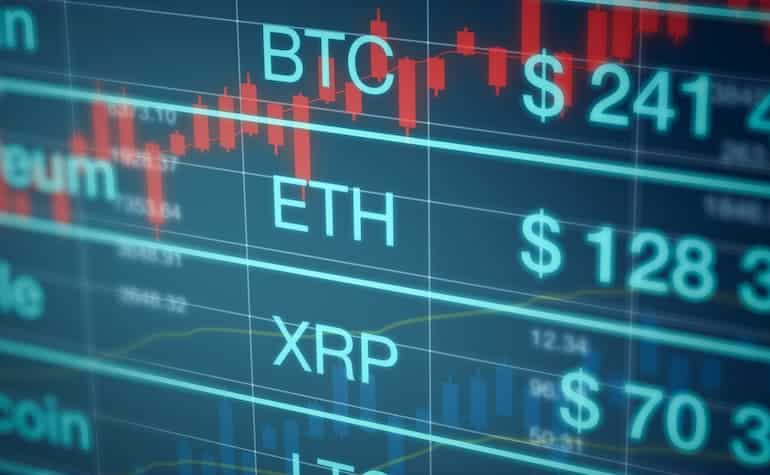
Following the previous Bitcoin analysis ( https://www.gomarkets.com/au/articles/economic-updates/bitcoin-usd-technical-analysis/ ), bitcoin continues to break below pattern after pattern, recently breaking out and re-testing a descending flag pattern on a 4h time frame as seen below: With the next major support sitting around $17,619, it won’t be a surprise if bitcoin comes down to that area. Looking at the correlation between Bitcoin and Ethereum, the last 7 days of price action shows a correlation of.89, which is a positive value that indicates a positive correlation between the two. A positive correlation means that the two moves very similar to one another. [caption id="attachment_273298" align="alignnone" width="602"] (https://cryptowat.ch/correlations)[/caption] [caption id="attachment_273299" align="alignnone" width="527"] (https://cryptowat.ch/correlations)[/caption] For ETHUSD (Ethereum), making similar patterns to BTCUSD, has also recently broken out of a descending flag pattern, signalling a probable continuation of the 4h downtrend, there is a high probability of ETHUSD reaching the next major support around $1012.
More downside for major cryptos?

Related Articles

2025 has seen a material decline in the fortunes of the greenback. A technical structure breakdown early in the year was followed by a breach of the 200-day moving average (MA) at the end of Q1. The index then entered correction territory, printing a three-year low at the end of Q2.
Since then, we have seen attempts to build a technical base, including a re-test of the end-of-June lows in mid-September. However, buying pressure has not been strong enough to push price back above the technically critical and psychologically important 100 level.
What the levels suggest from here
As things stand, the index remains more than 10% lower for 2025. On this technical view, the index may revisit the 96 area. However, technical levels can fail and outcomes depend on multiple factors.
US dollar index

The key question for 2026
The key question remains: are we likely to see further losses in the early part of next year and beyond, or will current support hold?
We cannot assess the US dollar in isolation and any outlook is shaped by internal and global factors, not least its relative strength versus other major currencies. Many of these drivers are interrelated, but four potential headwinds stand out for any US dollar recovery. Collectively, they may keep downside pressure in play.
Four headwinds for any US dollar recovery
1. The US dollar as a safe-haven trade
One scenario where US dollar support has historically been evident is during major global events, slowdowns and market shocks. However, the more muted response of the US dollar during risk-off episodes this year suggests a shift away from the historical norm, with fewer sustained US dollar rallies.
Instead, throughout 2025, some investors appeared to favour gold, and at other times, FX and even equities, rather than into the US dollar. If this change in behaviour persists through 2026, it could make recovery harder, even if global economic pressure builds over the year ahead.
2. US versus global trade
Trade policy is harder to measure objectively, and outcomes can be difficult to predict. That said, trade battles driven by tariffs on US imports are often viewed as an additional potential drag on the US dollar.
The impact may be twofold if additional strain is placed on the US economy through:
- a slowdown in global trade volumes as impacted countries seek alternative trade relationships, with supply chain distortions that may not favour US growth
- pressure on US corporate profit margins as tariffs lift costs for importers
3. Removal of quantitative tightening
The Fed formally halted its balance sheet reduction, quantitative tightening (QT), as of 1 December 2025, ending a program that shrank assets by roughly US$2.4 trillion since mid-2022.
Traditionally, ending QT is seen as marginally negative for the US dollar because it stops the withdrawal of liquidity, can ease global funding conditions, and may reduce the scarcity that can support dollar demand. Put simply, more dollars in the system can soften the currency’s support at the margin, although outcomes have varied historically and often depend on broader financial conditions.
4. Interest rate differential
Interest rate differential (IRD) is likely to be a primary driver of US dollar strength, or otherwise, in the months ahead. The latest FOMC meeting delivered the expected 0.25% cut, with attention on guidance for what may come next.
Even after a softer-than-expected CPI print, markets have been reluctant to price aggressive near-term easing. At the time of writing, less than a 20% chance of a January cut is priced in, and it may be March before we see the next move.
The Fed is balancing sticky inflation against a jobs market under pressure, with the headline rate back at levels last seen in 2012. The practical takeaway is that a more accommodative stance may add to downward pressure on the US dollar.
Current expectations imply around two rate cuts through 2026, with the potential for further easing beyond that, broadly consistent with the median projections shown in the chart below. These are forecasts rather than guarantees, and they can shift as economic data and policy guidance evolve.


The “Magnificent Seven” technology companies are expected to invest a combined $385 billion into AI by the end of 2025.
Microsoft is positioning itself as the platform leader. Nvidia dominates the underlying AI infra. Google leads in research. Meta is building open-source tech. Amazon – AI agents. Apple — on-device integration. And Tesla pioneering autonomous vehicles and robots.

With such enormous sums pouring into AI, is this a winner-take-all game?
Or will each of the Mag Seven be able to thrive in the AI future?
Microsoft: The AI Everywhere Strategy
Microsoft has made one of the biggest bets on AI out of the Mag Seven — adopting the philosophy that AI should be everywhere.
Through its deep partnership with OpenAI, of which it is a 49% shareholder, the company has integrated GPT-5 across its entire ecosystem.
Key initiatives:
- GPT-5 integration across consumer, enterprise, and developer tools through Microsoft 365 Copilot, GitHub Copilot, and Azure AI Foundry
- Azure AI Foundry for unified AI development platform with model router technology
- Copilot ecosystem spanning productivity, coding, and enterprise applications with real-time model selection
- $100 billion projected AI infrastructure spending for 2025
Microsoft’s centrepiece is Copilot, which can now detect whether a prompt requires advanced reasoning and route to GPT-5's deeper reasoning model.
This (theoretically) means high-quality AI outputs become invisible infrastructure rather than a skill users need to learn.
However, this all-in bet on OpenAI does come with some risks. It is putting all its eggs in OpenAI's basket, tying its future success to a single partnership.

Elon Musk warned that "OpenAI is going to eat Microsoft alive"[/caption]
Google: The Research Strategy
Google’s approach is to fund research to build the most intelligent models possible. This research-first strategy creates a pipeline from scientific discovery to commercial products — what it hopes will give it an edge in the AI race.
Key initiatives:
- Over 4 million developers building with Gemini 2.5 Pro and Flash
- Ironwood TPU offering 3,600 times better performance compared to Google’s first TPU
- AI search overviews reaching 2 billion monthly users across Google Search
- DeepMind breakthroughs: AlphaEvolve for algorithm discovery, Aeneas for ancient text interpretation, AlphaQubit for quantum error detection, and AI co-scientist systems
Google’s AI research branch, DeepMind, brings together two of the world's leading AI research labs — Google Brain and DeepMind — the former having invented the Transformer architecture that underpins almost all modern large language models.
The bet is that breakthrough research in areas like quantum computing, protein folding, and mathematical reasoning will translate into a competitive advantage for Google.
Today, we're introducing AlphaEarth Foundations from @GoogleDeepMind , an AI model that functions like a virtual satellite which helps scientists make informed decisions on critical issues like food security, deforestation, and water resources. AlphaEarth Foundations provides a… pic.twitter.com/L1rk2Z5DKk
— Google AI (@GoogleAI) July 30, 2025
Meta: The Open Source Strategy
Meta has made a somewhat contrarian bet in its approach to AI: giving away their tech for free. The company's Llama 4 models, including recently released Scout and Maverick, are the first natively multi-modal open-weight models available.
Key initiatives:
- Llama 4 Scout and Maverick - first open-weight natively multi-modal models
- AI Studio that enables the creation of hundreds of thousands of AI characters
- $65-72 billion projected AI infrastructure spending for 2025
This open-source strategy directly challenges the closed-source big players like GPT and Claude. By making AI models freely available, Meta is essentially commoditizing what competitors are trying to monetize. Meta's bet is that if AI models become commoditized, the real value will be in the infrastructure that sits on top. Meta's social platforms and massive user base give it a natural advantage if this eventuates.
Meta's recent quarter was also "the best example to date of AI having a tangible impact on revenue and earnings growth at scale," according to tech analyst Gene Munster.

However, it hasn’t been all smooth sailing for Meta. Their most anticipated release, Llama Behemoth, has all but been scrapped due to performance issues. And Meta is now rumored to be developing a closed-source Behemoth alternative, despite their open-source mantra.
Amazon: The AI Agent Strategy
Amazon’s strategy is to build the infrastructure for AI that can take actions — booking meetings, processing orders, managing workflows, and integrating with enterprise systems.
Rather than building the best AI model, Amazon has focused its efforts on becoming the platform where all AI models live.
Key initiatives:
- Amazon Bedrock offering 100+ foundation models from leading AI companies, including OpenAI models.
- $100 million additional investment in AWS Generative AI Innovation Center for agentic AI development
- Amazon Bedrock AgentCore enabling deployment and scaling of AI agents with enterprise-grade security
- $118 billion projected AI infrastructure spending for 2025
The goal is to become the “orchestrator” that lets companies mix and match the best models for different tasks.
Amazon’s AgentCore will provide the underlying memory management, identity controls, and tool integration needed for these companies to deploy AI agents safely at scale.
This approach offers flexibility, but does carry some risks. Amazon is essentially positioning itself as the middleman for AI. If AI models become commoditized or if companies prefer direct relationships with AI providers, Amazon's systems could become redundant.
Nvidia: The Infra Strategy
Nvidia is the one selling the shovels for the AI gold rush. While others in the Mag Seven battle to build the best AI models and applications, Nvidia provides the fundamental computing infrastructure that makes all their efforts possible.
This hardware-first strategy means Nvidia wins regardless of which company ultimately dominates. As AI advances and models get larger, demand for Nvidia's chips only increases.
Key initiatives:
- Blackwell architecture achieving $11 billion in Q2 2025 revenue, the fastest product ramp in company history
- New chip roadmap: Blackwell Ultra (H2 2025), Vera Rubin (H2 2026), Rubin Ultra (H2 2027)
- Data center revenue reaching $35.6 billion in Q2, representing 91% of total company sales
- Manufacturing scale-up with 350 plants producing 1.5 million components for Blackwell chips
With an announced product roadmap of Blackwell Ultra (2025), Vera Rubin (2026), and Rubin Ultra (2027), Nvidia has created a system where the AI industry must continuously upgrade to Nvidia’s newest tech to stay competitive.
This also means that Nvidia, unlike the others in the Mag Seven, has almost no direct AI spending — it is the one selling, not buying.
However, Nvidia is not indestructible. The company recently halted its H20 chip production after the Chinese government effectively blocked the chip, which was intended as a workaround to U.S. export controls.

Apple: The On-Device Strategy
Apple's AI strategy is focused on privacy, integration, and user experience. Apple Intelligence, the AI system built into iOS, uses on-device processing and Private Cloud Compute to help ensure user data is protected when using AI.
Key initiatives:
- Apple Intelligence with multi-model on-device processing and Private Cloud Compute
- Enhanced Siri with natural language understanding and ChatGPT integration for complex queries
- Direct developer access to on-device foundation models, enabling offline AI capabilities
- $10-11 billion projected AI infrastructure spending for 2025
The drawback of this on-device approach is that it requires powerful hardware from the user's end. Apple Intelligence can only run on devices with a minimum of 8GB RAM, creating a powerful upgrade cycle for Apple but excluding many existing users.
Tesla: The Robo Strategy
Tesla's AI strategy focuses on two moonshot applications: Full Self-Driving vehicles and humanoid robots.
This is the 'AI in the physical world' play. While others in the Mag Seven are focused on the digital side of AI, Tesla is building machines that use AI for physical operations.

Key initiatives:
- Plans for 5,000-10,000 Optimus robots in 2025, scaling to 50,000 in 2026
- Robotaxi service targeting availability to half the U.S. population by EOY 2025
- AI6 chip development with Samsung for unified training across vehicles, robots, and data centers
- $5 billion projected AI infrastructure spending for 2025
This play is exponentially harder to develop than digital AI, and the markets have reflected low confidence that Tesla can pull it off.
TSLA has been the worst-performing Mag Seven stock of 2025, down 18.37% in H1 2025.
However, if Tesla’s strategy is successful, it could be far more valuable than other AI plays. Robots and autonomous vehicles could perform actual labour worth trillions of dollars annually.
The $385 billion Question
The Mag Seven are starting to see real revenue come in from their AI investments. But they're pouring that money (and more) back into AI, betting that the boom is just getting started.
The platform players like Microsoft and Amazon are betting on becoming essential infrastructure. Nvidia’s play is to sell the underlying hardware to everyone. Google and Meta compete on capability and access. While Apple and Tesla target specific use cases.
The $385 billion question is which of the Magnificent Seven has bet the right way? Or will a new player rise and usurp the long-standing tech giants altogether?
You can access all Magnificent Seven stocks and thousands of other Share CFDs on GO Markets.

Over the past 3 months Nvidia has moved through ranges that some stocks don’t do in years, in some cases decades. Having lost over 35 per cent in the June to August sell off, it quickly bounced over 40 per cent in the preceding 20 days once it hit its August low as we build positions ahead of its results. These results delivered Nvidia style numbers with three figure growth on the sales, net profit and earnings lines but this did not appease the market, seeing it fall 22 per cent in a little over 8 days.
Which brings us to now – a new 16 per cent drive as Nivida reports it’s struggling to meet demands and that the AI revolution is translating faster than even it expected. This got us thinking – Where are we right “Now” in the AU players? Thus, it’s time to dive into the drivers for the Nvidia and Co.
AI players. Supersonic As mentioned, Nvidia’s results have been astonishing – and it still has time to do a US$50 billion buyback. It collected the award for becoming the world’s largest company in the shortest timeframe in the post-WWII era, think about that for one second – that’s faster than Amazon, Microsoft, Apple, Google, Shell, BP, ExxonMobil, TV players of the 60s and 70s.
So the question is how does it keep its speed and trajectory? Well that comes from what some are calling the ‘supersonic’ scalers. These are the players like Google, Amazon, Meta and Microsoft that are the users and providers of the AI revolution.
These are the players that have spent hundreds billions thus far on the third digital revolution. Let us once again put that into perspective, the amount of spending is (inflation adjusted) the same as what was spent during the 1960’s on mainframe computing and the 1990’s distribution of fibre-optics. So we have now seen that level of spending in AI the next step is ‘usage’ and that is the inflection point we find ourselves at.
Currently AI is mainly used to train foundational models and chatbots – which is fine but not long-term financially stable. It needs to move into things like productions – that is producing models for corporate clients that forecast, streamline and increase productivity. This is the ‘Grail’ This immediately raises the bigger question for now – can this Grail be achieved?
The Voices To answer that – let us present some arguments from some of AI’s largest “Voices” On the AI potential and the possibility of a profound and rapid technological revolution, Sam Altman, CEO of OpenAI, has claimed that AI represents the "biggest, best, and most important of all technology revolutions," and predicts that AI will become increasingly integrated into all aspects of life. This reflects a belief in AI's far-reaching influence over time. The never subtle McKinsey and Co. has projected that generative AI could eventually contribute up to $8 trillion to the global economy annually.
This figure underscores the massive economic potential of AI. The huge caveat: McKinsey's predictions are never real-world tested and inevitably fall flat in the market. This kind of money is what makes AI so attractive to players in Venture Capital.
For the VC watchers out there the one that is catching everyone’s attention is VC accelerator Y Combinator which is fully embracing the technology. Just to put Y Combinator into context, according to Jared Heyman’s Rebel Fund, if anyone had invested in every Y Combinator deal since 2005 (which would have been impossible just to let you know), the average annual return would have been 176%, even after accounting for dilution. Furthermore to the VC story - AI has accounted for over 40 per cent of new unicorns (startups valued at $1 billion or more) in the first half of 2024, and 60 per cent of the increase in VC-backed valuations.
So far in 2024, U.S. unicorn valuations have grown by $162 billion, largely driven by AI’s rapid expansion, according to Pitchbook data. So the Voices certainly believe it can be achieved. But is this a good thing?
The Good, the Bad and the Ugly AI is advancing at such a rapid pace that existing performance benchmarks, such as reading comprehension, image classification and advanced maths, are becoming outdated, necessitating the creation of new standards. This reflects the fast-moving nature of AI progress. For example, look at the success of AlphaFold, an AI-driven algorithm that accurately predicts protein structures.
Some see this as one of the most important achievements in AI’s short history and underscores AI’s transformative impact on science, particularly in fields like biology and healthcare. This is the Good. Then there is the 165-page paper titled "Situational Awareness" by Aschenbrenner which has predicted that by 2030, AI will achieve superintelligence and create a $1 trillion industry.
Also, a positive, but will consume 20 per cent of the U.S. power supply. These incredible predictions emphasise the enormous scale of AI and the impact it will have on industry, infrastructure and people. The latest Google study found that generative AI could significantly improve workforce productivity.
The study suggests that roughly 80 per cent of jobs could see at least 10 per cent of tasks completed twice as fast due to AI, which has implications for industries such as call centres, coding, and professional writing. This highlights AI's capacity to streamline tasks and enhance efficiency across various fields. However it also raises the massive concern around job security, job satisfaction and the socio-economic divide as the majority of those affected by AI ‘productivity’ are in mid to low scales.
Then we come to Elon Musk’s new AI startup, xAI, which raised $6 billion at a valuation of $24 billion this year. The company is planning to build the world’s largest supercomputer in Tennessee to support AI training and inference. This all sounds economically and financially exciting but it has a darker side.
These are the kinds of AI ventures that have seen ‘deep-fake’ creations. For example Musk himself shared a deep-fake video of Vice President Kamala Harris. This is the ugly side of AI and reflects the broader cultural and ethical issues surrounding AI-generated content.
Furthermore – we should always be forecasting both the good and the bad for investment opportunities. These issues are already attracting regulations and compliance responses. How impactful will these be?
And will it halt the AI driven share price appreciation? It is a very real and present issue. Where does this leave us?
The share price future of Nvidia and Co is clearly dependent on the longer-term achievement of the AI revolution. As shown, the supersonic players in technology and venture capital are betting big on AI, with predictions that it will reshape the global economy, industries, and even basic societal structures. However, there is still uncertainty about the exact timeline for these changes and how accurately the market is pricing in AI's potential.
The AI ecosystem is moving at breakneck speed, with new developments outpacing benchmarks and productivity gains reshaping jobs, but whether all these projections that range from trillion-dollar economies to superintelligence materialises remains to be seen. Thus – for now – Nvidia and Co’s recent roller-coaster trading looks set to continue.
Recent Articles

ตลาดเคลื่อนไหวเข้าสู่สัปดาห์ข้างหน้าด้วยข้อมูลเงินเฟ้อทั่วออสเตรเลียและญี่ปุ่น ควบคู่ไปกับความตึงเครียดทางการเมืองที่เพิ่มขึ้นซึ่งยังคงมีอิทธิพลต่อราคาพลังงานและความเชื่อมั่นความเสี่ยงที่กว้างขึ้น
- ดัชนีราคาผู้บริโภคออสเตรเลีย (CPI): ข้อมูลอัตราเงินเฟ้ออาจมีอิทธิพลต่อ ธนาคารสำรองออสเตรเลีย (RBA) เส้นทางนโยบาย โดยดอลลาร์ออสเตรเลีย (AUD) และผลตอบแทนในท้องถิ่นมีความอ่อนไหวต่อความประหลาดใจใด ๆ
- คลัสเตอร์ข้อมูลญี่ปุ่น: CPI ของโตเกียว (เบื้องต้น) บวกกับการผลิตในอุตสาหกรรมและการขายปลีกทำให้เกิดแรงกระตุ้นอัตราเงินเฟ้อและกิจกรรมที่สามารถกำหนดความคาดหวังในการปรับตัวของธนาคารแห่งประเทศญี่ปุ่น (BoJ)
- ยูโรโซนและเยอรมนี CPI: การอ่านอัตราเงินเฟ้อแบบแฟลชจะทดสอบเรื่องราวของภาวะเงินเฟ้อและส่งผลต่อความคาดหวังในการลดอัตราดอกเบี้ยของ ECB
- น้ำมันและการเมืองธรณีวิทยา: น้ำมันดิบ Brent ปิดตัวสูงสุดนับตั้งแต่วันที่ 8 สิงหาคม 2025 ท่ามกลางความตึงเครียดในตะวันออกกลางที่เกิดขึ้นใหม่ซึ่งเพิ่มความเสี่ยงด้านเงินเฟ้อที่ขับเคลื่อนด้วยพลังงาน
CPI ของออสเตรเลีย: ความคาดหวังของ RBA จะเปลี่ยนไป?
การเผยแพร่ CPI ของออสเตรเลียจะได้รับการเฝ้าระวังอย่างใกล้ชิดเพื่อดูสัญญาณว่าเงินเฟ้อคงตัวหรือพิสูจน์ว่าคงที่มากกว่าที่คาดไว้
การพิมพ์ที่แข็งแกร่งกว่าที่คาดไว้อาจเกี่ยวข้องกับผลตอบแทนที่สูงขึ้นและ AUD ที่แข็งแกร่งขึ้นเมื่ออัตราคาดหวังปรับตัวผลลัพธ์ที่นุ่มนวลอาจสนับสนุนความคาดหวังสำหรับทัศนคติเชิงนโยบายที่มั่นคง
วันที่สำคัญ
- อัตราเงินเฟ้อ (MoM): วันพุธที่ 25 กุมภาพันธ์ เวลา 11:30 น. (AEDT)
- ซีพีไอ: วันพุธที่ 25 กุมภาพันธ์ เวลา 11:30 น. (AEDT)
มอนิเตอร์
- ความผันผวนของ AUD รอบการเปิดตัว
- ปฏิกิริยาผลตอบแทนพันธบัตรในพื้นที่
- การเปลี่ยนแปลงราคาอัตราดอกเบี้ย

ข้อมูลอัตราเงินเฟ้อและการเติบโตของญี่ปุ่น
การเผยแพร่ในช่วงปลายสัปดาห์ของญี่ปุ่นรวม CPI ของโตเกียว (เบื้องต้น) เข้ากับการผลิตอุตสาหกรรมและการขายปลีก นำเสนอการอ่านอย่างกว้างขวางเกี่ยวกับแรงกดดันราคาและความต้องการในประเทศ
CPI ของโตเกียวมักถูกมองว่าเป็นสัญญาณทันเวลาสำหรับการเปลี่ยนแปลงอัตราเงินเฟ้อของประเทศและการอภิปรายของ BoJผลผลิตอุตสาหกรรมและการใช้จ่ายค้าปลีกเพิ่มบริบทเกี่ยวกับกิจกรรม
ความประหลาดใจในกลุ่มนี้สามารถกระตุ้นให้ค่าเงินเยน JPY เคลื่อนไหวอย่างรวดเร็ว โดยเฉพาะอย่างยิ่งหากผลลัพธ์เปลี่ยนการรับรู้เกี่ยวกับความเร็วและความคงอยู่ของการปรับตัวให้เป็นปกติ BoJ
วันที่สำคัญ
- CPI ของโตเกียว: วันศุกร์ที่ 27 กุมภาพันธ์ เวลา 10:30 น. (AEDT)
- การผลิตอุตสาหกรรม: 10:50 น. ศุกร์ที่ 27 กุมภาพันธ์ (AEDT)
- การขายปลีก: 10:50 น. ศุกร์ที่ 27 กุมภาพันธ์ (AEDT)
มอนิเตอร์
- JPY มีความไวต่ออัตราเงินเฟ้อประหลาดใจ
- ผลตอบแทนพันธบัตรเคลื่อนไหวตามข้อมูลกิจกรรม
- ปฏิกิริยาหุ้นหากความคาดหวังโมเมนตัมการเติบโต
การไหลของพลังงานและที่ปลอดภัย
ราคาน้ำมันปรับตัวสูงสุดนับตั้งแต่วันที่ 8 สิงหาคม 2025 ท่ามกลางความตึงเครียดในตะวันออกกลางที่เกิดขึ้นใหม่
การรายงานล่าสุดเกี่ยวกับกิจกรรมทางทหารในภูมิภาคที่เพิ่มขึ้นและหัวข่าวความเสี่ยงต่อการขนส่งใกล้ช่องแคบฮอร์มูซได้เสริมความมั่นคงด้านพลังงานเพื่อจุดเน้นของตลาดช่องแคบฮอร์มูซยังคงเป็นจุดโชคที่เฝ้าระวังอย่างกว้างขวางสำหรับการไหลเวียนของพลังงานทั่วโลก
ราคาน้ำมันที่สูงขึ้นอาจส่งผลต่อความคาดหวังของอัตราเงินเฟ้อและส่งผลต่อผลตอบแทนพันในขณะเดียวกัน ความไม่แน่นอนทางภูมิศาสตร์สามารถรองรับเงินดอลลาร์สหรัฐผ่านความต้องการที่ปลอดภัยและการวางตำแหน่งอัตราสัมพัทธ์
มอนิเตอร์
- ระดับราคาน้ำมันดิบเบรนต์
- ความแข็งแกร่งของดอลลาร์สหรัฐเทียบกับสกุลเงินหลัก
- การเปลี่ยนแปลงผลตอบแทนเมื่อปรับเบี้ยประกันความเสี่ยงเงินเฟ้อ

เงินเฟ้อยูโรโซนและเยอรมน
การอ่านอัตราเงินเฟ้อแบบแฟลชจากเยอรมนีและยูโรโซนที่กว้างขวาง (HICP) จะทดสอบว่าแนวโน้มเงินเฟ้อของภูมิภาคยังคงไม่เหมือนเดิมหรือไม่
การเปิดตัวของเยอรมนีอาจมีอิทธิพลต่อความคาดหวังก่อนตัวเลขยูโรโซนรวมหากเงินเฟ้อหลักแสดงให้เห็นว่ามีความเหนียว ความคาดหวังเกี่ยวกับระยะเวลาและอัตราการผ่อนคลายของธนาคารกลางยุโรปอาจเปลี่ยนไป
วันที่สำคัญ
- อัตราเงินเฟ้อเยอรมนี: 12:00 น. วันเสาร์ที่ 28 กุมภาพันธ์ (AEDT)
มอนิเตอร์
- ความผันผวนของยูโรเมื่อมีการเผยแพร
- อัตราผลตอบแทนพันธบัตรรัฐยุโรป
- การปรับความน่าจะเป็นในการลดอัตรา
เหตุการณ์ทางเศรษฐกิจสำคัญ


ตั้งแต่ผู้ขัดขวางเทคโนโลยีไปจนถึงผู้รับเหมาด้านการป้องกัน บริษัท ที่พูดถึงมากที่สุดของตลาดบางแห่งเริ่มการเดินทางสาธารณะผ่านการเสนอขายสาธารณะครั้งแรก (IPO)สำหรับเทรดเดอร์ รายการสาธารณะเบื้องต้นเหล่านี้สามารถแสดงถึงสภาพแวดล้อมการซื้อขายที่ไม่เหมือนใคร แต่ยังเป็นช่วงเวลาแห่งความไม่แน่นอนที่เพิ่มขึ้นด้วย
ข้อเท็จจริงด่วน
- IPO คือเมื่อ บริษัท เอกชนจดทะเบียนหุ้นในตลาดหลักทรัพย์สาธารณะเป็นครั้งแรก
- IPO สามารถเสนอให้เทรดเดอร์เข้าถึงบริษัทที่เติบโตสูงได้ตั้งแต่เนิ่นๆ แต่มาพร้อมกับความผันผวนที่สูงขึ้นและประวัติราคาที่ จำกัด
- เมื่อจดทะเบียนแล้ว เทรดเดอร์สามารถได้รับโอกาสในการเปิดเผยหุ้น IPO ผ่านการซื้อหุ้นโดยตรงหรืออนุพันธ์ เช่น สัญญาสำหรับความแตกต่าง (CFD).
การเสนอขายสาธารณะครั้งแรก (IPO) คืออะไร?
IPO คือเมื่อ บริษัท เสนอหุ้นให้กับประชาชนเป็นครั้งแรก
ก่อนที่จะดำเนินการ IPO หุ้นใน บริษัท มักจะถือโดยผู้ก่อตั้ง พนักงานแรกๆ และนักลงทุนเอกชนเท่านั้นการเปิดเผยต่อสาธารณะทำให้ทุกคนสามารถซื้อหุ้นได้
ขึ้นอยู่กับขนาดของ บริษัท โดยปกติจะแสดงรายการหุ้นสาธารณะในตลาดหลักทรัพย์ท้องถิ่น (ตัวอย่างเช่น แอ็กซ์ ในออสเตรเลีย)อย่างไรก็ตาม บริษัท ประเมินมูลค่าขนาดใหญ่บางแห่งเลือกที่จะลงทะเบียนในตลาดหลักทรัพย์ทั่วโลกเท่านั้น เช่น Nasdaq ไม่ว่าสำนักงานใหญ่ของพวกเขาจะอยู่ที่ไหน
สำหรับนักเทรดโดยทั่วไปแล้ว IPO เป็นโอกาสแรกที่จะได้รับความเสี่ยงต่อหุ้นของ บริษัทพวกเขาสามารถสร้างสภาพแวดล้อมที่เป็นเอกลักษณ์พร้อมความผันผวนและสภาพคล่องที่เพิ่มขึ้น แต่ยังมีความเสี่ยงที่สูงขึ้นด้วยประวัติราคาที่ จำกัด และความอ่อนไหวต่อการเปลี่ยนแปลงของความเชื่อมั่น
ทำไม บริษัท จึงเปิดเผยต่อสาธารณะ
ตัวขับเคลื่อนที่ใหญ่ที่สุดในการดำเนินการ IPO คือการเข้าถึงเงินทุนมากขึ้นการจดทะเบียนในตลาดหลักทรัพย์หมายความว่า บริษัท สามารถระดมทุนได้อย่างมีนัยสำคัญโดยการขายหุ้น
นอกจากนี้ยังให้สภาพคล่องสำหรับผู้ถือหุ้นที่มีอยู่ผู้ก่อตั้ง พนักงานยุคแรก และนักลงทุนเอกชนมักขายส่วนหนึ่งของการถือครองที่มีอยู่ในตลาดเปิด โดยตระหนักถึงผลตอบแทนจากการสนับสนุนหลายปีของพวกเขา
นอกเหนือจากผลประโยชน์ทางการเงินแล้ว การเข้าสู่สาธารณะหมายความว่า บริษัท ต่างๆสามารถใช้หุ้นของตนเป็นสกุลเงินสำหรับการซื้อกิจการและเสนอค่าชดเชยตามหลักทรัพย์เพื่อดึงดูดผู้มีความสามารถได้และการประเมินมูลค่าสาธารณะให้เกณฑ์มาตรฐานที่โปร่งใส ซึ่งมีประโยชน์สำหรับการวางตำแหน่งเชิงกลยุทธ์และการระดมทุนในอนาคต
อย่างไรก็ตามมันมาพร้อมกับข้อเท็จจริงบริษัทมหาชนต้องปฏิบัติตามภาระผูกพันในการเปิดเผยข้อมูลและการรายงานอย่างต่อเนื่อง และความกดดันจากผู้ถือหุ้นสาธารณะอาจกลายเป็นอุปสรรคต่อความคืบหน้าในระยะยาวหากหลายคนมุ่งเน้นไปที่ผลการดำเนินงานระยะสั้น

กระบวนการ IPO ทำงานอย่างไร?
แม้ว่าข้อมูลเฉพาะจะแตกต่างกันไปตามเขตอำนาจศาล แต่การเปลี่ยนจาก บริษัท เอกชนไปเป็นรายชื่อสาธารณะโดยทั่วไปเกี่ยวข้องกับขั้นตอนต่อไปนี้:
1.การเตรียมการ
บริษัทคัดเลือกผู้รับผิดชอบก่อน (โดยทั่วไปจะเป็นธนาคารเพื่อลงทุน) เพื่อจัดการการเสนอขายพวกเขาร่วมกันประเมินทางการเงินโครงสร้างองค์กรและตำแหน่งตลาดของ บริษัท เพื่อกำหนดแนวทางที่ดีที่สุดสำหรับการเปิดเผยต่อสาธารณะเป็นขั้นตอนการวางแผนที่หนักเพื่อให้แน่ใจว่า บริษัท พร้อมที่จะเปิดเผยต่อสาธารณะจริงๆ
2.การลงทะเบียน
เมื่อเตรียมทุกอย่างแล้ว ผู้รับประกันจะทำการตรวจสอบการตรวจสอบสถานะอย่างละเอียดและยื่นเอกสารการเปิดเผยที่จำเป็นกับหน่วยงานกำกับดูแลที่เกี่ยวข้องเอกสารเหล่านี้ให้การเปิดเผยรายละเอียดแก่หน่วยงานกำกับดูแลเกี่ยวกับ บริษัท การบริหารและการเสนอขายที่เสนอในออสเตรเลีย โดยทั่วไปแล้วจะเป็นหนังสือชี้ชวนที่ยื่นกับ ASIC ในสหรัฐอเมริกา คำชี้แจงการลงทะเบียนที่ยื่นต่อ SEC
3.การเดินทางไปจัดแสดงตามสถานที่ต่าง ๆ
ผู้บริหารของ บริษัท และผู้ประกันภัยจะนำเสนอกรณีการลงทุนต่อนักลงทุนสถาบันและนักวิเคราะห์ตลาดใน “โรดโชว์”ตู้โชว์นี้ได้รับการออกแบบมาเพื่อวัดความต้องการหุ้นและช่วยสร้างความสนใจนักลงทุนสถาบันสามารถลงทะเบียนผลประโยชน์และการประเมินมูลค่าของ IPO ซึ่งช่วยแจ้งการกำหนดราคาเริ่มต้น
4.การกำหนดราคา
จากข้อเสนอแนะจากงานแสดงสินค้าและเงื่อนไขตลาดปัจจุบัน ผู้ประกันภัยจะกำหนดราคาหุ้นสุดท้ายและกำหนดจำนวนหุ้นที่จะออกมาหุ้นจะถูกจัดสรรใน 'ตลาดหลัก' ให้กับนักลงทุนที่เข้าร่วมในข้อเสนอ (ก่อนที่หุ้นจะถูกจดทะเบียนต่อสาธารณะในตลาดรอง)กระบวนการนี้กำหนดราคาก่อนการตลาดซึ่งกำหนดการประเมินมูลค่าสาธารณะเบื้องต้นของ บริษัท อย่างมีประสิทธิภาพ
5.รายการ
ในวันจดทะเบียนหุ้นของ บริษัท เริ่มซื้อขายในตลาดหลักทรัพย์ที่เลือกเปิดตลาดรองอย่างเป็นทางการสำหรับผู้ค้าส่วนใหญ่นี่เป็นจุดแรกที่พวกเขาสามารถซื้อขายหุ้นได้ทั้งโดยตรงหรือผ่านอนุพันธ์เช่น หุ้น CFD.
6.หลังการเสนอขายหุ้น
เมื่อจดทะเบียนแล้ว บริษัทจะอยู่ภายใต้ข้อกำหนดในการรายงานและการเปิดเผยข้อมูลที่เข้มงวดต้องสื่อสารกับผู้ถือหุ้นเป็นประจำเผยแพร่ผลการเงินและปฏิบัติตามมาตรฐานการกำกับดูแลของตลาดหลักทรัพย์ที่จดทะเบียน
ความเสี่ยงและผลประโยชน์ของ IPO สำหรับผู้ค้า
เทรดเดอร์มีส่วนร่วมใน IPO อย่างไร?
สำหรับผู้ค้าส่วนใหญ่ การเข้าร่วมใน IPO เกิดขึ้นเมื่อหุ้นจดทะเบียนและเริ่มซื้อขายในตลาดรอง
เมื่อหุ้นอยู่ในตลาดหลักทรัพย์ นักลงทุนสามารถซื้อหุ้นทางกายภาพได้โดยตรงผ่านโบรกเกอร์หรือการแลกเปลี่ยนออนไลน์ หรือพวกเขาสามารถใช้อนุพันธ์เช่น หุ้น CFD เพื่อรับตำแหน่งในราคาโดยไม่ต้องเป็นเจ้าของสินทรัพย์อ้างอิง
สองสามวันแรกของการซื้อขาย IPO มักจะมีความผันผวนสูงผู้ค้าควรตรวจสอบให้แน่ใจว่าพวกเขาได้ใช้มาตรการบริหารความเสี่ยงที่เหมาะสมเพื่อช่วยป้องกันการเปลี่ยนแปลงของราคาที่อาจเกิดขึ้นอย่างรวดเร็ว
บรรทัดล่าง
IPO ทำเครื่องหมายเมื่อบริษัทสามารถลงทุนต่อสาธารณชนพวกเขาสามารถเสนอการเข้าถึงบริษัทที่มีการเติบโตสูงตั้งแต่เนิ่นๆ และสร้างสภาพแวดล้อมการซื้อขายที่ไม่เหมือนใครซึ่งขับเคลื่อนโดยความผันผวนที่สูงขึ้นและความสนใจของตลาด
สำหรับเทรดเดอร์ การทำความเข้าใจว่ากระบวนการทำงานอย่างไร ผลักดันการกำหนดราคาและผลการดำเนินงานหลังการเสนอขายหุ้นหลังการซื้อขาย และวิธีชั่งน้ำหนักของรางวัลที่อาจเกิดขึ้นกับความเสี่ยงของการซื้อขายหุ้นจดทะเบียนใหม่เป็นสิ่งสำคัญก่อนที่จะทำตำแหน่ง

ปี 2026 ไม่ได้ทำให้นักลงทุนมีพื้นที่หายใจมากนักดูเหมือนว่าตลาดอาจขยับไปเกินแนวคิดที่ว่าการลดอัตราดอกเบี้ยใกล้เข้ามาและเข้าสู่ปีที่อัตราเงินเฟ้ออาจพิสูจน์ได้ยากกว่าที่หลายคนคาดหวัง
อัตราเงินเฟ้อสินค้าเพิ่มขึ้น ในขณะที่เงินเฟ้อบริการยังคงค่อนข้างเหนียวเนื่องจากแรงกดดันต้นทุนแรงงานอย่างต่อเนื่องต้นทุนที่อยู่อาศัยโดยเฉพาะค่าเช่า ยังคงเป็นแหล่งที่สำคัญของแรงกดดันเงินเฟ้อ
RBA พยายามรักษาความน่าเชื่อถือเกี่ยวกับเงินเฟ้อโดยไม่ผลักดันเศรษฐกิจไปทางอื่นเกินไป
ข้อมูลที่สำคัญ
CPI ยังคงอยู่ใกล้ ร้อยละ 3.8 (เหนือเป้าหมาย) ค่าจ้างยังคงเพิ่มขึ้นประมาณ ร้อยละ 0.8 ในช่วงไตรมาสและการว่างงานก็อยู่ใกล้ ๆ 4.1 เปอร์เซ็นต์.
ขึ้นอยู่กับการกำหนดราคาโดยนัยตามตลาด คาดว่าจะมีการเพิ่มอัตราดอกเบี้ยในไม่ช้า ดังนั้นวิธีที่ RBA อธิบายการตัดสินใจอาจมีความสำคัญเกือบเท่ากับการตัดสินใจเองหากโทนเปลี่ยนความคาดหวังความคาดหวังเหล่านั้นสามารถเคลื่อนไหวตลาดได้
หนังสือเลย์บุ๊คนี้ครอบคลุมอะไร
นี่คือหนังสือเลย์บุ๊คสำหรับสัปดาห์หนักของ RBA ในปี 2026มันครอบคลุมสิ่งที่ต้องดูในทุกภาคส่วน แสดงรายการทริกเกอร์ที่สำคัญ และอธิบายว่าตัวบ่งชี้ใดที่อาจเปลี่ยนความรู้สึกได้

1.ธนาคารและการเงิน: การตัดสินใจของ RBA ไหลไปสู่การให้กู้ยืมและผู้กู้อย่างไร
ธนาคารเป็นที่ที่ RBA แสดงให้เห็นได้เร็วที่สุดในเศรษฐกิจออสเตรเลียอัตราดอกเบี้ยสามารถส่งผลกระทบต่อผู้กู้ได้อย่างรวดเร็วและนำไปสู่ต้นทุนและความเชื่อมั่นในการระดมทุน
ในระยะที่เข้มงวด อัตรากำไรสามารถปรับปรุงได้ในตอนแรก แต่ก็สามารถพลิกกลับได้หากต้นทุนการระดมทุนเพิ่มขึ้นเร็วขึ้นหรือหากคุณภาพเครดิตเริ่มอ่อนลงความสมดุลระหว่างกองกำลังเหล่านั้นเป็นสิ่งที่สำคัญที่สุด
หากธนาคารรวมตัวเข้าสู่สัปดาห์การตัดสินใจ RBA อาจหมายความว่าตลาดคิดว่าสูงขึ้นเพื่อรองรับรายได้นานขึ้นหากขายหมดอาจหมายความว่าตลาดคิดว่าสูงขึ้นเป็นเวลานานทำให้ผู้กู้ส่งผลเสียหายต่อไปคุณสามารถอ่านที่แตกต่างกันสองครั้งจากหัวเรื่องเดียวกัน
สิ่งที่ต้องดู
- รูปร่างเส้นโค้งผลตอบแทน: เส้นโค้งที่สูงขึ้นสามารถช่วยอัตรากำไรได้ ในขณะที่เส้นโค้งกลับสามารถส่งสัญญาณความเครียดในการเติบโตได้
- การแข่งขันเงินฝาก: มันสามารถกดอัตรากำไรได้อย่างเงียบ ๆ แม้ว่าอัตราส่วนต้นจะดูสนับสนุนก็ตาม
- คำพูด RBA เกี่ยวกับเสถียรภาพทางการเงิน บัฟเฟอร์ครัวเรือน และความยืดหยุ่นวลีเล็ก ๆ สามารถเปลี่ยนเรื่องราวความเสี่ยงได้
ทริกเกอร์ที่อาจ
หากดัชนี RBA ฟังดูน่ากลัวมากกว่าที่คาดไว้ ธนาคารอาจตอบสนองเร็ว เนื่องจากตลาดประเมินความคาดหวังการเติบโตและความเสี่ยงด้านเครดิตอีกครั้งการเคลื่อนไหวครั้งแรกบางครั้งสามารถตั้งค่าโทนสำหรับเซสชัน
ความเสี่ยงที่สำคัญ
- ต้นทุนการระดมทุนเพิ่มขึ้นเร็วกว่าผลตอบแทนสินเชื่อ: อาจชี้ไปที่แรงดันอัตรากร
- เงื่อนไขเครดิตเข้มงวดอย่างชัดเจน: การค้างชำระที่เพิ่มขึ้นหรือความเครียดในการรีไฟแนนซ์สามารถเปลี่ยนการเล่าได้อย่างรวดเร็ว

2.ดุลยพินิจของผู้บริโภคและการค้าปลีก: อัตราที่สูงขึ้นส่งผลกระทบต่อการใช้จ่าย
เมื่อนโยบายเข้มงวด ดุลยพินิจของผู้บริโภคจะกลายเป็นแบบทดสอบความยืดหยุ่นของครัวเรือนนี่คือจุดที่ค่าใช้จ่ายในชีวิตประจำวันที่สูงขึ้นมักปรากฏเร็วที่สุด
การโทรขนาดใหญ่เกี่ยวกับผู้บริโภคอาจดูชัดเจนจนกว่าข้อมูลจะหยุดสำรองข้อมูลเมื่อสิ่งนั้นเกิดขึ้นการบรรยายสามารถเปลี่ยนแปลงได้อย่างรวดเร็ว
สิ่งที่ต้องดู
- ค่าจ้างเทียบกับอัตราเงินเฟ้อ: ผลักหรือลากรายได้จริง
- สัญญาณแรงงานในช่วงต้น: ชั่วโมงการทำงานสามารถอ่อนตัวลงก่อนที่การว่างงานเพิ่มขึ้น
- เบาะแสฤดูกาลรายงาน: การลดราคา การส่งผ่านต้นทุน และแรงกดดันมาร์จิ้นสามารถบ่งชี้ว่าความต้องการที่ขยายตัวจริงแค่ไหน
ทริกเกอร์ที่อาจ
หากเสียงจาก RBA มีค่ามากกว่าที่คาดไว้ ภาคส่วนนี้อาจมีความอ่อนไหวต่ออัตราความคาดหวังการเคลื่อนไหวครั้งแรกอาจไม่เกิดขึ้นและการดำเนินการราคาที่ตามมาอาจขึ้นอยู่กับข้อมูลที่เข้ามาและการวางตำแหน่ง
ความเสี่ยงที่สำคัญ
- การเปลี่ยนแปลงอย่างรวดเร็วในตลาดแรงงาน
- แรงกระแทกต้นทุนการครองชีพใหม่ โดยเฉพาะพลังงานหรือที่อยู่อาศัย ซึ่งส่งผลกระทบต่อการใช้จ่ายอย่างรวดเร็ว

3.แหล่งข้อมูล: สิ่งที่ควรระวังเมื่อภาษีการเมืองทางภูมิศาสตร์และการเปลี่ยนแปลงนโยบาย
ทรัพยากรสามารถทำหน้าที่เป็นการอ่านเกี่ยวกับการเติบโตของโลกได้ แต่การเคลื่อนไหวของสกุลเงินและเสียงของธนาคารกลางสามารถเปลี่ยนวิธีที่เรื่องราวนั้นเกิดขึ้นในออสเตรเลีย
ในปี 2026 อัตราภาษีและการเมืองทางภูมิศาสตร์ยังสามารถสร้างการเคลื่อนไหวของหัวข้อที่คมชัดกว่าปกติ ดังนั้นความเสี่ยงช่องว่างจึงสามารถอยู่เหนือวงจรปกติ
RBA ยังคงมีความสำคัญผ่านสองช่องทาง ได้แก่ ดอลลาร์ออสเตรเลียและความอยากเสี่ยงโดยรวมทั้งสองสามารถคืนราคาภาคได้อย่างรวดเร็วแม้ว่าราคาสินค้าโภคภัณฑ์จะไม่เคลื่อนไหวมากก็ตาม
สิ่งที่ต้องดู
- ชีพจรการเติบโตทั่วโลก: ความคาดหวังความต้องการของอุตสาหกรรมและสัญญาณที่เชื่อมโยงกับจีน
- ดอลลาร์ออสเตรเลีย: การเคลื่อนไหวหลังการตัดสินใจอาจกลายเป็นตัวขับเคลื่อนที่สองสำหรับภาคส่วนนี้
- ความเป็นผู้นำภาคส่วน: การซื้อขายทรัพยากรเทียบกับตลาดที่กว้างขึ้นสามารถส่งสัญญาณถึงระบอบการปกครองปัจจุบันได้อย่างไร
ทริกเกอร์ที่อาจ
หากโทนเสียง RBA เปลี่ยนเป็นข้อ จำกัด มากขึ้นในขณะที่การเติบโตของโลกยังคงที่คงที่ ทรัพยากรอาจคงตัวได้ดีกว่าส่วนอื่น ๆ ของตลาดกระแสเงินสดที่แข็งแกร่งอาจมีความสำคัญมากขึ้นและมุมสินทรัพย์จริงสามารถดึงดูดผู้ซื้อได้
ความเสี่ยงที่สำคัญ
- ในเหตุการณ์ความเครียดที่แท้จริง ความสัมพันธ์สามารถกระโดดได้ และการวางตำแหน่งป้องกันอาจล้มเหลวได้
- หากนโยบายเข้มงวดให้กลัวการเติบโต วงจรสามารถเข้าครอบงำ และภาคส่วนก็สามารถจางหายไปได้อย่างรวดเร็ว

4.อุปกรณ์ป้องกัน ลวดเย็บกระดาษ และการดูแลสุขภาพที่มีคุณภาพ
การป้องกันมีไว้เพื่อเป็นมุมที่สงบกว่าของตลาดเมื่อทุกอย่างรู้สึกยุ่งเหยิงในปี 2026 พวกเขายังคงมีจุดอ่อนใหญ่หนึ่ง: อัตราส่วนลด
การป้องกันที่มีคุณภาพสามารถดึงดูดการไหลเข้าได้เมื่อการเติบโตดูสั่นสะเทือน แต่หุ้นที่เติบโตด้านการป้องกันบางส่วนยังคงซื้อขายเหมือนสินทรัพย์ระยะยาวพวกเขาสามารถได้รับผลกระทบเมื่อผลตอบแทนเพิ่มขึ้น แม้ว่าธุรกิจจะดูแข็งแกร่งก็ตามนั่นหมายความว่ารายได้อาจคงที่ในขณะที่การประเมินค่ายังคงเคลื่อนที่
สิ่งที่ต้องดู
- ความแข็งแรงสัมพัทธ์: การป้องกันทำงานอย่างไรในช่วงสัปดาห์ RBA เทียบกับตลาดที่กว้างขวาง
- ภาษาแนะนำ: ความคิดเห็นเกี่ยวกับแรงกดดันด้านต้นทุน พลังการกำหนดราคา และปริมาณคงอยู่หรือไม่
- พฤติกรรมผลตอบแทน: ผลตอบแทนที่เพิ่มขึ้นสามารถเอาชนะการเสนอราคาคุณภาพและผลักคูณลดลง
ทริกเกอร์ที่อาจ
หาก RBA ฟังดูเป็นเหยี่ยวและวัฏจักรเริ่มสั่นสะเทือน สารป้องกันสามารถดึงดูดการไหลเข้าสัมพัทธ์ได้ แต่นั่นอาจขึ้นอยู่กับผลตอบแทนที่ยังคงมีอยู่หากผลตอบแทนเพิ่มขึ้นอย่างรวดเร็ว การป้องกันระยะยาวยังคงลดอัตราได้
ความเสี่ยงที่สำคัญ
- อัตราเงินเฟ้อต้นทุนที่บีบอัตรากำไรและทำให้เรื่องราวการป้องกันอ่อนแอลง

5.สินทรัพย์แข็ง ทองคำ และหุ้นทอง
ในปี 2026 สินทรัพย์แข็งอาจน้อยลงเกี่ยวกับเรื่องราวป้องกันความเสี่ยงเงินเฟ้ออย่างง่าย และมากขึ้นเกี่ยวกับความเสี่ยงด้านท้ายและความไม่แน่นอนของนโยบาย
เมื่อความเชื่อมั่นอ่อนลง สินทรัพย์ที่แข็งมักจะได้รับความสนใจมากขึ้นพวกเขาไม่ได้ขับเคลื่อนด้วยปัจจัยใดปัจจัยหนึ่ง และทองคำยังคงลดลงได้หากผู้ขับขี่หลักวิ่งกับมัน
สิ่งที่ต้องดู
- ทิศทางผลตอบแทนจริง: กำหนดต้นทุนโอกาสในการถือทองคำ
- ทิศทางดอลลาร์สหรัฐ: ช่องทางการกำหนดราคาหลักสำหรับทองคำ
- หุ้นทองคำเทียบกับสปอตโกลด์: นักขุดเพิ่มเลเวอเรจในการดำเนินงาน และยังเพิ่มความเสี่ยงด้านต้นทุน
ทริกเกอร์ที่อาจ
หากตลาดเริ่มตั้งคำถามเกี่ยวกับการควบคุมอัตราเงินเฟ้อหรือความน่าเชื่อถือของนโยบาย การเล่าเรื่องสินทรัพย์ที่ยากจะแข็งแกร่งขึ้นได้หาก RBA ยังคงมีข้อ จำกัด ในขณะที่เงินเฟ้อยังคงดำเนินต่อไป ทองคำอาจสูญเสียความเร่งด่วนและเงินสามารถหมุนเวียนไปสู่การซื้อขายอื่นได้
ความเสี่ยงที่สำคัญ
- ผลตอบแทนที่แท้จริงเพิ่มขึ้นอย่างมีนัยสำคัญ ซึ่งสามารถกดดันทองคำ
- ความแออัดและการวางตำแหน่งที่อาจทำให้เกิดการดึงกลับอย่างรวดเร็ว

6.ระบบประปาของตลาด FX ความผันผวนของอัตราและการกระจายตัว
ในบางสัปดาห์ RBA การเคลื่อนไหวครั้งแรกปรากฏขึ้นในอัตราและดอลลาร์ออสเตรเลีย และหุ้นตามมาผ่านการหมุนเวียนของภาคส่วนมากกว่าการเคลื่อนไหวของดัชนีที่สะอาด
เมื่อแนวทางเปลี่ยนแปลง RBA สามารถเปลี่ยนแปลงวิธีการเคลื่อนไหวของตลาดด้วยกันคุณสามารถจบลงท้ายด้วยดัชนีแบนในขณะที่เซกเตอร์แกว่งอย่างแข็งในทิศทางตรงกันข้าม
สิ่งที่ต้องดู
- อัตราส่วนหน้า: ความเร็วในการปรับราคาทันทีหลังจากการตัดสินใจสามารถเปิดเผยความประหลาดใจที่แท้จริงได้
- ปฏิกิริยา AUD: ทิศทางและการติดตามมักจะเป็นตัวกำหนดการเคลื่อนไหวครั้งต่อไปในหุ้นและทรัพยากร
- ความผันผวนโดยนัยเทียบกับที่เกิดขึ้นจริง: สามารถแสดงให้เห็นว่าตลาดจ่ายเงินมากเกินไปหรือน้อยเกินไปสำหรับงานดังกล่าว
- ตัวเลือกเอียงตัว: สามารถสะท้อนความต้องการด้านการป้องกันด้านลบกับการไล่ล่าตัวลงได้
- พฤติกรรมเทปในช่วงต้น: 5 ถึง 15 นาทีแรกอาจยุ่งเหยิงและสามารถเปลี่ยนแปลง
ทริกเกอร์ที่อาจ
หากคาดว่าจะมีการตัดสินใจ แต่คำชี้แจงจะเอียงไปอย่างหนึ่ง ส่วนด้านหน้าอาจเปลี่ยนราคาก่อน และ AUD สามารถเคลื่อนไหวไปพร้อมกับมันได้ความผันผวนที่เกิดขึ้นสามารถกระโดดได้แม้ว่าดัชนีแทบจะไม่เคลื่อนไหวแม้ว่าตลาดจะเขียนเส้นทางใหม่และหมุนตำแหน่งใต้พื้นผิว
ความเสี่ยงที่สำคัญ
- ความประหลาดใจที่แท้จริงที่ครอบงำตัวเลือกที่นัยและสร้างการเคลื่อนไหวของช่องว่าง
- หัวข่าวมาโครที่แข่งขันกันที่ครอบงำเทปและทำให้สัญญาณ RBA จมลง
- สภาพคล่องบางที่สร้างสัญญาณเท็จ Whipsaw และการดำเนินการที่เลวร้ายกว่าที่โมเดลสันนิษฐาน

7.กระเช้าธีม
กระเช้าธีมอาจอนุญาตให้เทรดเดอร์แสดงระบอบการปกครองแบบมาโครในขณะที่ลดความเสี่ยงที่มีชื่อเดียวพวกเขายังแนะนำความเสี่ยงของตนเองโดยเฉพาะอย่างยิ่งเกี่ยวกับเหตุการณ์
สิ่งที่ต้องดู
- ตะกร้ามีอะไรบ้าง: วิธีการกฎการปรับสมดุลความเข้มข้นที่ซ่อนอยู่
- สภาพคล่องและสเปรด: โดยเฉพาะบริเวณหน้าต่างกิจกรรม
- การติดตามกับการบรรยาย: “ธีม” ทำงานเหมือนไดรเวอร์มาโครหรือไม่
ทริกเกอร์ที่อาจ
หากภาษา RBA เสริมระบอบระบอบการปกครอง “จำกัด และไม่แน่นอน” ตะกร้าธีมที่เชื่อมโยงกับมูลค่า คุณภาพ หรือสินทรัพย์แข็งอาจดึงดูดความสนใจ โดยเฉพาะอย่างยิ่งหากดัชนีกว้างขวางลดลง
ความเสี่ยงที่สำคัญ
- การพลิกกลับธีมเมื่อความคาดหวังของมาโครเปลี่ยนไป
- ความเสี่ยงด้านสภาพคล่องรอบหน้าต่างเหตุการณ์ ซึ่งสเปรดสามารถขยายตัวได้อย่างมีนัยสำคัญ
จุดเด่นของหนังสือเลย์บุ๊คนี้ไม่ใช่การคาดการณ์หัวเรื่องที่แน่นอน มันคือการรู้ว่าเอฟเฟกต์ลำดับสองมักจะมาที่ไหน และต้องเตรียมรายการตรวจสอบสั้น ๆ ก่อนที่การตัดสินใจจะเกิดขึ้น
การรักษาทริกเกอร์และความเสี่ยงเหล่านี้อาจช่วยให้เทรดเดอร์บางรายจัดโครงสร้างการตรวจสอบตามการตัดสินใจ RBA ตลอดปี 2026
คำถามที่พบบ่อย
ทำไม “เสียง” จึงมีความสำคัญมากในปี 2026?
เพราะตลาดมักจะทำการตัดสินใจล่วงหน้าข้อมูลที่เพิ่มขึ้นคือคำแนะนำเกี่ยวกับว่า RBA ฟังดูสะดวกสบาย กังวล หรือเปิดให้เคลื่อนไหวอีกครั้ง
อะไรคือสิ่งที่เร็วที่สุดหลังจากการตัดสินใจ
เทรดเดอร์บางคนมองว่าอัตราส่วนหน้า AUD และการเป็นผู้นำของภาคส่วนเป็นตัวบ่งชี้เริ่มต้น แต่สัญญาณเหล่านี้อาจมีเสียงดังและมีอิทธิพลจากตำแหน่งและสภาพคล่อง
ทำไม REIT จึงเรียกว่าการซื้อขายระยะเวลา
เนื่องจากการประเมินมูลค่าส่วนใหญ่อาจมีความอ่อนไหวต่ออัตราส่วนลดและต้นทุนการระดมทุนเมื่อผลตอบแทนเคลื่อนที่ การประเมินราคาสามารถคืนราคาได้อย่างรวดเร็ว
การป้องกันปลอดภัยกว่าอยู่รอบ RBA เสมอหรือไม่?
ไม่เสมอไปหากผลตอบแทนเพิ่มขึ้น ระบบป้องกันระยะยาวยังสามารถปรับราคาต่ำลงแม้จะมีรายได้ที่มั่นคง
ทำไมสินทรัพย์ฮาร์ดจึงปรากฏขึ้นอย่างต่อเนื่องในเรื่องราวปี 2026?
เพราะพวกเขาสามารถทำหน้าที่เป็นการป้องกันความเสี่ยงเมื่อความไว้วางใจในนโยบายความน่าเชื่อถือของนโยบายสั่นลง แต่พวกเขายังมีความเสี่ยงจากความแออัดและความเสี่ยงจากผลตอบแทนที่แท้จริงด้วย