IntroductionSo, what is a Trading Edge?There is much written and many videos on social media that are out there singing the praises of developing a trading edge, and why it is a must if you want trading success, BUY in terms of practical “how do a get one” advice, most that is written seems to fall short of something substantive that you as a trader can work with.When you read articles discussing the concept of an "edge," they're talking about having some kind of advantage over other market participants; after all, there are always winners and losers in every trade.However, many traders are often mistakenly informed that edge relates solely to a system, but the reality is that it encompasses so much more than that. While systems certainly matter, your edge also includes how you think, act, and execute under pressure when YOUR real money is on the line.Your advantage may stem from speed, knowledge, technology, or experience, or better still a combination of all of these, the key point here is that you're not trading like so many others without the appropriate things in place and the consistency that is required when trading any asset class, on any timeframe to achieve on-going positive outcomes.Here's something worth considering before we have a deeper dive into your SEVEN secrets. Simply having a plan, trading it consistently, and evaluating it regularly gives you an advantage over more than 75% of traders out there. Most market participants lack these basic but critical elements of good trading practice. Just doing these fundamental things already puts you ahead of most, but refining further will truly set you apart from the crowd.At its core, a trading edge can be defined as a consistent, testable advantage that improves your odds over time. It's not about achieving perfection but developing repeatability in results and establishing statistically positive, i.e. evidence-based action that will work in your favour.So, despite what you may have seen or heard previously, a complete edge combines idea generation, timing, risk management, and execution; it's not just about focusing on high probability entries. It's a whole process, not a single isolated rule or signal.Just to give an example, a trading system that wins only 48% of the time may not seem that impressive on the surface to many, but if it consistently delivers a 2.5:1 reward-to-risk ratio can still achieve long-term profitability. The key issue in this example is the combination of numbers that creates the result, AND the word consistently.That IS an edge.In this article, we will explore SIX things that are not so regularly talked about in combination, this is the difference, and an approach that can move you towards creating such an edge.As we move through each of these, use this as your trading checklist for potentially taking action on the things that you need to take to the next level, and so take affirmative steps to sharpen your edge.Secret #1: An Edge Is Something You Build, Not Something You FindAs traders, we are always looking for the “holy grail”, that system or indicator that means we will be a success. As previously discussed, that is NOT what constitutes an edge. We need to let go of the idea that there's something magical waiting to be discovered and get to work on the things we need to.Your edge comes from testing, refining, and aligning strategies with your personal strengths and market access. The best edges are customised to your specific goals and circumstances, not simply downloaded from someone else's playbook, you may have heard on a webinar, conference or TikTok post.Your strategies should be a natural fit with your daily routine, available tools, trading purposes, and emotional style. If your approach you choose clashes with your lifestyle, mindset or experience, your execution and results will invariably suffer when you are in the heat of the market action and have decisions to make. For example, if you are a trader working a full-time job, it may be wise to either build a 4-hour chart trend model that matches your limited availability, consider some form of automation or restrict yourself to small windows of opportunity on very short timeframes for times that you can ringfence.We often come across systems that look attractive on the surface. When you copy others, you might get their trades, but you won't have their conviction (belief in your trading system is critical in terms of execution discipline) or context, e.g., their access to markets, and so you will find that you won't match their published results.Without the required deeper understanding of why a strategy works, you'll struggle to stick with it through the inevitable trades that don’t go your way, and drawdowns that WILL always test your resolve to keep with any system.So, the key takeaway is that you must make the investment in time, in yourself as a trader and do the work as you move towards building your edge. There are no shortcuts!Secret #2: Probability of Your Edge Is Only as Good as Your DataData that you can use in your decision-making for system development and refinement can come from accessing historical test data, but more importantly, YOUR results in live market trading (whether from journaling or automated tracking).The strength of this in developing an edge depends directly on two key things.Firstly, on data being clean, i.e. the key numbers relating to what happened, and sufficient detail with a sufficient critical mass of results that allows you to see beyond the profit/loss of a handful of trades. The meticulous recording to a high quality of this evidence makes it a priority if you are to create something meaningful on which to base decisions.Poor data creates false confidence in any system developed on such with fragile strategy and forces you to rely on guesswork to fill in any gaps or because you simply haven’t got enough numbers on which to make a strategic decision.Think about this for a moment, if you have 60 trades, across three strategies, and then of those 20 trades per strategy, 10 are FX and 10 are stock CFDS, and of those 10, 5 are long and 5 are short trades, to make substantive decisions on 5 trades hardly seems like enough evidence on which to base something so important. To think that this is ok, go full tilt into the market, your confidence based on a sample so small, there is a high chance your strategy will likely break under real market pressure.Always ensure the market conditions in your testing environment reasonably match your live trading environment.Even when using backtests to try to get more evidence, which on the surface seems worthwhile, it is not without pitfalls unless due care is taken. For example, back tests performed exclusively during trending market periods won't adequately prepare your system for range-bound price action.Secret #3: Simplicity May Beat Complexity Under PressureSimple systems prove easier to create, allow you to find errors when they are occurring, and of course follow in the heat of inevitably volatile market moments. The more clarity you have about exactly what to do and when, significantly reduces hesitation and increases follow-through when decisive trading action may matter most.A complex system, as a contrast, increases your “thinking load”, slows your reaction time when speed of decision may count, and if you have 14 criteria to tick before action, may lead to the “that’s close enough” temptation for trade actions. Adding more indicators without evidence rarely does anything but make your charts look more impressive and typically leads to more doubt and “short-cutting” rather than better results.As a formula, more rules = more system and trader fragility, which is potentially a good rule of thumb to have in place.Consider how some automation, for example, the use of exit-only EAS, can help simplify the execution of otherwise complex situations and achieve consistency.It is not inconceivable that a trader using a simple price-only breakout strategy consistently outperforms another with a 12-indicator system by executing cleanly during volatile news events when others freeze with so-called “analysis paralysis”.Secret #4: Edge Disappears Without Execution DisciplineYou could have the most brilliant, robustly tested, evidence-based strategy on the planet and yet the reality of why many traders fail to reach their potential is at the point of action. Plans are often skipped, rushed, or mismanaged, and the harsh reality is that your system of systems that you have invested a considerable amount of effort and time to develop may crumble without precise, consistent and disciplined execution.Emotional interference in decision making is something we discuss regularly at education sessions, whether from fear of loss, greed, revenge trading or the fear of missing out on potential profit, can kill performance, even when presented with textbook setups and times when price action is telling you it is time to get out. Even momentary lapses in judgment and actions originating from cognitive biases can undo hours or days of careful preparation or remove the profit from several previous trades.Recency bias can creep in quickly, even after a couple of losses, where hesitation in action in an attempt to avoid the same again costs you the opportunity that the “plan-following” trade can give you.What brings your edge to life is consistency in action, not just having a good plan. The discipline of follow-through can transform a considered and carefully developed system into actual profits, and quite simply, to fail to do this is unlikely to deliver the results you seek.Secret #5: Evolve or Expire — Markets Consistently Change, So Should YouMarket circumstances, fundamental drivers and shifts in these create different conditions not only in price action and direction, but volatility and effects in sentiment can be changed for the long term, not just the next hour. If markets evolve to a new way of acting, it is logical that your systems must, at a minimum, be able to accommodate this. This is part of your potential edge that few traders master (or even look at!), but your systems must evolve accordingly when markets change. What works brilliantly in the last few months may not necessarily work forever—diligently monitor changes and adjust your approach.Static systems will potentially degrade in outcomes without regular review and adaptation, or at best have significant periods of underperformance. Perhaps think of your strategy as requiring a review and maintenance plan like any sophisticated machine.In practical terms, system evolution means identifying when strategies do well and not so well, including evaluation of performance in different market conditions. With this information, you can make informed changes based on evidence, not random tinkering or looking for the next new indicator to add.Remember, you always have the ultimate sanction of switching a strategy off completely during specific market conditions that may mean risk is increased.Secret #6: Effective Risk Management Is an Edge MultiplierIt is difficult when talking about a multi-factor approach to hone down on the most influential factor, but this may be it.Your position sizing approach in not only single but multiple trades determines whether your edge, even when followed to the letter, can scale profitably or self-destruct dramatically. The same system can either give you ongoing positive outcomes or destroy an account based depending on how you size your positions.Risk too much, and you'll potentially blow your account up; risk too little, and you'll generate gains that make little difference to the choice you can make with any trading success.Your sizing should align with both your system's statistical properties as we discussed before and your psychological comfort zone, as the latter is equally something that will develop over time with sufficient belief in your system – a key factor as we have discussed at length in other articles, in the ability to be disciplined in trade execution.Only scale your position sizing after accumulating a critical mass of trades and establishing a clear set of rules based on a record of positive trading metrics for doing so. Premature scaling should only be done when you have proved not only that your system looks as though it performed favourably but also that you have the consistency to move to the next level.Finally on this point, and perhaps the topic of a future article in more detail, concerning the previous point relating to market conditions, once you have developed a way of identifying market conditions and fine tune strategies accordingly, there is of course the possibility of using this information to position size more effectively, To give a simple example something like market condition A =1% risk, market condition B = 2% risk.Summary and Your Actions...As stated earlier, a good approach to this article is to use it as a checklist. Invest some time to review the material covered here and make a judgment of where you are right now with some of the things covered.For some of you, there may be a few things to work on; for others, it may be just some checking and fine-tuning. Either way, identify at least one specific area to work on immediately. One insight that you implement properly is worth far more in terms of the difference it can make than a few insights you just acknowledge but forget to take action on.Ask yourself honestly: "On a scale of 1-10, how do I perform on each of the above in the pursuit of my current trading edge?Or perhaps where would I like it to be six months from now?"Build yourself a roadmap to achieve these, and of course, commit to and follow through in making it happen.
The 6 Secrets of Developing a Trading Edge – What it is and how you get one!

Related Articles

As the final trading days of December approach, investors are assessing whether seasonal factors may again influence year-end price action.
- The Santa Claus rally has delivered gains in 70 of the past 97 years, but history is no guarantee.
- Technology, retail, and consumer discretionary sectors have historically led with 1.9-2.1 per cent average gains during the Christmas period.
- Recent market rallies, AI weariness, and a hawkish Fed put doubts around the Santa Rally.
The seven-day Santa rally window runs from 24 December through 5 January 2026.
This period has historically outperformed average market conditions, driven by holiday optimism, thin trading volumes, year-end bonus spending, tax-loss completions, and institutional portfolio rebalancing.

5 assets in focus this Christmas
1. Technology stocks
Technology stocks have historically been standout performers during the Santa rally period, averaging gains of 2.1 per cent across the seven-day window, although results vary significantly year to year.
The Nasdaq Composite typically posts stronger returns than broader indices, with an 82 per cent historical win rate for December-January performance.
However, tech stocks do currently face a challenging setup. The Nasdaq gained 19 per cent year-to-date (YTD) but has come under pressure in recent months, with AI-related stocks experiencing sentiment dips.
Key drivers:
- E-commerce momentum: Black Friday 2025 spending hit a record US$11.8 billion, with sustained demand through December as last-minute purchases drive revenue for Amazon and digital payment processors.
- Holiday infrastructure: Cloud computing, semiconductors, and digital payments capture the backend of holiday spending surges, benefiting from both retail transactions and year-end enterprise spending.
- Concentration risk: Five companies (Nvidia, Microsoft, Apple, Alphabet, Amazon) account for 30 per cent of major index returns. Down periods for these companies, as seen during recent AI-sentiment-driven volatility, could bring down the sector as a whole.
2. Gold
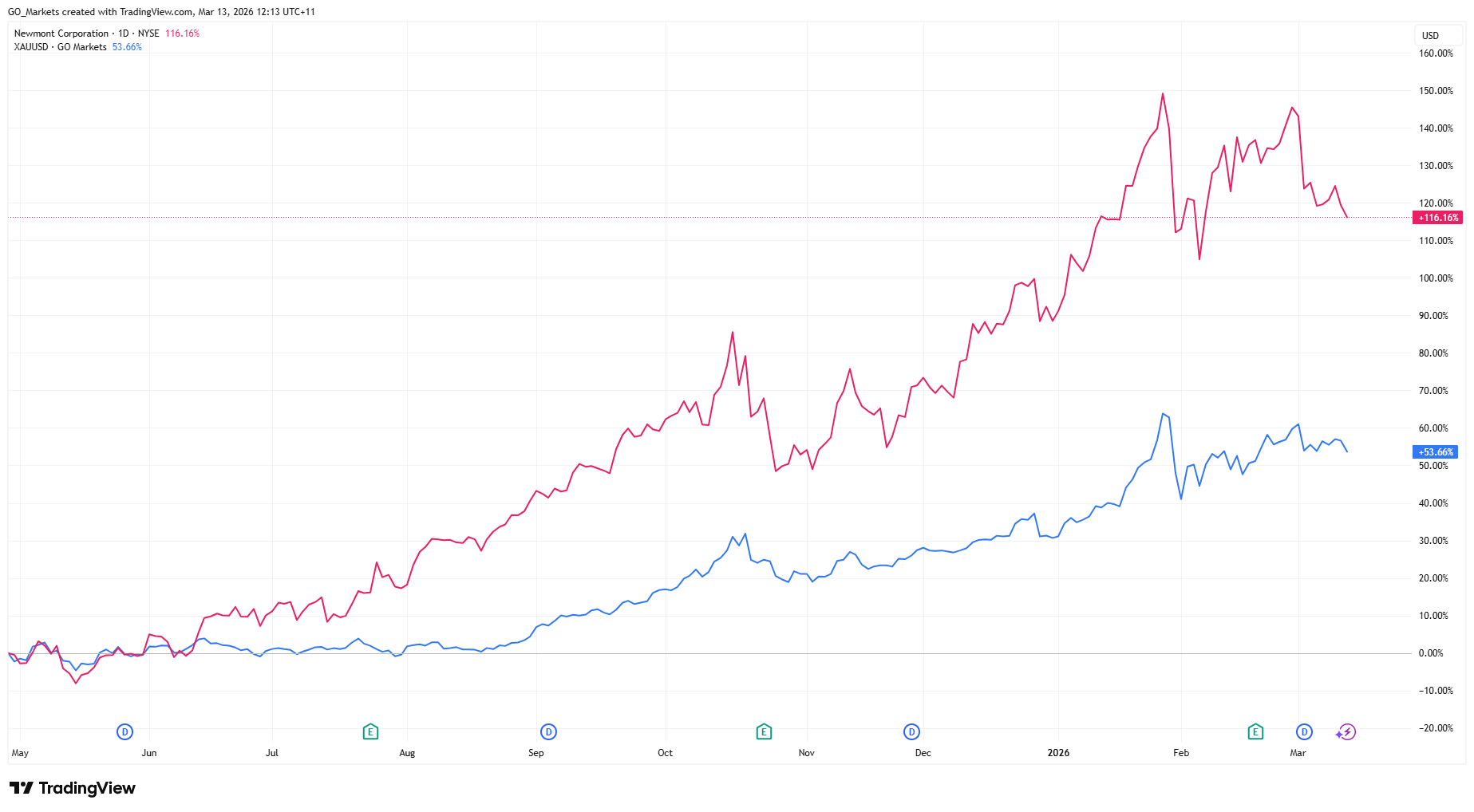
Gold enters one of its strongest seasonal periods from mid-December through February, having posted gains every year since 2015 during this window.
The gold price is maintaining strength throughout December despite the dollar's resilience, positioning well as the Christmas jewellery season peaks.
Key drivers:
- Seasonal jewellery demand: Approximately two-thirds of annual gold production flows into jewellery fabrication. Christmas, Lunar New Year (February 2026), and the Indian wedding season create regular buying patterns as merchants stock up in December.
- Dollar weakness patterns: December has historically been the dollar's weakest month, with negative bias from 22 December onwards. Gold's inverse correlation to the dollar could provide upside momentum during this period.
- Real yields environment: With the Fed cutting rates to 3.5-3.75 per cent while inflation remains around 3 per cent, real yields stay relatively low, potentially supporting higher gold valuations.
- Central bank accumulation: Continued central bank purchases and year-end institutional portfolio rebalancing could provide additional support.
3. EUR/USD
December has historically been the most bullish month for EUR/USD, with the world's most-traded currency pair posting an average return of +1.2 per cent over the past 50 years.
The US dollar regularly shows clear weakness during the Santa rally period, particularly from 22 December onwards. However, the Fed's hawkish rate cut has provided some dollar support this year.
Key drivers:
- Holiday liquidity dynamics: Lower institutional trading volumes during the holiday period reduce dollar support as retail traders and smaller participants dominate. Thin markets can amplify moves in either direction.
- Year-end rebalancing: European and Asian investors often repatriate funds or rebalance portfolios at year-end, creating demand for non-dollar currencies that typically support EUR and AUD against USD.
- Dollar strength from hawkish Fed: The Fed's December rate cut came with guidance of fewer cuts in 2026. This has kept the dollar elevated despite lower rates, possibly limiting the ability of EUR/USD seasonal patterns to influence the market.
4. Retail stocks
Consumer discretionary and retail stocks historically outperform during the holiday period, with the sector averaging 1.9-2.1 per cent gains during the Santa rally window. Holiday shopping accounts for 30-40 per cent of annual retail revenue for many companies, making this period crucial for full-year performance.
Key drivers:
- Record holiday traffic: A record 202.9 million consumers shopped during the Thanksgiving-Cyber Monday weekend, up from 197 million in 2024. November spending surged 3.8 per cent year-over-year, with total holiday spending projected to exceed US$1 trillion for the first time.
- High-income shoppers trend: Value-oriented retailers (TJX, Five Below) and those with strong omnichannel presence are capturing a disproportionate share of value over retailers targeting low-middle income earners.
- Post-Fed tailwind: The December rate cut provides marginal relief through lower borrowing costs, potentially extending holiday spending into late December as credit becomes more accessible.
5. Bitcoin
Bitcoin's December performance has been highly inconsistent, with a median return of -3.2 per cent, contrasting with traditional Santa rally patterns. Currently, Bitcoin is trading around US$87,500, down approximately 30 per cent from its October all-time high of US$126,210.
However, there are signals that the historically volatile asset could see a Santa-led bounce this year.
Key drivers:
- Institutional infrastructure in place: More than US$120 billion is now held in spot Bitcoin ETFs, which provides a framework that could support capital flows if risk sentiment improves, although inflows are not assured.
- Pro-crypto policy expectations: Discussion around potential developments such as a US strategic Bitcoin reserve and the CLARITY Act could influence sentiment going into 2026, although outcomes remain uncertain.
- Four-year cycle inflection point: The recent sell-off came roughly 18 months after the most recent Bitcoin halving, a point linked to turning points in some past cycles, with the four-year narrative potentially influencing market behaviour.
Risks to watch
- The December Fed meeting delivered a 25 basis point cut, but the hawkish tone has set expectations for fewer rate cuts in 2026.
- The Nasdaq's 19 per cent YTD gain has pushed valuations to elevated levels as AI-stock sentiment begins to dip.
- Five companies account for 30 per cent of index returns, placing portfolio concentration at concerning levels.
- Reduced holiday liquidity amplifies both moves and risks. Thin trading volumes can create exaggerated reactions to headlines, particularly around geopolitical events or economic data.
Is Santa coming to town?
The Santa Claus rally remains one of the better-known seasonal patterns in financial markets, but a historical hit rate of around 72 per cent also implies meaningful years where it does not play out.
A more balanced way to view the Santa rally window is as one input among many.
Seasonal observations can be considered alongside technical levels, fundamental drivers, and risk management — particularly given how quickly sentiment can change in thin holiday conditions.
And, if you can, take time away from the screens and enjoy the break.
.jpg)
Every trader has had that moment where a seemingly perfect trade goes astray.
You see a clean chart on the screen, showing a textbook candle pattern; it seems as though the market planets have aligned, and so you enthusiastically jump into your trade.
But before you even have time to indulge in a little self-praise at a job well done, the market does the opposite of what you expected, and your stop loss is triggered.
This common scenario, which we have all unfortunately experienced, raises the question: What separates these “almost” trades from the truly higher-probability setups?
The State of Alignment
A high-probability setup isn’t necessarily a single signal or chart pattern. It is the coming together of several factors in a way that can potentially increase the likelihood of a successful trade.
When combined, six interconnected layers can come together to form the full “anatomy” of a higher-probability trading setup:
- Context
- Structure
- Confluence
- Timing
- Management
- Psychology
When more of these factors are in place, the greater the (potential) probability your trade will behave as expected.
Market Context
When we explore market context, we are looking at the underlying background conditions that may help some trading ideas thrive, and contribute to others failing.
Regime Awareness
Every trading strategy you choose to create has a natural set of market circumstances that could be an optimum trading environment for that particular trading approach.
For example:
- Trending regimes may favour momentum or breakout setups.
- Ranging regimes may suit mean-reversion or bounce systems.
- High-volatility regimes create opportunity but demand wider stops and quicker management.
Investing time considering the underlying market regime may help avoid the temptation to force a trending system into a sideways market.
Simply looking at the slope of a 50-period moving average or the width of a Bollinger Band can suggest what type of market is currently in play.
Sentiment Alignment
If risk sentiment shifts towards a specific (or a group) of related assets, the technical picture is more likely to change to match that.
For example, if the USD index is broadly strengthening as an underlying move, then looking for long trades in EURUSD setups may end up fighting headwinds.
Setting yourself some simple rules can help, as trading against a potential tidal wave of opposite price change in a related asset is not usually a strong foundation on which to base a trading decision.
Key Reference Zones
Context also means the location of the current price relative to levels or previous landmarks.
Some examples include:
- Weekly highs/lows
- Prior session ranges, e.g. the Asian high and low as we move into the European session
- Major “round” psychological numbers (e.g., 1.10, 1000)
A long trading setup into these areas of market importance may result in an overhead resistance, or a short trade into a potential area of support may reduce the probability of a continuation of that price move before the trade even starts.
Market Structure
Structure is the visual rhythm of price that you may see on the chart. It involves the sequences of trader impulses and corrections that end up defining the overall direction and the likelihood of continuation:
- Uptrend: Higher highs (HH) and higher lows (HL)
- Downtrend: Lower highs (LH) and lower lows (LL)
- Transition: Break in structure often followed by a retest of previous levels.
A pullback in an uptrend followed by renewed buying pressure over a previous price swing high point may well constitute a higher-probability buy than a random candle pattern in the middle of nowhere.
Compression and Expansion
Markets move through cycles of energy build-up and release. It is a reflection of the repositioning of asset holdings, subtle institutional accumulation, or a response to new information, and may all result in different, albeit temporary, broad price scenarios.
- Compression: Evidenced by a tightening range, declining ATR, smaller candles, and so suggesting a period of indecision or exhaustion of a previous price move,
- Expansion: Evidenced by a sudden breakout, larger candle bodies, and a volume spike, is suggestive of a move that is now underway.
A breakout that clears a liquidity zone often runs further, as ‘trapped’ traders may further fuel the move as they scramble to reposition.
A setup aligned with such liquidity flows may carry a higher probability than one trading directly into it.
Confluence
Confluence is the art of layering independent evidence to create a whole story. Think of it as a type of “market forensics” — each piece of confirmation evidence may offer a “better hand’ or further positive alignment for your idea.
There are three noteworthy types of confluence:
- Technical Confluence – Multiple technical tools agree with your trading idea:
- Moving average alignment (e.g., 20 EMA above 50 EMA) for a long trade
- A Fibonacci retracement level is lining up with a previously identified support level.
- Momentum is increasing on indicators such as the MACD.
- Multi-Timeframe Confluence – Where a lower timeframe setup is consistent with a higher timeframe trend. If you have alignment of breakout evidence across multiple timeframes, any move will often be strengthened by different traders trading on different timeframes, all jumping into new trades together.
3. Volume Confluence – Any directional move, if supported by increasing volume, suggests higher levels of market participation. Whereas falling volume may be indicative of a lesser market enthusiasm for a particular price move.
Confluence is not about clutter on your chart. Adding indicators, e.g., three oscillators showing the same thing, may make your chart look like a work of art, but it offers little to your trading decision-making and may dilute action clarity.
Think of it this way: Confluence comes from having different dimensions of evidence and seeing them align. Price, time, momentum, and participation (which is evidenced by volume) can all contribute.
Timing & Execution
An alignment in context and structure can still fail to produce a desired outcome if your timing is not as it should be. Execution is where higher probability traders may separate themselves from hopeful ones.
Entry Timing
- Confirmation: Wait for the candle to close beyond the structure or level. Avoid the temptation to try to jump in early on a premature breakout wick before the candle is mature.
- Retests: If the price has retested and respected a breakout level, it may filter out some false breaks that we will often see.
- Then act: Be patient for the setup to complete. Talking yourself out of a trade for the sake of just one more candle” confirmation may, over time, erode potential as you are repeatedly late into trades.
Session & Liquidity Windows
Markets breathe differently throughout the day as one session rolls into another. Each session's characteristics may suit different strategies.
For example:
- London Open: Often has a volatility surge; Range breaks may work well.
- New York Overlap: Often, we will see some continuation or reversal of morning trends.
- Asian Session: A quieter session where mean-reversion or range trading approaches may do well
Trade Management
Managing the position well after entry can turn probability into realised profit, or if mismanaged, can result in losses compounding or giving back unrealised profit to the market.
Pre-defined Invalidation
Asking yourself before entry: “What would the market have to do to prove me wrong?” could be an approach worth trying.
This facilitates stops to be placed logically rather than emotionally. If a trade idea moves against your original thinking, based on a change to a state of unalignment, then considering exit would seem logical.
Scaling & Partial Exits
High-probability trade entries will still benefit from dynamic exit approaches that may involve partial position closes and adaptive trailing of your initial stop.
Trader Psychology
One of the most important and overlooked components of a higher-probability setup is you.
It is you who makes the choices to adopt these practices, and you who must battle the common trading “demons” of fear, impatience, and distorted expectation.
Let's be real, higher-probability trades are less common than many may lead you to believe.
Many traders destroy their potential to develop any trading edge by taking frequent low-probability setups out of a desire to be “in the market.”
It can take strength to be inactive for periods of time and exercise that patience for every box to be ticked in your plan before acting.
Measure “You” performance
Each trade you take becomes data and can provide invaluable feedback. You can only make a judgment of a planned strategy if you have followed it to the letter.
Discipline in execution can be your greatest ally or enemy in determining whether you ultimately achieve positive trading outcomes.
Bringing It All Together – The Setup Blueprint

Final Thoughts
Higher-probability setups are not found but are constructed methodically.
A trader who understands the “higher-probability anatomy” is less likely to chase trades or feel the need to always be in the market. They will see merit in ticking all the right boxes and then taking decisive action when it is time to do so.
It is now up to you to review what you have in place now, identify gaps that may exist, and commit to taking action!
.jpg)
Bitcoin has now outlasted the peak of all its previous four-year cycles.
For over a decade, every Bitcoin cycle has followed the same sequence: consolidation, breakout, mania, crash. Rinse and repeat.

Timeline-wise, we should be at the post-mania inflection point, waiting for the seemingly inevitable crash.
Yet unlike previous runs, this cycle never saw its “mania phase.” Instead, Bitcoin has spent the past year grinding sideways, touching new all-time highs without a euphoric blow-off top that defined previous cycles.
The fact that this euphoria period never materialised brings into question whether this cycle still has room to run, or has the market simply matured past the point of mania-driven peaks?
The Historical Four-Year Pattern
The traditional Bitcoin cycle was simple. Every four years, a halving event would reduce the block reward (amount of new Bitcoin being created) by half, creating a supply shock that triggered major bull markets.
The 2013 cycle, the 2017 cycle, and the 2021 cycle all followed this script. Each halving was followed by a 3-to 9-month growth period, then a full-on mania period, before topping out 12 to 18 months after the event.
Following the most recent halving in April 2024, Bitcoin experienced five months of sideways consolidation, then hinted at making its anticipated breakout into mania after the US election… but quickly returned to sideways consolidation for the next year.
We have seen new ATHs and the price has made some notable gains during the period, but the overall momentum has been much weaker.
This failure to repeat the frenzies of the past three cycles has brought into question how much influence the Bitcoin halving truly has on the market anymore.
No Longer a Supply Shock
In previous cycles, the halving created a situation where prices had to rise to clear the same dollar amount of miner expenses (who were now earning half the Bitcoin).
Bitcoin miners would simply not sell until the price reached a certain level, creating a supply shock that would drive prices higher.

Miners still do this today; however, the market’s maturation and the institutional adoption of Bitcoin have dampened the impact.
Selling off Bitcoin is no longer a balancing act where miners hold influence over price. The market has deep liquidity that can handle significant flows in either direction.
Institutional ETFs routinely purchase more Bitcoin in a single day than miners produce in a month.
The supply reduction that once drove dramatic price movements is now easily absorbed by a market with institutional buyers providing constant demand.
If the Halving Isn't Driving Cycles, What Is?
The overriding narrative is that the Bitcoin cycle is now tied to the global liquidity cycle.
If you plot the Global M2 Money Supply versus Bitcoin on a year-on-year basis, you can see that every Bitcoin top has correlated with the peaks of Global M2 liquidity growth.

This isn't unique to Bitcoin. The Gold price has closely mirrored the rate of Global M2 expansion for decades.
When central banks flood the system with liquidity, capital tends to move into stores of value or high-risk assets. When they drain liquidity, those same assets tend to retreat.
However, this is a correlation; these relationships may change and should not be relied upon as indicators of future performance.
Is the Dollar Just Getting Weaker?
The U.S. Dollar Strength Index tells the other side of this liquidity story. Bitcoin versus the dollar year-on-year has been almost perfectly inversely correlated.
Simply put, as fiat currencies lose purchasing power, “hard” assets like Bitcoin and Gold start to appreciate. Not because of improved fundamentals, but because the currencies they are paired against are simply worth less.

The Self-Fulfilling Prophecy
Beyond the charts and patterns, there is also the psychological notion that the four-year cycle persists precisely because people believe it will.
People have been conditioned by three complete cycles to expect Bitcoin to peak somewhere between 400 and 600 days after a halving.
This collective belief shapes behaviour: traders take profits, investors take fewer risks, and retail enthusiasm wanes. The prophecy fulfils itself.
When everyone believes Bitcoin should peak 18 months after a halving, the combined selling pressure can create exactly that outcome — regardless of whether the underlying driver still exists.
The current market weakness, with Bitcoin dropping over 20% from its October record high, occurred almost precisely at this 18-month mark.
Is This Cycle Built Different?
Despite this on-cue sell-off, this cycle still has the potential to break away from the historical four-year pattern.
Increased ETF adoption by institutional investors has brought in higher quality and consistent ownership of Bitcoin.
Unlike retail traders, who often panic-sell during corrections, institutional holders tend to maintain their positions through volatility.
For example, Michael Saylor’s high-profile MicroStrategy fund has continued to purchase Bitcoin through market weakness. Recently reporting a purchase of 8,178 BTC at an average price of $102,171.

Another hard indicator that diverges from previous cycle peaks is the amount of Bitcoin being held on centralised exchanges.
The current amount of BTC on CEXs is unusually low. This pattern is generally seen closer to cycle lows, rather than peaks.

Other factors supporting the break of the four-year mould are coming out of the Whitehouse.
A comprehensive regulatory framework through the CLARITY Act represents structural changes and boundaries for regulatory bodies that didn't exist in previous cycles.
And the move to establish a Strategic Bitcoin Reserve will see all government-held forfeited Bitcoin (approximately $30 billion worth) transferred into a government reserve, signalling Bitcoin as a strategic asset like Gold and oil.

Bitcoin Has Finally Grown Up
The four-year cycle has been a useful heuristic, but heuristics break down when conditions change. Institutional buyers, regulatory clarity, and strategic reserves represent genuinely new conditions historical patterns don’t account for.
At the same time, dismissing the cycle entirely would be premature. The self-fulfilling aspect means it retains predictive power even if the original cause has weakened.
Market participants act on the pattern they've learned, and their actions create the pattern they expect.
Perhaps the real insight is that the Bitcoin market cycles never had just one cause. They were always the result of multiple overlapping forces — programmed scarcity, liquidity conditions, sentiment, self-reinforcing expectations.
The cycle shifts character as some forces strengthen and others weaken. But whether the forces have shifted enough to break the four-year trend is yet to be determined.
The fundamental indicators show this cycle may have some life, but the psychological power of the four-year pattern could push it to another, predictable end.
You can trade BTC and other popular Crypto CFD pairs on GO Markets with $0 swaps until 31 December 2025.
Recent Articles

Donald Trump has officially declared the Maduro regime in Venezuela a foreign terrorist organisation and ordered a "total and complete blockade" of the country's sanctioned oil tankers.
The U.S. has positioned 11 warships in the Caribbean to enforce the blockade, which could remove 400,000 to 500,000 barrels daily from global supply.
The move sent crude prices jumping over 2% and sparked renewed concerns about supply stability heading into 2026.

White House Chief of Staff Susie Wiles succinctly summarised the situation as: “Trump wants to keep on blowing boats up until Maduro cries uncle."
Brent crude jumped 2.4% to $60.33 per barrel, while WTI climbed 2.6% to $56.69.
If crude maintains its $60 per barrel price, analysts project the blockade, combined with potential Russian sanctions, could push prices toward $70 as Venezuela's already-devastated economy faces collapse.
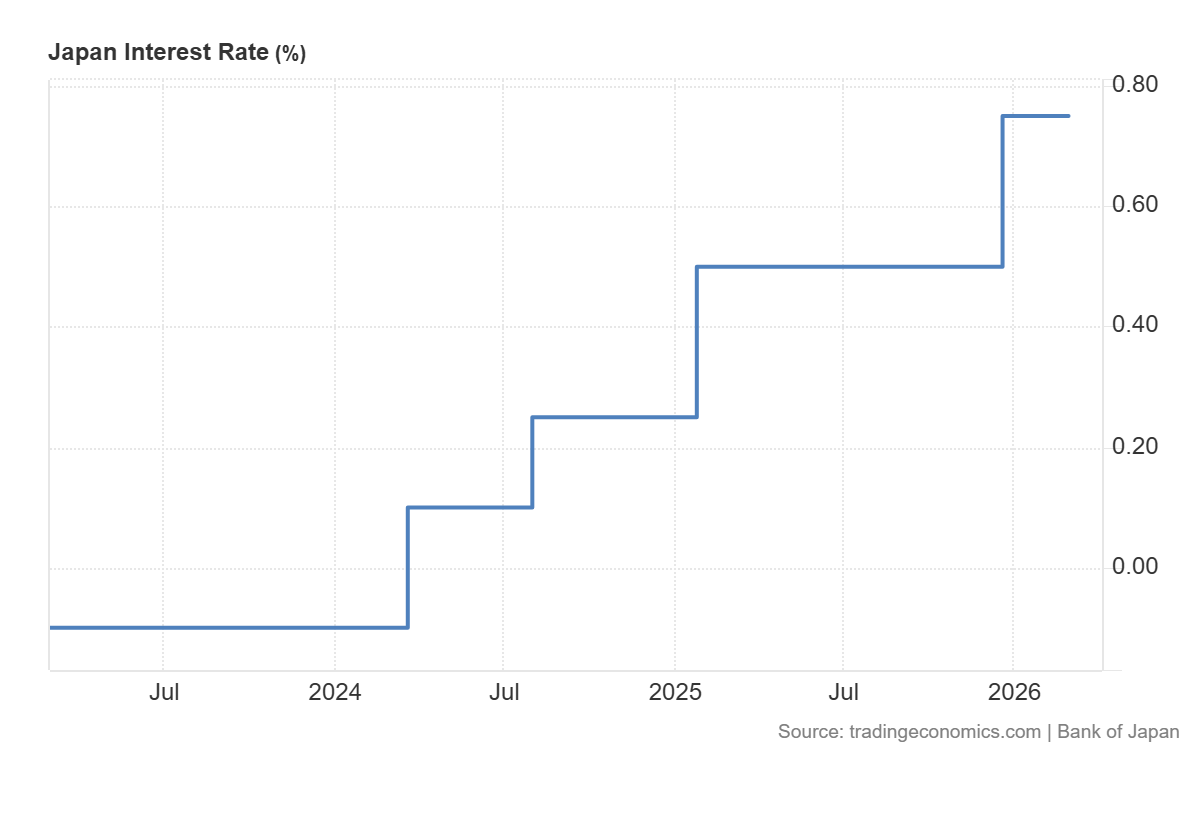
Bank of Japan to Hike Rates to Highest Level in Decades
The Bank of Japan is set to raise interest rates to their highest level in three decades this Friday, with Governor Kazuo Ueda expected to lift the benchmark rate from 0.5% to 0.75%.
While modest by global standards, this marks a landmark step in Japan's departure from decades of near-zero rates and unconventional easing.
The decision comes amid significant market turbulence. Japanese government bond yields have surged, with 30-year bonds hitting record highs and 10-year yields reaching 19-year peaks.
The volatility stems partly from concerns under new Prime Minister Sanae Takaichi, who recently approved a $118 billion stimulus package with over 60% financed through borrowing.

While Friday's hike appears certain, policymakers have signalled caution as they push rates toward levels estimated between 1% and 2.5%.
Ueda's post-meeting press conference will be closely watched for signals about future increases.
Micron Forecasts Blowout Earnings on Booming AI Market
Micron Technology is projecting second-quarter earnings of $8.42 per share, nearly double Wall Street's $4.78 estimate.
Micron shares surged 7% in after-hours trading as markets reacted to the news that the AI-driven memory chip race is showing no signs of slowing.

As one of only three major suppliers of high-bandwidth memory (HBM) chips alongside SK Hynix and Samsung, Micron sits at a chokepoint in AI infrastructure.
The HBM specialised chips are essential for training and deploying generative AI models, and current demand is dramatically outpacing supply.
CEO Sanjay Mehrotra revealed that supply tightness will extend beyond 2026, with Micron expecting to fulfil only 50-70% of key customer demand in the medium term.
Micron projects revenue of $18.70 billion this quarter versus analyst estimates of $14.20 billion. The company has retooled their operations toward AI applications, even dissolving its consumer "Crucial" brand to concentrate on AI data centre demand.
HBM chips are now the bottleneck in AI system performance, and suppliers who can deliver at scale have the potential to capture large amounts of value over the coming years.

As the final trading days of December approach, investors are assessing whether seasonal factors may again influence year-end price action.
- The Santa Claus rally has delivered gains in 70 of the past 97 years, but history is no guarantee.
- Technology, retail, and consumer discretionary sectors have historically led with 1.9-2.1 per cent average gains during the Christmas period.
- Recent market rallies, AI weariness, and a hawkish Fed put doubts around the Santa Rally.
The seven-day Santa rally window runs from 24 December through 5 January 2026.
This period has historically outperformed average market conditions, driven by holiday optimism, thin trading volumes, year-end bonus spending, tax-loss completions, and institutional portfolio rebalancing.

5 assets in focus this Christmas
1. Technology stocks
Technology stocks have historically been standout performers during the Santa rally period, averaging gains of 2.1 per cent across the seven-day window, although results vary significantly year to year.
The Nasdaq Composite typically posts stronger returns than broader indices, with an 82 per cent historical win rate for December-January performance.
However, tech stocks do currently face a challenging setup. The Nasdaq gained 19 per cent year-to-date (YTD) but has come under pressure in recent months, with AI-related stocks experiencing sentiment dips.
Key drivers:
- E-commerce momentum: Black Friday 2025 spending hit a record US$11.8 billion, with sustained demand through December as last-minute purchases drive revenue for Amazon and digital payment processors.
- Holiday infrastructure: Cloud computing, semiconductors, and digital payments capture the backend of holiday spending surges, benefiting from both retail transactions and year-end enterprise spending.
- Concentration risk: Five companies (Nvidia, Microsoft, Apple, Alphabet, Amazon) account for 30 per cent of major index returns. Down periods for these companies, as seen during recent AI-sentiment-driven volatility, could bring down the sector as a whole.
2. Gold
Gold enters one of its strongest seasonal periods from mid-December through February, having posted gains every year since 2015 during this window.
The gold price is maintaining strength throughout December despite the dollar's resilience, positioning well as the Christmas jewellery season peaks.
Key drivers:
- Seasonal jewellery demand: Approximately two-thirds of annual gold production flows into jewellery fabrication. Christmas, Lunar New Year (February 2026), and the Indian wedding season create regular buying patterns as merchants stock up in December.
- Dollar weakness patterns: December has historically been the dollar's weakest month, with negative bias from 22 December onwards. Gold's inverse correlation to the dollar could provide upside momentum during this period.
- Real yields environment: With the Fed cutting rates to 3.5-3.75 per cent while inflation remains around 3 per cent, real yields stay relatively low, potentially supporting higher gold valuations.
- Central bank accumulation: Continued central bank purchases and year-end institutional portfolio rebalancing could provide additional support.
3. EUR/USD
December has historically been the most bullish month for EUR/USD, with the world's most-traded currency pair posting an average return of +1.2 per cent over the past 50 years.
The US dollar regularly shows clear weakness during the Santa rally period, particularly from 22 December onwards. However, the Fed's hawkish rate cut has provided some dollar support this year.
Key drivers:
- Holiday liquidity dynamics: Lower institutional trading volumes during the holiday period reduce dollar support as retail traders and smaller participants dominate. Thin markets can amplify moves in either direction.
- Year-end rebalancing: European and Asian investors often repatriate funds or rebalance portfolios at year-end, creating demand for non-dollar currencies that typically support EUR and AUD against USD.
- Dollar strength from hawkish Fed: The Fed's December rate cut came with guidance of fewer cuts in 2026. This has kept the dollar elevated despite lower rates, possibly limiting the ability of EUR/USD seasonal patterns to influence the market.
4. Retail stocks
Consumer discretionary and retail stocks historically outperform during the holiday period, with the sector averaging 1.9-2.1 per cent gains during the Santa rally window. Holiday shopping accounts for 30-40 per cent of annual retail revenue for many companies, making this period crucial for full-year performance.
Key drivers:
- Record holiday traffic: A record 202.9 million consumers shopped during the Thanksgiving-Cyber Monday weekend, up from 197 million in 2024. November spending surged 3.8 per cent year-over-year, with total holiday spending projected to exceed US$1 trillion for the first time.
- High-income shoppers trend: Value-oriented retailers (TJX, Five Below) and those with strong omnichannel presence are capturing a disproportionate share of value over retailers targeting low-middle income earners.
- Post-Fed tailwind: The December rate cut provides marginal relief through lower borrowing costs, potentially extending holiday spending into late December as credit becomes more accessible.
5. Bitcoin
Bitcoin's December performance has been highly inconsistent, with a median return of -3.2 per cent, contrasting with traditional Santa rally patterns. Currently, Bitcoin is trading around US$87,500, down approximately 30 per cent from its October all-time high of US$126,210.
However, there are signals that the historically volatile asset could see a Santa-led bounce this year.
Key drivers:
- Institutional infrastructure in place: More than US$120 billion is now held in spot Bitcoin ETFs, which provides a framework that could support capital flows if risk sentiment improves, although inflows are not assured.
- Pro-crypto policy expectations: Discussion around potential developments such as a US strategic Bitcoin reserve and the CLARITY Act could influence sentiment going into 2026, although outcomes remain uncertain.
- Four-year cycle inflection point: The recent sell-off came roughly 18 months after the most recent Bitcoin halving, a point linked to turning points in some past cycles, with the four-year narrative potentially influencing market behaviour.
Risks to watch
- The December Fed meeting delivered a 25 basis point cut, but the hawkish tone has set expectations for fewer rate cuts in 2026.
- The Nasdaq's 19 per cent YTD gain has pushed valuations to elevated levels as AI-stock sentiment begins to dip.
- Five companies account for 30 per cent of index returns, placing portfolio concentration at concerning levels.
- Reduced holiday liquidity amplifies both moves and risks. Thin trading volumes can create exaggerated reactions to headlines, particularly around geopolitical events or economic data.
Is Santa coming to town?
The Santa Claus rally remains one of the better-known seasonal patterns in financial markets, but a historical hit rate of around 72 per cent also implies meaningful years where it does not play out.
A more balanced way to view the Santa rally window is as one input among many.
Seasonal observations can be considered alongside technical levels, fundamental drivers, and risk management — particularly given how quickly sentiment can change in thin holiday conditions.
And, if you can, take time away from the screens and enjoy the break.

REMX approaches key resistance after a sharp rebound
- Instrument: REMX (VanEck Rare Earth and Strategic Metals ETF)
- Time horizon: Short-to-medium term
- Market read: Price action is often interpreted as neutral-to-constructive while holding above the ~$68 area, outcomes remain uncertain
- Chart reference levels: ~$75 (prior reaction/overhead supply area), ~$68 (support area), then ~$81 (next prior reaction area)
Rare earth and strategic metals equities have been among the stronger-performing thematic areas in 2025, though recent price action suggests the rally has paused as investors reassess momentum. REMX has rebounded sharply from its April lows and is now consolidating below a technically significant resistance zone near $75, making it a key level to monitor.
What is REMX?
REMX is an exchange-traded fund that provides diversified exposure to global companies involved in mining, refining, and recycling rare earth and strategic metals. For traders and investors who want sector exposure without relying on a single issuer, the ETF structure can help spread company-specific risk. Performance will still be highly sensitive to commodity cycles and policy/geopolitics.
Portfolio snapshot
The ETF’s larger positions typically include a mix of rare earth producers and lithium-related names. Examples of top holdings (approximate weights, based on the fund’s most recent publicly available holdings data)

Why rare earths and strategic metals matter
Rare earth elements (a group of 17 metals) are not necessarily scarce in the earth’s crust, but economically viable deposits—and especially processing capacity—are concentrated. This creates a supply-chain dynamic where policy decisions, trade restrictions, and downstream demand can have outsized impacts on pricing and sentiment.
Key demand linkages include:
- EVs and wind power (permanent magnets and motors)
- Electronics (speakers, screens, storage)
- Defence/aerospace (guidance, radar, specialised alloys)
- Industrial catalysts (refining and emissions control)
Technical outlook
After marking multi-year lows around $33 in early April, REMX rallied strongly and returned to levels last seen in mid-2023. The $75 area stands out as a prior multi-touch support zone (2021–2023), which increases the probability it acts as resistance on the first approach.
REMX weekly chart

Price has repeatedly tested $75 over the past month without a confirmed breakout. The pattern of higher lows against flat resistance resembles an ascending triangle, often associated with building pressure; however, confirmation requires a decisive break.
REMX daily chart

Scenarios to watch
- Bullish continuation: A daily close above $75 (ideally with expanding participation) would shift focus to $81 as the next resistance zone.
- Range continuation / pullback: Failure to clear $75 again keeps the risk of a retracement toward $68 support.
- Bearish breakdown: A sustained move below $68 would weaken the structure and raise the probability of a deeper mean reversion (next support levels should be mapped from prior swing lows).