We have deliberately waited a few days before commenting on “Liberation Day” and the fallout that would come from President Trump’s new tariffs regime.It will go down as just another historical period of heightened volatility, uncertainty, risk, and a whole manner of market turmoil. This is why we wanted to put what is happening right now into some context. (If that is possible, considering how volatile the period is and how erratic and how quick the president's manner can change.)US markets have seen this kind of violent move only three times since the 1950s. The S&P’s over 10 per cent drop in the final two sessions of the week following President Trump's "Liberation Day" tariff announcement has it in rare company – and not in a good way - October 1987 (Black Monday), November 2008 (Global Financial Crisis), March 2020 (COVID-19).So, why such a reaction?The market reaction reflects not the ‘shock’ but the scale and brevity of the tariffs. A 10% across-the-board tariff was broadly expected. There were some calculations as much as 15 to 20% judging by the net $1 trillion in and out of the federal government revenue. (This is the impact of DOGE and other government spending cuts coupled with the tariffs now in place that will offset the promised 0% personal income tax for those earning up to US$150,000)But what markets didn’t see coming was the country-specific layer. Take China as an example; the additional 34% reciprocal tariff on Chinese goods pushed the total to 54%. With other measures factored in, the effective burden could approach 65%.Then there were the tariffs that were tied to trade deficits, hitting Japan, South Korea and most emerging markets between the eyes (i.e. Vietnam).The EU saw a 20% rate, which was within expectations, while the UK, Australia, New Zealand and others landed at 10%. Canada and Mexico were spared, as was Russia, North Korea and Belarus, interestingly enough.Energy was excluded, which is unsurprising considering Trump’s goal of getting energy down, down and staying down. Pharmaceuticals and semiconductors were also carved out, however, this is more down to the probability of more targeted action like that of steel and aluminium.Now, what is different about this market shock and risk off trading is that it would send funds flowing to the US dollar, ratcheting it higher. But not this time. The dollar weakened against the euro. Theories as to why range from Europe’s lighter tariff load to euro-based investors pulling money out of the US. The same could be said of the Swiss Franc.All this leads to an average effective tariff rate of around 22%. That number will likely climb once product-specific tariffs on areas like pharmaceuticals and lumber are formalised. Some of this may be negotiated down, but not soon, and the possibility of tit-for-tat retaliation like China has now entered into could actually see it going higher still as the President looks to outdo country responses.The broader uncertainty this introduces to the US outlook is now at its highest since early 2020 and has the markets pricing in 110 basis points of Fed rate cuts this year – a near 5 cut call shows just how unprecedented this is.In fact, in no time in living memory has a developed economy lifted trade barriers this aggressively or abruptly. What has been implemented is textbook economics 101 supply-side shock.Input costs go up, finished goods get pricier, and the ripple effects hit margins and employment. Expect to see this in the next six months.Expect core PCE inflation to finish the year at 3.5% —nearly a full percentage point higher than the consensus forecast from just a week ago.Real GDP growth is forecast to slow to 0.1% on a quarter-on-quarter basis. That path may be volatile as Q1 could look worse due to soft consumption and strong imports, with a mechanical bounce in Q2.What has been lost in the chaos of last Thursday and Friday’s trade was the March Non-farm payrolls jobs print came in at 228,000, which was above consensus, the caveat being it is less so after downward revisions to prior months.Hospitality hiring was strong, likely helped by a weather rebound that won’t repeat. Government payrolls are holding steady for now, but cuts are coming. Layoffs in defence and aerospace (DOGE) are already underway, and tariffs will act as a brake on new hiring. Expect softer reports ahead.Unemployment ticked up slightly to 4.15%, reflecting a modest rise in participation. That’s still within range, giving the Fed cover to hold off on immediate action. But if job losses build pressure on the Fed to act, it will increase quickly.The consensus now is for the first rate cut of this cycle to start in May, triggered by softer April payrolls and earlier signs of deterioration in jobless claims and business sentiment.Zooming out from just a US-centric point of view, the macro standpoint is just as bad if not worse. The scale of tariffs adds pressure on industrial production, trade volumes and cross-border investment.That’s feeding into commodity markets, where the outlook has turned more cautious.Brent is expected to fall into the low US$60s as trade frictions and oversupply build. LNG looks weaker too, with soft Asian demand and less urgency in Europe to restock. Iron ore is more exposed to China, and the reciprocal tariffs put a vulnerability into the price due to the broader global slowdown and higher prices to the US.Looking at China specifically, infrastructure remains a key policy lever that would offset the possible loss of demand in aluminium, copper, and steel. Monetary indicators are beginning to turn, suggesting the start of a new easing cycle. It also suggests that policy remains inward-facing, and a focus on domestic stability would mean a metals-heavy growth path. Thus suggesting Australia could be the ‘lucky country’ once more and could escape the full burden of the global upheaval.In short, the global reaction isn’t just about tariffs. It’s about what happens when policy shocks collide with already-fragile global demand, and central banks are forced to navigate inflation that’s driven by politics, not just price cycles.This is the question for traders and investors alike over the coming period.
Another Period For The History Books.

Related Articles

What moved the ASX 200 in 2025?
In 2025, the ASX 200 closed around 8,621 points and was up approximately 6% year to date (YTD) as of 19 December close. Market direction was most sensitive to Reserve Bank of Australia (RBA) expectations, commodity prices and China-linked demand, and (to a lesser extent) moves in the Australian dollar (AUD). The index recovered from November’s pullback, but remained below October’s record close.
Key 2025 drivers included:
- RBA policy expectations: Sentiment was shaped by shifting views on the timing and extent of rate moves. The November pullback reflected repricing towards a longer pause and higher uncertainty around whether the next move could be a hike rather than a cut, particularly as jobs and inflation data surprised.
- Resources and China sensitivity: With a meaningful resources weight, the index responded to iron ore stability, strong gold prices and relative firmness in base metals. China data and any perceived policy support (including signals from the People’s Bank of China (PBOC)) remained important for the export backdrop. A relatively stable AUD also reduced currency-related noise for exporters.
- Index composition and market structure: The ASX 200’s heavier tilt to materials and banks, and lower exposure to high-growth technology, meant it often lagged tech-led global rallies, but tended to hold up better when AI and growth valuations were questioned.
- Corporate earnings: Reporting season outcomes influenced valuation support. In September’s half-year reporting season, around 33% of ASX 200 companies beat expectations, which helped underpin pricing around current levels.
Current state
The ASX 200 was roughly 5% below its late-October record high close of 9,094 points. After the November retracement, support around 8,400 appeared to hold and buying interest improved. The 50-day EMA near 8,730 (a prior consolidation area) was a commonly watched near-term reference, noting technical indicators can be unreliable.
What to watch in January
- China and commodity demand: Growth, trade and any fresh stimulus inference from the PBOC may affect sentiment.
- Domestic inflation and labour data: CPI and jobs prints are key inputs into RBA expectations.
- Key levels and follow-through: The post-November rebound may need continued demand to sustain momentum.

What moved the Nikkei 225 in 2025?
In 2025, the Nikkei 225 traded around 39,200 points and was up approximately 21% year to date (YTD). Market direction was most sensitive to moves in the Japanese yen (JPY) and Bank of Japan (BOJ) communication, with the index consolidating after multi-decade highs. While broader signals remained constructive, consolidation can resolve either higher or lower.
Key influences included:
- JPY movements and earnings translation: A weaker JPY can boost the reported value of overseas earnings for some exporters, although it may also increase input and import costs. The net impact often depends on company hedging practices and varies by sector, with effects most evident in export-heavy industries such as automotive, industrials and parts of technology manufacturing.
- Gradual BOJ policy transition: The BOJ continued to step away from ultra-easy settings, but tightening was generally cautious. Markets largely priced a slow, conditional normalisation, which helped limit downside, even as policy headlines created bouts of volatility.
- Corporate governance reforms: Ongoing improvements in capital efficiency and shareholder returns supported interest from overseas investors. Share buybacks, stronger balance-sheet discipline and improved return on equity (ROE) contributed to re-rating in parts of the market.
- Global cyclical exposure: The Nikkei moved with shifts in global manufacturing sentiment and expectations for US growth, particularly during risk-on phases associated with AI-related capital spending.
Current state
After pushing to multi-decade highs earlier in the year, the Nikkei spent time consolidating but has remained structurally strong. Price sits above key long-term moving averages, and some technicians watch the 50-day exponential moving average (EMA) as a potential reference level (noting these indicators can be unreliable). Currency swings and shifting BOJ expectations were commonly cited as contributors to much of the second-half volatility, although pullbacks were generally met with buying interest.
What to watch in January for Japan
- JPY volatility: Sharper yen moves, especially if driven by BOJ or Federal Reserve expectations, could quickly change exporter earnings assumptions.
- BOJ communication: Small changes in language on inflation persistence or bond market operations may move sentiment.
- Global growth data: US and China manufacturing and trade prints remain key inputs for an externally focused economy.


2025 has seen a material decline in the fortunes of the greenback. A technical structure breakdown early in the year was followed by a breach of the 200-day moving average (MA) at the end of Q1. The index then entered correction territory, printing a three-year low at the end of Q2.
Since then, we have seen attempts to build a technical base, including a re-test of the end-of-June lows in mid-September. However, buying pressure has not been strong enough to push price back above the technically critical and psychologically important 100 level.
What the levels suggest from here
As things stand, the index remains more than 10% lower for 2025. On this technical view, the index may revisit the 96 area. However, technical levels can fail and outcomes depend on multiple factors.
US dollar index

The key question for 2026
The key question remains: are we likely to see further losses in the early part of next year and beyond, or will current support hold?
We cannot assess the US dollar in isolation and any outlook is shaped by internal and global factors, not least its relative strength versus other major currencies. Many of these drivers are interrelated, but four potential headwinds stand out for any US dollar recovery. Collectively, they may keep downside pressure in play.
Four headwinds for any US dollar recovery
1. The US dollar as a safe-haven trade
One scenario where US dollar support has historically been evident is during major global events, slowdowns and market shocks. However, the more muted response of the US dollar during risk-off episodes this year suggests a shift away from the historical norm, with fewer sustained US dollar rallies.
Instead, throughout 2025, some investors appeared to favour gold, and at other times, FX and even equities, rather than into the US dollar. If this change in behaviour persists through 2026, it could make recovery harder, even if global economic pressure builds over the year ahead.
2. US versus global trade
Trade policy is harder to measure objectively, and outcomes can be difficult to predict. That said, trade battles driven by tariffs on US imports are often viewed as an additional potential drag on the US dollar.
The impact may be twofold if additional strain is placed on the US economy through:
- a slowdown in global trade volumes as impacted countries seek alternative trade relationships, with supply chain distortions that may not favour US growth
- pressure on US corporate profit margins as tariffs lift costs for importers
3. Removal of quantitative tightening
The Fed formally halted its balance sheet reduction, quantitative tightening (QT), as of 1 December 2025, ending a program that shrank assets by roughly US$2.4 trillion since mid-2022.
Traditionally, ending QT is seen as marginally negative for the US dollar because it stops the withdrawal of liquidity, can ease global funding conditions, and may reduce the scarcity that can support dollar demand. Put simply, more dollars in the system can soften the currency’s support at the margin, although outcomes have varied historically and often depend on broader financial conditions.
4. Interest rate differential
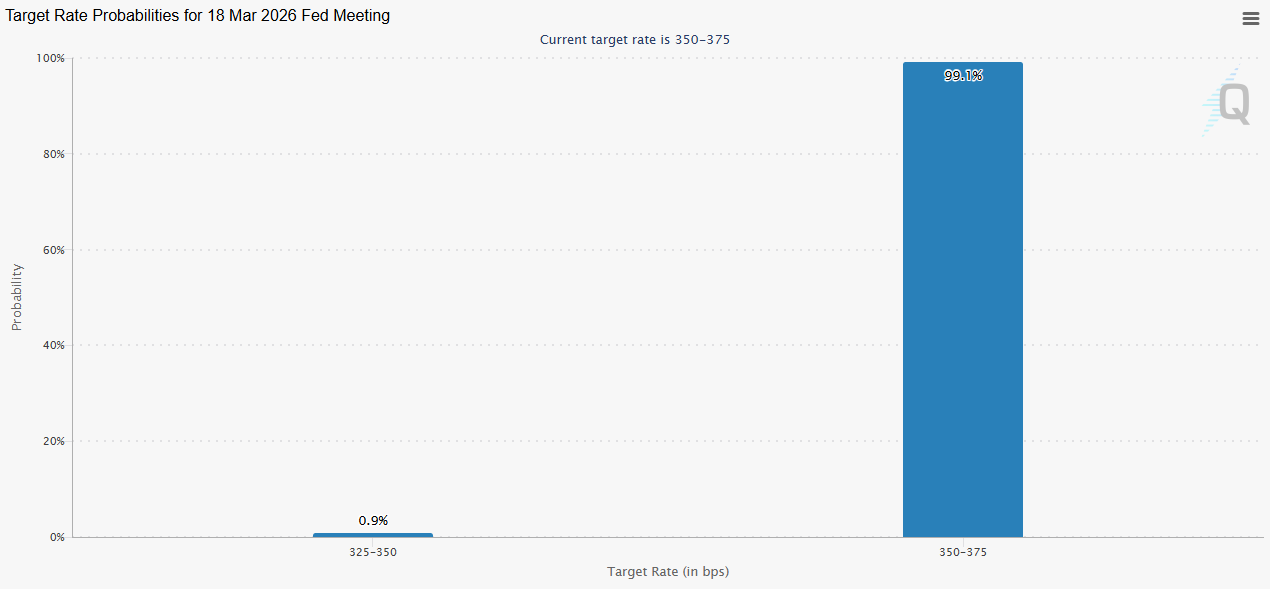
Interest rate differential (IRD) is likely to be a primary driver of US dollar strength, or otherwise, in the months ahead. The latest FOMC meeting delivered the expected 0.25% cut, with attention on guidance for what may come next.
Even after a softer-than-expected CPI print, markets have been reluctant to price aggressive near-term easing. At the time of writing, less than a 20% chance of a January cut is priced in, and it may be March before we see the next move.
The Fed is balancing sticky inflation against a jobs market under pressure, with the headline rate back at levels last seen in 2012. The practical takeaway is that a more accommodative stance may add to downward pressure on the US dollar.
Current expectations imply around two rate cuts through 2026, with the potential for further easing beyond that, broadly consistent with the median projections shown in the chart below. These are forecasts rather than guarantees, and they can shift as economic data and policy guidance evolve.


As the final trading days of December approach, investors are assessing whether seasonal factors may again influence year-end price action.
- The Santa Claus rally has delivered gains in 70 of the past 97 years, but history is no guarantee.
- Technology, retail, and consumer discretionary sectors have historically led with 1.9-2.1 per cent average gains during the Christmas period.
- Recent market rallies, AI weariness, and a hawkish Fed put doubts around the Santa Rally.
The seven-day Santa rally window runs from 24 December through 5 January 2026.
This period has historically outperformed average market conditions, driven by holiday optimism, thin trading volumes, year-end bonus spending, tax-loss completions, and institutional portfolio rebalancing.

5 assets in focus this Christmas
1. Technology stocks
Technology stocks have historically been standout performers during the Santa rally period, averaging gains of 2.1 per cent across the seven-day window, although results vary significantly year to year.
The Nasdaq Composite typically posts stronger returns than broader indices, with an 82 per cent historical win rate for December-January performance.
However, tech stocks do currently face a challenging setup. The Nasdaq gained 19 per cent year-to-date (YTD) but has come under pressure in recent months, with AI-related stocks experiencing sentiment dips.
Key drivers:
- E-commerce momentum: Black Friday 2025 spending hit a record US$11.8 billion, with sustained demand through December as last-minute purchases drive revenue for Amazon and digital payment processors.
- Holiday infrastructure: Cloud computing, semiconductors, and digital payments capture the backend of holiday spending surges, benefiting from both retail transactions and year-end enterprise spending.
- Concentration risk: Five companies (Nvidia, Microsoft, Apple, Alphabet, Amazon) account for 30 per cent of major index returns. Down periods for these companies, as seen during recent AI-sentiment-driven volatility, could bring down the sector as a whole.
2. Gold
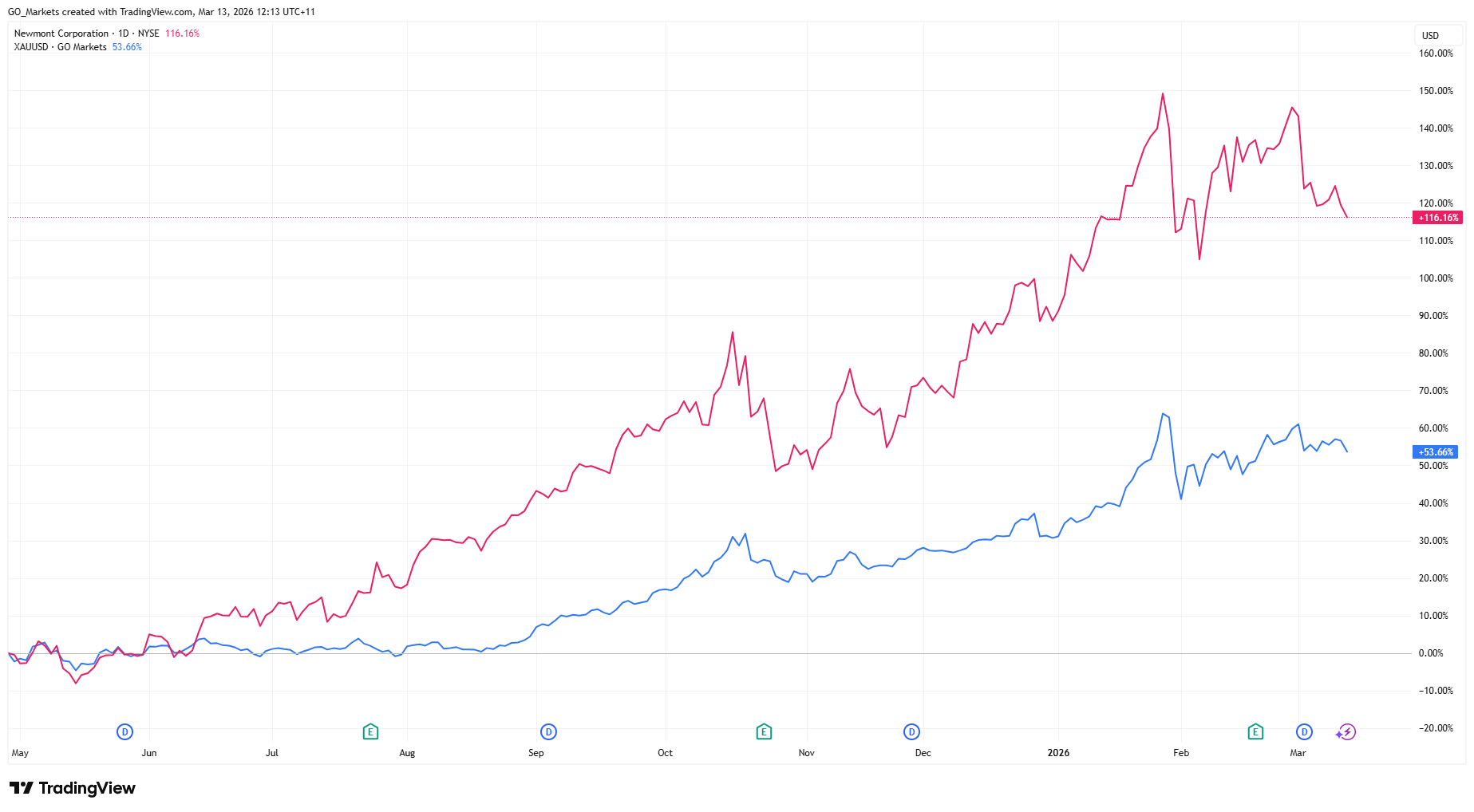
Gold enters one of its strongest seasonal periods from mid-December through February, having posted gains every year since 2015 during this window.
The gold price is maintaining strength throughout December despite the dollar's resilience, positioning well as the Christmas jewellery season peaks.
Key drivers:
- Seasonal jewellery demand: Approximately two-thirds of annual gold production flows into jewellery fabrication. Christmas, Lunar New Year (February 2026), and the Indian wedding season create regular buying patterns as merchants stock up in December.
- Dollar weakness patterns: December has historically been the dollar's weakest month, with negative bias from 22 December onwards. Gold's inverse correlation to the dollar could provide upside momentum during this period.
- Real yields environment: With the Fed cutting rates to 3.5-3.75 per cent while inflation remains around 3 per cent, real yields stay relatively low, potentially supporting higher gold valuations.
- Central bank accumulation: Continued central bank purchases and year-end institutional portfolio rebalancing could provide additional support.
3. EUR/USD
December has historically been the most bullish month for EUR/USD, with the world's most-traded currency pair posting an average return of +1.2 per cent over the past 50 years.
The US dollar regularly shows clear weakness during the Santa rally period, particularly from 22 December onwards. However, the Fed's hawkish rate cut has provided some dollar support this year.
Key drivers:
- Holiday liquidity dynamics: Lower institutional trading volumes during the holiday period reduce dollar support as retail traders and smaller participants dominate. Thin markets can amplify moves in either direction.
- Year-end rebalancing: European and Asian investors often repatriate funds or rebalance portfolios at year-end, creating demand for non-dollar currencies that typically support EUR and AUD against USD.
- Dollar strength from hawkish Fed: The Fed's December rate cut came with guidance of fewer cuts in 2026. This has kept the dollar elevated despite lower rates, possibly limiting the ability of EUR/USD seasonal patterns to influence the market.
4. Retail stocks
Consumer discretionary and retail stocks historically outperform during the holiday period, with the sector averaging 1.9-2.1 per cent gains during the Santa rally window. Holiday shopping accounts for 30-40 per cent of annual retail revenue for many companies, making this period crucial for full-year performance.
Key drivers:
- Record holiday traffic: A record 202.9 million consumers shopped during the Thanksgiving-Cyber Monday weekend, up from 197 million in 2024. November spending surged 3.8 per cent year-over-year, with total holiday spending projected to exceed US$1 trillion for the first time.
- High-income shoppers trend: Value-oriented retailers (TJX, Five Below) and those with strong omnichannel presence are capturing a disproportionate share of value over retailers targeting low-middle income earners.
- Post-Fed tailwind: The December rate cut provides marginal relief through lower borrowing costs, potentially extending holiday spending into late December as credit becomes more accessible.
5. Bitcoin
Bitcoin's December performance has been highly inconsistent, with a median return of -3.2 per cent, contrasting with traditional Santa rally patterns. Currently, Bitcoin is trading around US$87,500, down approximately 30 per cent from its October all-time high of US$126,210.
However, there are signals that the historically volatile asset could see a Santa-led bounce this year.
Key drivers:
- Institutional infrastructure in place: More than US$120 billion is now held in spot Bitcoin ETFs, which provides a framework that could support capital flows if risk sentiment improves, although inflows are not assured.
- Pro-crypto policy expectations: Discussion around potential developments such as a US strategic Bitcoin reserve and the CLARITY Act could influence sentiment going into 2026, although outcomes remain uncertain.
- Four-year cycle inflection point: The recent sell-off came roughly 18 months after the most recent Bitcoin halving, a point linked to turning points in some past cycles, with the four-year narrative potentially influencing market behaviour.
Risks to watch
- The December Fed meeting delivered a 25 basis point cut, but the hawkish tone has set expectations for fewer rate cuts in 2026.
- The Nasdaq's 19 per cent YTD gain has pushed valuations to elevated levels as AI-stock sentiment begins to dip.
- Five companies account for 30 per cent of index returns, placing portfolio concentration at concerning levels.
- Reduced holiday liquidity amplifies both moves and risks. Thin trading volumes can create exaggerated reactions to headlines, particularly around geopolitical events or economic data.
Is Santa coming to town?
The Santa Claus rally remains one of the better-known seasonal patterns in financial markets, but a historical hit rate of around 72 per cent also implies meaningful years where it does not play out.
A more balanced way to view the Santa rally window is as one input among many.
Seasonal observations can be considered alongside technical levels, fundamental drivers, and risk management — particularly given how quickly sentiment can change in thin holiday conditions.
And, if you can, take time away from the screens and enjoy the break.
Recent Articles

What moved the ASX 200 in 2025?
In 2025, the ASX 200 closed around 8,621 points and was up approximately 6% year to date (YTD) as of 19 December close. Market direction was most sensitive to Reserve Bank of Australia (RBA) expectations, commodity prices and China-linked demand, and (to a lesser extent) moves in the Australian dollar (AUD). The index recovered from November’s pullback, but remained below October’s record close.
Key 2025 drivers included:
- RBA policy expectations: Sentiment was shaped by shifting views on the timing and extent of rate moves. The November pullback reflected repricing towards a longer pause and higher uncertainty around whether the next move could be a hike rather than a cut, particularly as jobs and inflation data surprised.
- Resources and China sensitivity: With a meaningful resources weight, the index responded to iron ore stability, strong gold prices and relative firmness in base metals. China data and any perceived policy support (including signals from the People’s Bank of China (PBOC)) remained important for the export backdrop. A relatively stable AUD also reduced currency-related noise for exporters.
- Index composition and market structure: The ASX 200’s heavier tilt to materials and banks, and lower exposure to high-growth technology, meant it often lagged tech-led global rallies, but tended to hold up better when AI and growth valuations were questioned.
- Corporate earnings: Reporting season outcomes influenced valuation support. In September’s half-year reporting season, around 33% of ASX 200 companies beat expectations, which helped underpin pricing around current levels.
Current state
The ASX 200 was roughly 5% below its late-October record high close of 9,094 points. After the November retracement, support around 8,400 appeared to hold and buying interest improved. The 50-day EMA near 8,730 (a prior consolidation area) was a commonly watched near-term reference, noting technical indicators can be unreliable.
What to watch in January
- China and commodity demand: Growth, trade and any fresh stimulus inference from the PBOC may affect sentiment.
- Domestic inflation and labour data: CPI and jobs prints are key inputs into RBA expectations.
- Key levels and follow-through: The post-November rebound may need continued demand to sustain momentum.

What moved the Nikkei 225 in 2025?
In 2025, the Nikkei 225 traded around 39,200 points and was up approximately 21% year to date (YTD). Market direction was most sensitive to moves in the Japanese yen (JPY) and Bank of Japan (BOJ) communication, with the index consolidating after multi-decade highs. While broader signals remained constructive, consolidation can resolve either higher or lower.
Key influences included:
- JPY movements and earnings translation: A weaker JPY can boost the reported value of overseas earnings for some exporters, although it may also increase input and import costs. The net impact often depends on company hedging practices and varies by sector, with effects most evident in export-heavy industries such as automotive, industrials and parts of technology manufacturing.
- Gradual BOJ policy transition: The BOJ continued to step away from ultra-easy settings, but tightening was generally cautious. Markets largely priced a slow, conditional normalisation, which helped limit downside, even as policy headlines created bouts of volatility.
- Corporate governance reforms: Ongoing improvements in capital efficiency and shareholder returns supported interest from overseas investors. Share buybacks, stronger balance-sheet discipline and improved return on equity (ROE) contributed to re-rating in parts of the market.
- Global cyclical exposure: The Nikkei moved with shifts in global manufacturing sentiment and expectations for US growth, particularly during risk-on phases associated with AI-related capital spending.
Current state
After pushing to multi-decade highs earlier in the year, the Nikkei spent time consolidating but has remained structurally strong. Price sits above key long-term moving averages, and some technicians watch the 50-day exponential moving average (EMA) as a potential reference level (noting these indicators can be unreliable). Currency swings and shifting BOJ expectations were commonly cited as contributors to much of the second-half volatility, although pullbacks were generally met with buying interest.
What to watch in January for Japan
- JPY volatility: Sharper yen moves, especially if driven by BOJ or Federal Reserve expectations, could quickly change exporter earnings assumptions.
- BOJ communication: Small changes in language on inflation persistence or bond market operations may move sentiment.
- Global growth data: US and China manufacturing and trade prints remain key inputs for an externally focused economy.


2025 has seen a material decline in the fortunes of the greenback. A technical structure breakdown early in the year was followed by a breach of the 200-day moving average (MA) at the end of Q1. The index then entered correction territory, printing a three-year low at the end of Q2.
Since then, we have seen attempts to build a technical base, including a re-test of the end-of-June lows in mid-September. However, buying pressure has not been strong enough to push price back above the technically critical and psychologically important 100 level.
What the levels suggest from here
As things stand, the index remains more than 10% lower for 2025. On this technical view, the index may revisit the 96 area. However, technical levels can fail and outcomes depend on multiple factors.
US dollar index

The key question for 2026
The key question remains: are we likely to see further losses in the early part of next year and beyond, or will current support hold?
We cannot assess the US dollar in isolation and any outlook is shaped by internal and global factors, not least its relative strength versus other major currencies. Many of these drivers are interrelated, but four potential headwinds stand out for any US dollar recovery. Collectively, they may keep downside pressure in play.
Four headwinds for any US dollar recovery
1. The US dollar as a safe-haven trade
One scenario where US dollar support has historically been evident is during major global events, slowdowns and market shocks. However, the more muted response of the US dollar during risk-off episodes this year suggests a shift away from the historical norm, with fewer sustained US dollar rallies.
Instead, throughout 2025, some investors appeared to favour gold, and at other times, FX and even equities, rather than into the US dollar. If this change in behaviour persists through 2026, it could make recovery harder, even if global economic pressure builds over the year ahead.
2. US versus global trade
Trade policy is harder to measure objectively, and outcomes can be difficult to predict. That said, trade battles driven by tariffs on US imports are often viewed as an additional potential drag on the US dollar.
The impact may be twofold if additional strain is placed on the US economy through:
- a slowdown in global trade volumes as impacted countries seek alternative trade relationships, with supply chain distortions that may not favour US growth
- pressure on US corporate profit margins as tariffs lift costs for importers
3. Removal of quantitative tightening
The Fed formally halted its balance sheet reduction, quantitative tightening (QT), as of 1 December 2025, ending a program that shrank assets by roughly US$2.4 trillion since mid-2022.
Traditionally, ending QT is seen as marginally negative for the US dollar because it stops the withdrawal of liquidity, can ease global funding conditions, and may reduce the scarcity that can support dollar demand. Put simply, more dollars in the system can soften the currency’s support at the margin, although outcomes have varied historically and often depend on broader financial conditions.
4. Interest rate differential
Interest rate differential (IRD) is likely to be a primary driver of US dollar strength, or otherwise, in the months ahead. The latest FOMC meeting delivered the expected 0.25% cut, with attention on guidance for what may come next.
Even after a softer-than-expected CPI print, markets have been reluctant to price aggressive near-term easing. At the time of writing, less than a 20% chance of a January cut is priced in, and it may be March before we see the next move.
The Fed is balancing sticky inflation against a jobs market under pressure, with the headline rate back at levels last seen in 2012. The practical takeaway is that a more accommodative stance may add to downward pressure on the US dollar.
Current expectations imply around two rate cuts through 2026, with the potential for further easing beyond that, broadly consistent with the median projections shown in the chart below. These are forecasts rather than guarantees, and they can shift as economic data and policy guidance evolve.


Donald Trump has officially declared the Maduro regime in Venezuela a foreign terrorist organisation and ordered a "total and complete blockade" of the country's sanctioned oil tankers.
The U.S. has positioned 11 warships in the Caribbean to enforce the blockade, which could remove 400,000 to 500,000 barrels daily from global supply.
The move sent crude prices jumping over 2% and sparked renewed concerns about supply stability heading into 2026.

White House Chief of Staff Susie Wiles succinctly summarised the situation as: “Trump wants to keep on blowing boats up until Maduro cries uncle."
Brent crude jumped 2.4% to $60.33 per barrel, while WTI climbed 2.6% to $56.69.
If crude maintains its $60 per barrel price, analysts project the blockade, combined with potential Russian sanctions, could push prices toward $70 as Venezuela's already-devastated economy faces collapse.
Bank of Japan to Hike Rates to Highest Level in Decades
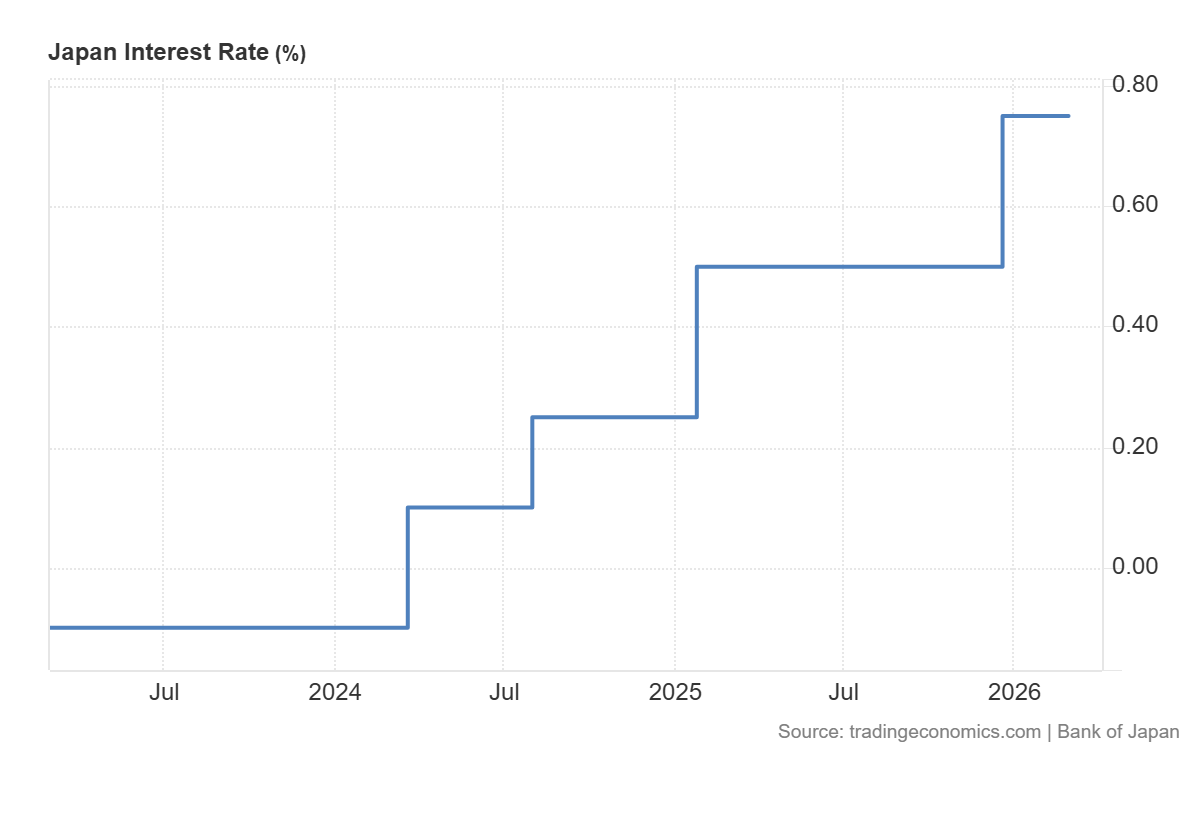
The Bank of Japan is set to raise interest rates to their highest level in three decades this Friday, with Governor Kazuo Ueda expected to lift the benchmark rate from 0.5% to 0.75%.
While modest by global standards, this marks a landmark step in Japan's departure from decades of near-zero rates and unconventional easing.
The decision comes amid significant market turbulence. Japanese government bond yields have surged, with 30-year bonds hitting record highs and 10-year yields reaching 19-year peaks.
The volatility stems partly from concerns under new Prime Minister Sanae Takaichi, who recently approved a $118 billion stimulus package with over 60% financed through borrowing.

While Friday's hike appears certain, policymakers have signalled caution as they push rates toward levels estimated between 1% and 2.5%.
Ueda's post-meeting press conference will be closely watched for signals about future increases.
Micron Forecasts Blowout Earnings on Booming AI Market
Micron Technology is projecting second-quarter earnings of $8.42 per share, nearly double Wall Street's $4.78 estimate.
Micron shares surged 7% in after-hours trading as markets reacted to the news that the AI-driven memory chip race is showing no signs of slowing.

As one of only three major suppliers of high-bandwidth memory (HBM) chips alongside SK Hynix and Samsung, Micron sits at a chokepoint in AI infrastructure.
The HBM specialised chips are essential for training and deploying generative AI models, and current demand is dramatically outpacing supply.
CEO Sanjay Mehrotra revealed that supply tightness will extend beyond 2026, with Micron expecting to fulfil only 50-70% of key customer demand in the medium term.
Micron projects revenue of $18.70 billion this quarter versus analyst estimates of $14.20 billion. The company has retooled their operations toward AI applications, even dissolving its consumer "Crucial" brand to concentrate on AI data centre demand.
HBM chips are now the bottleneck in AI system performance, and suppliers who can deliver at scale have the potential to capture large amounts of value over the coming years.