
March’s foreign exchange (FX) markets could be shaped by several high-impact releases clustered around the first half of the month. China PMIs, Australia GDP, Japan GDP and the Federal Reserve’s March meeting could all influence FX sentiment as the month progresses.
Quick facts
- US rate expectations remain stable, with CME FedWatch implying a greater than 85% probability of no rate change at the March FOMC meeting.
- China PMIs, CPI/PPI and trade data will help shape early-month regional risk tone.
- Australia's GDP, RBA decision, labour force data and CPI create a concentrated domestic event window for AUD.
- Japan GDP and the Bank of Japan (BoJ) policy meeting may influence domestic yield repricing and JPY volatility.
- Euro area CPI, industrial production and the ECB Monetary Policy Decision remain key for EUR stability.
US dollar (USD)
Key events
- Nonfarm Payrolls: 12:30 am, 7 March (AEDT)
- Consumer Price Index (CPI): 11:30 pm, 11 March (AEDT)
- Retail Sales: 11:30 pm, 17 March (AEDT)
- Federal Reserve policy decision: 5:00 am, 19 March (AEDT)
- Federal Reserve press conference: 5:30 am, 19 March (AEDT)
What to watch
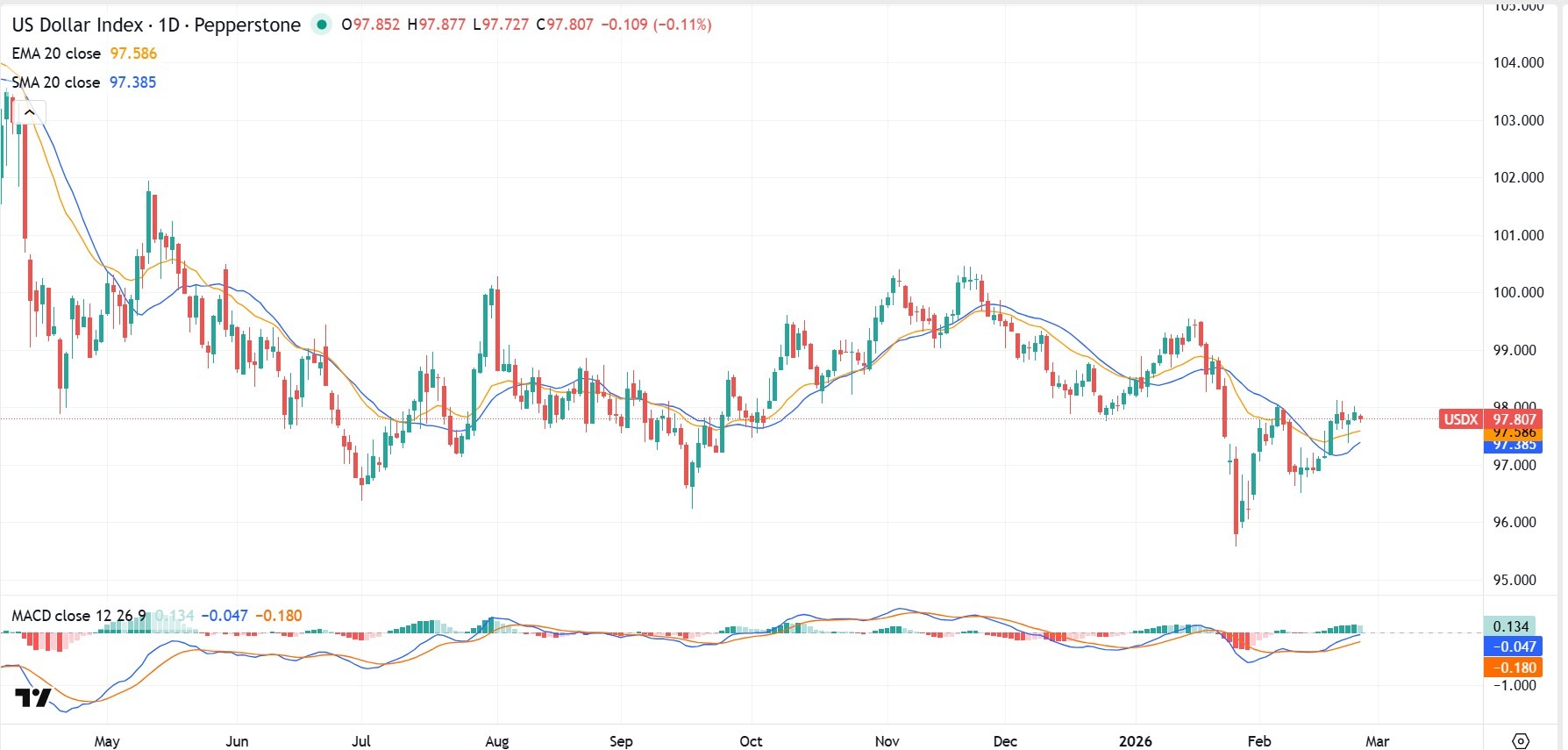
The USD remains primarily driven by inflation and labour data and their implications for Federal Reserve pricing.
CME FedWatch pricing indicates that markets are assigning a greater than 85% probability of no rate change at the March FOMC meeting. This suggests positioning is currently anchored around a pause, increasing sensitivity to any inflation surprise that could shift expectations.
With a pause largely priced in, USD direction may hinge more on inflation trajectory and longer-term policy expectations than the decision itself. Firmer CPI or resilient labour data could reinforce yield support.
Key chart: US dollar index (DXY) weekly chart
Euro (EUR)
Key events
- Euro area CPI (flash estimate): 10:00 pm, 3 March (AEDT)
- Euro area industrial production: 9:00 pm, 13 March (AEDT)
- ECB Monetary Policy Decision: 12:15 am, 20 March (AEDT)
- ECB press conference: 12:45 am, 20 March (AEDT)
- Eurozone flash PMI: 8:00 pm, 24 March (AEDT)
What to watch
EUR direction remains linked to inflation persistence and whether growth data stabilise expectations around ECB policy.
Sticky inflation or improved activity data could limit easing expectations and support the EUR. Softer inflation and weaker production data may renew downside pressure, particularly if US data remain firm.
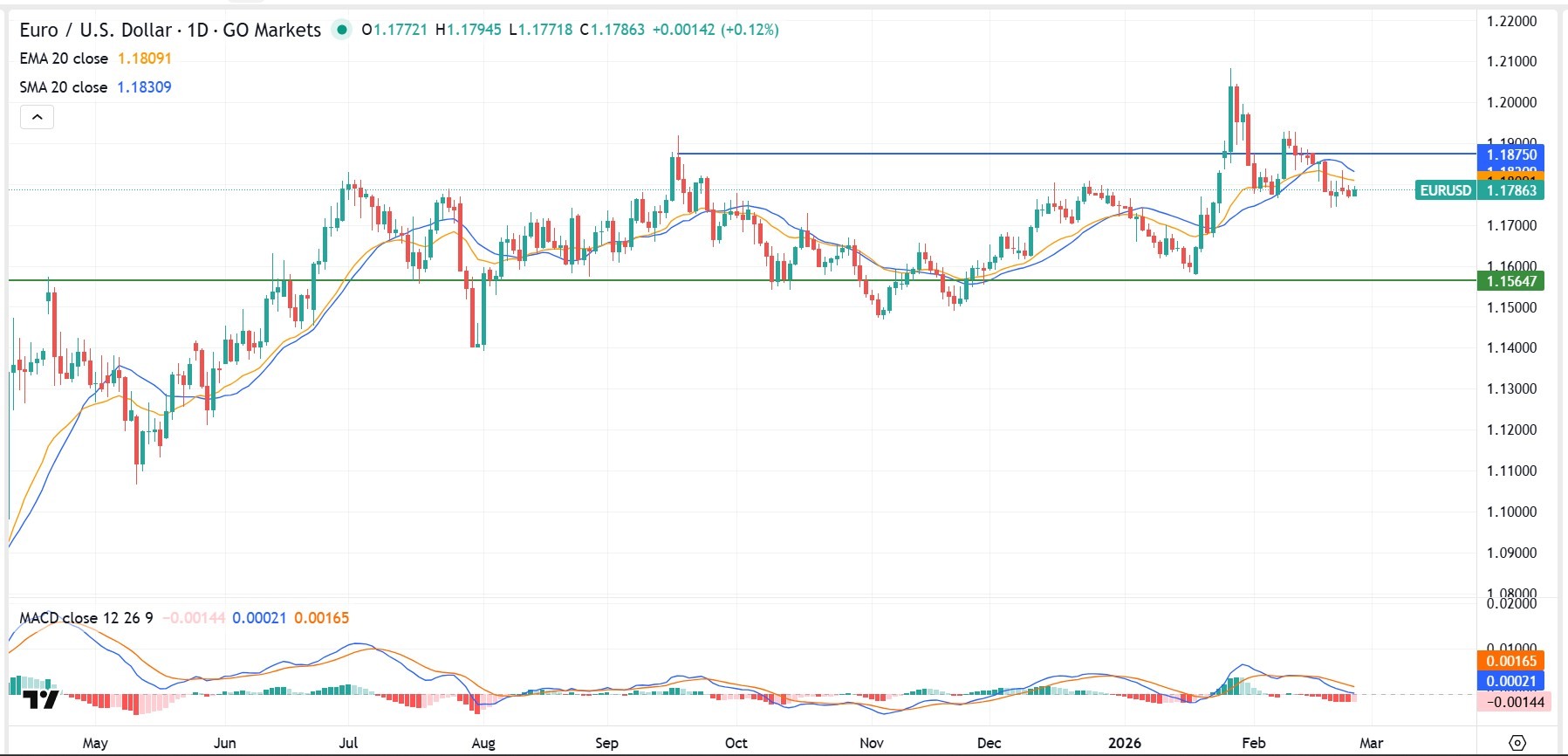
EUR/USD daily structure shows consolidation following an upside extension earlier in the year. Short-term momentum has moderated, with price holding above longer-term support levels.
Key chart: EUR/USD daily chart
Japanese yen (JPY)
Key events
- Japan GDP (Q4 2025, 2nd estimate): 10:50 am, 10 March (AEDT)
- Bank of Japan policy meeting: 18–19 March (AEDT)
- BOJ statement on monetary policy: 19 March (AEDT)
What to watch
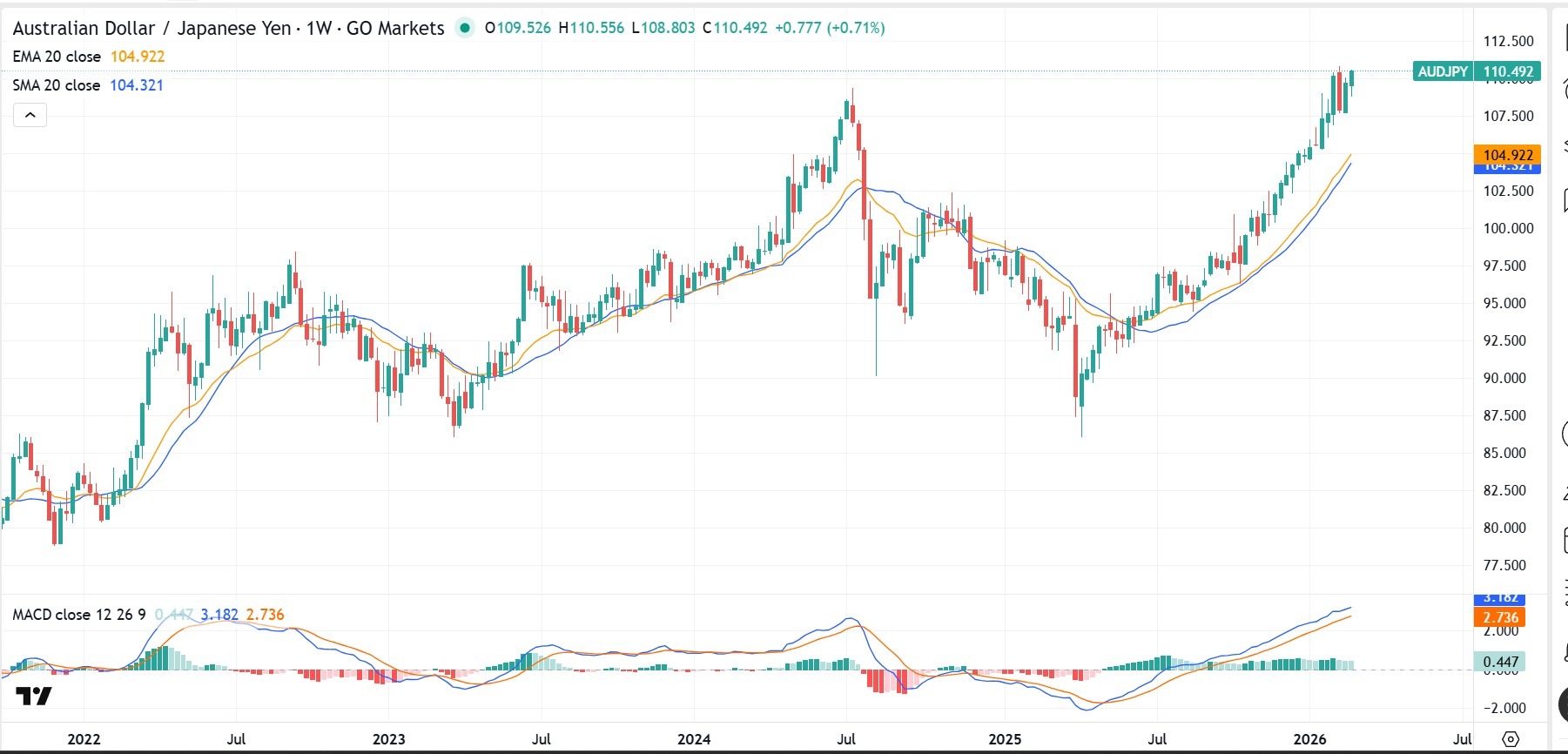
JPY remains sensitive to domestic growth data and Bank of Japan policy decisions. Yield expectations and policy normalisation signals continue to influence USD/JPY and cross-JPY volatility.
The BOJ policy meeting and subsequent communication may influence short-term volatility and longer-term rate expectations, and by extension JPY sentiment.
Stronger GDP or policy signals reinforcing normalisation could support JPY via domestic yield adjustments. More cautious messaging may maintain yield differentials in favour of USD and AUD.
Key chart: AUD/JPY weekly chart
Australian dollar (AUD)
Key events
- Australia GDP: 11:30 am, 4 March (AEDT)
- RBA Monetary Policy Decision: 2:30 pm, 17 March (AEDT)
- Labour Force Survey: 11:30 am, 19 March (AEDT)
- Consumer Price Index (CPI): 11:30 am, 25 March (AEDT)
What to watch
AUD faces a domestic calendar centred around the 16–17 March RBA meeting. Growth, labour and inflation releases cluster within a three-week window, increasing the potential for volatility.
Stronger GDP or persistent inflation could reinforce policy caution and support AUD. Softer labour or CPI outcomes may weigh on rate expectations and pressure AUD, particularly against USD and JPY.
Chinese data early in the month may also influence regional sentiment and commodity-linked currencies such as AUD.

The information provided is of general nature only and does not take into account your personal objectives, financial situations or needs. Before acting on any information provided, you should consider whether the information is suitable for you and your personal circumstances and if necessary, seek appropriate professional advice. All opinions, conclusions, forecasts or recommendations are reasonably held at the time of compilation but are subject to change without notice. Past performance is not an indication of future performance. Go Markets Pty Ltd, ABN 85 081 864 039, AFSL 254963 is a CFD issuer, and trading carries significant risks and is not suitable for everyone. You do not own or have any interest in the rights to the underlying assets. You should consider the appropriateness by reviewing our TMD, FSG, PDS and other CFD legal documents to ensure you understand the risks before you invest in CFDs. These documents are available here.
Any references to Australian or international shares, sectors, indices, ETFs, crypto-related stocks or other instruments are provided for market commentary and watchlist purposes only and do not constitute a recommendation, offer or solicitation to buy, sell or hold any financial product or adopt any investment strategy. International markets may involve additional risks, including currency fluctuations, regulatory differences, market structure differences, reduced liquidity and higher volatility. Company-specific, sector-specific and macroeconomic risks may also affect performance.
Commentary on geopolitical developments, economic data, central bank decisions, earnings, policy changes and other global or financial market events is based on information available at the time of publication and may change without notice. Such events can lead to sudden market moves, price gaps, reduced liquidity, wider spreads and increased volatility, particularly in leveraged products such as CFDs. Forward-looking statements, expectations and scenario analysis are inherently uncertain and should not be relied on as guarantees of future market behaviour or outcomes.